
Key takeaways
- Horseradish grows from root cuttings called thongs, planted in March or April
- Any scrap of root left in the soil regrows, so grow it in a container or sunken bucket
- It copes with sun or part shade and needs very little care
- Lift roots from October once the leaves die back; second-year roots are bigger
- Grate fresh roots outdoors or by an open window, as the fumes sting your eyes
Horseradish is one of the easiest crops you can grow in the UK. It’s hardy, copes with poor soil and part shade, and needs almost no care. The only real job is stopping it from taking over.
This guide shows how to plant it, how to keep it contained, when to lift the roots, and how to turn them into a fiery fresh sauce that puts shop-bought jars to shame.
What is horseradish?
Horseradish (Armoracia rusticana) is a hardy perennial in the cabbage and mustard family. It’s native to south-east Europe and western Asia but has grown wild on British roadsides and waste ground for centuries.
It makes a clump of large, wavy, dock-like leaves and long, thick white roots. The roots are what you eat. They have little smell until they’re cut or grated, then release a hot, eye-watering kick.
Unlike most root crops, horseradish is a perennial. Plant it once and it keeps coming back. That’s handy, but it also means any piece of root left in the ground grows into a new plant. Our guide to perennial vegetables has more crops that come back each year.

Horseradish sends up sprays of small white flowers in early summer. Snip them off so the plant puts its energy into the roots.
Why grow your own horseradish?
Fresh horseradish is far hotter and brighter than anything in a jar, and it’s hard to find in shops. Supermarkets rarely sell the fresh root.
Grated just before you use it, the root has a heat that hits your nose like strong mustard or wasabi. That heat fades quickly once grated, which is why freshness matters. One pot by the back door gives you roots to dig whenever you fancy them.
How to plant horseradish root thongs
Horseradish is grown from thongs, pencil-thick pieces of root about 15-20cm long. You can buy them from herb nurseries and seed suppliers, or beg a few from a friend’s plant.
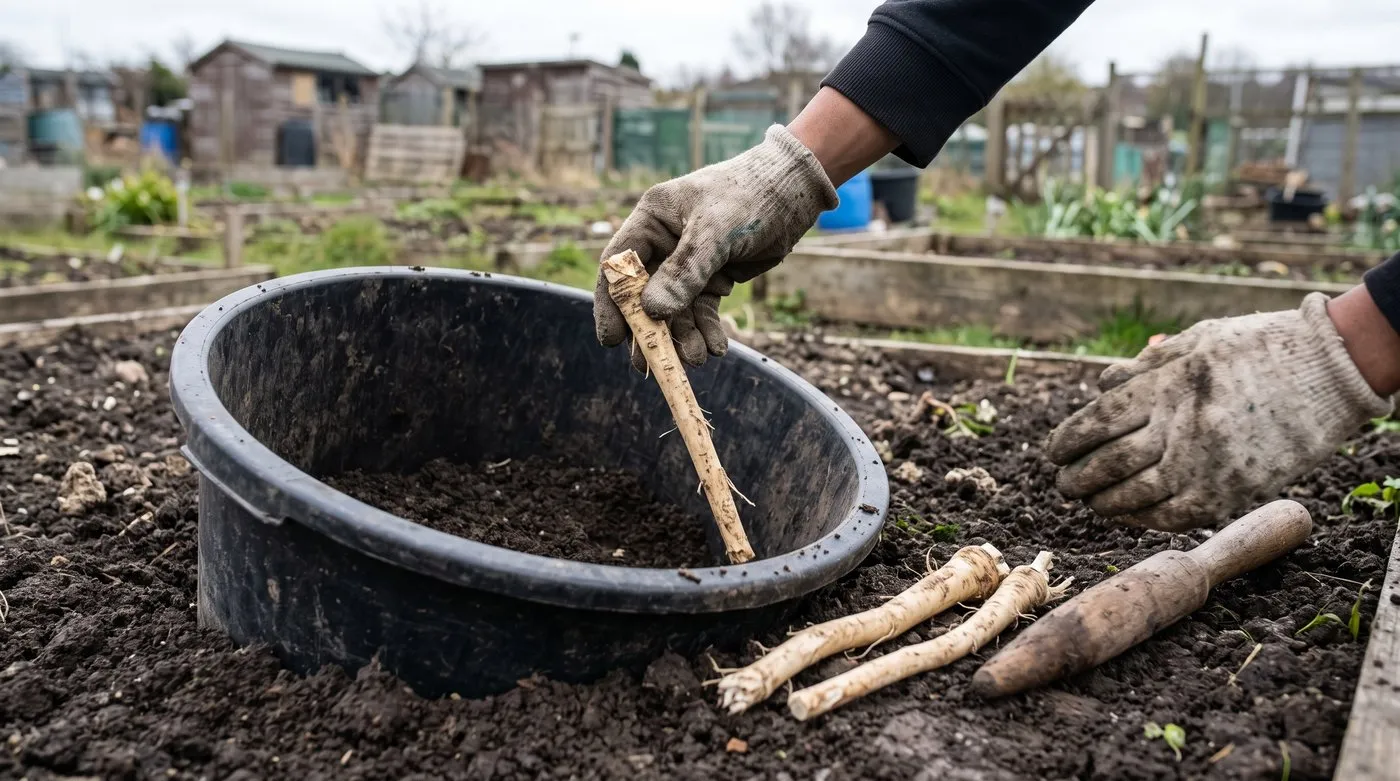
Drop each thong in thick end up, so the top sits about 5cm below the soil. Planting into a sunken tub keeps it contained.
When: plant in March or April, as soon as the soil is workable.
Where: sun gives the biggest roots, but part shade is fine. Avoid deep shade and waterlogged ground.
- Dig over the soil and add some garden compost. Remove big stones.
- Use a dibber to make slanting holes 30cm apart.
- Drop a thong into each hole, thick end up and thin end down.
- Fill in so the top of the thong sits about 5cm below the surface.
- Water well.
If the root has a flat cut end and a slanting cut end, the flat end goes at the top. Plant into a container or a sunken bucket from the start (see below).
How to stop horseradish spreading
This is the most important part of growing horseradish. It doesn’t send out runners, but every broken bit of root left in the soil regrows. Dig carelessly and you can end up with horseradish all over the bed.
| Method | How well it contains it | Best for |
|---|---|---|
| Large pot (40 litres or more) | Very well | Patios and small gardens |
| Sunken bottomless bucket or dustbin | Well | Allotments and veg beds |
| Raised bed lined with root barrier | Well | A dedicated horseradish bed |
| Open ground | Not at all | Best avoided |
Sunken bucket: cut the bottom out of a large bucket or old dustbin and sink it into the ground with the rim a few centimetres above the soil. Plant inside it. The roots grow down, but the sides stop them wandering. Each autumn, dig out the whole contents, harvest the roots and replant one or two fresh thongs.
Pots: use a deep pot of at least 40 litres with drainage holes. Fill with multipurpose compost mixed with some garden soil for weight. Stand it on paving, not on soil, so roots can’t creep out of the drainage holes. Our container vegetable gardening guide covers pots and compost.
Raised beds: line the sides and base with a root barrier membrane, or roots will push through the gaps. Our guide to garden thugs has more plants that need keeping in check.

Sinking a big tub with its rim above the soil keeps horseradish in one place. Lift and replant it each autumn.
How to care for horseradish
Horseradish needs very little from you.
- Watering: water in long dry spells. Pots need regular watering in summer.
- Feeding: it isn’t hungry. A little compost or general fertiliser in spring is plenty. Too much nitrogen gives lots of leaf and thin roots.
- Flowers: cut off flower stems as they appear so the plant concentrates on its roots.
- Weeding: keep the area clear while young plants establish.
Horseradish pests and problems
Horseradish is pleasingly trouble-free.
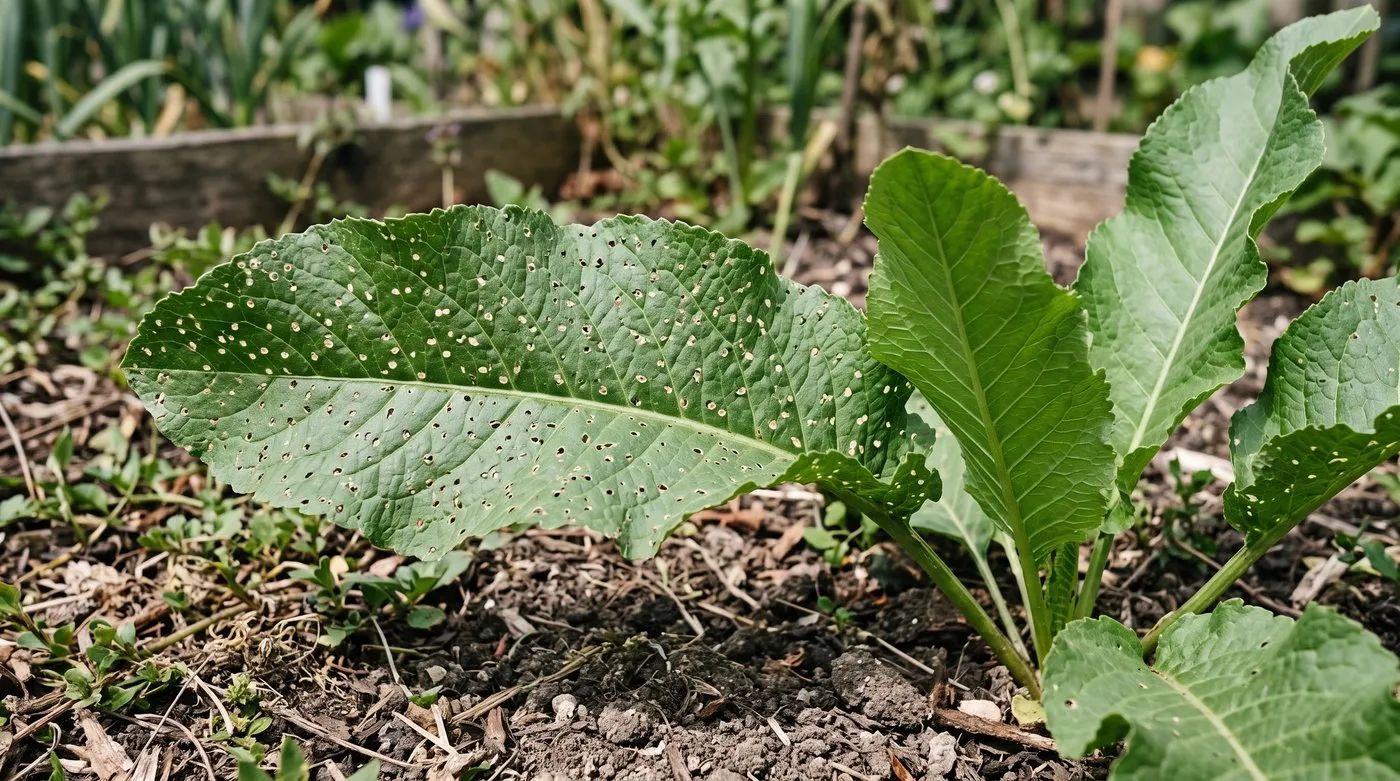
Tiny shot holes in spring are flea beetle damage. It looks bad, but the roots underneath carry on growing.
Flea beetles pepper the leaves with small round holes in dry spring weather. It looks bad but rarely affects the roots. Fleece and watering in dry spells help. Our guide to flea beetles has more tips.
Leaf spots can appear in wet summers. Pick off badly affected leaves and give plants room for air to move.
Clubroot can affect horseradish, as it’s related to cabbages. Avoid planting where clubroot has been a problem, or grow in a pot of fresh compost.
Aphids sometimes cluster on young leaves in spring. Hose them off, and the plant soon grows away.
When and how to harvest horseradish
Lift roots from October onwards, once the leaves start to yellow and die back. You can keep digging through winter whenever the ground isn’t frozen. Roots in their first year are usable but smaller. Leave plants for a second season if you want big, thick roots.
- Cut the leaves back to ground level.
- Fork carefully around the plant, starting a little way out from the crown.
- Lift the main root, which can go quite deep.
- Snap off the side roots. Keep a few pencil-thick ones to replant as thongs.
- Pick out every scrap of root you can find from open ground.

Long white roots lifted on an autumn morning. Pick out every scrap from the soil, as each piece can regrow.
How to store horseradish roots
Brush off the soil and keep whole roots in a bag in the fridge, wrapped in damp kitchen paper. They keep for several weeks this way. Only grate what you need, as the heat fades fast once grated.
For a larger crop, store unwashed roots in a box of damp sand somewhere cool, as you would carrots. Our guide to storing root vegetables over winter explains how. You can also freeze grated horseradish in small portions.
How to make fresh horseradish sauce
Grating your own takes five minutes and tastes far better than a jar.
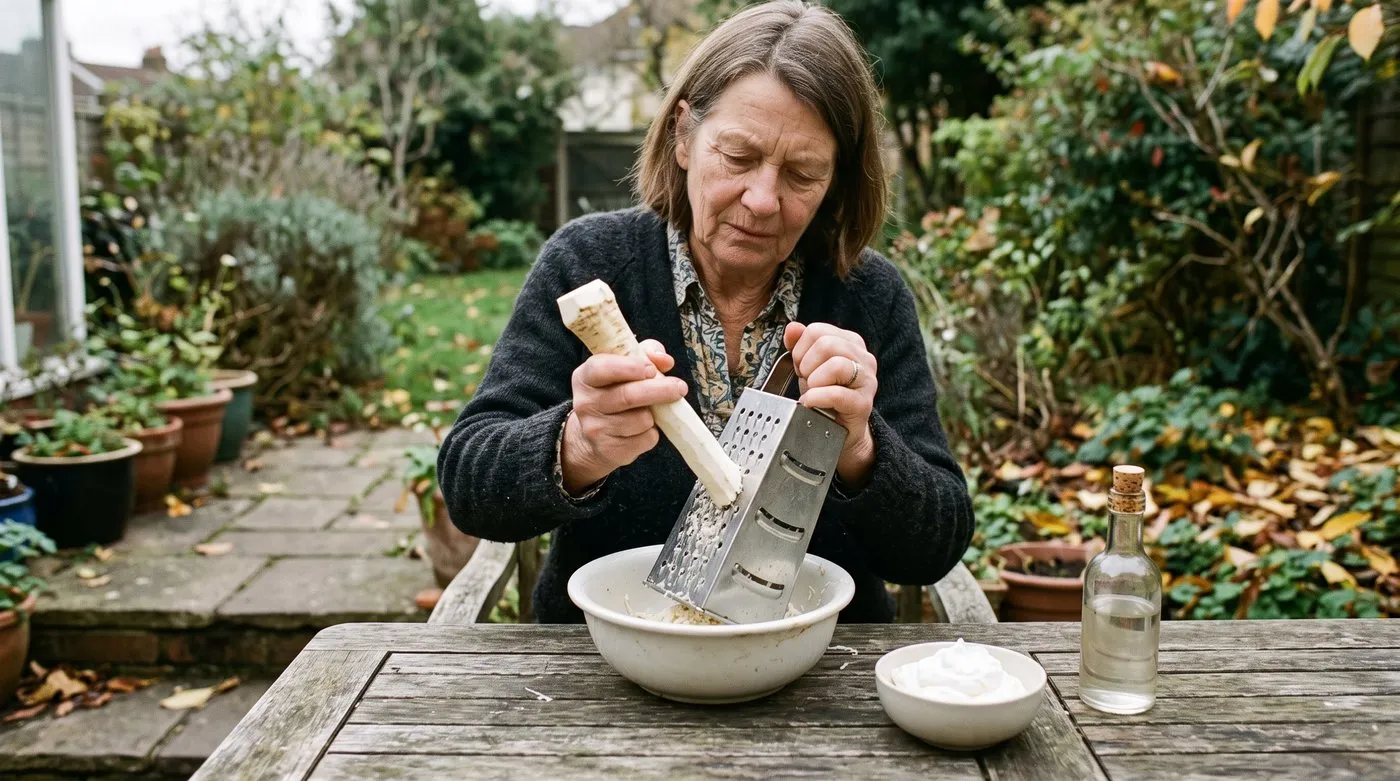
Grate outdoors and you’ll keep your eyes dry. Stir in the vinegar straight away for mild, or wait a few minutes for hot.
- Peel a piece of root about 10-15cm long.
- Grate it outdoors or by an open window. The fumes are strong and will make your eyes stream.
- Stir in about a tablespoon of white wine vinegar. Add it straight away for a milder sauce, or wait two or three minutes for a hotter one. The vinegar stops the heat building.
- Fold into lightly whipped double cream or soured cream with a pinch of salt and sugar.
- Taste and adjust.
Keep it in the fridge and use it within a few days. Serve with roast beef, smoked mackerel or beetroot. Mixing grated horseradish with cooked, grated beetroot and a splash of vinegar makes a punchy relish. If you like hot flavours, try growing real wasabi for a sharper, sweeter heat.
How to get rid of horseradish if it spreads
If horseradish has escaped, or you’ve inherited a patch, be ready for a long job. Digging alone rarely clears it in one go, because every missed piece regrows.
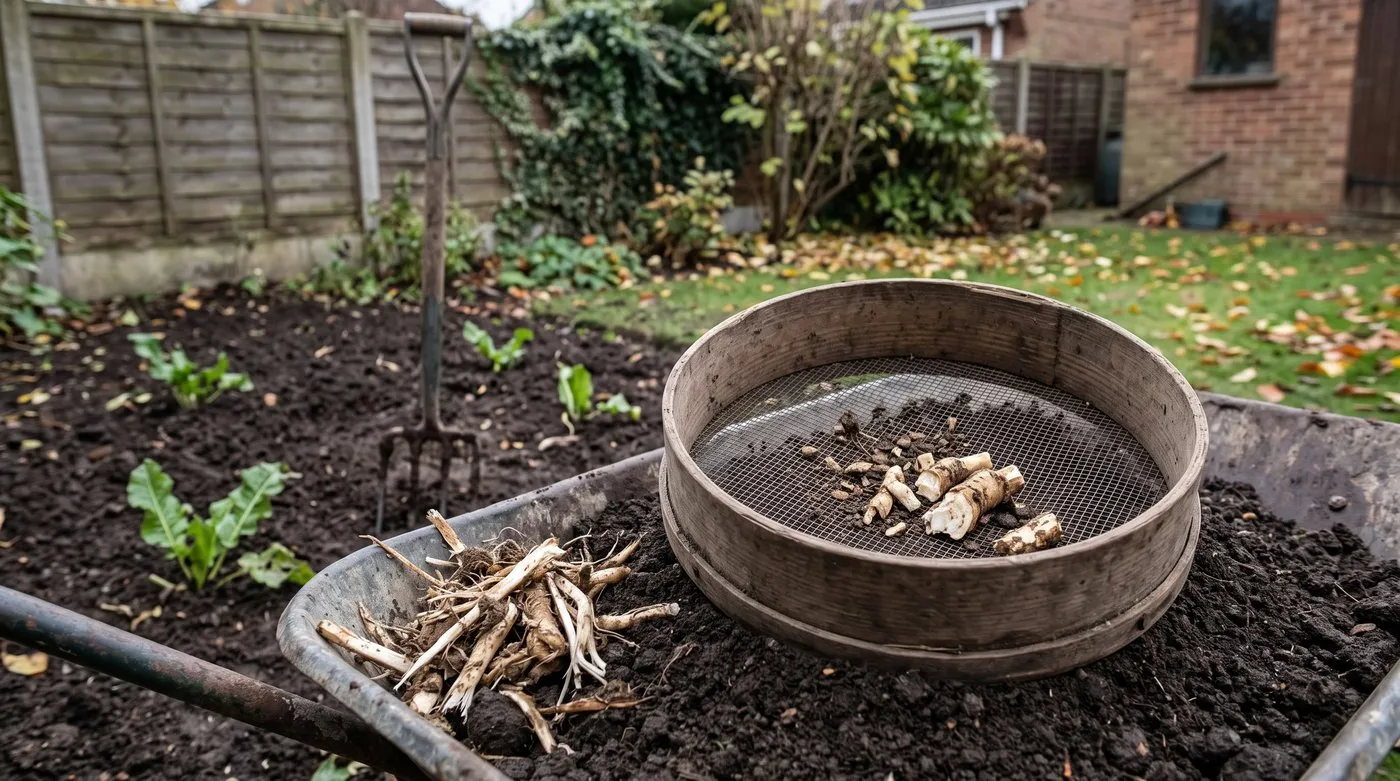
Every little scrap of root can grow again. Sieving the soil catches the bits that a fork misses.
- Fork the area over in autumn and pick out every bit of root you can find. Sieving the soil helps.
- Keep pulling or hoeing off new shoots as soon as they appear. Without leaves, the roots slowly weaken.
- Repeat over the following seasons until no more shoots come up.
Covering the ground with a light-proof sheet for a growing season can help weaken it. If you use a weedkiller, choose one approved for that use and follow the label.
Month-by-month horseradish calendar
| Month | What to do |
|---|---|
| March to April | Plant thongs 30cm apart in pots or sunken buckets |
| May to June | Keep weeded. Cut off flower stems. Watch for flea beetle |
| July to August | Water pots in dry spells |
| September | Little to do. Leaves start to fade |
| October to February | Lift roots as needed. Replant a few thongs. Store the rest |
Common mistakes with horseradish
Planting in open ground. It’s very hard to remove later. Use a pot or sunken bucket.
Leaving bits of root behind. Each one regrows. Pick out every piece when you harvest.
Over-feeding. Rich soil gives lots of leaf and thin roots.
Grating indoors with the windows shut. The fumes are fierce. Grate outside or by an open window.
Grating too far ahead. The heat fades quickly. Grate just before you need it.
Now you’ve got horseradish under control, read our guide to growing celeriac for another flavour-packed root crop. You’ll find plenty more on our growing veg hub.
Frequently asked questions
How do you plant horseradish root thongs?
Plant thongs in March or April, 30cm apart, in slanting holes. Make each hole with a dibber, drop the thong in thick end up, and leave the top about 5cm below the soil. Thongs are pencil-thick pieces of root, sold by herb nurseries and seed suppliers.
Does horseradish spread and become invasive?
Yes, horseradish spreads easily and is hard to get rid of. Any small piece of root left in the soil grows into a new plant. Grow it in a large pot, a sunken bottomless bucket or a lined bed so it can’t wander.
When should you harvest horseradish roots?
Harvest from October onwards, once the leaves start to die back. First-year roots are usable but smaller. Roots in their second year are thicker. Lift with a fork and save some pencil-thick side roots to replant.
Can you grow horseradish in pots?
Yes, a large, deep pot is one of the best ways to grow it. Use one of at least 40 litres with drainage holes. Stand it on a hard surface so roots can’t escape into the ground. Water regularly in summer.
How do you make fresh horseradish sauce?
Grate peeled root finely, then stir in a little white wine vinegar. Do it outdoors or by an open window. Adding vinegar straight away gives a milder sauce, while waiting a few minutes makes it hotter. Mix with soured cream or whipped cream and a pinch of salt and sugar.
How do you get rid of horseradish once it spreads?
Dig out as much root as you can, then keep removing regrowth. Fork the area over and pick out every piece of root you can find. Keep pulling new shoots as they appear, which weakens the plant over time. Expect it to take more than one season.
Is horseradish good for anything besides sauce?
Yes, it’s great in lots of dishes. Mix grated root with cooked beetroot for a punchy relish, stir it into mashed potato, or add it to dressings and smoked fish pâté. Young leaves can be added sparingly to salads.
Our team produces practical UK gardening guidance from source research, contributor records and established horticultural practice. Editorial standards are overseen by Matt W.


