
Key takeaways
- Garden thugs are legal, popular plants that simply spread faster than you want
- Grow mint and other runners in a large pot sunk so the rim sits 5cm above the soil
- Running bamboo needs a proper root barrier at least 60cm deep, or choose a clumping Fargesia
- Cut lady's mantle and lemon balm back after flowering to stop the seedlings
- Never compost ground elder or Houttuynia roots, as small pieces regrow
- Crambe cordifolia is big and dramatic but stays as a clump
Garden thugs are perfectly legal garden plants that spread too well. Plant one in a mixed border and within a few seasons it crowds out its neighbours. Garden centres call them “vigorous” or “great ground cover”, which is often a polite warning.
Most thugs are lovely plants in the right place. The trick is knowing how each one spreads, then giving it a pot, a bed of its own or a quick yearly trim. This guide covers ten of the usual suspects and the easy ways to keep them in check. For plants that are actually illegal to grow in the wild, see the guide to banned and invasive plants in UK gardens.
How do garden thugs spread?
Thugs spread in one of four ways, and the way they spread tells you how to stop them.
| How it spreads | Examples | What keeps it in check |
|---|---|---|
| Runners on the surface | Creeping Jenny, bugle (ajuga) | Pull or trim stray runners each year |
| Underground stems (rhizomes) | Mint, lily of the valley, running bamboo | Sunken pot, root barrier or a bed edged by paths |
| Root pieces that regrow | Ground elder, Houttuynia | Don’t plant it in open ground; dig out every piece |
| Seed | Lady’s mantle, lemon balm, foxglove | Cut back after flowering, before seed drops |
Using the wrong fix just gives the plant more time. A sunken pot won’t stop a self-seeder, and cutting off flowers won’t stop mint’s runners.

Mint sends out runners across any open soil. A pot sitting on top of the bed won’t stop them, so sink it in and keep the rim above ground.
The 10 garden thugs to watch
1. Mint (Mentha)
Mint is the classic thug. Spearmint, peppermint, apple mint and the rest all spread by underground runners. They pop up through gravel, lawn edges and the cracks in paving.
Grow mint in a large pot or old bucket with drainage holes, sunk into the bed so the rim sits about 5cm above the soil. The rim stops runners creeping over the top. Lift, split and replant every few years when it gets congested. The guide to growing mint has more on varieties and care.
2. Japanese anemone (Anemone x hybrida)
Japanese anemones are one of the best late-summer flowers, with white or pink blooms from August into October. In moist, fertile soil their running roots spread steadily into their neighbours. Any root left behind when you dig them out regrows.
They’re best where their spread is welcome, such as a shady bed or the space under shrubs. In drier soil they’re usually slower. The guide to growing Japanese anemones covers where they’re happiest.

Japanese anemones make a lovely late show, but they spread into a wide drift. Plant them where that’s a bonus, not a problem.
3. Running bamboo (Phyllostachys and others)
Running bamboos such as Phyllostachys, Pseudosasa and Sasa spread by underground stems. Left alone they can cross a lawn, push up under paving and appear next door.
If you want one, plant it inside a proper bamboo root barrier at least 60cm deep, with the top edge a few centimetres above the soil. Check the edge every year for stems escaping over the top. The easier answer is a clumping bamboo such as Fargesia, which stays put.
Warning: A label saying “bamboo” tells you nothing. Check the full plant name before you buy, so you know whether it’s a runner or a clumper.
If you only wanted bamboo for privacy, there are easier plants. See these bamboo alternatives for garden privacy.
4. Lemon balm (Melissa officinalis)
Lemon balm stays as a fairly neat clump, but it seeds everywhere. Seedlings soon appear all over the bed and in the cracks of paths.
Cut the whole plant back hard after it flowers in summer, before the seed ripens. You’ll get a fresh flush of leaves for tea too.
5. Lily of the valley (Convallaria majalis)
Lily of the valley has gorgeous scented bells in spring. Its creeping rhizomes spread slowly but surely, weaving through other plants’ roots so it’s hard to pull out.
Give it a shady corner of its own, or a bed edged by paving. All parts are poisonous to people and pets, so keep it away from where children and dogs play.
6. Houttuynia (Houttuynia cordata ‘Chameleon’)
Houttuynia has bright red, cream and green leaves and a strong orangey smell. Its brittle roots spread fast in damp soil, and every snapped piece can grow.
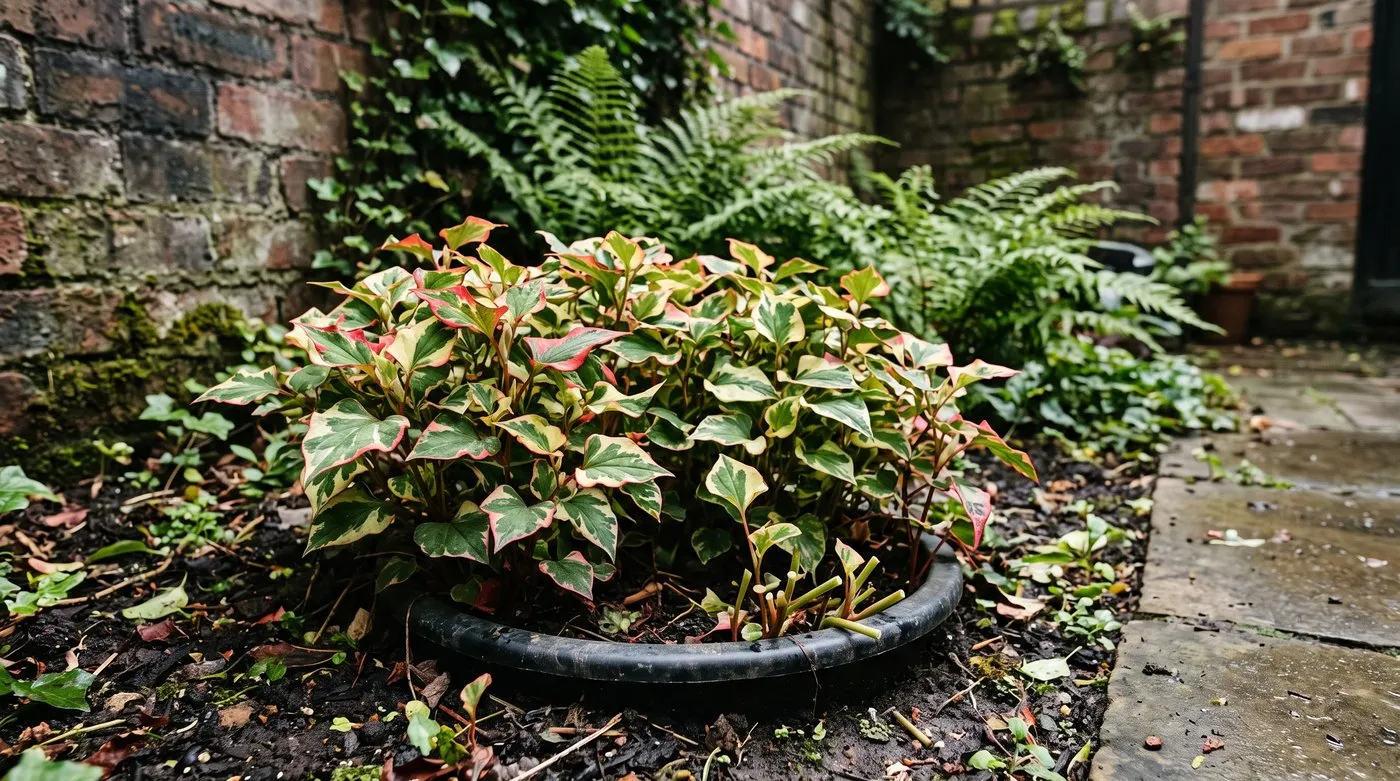
Houttuynia is safest in a pot. Sunk into the soil with the rim showing, it gives you the bright leaves without the spread.
Only grow it in a pot, either on the patio or sunk into the ground. Once it’s loose in a border, you’ll be digging it out for years.
7. Ground elder or bishop’s weed (Aegopodium podagraria)
Ground elder, also called bishop’s weed, is the plain green weed many people inherit. The cream-edged form ‘Variegatum’ is still sold as ground cover. It’s a little slower but still spreads, and both regrow from small root pieces.
Never plant either in an open border. If you’ve inherited it, dig it out patiently and keep pulling regrowth. The guide on how to remove ground elder walks you through it.

Ground elder carpets the soil under shrubs and fills every gap. Pieces of root left behind will grow back.
8. Comfrey ‘Bocking 14’ (Symphytum x uplandicum)
Comfrey ‘Bocking 14’ doesn’t set seed, but its deep roots make it very hard to move once planted. Any bit of root left in the ground grows a new plant.
Choose its spot for keeps, ideally a corner of the veg plot. It’s well worth having for leaves to make liquid feed. The guide to growing and using comfrey explains how.
9. Creeping Jenny (Lysimachia nummularia)
Creeping Jenny, especially the golden form ‘Aurea’, is sold for baskets and pond edges. In a damp border its trailing stems root as they go and smother low plants.
It’s lovely spilling from pots, baskets and the edges of ponds. In the ground, trim the edges back every year.
10. Lady’s mantle (Alchemilla mollis)
Lady’s mantle has soft, rounded leaves that hold raindrops and froth with lime-green flowers in early summer. It seeds itself into every gap, path and crack.

Cut lady’s mantle back as the flowers fade. It stops the seedlings and brings fresh new leaves within a few weeks.
Cut the flower stems and tired leaves right back once the flowers start to fade. This stops the seeding and gives you fresh leaves for the rest of summer.
A big plant that behaves: Crambe cordifolia
Crambe cordifolia looks like it should be a thug, but it isn’t. It sends up a huge cloud of tiny white, honey-scented flowers about 2m tall in early summer, above big dark green leaves. Bees love it.
It grows from a deep taproot and stays as a single clump. After flowering the leaves start to die back, so plant something later-flowering nearby to fill the gap. Give it a sunny spot in deep, well-drained soil and plenty of elbow room. Slugs and caterpillars can be fond of the young leaves.

Crambe cordifolia gives you a giant cloud of white flowers without ever running into its neighbours.
How to contain a garden thug
There are four simple ways to keep thugs in their place. Pick the one that matches how your plant spreads.
Sunken pot. Use a large plastic pot or bucket with drainage holes. Sink it so the rim sits about 5cm above the soil, then plant inside. This suits mint, Houttuynia and lily of the valley.
Root barrier. A tough plastic barrier sold for bamboo, buried at least 60cm deep with overlapped and sealed joins. It’s only worth the effort for running bamboo.
A bed of its own. Edge a bed with paving or a path on every side, and the plant stops at the hard edge. This suits comfrey, Japanese anemones and lily of the valley.
Cutting back. For self-seeders, cut the flower stems off once the flowers fade, before seed drops. This suits lady’s mantle, lemon balm and foxgloves where you don’t want more.

Mint kept in its own wide pot within a border. Sink the pot so only the rim shows and the runners can’t escape.
Garden thugs vs invasive species
Garden thugs are a nuisance, not a legal problem. You can buy, grow and compost most of them as normal (except roots that regrow).
Invasive non-native species are different. Plants such as Japanese knotweed, giant hogweed, Himalayan balsam and Rhododendron ponticum are listed under the Wildlife and Countryside Act. It’s an offence to plant them or let them spread into the wild, and their waste needs careful disposal. If you think you’ve spotted one, the guide to identifying Japanese knotweed is a good place to start. You’ll find more on plants and their quirks in the plants hub.
Month-by-month garden thug calendar
| Month | Task |
|---|---|
| February | Check bamboo barriers for stems escaping over the top |
| March | Fork out ground elder and Japanese anemone where they’ve crept too far |
| April | Plant any new spreaders in sunken pots or their own bed |
| May | Keep pulling ground elder regrowth. Lift and split crowded mint pots |
| June | Cut lady’s mantle back as the flowers fade |
| July | Cut lemon balm back before it seeds. Trim creeping Jenny edges |
| August | Pick comfrey leaves for liquid feed. Check pots for escaping runners |
| September | Cut back lady’s mantle leaves if they look tatty |
| October | Tidy Japanese anemones after flowering. Fork out stray runners |
| November | Dig over any bed you’re reclaiming and pick out every root you see |
Common mistakes with garden thugs
Trusting the words “ground cover”. “Fast-spreading” and “great ground cover” on a label are clues. Ask how the plant spreads before it goes in a mixed border.
Composting roots that regrow. Ground elder and Houttuynia roots can survive a compost heap. Put them in your council green waste bin instead.
Planting running bamboo “where it can spread”. It will, and not where you meant. Use a deep barrier or pick a clumping Fargesia.
Standing a pot on top of the soil. Mint runners simply escape over the rim or through the drainage holes. Sink the pot and keep the rim just above ground.
Frequently asked questions
What is a garden thug?
A garden thug is a legal garden plant that spreads faster than you want. It isn’t a banned invasive species. It just runs, roots or seeds so well that it crowds out its neighbours in a mixed border.
How do you stop garden thugs from spreading?
Match the fix to how the plant spreads. Grow runners like mint in a large pot sunk into the ground with the rim showing. Use a deep root barrier for running bamboo. Cut self-seeders back before they drop seed.
Can you grow mint in the ground?
Only if it has a bed to itself. In a mixed border its runners soon pop up everywhere. Grow it in a large pot sunk into the soil, or a bed edged by paths, and lift and replant every few years.
Will I ever get rid of ground elder once it is established?
Yes, but it takes patience. Fork out every bit of root you can find, then keep pulling regrowth every few weeks. Small root pieces regrow, so expect a season or two of follow-up. Never put the roots on the compost heap.
Are all bamboos invasive in UK gardens?
No, clumping bamboos stay put. Fargesia species form tight clumps and suit most gardens. Running bamboos such as Phyllostachys spread underground and need a deep root barrier. Always check the full plant name before you buy.
Is Japanese anemone a thug?
It can be in moist, fertile soil. Its running roots spread steadily, and bits left behind regrow. Give it room where its spread doesn’t matter, such as a shady bed or under shrubs.
What vigorous plant is worth growing?
Crambe cordifolia is big and dramatic but well behaved. It sends up a cloud of tiny white flowers about 2m tall in early summer, then stays as a clump rather than running.
Now you know which plants to keep an eye on, find well-behaved options in our guide to the best ground cover plants for UK gardens.
Our team produces practical UK gardening guidance from source research, contributor records and established horticultural practice. Editorial standards are overseen by Matt W.


