Key takeaways
- Ground elder spreads by brittle white roots, and tiny broken pieces regrow
- Covering it with black polythene for 12-18 months is the most reliable chemical-free fix
- Digging alone usually breaks the roots up and spreads the problem
- Never compost the roots, and never rotavate infested ground
- The variegated form sold in garden centres spreads just as badly
Ground elder is the weed that makes even seasoned gardeners sigh. Also called herb Gerard, Aegopodium podagraria has been creeping out of British gardens for centuries. It’s one of the hardest weeds to shift, alongside bindweed and horsetail. But it can be beaten with patience and the right method.
The trouble is underground. Ground elder spreads through a mat of white, brittle roots that snap at the slightest touch. Every bit you break off with a fork or spade can grow into a new plant, so a small patch can turn into a big one after a hasty dig.
How to spot ground elder
Check you’ve got the right plant before you start. Ground elder is often mixed up with young elder shoots and with cow parsley.
What to look for:
- Leaves: Bright green, split into groups of three toothed leaflets. The leaves look a bit like elder leaves, which is how it got its name.
- Smell: Crush a leaf and you’ll notice a strong, sharp, slightly parsley-like smell.
- Flowers: Flat white heads, like cow parsley, from May to July. Snip them off before they set seed.
- Roots: White, fleshy and brittle, running in every direction just under the surface.
It loves shade and part shade, and it’s especially common under trees, along fences and in old borders that rarely get dug. It grows less strongly in full sun, but still hangs on.
Variegated ground elder
Aegopodium podagraria ‘Variegatum’ is sold as ground cover, with pretty cream-edged leaves. Don’t be fooled. It spreads just as badly as the green kind and often reverts to plain green, which is even more vigorous. Treat it the same way.
Why digging alone doesn’t work
Before choosing a method, it helps to know why the obvious one fails.
The roots are brittle. Every spade stroke, fork turn or pass with a rotavator breaks them into lots of small pieces, and each piece can become a new plant.
The roots also weave through the roots of your border plants. Lift a perennial from an infested bed and it comes up wrapped in white ground elder roots. Picking every scrap out is close to impossible in the open ground.
So on a well-established patch, cover it first and dig later. Bindweed works the same way, with roots that multiply when you dig them.
Which method should you choose?
Here are your options side by side.
| Method | Chemical-free? | How long | Effort | Best for |
|---|---|---|---|---|
| Black polythene | Yes | 12-18 months | Low (cover and wait) | Open beds, paths, cleared ground |
| Regular cutting | Yes | 2-3 years | High | Small patches, mixed borders |
| Lifting plants and picking out roots | Yes | 1-2 years, after covering | High | Clearing a border you want to keep |
| Glyphosate | No | 2 growing seasons | Medium | Beds without plants you want to keep nearby |
| Raised beds | Yes | Straight away | Medium (one-off build) | Growing veg over infested ground |
| Root barrier | Yes | Straight away | Medium | Stopping it coming from next door |
| Cardboard and deep mulch | Yes | 18-24 months | Medium | Informal areas, new beds |
Method 1: smother it with black polythene
This is the most reliable way to clear ground elder from open ground without chemicals.
How it works: Like any plant, ground elder needs light. Cover it completely for 12-18 months and the roots run out of energy and die. And unlike digging, it doesn’t break the roots up.
What you need:
- Heavy-duty black polythene
- Bricks, timber or soil to hold the edges down
- 12-18 months of patience
Step by step:
- Cut all the ground elder down to soil level. Don’t dig.
- Cover the whole patch with polythene. Leave no gaps at all, as ground elder will find them.
- Overlap sheets by at least 30cm and tape or pin the joins.
- Weigh the edges down well with bricks, timber or heaped soil, so the wind can’t lift them.
- Check round the edges every month. Cut off any shoots poking out straight away.
- Leave it for at least 12 months, or 18 months for a bad patch.
When you lift the cover, the roots should be brown, dead and crumbly. Now you can dig them out without spreading anything. A few deep roots may have survived, so deal with any regrowth straight away, or cover again for another season.
Cardboard instead? Cardboard topped with 15-20cm of mulch works on lighter patches and looks nicer in a border. But cardboard rots, and ground elder can push through as it softens. Top up the mulch and check the edges every month. It fits well with no-dig gardening if you’re moving to a mulched garden for good.
Method 2: keep cutting it down
This works on the same idea as smothering. No leaves means no food for the roots. It just takes more of your time.
Every time a shoot appears, cut it off at soil level and take it away. The plant uses stored energy to push up each new shoot. Keep removing them before they can top that energy back up, and the roots gradually weaken.
How often: Every week or two from March to October, without fail. Leave it for a few weeks in summer and the plant soon recovers.
How long: About two growing seasons to weaken an established patch, and three to get close to clearing a bad one. It suits small patches in mixed borders, where polythene would harm your other plants.
Snipping at soil level with scissors or secateurs is better than pulling, which can snap and disturb the roots.
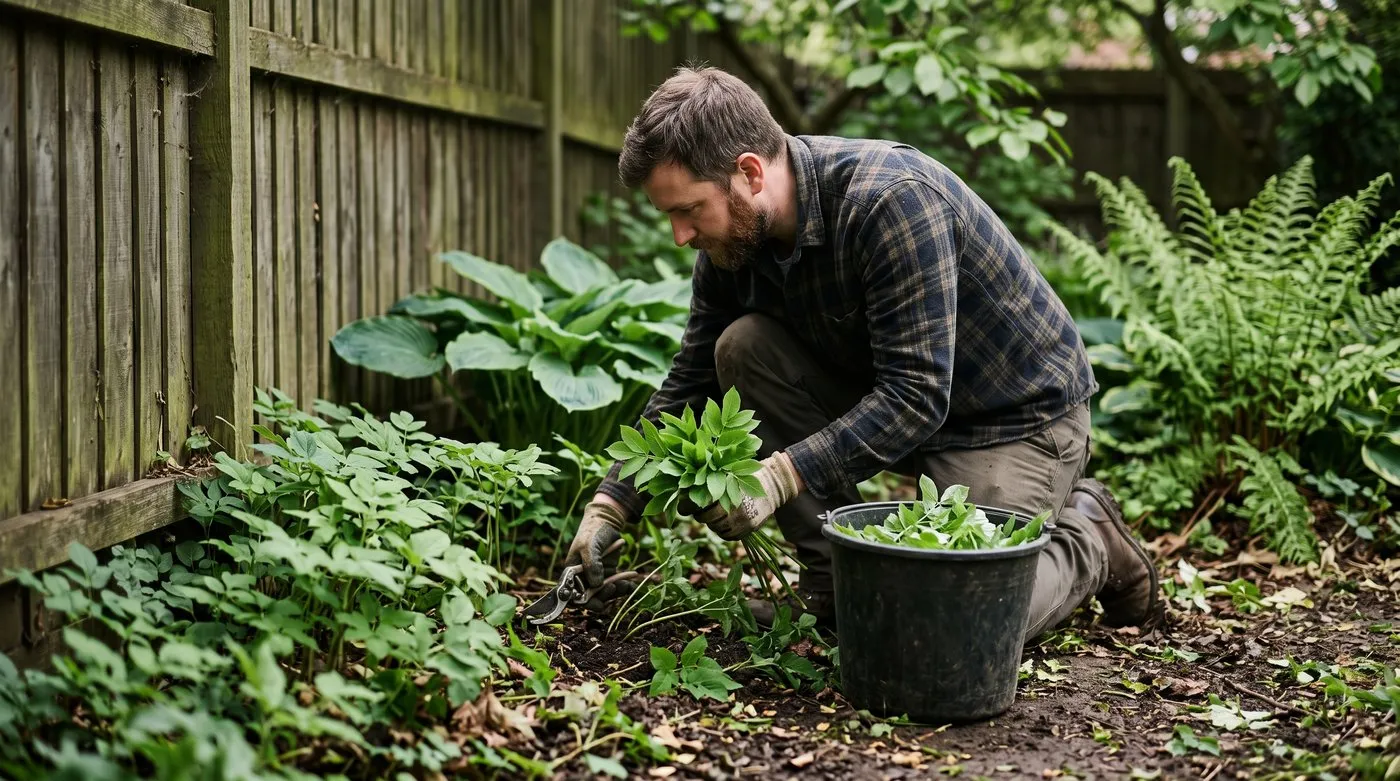
Cut every new shoot at soil level every week or two from March to October. Snipping is better than pulling, which snaps the roots.
Method 3: glyphosate weedkiller
Glyphosate (sold as Roundup, Gallup and own-brand versions) is the quickest way. It’s taken in through the leaves and carried down into the roots.
How to use it:
- Wait until the plant is in full leaf, usually June to August. Follow the instructions on the label.
- Pick a dry, calm day with no rain forecast, so it isn’t washed off.
- In mixed borders, use a glyphosate gel and paint it onto the ground elder leaves with a small brush. That keeps it off your other plants.
- Don’t cut the treated plants for a week or two, so the weedkiller has time to reach the roots.
- Treat the regrowth when it comes back, leaving about four weeks between goes.
- Expect several treatments a season on a heavy patch.
Two seasons of this usually clears most of it. Any weak regrowth in the third year can be pulled or spot-treated.
Glyphosate kills any green plant it touches, so lift and pot up plants you want to save first if you can. For an alternative, our organic weedkillers guide looks at pelargonic acid products. These burn off the leaves but don’t reach the roots, so you’ll need to use them more often.
Safety: Glyphosate kills most plants. Use it on calm days, keep it well away from ponds and streams, and keep pets and children off treated areas until the leaves are dry.
Method 4: lift your plants and pick out the roots
For borders where you want to save your plants, this clears the weed without losing anything you love.
- Lift each plant in autumn or spring when the soil is workable.
- Wash the root ball under a hose or tap. The white ground elder roots will show up clearly.
- Tease out every white root, with your fingers or a fine comb. Be thorough, as any bit left can regrow.
- Pot the plant up while you clear the bed with polythene or weedkiller.
- Replant once the bed has been treated for at least a full growing season.
It’s fiddly, but worth it for plants you treasure. If your soil is heavy, it’s a good time to improve it before replanting, and our guide to improving clay soil shows you how.
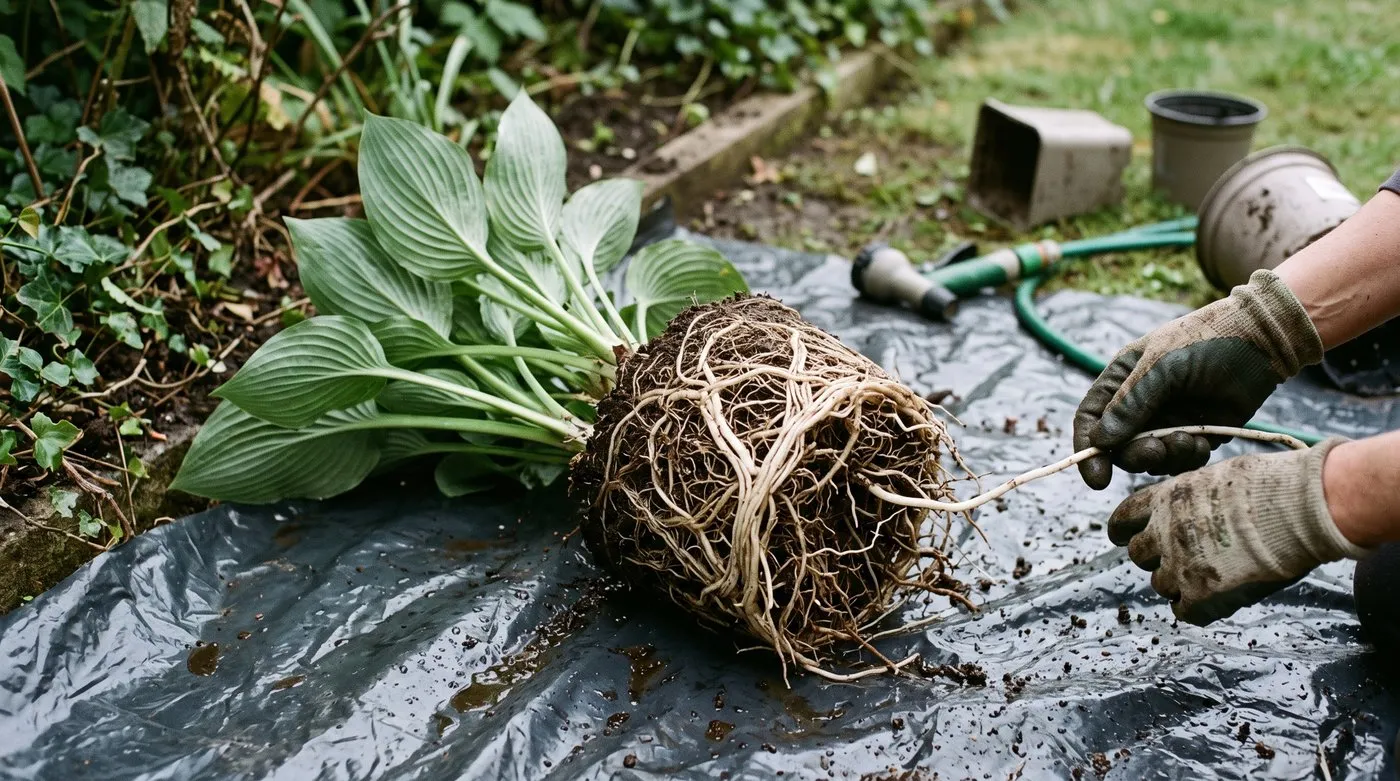
Washing the root ball makes the white ground elder roots easy to spot. Tease out every bit, as any piece left can regrow.
Ground elder in borders, lawns and veg beds
In borders
Borders are the hardest place to deal with it, because:
- Polythene would kill your border plants too
- Weedkiller spray would damage plants you want to keep
- Digging spreads root pieces all through the bed
The best plan is to lift your plants, clear the bare soil, then replant. For plants too big to lift, keep cutting the ground elder down and paint glyphosate gel onto its leaves.
In lawns
Ground elder rarely takes hold in a lawn that’s mown often, because mowing keeps cutting it down. It does hang on at the edges, especially where it’s creeping in from a shady border. Spot-treat those bits with gel, and keep the lawn edge mown short and often.
In veg gardens and raised beds
Raised beds are the easy answer. Build them over a tough weed membrane or a solid base so the roots can’t come up from below.
Set your raised beds on top of the infested ground over heavy-duty weed fabric and grow clean crops above the problem. Clear the open ground around the beds too, so the weed can’t creep in round the sides.
Stopping ground elder coming in from next door
Ground elder often creeps in from a neighbour’s garden, under or through the fence.
Putting in a root barrier:
- Dig a trench along the boundary, 40-60cm deep and about 15cm wide.
- Stand heavy-duty plastic root barrier sheeting upright in the trench, leaving about 5cm above the soil.
- Overlap the joins by 30cm and seal with waterproof tape.
- Fill the trench back in and firm the soil on both sides.
The RHS page on ground elder has more on dealing with it if you’d like a second opinion.
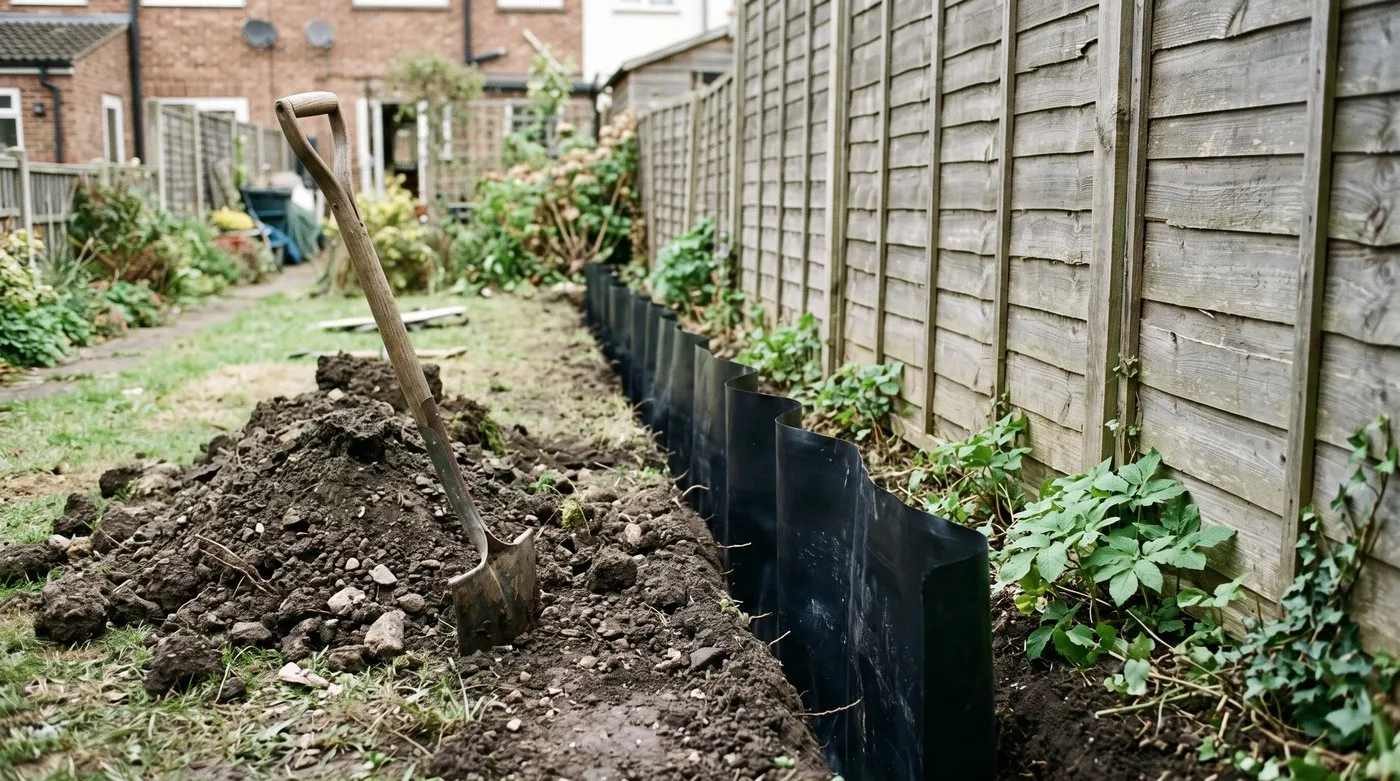
A barrier 40-60cm deep along the fence line stops roots creeping under from next door. Leave about 5cm showing above the soil.
What not to do
Don’t rotavate. It chops the roots into pieces and spreads them across the whole plot. One pass can turn one problem patch into a garden-wide one.
Don’t rely on one layer of cardboard. It only holds the weed back for a short while before it softens. Use it as part of a deep mulch, not on its own.
Don’t leave gaps in the polythene. Ground elder will find any lifted edge or loose join and grow out towards the light.
Don’t compost the roots. They can survive a home compost heap. Bag them for the green waste bin, or dry them in full sun on a hard surface until completely dead.
Don’t assume the variegated one is safe. It spreads just as badly and often turns back to plain green.
For other weeds that spread underground, see our guides on how to get rid of brambles and stopping weeds without chemicals.
How long will it take?
Clearing ground elder isn’t a one-season job. Here’s roughly what to expect.
| When | What you’ll see |
|---|---|
| Months 1-3 | Polythene down or first weedkiller treatments. Top growth gone, roots still alive. |
| Months 4-6 | Under polythene, the roots are weakening. With weedkiller, regrowth is noticeably weaker. |
| Months 6-12 | Under polythene, most roots are dying. With weedkiller, regrowth is thin and sparse. |
| Months 12-18 | Lift the polythene and remove the dead roots. With weedkiller, just odd spot treatments. |
| Years 2-3 | Keep a close eye out and deal with any regrowth straight away. Mulch and compost to build the soil back up. |
| Year 3 onwards | Light upkeep and the odd spot treatment. Check boundary barriers each year. |
A layer of mulch after clearing helps stop it coming back. Spread 5-8cm of wood chip or bark to smother seedlings and improve the soil for replanting. Garden Organic has more chemical-free tips.
Smothering works on another spring spreader too. See our guide to lesser celandine control.

Ground elder leaves come in groups of three leaflets on long stalks.

The white roots of ground elder. Any piece left in the soil can regrow, which is why digging alone rarely works.

Covering ground elder with black membrane is the most reliable chemical-free method. Leave it in place for 12-18 months.
Frequently asked questions
What is ground elder and why is it so hard to remove?
It’s a perennial weed that spreads by brittle underground roots. These white roots snap easily, and every little piece left in the soil can grow into a new plant. That’s why digging so often makes things worse. It’s one of the hardest garden weeds to clear, alongside bindweed and horsetail.
How long does it take to get rid of ground elder?
Usually two to three years of steady work. Covering it with black polythene for 12-18 months is the most reliable method without chemicals. With glyphosate, plan on several treatments a year for two seasons. Keep at it, as a missed cutting spell or a gap in the cover sets you back.
Does digging out ground elder work?
Not on its own, and it often makes it worse. The roots snap at every spade stroke, leaving lots of pieces that regrow. If you want to dig, cover the area with black polythene for a full season first, then dig out the dead roots. Never rotavate ground elder.
Will glyphosate kill ground elder permanently?
Not with one go, but repeat treatments work well. It travels from the leaves down into the roots, but some patches always survive the first treatment. Plan on several applications a season for two seasons on a bad patch. Treat in June to August when the plant is in full leaf.
Is variegated ground elder less invasive than the green form?
No, it spreads just as fast. It’s often sold as ground cover for shady spots, but it escapes into borders and next door just as easily. It can also revert to the plain green form, which grows even more strongly. Treat it exactly like the ordinary kind.
Can I compost ground elder?
Never compost the roots. They can survive a home compost heap and regrow wherever you spread it. Put them in the green waste bin, or dry them out on a hard surface in full sun until completely dead before composting. The leaves on their own are fine in a hot heap.
How do I stop ground elder coming from my neighbour’s garden?
Put a root barrier along the boundary. Bury tough plastic root barrier sheeting upright, 40-60cm deep, with joins overlapped by 30cm and taped. Leave about 5cm sticking up above the soil. Treat any ground elder that pops up on your side straight away, before it gets going.
Related reading
- Common garden weeds in the UK: a picture guide to over 20 weeds, including ground elder, horsetail and bindweed
- How to get rid of bindweed: another weed whose roots multiply when you dig
- How to get rid of brambles: clearing tough, woody weeds
- Organic weedkillers: alternatives to glyphosate that burn off the leaves
- What is mulch and how to use it: mulching after clearance to keep weeds away
Our team produces practical UK gardening guidance from source research, contributor records and established horticultural practice. Editorial standards are overseen by Matt W.