Key takeaways
- Pelargonic acid sprays brown weed leaves within hours but don't reach the roots
- Every weedkiller must be authorised, so look for a MAPP number on the label
- Vinegar, salt and other homemade mixes aren't legal weedkillers in the UK
- Boiling water and weed burners clear paths, but perennials grow back and need repeat treatment
- Mulch at least 5cm deep stops most weed seeds sprouting
- Hoe on a dry, warm or windy day so seedlings shrivel before they can seed
Organic weedkillers let you tackle weeds without synthetic weedkillers, but they work a bit differently. Most only kill the leaves they touch, so they’re great on annual weeds and less so on deep-rooted perennials. Knowing what each method can do saves you time and money.
Glyphosate is still legal for home use in Great Britain, with HSE approval extended to 15 December 2026 while it’s reviewed. If you’d rather avoid it, there are good alternatives for most jobs. Here’s what’s available, where each one works best, and why homemade mixes are off the table.
Why Choose Organic Weed Control?
Organic weed control keeps synthetic weedkillers out of your beds, paths and wildlife areas. Glyphosate travels from the leaves down to the roots. Organic-style sprays such as pelargonic acid only damage the parts they touch.
People choose organic methods for all sorts of reasons. Some don’t want weedkillers near food crops. Wildlife gardeners avoid spraying near ponds. Others just prefer a gentler approach.
There is a trade-off. Contact weedkillers kill what they touch, but nothing underground. That’s fine for annual weeds on paths and patios. For deep-rooted weeds like bindweed or couch grass, you’ll need to combine methods.
Types of Organic Weed Control
Pelargonic Acid (Fatty Acid Herbicides)
Pelargonic acid is in most organic-style weedkillers sold in UK garden centres. It’s a fatty acid found naturally in many plants. It strips the waxy coat off leaves, so weeds wilt and brown within hours.
It damages any green plant it lands on, so spray carefully. It doesn’t stay active in the soil, so it won’t stop new seedlings. Check the label to see how soon you can sow or plant afterwards.
It doesn’t reach the roots. Annual weeds like chickweed, groundsel and hairy bittercress usually die after one spray. Perennial weeds grow back and need their new leaves treated again.
Vinegar and Salt
Vinegar and salt aren’t authorised weedkillers in the UK, so they’re not legal options. Vinegar does scorch leaves, which is why the idea gets shared so much online. There’s more on the law below.
Salt also builds up in the soil and can harm nearby plants and lawns long after the weed has gone. Pelargonic acid sprays do a similar job, legally.
Boiling Water

Boiling water from the kettle is the cheapest way to deal with weeds in paving cracks.
Boiling water kills annual weeds for next to nothing. Pour it straight from the kettle onto weeds in path cracks, between slabs and along drive edges. Perennial weeds lose their tops but grow back, so expect to repeat it a few times over the season.
It’s best on hard surfaces where you can aim carefully. In borders or lawns it would kill everything around the weed too. Carry the kettle with care and keep children and pets well away.
Flame Weeding

A weed burner clears weeds on gravel paths and drives in seconds.
A gas weed burner kills weed leaves with a quick blast of heat. You don’t need to char the weed, just heat it enough to wilt. A quick pass works better than holding the flame in one spot.
Weed burners are handy on paths, drives, gravel and between raised beds. They do carry a fire risk, though. Never use one in dry weather or near dry mulch, hedges, wooden fences or sheds.
For perennial weeds, a burner works like cutting them down. Each time they regrow, they use up some of their root’s energy. Keep burning off new growth and they slowly give up.
Manual Removal
Hand weeding is the only organic method that gets the roots out. For dandelions and dock, a long daisy grubber or weeding knife lifts the root cleanly when the soil is moist. For small annual weeds, a hoe skimmed through the top couple of centimetres of soil does the job fast.
Hoe on a warm, dry or windy day so the seedlings shrivel. On damp days they can root back in. A Dutch hoe, pushed forwards through the surface, is the quickest for bigger areas.
Weeds with spreading roots are trickier. Brambles and couch grass leave bits behind that regrow. Hand weeding plus mulching works far better than either on its own.
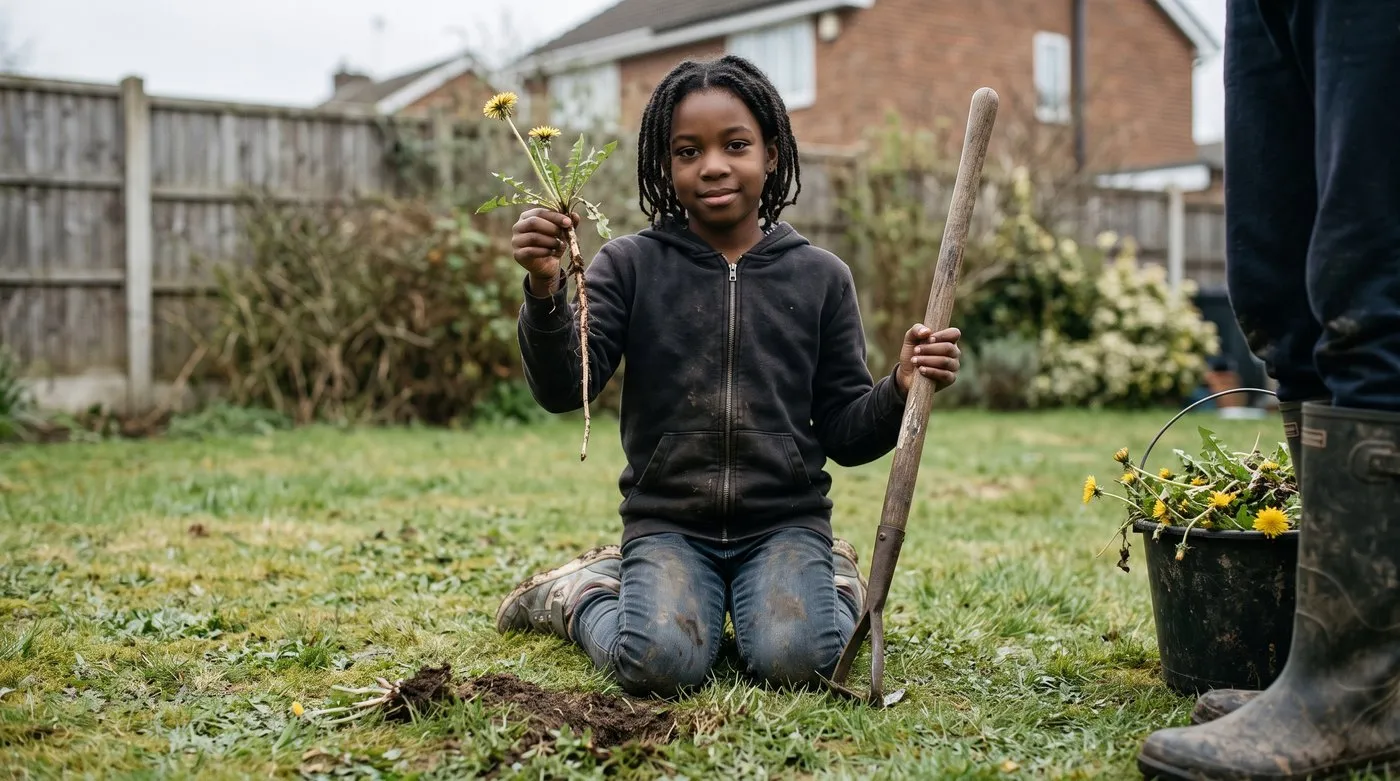
Lift dandelions when the soil is moist and the whole tap root slides out. Get it all and that one won’t be back.
Is It Legal to Use Vinegar or Salt as a Weedkiller in the UK?
No. Anything used to kill weeds counts as a pesticide, and it must be authorised first. HSE’s guidance for home and garden users warns that homemade remedies aren’t authorised and that household chemicals used as pesticides aren’t risk-free.
Vinegar, salt, bleach and washing-up liquid mixes aren’t authorised weedkillers. Giving or selling a homemade mix to someone else could also break the rules.
Physical methods are different. Hoeing, hand weeding, mulching, boiling water and weed burners aren’t pesticides, so they’re fine. If you want a spray, buy an authorised product and follow the label.
Organic Weedkiller Methods Compared
Here’s how the main legal methods stack up.
| Method | Annual weeds | Perennial weeds | Best place | Downside |
|---|---|---|---|---|
| Hand weeding and hoeing | Kills them | Gets roots out with care | Beds, borders, veg plots | Hard work, and root bits regrow |
| Pelargonic acid spray | Usually kills them | Tops only | Paths, patios, cleared ground | Needs repeating, hits any plant |
| Weed burner | Kills seedlings | Tops only | Gravel, paving, drives | Fire risk |
| Boiling water | Kills them | Tops only | Paving cracks | Small areas only |
| Mulch | Stops them sprouting | Weakens them if thick | Beds and borders | Needs topping up |
Only hand weeding deals with roots directly. The rest work by knocking weeds back again and again, or by cutting off their light.
Choosing an Authorised Organic Weedkiller
Pick a product with a MAPP number on the label. That number shows it’s authorised in the UK. Most organic-style weedkillers use pelargonic acid, sometimes listed as fatty acids. You’ll find ready-to-use trigger sprays and concentrates for a watering can.
How Can You Tell If a Weedkiller Is Legally Authorised?
Look for the MAPP number, then search for it in HSE’s garden pesticide database. The database lists every product authorised for garden use. If a product isn’t there, it’s probably no longer authorised and so can’t legally be used.
Withdrawn products have a final use-by date, which the database also shows. That’s handy for old bottles in the shed. If one is past its date, take it to your council tip. Never pour weedkiller down a drain.
The label also says where you can use the product, such as paths or around ornamentals. Stick to those places.
Seasonal Weed Control Guide
Different methods suit different times of year.
| Season | Months | Main weeds | Best method | Tips |
|---|---|---|---|---|
| Early spring | March-April | Annual seedlings like chickweed, hairy bittercress and groundsel | Hoeing on dry days | Catch them before they flower |
| Late spring | May-June | Fast annuals, plus dandelion, dock and bindweed coming up | Hand weeding, and a contact spray on paths | Dig out perennial roots where you can |
| Summer | July-August | Annuals setting seed, couch grass, ground elder | Weed burner on paths, mulch in beds | No burners in dry spells. Top up mulch on moist soil |
| Early autumn | September-October | A second flush of annuals | Hoeing and hand weeding | Clear them before winter |
| Late autumn and winter | November-February | Overwintering chickweed and bittercress | Mulch and hand weeding | Spread compost to stop spring seedlings |
Dealing With Specific UK Weeds
UK weeds fall into three groups, from easy to tough.
Annual Weeds (Easiest to Control)
Annual weeds live for one season, so stop them before they seed and you’ve won. Chickweed, groundsel, hairy bittercress and fat hen are common ones. A quick hoe or spray usually sees them off. Bittercress and chickweed can produce several generations a year, so keep at it.
Hoeing every few weeks from March to October stops annuals seeding. It sits nicely alongside no-dig gardening, where mulch does most of the work.
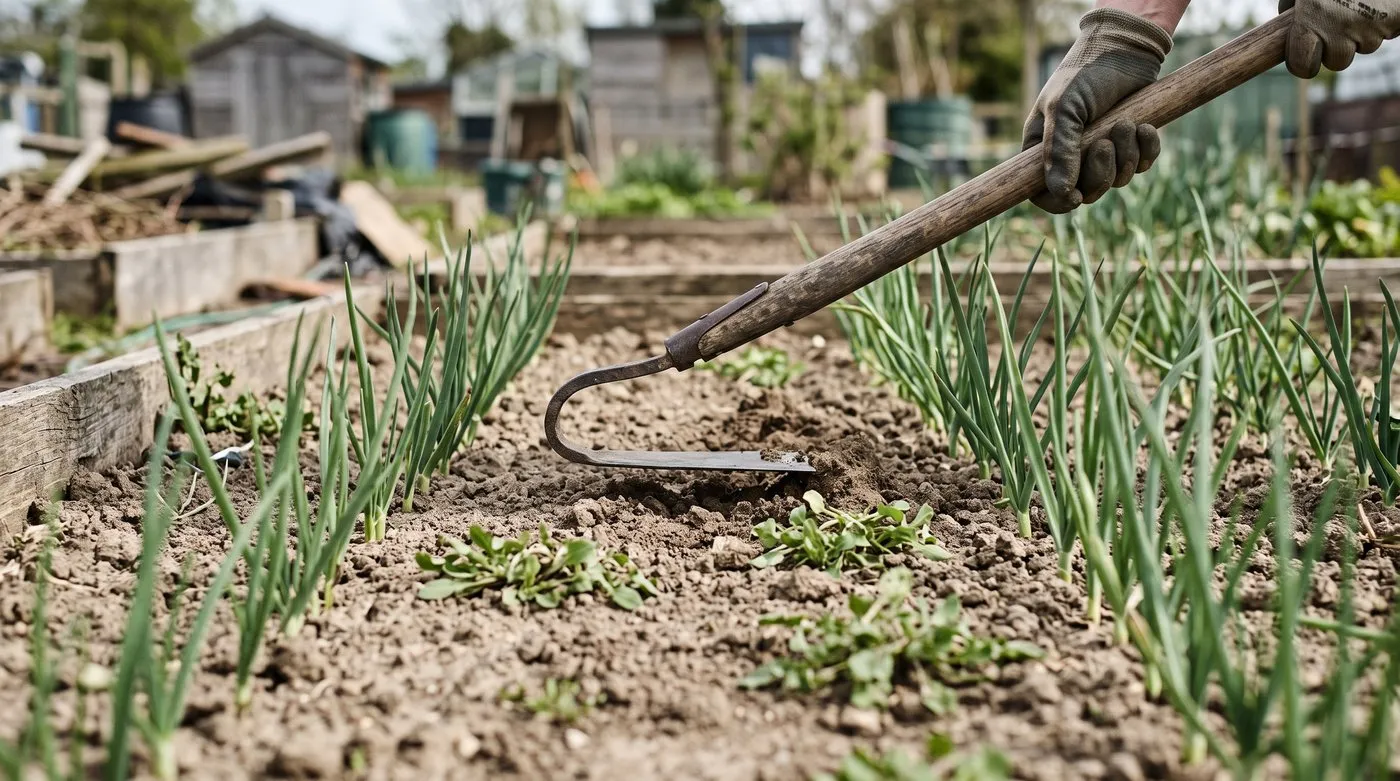
Hoe on a dry, breezy day and the seedlings shrivel where they fall. Catch annuals before they flower and you stop next year’s crop too.
Perennial Lawn and Border Weeds (Moderate Difficulty)
Dandelions, dock, plantain and creeping buttercup survive winter as roots and pop up again in spring. Contact sprays kill the leaves but not the root. Treating each new flush weakens them over a season.
Digging them out works better. Lift a dandelion with its whole root and it won’t come back. Creeping buttercup spreads by runners that root easily, so get those too. For lawns, see our guide to lawn weed identification and control.
Deep-Rooted Perennials (Hardest to Control)
Bindweed, couch grass, ground elder and horsetail are the toughest weeds to clear organically. Their roots go deep and regrow from tiny bits. No contact spray will beat them on its own.
Japanese knotweed is a special case. It’s against the law to plant it or let it spread into the wild, and letting it spread next door can land you in trouble. It’s very hard to clear without professional help. Our guide to Japanese knotweed identification explains the rules and your options.
How Do You Get Rid of Weeds Permanently Without Chemicals?
Get out every bit of root you can, then keep the rest in the dark until it gives up. On clear ground, dig out roots with a fork rather than a spade, which chops them into more pieces. Then cover the area with black plastic or weed membrane for at least a full growing season.
Where plants are in the way, pull or cut the weeds every time they show. Each regrowth uses up the root’s energy. Bindweed, ground elder and horsetail can take a few seasons to give up. Don’t put perennial roots on a cool compost heap, as they can survive. Drown them in a bucket of water for a few weeks first, or put them in the council green waste bin.
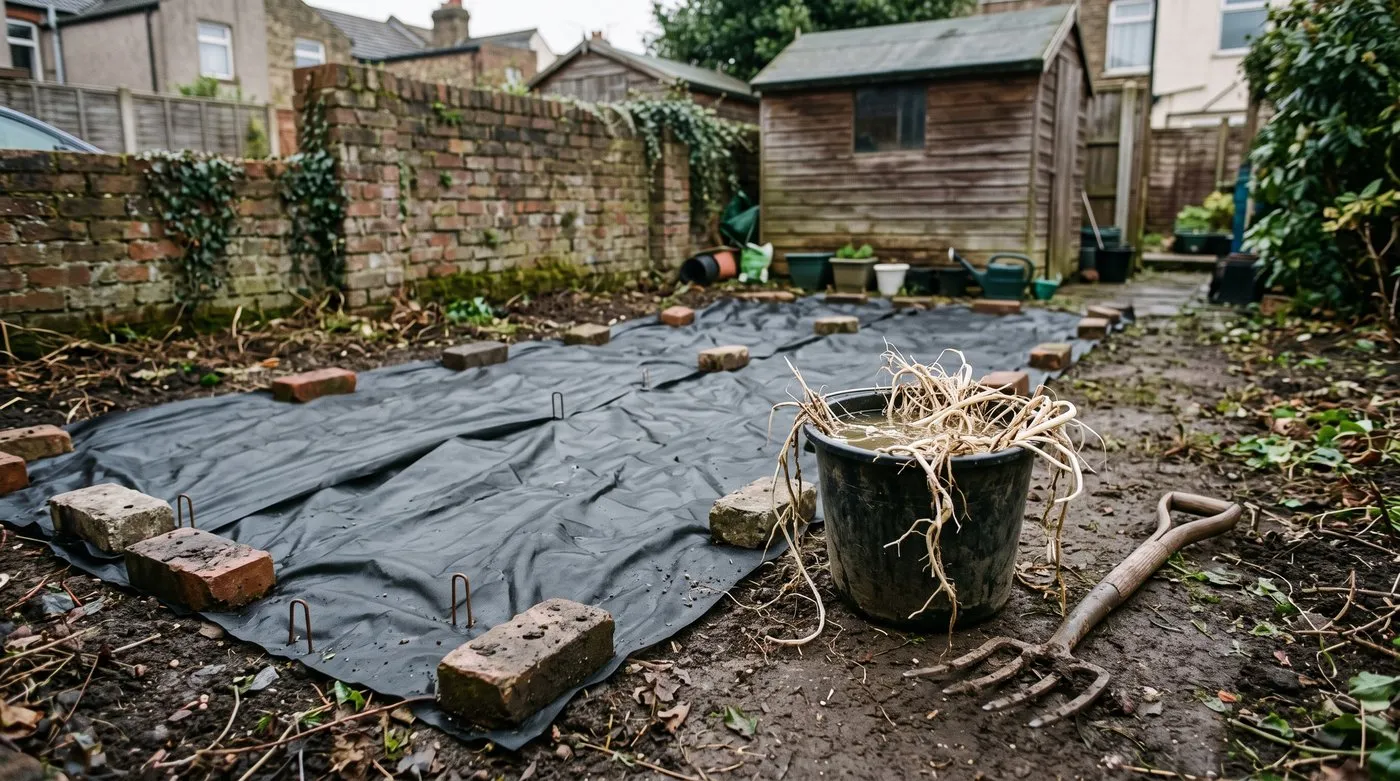
Dig out what roots you can with a fork, then keep the ground dark for a full season. Drown the roots in water before they go anywhere near the compost.
Weed Prevention Without Chemicals
Stopping weeds before they start is the easiest and cheapest trick of all.
Mulching

A thick layer of bark mulch around roses keeps weeds down and moisture in.
A layer of mulch at least 5cm deep blocks the light most weed seeds need. The RHS advice on non-chemical weed control suggests going thicker, 10-20cm, to smother existing weeds. Bark, wood chip, garden compost and well-rotted manure all work.
Spread mulch on moist, weed-free soil in spring or autumn and top it up each year. Keep it away from plant stems, which can rot if it’s piled against them.
Ground Cover Planting
Fill the gaps and weeds have nowhere to grow. Ground cover plants like hardy geraniums, ajuga and vinca make a living carpet that shades out weed seedlings.
No-Dig Methods
Not digging keeps buried weed seeds buried. Digging brings them up to the light, where they sprout. Spread compost on top and leave the soil alone instead. Over a few years, weeding gets much easier.
Path and Patio Maintenance
Weeds in paving grow from seeds that land in the cracks. Brush paths regularly to sweep away the bits they root into. Fill open joints with jointing compound or a dry mortar mix to close the gaps.
UK Legal Context
Every weedkiller sold or used in the UK, organic or not, must be authorised by HSE. Some products are only for professionals, so don’t use those at home.
Glyphosate is currently approved in Great Britain, and GB decides this separately from the EU. Whether you use it or go organic is up to you.
Garden Organic, the UK’s organic growing charity, has lots of helpful advice on common weeds. And our guide to no-dig gardening shows how leaving the soil alone cuts down weeding.
Frequently asked questions
Do organic weedkillers kill the roots?
No, they only kill the green parts they touch. Annual weeds usually die. Perennials such as bindweed, dandelion and couch grass grow back from their roots. Treating each new flush slowly weakens them, but expect it to take more than one season.
Is vinegar an effective weedkiller?
It can scorch leaves, but it isn’t a legal weedkiller in the UK. It doesn’t kill roots either. For a legal spray, choose an authorised pelargonic acid product. Or skip sprays and use a hoe, hand weeding, boiling water or a weed burner.
Are organic weedkillers safe for pets?
Check the label on the product you’re using. Most garden weedkiller labels say to keep children and pets off the area until the spray has dried. Boiling water and weed burners leave nothing behind, but keep pets well away while you work.
Is glyphosate banned in the UK?
No, glyphosate is still approved in Great Britain. HSE has extended its approval to 15 December 2026 while it reviews it. The EU renewed its own approval in 2023. Check the HSE garden database to see which glyphosate products are authorised for home use.
What is the cheapest organic weedkiller?
Boiling water from the kettle is the cheapest option. It works well on weeds in paving cracks. Annual weeds die, while perennials lose their tops and need treating again when they regrow. It kills any plant it touches, so keep it to hard surfaces.
When is the best time to use organic weedkillers?
Spray young, growing weeds on a dry day with no rain forecast. That’s usually between April and September. Rain soon after spraying can wash the product off. Check the label for drying times and any temperature limits.
Can I use organic weedkillers on my lawn?
No, they’ll scorch the grass as well as the weeds. For lawn weeds, dig out rosettes with a daisy grubber and don’t mow too short. Reseed bare patches in early autumn too. Thick, healthy grass crowds weeds out.
Our team produces practical UK gardening guidance from source research, contributor records and established horticultural practice. Editorial standards are overseen by Matt W.