Key takeaways
- Grow Bocking 14, a type of Russian comfrey that doesn't spread by seed
- Plant root cuttings about 5cm deep and 60-90cm apart in spring or early autumn
- Pick a permanent spot, as any root left behind regrows
- Cut the leaves 5cm above ground when about 60cm tall, several times a year from year two
- Use the leaves for liquid feed, as a mulch around tomatoes and potatoes, or in the compost heap
- Wear gloves to cut it, and never eat comfrey
Comfrey is a hardy perennial that gives you free plant food year after year. Its big, hairy leaves are rich in potash, the nutrient that helps plants flower and fruit. Cut them for liquid feed, lay them around tomatoes and potatoes, or add them to the compost heap. They regrow fast, so one patch keeps you going all summer.
This guide covers choosing, planting, cutting and using comfrey. To turn the leaves into feed, the comfrey liquid feed recipe has the step-by-step method. To multiply your plants, see the Bocking 14 propagation guide.
Which comfrey should you grow?
Grow Bocking 14. It is a type of Russian comfrey selected by the organic gardener Lawrence D Hills at Bocking in Essex in the 1950s. It doesn’t set seed, so it stays where you plant it, and it makes lots of large leaves.
| Comfrey | Spreads by seed? | Best for |
|---|---|---|
| Bocking 14 | No | Veg plots, allotments, feed and mulch |
| Common comfrey (Symphytum officinale) | Yes, freely | Wild corners, damp ground, wildlife areas |
| Russian comfrey (seed-raised) | Yes | Wilder areas only |
| Dwarf comfrey (Symphytum grandiflorum) | Yes, spreads | Ground cover in shade, not for feed |
Buy Bocking 14 as root cuttings or small plants from a specialist organic supplier. Garden centre comfreys are often ornamental types that spread by seed, so check the label.
Where to plant comfrey
Comfrey will be in that spot for years, so choose carefully. It grows in sun or part shade and copes with most soils. It is happiest in moist, fertile ground.
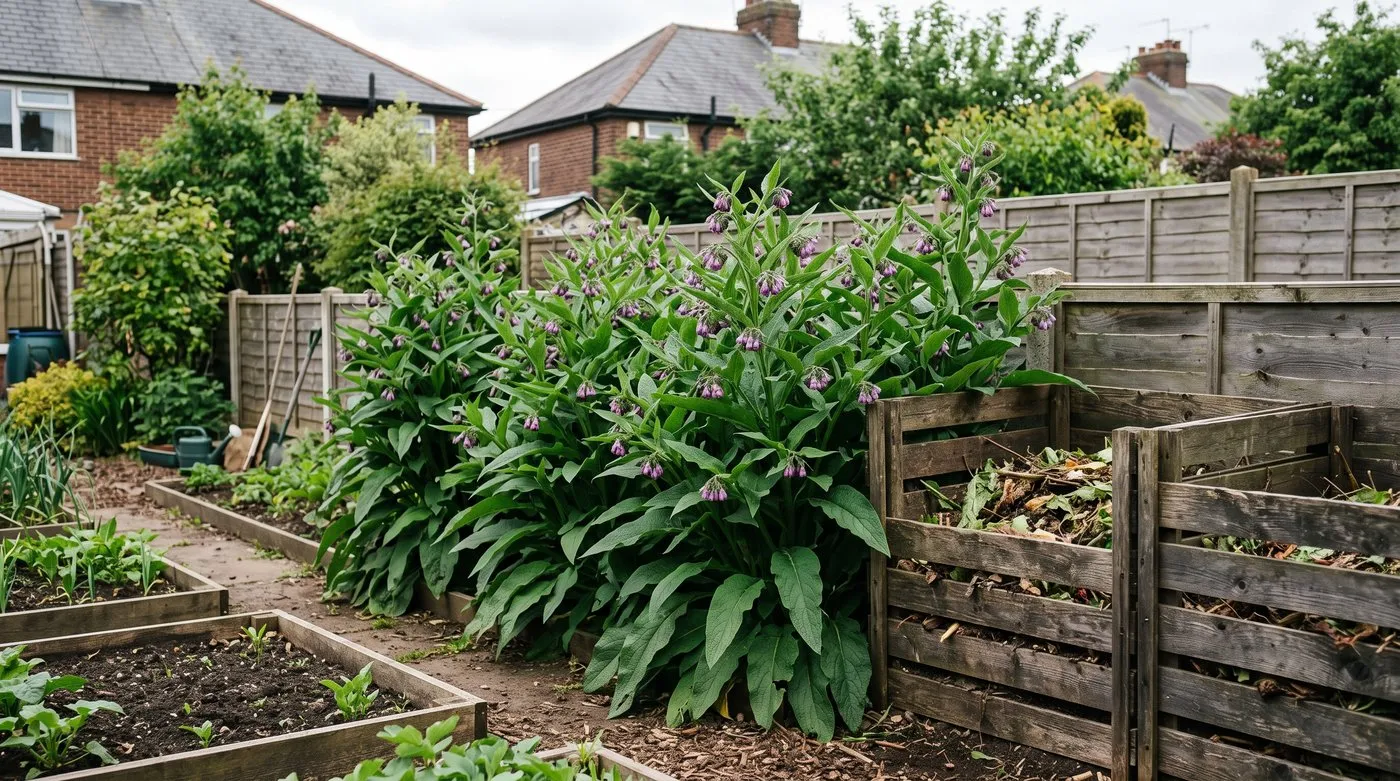
Next to the compost bins is a handy spot. The leaves don’t have far to travel and the plants are out of the way.
Good places are the edge of a veg plot or allotment, near the compost bins, or at the end of a bed where it won’t be in the way. Plants grow about 1m tall and wide when in flower.
Avoid anywhere you might want to dig up later. Comfrey has deep roots, and any bit left behind regrows. It is very hard to get rid of once settled.
How to plant comfrey root cuttings
Plant comfrey in spring or early autumn, when the soil is moist. Root cuttings look like pale lengths of root, about pencil thickness.
- Clear the ground of perennial weeds such as couch grass and bindweed.
- Dig in some well-rotted manure or compost.
- Plant each cutting about 5cm deep, laid flat or with the thicker end up.
- Space them 60-90cm apart.
- Water in and keep the soil moist until shoots appear.
Keep young plants weeded and watch for slugs on new shoots. In the first year, let the plant settle. Remove flower stems and take only a light cut, if any. From the second year it will be ready for regular cutting.

Root cuttings look like pale pieces of root. Lay them out first so the spacing is right, then plant each about 5cm deep.
When and how to cut comfrey
Cut comfrey when the plants are about 60cm tall, usually from late spring. Use shears or a sickle and cut all the leaves about 5cm above the ground.
It regrows quickly. An established plant can usually be cut three or four times, or more in a good year, every few weeks until September. Stop then so the plant can build up its roots for winter.
Wear gloves. The leaves and stems are covered in stiff hairs that can irritate skin.
Feed the patch once a year with a mulch of well-rotted manure or compost in late winter. That’s all it needs.

Cut the whole plant down to about 5cm. It bounces back within a few weeks, ready for the next cut. Gloves help with the prickly hairs.
The best ways to use comfrey leaves
Comfrey leaves break down fast and release their nutrients quickly. Here are the most useful ways to use them.
Comfrey liquid feed
This is the classic use. Pack leaves into a container, cover with water or a weighted lid and leave them to rot down for a few weeks. Dilute the liquid before using it on tomatoes, peppers, chillies, beans and fruit. It smells very strong, so keep it away from the house. The comfrey and nettle feed guide shows how to mix both into a feed for different crops.
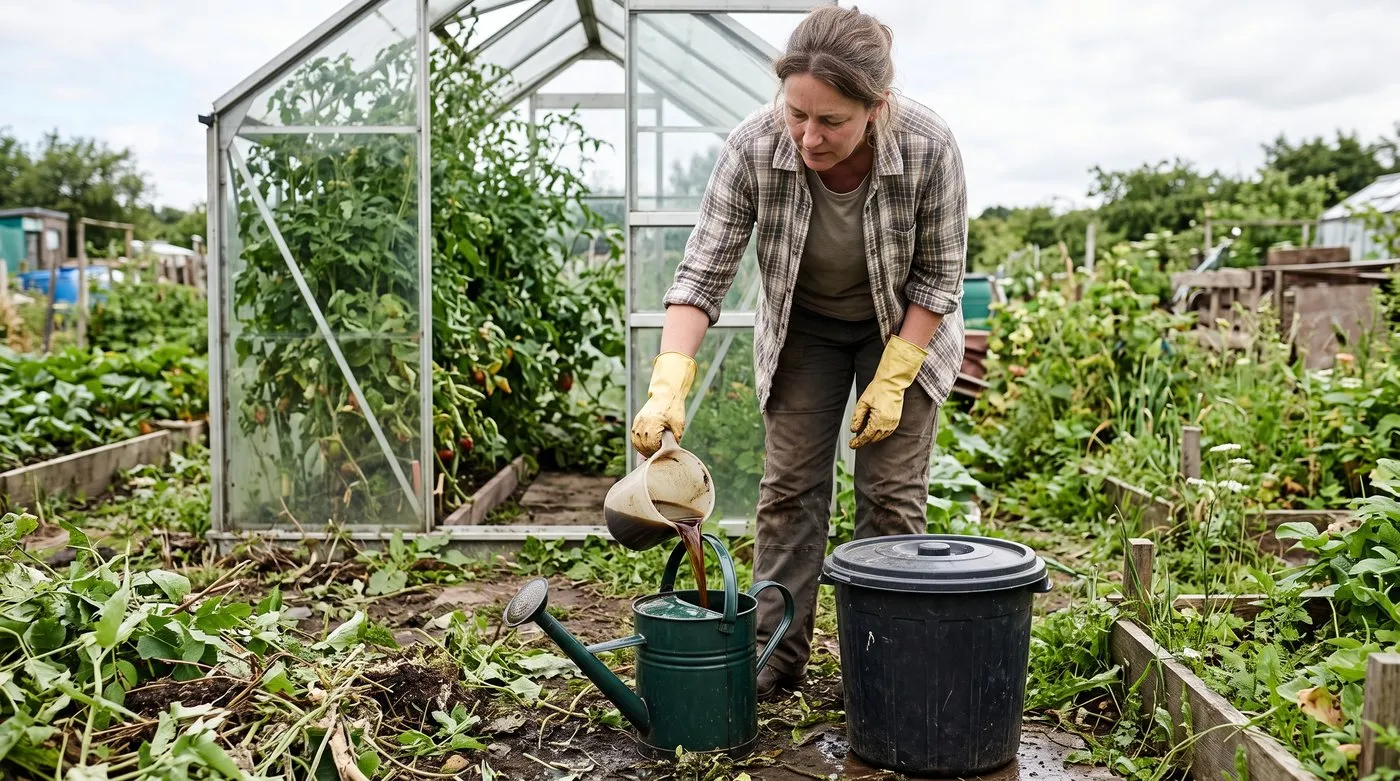
Always dilute comfrey liquid in a can of water before feeding. Gloves keep the strong smell off your hands.
Mulch for tomatoes and potatoes
Lay wilted leaves around tomato plants or along the bottom of a potato trench. They rot down in a few weeks and feed the plants as they go. Wilting them for a day or two first makes them easier to handle and quicker to rot.

A layer of wilted comfrey leaves around tomatoes rots down quickly and feeds the plants as it goes.
Compost heap booster
Add layers of fresh comfrey leaves to the compost heap. They help get it going, especially when the heap has a lot of dry, brown material such as straw or cardboard.
Bees and wildlife
Bumblebees love comfrey flowers. Leave a plant or two to flower between cuts and you’ll have a steady stream of visitors from late spring to summer. The guide to bee-friendly plants has more ideas.

Leaving a plant or two to flower between cuts gives bumblebees a feast from late spring into summer.
How comfrey compares with other feeds
Comfrey feed is high in potash, so it suits crops grown for flowers and fruit. For leafy crops such as lettuce and cabbages, a feed with more nitrogen, such as nettle feed, suits better.
| Feed | Main nutrient | Best for |
|---|---|---|
| Comfrey | Potash | Tomatoes, peppers, beans, fruit, flowers |
| Nettle | Nitrogen | Leafy crops, young plants |
| Tomato feed (bought) | Potash | Tomatoes and fruiting crops in pots |
| Well-rotted manure | Balanced, slow | Soil improvement each winter |
The guide to the best fertilisers for gardens compares more options.
Comfrey problems and how to fix them
Comfrey is very easy and has few problems.
- Comfrey rust: orange spots on the undersides of leaves in damp summers. Cut affected plants down and bin the leaves. Fresh growth is usually clean.
- Powdery mildew: a white coating late in summer, especially in dry spells. Cut down and water well.
- Slugs: can eat newly planted cuttings. Check young shoots on damp evenings.
- Weeds: couch grass and bindweed can swamp young plants. Weed well in the first year.
Common mistakes with comfrey
Planting common comfrey on a veg plot. It self-seeds everywhere. Choose Bocking 14.
Planting in the wrong spot. Moving comfrey is very hard, as any root left behind regrows.
Rotavating near a clump. Every chopped piece of root grows into a new plant.
Cutting bare-handed. The hairs irritate skin. Wear gloves.
Cutting too late in autumn. Stop in September so the plant can build up for winter.
Is comfrey safe?
Comfrey is safe to grow and use in the garden. Don’t eat it or take it by mouth, as it contains natural compounds that can harm the liver. Keep pets and livestock from eating large amounts. If you are curious about traditional skin balms, the guide to comfrey’s medicinal uses explains the risks.
Frequently asked questions
What is the best comfrey variety to grow in the UK?
Bocking 14 is the best comfrey for most UK gardens. It is a Russian comfrey that doesn’t set seed, so it stays where you plant it. It makes plenty of large leaves for feed and mulch. Common comfrey self-seeds, so it suits wild corners rather than veg plots.
Can I grow comfrey from seed?
You can’t grow Bocking 14 from seed, as it doesn’t set seed. It is grown from root cuttings or by dividing a clump. Common comfrey can be grown from seed, but it then self-seeds around the garden.
How much comfrey do I need to feed a vegetable plot?
A handful of plants is enough for most plots. Four to six established Bocking 14 plants give plenty of leaves for liquid feed, potato trenches and the compost heap. Add more if you want lots of mulch too.
Is comfrey safe to eat?
No, don’t eat comfrey or take it by mouth. It contains natural compounds that can damage the liver. Using the leaves as feed, mulch or compost in the garden is fine.
Will comfrey take over my garden?
Bocking 14 won’t spread by seed, but it is hard to move. Small bits of root left in the soil grow into new plants. Choose its spot carefully and never rotavate near it.
When should I cut comfrey?
Cut comfrey when the plants are about 60cm tall, from late spring. Cut the leaves 5cm above the ground. It regrows quickly, so you can cut again every few weeks until September.
Once your patch is cropping, read the guide on how to feed garden plants to see where comfrey fits in your feeding plan, or browse more growing guides.
Our team produces practical UK gardening guidance from source research, contributor records and established horticultural practice. Editorial standards are overseen by Matt W.