
Key takeaways
- Sow indoors from late January to March, on the surface of the compost
- Celeriac is a slow grower, taking most of the year from sowing to harvest
- Plant out 30cm apart in rich, moist soil after the last frost
- Water steadily all summer, as dry spells make woody, hollow roots
- Pull off old outer leaves and side shoots from July so the root can swell
- Harvest from October to March, leaving roots in the ground under straw
Celeriac is one of the most underrated veg in British gardens. It grows big, knobbly roots with a lovely celery flavour that’s brilliant in soups, mash, gratins and remoulade. Raw, it’s crisp and nutty. Yet hardly anyone grows it, which is a shame, because it’s not hard once you know a couple of tricks.
Which celeriac varieties grow best in the UK?
A good variety makes celeriac much easier. Some give smoother roots with fewer side shoots, and some are less likely to bolt. All of these are easy to find from UK seed companies.
Monarch is the most popular choice for UK gardens. It makes large, smooth roots with fewer side shoots than older types, and white, full-flavoured flesh. It’s less likely to bolt, copes well with our up-and-down summers and stores well.
Prinz is a modern variety with smooth skin, so there’s less waste when you peel it. Roots are an even size and shape. It’s a good pick for northern gardens and first-timers.
Giant Prague is the old heritage favourite. The roots are big and tasty but rougher-skinned. It’s vigorous, forgiving and copes with heavier soil better than most, though it takes a little longer.
Brilliant grows smooth, round roots with clean white flesh. The flavour is milder and a bit nuttier than Monarch, which suits mash and gratins.
Mars is a compact variety with smaller, dense roots. It’s handy for small gardens and raised beds, and can go in a deep pot of at least 30cm.
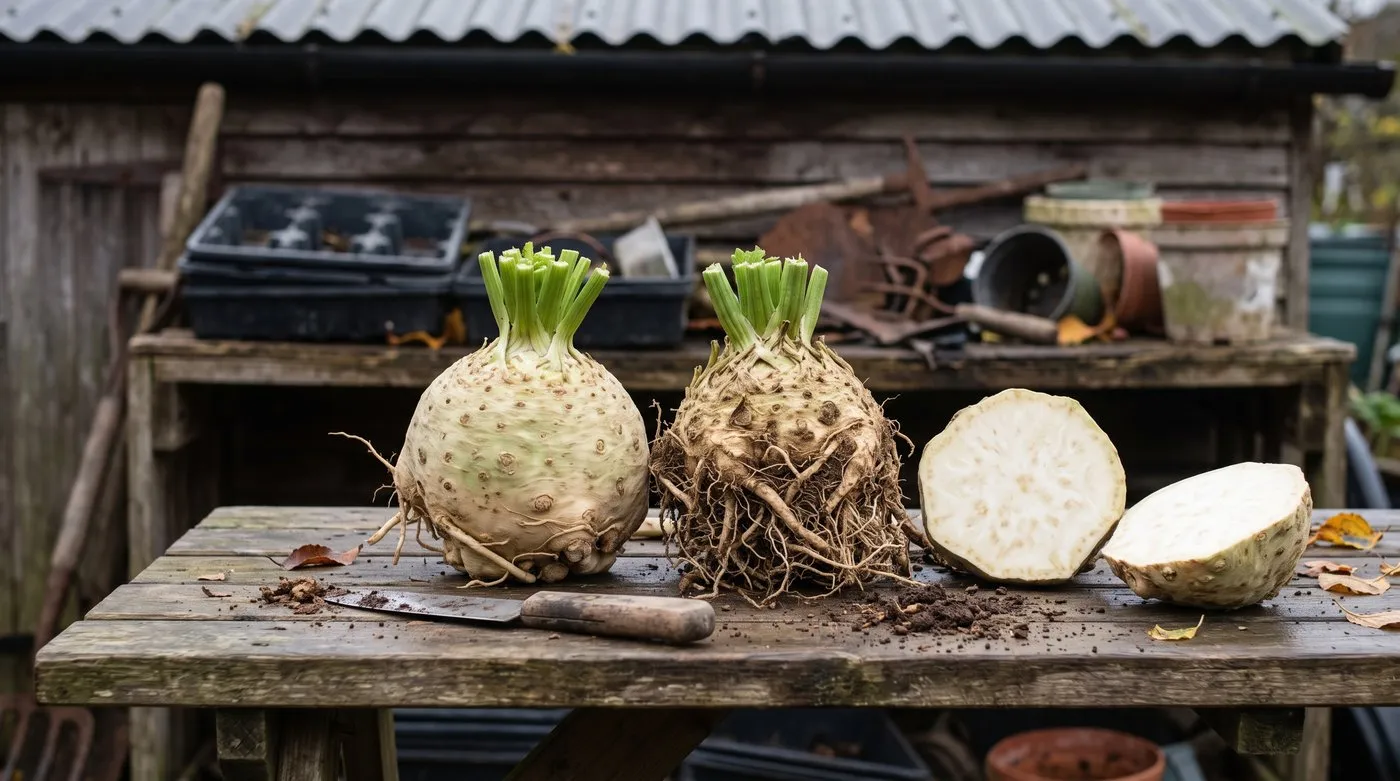
Modern smooth-skinned types mean far less waste when you peel them. Heritage roots are rougher but still full of flavour.
Varieties compared
| Variety | Root size | Skin | Flavour | Best for |
|---|---|---|---|---|
| Monarch | Large | Smooth | Strong | All-round, storing |
| Prinz | Medium-large | Very smooth | Medium-strong | Beginners, northern gardens |
| Giant Prague | Large | Rough | Strong | Heritage growing, heavy soil |
| Brilliant | Medium | Very smooth | Mild | Mash, gratins, easy peeling |
| Mars | Small-medium | Smooth | Strong | Small spaces, pots |
Handy tip: Monarch and Prinz are the two safest choices. If you have room, grow both and see which you prefer.
How to sow celeriac indoors
Celeriac must be started indoors. The season is far too long to sow it outside here. The seed needs gentle warmth to sprout, and the seedlings are slow for the first few weeks. Starting early gives the roots time to get to a good size before autumn.
When to sow
Sow from late January to early March. February is ideal for most of the UK. Sowing after mid-March often gives small roots.
How to sow
The seed is tiny and needs light to sprout. This is the most important thing to know. Don’t cover it with compost, or it won’t come up.
- Fill small pots or module trays with fine seed compost
- Water well and let it drain
- Scatter two or three seeds on the surface of each pot or cell
- Press them gently onto the compost with a flat piece of card
- Don’t cover them with compost or vermiculite
- Put them in a heated propagator
- Cover with a clear lid to keep them humid while letting light in
- Keep somewhere bright, like a windowsill or under grow lights
Seedlings take two to three weeks to appear, and often not all at once. Don’t give up on a tray too soon. Keep the compost moist but not soggy. A mist spray is better than a watering can, which can wash the tiny seeds off the surface.
Our guide to sowing seeds indoors covers kit and warmth in more detail.
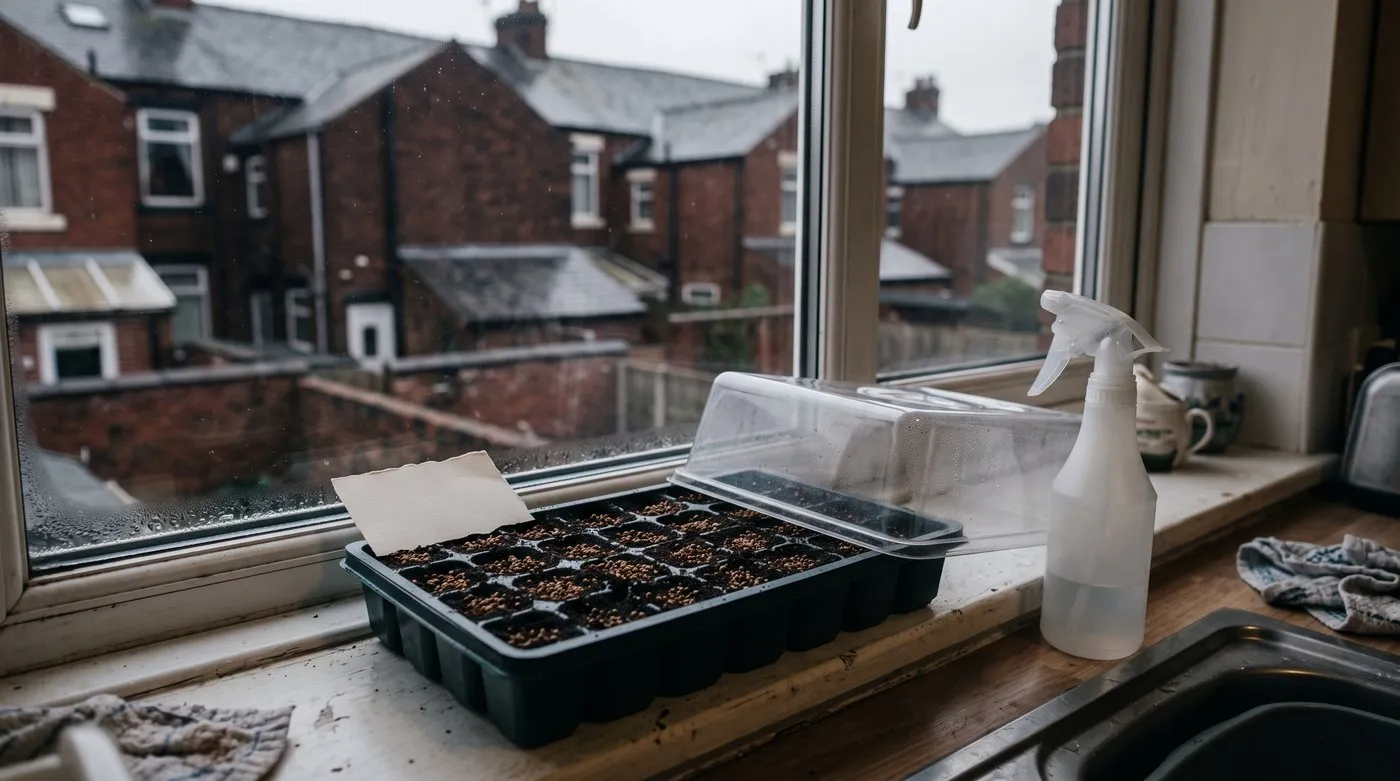
Celeriac seed needs light to sprout, so press it onto the surface and don’t cover it. Mist rather than water, so the seeds stay put.
Looking after seedlings
Celeriac seedlings grow painfully slowly for the first month or so. That’s normal, so don’t worry. Resist the urge to overwater or overfeed.
When they have two true leaves, thin to the strongest seedling per cell. If you sowed in pots, move each seedling into its own 7cm pot of multipurpose compost. Hold them by a leaf, never the stem.
Keep them warm and bright. Growth picks up from April as the days get lighter. Start hardening them off in early May: put them out during the day and bring them in at night for a week to ten days before planting.
Planting celeriac outdoors
Celeriac doesn’t like frost. Plant it out after the last frost, usually late May in the south and the first couple of weeks of June in northern England and Scotland.
Getting the soil ready
Celeriac wants rich soil that holds moisture, in sun or light shade. It’s a hungry, thirsty crop and sulks in thin, dry ground.
- Dig in plenty of well-rotted compost or manure a few weeks before planting
- The soil should hold moisture but not be waterlogged
- Avoid windy spots that dry the soil out fast
Celeriac grows well in raised beds of rich compost, as long as they’re at least 30cm deep and you keep on top of the watering.
How to plant
- Space plants 30cm apart, in rows 40cm apart
- Dig a hole a little bigger than the root ball
- Plant at the same depth it was in its pot
- Don’t bury the crown, as this leads to more side shoots and a poorer root
- Water well
- Mulch around each plant with compost or straw
The plants look small and fragile at first and grow slowly for a few weeks. The roots start to swell from midsummer.
Looking after celeriac through summer
Celeriac isn’t hard to look after, but two things matter most: water and tidying the leaves.
Watering
This is where most people go wrong. A dry spell makes woody, stringy, hollow roots, and you can’t undo it. A root that dries out in July will still be woody in November, however much you water later.
Water deeply and regularly all season. In dry weather, give each plant a good soak at least twice a week. A leaky hose along the row is ideal, as it waters steadily without wetting the leaves.
Mulching makes a big difference. Spread a 5-8cm layer of compost, straw or grass clippings around the plants in June to hold moisture and keep weeds down. Top it up as it breaks down.
Feeding
Give a balanced liquid feed, such as a seaweed feed, every two weeks from June to September. Avoid high-nitrogen feeds after midsummer, as they make leaves rather than root.
If your soil is rich and you added plenty of compost, you may not need to feed much. Thin or sandy soils benefit most.
Removing old leaves and side shoots
From July, start pulling off the oldest outer leaves, especially any yellowing ones lying on the ground. This lets light and air reach the root and helps keep disease away.
At the same time, look for side shoots and little extra roots growing from the base. They steal energy from the main root, so snap or cut them off. Check every couple of weeks into autumn.
By late summer you should have a tuft of upright leaves on top of a swelling root that sits partly above the soil. That’s exactly how it should look.
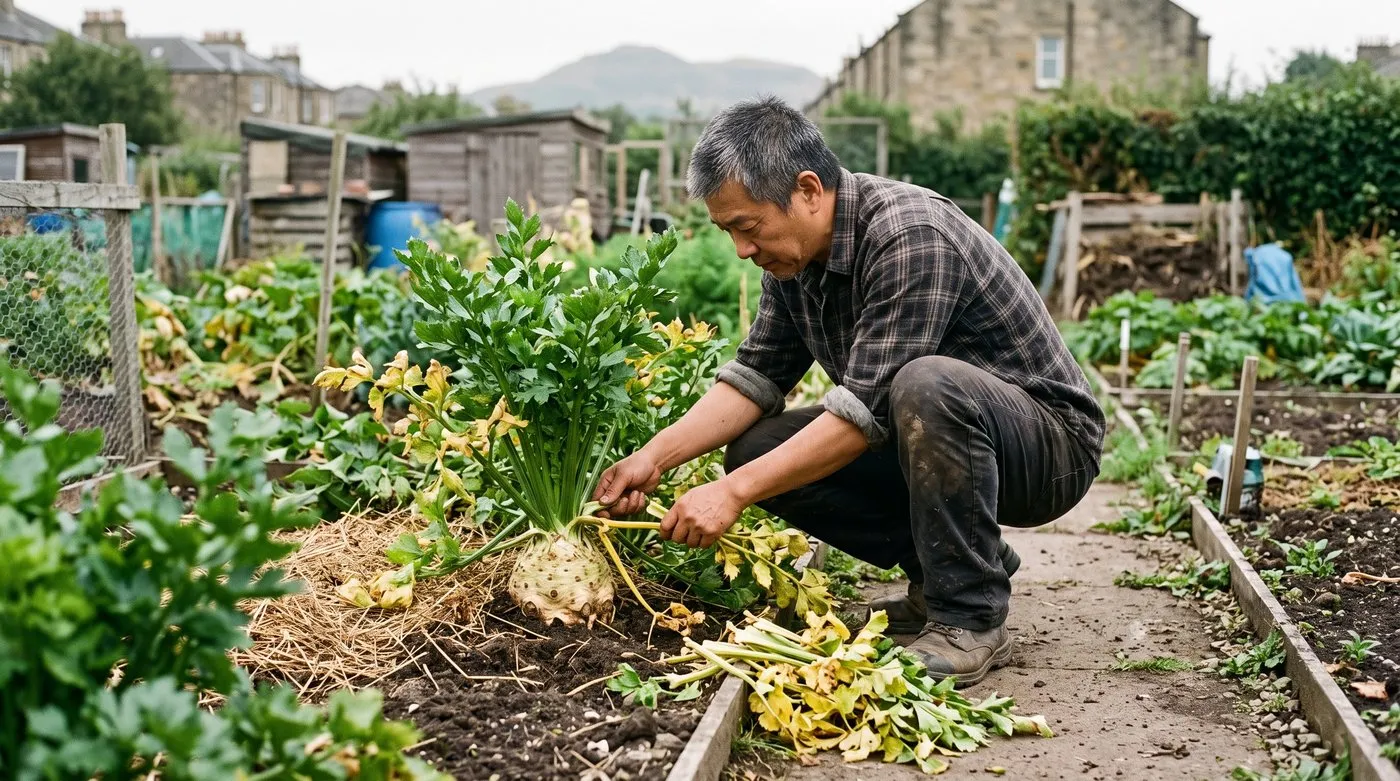
From July, pull off yellowing outer leaves and snap away side shoots at the base. It puts the plant’s energy into one good root.
Earthing up
Some growers pile soil around the swelling root to make the outside paler and milder. It’s optional, and it can give slugs somewhere to hide. Modern varieties do fine without it.
Celeriac pests and problems
Celeriac shares its problems with celery. The most common in UK gardens is celery leaf spot.
Celery leaf spot
This disease causes small brown spots with tiny black dots on the leaves. The spots join up and can kill whole leaves. It spreads fast in wet weather and through splashing water.
What to do:
- Pick off affected leaves straight away and bin them, not on the compost heap
- Water at the base, not over the leaves
- Space plants 30cm apart so air can move around them
The RHS guide to celery leaf spot has more on spotting and managing it.
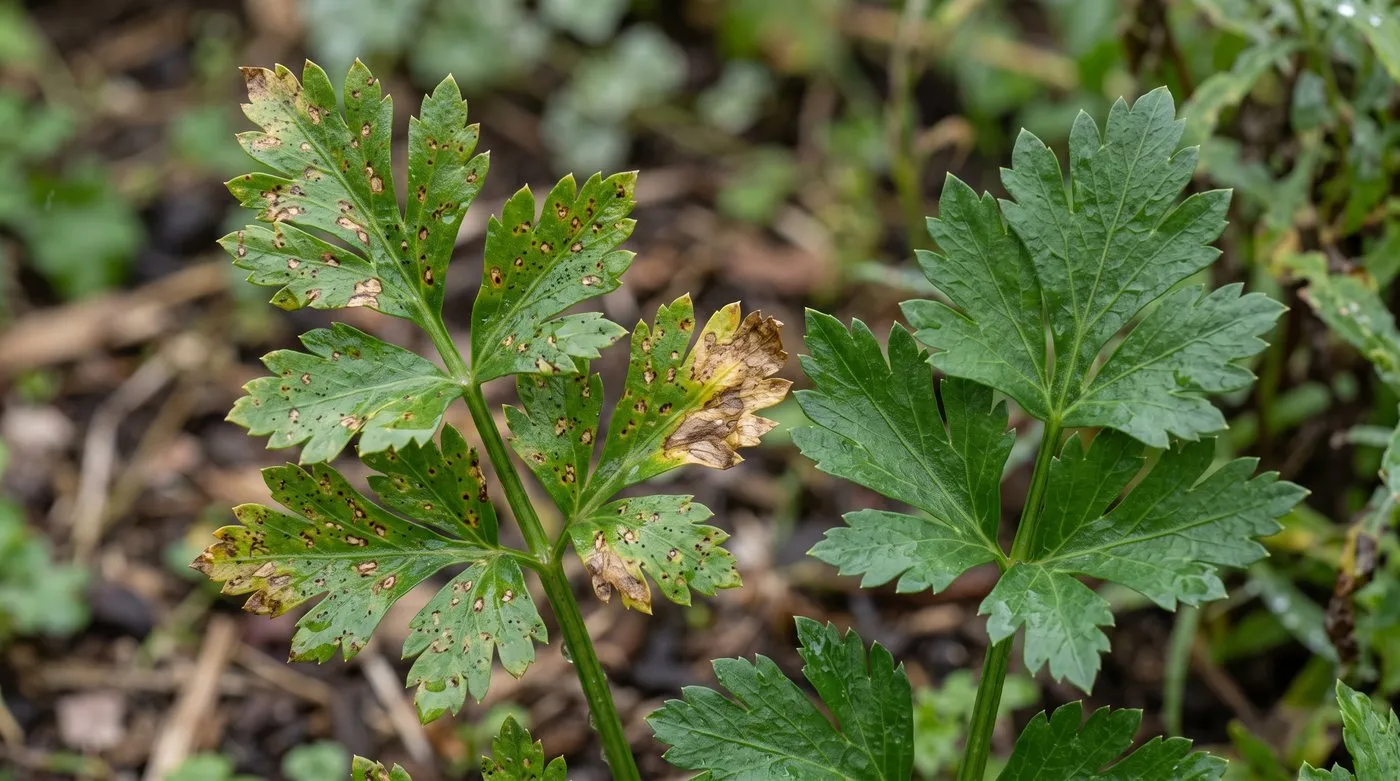
Brown spots with tiny black dots mean celery leaf spot. Pick affected leaves off and bin them, and water at the base to stop it splashing about.
Slugs and snails
Young plants are at risk for the first few weeks after planting, and slugs can flatten a row overnight. Use wildlife-friendly slug pellets (ferric phosphate) or beer traps. Once plants are growing strongly, slugs are less of a worry.
Carrot fly
Celeriac is related to carrots and can sometimes get carrot fly, though less often. If carrot fly is a problem in your garden, put up a fine mesh barrier at least 60cm high around the bed.
Bolting
Celeriac can bolt (run to seed) if it gets too cold after planting out. This is most likely in a cold spring or if plants go out too early. Wait until after the last frost and harden them off properly.
Month-by-month celeriac calendar
This covers the whole season. In northern England and Scotland, do things a couple of weeks later.
| Month | What to do |
|---|---|
| January (late) | First sowings indoors in a heated propagator. Sow on the surface and don’t cover |
| February | Main sowing month. Move early seedlings into their own 7cm pots |
| March | Last sowings. Keep potting on. Start feeding seedlings with a weak liquid feed |
| April | Pot strong plants into 9cm pots if roots fill their pots. Growth speeds up |
| May | Harden off from early May. Plant out after the last frost (late May in the south) |
| June | Plant out in the north. Water regularly. Mulch. Start liquid feeding |
| July | Start pulling off old outer leaves and side shoots |
| August | Keep removing leaves and side shoots. Soak twice a week in dry spells |
| September | Roots swelling nicely. Feed less, keep watering. Remove any spotty leaves |
| October | First harvests after a frost. Tuck straw around the rest for winter |
| November | Keep harvesting as needed. The roots get sweeter in cold weather |
| December to March | Lift as you need them. Top up the straw if it blows away |
Harvesting celeriac
Celeriac is ready from October, once the roots are 10-15cm across. No need to lift them all at once, as they keep well in the ground all winter.
When to start
Celeriac tastes sweeter after a frost. If you can, wait for a frosty night or two before your first harvest. October roots are fine to eat, but December and January ones often taste better.
How to harvest
- Cut away the outer leaves close to the crown
- Push a fork into the soil about 15cm from the root
- Lever the root up gently
- Lift it and shake off loose soil
- Trim off the small roots and leaf stems
Don’t be put off by the knobbly outside. Once peeled, the white flesh inside is the prize.
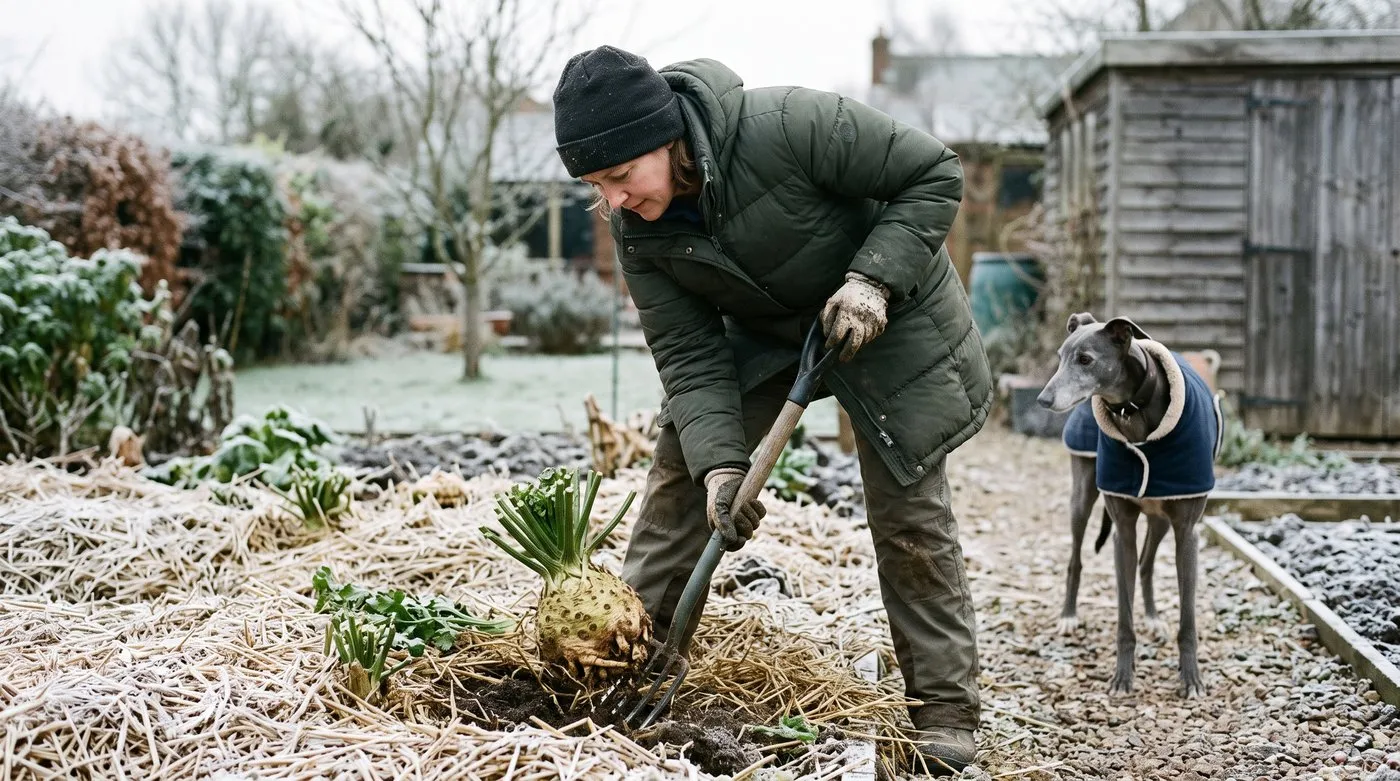
Push the fork in a little way from the root and lever gently. Roots lifted after a frost or two taste noticeably sweeter.
Leaving roots in the ground
The easiest way to store celeriac is to leave it in the ground and lift it as you need it. In October, tuck a thick layer of straw mulch, 10-15cm deep, around and over the plants.
In most of England and Wales this works from October to March. In very cold areas or a harsh winter, straw may not be enough, so lift the rest in December and store them indoors.
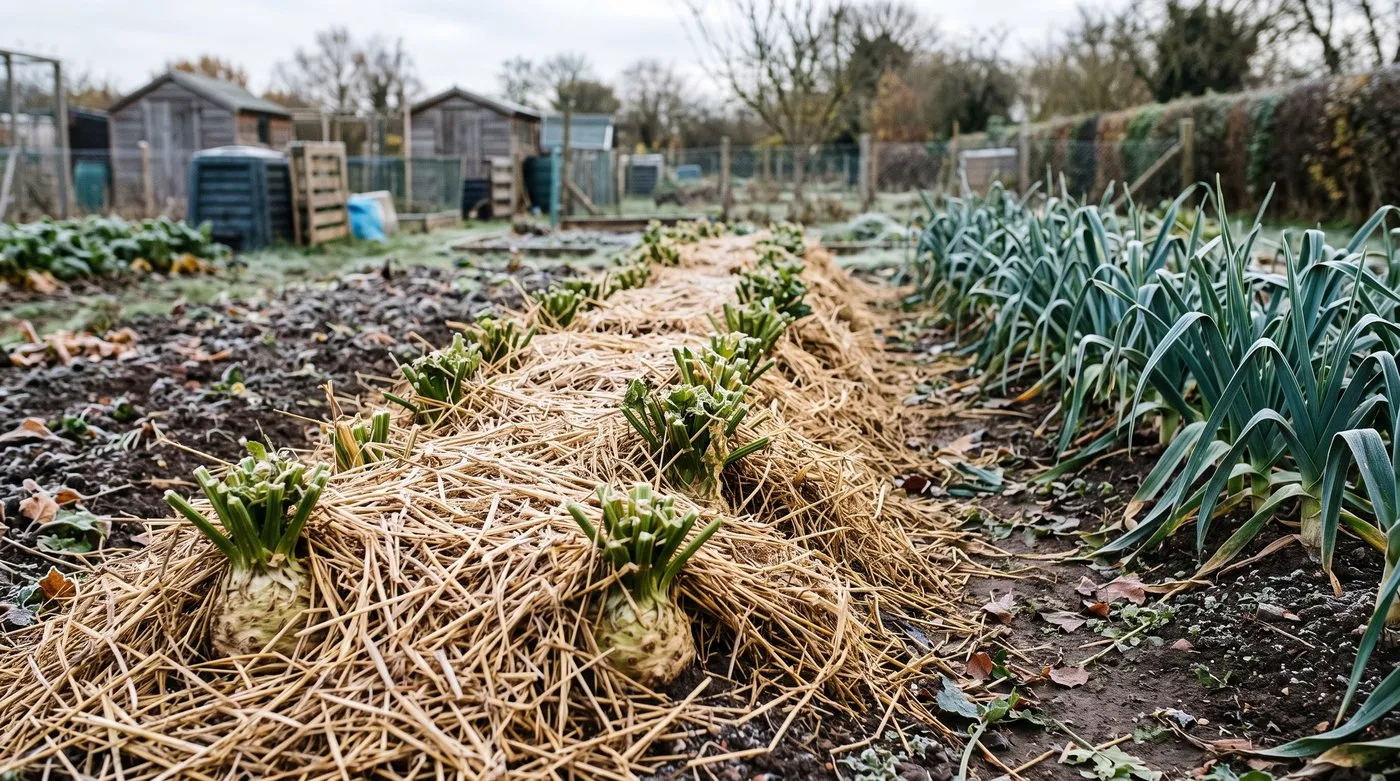
A thick straw blanket lets you leave celeriac in the ground and lift it as you need it. In a really harsh winter, lift the rest and store it indoors.
Storing lifted celeriac
If you’d rather lift your roots, or need the bed back, celeriac stores well for a while.
In sand
- Trim the leaves to 3cm above the crown
- Brush off loose soil but don’t wash
- Layer the roots in boxes of damp sand so they don’t touch
- Keep them somewhere cool, dark and frost-free
- Check monthly and remove any soft or mouldy ones
Stored this way, they keep for a couple of months. A garage, unheated shed or cellar works well.
In the freezer
Peel and cut into 2cm cubes. Blanch in boiling water for 3 minutes, cool in iced water, drain and freeze in portions. It softens when thawed, so it’s best for soups, stews and mash.
Cooking with celeriac
Celeriac is wonderfully versatile. Celeriac remoulade, grated raw with mustardy mayonnaise, shows off its crisp, nutty flavour. Celeriac mash with butter and cream is a treat. Roasted, it turns sweet and golden. It’s also great in gratins, soups and as oven-baked chips.
Five common celeriac mistakes
These cause most celeriac failures. Dodge them and you’re well on your way.
1. Covering the seeds
This is the most common reason seed doesn’t come up. Celeriac seed needs light to sprout. Press it onto the surface and leave it uncovered. A clear lid keeps it humid.
2. Sowing too late
Celeriac needs a long season. Seed sown after mid-March rarely makes a decent root, as it simply runs out of time. Aim for February.
3. Letting the soil dry out
Dry soil is celeriac’s worst enemy. Even a few dry days from June to September can make the root woody and hollow. Water steadily and mulch thickly. Set a reminder if you tend to forget.
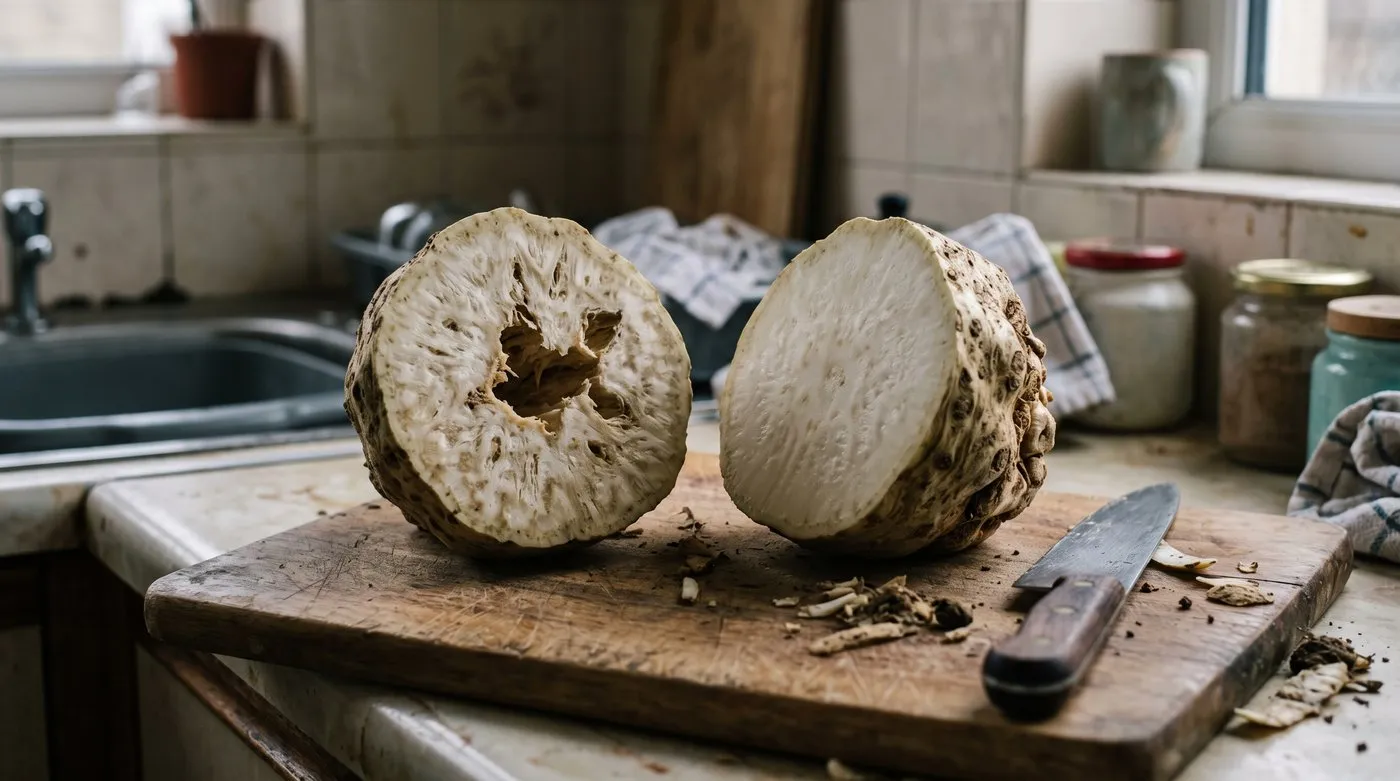
A hollow, woody middle comes from dry spells in summer, and later watering can’t undo it. Steady watering and a thick mulch give dense, crisp roots.
4. Leaving the side shoots
Side shoots and small extra roots at the base steal energy and make the root smaller and misshapen. Check every couple of weeks from July and snap them off. Remove the lowest yellow leaves at the same time.
5. Harvesting too early
Roots lifted before the first frost taste starchier and less sweet. Unless you need the space, leave them in the ground under straw and lift them through the winter.
Growing celeriac in raised beds and pots
Celeriac isn’t the best veg for pots, but it will grow in a big one. Raised beds are a better bet and solve a lot of soil problems.
Raised beds
A bed at least 30cm deep, filled with a rich compost mix, is ideal. It warms up faster in spring and you control the soil.
Pots
Use a pot at least 30cm deep and 30cm wide for each plant. Fill it with half multipurpose compost and half John Innes No. 3, which holds moisture better.
Pots need watering daily in warm weather and a liquid feed every week from June. You’ll get smaller roots than in the ground, but they taste just as good. Mars is the best variety for pots.
Good neighbours for celeriac
Celeriac grows happily next to leeks, onions, garlic, cabbage-family crops and bush beans. Leeks and onions make especially good neighbours, as they like the same rich, moist soil.
Keep it away from carrots, parsley and their relatives. They share pests and diseases, so growing them together makes carrot fly and leaf spot more likely to spread.
In a crop rotation, celeriac goes with carrots, parsnips and celery. Follow it with peas and beans or cabbage-family crops the next year, and leave a few years before growing it in the same spot again. Our vegetable planting calendar can help you plan.
Now you’ve mastered celeriac, read our guide on growing carrots in the UK for another tasty root veg that likes similar soil preparation.
Frequently asked questions
When should I sow celeriac in the UK?
Sow indoors from late January to early March. Celeriac needs a long season, so early sowing really matters. Use a heated propagator and press the seed onto the compost surface without covering it. Seedlings take two to three weeks to appear and often come up patchily, so sow a few extra.
Why do celeriac seeds need light to germinate?
That’s simply how celeriac seed is made. It only sprouts when light reaches it, so burying it stops it coming up. Press the seed gently onto moist compost and leave it uncovered. A clear propagator lid keeps it humid while letting the light in.
Can I sow celeriac directly outdoors?
No, it won’t work in the UK. Our season is too short and the seed sprouts poorly in cold soil. Always start it indoors with gentle heat from late January. The seedlings grow very slowly at first and need shelter until late May.
Why is my celeriac woody and hollow inside?
It went short of water at some point. Celeriac needs steady moisture all summer, and even a few dry days can make the root stringy and hollow. Mulch around plants and give them a good soak twice a week in dry spells. Being regular matters more than giving lots at once.
When is celeriac ready to harvest?
From October, once roots are 10-15cm across. They taste sweeter after the first frost. Leave them in the ground under a thick straw mulch and lift them as you need them, right through to March in most of the UK.
How do I store celeriac after harvesting?
Leaving it in the ground under straw is easiest. For lifted roots, trim the leaves to 3cm, brush off the soil and store in boxes of damp sand somewhere cool and frost-free. They’ll keep for a couple of months. You can also peel, dice, blanch and freeze it.
What diseases affect celeriac in the UK?
Celery leaf spot is the most common problem. It causes brown spots with tiny black dots and spreads fast in wet weather. Pick off affected leaves and bin them, water at the base and space plants well. Protect young plants from slugs, and use a 60cm mesh barrier if carrot fly is a problem.
Our team produces practical UK gardening guidance from source research, contributor records and established horticultural practice. Editorial standards are overseen by Matt W.


