
Key takeaways
- Buy fresh parsnip seed every year, as old seed often fails to come up
- Sow straight into the ground from March to May, as parsnips hate being moved
- Seedlings can take two to four weeks to appear, so mark the row and be patient
- Sow three seeds every 15cm, then keep the strongest seedling at each spot
- They taste sweeter after a frost, so wait before you start lifting
- Leave them in the ground over winter and dig as needed until February
Parsnips are one of the great British winter vegetables. Few crops actually get better sitting in cold ground. A frost or two turns some of the starch into sugar, which gives home-grown parsnips their sweet, nutty taste.
You do need a little patience. The seed is slow, the roots take all season to grow, and the crop sits in the bed from spring right through to February. The reward is a vegetable that stores itself in the soil, ready to dig whenever you fancy a roast. To see where parsnips fit in your plans, have a look at our UK vegetable planting calendar.
Why parsnip seed must be fresh every year
This is the golden rule. Parsnip seed goes off much faster than most vegetable seed. Last year’s packet will often give you a row with big gaps, or nothing at all, however carefully you stored it.
Buy fresh seed every spring and check the sow-by date on the packet. If you’ve got leftovers from last year, pop them on the compost heap. Good, fresh seed matters just as much as the soil work you’d do when starting a vegetable garden.
Choosing the best parsnip varieties for UK gardens
There are two main groups: older traditional varieties, and modern F1 hybrids bred to resist canker and grow neat roots.
| Variety | Type | Root length | Canker resistance | Good for |
|---|---|---|---|---|
| Gladiator F1 | Hybrid | Long | Strong | All-round reliability, showing |
| Tender and True | Traditional | Very long | Good | Flavour, showing |
| Javelin F1 | Hybrid | Medium | Strong | Shallower soil, raised beds |
| Countess F1 | Hybrid | Long | Good | Heavier soils |
| Hollow Crown | Traditional | Long | Some | Deep, light soil |
Gladiator F1
Gladiator F1 is a favourite in UK gardens. It grows smooth, broad-shouldered roots with strong canker resistance. They taper neatly, so they’re easy to lift without snapping. If you only have room for one variety, this is a safe choice.
Tender and True
Tender and True is the classic show parsnip and has a lovely flavour. The roots are long and smooth. It resists canker well, though not quite as well as the F1s. Give it deep, well-dug soil so the roots can reach their full length.
Javelin F1
Javelin F1 grows shorter, neater roots that suit shallower soil and raised beds. Canker resistance is strong. It’s the practical pick if your topsoil is less than about 30cm deep. The roots are smaller than Gladiator but taste very good.
Countess F1
Countess F1 is a reliable hybrid that copes well with heavier soil. Its wedge-shaped roots push through clay better than very long varieties. Canker resistance is good, and you can often start lifting in late October.
Hollow Crown
Hollow Crown is an old British favourite, grown for well over a century. The roots are long and broad, with a little dip at the top where the leaves grow. It tastes great but is more prone to canker. Grow it in deep, light soil.
Gardener’s tip: If canker has been a problem before, choose Gladiator F1 or Javelin F1. A resistant variety makes the biggest difference.
How to prepare soil for parsnips
Parsnips want deep, loose soil with no stones. The roots head straight down, and anything in the way makes them fork or split.
Depth and texture
Dig or fork the bed to at least 30cm deep in late winter or early spring. Pick out every stone you can find. Break up any hard layers underneath, and work backwards so you don’t tread on the soil you’ve just loosened.
A light, sandy soil is ideal. Heavy clay is harder work but still doable. Mix in well-rotted compost to lighten the top layer. Adding organic matter to clay soil year after year slowly turns it into good growing ground.
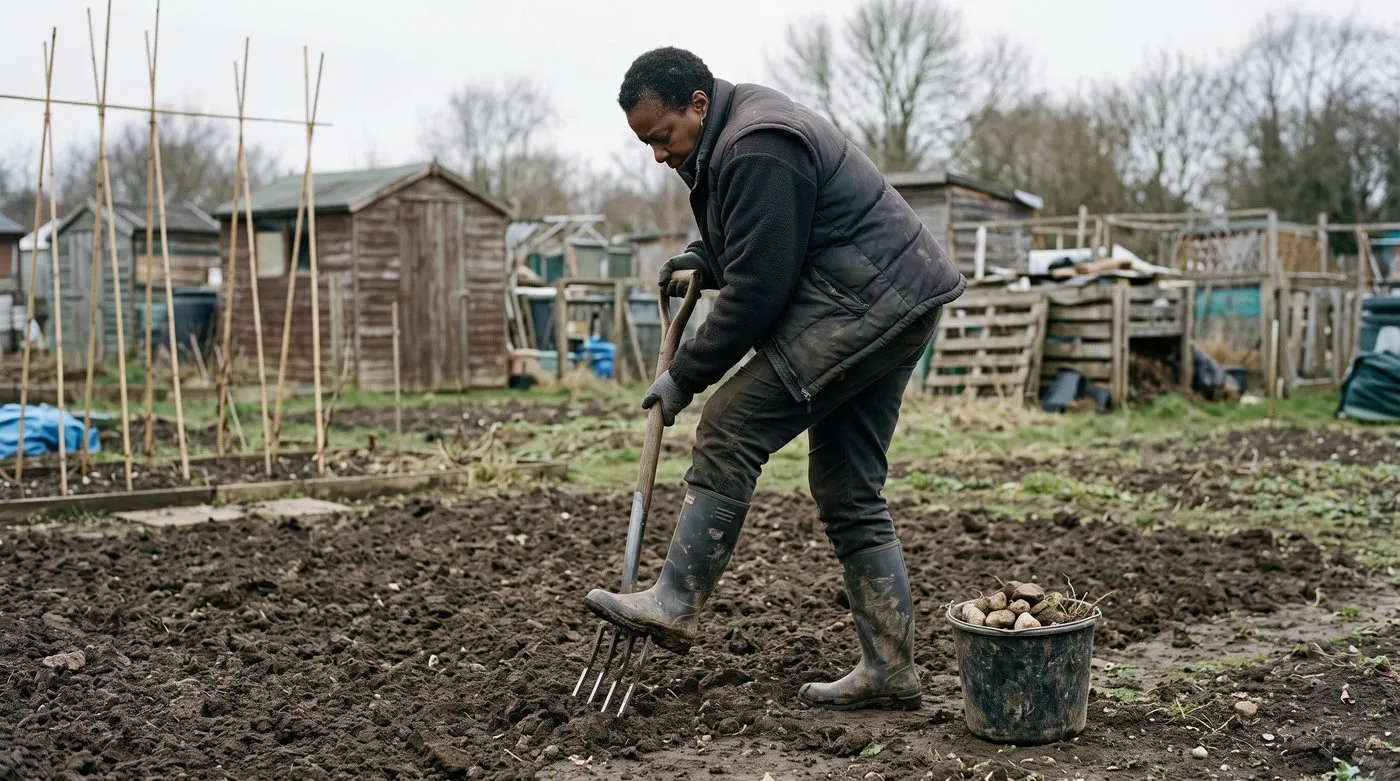
Fork to at least 30cm and pick out every stone you find. Work backwards so you don’t tread on the soil you’ve just loosened.
Manure and feeding
Never add fresh manure to a parsnip bed. Like carrots, parsnips fork when their roots hit rich pockets. If the soil needs help, dig in well-rotted compost or manure the autumn before so it breaks down over winter.
Parsnips aren’t greedy. A bed that grew cabbages, potatoes, peas or beans last year will have plenty left in it. If your soil is really poor, rake in a light sprinkle of general fertiliser before sowing, following the packet.
Raking to a fine finish
Rake the surface until the top few centimetres are fine and crumbly, with no lumps bigger than a fingertip. Tiny parsnip seedlings struggle to push through rough, lumpy soil.
When and how to sow parsnips
Parsnips are always sown straight where they’ll grow, as they hate being moved. Get the sowing right and the rest is easy.
When to sow
Sow straight into the ground from March to May. In southern England, mid-March is often fine. In the north, or on high ground, wait until April when the soil has warmed and dried out.
May sowings still give perfectly good roots by autumn, just a bit smaller. There’s no prize for sowing early into cold, wet soil, as the seed can simply rot.
Sowing in stations
Sow three seeds at each spot, 15cm apart along the row. Make a shallow drill 1-2cm deep, drop in three seeds, move 15cm along and repeat. Leave 30cm between rows.
This saves seed and makes thinning easy. When the seedlings are up, keep the strongest at each spot and snip the others off at soil level with scissors. Pulling them out can disturb the one you’re keeping.
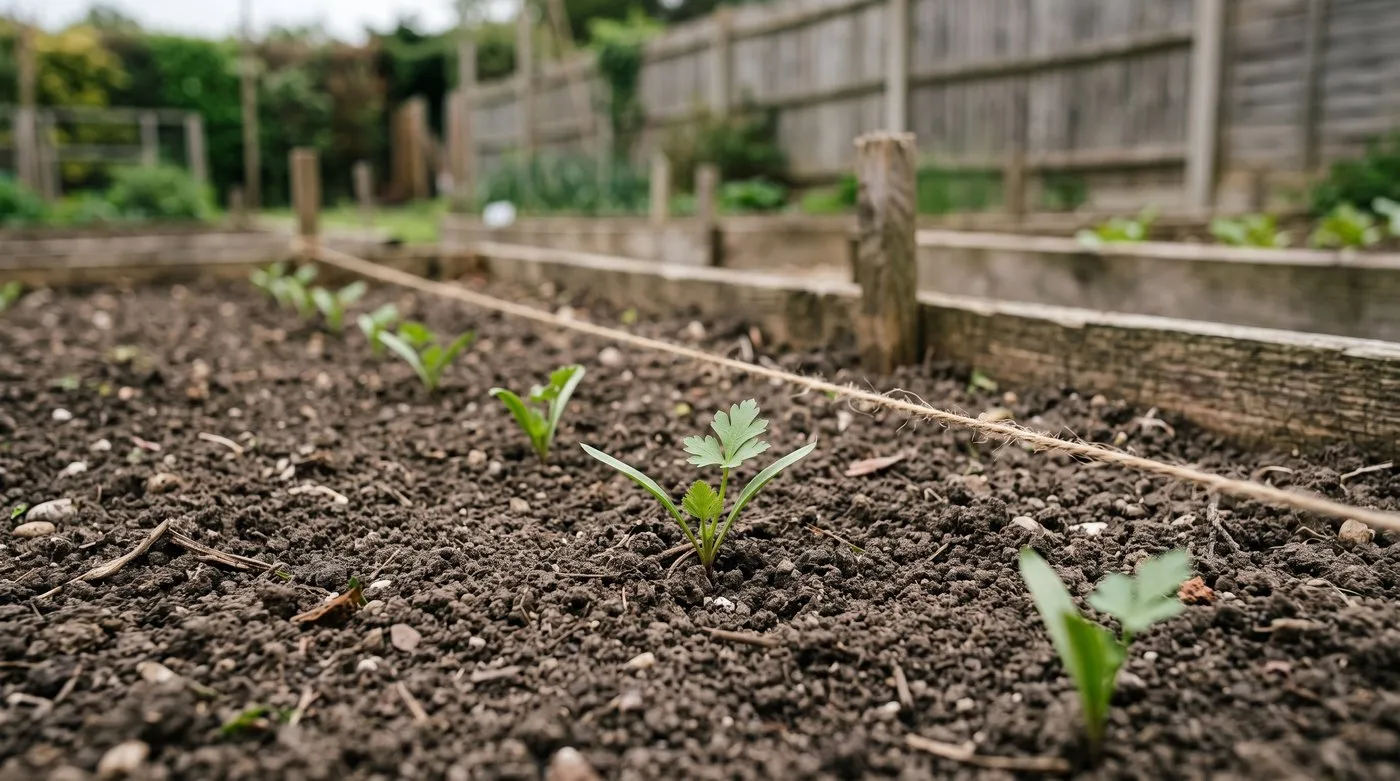
Keep the strongest seedling at each spot and snip the rest off at soil level. Pulling them out can disturb the one you want to keep.
Coping with slow seed
Parsnips can take two to four weeks to come up. Many first-timers think the sowing has failed after a fortnight. Don’t sow over the top of an empty-looking row, as the first seeds may still appear.
Mark the row with string or labels so you don’t hoe it by mistake. A handy trick is to sow a few radish seeds between the parsnip stations. Radishes pop up within a week or so, showing you where the row is, and you’ll have eaten them long before the parsnips need the room.
Keep the soil moist but not soggy while you wait. If spring turns dry, water gently with a fine rose so you don’t wash the seed away.
Looking after parsnips through the summer
Once they’re thinned, parsnips need very little help. They pretty much look after themselves all summer.
Watering
Established parsnips rarely need watering, as their long roots find moisture deep down. In a long dry spell, give them a good soak once a week rather than a little sprinkle every day.
Uneven watering makes roots split. A sudden soaking after a long dry spell makes the root swell faster than its skin can stretch. Split roots are still fine to eat, but they’re fiddly to peel and more likely to rot.
Weeding
Keep the bed weeded, especially for the first couple of months while the seedlings are small and slow. Hand-weed close to the plants and use a hoe between the rows.
By midsummer the leaves shade the soil and keep most weeds down for you.
Feeding
Parsnips don’t need feeding through the summer. Extra feed just makes lots of leaf. If the leaves turn pale, a seaweed feed is a gentle pick-me-up.
Earthing up
In September, draw a little soil up over the tops of the roots. This stops the shoulders turning green, and helps keep canker out of any cracks on the exposed tops.
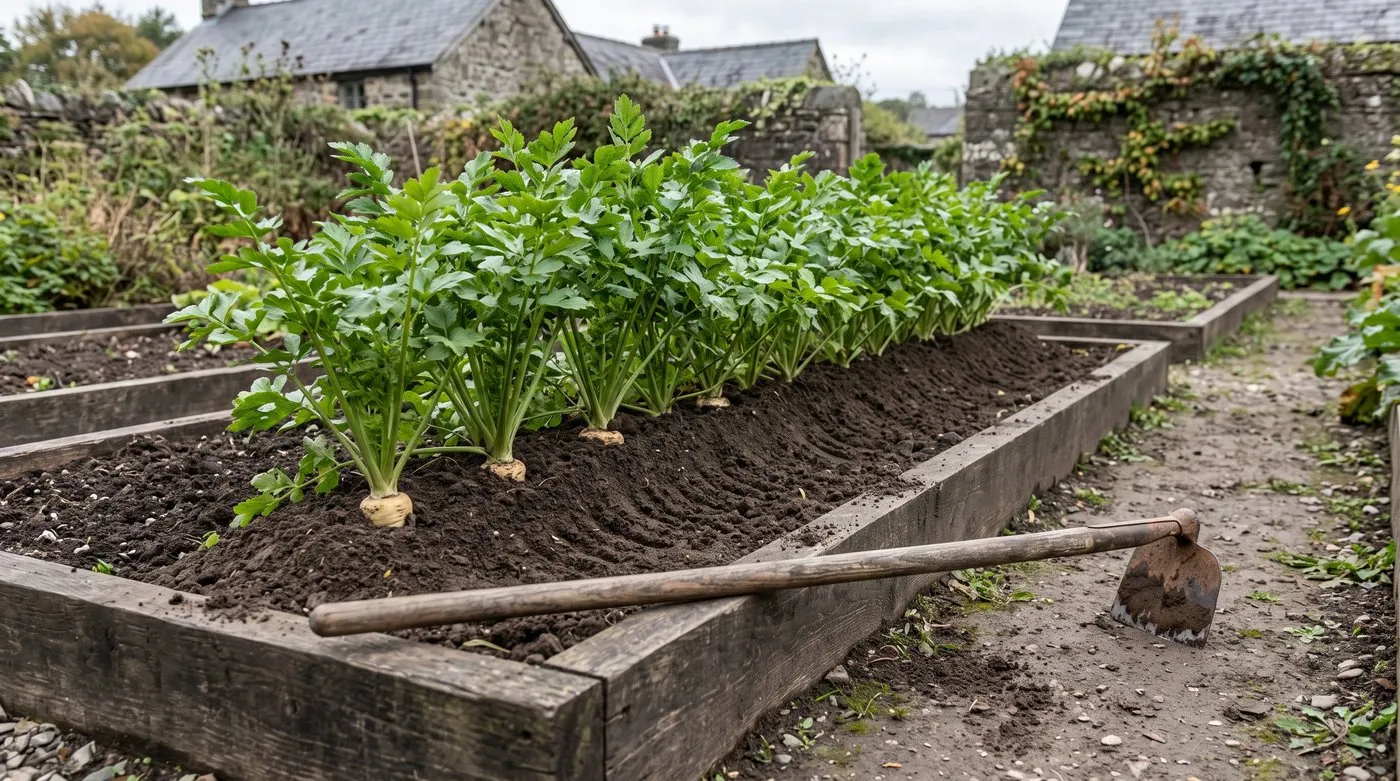
A few centimetres of soil over the tops stops the shoulders going green. It also helps keep canker out of any small cracks.
Parsnip month-by-month calendar
Here’s the parsnip year at a glance.
| Month | What to do |
|---|---|
| January | Order fresh seed for the new season |
| February | Dig the bed to 30cm deep and pick out stones. Add compost if needed |
| March | Sow in the south once the soil has warmed. Rake it fine first |
| April | Main sowing time for most of the UK. Mark rows and keep them moist |
| May | Last sowings. Thin each spot to one seedling |
| June | Weed by hand while the seedlings are small. Water only in dry spells |
| July | The leaves shade out weeds. Very little to do |
| August | Roots are swelling underground. Leave the bed be |
| September | Earth up the tops of the roots |
| October | Roots reach full size and the leaves start to die back |
| November | Start lifting after the first frost |
| December to February | Lift as needed. Clear the bed before it regrows in March |
How to stop parsnip canker
Parsnip canker is the most common parsnip problem in UK gardens. It shows as rough, orange-brown, rotting patches on the top of the root. Cut the damaged bit away and the rest of the root is fine to eat.
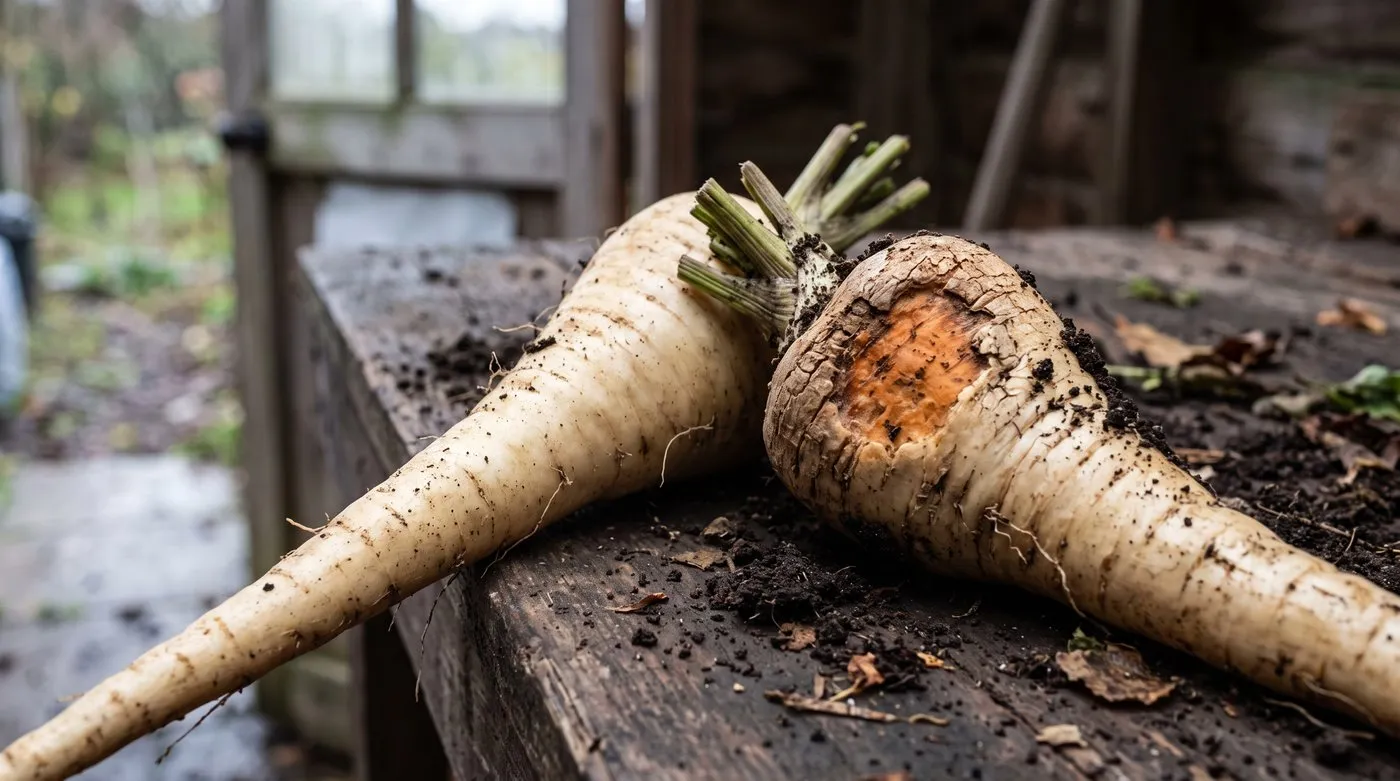
Canker shows as rough orange-brown patches on the shoulder. Cut the damaged bit away and the rest of the root is fine to eat.
What causes canker
Canker is a fungal disease that gets in through cracks and wounds in the root. Careless hoeing, pest damage and roots splitting after uneven watering all give it a way in. Wet autumn weather makes it worse.
How to prevent it
Grow a resistant variety. This is the biggest help. Gladiator F1 and Javelin F1 both resist it well.
Earth up the tops in September with a few centimetres of soil. This covers the most vulnerable part of the root.
Don’t nick the roots when weeding. Hoe carefully and hand-weed close to the plants.
Move the crop each year. Don’t grow parsnips in the same bed two years running.
Sow in April or May. Later sowings give smaller roots, which are less likely to get canker.
Harvesting parsnips: why frost matters
Parsnips taste much sweeter after a frost. The cold turns some of the starch in the root into sugar. That’s where the sweet, caramel flavour of a good roast parsnip comes from.
When to start lifting
Wait until after the first proper frost, usually in late October or November. By then the leaves will be dying back. Push a garden fork into the soil 10-15cm from the root so you don’t spear it, then gently lever the root up. Long varieties like Tender and True may need a second go to free them.
How to lift them
Parsnips snap if you try to pull them out, so always use a fork. Dig in beside the root, push the handle down to lever it up, and ease it out. In heavy soil you may need to dig a full fork’s depth beside it first.
Check each root for canker as you go and cut away any brown, rotten bits. The clean part is fine to eat.
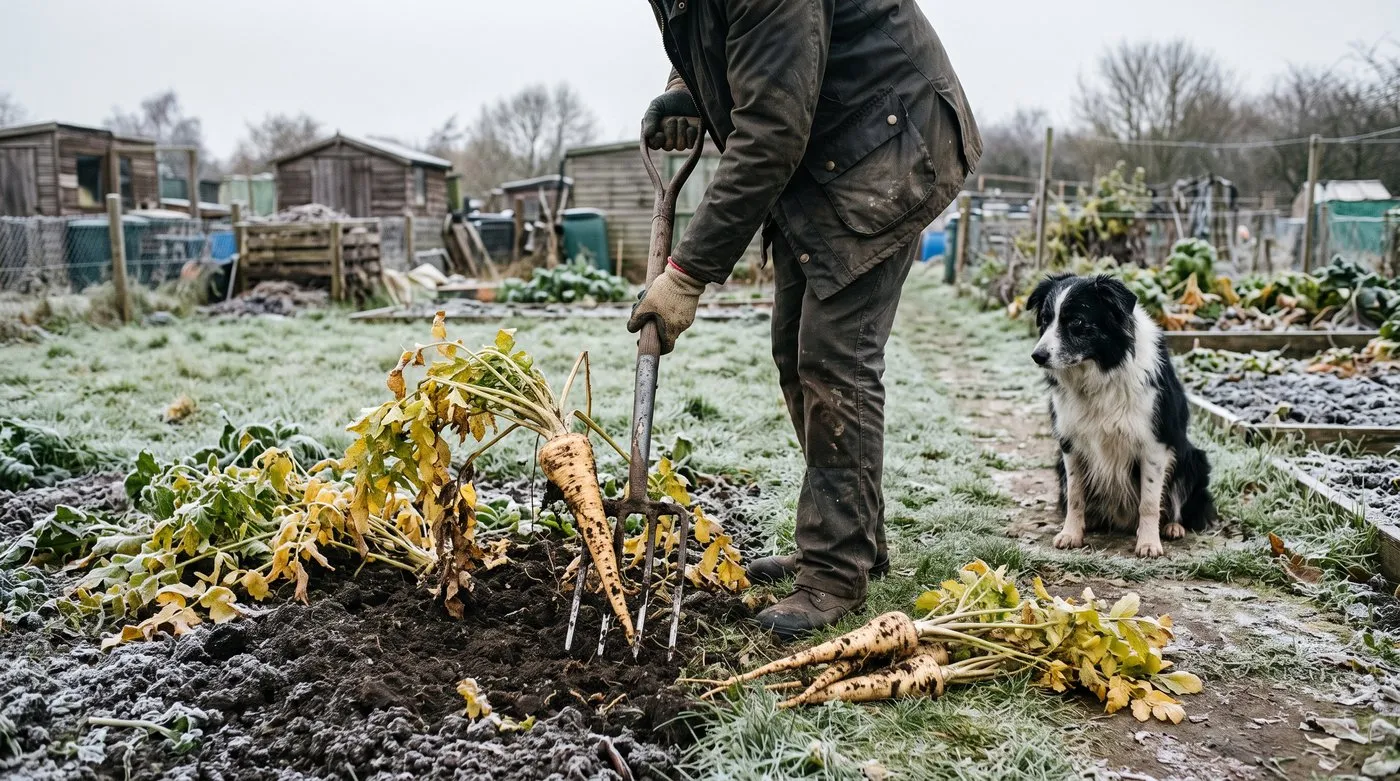
Dig the fork in beside the root and lever it up rather than pulling. Parsnips snap easily, especially the long varieties.
Storing parsnips through winter
The easiest way to store parsnips is to leave them in the ground and dig them as you need them. They’re very hardy and cope with hard frosts.
Leaving them in the ground
If a hard frost is forecast, cover the bed with a thick layer of straw, cardboard or old carpet. This stops the soil freezing solid, so you can still dig them out in January and February.
Lift the last roots by the end of February. Once it warms up in March, they start to regrow, and the roots turn woody and bitter.
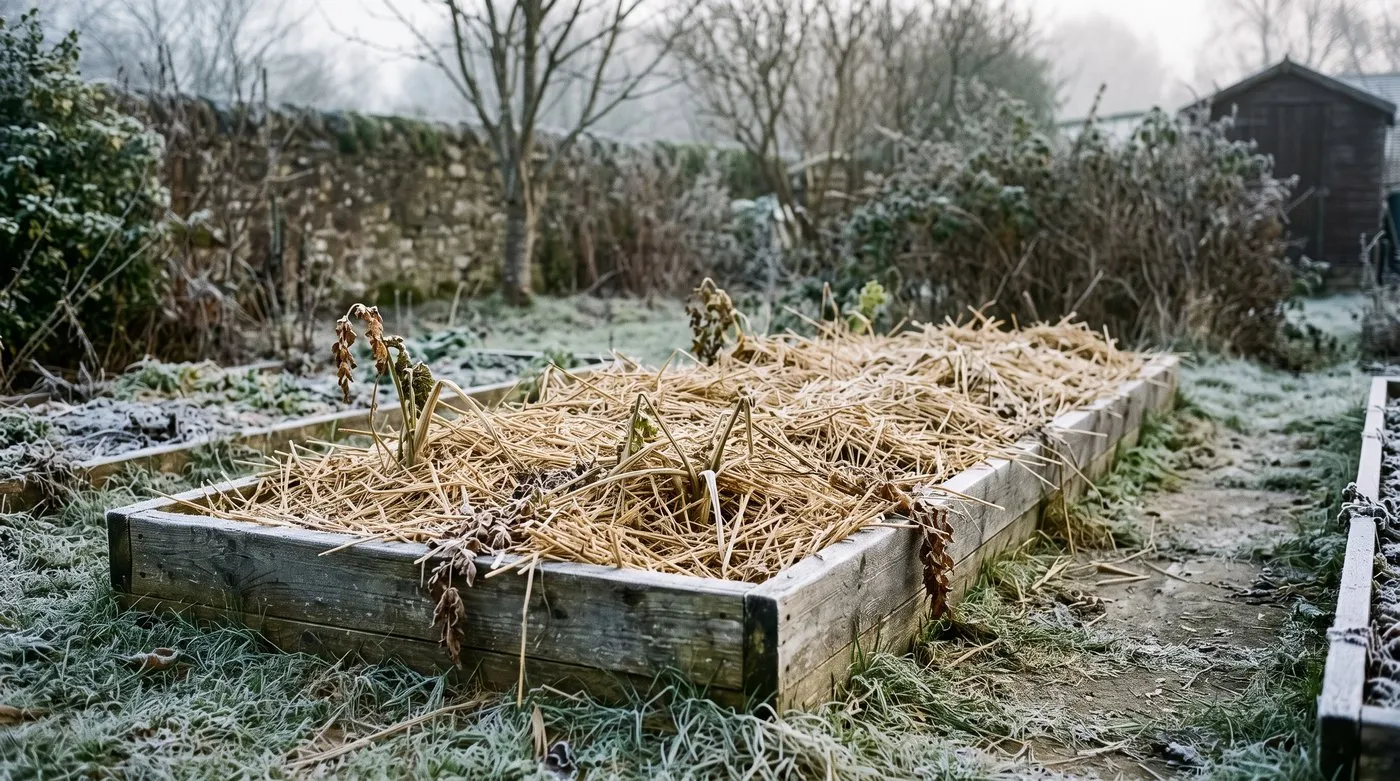
A thick blanket of straw stops the ground freezing solid. You can then keep digging parsnips through January and February.
Storing lifted roots
If you need the bed back for spring, lift what’s left in late February. Twist off the leaves and store the roots unwashed in boxes of damp sand somewhere cool, dark and frost-free, like a garage or shed. They’ll keep for several weeks.
Parsnips freeze well too. Peel, cut into chunks, blanch for 3 minutes, cool in iced water, drain and freeze on a tray before bagging. You can roast them straight from frozen.
Five common mistakes when growing parsnips
These catch out plenty of gardeners. Dodge them and you’ll get a bed full of clean, sweet roots.
1. Using old seed
The number one reason parsnips fail. Old seed often doesn’t come up. Buy a fresh packet every spring.
2. Sowing too early in cold soil
It’s tempting to sow in February or early March, but seed in cold, wet soil can rot. Wait until mid-March in the south and April in the north. Seed that never comes up loses you far more time than waiting a few weeks.
3. Not digging deep enough
If you only dig a spade’s depth, the roots hit hard ground and fork. Fork to at least 30cm and pick out the stones. Time spent here pays off more than anything else.
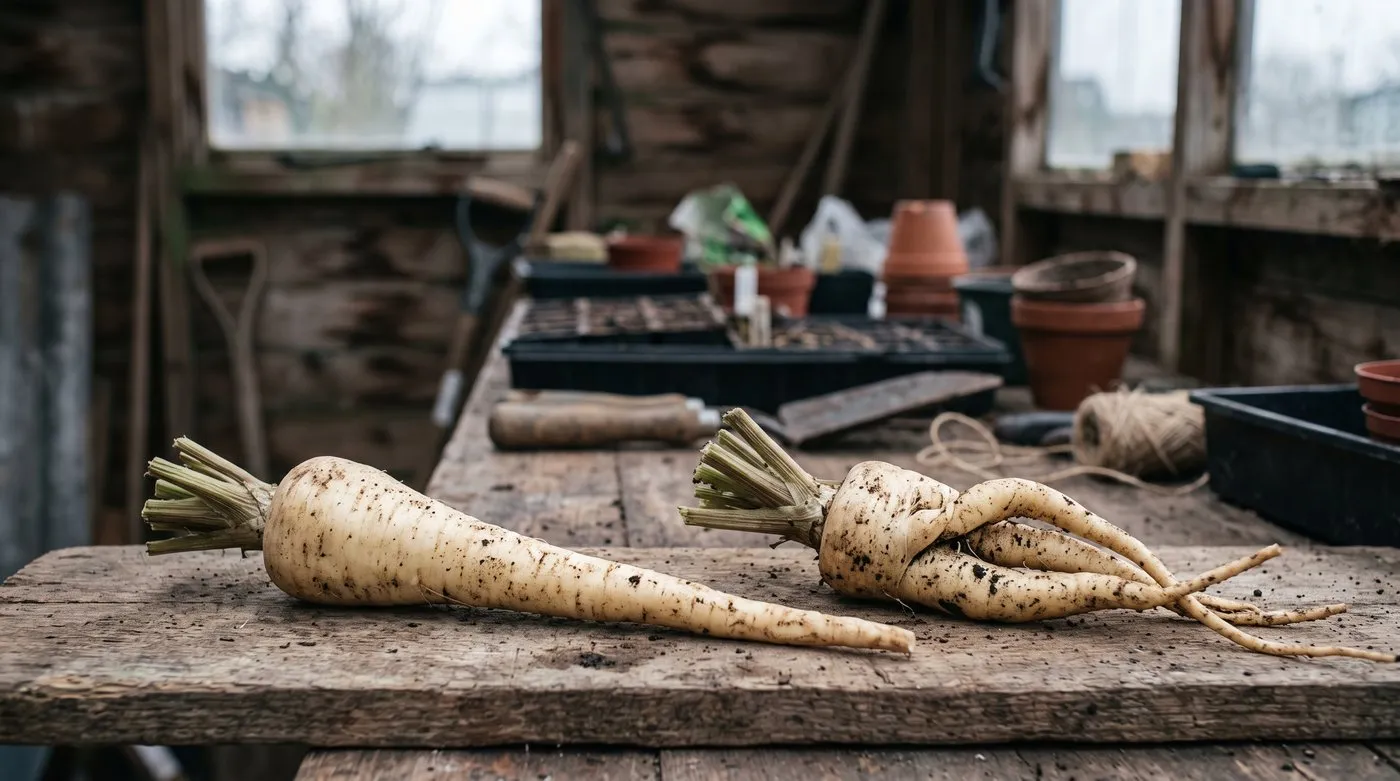
Roots fork like the one on the right when they hit stones or hard ground. Deep, loose soil gives you long, straight parsnips that are easy to peel.
4. Watering little and often, or in fits and starts
Parsnips need very little water once they’re growing. Swinging between dry and soaked makes the roots crack, and the cracks let canker in. Water only in long dry spells, and give a good soak when you do.
5. Lifting before a frost
Parsnips dug in September taste starchy and bland next to frosted ones. A little patience makes a big difference to the flavour.
Growing parsnips in raised beds
Raised beds are great for parsnips. You choose the soil, so you can make it deep, loose and stone-free. That’s a big help if your garden has heavy clay, stony ground or thin topsoil.
How deep the bed should be
Aim for at least 40cm of soil for long varieties. Fill with topsoil and well-rotted compost, picking out any stones. Shorter varieties like Javelin F1 and Countess F1 cope in beds around 30cm deep.
Spacing in raised beds
Raised bed soil is usually loose and rich, so you can space parsnips a little closer. Sow stations 12-15cm apart with rows 25-30cm apart. A standard 1.2m wide bed fits four rows.
Drainage
Parsnips sitting in wet soil are much more likely to rot or get canker. Make sure water can drain out of the bottom of the bed. On heavy clay, loosen the ground underneath before you fill the bed.
Pests and problems
Parsnips get fewer pests than most vegetables. A few can still turn up.
Carrot fly
Carrot fly goes for parsnips as well as carrots. The grubs tunnel into the root and leave brown tracks. The most reliable fix is to cover the crop completely with fine insect-proof mesh. Don’t grow them right next to carrots, which draw the flies in. Some gardeners also grow onions nearby to help hide the smell.
Celery leaf miner
Small grubs tunnel inside the leaves, leaving pale brown blotches. Pinch off and bin the damaged leaves. The roots are rarely affected.
Aphids
Greenfly sometimes settle on the leaves in June and July. They can make leaves curl and yellow but rarely harm the crop. Wash them off with a jet of water, or leave them for the ladybirds and hoverflies. You almost never need to spray.
Crown rot
This is different from canker. It shows as soft, wet rot at the top of the root, usually in waterlogged soil. Improve the drainage, earth up the tops so water doesn’t pool, move the crop each year and remove affected plants promptly.
Good companions for parsnips
Parsnips get on well with several other crops. Their deep roots don’t compete with shallow-rooted neighbours.
Onions and garlic make good row neighbours. Many gardeners pop spring onions between parsnip rows.
Lettuce and radishes fill the gaps while the parsnips are slowly coming up. Radishes mark the row and are gone before the parsnips need the room.
Peas and beans are good to grow in a bed the year before parsnips.
Try not to grow parsnips right next to carrots or celery. They share the same pests, so planting them together just gathers carrot fly in one spot.
Using parsnips in the kitchen
Home-grown parsnips lifted after a frost are sweet, nutty and easy to cook with.
Roast them. Peel, quarter lengthways and toss in oil with a pinch of salt. Roast at 200C for 35-40 minutes until golden. Their own sugars give you crispy edges, no honey needed.
Mash them. Boil chunks for 15-20 minutes until tender, then mash with butter and a little nutmeg. Half parsnip, half potato is a classic.
Make soup. Soften onion and garlic, add chopped parsnips and stock, simmer for 20 minutes and blend. A spoonful of curry powder works a treat.
Bake crisps. Peel thin ribbons, toss in oil and bake at 180C for 10-12 minutes. Watch them closely, as they burn quickly.
Now you’ve got parsnips sorted, read our guide on how to grow carrots in the UK to fill the rest of your winter root bed.
Frequently asked questions
When should I sow parsnips in the UK?
Sow outdoors from March to May, once the soil has warmed and dried out. In the south, March can work in a mild spring. Further north, April is usually better. Cold, wet soil can rot the seed. Later sowings still give good roots by autumn, just a little smaller.
Why do parsnip seeds take so long to germinate?
They’re naturally slow, often taking two to four weeks. Cold or wet soil slows them even more, so waiting until mid-spring usually helps. Mark the row clearly and keep it weeded. Don’t give up on a sowing until at least four weeks have passed.
Can I use last year’s parsnip seed?
It’s best not to. Parsnip seed goes off faster than most, and old seed is one of the main reasons sowings fail. Buy fresh each spring. If you do try older seed, sow it thickly and expect gaps.
How do I prevent parsnip canker?
Grow a resistant variety such as Gladiator, Javelin or Albion. Canker shows as orange-brown or black patches on the top of the root. Take care not to nick the roots when weeding, as wounds let it in. Later sowing and closer spacing give smaller roots that are less likely to get it. Move the crop each year and keep the soil well drained.
Do parsnips need full sun?
They do best in full sun but cope with light shade. In deeper shade the roots grow slowly and stay small. Avoid spots under trees or by tall hedges, where the roots also fight for water. An open, sunny bed with deep, stone-free soil is ideal.
Can I grow parsnips in containers or raised beds?
Raised beds work really well, as you control the soil. Fill them with a deep, stone-free mix of topsoil and compost. Most pots are too shallow for long varieties. Shorter varieties suit shallower beds, and a deep tub can work for these.
When are parsnips ready to harvest?
From autumn, but they taste best after a frost or two. The cold turns some of the starch into sugar, so the roots get sweeter. Start lifting in late autumn and leave the rest in the ground to dig as you need them. Lift the last ones before they start to regrow in spring.
More parsnip reading
These guides will help you plan the rest of your veg plot:
- How to start a vegetable garden in the UK
- How to make compost
- How to improve clay soil
- UK vegetable planting calendar
- Raised bed gardening for beginners
For more varieties and timings, the RHS guide to growing parsnips is a handy read. Parsnip seed is famous for patchy rows, which is just where seed tapes come in useful.
Our team produces practical UK gardening guidance from source research, contributor records and established horticultural practice. Editorial standards are overseen by Matt W.


