Key takeaways
- Sow seed tapes 1-2cm deep in a drill watered before the tape goes in, never after sowing alone
- A bought 6m carrot tape costs £2.50-£3.50; the DIY loo-roll version works out near 30p per 3m
- Tapes cut thinning from 25 minutes a row to 4, and less thinning means fewer carrot root fly visits
- A thickly sown loose carrot row wastes around 85% of its seed to the thinning bucket
- Make tapes with 2-ply toilet roll and a 1:2 flour-water paste; they keep as long as the seed packet
Do seed tapes actually work?
The tape itself is simple. Two layers of biodegradable tissue sandwich the seed at a printed spacing, usually 2.5-5cm for carrots. The paper holds moisture against the seed while it germinates, then rots away within 2-3 weeks. Suttons, Mr Fothergill’s and most garden centres stock tapes for carrots, lettuce, radishes and spring onions, and discs in the same material for pots.
What tapes really buy you is time and seed. Every seed sits where you want it, so there is no clumped patch to tease apart in May and no bare 30cm gap where the packet ran thin. For anyone whose knees or eyesight make fine sowing a chore, that is the whole argument.
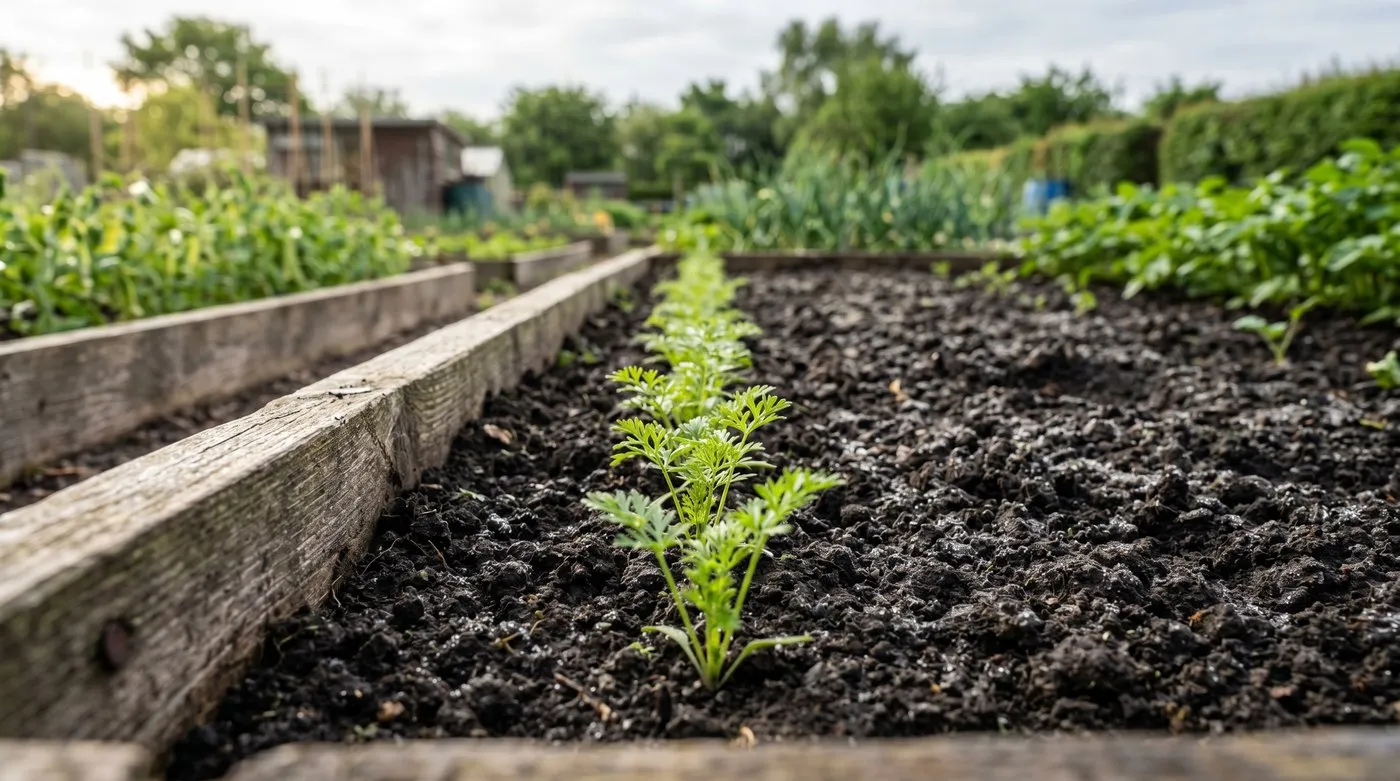 The taped row at four weeks: ‘Nantes 2’ seedlings up at 71%, each one already at its final 5cm spacing.
How do you sow seed tapes in a raised bed?
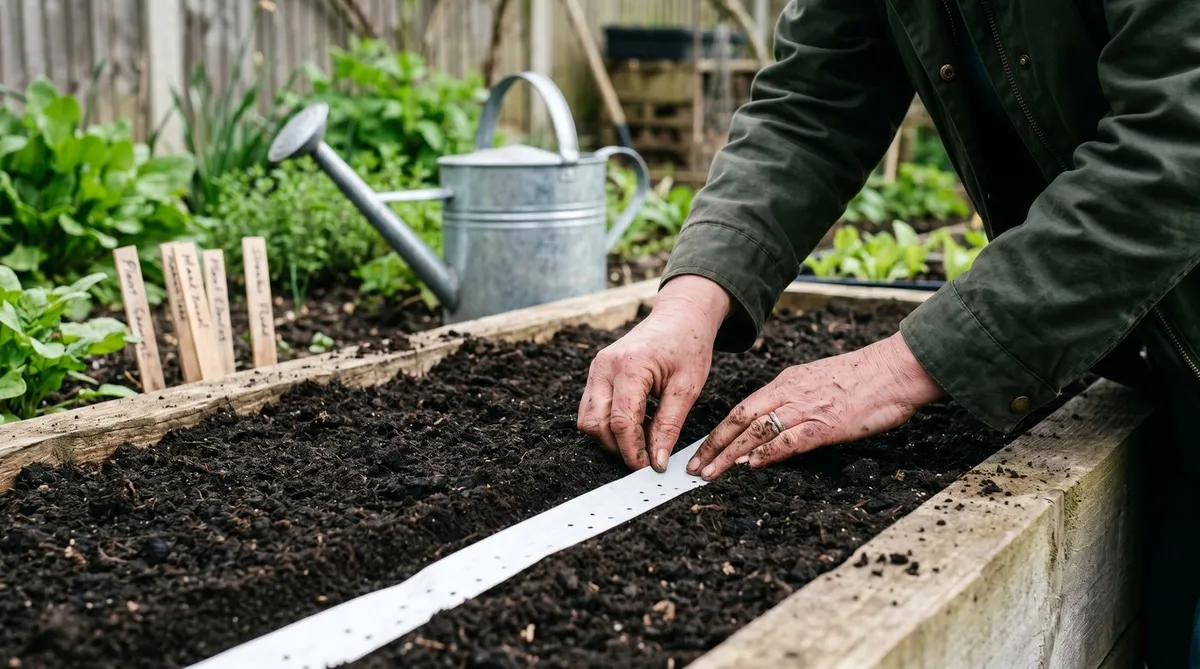
Sow tapes in a pre-watered drill, 1-2cm deep, and keep the paper moist until the seedlings show. The method takes five minutes per row.
- Rake the surface to a fine tilth. Lumps hold the tape away from the soil and the seed dries out in the air gap.
- Draw a drill 1-2cm deep. A cane pressed into the surface gives a straighter, more even drill than a trowel.
- Water the drill first. Soak it with a can before the tape goes anywhere near it. This matters more with tapes than loose seed, because the paper must wet through before germination starts.
- Lay the tape flat along the drill. Pin each end down with a small stone or a hairpin of wire. A breeze will lift an unanchored tape before you can cover it.
- Cover with 1cm of sieved soil or compost and firm gently. Firming presses the wet paper into full contact with the soil.
- Water with a fine rose, and keep watering. The paper must not dry out from sowing until emergence. For carrots that means checking every 2-3 days for 14-21 days.
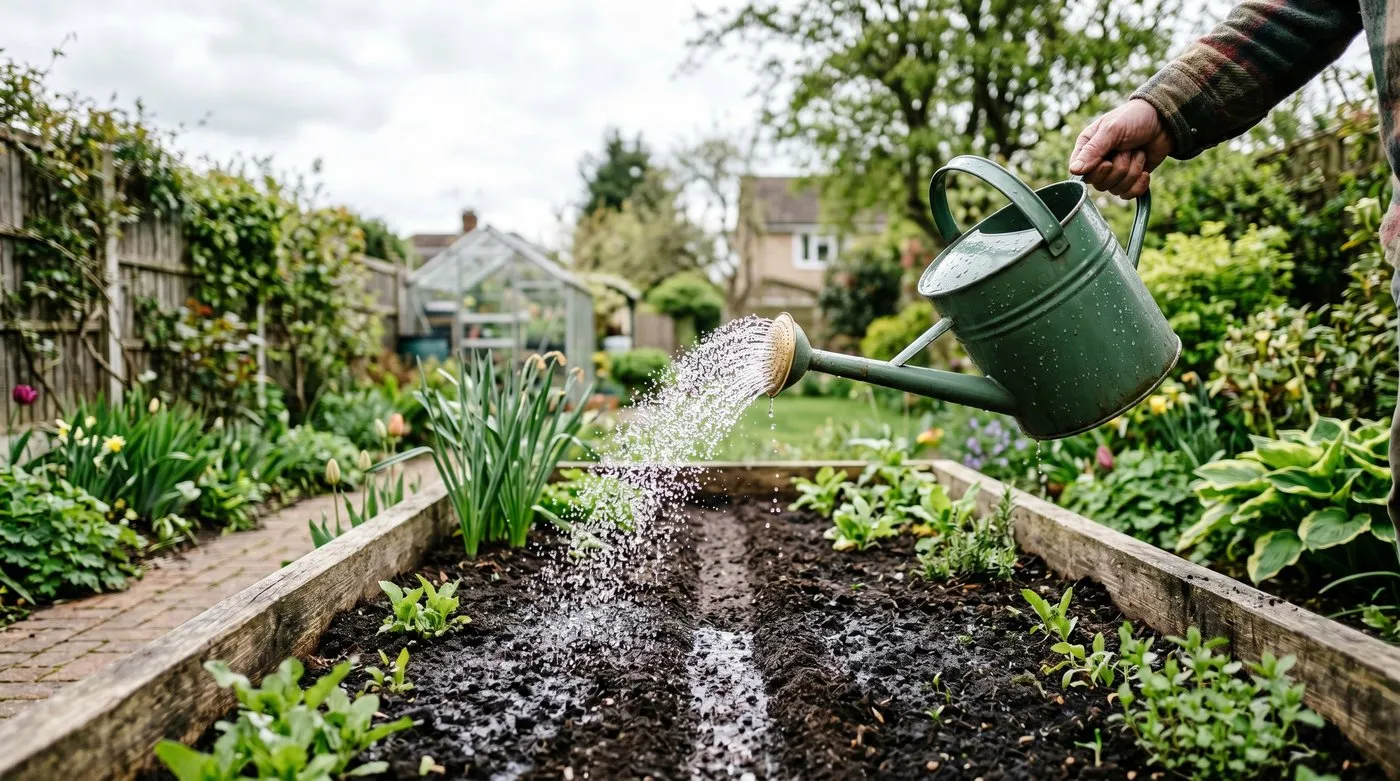 The non-negotiable step: the tissue must stay damp for the full 14-21 days, so water every 2-3 days in a dry spell.
The spacing maths: what thinning really wastes
A thickly sown loose carrot row wastes around 85% of its seed. The arithmetic is blunt. A £2 packet of carrot seed holds roughly 1,500 seeds. Sown “thinly” by hand along a 3m row, around 300 of them go in, because carrot seed is too small to meter out singly with cold fingers. At a final spacing of 5-6cm, the row only has room for about 50 plants. The other 250 seedlings go in the thinning bucket.
A tape carrying 60 seeds along the same 3m loses almost nothing. Two seeds share the odd station and one gets snipped; that is the entire cull.
How do you make seed tapes at home?
Home-made seed tapes need toilet roll, plain flour, water and a cocktail stick. A 3m tape takes about 20 minutes at the kitchen table and costs around 30p all in.
Total: near 30p per 3m row, against £1.50-£1.75 for the same length of bought tape. Make them in February, when the garden offers nothing better to do, and sowing day becomes a five-minute job. The same saucer-and-stick handling works for fluid sowing, the gel method that suits pre-germinated seed; tapes suit dry seed, fluid sowing suits chitted.
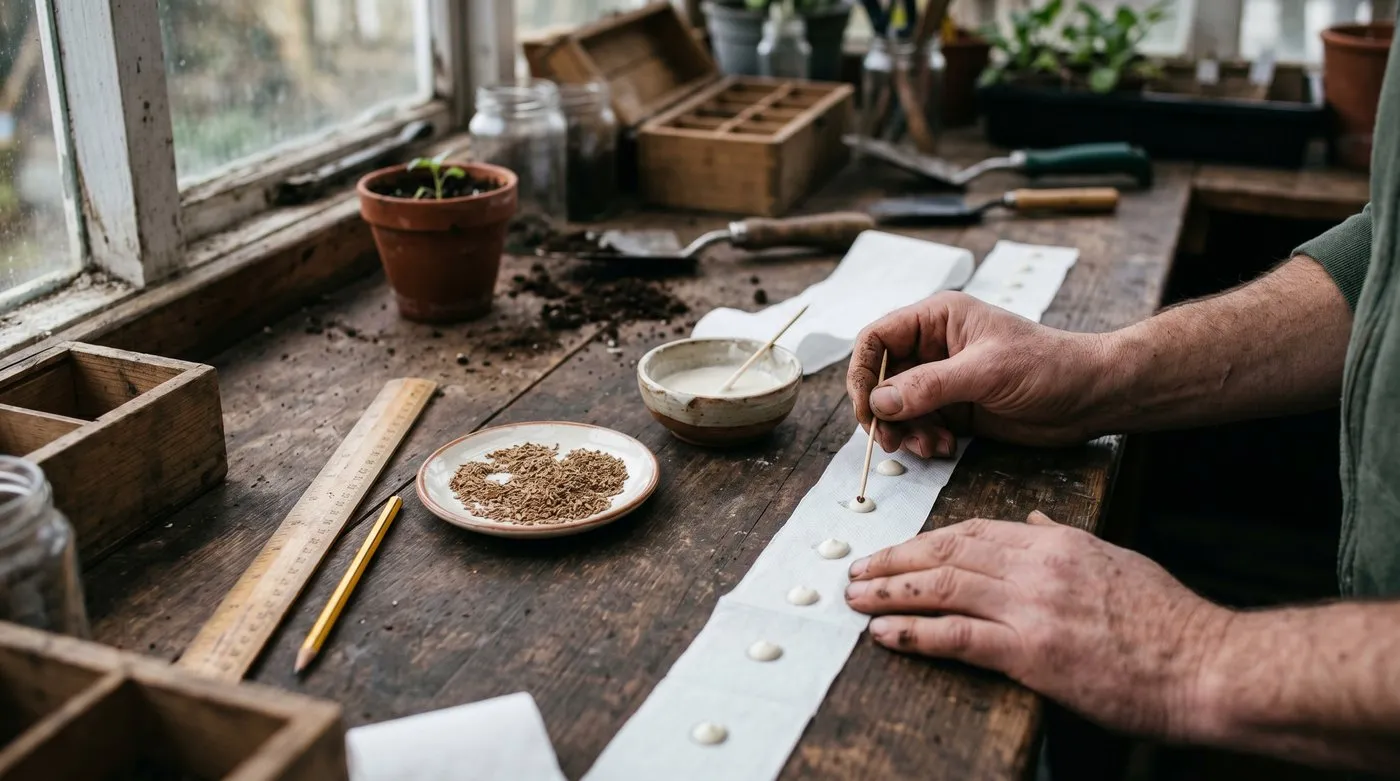 The whole kit: single-ply strips, a 1:2 flour-water paste, a cocktail stick and a saucer of carrot seed.
What do seed tapes cost? Bought vs DIY vs loose
Read the table by what your time is worth. Loose seed wins on pence per row only if 25 minutes of kneeling counts for nothing. The bought tape buys back the 20-minute making session for about £1.30 a row, which adds up fast across a plot of ten rows. The DIY tape costs one winter evening and wins everything else.
Which seeds suit tapes, and which to skip
Skip tapes for beans, peas, courgettes and sweetcorn. A seed you can place singly between finger and thumb gains nothing from paper. Skip them too for anything raised in modules and transplanted, like brassicas, and for tomatoes and other crops started in heat indoors. Tapes are a direct-sowing tool. If your beds are new and you are still deciding what to direct-sow where, our raised bed gardening for beginners guide sets out which crops earn the space, and the RHS publishes a clear grow-your-own carrots page covering drills and depths that pairs well with this one. For organic growers, Garden Organic publishes seed-saving guidance that turns this year’s plants into next February’s free tape filling.
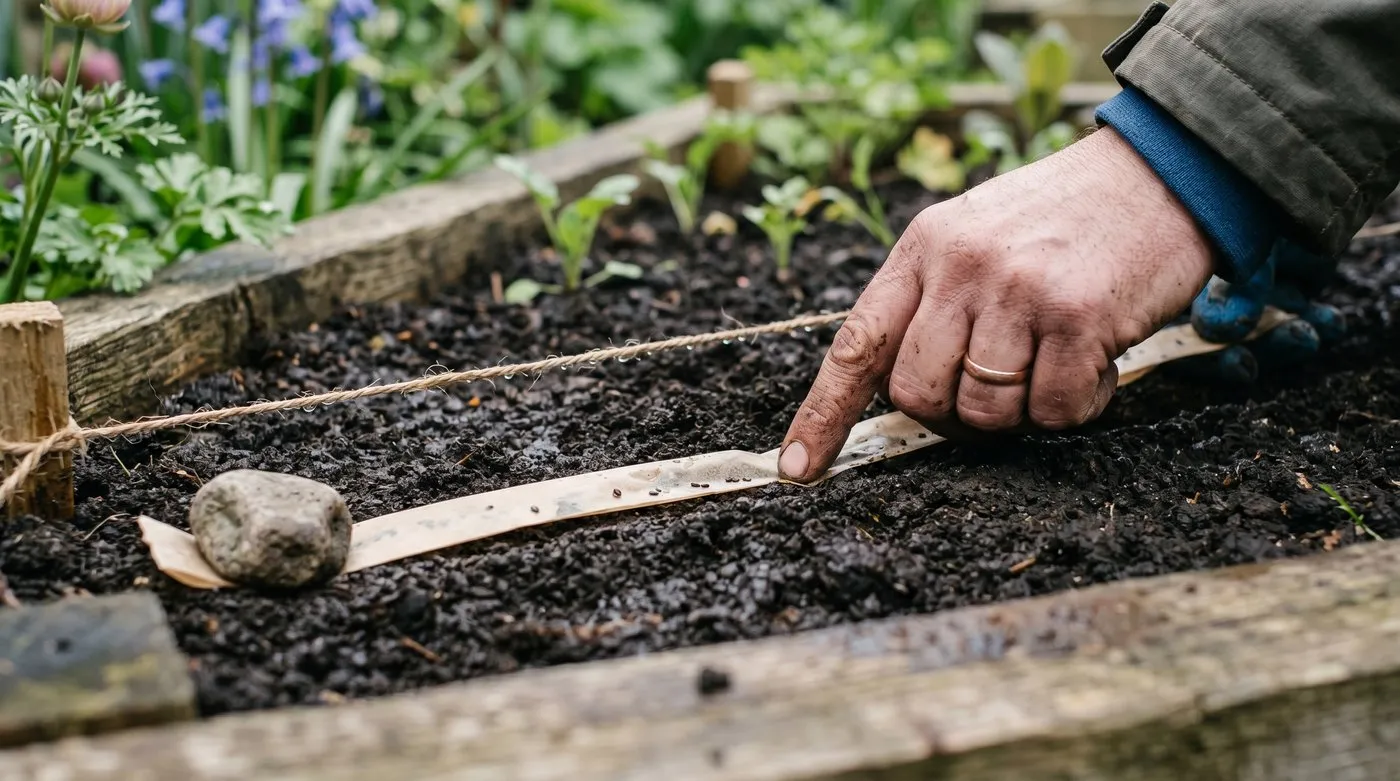 Laying day: the dried tape goes paper-flat into a pre-watered 1.5cm drill, pinned at each end before covering.
Common seed tape mistakes
- Letting the paper dry out mid-germination. The tissue wicks moisture away from seed faster than bare soil does. One dry week in the 14-21 day carrot window kills the row. Water every 2-3 days without fail.
- Sowing the tape too deep. At 3-4cm the small seed inside exhausts itself before reaching light. Stay at 1-2cm and cover with sieved soil, not clods.
- Laying tape into a dry drill. Watering only from above after covering often fails to wet the paper through. Soak the drill first, every time.
- Leaving the tape unpinned. A 6m tape catches wind like a streamer. Pin both ends and midway before reaching for the soil.
- Using wallpaper paste for DIY tapes. Most modern wallpaper pastes contain fungicide, which can suppress germination. Flour and water costs 2p and does nothing but glue.
- Storing home-made tapes anywhere damp. A shed shelf in winter swings past dew point nightly, and damp paste moulds. Keep finished tapes indoors in a paper envelope.
- Taping old seed. Tapes fix spacing, so a packet germinating at 40% leaves visible gaps every few centimetres. Use fresh seed, especially for parsnips.
Frequently asked questions
Do seed tapes actually work?
How deep do you sow seed tapes?
Lay tapes 1-2cm deep, the same depth as loose seed of that crop. Water the drill before the tape goes in, cover with sieved soil or compost, and firm gently. A tape sown deeper than 2cm struggles, because most taped seed is small.
Do you still need to thin seedlings from seed tapes?
Barely, because the seed is already fixed at or near its final spacing. Where two seeds share a station, snip the weaker one at soil level with scissors. Our taped rows needed 4 minutes of thinning against 25 for the loose row.
How do you make seed tapes at home?
Glue seeds onto strips of 2-ply toilet roll with flour-and-water paste. Mix 1 tablespoon of plain flour with 2 of water, dot it at your crop’s final spacing, drop one seed per dot, fold the strip over and dry for 24 hours. A 3m tape costs about 30p.
How long do home-made seed tapes keep?
Home-made tapes keep as long as the seed packet’s use-by date. Flour paste does not shorten seed life once fully dry. Store rolled tapes in a labelled paper envelope somewhere cool and dry. Damp storage is the one thing that ruins them.
Which seeds work best on tapes?
Small, fiddly seed: carrots, lettuce, radishes, spring onions, parsnips and beetroot. These are the crops where hand-spacing wastes the most seed and thinning takes the most time. Big seeds like beans, peas and courgettes are easy to place by hand, so taping them gains nothing.
Our team produces practical UK gardening guidance from source research, contributor records and established horticultural practice. Editorial standards are overseen by Matt W.