
Key takeaways
- Beauregard is a reliable variety for UK gardens
- Start slips indoors from late winter, or buy ready-rooted slips in spring
- Plant out in June, once frosts are over and the soil has warmed up
- Black plastic over the soil warms it up and helps the crop
- Dig them up before the first frost, then keep them somewhere warm for 10 days to sweeten
Yes, you really can grow sweet potatoes in the UK. All you need is a sunny spot, a warm summer and a bit of patience. Short-season varieties do well in raised beds, pots and grow bags, especially in southern and central England.
Why sweet potatoes can work in UK gardens
They need warmth rather than scorching heat. Sweet potatoes (Ipomoea batatas) are tropical plants, and they won’t make tubers in cold soil. A UK summer from June to late September gives them just enough time in most of England, especially if you help the soil warm up.
Quick varieties like Beauregard are the ones to grow. Southern England has the longest season, but sheltered gardens further north can still get a crop, especially with a polytunnel.

Slips sprouting from a sweet potato in a jar of water. Start this indoors between January and March.
How to start sweet potato slips from tubers
Slips are rooted shoots grown from a sweet potato. You can’t plant a tuber like a seed potato. Grow slips indoors over a couple of months, or buy rooted slips from a seed company in spring, which is the easy option.
Growing your own slips
- Pick a tuber (January to February). A named variety from a seed supplier is best. Supermarket ones may have been treated to stop sprouting, and they may not be a variety that suits the UK.
- Stand it in water. Push three cocktail sticks into the middle and rest it on the rim of a jar, with the bottom third in tepid water. Put it on a warm, bright windowsill.
- Wait for shoots. Green shoots grow from the top after a few weeks. Change the water every few days to keep it fresh.
- Take the slips. When the shoots are 15-20cm long, twist them off. Root them in a jar of fresh water, or push them into small pots of moist multipurpose compost.
- Grow them on. Keep them warm and bright until June. Harden them off for a week first, putting them out by day and bringing them in at night.
One tuber gives plenty of slips for a small raised bed. For container vegetable gardening, grow one slip per big pot.
Best sweet potato varieties for UK growing
UK variety comparison table
| Variety | Skin | Flesh | Speed | Taste | How easy in the UK |
|---|---|---|---|---|---|
| Beauregard | Copper-orange | Deep orange | Quick | Sweet, creamy | Easy |
| Georgia Jet | Red | Orange | Quick | Sweet, moist | Easy |
| T65 | Purple-brown | White | Medium | Mild, nutty | Medium |
| Murasaki | Purple-red | White | Slower | Dry, chestnut-like | Harder |
Georgia Jet is a little quicker than Beauregard, so it’s handy for cooler gardens or a late start. The tubers tend to be smaller but taste lovely.
T65 has white flesh and a mild, nutty flavour. It’s less sweet, so it’s great in stir-fries and curries as well as roasted.
Planting out sweet potatoes
Wait until June, when frosts are over and the soil is warm. Sweet potatoes can’t take any frost, and cold soil stops them growing.
When to plant
Plant out after the last frost, usually in June across most of England. Don’t rush. A slip planted into warm soil in mid-June will soon overtake one put into cold soil in late May. If you have a soil thermometer, wait until it reads about 15°C at 10cm deep.
Getting the soil ready
They like light soil that drains well. Heavy clay needs plenty of compost dug in first, and our guide to improving clay soil shows you how. On clay, a raised bed is the easiest answer, as you choose what goes in it.
Rake in a general-purpose fertiliser before planting. Avoid high-nitrogen feeds, which give you lots of leafy vines and not many tubers.
How to plant
- Cover the bed with black plastic 2-3 weeks before planting to warm the soil.
- Cut X-shaped slits in the plastic about 30cm apart.
- Plant a slip through each slit, burying the stem up to the first pair of leaves.
- Water well and firm the soil around each one.
- If cold nights are forecast in the first couple of weeks, cover them with fleece.

Lifting Beauregard sweet potatoes from a raised bed in early October, before the first frost.
Growing methods compared
Raised beds are the best bet, but pots and grow bags work too.
Raised beds
Raised beds warm up faster, drain freely and let you fill them with a good mix of soil and compost. Plant about 30cm apart. Our raised bed gardening guide explains how to build and fill one.
Containers
Use a big pot of about 40 litres, one plant per pot. Fill with multipurpose compost mixed with some perlite. Stand it by a sunny, south-facing wall for extra warmth. Pots dry out fast in July and August, so water every day in hot weather.
Grow bags
Ordinary tomato grow bags work, though you’ll get a smaller crop than from a raised bed. Plant two slips per bag, about 25cm apart. Growing in grow bags is handy if you only have a patio.
Black plastic mulch (all methods)
Whichever way you grow them, black plastic over the soil is a great help. It warms the soil, keeps weeds down and holds in moisture. Lay it a couple of weeks before planting and plant through slits.
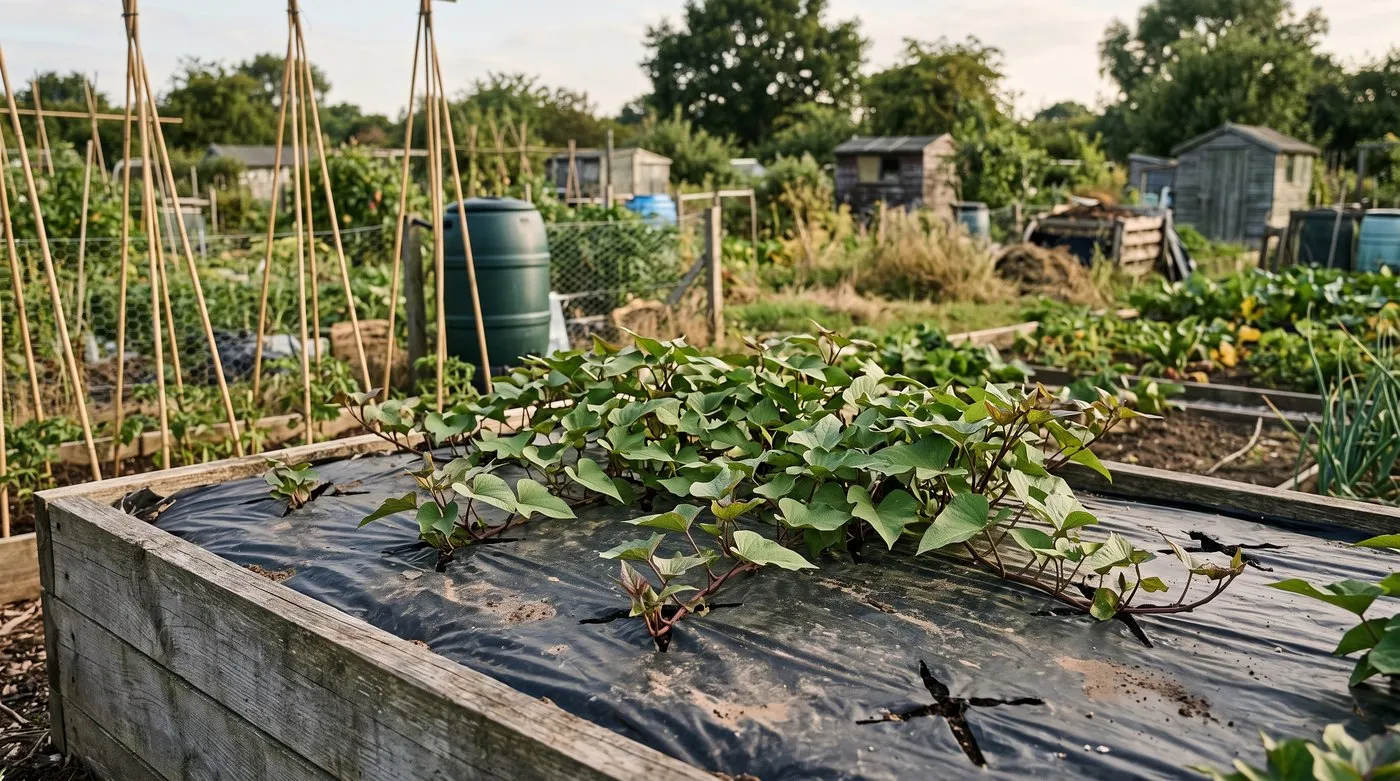
Black plastic warms the soil, smothers weeds and keeps moisture in. Lay it a couple of weeks before planting so the soil is warm from day one.
Watering and feeding sweet potatoes
Keep the soil evenly moist, but never soggy. The vines cope with short dry spells once they’re settled, but dry soil in late summer means a smaller crop.
- June: water every 2-3 days until the slips start growing.
- July: water once or twice a week. The vines grow fast and spread a long way.
- August to September: this is when the tubers swell. Water deeply twice a week if it’s dry.
- Two weeks before digging: water less, so the skins toughen up for storing.
Harvesting and curing sweet potatoes
Dig them up before the first frost, then keep them warm for about 10 days. Curing is what makes them sweet and helps them keep.
When to harvest
Lift them in late September or early October in most of England, and always before the first frost. Frost kills the vines and damages tubers near the surface, so keep an eye on the forecast from late September.
Yellowing lower leaves are a sign they’re ready. Have a gentle dig around one plant first. If the tubers are still finger-sized and no frost is due, cover the plants with fleece and wait a couple more weeks.
How to harvest
Push a fork in about 30cm from the stem so you don’t spear the tubers, and lift gently. The skins are thin and bruise easily, so handle them like eggs. Don’t wash them. Brush off loose soil and lay them on newspaper somewhere dry and shady.
Curing for sweetness and storage
Fresh-dug sweet potatoes taste starchy. A warm rest makes them sweeter and heals small knocks in the skin.
- Put the unwashed tubers somewhere warm (about 25-30°C) and humid, such as an airing cupboard or warm conservatory.
- Cover them loosely with newspaper or a damp towel.
- Leave them for 10-14 days. The skin will firm up and darken slightly.
- Then store them somewhere dark and airy at about 12-15°C.
Well-cured sweet potatoes keep for months. A cool spare room or pantry is ideal. Never put them in the fridge, as the cold turns the flesh hard and discoloured.

Four varieties side by side: orange Beauregard, red Georgia Jet, white T65 and purple Murasaki. Each has its own taste and texture.
Common problems and solutions
Sweet potatoes are fairly trouble-free, but watch out for these.
Slugs and snails are the main pest. They nibble holes into the tubers underground. A nematode biological control such as Nemaslug, watered on in summer, helps, and so do beer traps around the bed.
Cold is behind most failures, from planting too early or digging too late. Cover with fleece if a cold night follows planting, and never leave tubers in the ground after the first frost.
Small crops nearly always come down to cold soil. Black plastic, raised beds and waiting until June make the biggest difference.
Whitefly sometimes gather under the leaves in hot summers. Outdoors they rarely do much harm, and a jet of water from the hose knocks them off. Under cover, hang up yellow sticky traps.
Growing other veg alongside? Our guide to the best vegetables to grow at home helps you plan a mixed bed.
The RHS sweet potato growing guide has more help with getting started.
Frequently asked questions
Can you grow sweet potatoes in the UK?
Yes, especially in a warm, sheltered garden. Choose a variety such as Beauregard, plant out in June and use black plastic or a raised bed to warm the soil. Southern and central England usually have the best results, but a greenhouse or polytunnel helps further north.
When should I start sweet potato slips UK?
Start them indoors between January and March. Stand a sweet potato in a jar of water on a warm windowsill and wait for shoots. When they’re 15-20cm long, twist them off and root them in water or moist compost. They should be ready to plant out in June.
What is the best sweet potato variety for the UK?
Beauregard is a dependable choice for UK gardens. It has orange flesh and a sweet, creamy taste. Georgia Jet is a little quicker, which helps in cooler areas. Murasaki has purple skin and white flesh if you fancy something different.
Do sweet potatoes need a greenhouse in the UK?
No, not in most of England. They grow outside in raised beds, big pots and grow bags, especially with black plastic over the soil. A greenhouse or polytunnel gives them a longer, warmer season, which is handy in cooler parts of the country.
How many sweet potatoes do you get from one plant?
Usually a handful of medium tubers per plant. How many depends on the variety, how warm the soil gets and how long the summer lasts. Plants in warm raised beds usually do better than ones in pots or grow bags.
Why are my sweet potatoes so small?
Usually because the soil was too cold or the summer too short. Planting into cold soil holds the roots back. Crowding, too much high-nitrogen feed and soggy soil can also give small tubers. Black plastic, raised beds and waiting until June all help.
How do you cure sweet potatoes after harvesting?
Keep them somewhere warm and humid for about 10 days. Lay the unwashed tubers in an airing cupboard or warm room, loosely covered with newspaper. This sweetens them, heals small skin damage and helps them keep. Then store them somewhere dark and cool, but never in the fridge.
Our team produces practical UK gardening guidance from source research, contributor records and established horticultural practice. Editorial standards are overseen by Matt W.


