Key takeaways
- Fluid sowing helps slow, patchy germinators such as parsnips, carrots and parsley
- Sprout seeds on damp kitchen paper somewhere warm, checking every day
- Sow as soon as tiny white roots appear, before they grow long and tangle
- Use plain cellulose wallpaper paste with no fungicide as the gel
- Pipe the gel along a drill 1-2cm deep, cover lightly and keep the soil moist
- Always start with fresh seed, especially for parsnips
Fluid sowing is a neat trick for seeds that are slow and patchy to come up. You sprout the seeds on damp kitchen paper indoors, then sow them in a gel made from plain wallpaper paste. Seedlings appear sooner and more evenly, so weeds and slugs have less time to spoil the row.
It works best for parsnips, carrots and parsley. The method was developed by researchers in the 1970s for commercial growers, and it scales down nicely to a garden or allotment bed. All you need is kitchen paper, a tub, a sandwich bag and some fungicide-free paste.
What is fluid sowing?
Fluid sowing has two stages. You can use the first on its own.
Pre-chitting (pre-germinating) means sprouting seeds on damp paper until a tiny white root, called the radicle, pokes out. Then you sow them. They carry straight on growing instead of sitting in cold soil for weeks.
Fluid drilling is the full method. You stir the sprouted seeds into a gel and squeeze it along a drill from a bag, a bit like piping icing. The gel cushions the delicate roots, spreads the seeds out and keeps them moist while they settle in.
Pre-chitting does most of the good. The gel makes sowing small, sprouted seeds quicker and gentler. Larger sprouted seeds, such as parsnips, can be placed by hand instead.
Which seeds are worth fluid sowing?
Fluid sowing is worth it for crops that are slow or unreliable from dry seed.
A gappy parsnip row like this is exactly what fluid sowing helps you avoid.
- Parsnips: the classic case. Dry-sown seed can take three weeks or more to show in cool soil, and rows are often gappy. Parsnip seed doesn’t keep well, so always buy fresh.
- Carrots: fine seed that can be slow to come up. A quicker, more even row is easier to weed and thin.
- Parsley: famously slow to germinate. Sprouting it first saves weeks of waiting. The guide to growing parsley from seed covers the rest.
- Celery and celeriac: small, slow seed. Most people sprout these on paper, then grow them in modules indoors.
Don’t bother for peas, beans, squash, radish, rocket or brassicas. They come up fast and reliably from dry seed. Beetroot seed is a cluster of seeds, so it doesn’t suit the gel either.
How to pre-chit seeds on kitchen paper
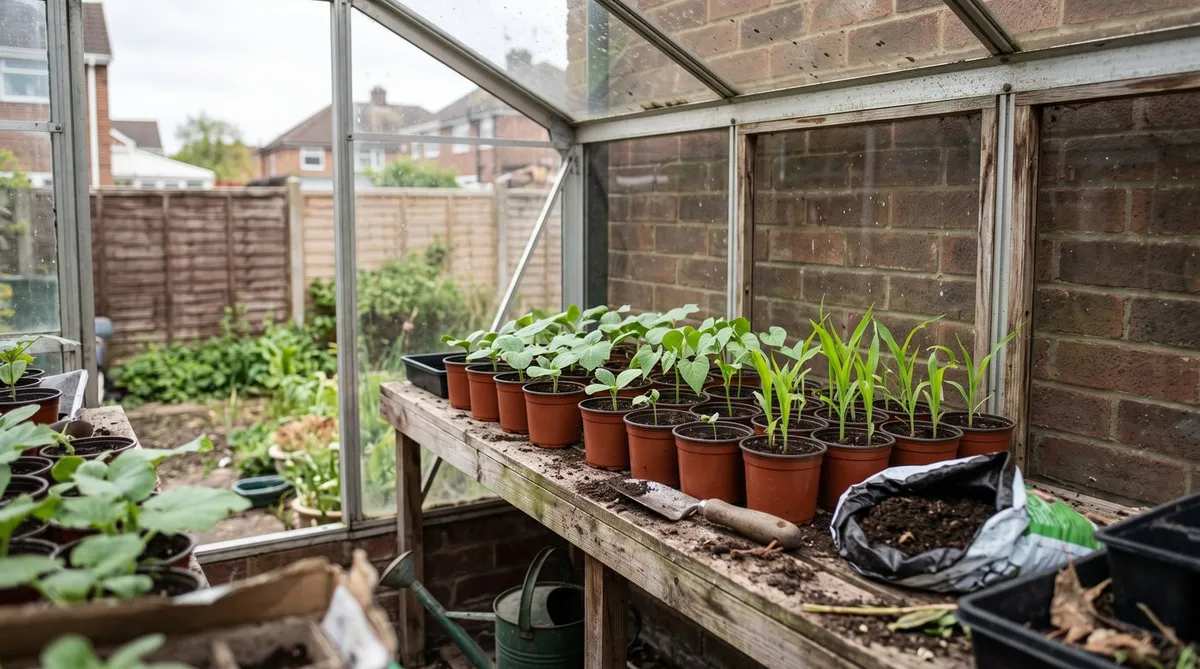
You need a plastic tub with a lid, some kitchen paper, fresh seed and a label.
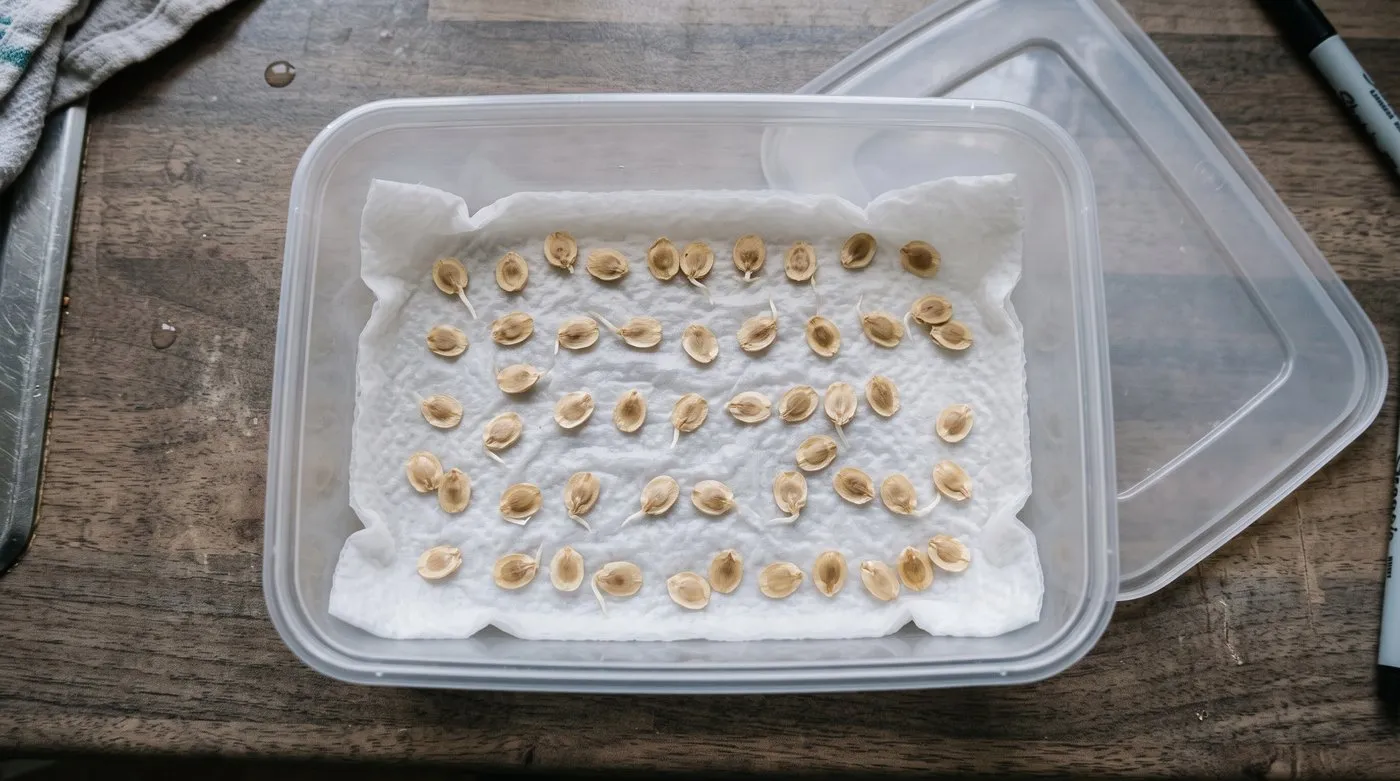
Parsnip seeds are flat and papery. Sow them as soon as tiny white roots like these appear.
- Lay two or three sheets of kitchen paper in the bottom of the tub.
- Wet them well, then tip away any extra water. The paper should be damp, not swimming.
- Sprinkle the seed thinly over the paper so the seeds don’t touch.
- Put the lid on loosely and label the tub.
- Keep it somewhere warm, such as a kitchen worktop away from direct sun.
- Check every day. Keep the paper damp and remove any seeds that go mouldy.
Most seeds show their first tiny roots within a few days to a week or so. Parsley and celery can take longer. Sow as soon as you see the first few roots appear. If the roots grow long, they tangle and snap when you sow them.
How to fluid drill sprouted seeds
Once your seeds have sprouted, sowing a row takes a few minutes.
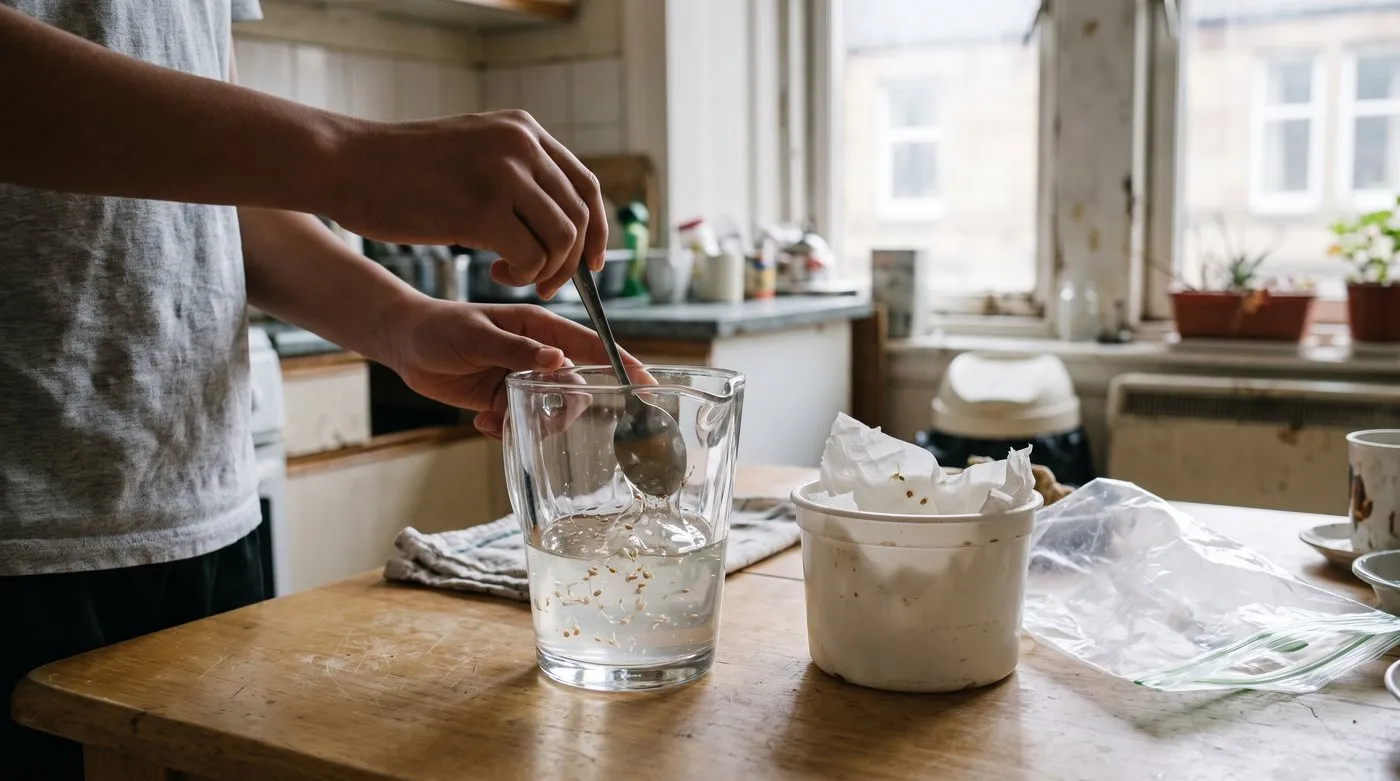
Fold the sprouted seeds in slowly. The gel should be about as thick as custard so the seeds stay spread out.
- Mix the gel. Stir plain cellulose wallpaper paste into cool water until it’s like thick custard. Use a paste labelled as fungicide-free. Leave it a few minutes to thicken.
- Add the seeds. Rinse the sprouted seeds gently off the paper and fold them into the gel with a spoon. Stir slowly, as the roots are fragile.
- Fill the bag. Spoon the gel into a sandwich bag and push it to one corner.
- Draw the drill. Make a drill 1-2cm deep in moist, finely raked soil.
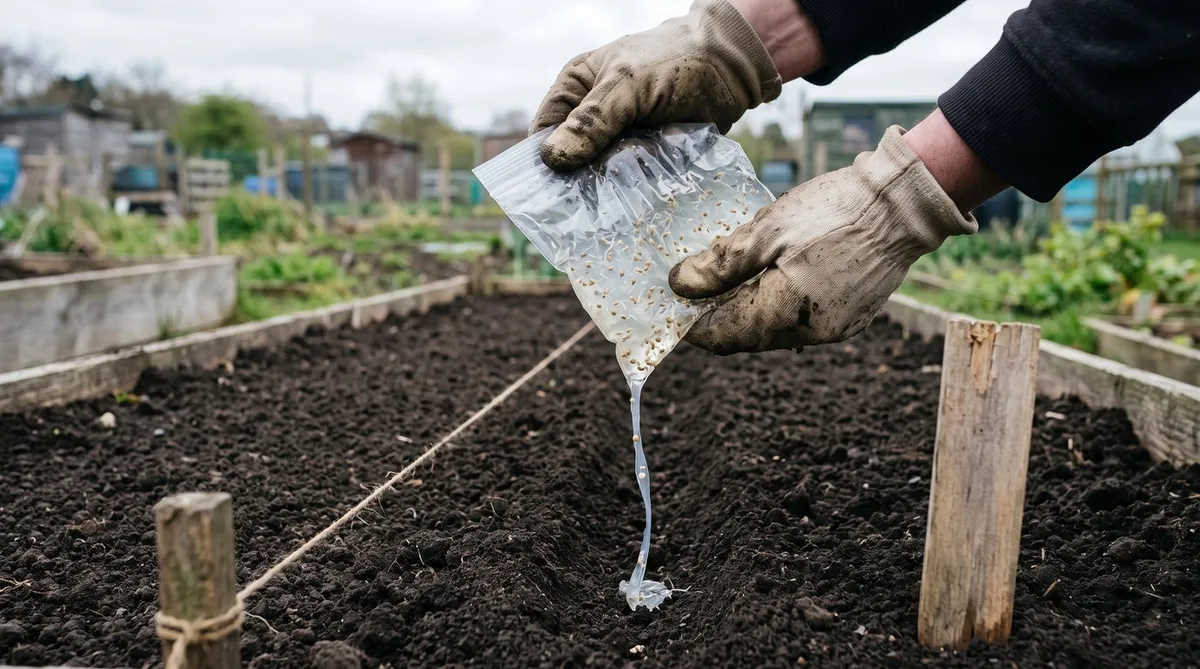
- Pipe it in. Snip a small corner off the bag and squeeze a steady ribbon of gel along the drill.
- Cover and water. Cover lightly with fine soil and water gently with a fine rose.
- Keep it moist. Don’t let the drill dry out while the seedlings come through.
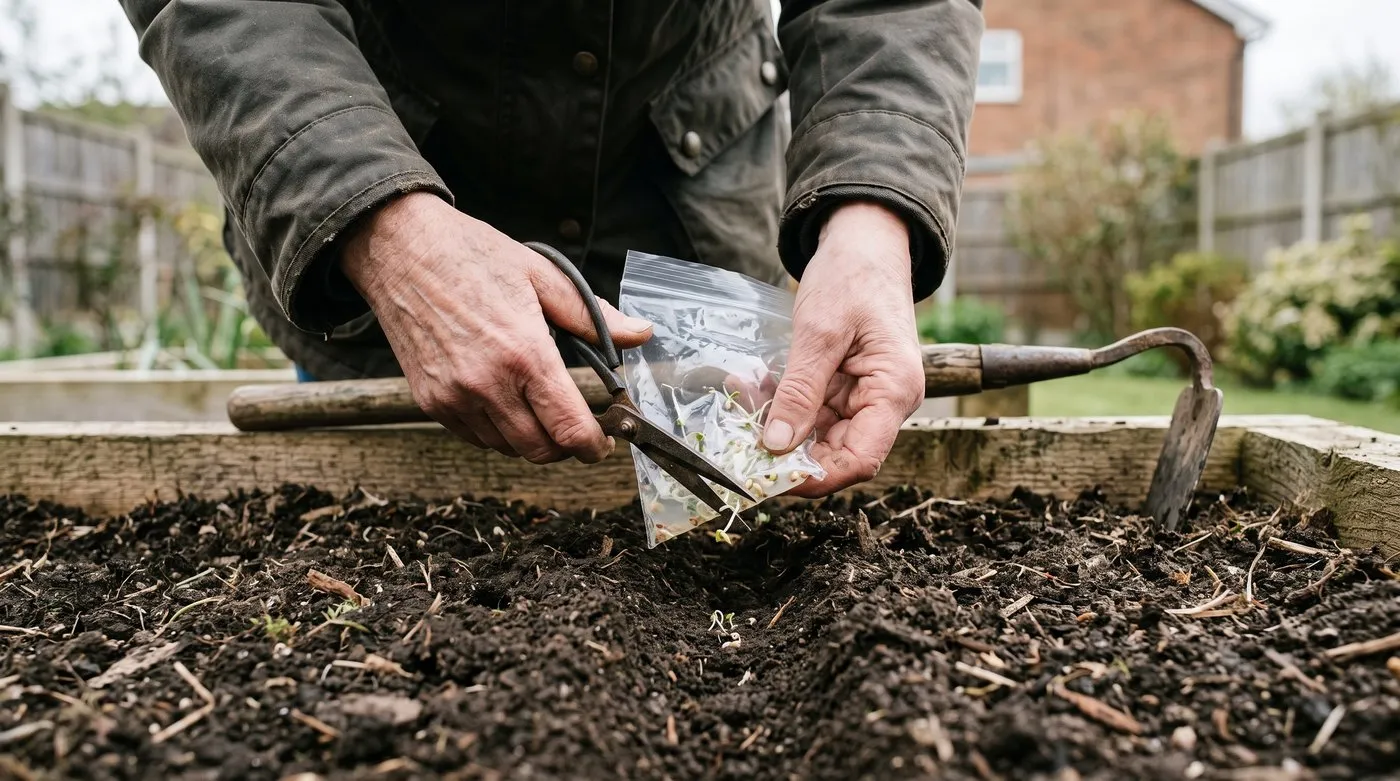
Snip only a small corner off the bag. You want a steady ribbon of gel, not a sudden splodge.
Sow the gel on the day you mix it. The seeds keep growing in the bag, so don’t leave it hanging about. Thin the seedlings later as usual. The guide to growing parsnips gives final spacings.
Gardener’s tip: Not sure if old seed is still good? Sprout 20 seeds on damp paper first. If only a few show roots after a couple of weeks, buy a fresh packet.
When to fluid sow
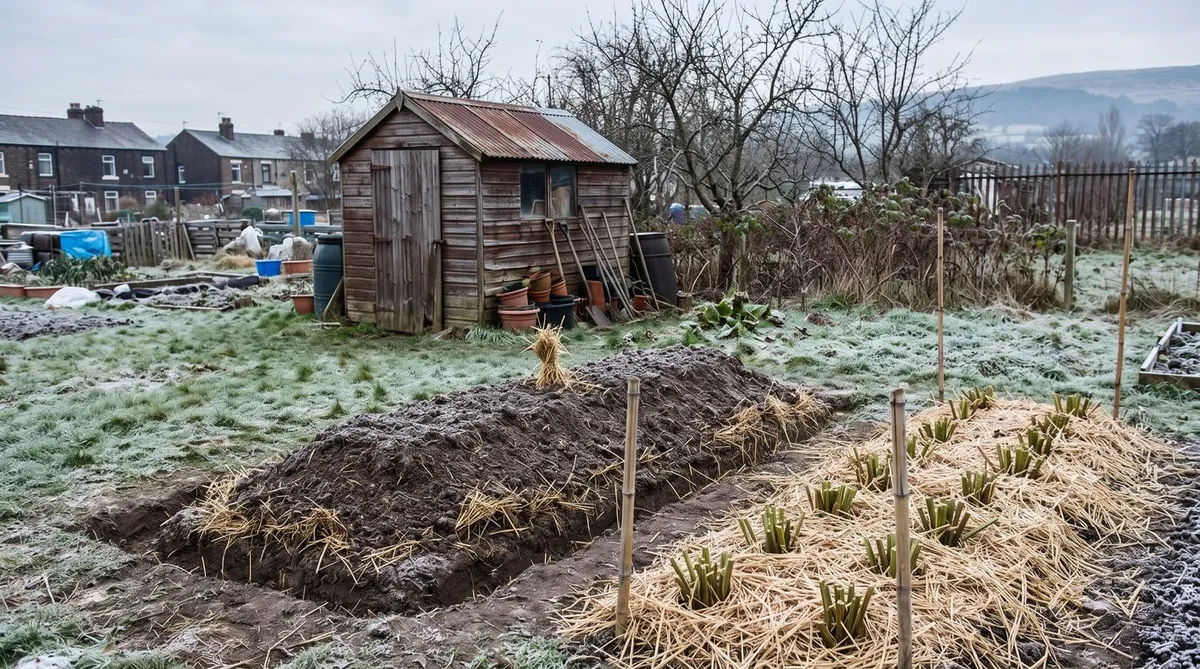
Sprouted seed carries on growing as soon as it’s sown, so it needs soil that’s warm enough to keep it going. Wait until the soil has warmed up in spring. Cold, wet soil can kill the tiny roots. A cloche or fleece over the bed for a week or two before sowing helps warm it up. The guide to cloches and low tunnels shows how.
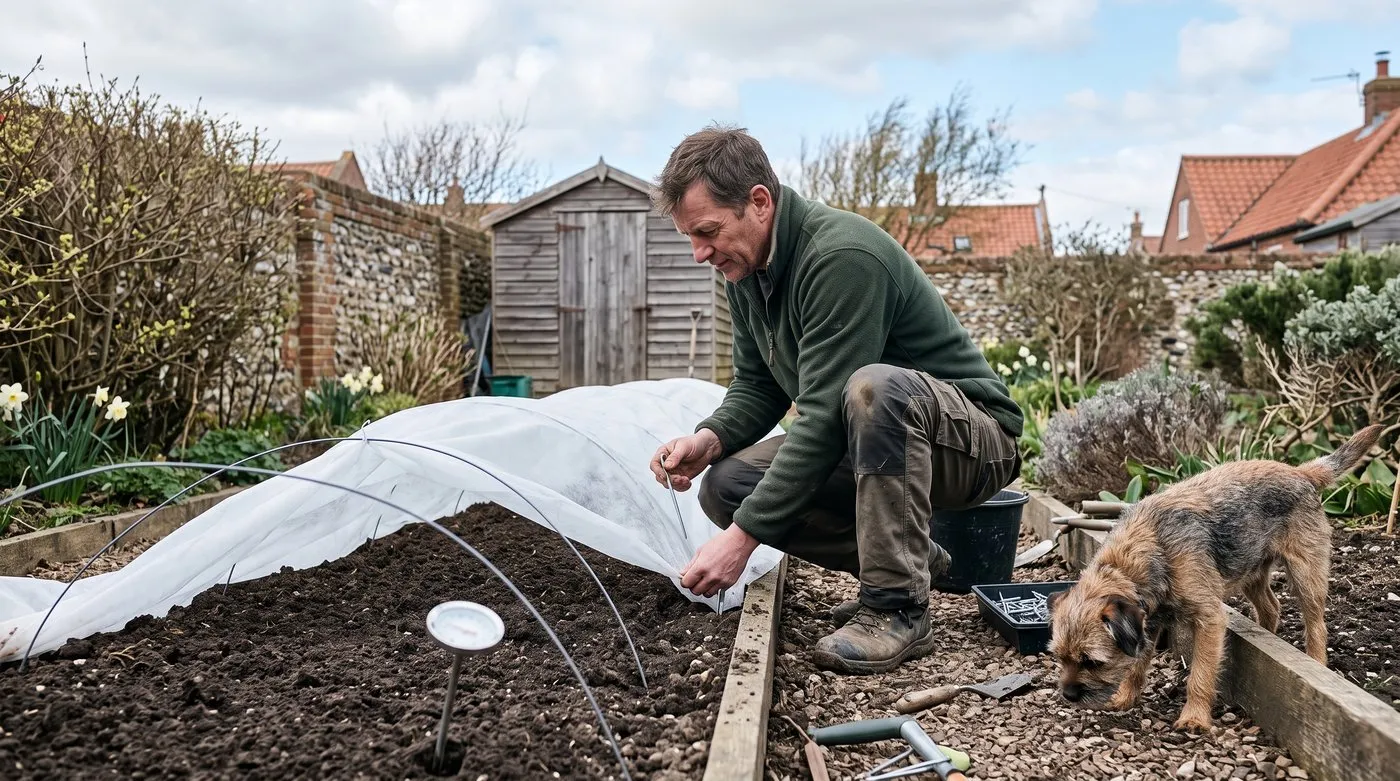
Fleece or a cloche over the bed for a week or two warms the soil ready for sprouted seed.
| Month | What to fluid sow |
|---|---|
| March | Pre-chit celery, celeriac and parsley for modules indoors |
| April | Parsnips and carrots outdoors once the soil has warmed |
| May | Parsnips, carrots and parsley outdoors |
| June | Last parsnip sowings, more carrots and parsley |
| July | Carrots and parsley for autumn |
How fluid sowing compares with dry sowing
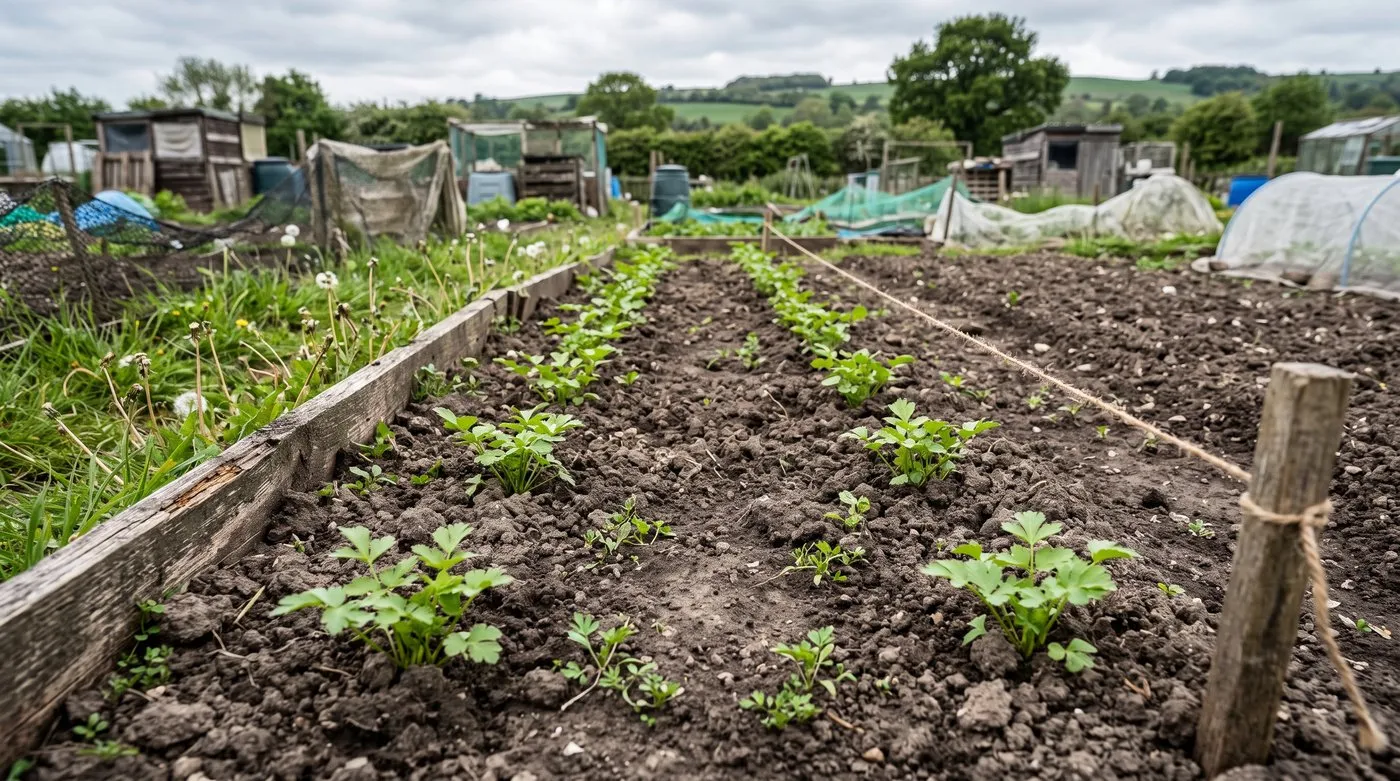
Fluid sowing takes a little more work, but you usually get a fuller row with fewer gaps. That matters most for parsnips, which sit in the ground for months.

Even rows like the two on the left are the aim. Sprouted seed comes up together, so there are fewer gaps to fill.
For carrots, a quick, even row is easier to weed and to cover against pests. The guide to preventing carrot root fly covers fleece and mesh. Another tidy option for fine seed is seed tapes, which space the seeds for you.
Common fluid sowing mistakes
- Using paste with fungicide. Many wallpaper pastes contain fungicides or preservatives. Check the label and use a plain, fungicide-free one.
- Letting the roots get too long. Long roots tangle and snap. Sow as soon as the first ones appear.
- Sowing into cold soil. Sprouted seeds stall and die in cold, wet ground. Wait for the soil to warm up.
- Making the gel too thin. Runny gel pours out too fast and the seeds clump. Aim for thick custard.
- Letting the drill dry out. Young roots need steady moisture. Water gently in dry spells until the seedlings are up.
- Using old parsnip seed. It loses its oomph fast. Buy a fresh packet every year.
Frequently asked questions
What is fluid drilling?
It is sowing sprouted seeds in a gel instead of dry. Seeds are kept on damp paper until tiny roots appear, then stirred into a thin cellulose paste. The paste is squeezed along a drill from a plastic bag. The gel cushions the tiny roots and keeps them moist while they settle in.
Which seeds benefit most from fluid sowing?
Parsnips, carrots and parsley gain the most. They are slow to come up from dry seed, so weeds and gaps take over while you wait. Sprouted seed comes up sooner and more evenly. Fast, easy crops such as radish, peas and beans don’t need it.
Can I use any wallpaper paste for fluid drilling?
No, use a plain cellulose paste with no fungicide. Many pastes contain fungicides or preservatives that can harm young roots. Check the label before you buy. Mix it thick enough to hold the seeds in suspension, but soft enough to squeeze from a bag.
How do I pre-chit parsnip seeds?
Spread fresh parsnip seed on damp kitchen paper in a lidded tub. Keep it somewhere warm indoors and check every day, keeping the paper damp. Remove any mouldy seeds. Sow as soon as tiny white roots appear, before they grow long.
How long does fluid-sown seed take to come up?
Usually sooner than dry-sown seed. Dry-sown parsnips can take three weeks or more in cool soil, while sprouted seed usually shows much quicker. The exact time depends on soil warmth and moisture.
Can I sow pre-sprouted seeds without the gel?
Yes, for larger seeds such as parsnips. Use tweezers or a damp fine paintbrush to place each sprouted seed in the drill. Handle them gently, as the roots snap easily. The gel just makes it quicker and kinder for small seeds like carrots.
Is fluid sowing worth the effort?
Yes for parsnips and other slow, patchy crops. The paste is cheap and the extra work is small once you’ve tried it. You get a fuller row with fewer gaps to re-sow. For quick crops, ordinary dry sowing is simpler and works just as well.
Once your row is up, the guide to growing carrots takes you through thinning, watering and harvest. For tender crops started under cover, see sowing seeds indoors, and find more veg guides in the growing veg hub.
Our team produces practical UK gardening guidance from source research, contributor records and established horticultural practice. Editorial standards are overseen by Matt W.