Key takeaways
- Sow all six tender crops in pots indoors in early May for the earliest harvests
- Wait until the soil is about 12°C before sowing beans or courgettes outdoors
- Plant out after the last frost, usually late May in the south and early June in the north
- Sow beans 5cm deep, and courgettes, squash and cucumbers on their edge 2.5cm deep
- Plant sweetcorn in a block, not a single row, so the cobs fill
- Beans can still be sown into late June if May gets away from you
May is the month to sow tender vegetables in the UK. The soil is finally warming up and the last frosts are fading, so beans, sweetcorn, courgettes, squash and cucumbers can all get going.
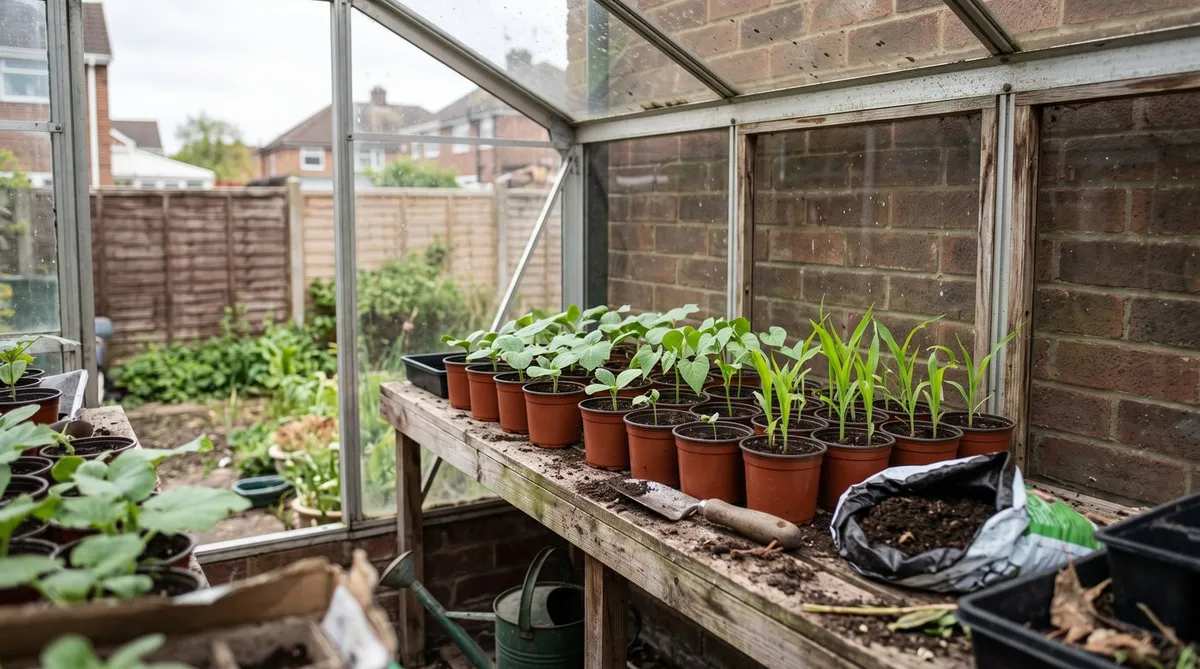
The simplest plan is to sow all six in small pots indoors in early May, then plant them out once frosts are over. Beans and courgettes can also go straight into the ground from mid to late May. Here’s when and how to sow each one.
This page focuses on sowing these six summer crops from seed. For everything else to sow and plant this month, from tomatoes to bedding and potatoes, see what to plant in May.
Why is May the key month for tender vegetables?
Tender crops need warm soil and no frost. Sow too early and the seed rots in cold, wet ground. Sow too late and the plants run out of summer.
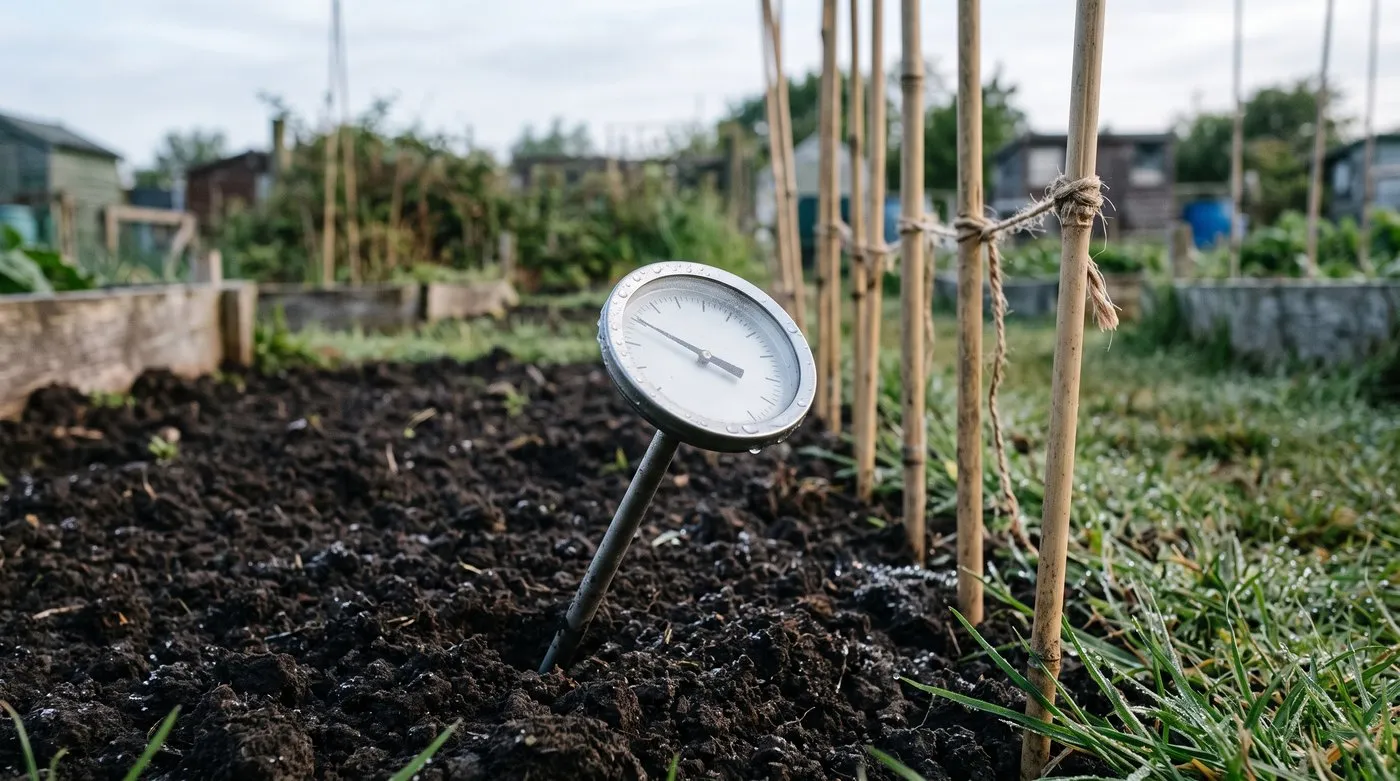
A quick morning reading tells you when the soil is warm enough to sow beans outside.
In May both problems ease. Soil warms to around 12°C, which is what beans and sweetcorn need to germinate well. The risk of frost fades too. It’s usually gone by late May in the south and early June in the north and Scotland, but check your local forecast. Long, light days then push young plants on fast.
Not sure if your soil is warm enough? Push a soil thermometer about 5cm into the ground first thing in the morning. If it reads 12°C or more for a few days running, you’re ready to sow outside.
Which tender crops to sow first
All six can be sown indoors in early May. Here’s how they compare.
| Crop | Sow indoors | Sow outdoors | Depth | Latest sowing |
|---|---|---|---|---|
| French beans | Early May | Mid to late May | 5cm | Late June |
| Courgettes | Early May | Late May | 2.5cm, on edge | Mid-June |
| Squash and pumpkins | Early May | Late May, south only | 2.5cm, on edge | Mid-June |
| Outdoor cucumbers | Early May | Late May | 2.5cm, on edge | Mid-June |
| Runner beans | Early May | Late May | 5cm | Late June |
| Sweetcorn | Early May | Late May under fleece | 2.5cm | Early June |
Squash, cucumbers and sweetcorn need the longest warm spell, so give them priority if you’re short of windowsill space.
French beans
French beans are one of the easiest May sowings. They come up in about a week in warm compost and crop from midsummer into autumn.
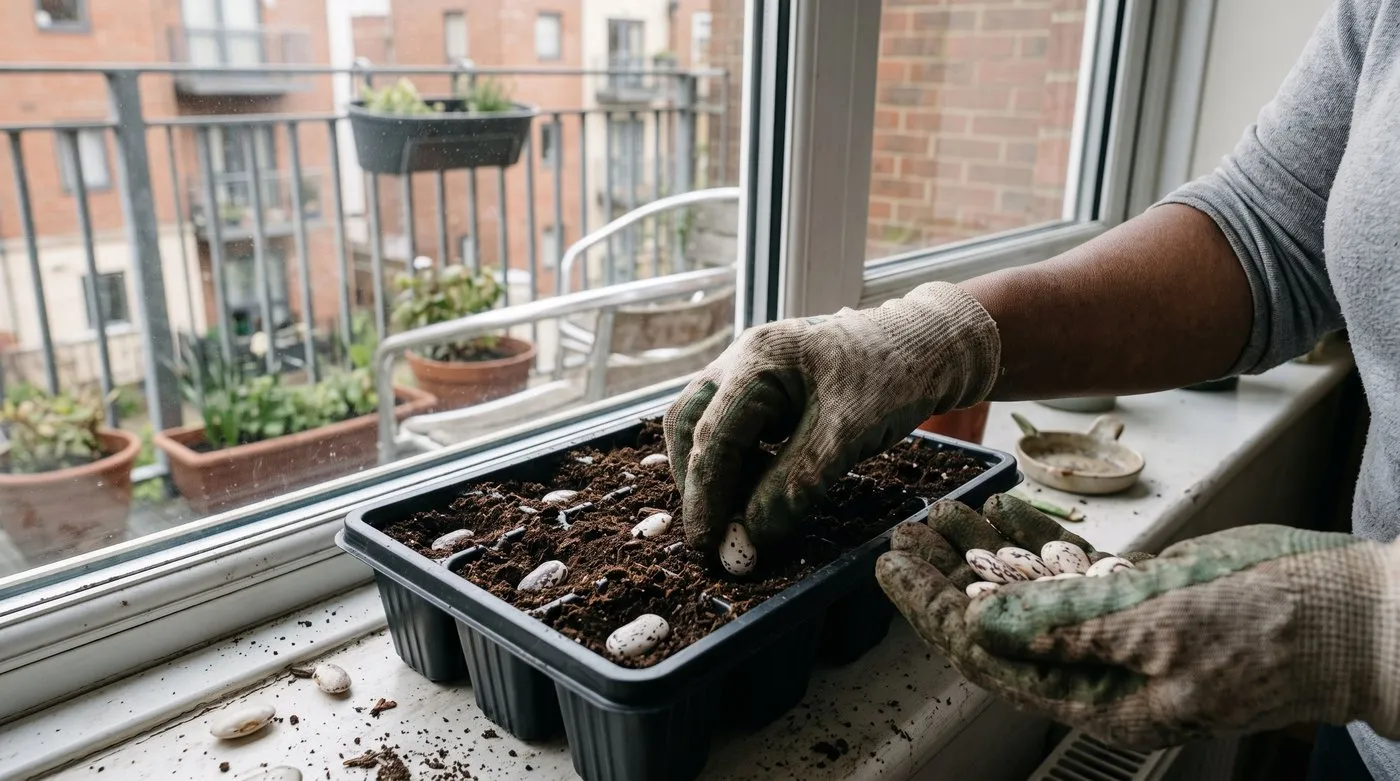
One bean per module, about 5cm deep, gives each seedling its own root space.
- Indoors: sow one seed per small pot or module, 5cm deep, in early May. Plant out after the last frost.
- Outdoors: sow from mid to late May once the soil is about 12°C. Sow 5cm deep and 10-15cm apart.
Dwarf types need no support. Climbing French beans need canes or netting, just like runner beans. The biggest mistake is sowing into cold soil: the seed simply rots. If in doubt, sow in pots and wait.
See the full guide to growing French beans for varieties and picking.
Courgettes
Courgettes give a big crop from a small space. Two or three plants are plenty for most families.
- Indoors: sow one seed per 9cm pot, on its edge, 2.5cm deep, in early May. Sowing on edge helps stop the seed rotting.
- Outdoors: in late May, sow two or three seeds where each plant will grow, then keep the strongest.
Give bush courgettes about 90cm each way, and trailing types more. Water well at the roots, as dry plants are more prone to powdery mildew. More in the guide to growing courgettes.

A courgette with a couple of true leaves is ready to harden off and plant out once frosts are over.
Squash and pumpkins
Squash and pumpkins need a long, warm season to ripen, so sow them in pots in early May.
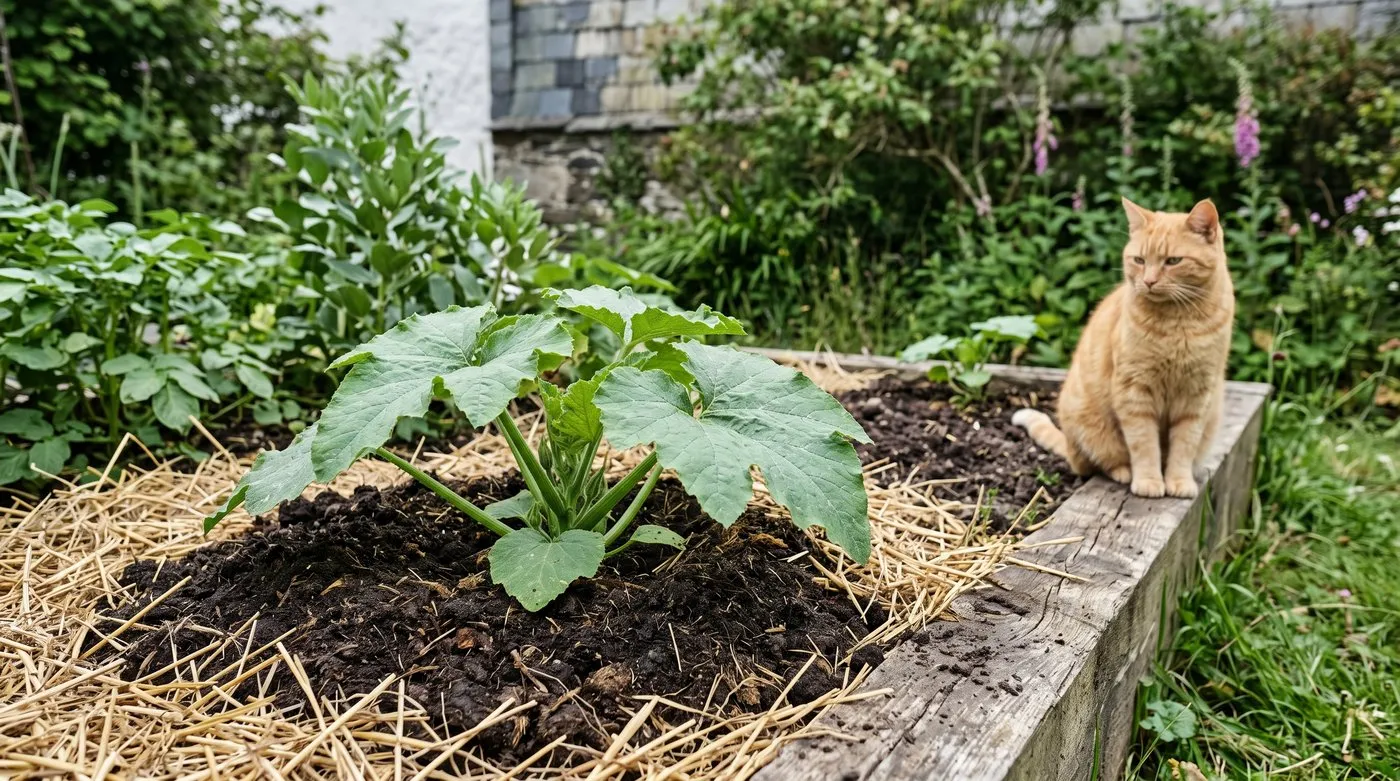
Squash love rich soil, so dig in plenty of manure or compost before planting out.
Sow one seed per 9cm pot, on its edge, 2.5cm deep. Keep them somewhere warm and bright. Plant out after the last frost into rich soil with plenty of well-rotted manure or compost dug in. Trailing types need 1.5-2m each way. Bush types need about 1m.
Direct sowing can work in the south from late May, but the fruit has less time to ripen. In a cool summer that can mean green squash in October. The guide to growing pumpkins and squash covers ripening and curing.
Outdoor cucumbers
Outdoor or ridge cucumbers are tougher than greenhouse types, but they still need warmth to get started.
Sow one seed per 9cm pot, on its edge, 2.5cm deep, in early May. They need a warm spot, at least 20°C, to germinate well. Plant out after the last frost in a sheltered, sunny spot, about 45-60cm apart, with a frame or netting to climb.
Check the packet: greenhouse cucumbers won’t do well outside. Water regularly, as dry spells can make the fruit bitter.
Runner beans
Runner beans are the classic British allotment crop and very easy from seed.
- Indoors: sow one seed per pot or deep module, 5cm deep, in early May.
- Outdoors: sow in late May or early June, 5cm deep, at the base of each cane.
Put the canes up before you plant. A wigwam or double row of 2.4m canes works well, with one or two plants per cane. Pinch out the tips when the plants reach the top. Keep them well watered once flowering starts, or the flowers tend to drop without setting pods. See the guide to growing runner beans.

Get the canes in before you plant. Young runner beans find their way up quickly once they touch a cane.
Sweetcorn
Sweetcorn needs warmth and a block layout. Sow it in pots in early May for the best chance of ripe cobs.
Sow one seed per pot or deep module, 2.5cm deep. Plant out after the last frost when the seedlings are about 8-10cm tall, in a block rather than a row, about 35-45cm apart each way.
Sweetcorn is pollinated by the wind. Pollen falls from the tassels at the top onto the silky threads on the cobs below. In a single row much of it blows away and the cobs come out patchy. Direct sowing is possible in the south under fleece, but mice and slugs often take the seed. More in the guide to growing sweetcorn.

Planting sweetcorn in a square block rather than a long row helps the pollen land on every cob.
Pots or direct sowing: which is better in May?
Both work. Pots give a head start and keep seedlings safe from slugs while they’re small. Direct sowing saves potting and transplanting, and suits beans and courgettes once the soil is warm.
| Sowing in pots | Sowing direct | |
|---|---|---|
| Best for | All six crops, especially squash, cucumbers and sweetcorn | French beans, runner beans, courgettes |
| When | Early May | Mid to late May, once soil is 12°C |
| Pros | Earlier crops, fewer slug losses | Less work, no transplant shock |
| Cons | Needs windowsill space and hardening off | Slower start, more at risk from slugs and cold |
A handy approach is to do both. Sow a few in pots early, then sow a row direct later as a back-up and a later crop.
May to June sowing timeline
| When | What to do |
|---|---|
| Early May | Sow all six crops indoors in pots or modules |
| Mid-May | Start hardening off the earliest seedlings. Sow French beans outdoors in warm areas |
| Late May | Plant out in the south after the last frost. Sow beans and courgettes direct |
| Early June | Plant out in the north and Scotland. Last sowings of sweetcorn |
| Mid-June | Last sowings of courgettes, squash and outdoor cucumbers |
| Late June | Last sowings of French and runner beans |
How to plant out and care for May-sown crops
Before planting out, harden off your seedlings. Stand them outside by day and bring them in at night for 7-10 days, so they get used to wind and cooler air. The guide to hardening off explains how.
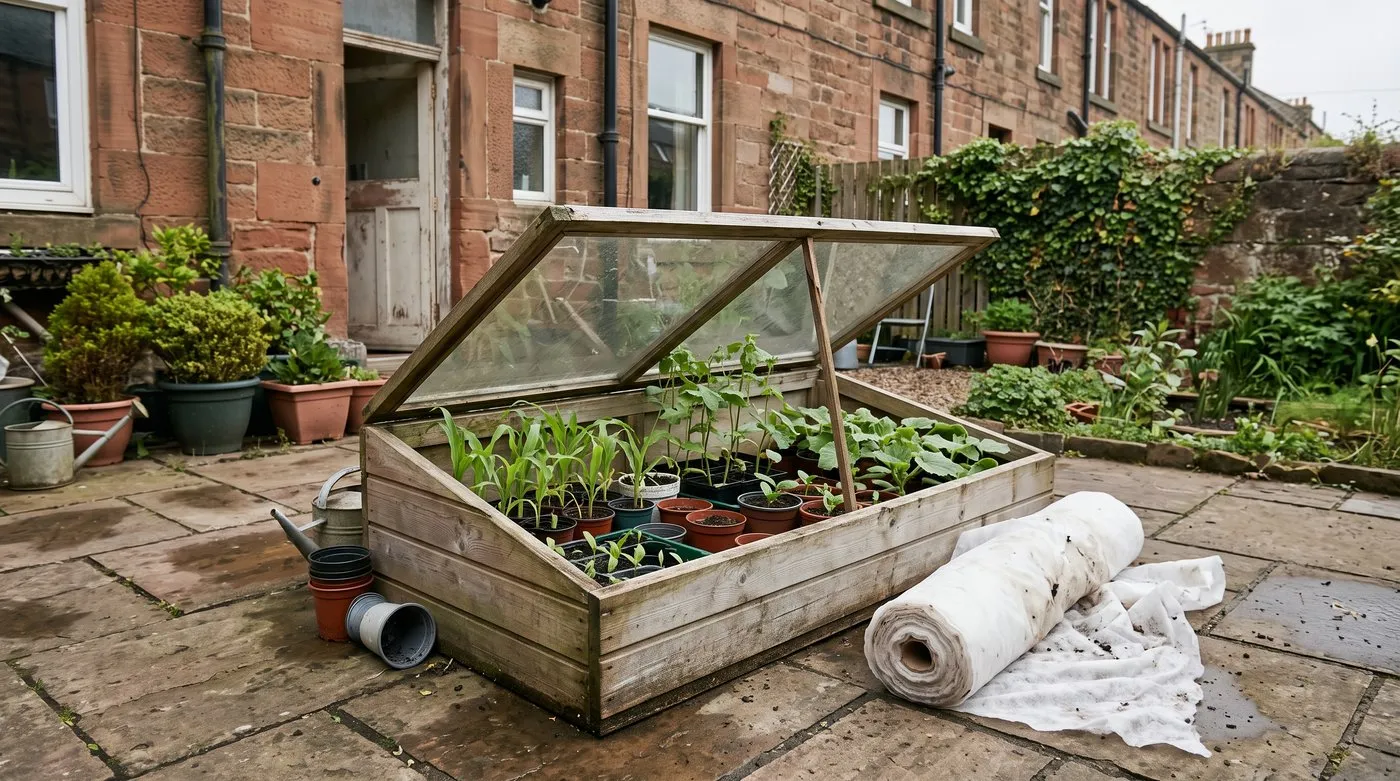
A week or so in a cold frame with the lid open by day helps seedlings cope with life outside.
Once they’re in:
- Water them in well to settle the roots.
- Mulch with compost to hold in moisture.
- Watch for slugs for the first couple of weeks, especially after rain. Check at dusk and pick them off.
- Put supports in before climbers need them.
- Feed courgettes, squash and cucumbers with a liquid feed once they start flowering.
- Water steadily through summer. Dry spells at flowering are the main reason for poor bean crops.
Keep fleece handy for any cold nights in the first week or two.
Common May sowing mistakes
- Sowing outside too early. Cold soil rots bean and squash seed. Wait for about 12°C, or sow in pots.
- Sowing courgette and squash seeds flat. Sow them on their edge to help stop them rotting.
- Planting sweetcorn in one long row. Plant a block so the cobs fill properly.
- Skipping hardening off. Plants moved straight from a warm room outside often stall or scorch.
- Letting pots dry out. Small pots dry fast on a sunny windowsill. Check them every day.
- Forgetting the frost forecast. A single late frost can kill tender seedlings. Keep fleece ready.
Frequently asked questions
Why is May the month for sowing tender vegetables?
Because the soil is finally warm enough and frosts are nearly over. Beans, sweetcorn, courgettes and squash rot in cold, wet soil. By late May most of the UK is warm enough to plant them out.
Should I sow in pots or straight into the ground in May?
Pots give a head start and protect seedlings from slugs. Direct sowing works for beans and courgettes once the soil warms in mid to late May. Doing a bit of both gives you a back-up if one batch fails.
What soil temperature do French beans need?
About 12°C or warmer for reliable germination. In cold, wet soil the seed sits and often rots. Check with a soil thermometer in the morning, and sow in pots indoors if it’s still cold.
How late can I sow these crops?
Beans can go in until late June. Courgettes, squash and outdoor cucumbers are best sown by mid-June. Sweetcorn is best sown by early June so the cobs ripen before autumn.
Do I need a heated propagator in May?
No, a warm windowsill is enough in May. Most tender seeds come up well at normal room temperature. A propagator just speeds things up a little.
How do I protect young plants from a late frost?
Watch the forecast and cover plants on cold nights. Use horticultural fleece, cloches or upturned pots. Keep pot-grown plants indoors or in a cold frame until frosts have passed in your area.
Why do I need to plant sweetcorn in blocks?
Because sweetcorn is wind-pollinated. Pollen falls from the tassels on top onto the silks of the cobs below. In a single row much of it blows away, so plant in a block about 35-45cm apart each way.
Once your May sowings are in, see what to plant in June for the next round, or browse more vegetable growing guides.
Our team produces practical UK gardening guidance from source research, contributor records and established horticultural practice. Editorial standards are overseen by Matt W.


