
Key takeaways
- Plant tubers 10-15cm deep, 30cm apart, from February to April
- They're a kind of sunflower, not related to globe artichokes
- Plants reach 2-3 metres, so they make a handy summer windbreak
- Dig tubers from November to March and leave the rest in the soil
- Fuseau has the smoothest tubers and is the easiest to peel
- Any tuber left behind regrows, so lift them all or use a barrier
Jerusalem artichokes are one of the easiest crops you can grow in the UK. Plant a tuber in spring and by November you’ll be digging up a cluster of knobbly, nutty tubers from the same spot. They grow in almost any soil, shrug off frost and neglect, and come back every year whether you want them to or not.
Despite the name, they have nothing to do with Jerusalem or with globe artichokes. They’re a sunflower, Helianthus tuberosus, from North America. “Jerusalem” is probably a mangling of girasole, the Italian for sunflower. If you’re planning the year’s plot, our crop rotation planner helps you fit permanent crops like these around your annual veg.
Which Jerusalem artichoke variety should I grow?
Go for Fuseau if you can. Tuber shape matters more than you’d think, because knobbly ones take ages to peel.
| Variety | Tubers | Height | Best for |
|---|---|---|---|
| Fuseau | Long and smooth, pale cream | Tall | Easy peeling, soups, roasting |
| Dwarf Sunray | Rounded, white | Shorter | Small gardens and big pots |
| Gerard | Knobbly, red-purple | Very tall | Big crops on an allotment |
| Red Fuseau | Smooth, pink-red | Tall | Pretty tubers for salads |
Fuseau
Fuseau is the best all-rounder. The tubers are long and smooth, so they’re far easier to peel than the old knobbly kinds. They taste sweet and nutty when roasted. It’s the one most garden centres sell, and the RHS guide to growing Jerusalem artichokes is a good extra read. Plants reach about 2-2.5 metres.
Dwarf Sunray
Dwarf Sunray stops at around 1.5 metres, so it suits smaller gardens, borders and large containers. The white tubers are round and fairly smooth. You’ll get a smaller crop, but less staking and less shade over your other plants. Pick this one if you want the tubers without a 3-metre jungle.
Gerard
Gerard gives big crops of knobbly red-purple tubers. They taste lovely but take longer to prepare. Plants grow 2.5-3 metres tall and spread hard. It’s a good choice if you have room on an allotment.
Red Fuseau
Red Fuseau has the smooth shape of Fuseau with pretty pink-red skin. The flesh is white and crisp raw, sweet when roasted. It can be harder to find in garden centres, so you may need to order online. Sliced raw, it looks great in a winter salad.
How to plant Jerusalem artichoke tubers

Planting tubers in a trench in spring, 30cm apart and 10-15cm deep.
You grow them from tubers, not seed. Buy named ones in late winter, or plant firm tubers from the greengrocer. Pick ones with visible buds (eyes) and no soft or mouldy patches.
When to plant
Plant from February to April. They’re fully hardy and don’t mind cold soil. In mild southern gardens, February is fine. In the north or on heavy clay, wait until March or April when the ground is less soggy. Later planting still works, as they keep growing until autumn.
How to plant
- Dig a trench 10-15cm deep
- Lay the tubers 30cm apart
- Set them buds facing up
- Fill in and firm gently
- Water if the soil is dry
Leave 90cm between rows so you can get between the tall plants later. A single row for a screen just needs the 30cm gap.
Soil requirements
Almost any soil will do, from heavy clay to sand and chalk. The one thing they hate is sitting in water all winter, which rots the tubers. If your plot stays wet, grow them on a mound or in a raised bed.
They don’t need much feeding. Ground that’s had some compost in the last couple of years is plenty. On very poor or sandy soil, fork in a bucket of well-rotted compost per square metre first.
Why containment matters (and how to do it)
This is the bit everyone warns you about. Jerusalem artichokes spread through the soil and can take over an open bed in a couple of years. Any little piece left after harvest grows into a new plant. On allotments they’re up there with mint and horseradish for wandering into the neighbours’ plots.
Sunken barrier method
The surest fix is a barrier around the bed. Use rigid plastic sheeting, doubled-up heavy plastic or metal flashing. Bury it upright 45cm deep, with 5cm poking above the soil. The tubers can’t get past it.
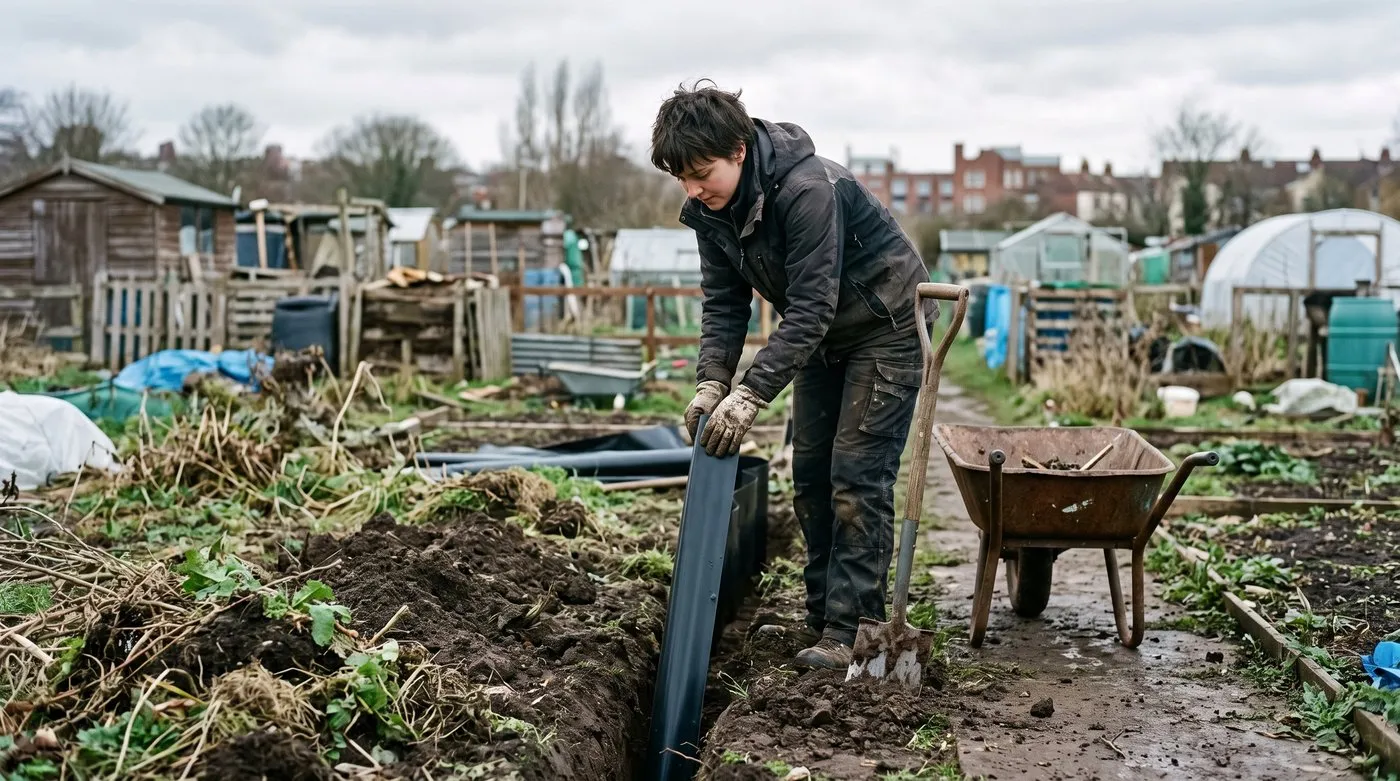
Bury the barrier 45cm deep with a little showing above ground. It’s the surest way to stop tubers wandering into the next bed.
Raised bed method
A raised bed with solid sides of timber, brick or metal keeps them in well. A bed about 60cm tall is enough. Tubers can still push down underneath, so check the base each spring.
Container method
A big pot, an old dustbin with drainage holes or a heavy-duty grow bag stops the spreading completely. Use at least 40 litres for one or two plants. Fill with multi-purpose compost mixed with garden soil. The crop is smaller than in the ground, but much easier to manage.
The harvest-everything method
In an open bed, the simplest plan is to dig up every tuber each year. In late February or March, before new shoots appear, fork over the whole bed. Then feel through the soil by hand. A tuber the size of a marble is enough to make a new plant.
Caring for Jerusalem artichokes through the season

By late summer the plants reach 2-3 metres and make a handy windbreak.
Once they’re in, they pretty much look after themselves.
Watering
Plants in the ground rarely need watering in a normal British summer. In a long dry spell in July or August, give them a good soak once a week to keep the tubers swelling. Pots dry out much faster, so water those regularly.
Staking and support
The stems are thick and sturdy, and in a sheltered garden they usually stand up on their own. On a windy site, run a wire or string between stout posts at about 1.5 metres. Or cut the stems back to 1.5 metres in late August to cut down on wind rock.
Weeding
Weed around them in spring while they’re small. By midsummer the tall leaves shade out most weeds. That’s why no-dig gardeners like them: mulch thickly in spring and let the plants do the rest.
Feeding
On reasonable soil you don’t need to feed them. On poor ground, scatter a handful of general organic fertiliser around each plant in May and water it in. Too much feed just gives you lots of leaves.
The yellow flowers
In late summer and early autumn you’ll get small yellow sunflowers at the tops of the stems. Bees love them. Taking them off doesn’t make much difference to the crop, so leave them for the pollinators.
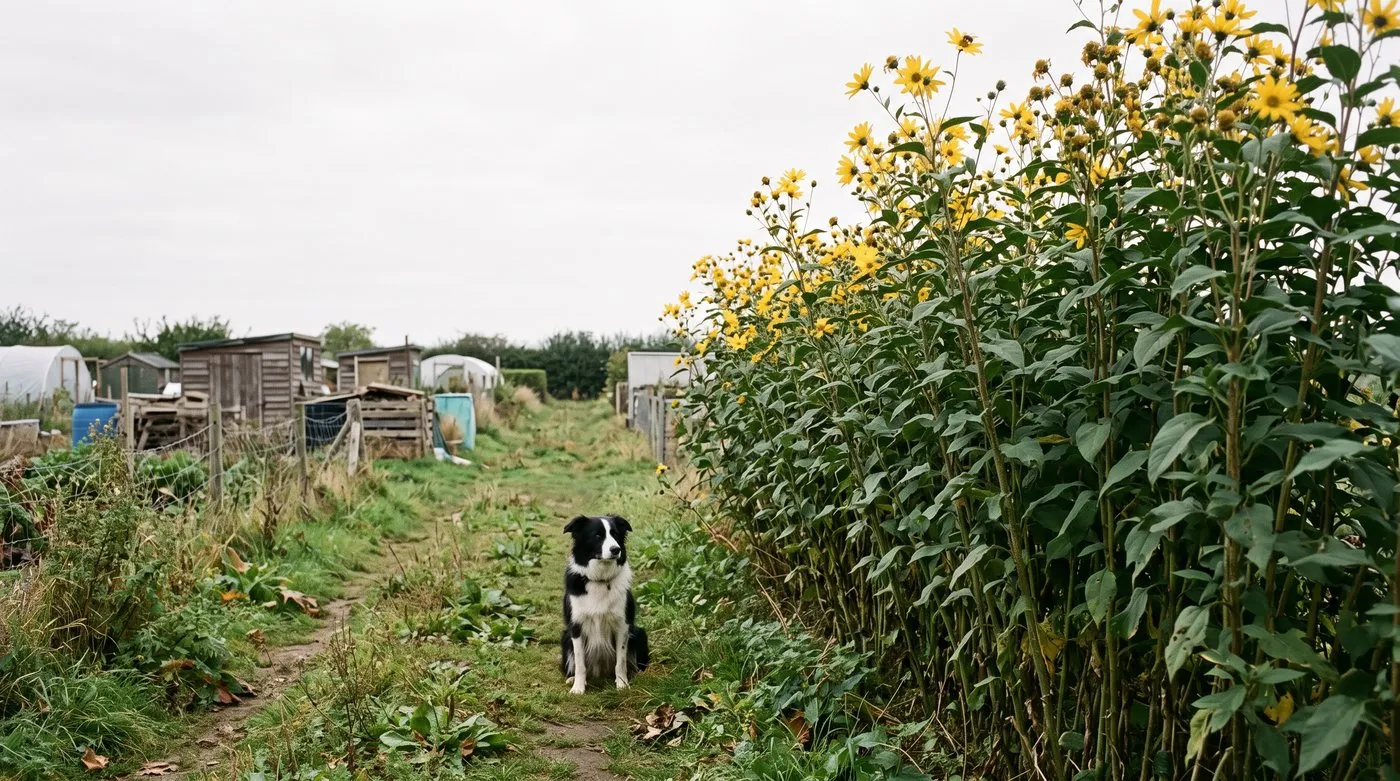
The little yellow sunflowers arrive in late summer and bees love them. Leave them on, as taking them off makes little difference to the crop.
Harvesting Jerusalem artichokes through winter

Freshly lifted tubers. Knobbly types like Gerard take longer to clean and peel.
This is the best part. Most crops have to be lifted and stored in autumn, but these sit happily in the cold ground all winter until you want them.
When to start harvesting
Start lifting from November. Wait until the first hard frost blackens the leaves. Then cut the stems down to 10cm.
How to lift tubers
Push a fork into the soil about 20cm from the stem. Lever up gently and pull the clump out by hand. Feel around in the loose soil for strays, as some wander 15-20cm from the stem.
Leave them in the ground
The soil is your best store cupboard. Dig only what you need for each meal and leave the rest. They keep well in cold soil for months and don’t mind frost. Lifted ones soon go soft and shrivel.
Forced storage
If you have to lift some, keep them unwashed in a paper bag or a box of damp sand somewhere cool and dark. Use them within a couple of weeks. Don’t use plastic bags, as damp builds up and they rot.
Final spring clearance
In late February or early March, before new shoots show, lift everything that’s left. Keep a few of the best tubers to replant and eat or compost the rest. Fork the whole area and feel for bits by hand. This clear-out is the most important step for keeping them under control.
Cooking and preparing Jerusalem artichokes
They have a sweet, nutty flavour that’s lovely in soups, roasts, gratins and salads. The only fiddly bit is peeling the knobbly ones, which is where smooth Fuseau earns its keep.
Preparation tips
Scrub them well with a stiff brush. Peel smooth ones with a normal peeler. For knobbly ones, cook them in their skins and slip the skins off afterwards. Cut tubers go brown quickly, so drop them into water with a squeeze of lemon.
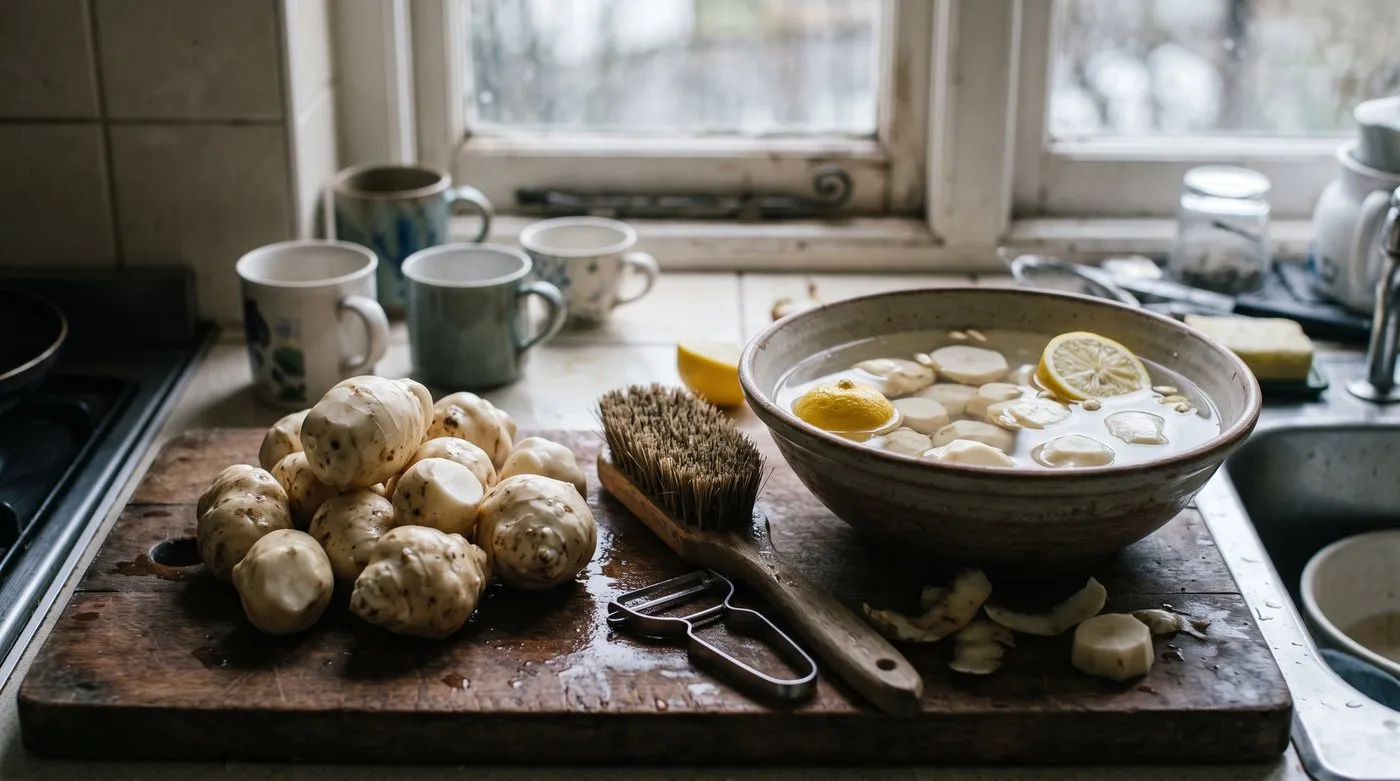
Smooth types like Fuseau peel easily. Drop the cut pieces into lemony water straight away, as they brown quickly.
Best cooking methods
| Method | How | What you get |
|---|---|---|
| Roasted | 190C for 35-45 minutes | Sweet, with crispy edges |
| Soup | Simmer 20 minutes with onion and stock | Silky winter starter |
| Mashed | Boil 15-20 minutes, mash with butter | Smooth and slightly sweet |
| Raw in salad | Thinly sliced or grated | Crisp, like water chestnut |
| Gratin | 180C for 40 minutes with cream and garlic | Rich and comforting |
The wind issue
Let’s be honest: they give most people wind. The tubers are full of inulin, a fibre we can’t digest, so gut bacteria break it down and make gas. It’s usually worst the first few times and eases if you eat them often.
Start small. Slow roasting seems to help a little. Some cooks add a pinch of caraway or fennel seeds, which may help too.
Growing Jerusalem artichokes as a windbreak or screen
Their height makes them a useful summer windbreak. On an exposed allotment, one row along the windy side shelters lower crops, without the commitment of a hedge.
Plant a row 30cm apart along the boundary in February. By July you’ll have a dense green wall. It dies back in winter, so it’s a summer screen only.
The bonus is that this screen feeds you. Dig the tubers over winter, replant a few in spring, and the screen grows back by summer.
Common problems and pests
They’re very trouble-free. Serious diseases are rare in UK gardens.
Slugs
Slugs sometimes nibble young shoots in spring. It’s rarely bad enough to matter. Evening torch patrols, beer traps or nematodes will deal with it. Once plants are growing strongly, slugs aren’t a worry.
Sclerotinia rot
This is a white, fluffy mould with hard black lumps, found on tubers in wet ground or in storage. Bin or burn affected tubers rather than composting them. Good drainage and crop rotation help, though moving a permanent patch isn’t always practical.
Aphids
Blackfly sometimes cluster on the shoot tips in early summer. They rarely affect the crop. Knock them off with a jet of water from the hose. Ladybirds and hoverflies soon move in to finish the job.
Spreading out of control
The biggest problem is usually the plant itself. If they escape, they’ll pop up in beds and paths for years. The only answer is to keep digging. Fork over the area each spring and remove every piece. It may take two or three years to clear.
Month-by-month growing calendar
| Month | What to do |
|---|---|
| February | Plant tubers 10-15cm deep, 30cm apart. Put in any barriers |
| March | Finish planting. Look out for shoots |
| April | Weed around young plants |
| May | Mulch around the stems if you like |
| June-July | Plants shoot up. Water only in long dry spells |
| August | Support plants on windy sites, or cut back to 1.5m |
| September | Enjoy the yellow flowers |
| October | Leaves start to yellow |
| November | Cut stems to 10cm after frost. Start digging |
| December-January | Keep digging as you need them |
| Late February | Lift everything that’s left. Save the best to replant |
Fancy another unusual tuber? Try our guide to growing yacon.
Garden Organic’s Jerusalem artichoke page has more growing tips.
Frequently asked questions
Are Jerusalem artichokes related to globe artichokes?
No, they’re completely different plants. Jerusalem artichokes are a North American sunflower grown for their tubers. Globe artichokes are thistles grown for their flower buds. The name probably stuck because early settlers thought the tubers tasted a bit like artichoke hearts.
When should I plant Jerusalem artichoke tubers in the UK?
Plant tubers from February to April. They don’t mind cold soil, so there’s no need to wait for warm weather. Late February to mid-March suits most of the country. In the north, or on wet clay, wait until March or April.
How do I stop Jerusalem artichokes spreading?
Lift every single tuber each spring. Even a small piece left in the soil will regrow. For a lasting fix, plant inside a barrier of thick plastic or metal sheeting buried 45cm deep. A solid-sided raised bed or a big container works too.
Can I eat Jerusalem artichokes raw?
Yes, raw Jerusalem artichokes are crisp and nutty. Slice them thinly into salads or grate them into slaws. Raw ones are more likely to give you wind, so start with a small portion.
Why do Jerusalem artichokes cause wind?
They’re full of inulin, a fibre your body can’t break down. Your gut bacteria do the job instead, and that makes gas. Most people find it eases if they eat them regularly. Slow roasting seems to help a little too.
How do I harvest Jerusalem artichokes?
Lift tubers with a garden fork from November onwards. Push the fork in about 20cm from the stem so you don’t spear them. Loosen the soil, pull the clump out by hand and feel around for strays. Dig only what you need, as they keep best in the cold ground.
Do Jerusalem artichokes need full sun?
They do best in full sun but cope with part shade. In shade they grow lankier and give a smaller crop. They put up with windy sites, though very tall stems may need support in autumn gales.
Our team produces practical UK gardening guidance from source research, contributor records and established horticultural practice. Editorial standards are overseen by Matt W.


