Key takeaways
- Yacon is frost tender, so plant out in late May or early June after the last frost
- Start crowns in pots indoors in March or April for a longer season
- Give it rich, moist soil, full sun and shelter, spaced 75-90cm apart
- Lift in October or November once frost has blackened the leaves
- Cure the tubers for a week or two somewhere dry and frost-free to sweeten them
- Eat the smooth storage tubers and save the knobbly crowns for next year's plants
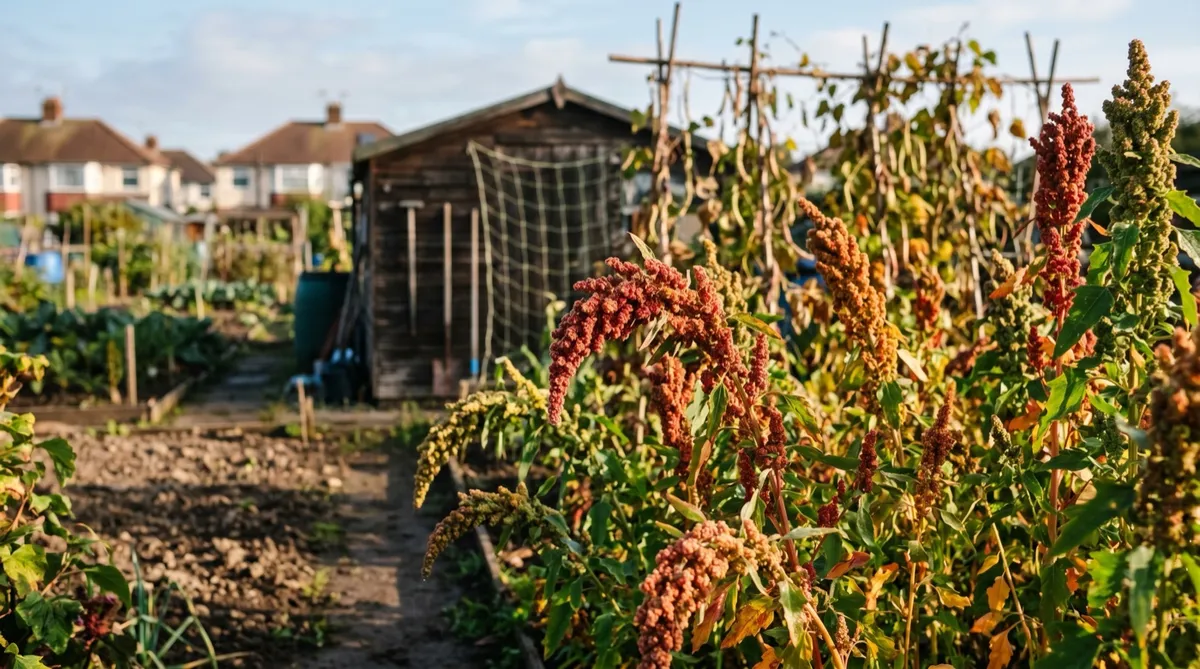
Yacon is one of the most rewarding unusual crops you can grow in the UK. A single plant gives a cluster of crisp, juicy tubers that taste like a cross between an apple and a water chestnut. It’s a relative of the sunflower from the Andes, and you grow it much like a dahlia.
That means starting it under cover, planting out after the last frost and lifting it in autumn. The one trick most beginners miss is curing: leave the tubers to rest for a week or two and they turn noticeably sweeter. This guide covers every step, from waking the crowns to storing the harvest.
What is yacon?
Yacon (Smallanthus sonchifolius) is a frost-tender perennial from the Andes of South America. In a UK summer it grows 1.5-2m tall, with large soft leaves and small yellow daisy flowers late in the season.
Underground it makes two different things:
- Storage tubers: large, smooth, brown-skinned tubers that you eat.
- Crowns: a knobbly, reddish mass at the base of the stems. These carry the buds for next year, so you save them for replanting.
If you enjoy growing oddities, yacon sits nicely alongside the other unusual crops worth growing in the UK.
When to plant yacon
Pot up crowns in March or April and plant out in late May, once frost has passed. Yacon has no frost tolerance. A single frosty night blackens the leaves, just as it does to dahlias.
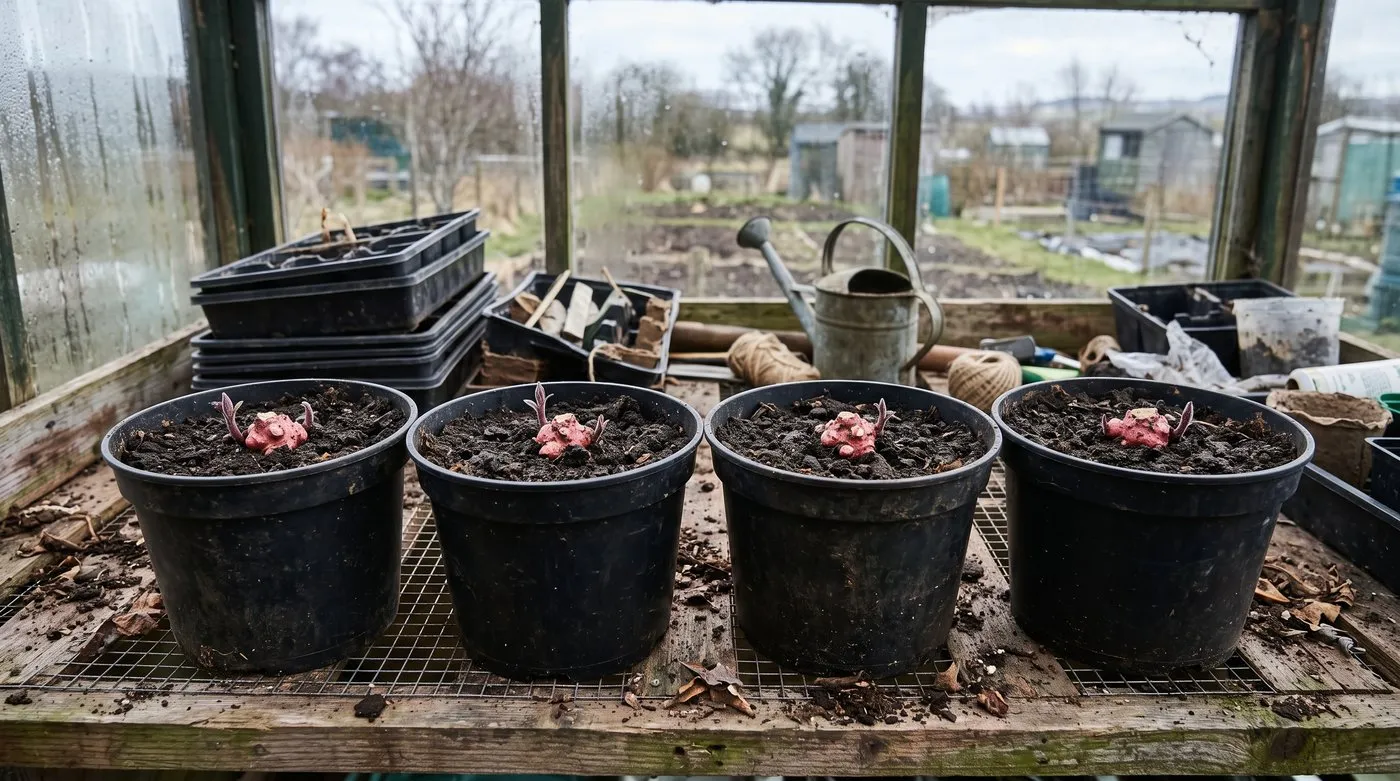
Pot up crown pieces in spring and keep them frost-free. Shoots soon appear.
- Pot each crown piece into a 1-litre pot of multipurpose compost.
- Keep the pots in a frost-free greenhouse or on a bright windowsill.
- Water lightly until shoots appear, then a little more as they grow.
- Harden the plants off for a week or so in mid to late May.
- Plant out after your last frost date: late May in much of England, early June further north.
Starting under cover gives the plants the longest possible season, which means a bigger crop. Sweet potatoes follow similar timing if you’d like another tender root to try.
Soil, sun and spacing for yacon
Yacon crops best in rich, moist soil in full sun, with some shelter from wind. It’s a hungry, thirsty plant.
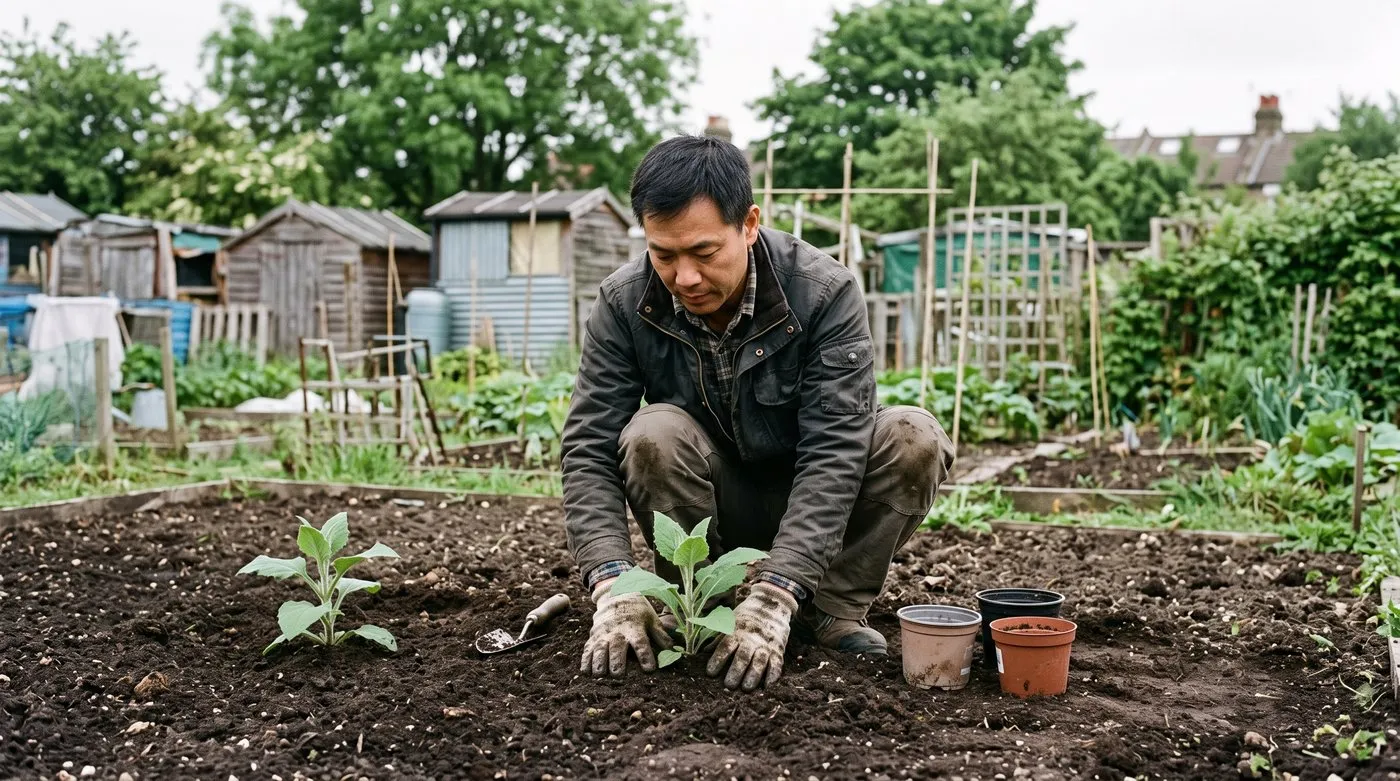
Plant out once frost has passed, leaving plenty of room. The plants soon fill the gap.
Dig in a generous amount of well-rotted manure or garden compost before planting. Space plants 75-90cm apart each way. They look small in June but fill the gap by August.
The tall stems catch the wind, so a sheltered spot helps. On heavy, wet ground, plant on a slight ridge so the crowns don’t sit in water. On light, dry soil, add extra organic matter and mulch well.
Watering and summer care
Keep yacon steadily moist through summer. A dry spell slows the tubers swelling, and you won’t see the damage until you lift a small crop.
- Water deeply once or twice a week in dry spells, soaking the root area.
- Mulch with compost, straw or grass clippings to hold in moisture.
- Feed occasionally with a general liquid feed if growth looks slow.
- Stake plants on windy sites with one stout cane, tied loosely.
Yacon has few pest problems in the UK. Slugs may nibble young shoots in June, so keep an eye on new plantings.

A straw mulch keeps the soil moist through summer, when yacon is growing fastest.
How and when to harvest yacon
Lift yacon in October or November, soon after the first frost has blackened the leaves. The frost tells you the season is over.
- Cut the dead stems down to about 10cm so you can see where to dig.
- Push a fork into the soil well away from the plant and work inwards.
- Lever the whole clump up gently. The tubers are brittle and snap easily.
- Tease off the soil by hand.
- Separate the smooth storage tubers for eating from the knobbly crowns for replanting.
Handle the tubers gently, as broken or bruised ones don’t keep as well. Lifting is very like lifting dahlias, which the guide to growing dahlias covers in detail.

Eat the smooth tubers on the left. Save the knobbly red crowns on the right to grow next year’s plants.
How to cure yacon for sweetness
Freshly lifted yacon is crunchy and juicy but tastes fairly bland. Curing fixes that. As the tubers rest, some of their stored carbohydrate turns to sugar, and they taste much sweeter.
Spread the tubers out somewhere dry and frost-free, such as a shed, garage or porch, for one to two weeks. Don’t wash them first. Check them every few days and use any damaged ones first.
The biggest mistake is eating yacon straight from the ground, deciding it’s dull, and never growing it again. Give it time.

A week or two in a dry, frost-free shed makes the tubers noticeably sweeter.
Storing and eating yacon
Store cured tubers somewhere cool, dark and frost-free, in a box of barely damp sand or in paper sacks. They should keep for a couple of months. The guide to storing root vegetables over winter covers boxes and clamps.
Yacon is best raw. Peel off the thin skin and slice or grate it into salads, or eat it like fruit. A squeeze of lemon stops the flesh browning. It also works in a quick stir-fry, staying crunchy where other roots go soft.

Crisp, juicy and pale inside: cured yacon is lovely sliced raw.
How to save yacon crowns for next year
Yacon is grown from crowns, not seed, and it rarely sets seed in the UK. One plant gives you plenty of crown pieces each autumn, so you only need to buy it once.
- After lifting, break or cut the crown clump into pieces, each with at least one visible bud.
- Let any cut surfaces dry for a day.
- Store the pieces in trays of just-moist compost somewhere cool and frost-free.
- Check them through winter and throw out any that rot.
- Pot them up in March or April to start the cycle again.
Don’t try to replant the smooth storage tubers. They rarely have buds and usually won’t grow. The guide to bulbs, corms, tubers and rhizomes explains why different underground parts behave differently.
Yacon, oca or Jerusalem artichoke?
| Crop | Hardiness | Taste | How easy | Good to know |
|---|---|---|---|---|
| Yacon | Frost tender | Crisp, juicy, sweet after curing | Easy | Save crowns to replant |
| Jerusalem artichoke | Fully hardy | Nutty, usually cooked | Very easy | Spreads readily |
| Oca | Frost tender | Lemony, waxy | Moderate | Tubers form late in autumn |
Yacon gives the crunchiest raw crop. Jerusalem artichoke is the easiest but can take over. The guide to growing Jerusalem artichokes covers that hardy option.
Yacon growing calendar
| Month | What to do |
|---|---|
| January-February | Check stored crowns and remove any that rot |
| March-April | Pot up crowns under cover. Keep frost-free |
| May | Harden off. Plant out after the last frost, 75-90cm apart |
| June | Mulch. Watch for slugs on young shoots |
| July-August | Water deeply in dry spells. Stake on windy sites |
| September | Small yellow flowers appear. Keep the soil moist |
| October-November | Lift after the first frost. Separate tubers and crowns. Cure tubers |
| December | Store tubers cool and dark. Keep crowns frost-free |
Common mistakes with yacon
- Eating it straight from the ground. Cure the tubers for a week or two first.
- Planting out too early. One frost can kill young plants. Wait until late May or early June.
- Saving the wrong part. Replant the knobbly crowns, not the smooth tubers.
- Letting it dry out in summer. Mulch and water deeply in dry spells.
- Rough lifting. Brittle tubers snap and rot. Lift the clump whole with care.
Frequently asked questions
Is yacon easy to grow in the UK?
Yes, if you give it a long, frost-free season. Start crowns indoors in spring and plant out in late May. It needs rich, moist soil and full sun. The plant looks after itself through summer, and the main skill is curing the tubers after lifting.
What does yacon taste like?
Like a cross between an apple and a water chestnut. The flesh is crisp and juicy, and only mildly sweet when first lifted. After a week or two of curing it tastes noticeably sweeter. It stays crunchy raw, so it’s lovely sliced into salads.
When do you harvest yacon in the UK?
In October or November, soon after the first frost. Frost blackens the leaves, which tells you the season is over. Cut the stems down, then lift the whole clump carefully with a fork. Separate the smooth tubers for eating from the knobbly crowns for replanting.
Why do you need to cure yacon tubers?
Curing makes them sweeter. Freshly lifted tubers taste fairly bland. Leaving them somewhere dry and frost-free for a week or two lets some of the stored carbohydrate turn to sugar. The skins also toughen a little, which helps them keep.
How do you store yacon over winter?
Keep the cured tubers somewhere cool, dark and frost-free. A box of barely damp sand or paper sacks in a shed or garage works well. Store the crowns separately in just-moist compost, also frost-free, ready to pot up in spring.
How is yacon different from Jerusalem artichoke?
Yacon is frost tender and usually eaten raw. Jerusalem artichoke is fully hardy, usually cooked and spreads readily. Both are tall relatives of the sunflower. Yacon also needs you to save its crowns to replant, while Jerusalem artichokes regrow from any tuber left in the ground.
Fancy more crops that keep giving? The guide to perennial vegetables has plenty of ideas, and you’ll find more on the growing hub.
Our team produces practical UK gardening guidance from source research, contributor records and established horticultural practice. Editorial standards are overseen by Matt W.