
Key takeaways
- Established plants give you a good crop of buds from June to September
- Plants grow 1.2-1.5m tall and need 90cm spacing in full sun and well-drained soil
- Cut buds while the scales are still tightly closed, with a short piece of stem
- Replant fresh offsets every 3-4 years in April to keep plants cropping well
- Imperial Star is bred to crop in its first year from seed
- Cut stems down in autumn and cover the crowns with a thick straw mulch
Globe artichokes are one of the most rewarding perennial vegetables you can grow. Each plant gives you tasty buds from June to September, crops for 3-4 years, and looks stunning in a border too. The silvery, deeply cut leaves are huge, and any buds you don’t pick open into big purple thistles that bumblebees love.
They come from the Mediterranean, but they’re hardy across most of England, Wales and sheltered parts of Scotland with a winter mulch. Wet soil is a bigger danger than cold, so get the drainage right and they’ll do well. If you’re setting up a new veg patch, our guide to raised bed gardening for beginners shows how to build well-drained beds.
Which globe artichoke varieties grow best in the UK?
These four varieties are good choices for British gardens.
Green Globe is the standard variety you’ll find in most catalogues. It has big, round buds on vigorous plants up to 1.5m tall, with a mild, nutty flavour. It’s reliable in southern and central England but less so in exposed northern gardens.
Violetta di Chioggia is an Italian heritage variety with gorgeous purple-tinged buds. They’re a little smaller than Green Globe, with a rich flavour. It’s slightly less hardy, so give it extra winter protection in colder areas.
Imperial Star is bred to crop in its first year from seed, whereas most varieties need two seasons. It’s the one to pick if you want results quickly.
Gros Vert de Laon is a French heritage variety that chefs love for its big, fleshy hearts. The buds are round and meaty. Plants are a bit more compact, at about 1.2m.
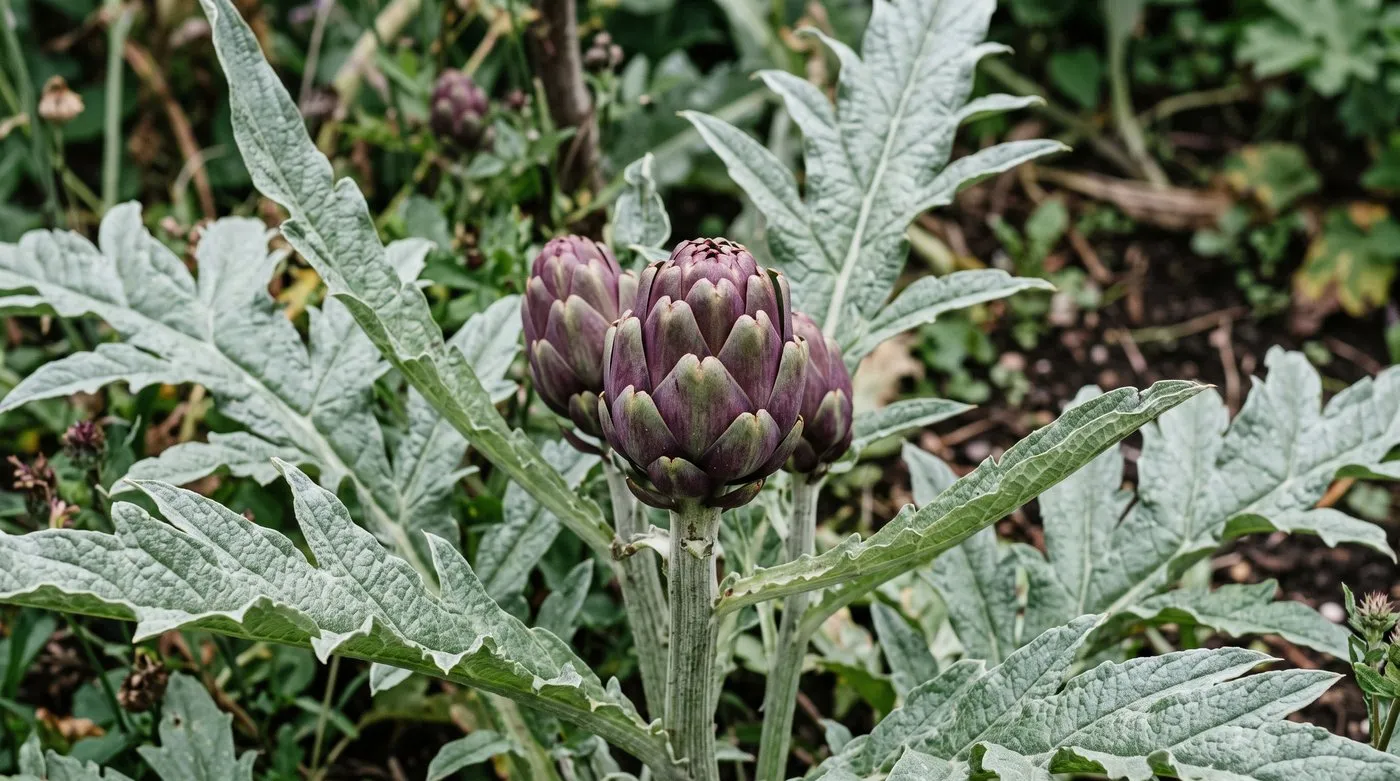
Violetta di Chioggia has gorgeous purple-tinged buds and a rich flavour. Give it extra winter protection in colder gardens.
Variety comparison table
| Variety | Bud colour | Crops in year one from seed? | Best for |
|---|---|---|---|
| Green Globe | Green | No | All-round reliability |
| Violetta di Chioggia | Purple-green | No | Flavour and good looks |
| Imperial Star | Green | Yes | A quick first harvest |
| Gros Vert de Laon | Grey-green | No | Big, meaty hearts |
Growing globe artichokes from seed
Seed is cheaper than buying offsets, but most varieties need a year or more before they crop. Imperial Star is the one to choose for a crop in year one.
Sowing indoors
Sow in February or early March. Fill 9cm pots with seed compost and sow one seed per pot, about 1.5cm deep. Water lightly and keep them in a propagator or on a warm windowsill. Seedlings usually appear in about 10-14 days. Once they have their first true leaves, move them somewhere bright and a bit cooler so they don’t get leggy.
Pot them on into 1-litre pots when the roots fill the small pot. Use multipurpose compost with some perlite mixed in. Give a weak liquid feed every two weeks from April.
Hardening off and planting out
Start hardening them off in late April: outside by day, in at night, for a week or two. Plant out in May once the frosts are over and the soil has warmed.
One thing to know: seed-grown artichokes vary a lot. Some will be strong with big buds; others will be spiny, small-budded or weak. Grow a few more than you need, then keep the best three or four after the first season and take offsets from those in future.
 A globe artichoke bud ready to cut: plump, with the scales still tightly closed and no purple showing.
Growing globe artichokes from offsets
Offsets, also called suckers, are rooted shoots that grow around the base of an established plant. They’re the traditional and most reliable way to get new plants, because each one is identical to its parent.
When and how to take offsets
Take offsets in April, when the new shoots are 20-25cm tall. Choose ones from the outside of the clump, not the middle. Cut down between the offset and the parent with a sharp spade or knife, so each offset has some good roots and a growing tip.
If you can’t plant them straight away, pot them into 2-litre pots and keep them watered in a sheltered spot. Plant them out within a couple of weeks. Offsets planted in April give a light crop in their first summer and a full crop from the second year.
No established plant to take them from? Buy offsets of a named variety from a nursery in spring. They cost more than seed, but you know exactly what you’re getting.
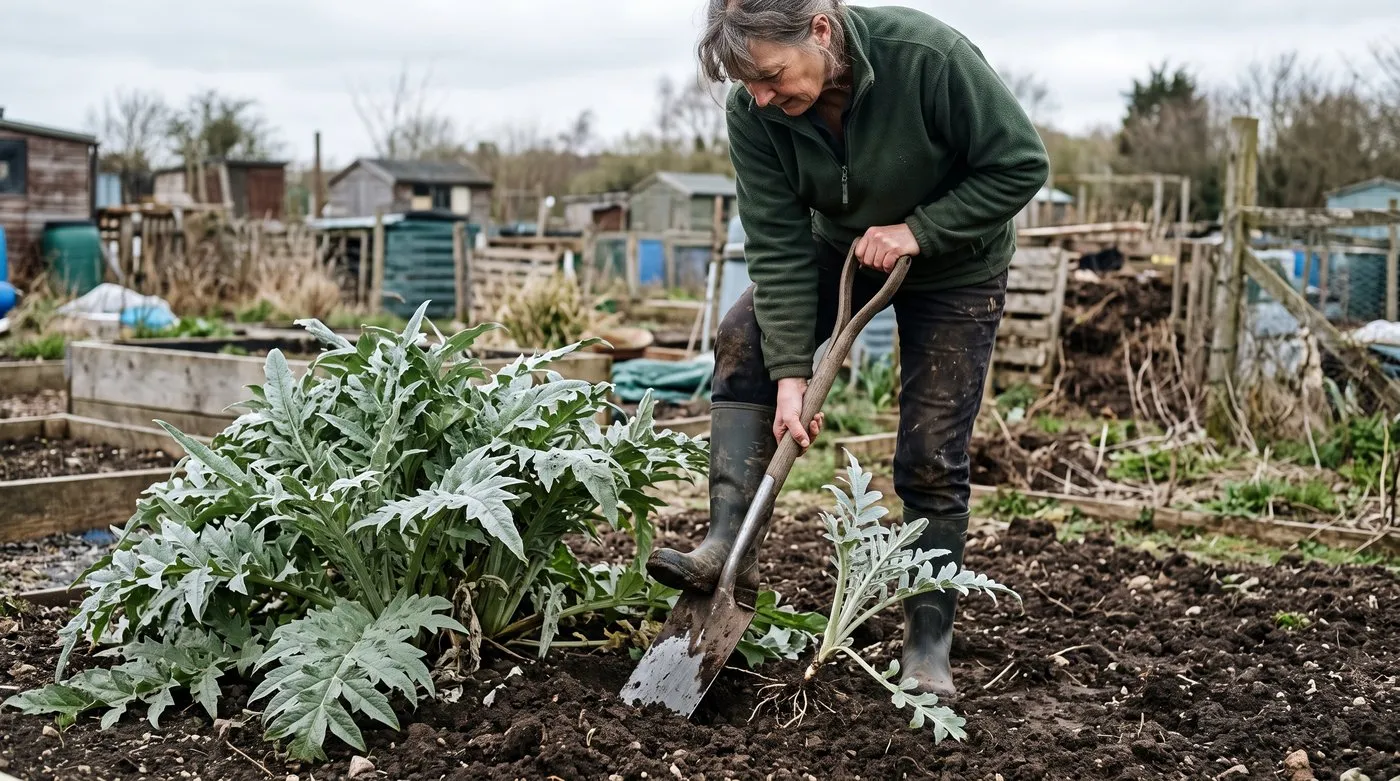
Take offsets from the outside of the clump, each with good roots and a growing tip. Plant them straight away or pot them up for a week or two.
Choosing the right site and preparing soil
Globe artichokes need full sun and soil that drains well. They’ll grow in part shade but give fewer buds. A south or west-facing spot with at least 6 hours of sun is ideal.
Soil requirements
They grow in most soils but struggle in heavy, wet clay unless you improve the drainage. Dig in plenty of garden compost or well-rotted manure before planting. On clay, mix in coarse grit as well. Our guide on how to make compost shows how to make your own.
Plants grow 1.2-1.5m tall and about 90cm wide. Space them 90cm apart in rows 1m apart, and leave room to get round them for picking and taking offsets.
Watch out for wet spots. Never plant where water puddles after rain. Rot from winter wet kills more artichokes than frost does. On heavy soil, plant on a low mound to lift the crown above the wet.
Month-by-month growing calendar
| Month | What to do |
|---|---|
| January | Order seed or reserve offsets |
| February | Sow seed indoors somewhere warm |
| March | Pot on seedlings. Prepare the bed with compost and grit. Pull back winter mulch as shoots appear |
| April | Feed. Take offsets from established plants and plant them 90cm apart |
| May | Plant out seed-grown plants after the last frost. Mulch with compost |
| June | First buds appear. Start cutting |
| July | Main picking month. Cut the top bud first, then the side buds |
| August | Keep picking. Water deeply in dry spells |
| September | Last pickings. Leave a few buds to flower for the bees |
| October | Cut down finished flower stems |
| November | Cut all stems down low. Cover the crowns with a thick straw mulch |
| December | Check the mulch is still in place |
Caring for globe artichoke plants
Watering
Once settled, globe artichokes cope with dry spells, but steady watering while the buds form gives you a better crop. Water deeply once a week in dry weather from June to August, at the base rather than over the leaves. A seep hose along the row is ideal.
Feeding
Give a general feed, such as blood, fish and bone, in spring as you pull back the winter mulch. Then mulch with compost to keep the soil rich and moist.
Weed control
Keep the area weed-free, especially in the first year, as young plants don’t compete well. A thick mulch of compost, bark or straw keeps weeds down and holds moisture. Don’t dig deeply near the plants, as their roots don’t like being disturbed. Our guide to what mulch is and how to use it covers the best mulches for perennial beds.
Pest and disease management
Globe artichokes have few serious pests here. Blackfly sometimes cluster on the stems and bud bases from May. A strong jet of water from the hose usually knocks them off. If you need a spray, use an approved product exactly as the label says.
Slugs and snails go for young plants and new shoots in spring. Use beer traps or wildlife-friendly ferric phosphate pellets, and protect new offsets with cloches for the first few weeks.
Petal blight sometimes causes brown spots on the buds in wet summers. Remove affected buds, space plants well and water at the base.
How and when to harvest globe artichokes
Picking at the right moment is the difference between a tender artichoke and a tough one.
Harvest timing
The top bud on the main stem ripens first, usually in June or early July. Cut it while it’s plump and the scales are still tightly packed. If you see purple petals poking out of the top, it’s too late for eating, but it’s still worth leaving to flower.
Use a sharp knife and cut the stem about 5cm below the bud, so you have a handle. Once the top bud is gone, the plant puts its energy into the side buds, which are smaller but just as tasty. These keep coming through July, August and into September.
The first top buds are the biggest. The side buds are smaller but there are more of them. Check every few days in peak season so none get past their best.
 A globe artichoke bud left to open into a big purple thistle, buzzing with bumblebees.
Storage and preparation
Fresh artichokes keep for about a week in the fridge. Stand them upright in a little water, like cut flowers. To cook, trim the stem, pull off the tough outer scales and cut the spiky tips off the top. Boil in salted water with lemon juice for 25-35 minutes, until a leaf pulls away easily. The heart and the fleshy base of each inner scale are the bits you eat.
Overwintering globe artichokes
Winter protection is easy but important, especially in northern England, Scotland and exposed gardens.
Autumn preparation
In November, once the leaves have died back, cut all the stems down to 5-10cm. Then cover the crown with a thick mulch of straw, bark or dry bracken, about 15-20cm deep. It keeps out the worst of the frost and helps stop the crown sitting wet.
In mild, sheltered gardens in the south, plants often get through winter with no protection at all. In the Midlands and further north, mulching is a must.
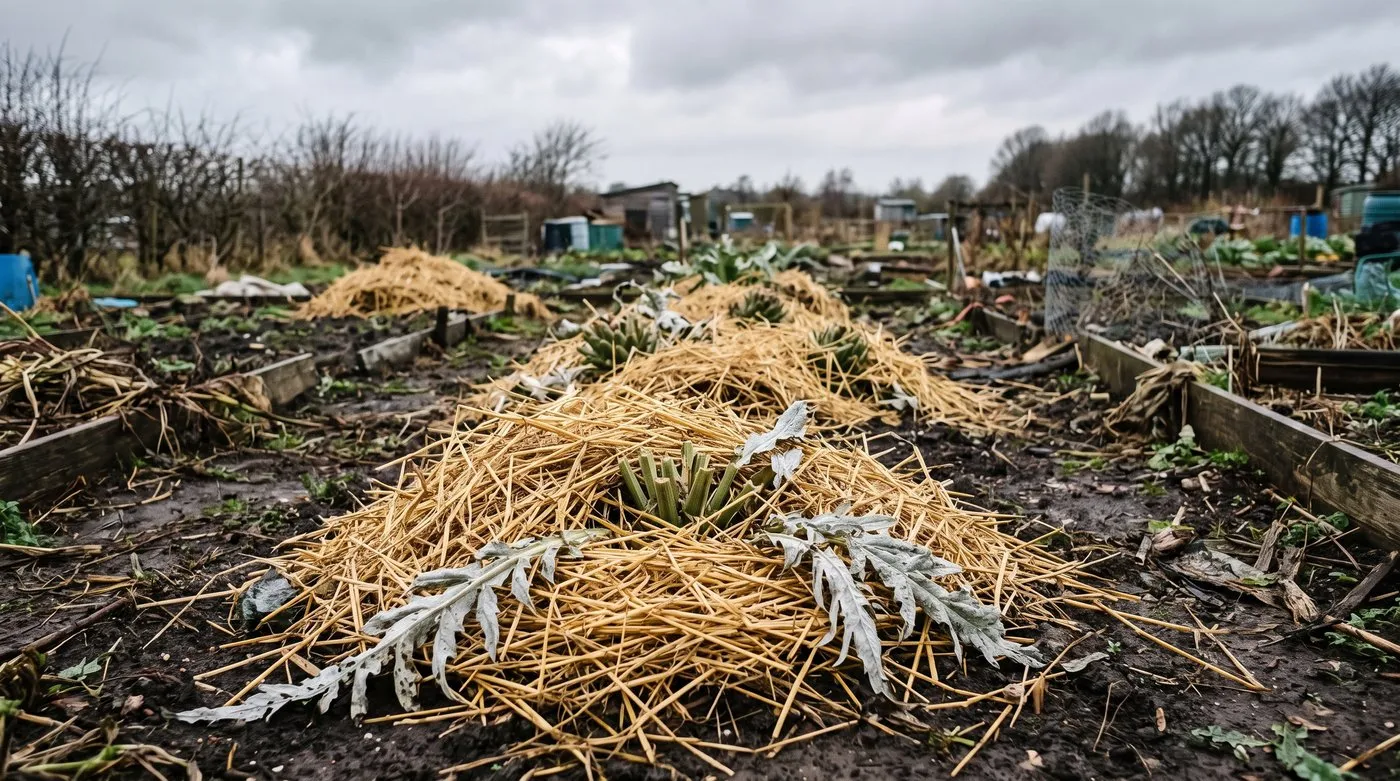
Cut stems down to 5 to 10cm, then pile on a thick layer of straw. It keeps out the worst frost and stops the crown sitting wet.
Spring uncovering
Pull back the mulch in late March when new shoots appear. Leave it too long and the shoots grow pale and weak underneath. Spread the old mulch around the base to hold in moisture, and give the first feed of the year.
Propagating by division
Dividing isn’t just for new plants; it keeps your artichokes cropping well. After 3-4 years, the crown gets woody and crowded and the buds get smaller and fewer. Dividing and replanting keeps the patch going.
How to divide
In April, when new shoots are 20-25cm tall, dig up the whole clump. You’ll see several growing points around the outside. Split these off, each with roots and a growing tip, and throw away the old woody middle. Replant the best 3-4 in freshly prepared soil with plenty of compost, in a new spot, just as you’d rotate other veg.
A mature plant gives you several offsets, so one good plant can start a whole new row. Share spares with neighbours or your allotment friends. Our guide to companion planting has ideas for what to grow nearby.
 Planting a rooted offset in a raised bed in spring. Each one needs good roots and a growing tip.
Globe artichokes as ornamental plants
Globe artichokes are some of the most striking plants you can grow. The big, silvery leaves make a real statement in any border. The RHS guide to globe artichokes is a handy extra read.
In a flower border, plant them at the back, where their height gives structure without shading smaller plants. They look great with other sun-lovers like lavender, rosemary, Verbena bonariensis and tall grasses such as Stipa gigantea.
Leave a few buds per plant to flower each summer. They open into big purple thistles that bumblebees, honeybees and hoverflies love. The dried heads look good into winter, especially with frost on them. For another crop that looks as good as it tastes, see our guide to growing asparagus, with its feathery fern-like foliage.
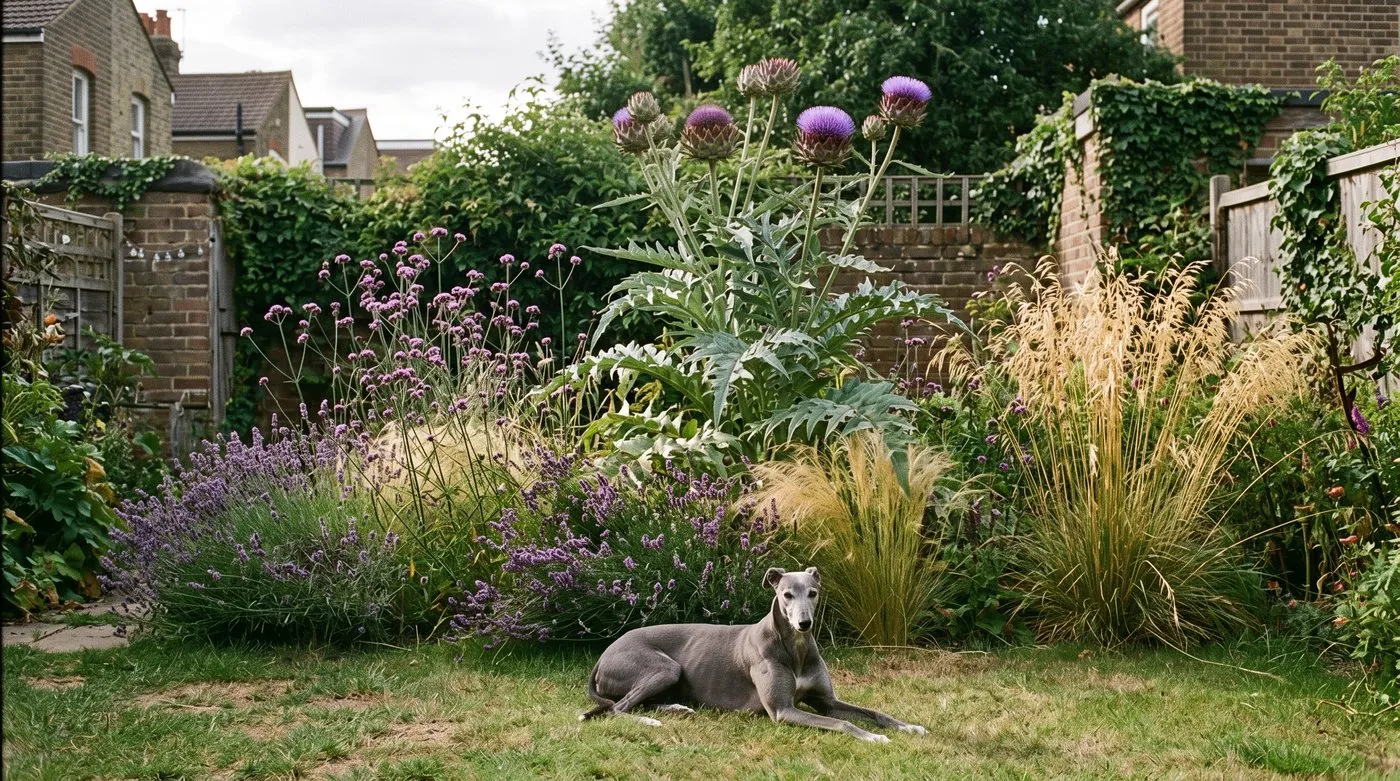
At the back of a border, those silvery leaves give real structure. Leave a few buds to open into purple thistles for the bees.
Cooking with globe artichokes
Preparing whole artichokes
Trim the stem to about 3cm. Pull off the tough outer 2-3 layers of scales and slice the spiky tips off the top. Rub the cut bits with lemon so they don’t go brown. Boil in salted water with a squeeze of lemon for 25-35 minutes. It’s done when a leaf pulls away easily.
What to eat
You eat the fleshy base of each inner scale, scraped off with your teeth, the heart at the bottom, and the stem once peeled. The hairy “choke” above the heart isn’t edible, so scoop it out with a spoon.
Quick recipe ideas
With garlic butter: Boil until tender and serve with melted butter, crushed garlic and lemon. The simplest and best way to enjoy them.
Stuffed artichokes: Ease the leaves apart, fill the middle with breadcrumbs, garlic, parsley and parmesan, then bake at 190C for 30 minutes.
Grilled baby artichokes: The small side buds have very little choke. Halve them, brush with olive oil and grill for 4-5 minutes each side until charred and tender.
Common mistakes when growing globe artichokes
Planting in soggy soil. This is the number one killer. Artichokes cope with dry soil far better than wet. On heavy clay, plant on mounds or in raised beds with grit.
Picking too late. Once the scales open and purple appears, the bud is past its best. The heart shrinks and the scales get tough. Check every few days in season and cut while the buds are tight.
Keeping old plants too long. Cropping drops off after 3-4 years. Divide and replant offsets in fresh soil to keep the buds big.
Skipping the winter mulch up north. Unmulched crowns often survive in sheltered southern gardens but are much more likely to die further north. A thick layer of straw takes five minutes per plant.
Expecting a first-year crop from the wrong seed. Most varieties need well over a year from seed before they crop well. If you want artichokes this summer, sow Imperial Star or buy offsets of a named variety in April.
Frequently asked questions
Now you know how to grow globe artichokes, read our guide to growing asparagus for another perennial veg that rewards a bit of patience with years of harvests.
When should I plant globe artichoke offsets in the UK?
Plant them in April or early May, once the soil has warmed. Choose rooted shoots about 20-25cm tall from the outside of an established clump, each with healthy roots. Space them 90cm apart with 1m between rows. Water well and keep them moist while they settle. Expect only a light crop in the first summer.
Can I grow globe artichokes from seed in the UK?
Yes, sow them indoors in late winter or early spring. Keep them somewhere warm, pot the seedlings on one per pot and plant out after the last frost. Seed-grown plants vary, so keep the best ones and replace weaker plants with offsets later. Imperial Star can crop in its first year.
How do I know when globe artichokes are ready to harvest?
Cut them when the buds are plump but the scales are still tight. Once the scales start to open or purple shows at the top, the bud is past its best for eating. Cut the stem a few centimetres below the bud with a sharp knife. The top bud is the biggest and ripens first, then the smaller side buds follow.
Why did my globe artichoke plants die over winter?
Wet winter soil is the most common reason. Hard frost on young plants can also kill them. They hate sitting in cold, soggy ground, so add grit to heavy clay or plant on a slight mound. In autumn, cut back the stems and cover the crowns with a thick mulch of straw or bracken, then pull it back in spring.
How many globe artichoke plants do I need?
Three or four plants are usually plenty for two people. Each established plant gives you several buds every summer, from one big top bud to smaller side buds. A bigger family may want six or more. Space them 90cm apart. They’re handsome enough for the back of a flower border as well as the veg patch.
Do globe artichokes come back every year?
Yes, they’re perennials and come back every year in most UK gardens. They die back in winter and regrow from the crown in spring. Plants usually crop well for three or four years, then start to tire. Replace older plants by taking rooted offsets in spring and planting them in fresh, well-prepared soil.
Can I eat globe artichoke flowers?
No, once the bud opens into a flower it’s too tough to eat. The tasty part is the unopened bud, especially the fleshy base of each scale and the heart. The open flowers are still lovely, though. They’re big purple thistles that bumblebees adore, so leave a few to flower for the bees and for drying.
Our team produces practical UK gardening guidance from source research, contributor records and established horticultural practice. Editorial standards are overseen by Matt W.


