
Key takeaways
- Real wasabi needs cool, deep shade and constantly moist soil or gently moving water
- It grows best at roughly 8-20C and suffers in hot summers, so a north-facing or woodland spot suits it
- Most home growers use a large pot or a shaded bed rich in leaf mould
- Buy named Wasabia japonica plants from a specialist grower; cheap "wasabi" is often horseradish
- Leaves and stalks are edible from about six months, with a mild wasabi kick
- The knobbly rhizome takes 18-24 months to reach a useful size
You can grow real wasabi in the UK, as long as you can give it cool shade and soil that never dries out. Wasabia japonica comes from shady mountain streams in Japan. It hates heat and sun but copes well with a damp British summer in the right spot.
It is slow. The prized knobbly rhizome (the thick stem you grate) takes 18-24 months. You can pick the peppery leaves and stalks long before that, though. This guide covers where to grow it, three ways to plant it, and how to harvest.
Can you grow real wasabi in the UK?
Yes. Wasabi wants cool temperatures, roughly 8-20C, deep or dappled shade and steady moisture. Much of the UK suits it better than you might think. Commercial growers in southern England produce it in spring-fed water.
What it can’t take is heat, direct sun and drying out. A hot spell, a sunny afternoon or a dry pot are the usual reasons plants fail. Pick the coolest, shadiest damp corner you have.
Shade-loving crops are handy for awkward spots. The guide to vegetables that grow in shade lists easier options for the same kind of corner.
Real wasabi or horseradish?
Real wasabi and horseradish are both in the cabbage family, but they are very different plants. Most green “wasabi” paste in shops is mainly horseradish, mustard and colouring. Some plants sold as wasabi turn out to be horseradish too.
| Feature | Real wasabi | Horseradish |
|---|---|---|
| Leaves | Rounded, heart-shaped, glossy | Long, large, paddle-shaped |
| Size | Low clump, about 30-45cm | Tall, up to about 1m |
| Root | Knobbly green rhizome | Long white root |
| Conditions | Cool shade, constant moisture | Sun or part shade, almost any soil |
| Ease | Fussy and slow | Very easy, can spread |
If you want an easy, fiery root, the guide to growing horseradish is the simpler route.

All three parts are edible: leaves, stalks and the rhizome. The rhizome is the slow prize; leaves come much sooner.
Where to grow wasabi
Choose a spot with deep or dappled shade all day, such as under deciduous trees, beside a north-facing wall or in a shaded corner of a polytunnel with shade netting. Morning sun is the most it should get. In hot spells, even a shaded plant may need extra shade cloth.
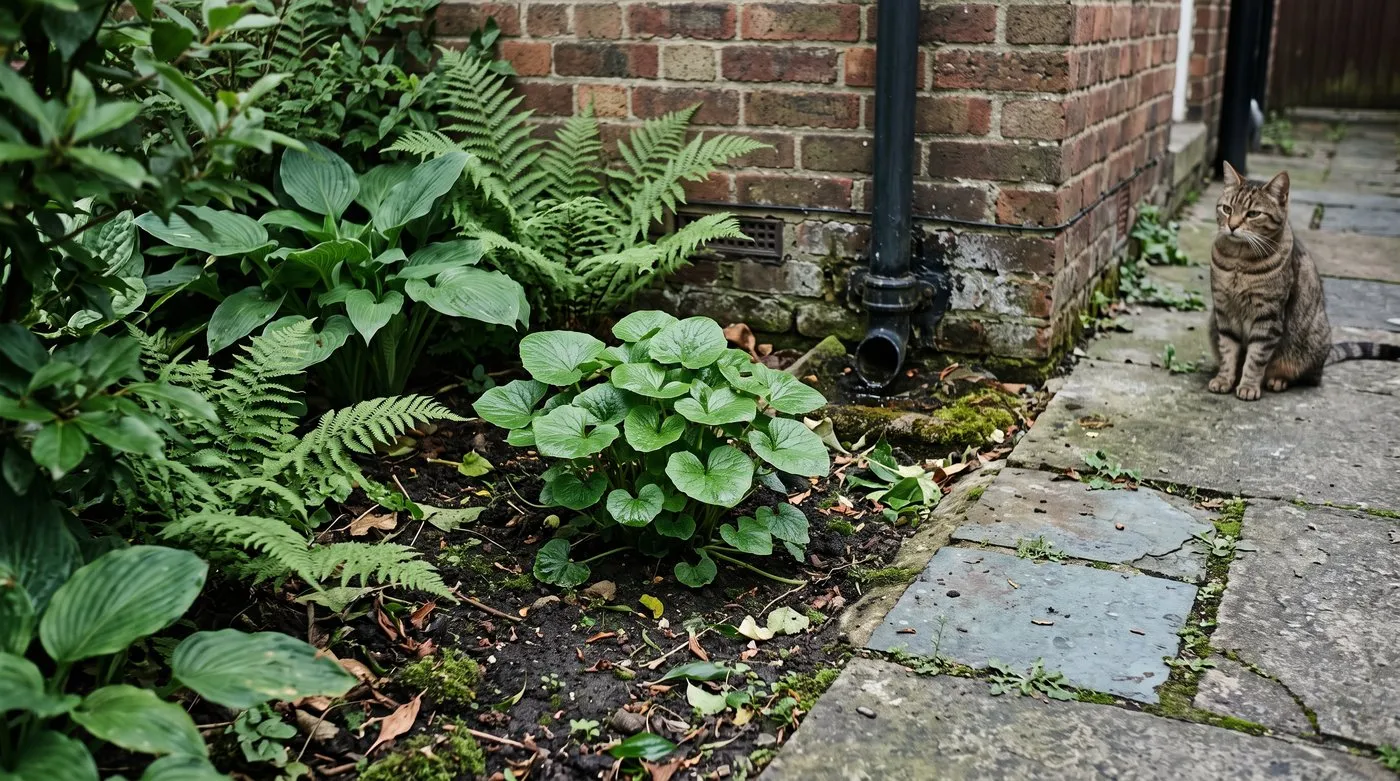
The foot of a north-facing wall stays cool and shady all summer, just how wasabi likes it.
Shelter helps too. Strong wind dries the big leaves. A sheltered woodland edge or courtyard is ideal.
In winter, wasabi copes with light frost but the crown is easily damaged by hard cold. Mulch beds with leaf mould, or move pots into a cold greenhouse or against a sheltered wall.
How to grow wasabi in a pot
A large pot is the easiest way to start, because you can move it into deeper shade in summer and shelter in winter.
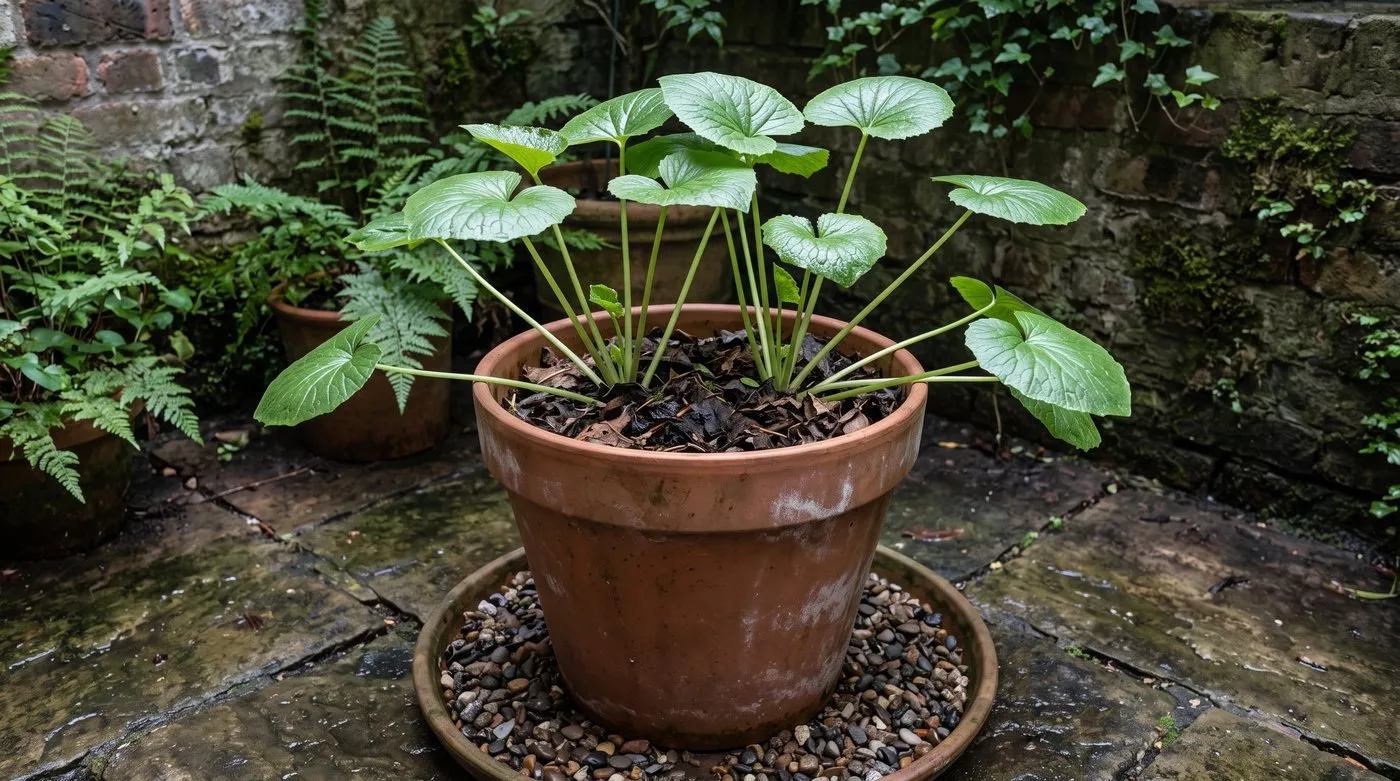
A big pot in deep shade, stood on wet gravel, keeps wasabi’s roots cool and moist.
- Choose a pot at least 30cm across and deep, with drainage holes.
- Fill with a mix of peat-free compost, leaf mould and some grit, so it holds moisture but doesn’t go stagnant.
- Plant with the crown level with the surface, not buried.
- Stand the pot in deep shade and water often, so the compost stays moist but never waterlogged.
- Feed lightly with a seaweed or general liquid feed in spring and summer.
Watering with cool rainwater helps in hot weather. Many growers stand pots on a tray of wet gravel to keep the roots cooler.
Growing wasabi in a shaded bed
Growing wasabi in damp soil, sometimes called the oka method, suits gardens with a cool, shady patch.
Dig in plenty of leaf mould and compost to make a rich, spongy soil. On heavy clay, add grit so water doesn’t sit around the crown. Plant 25-30cm apart, with the crown at soil level. Mulch with leaf mould to keep the roots cool and moist.
Water whenever the top of the soil starts to dry, which may be daily in a warm spell. A soaker hose on a timer makes this easier. Weed by hand, as hoeing can damage the shallow roots. Top up the leaf-mould mulch in spring and autumn.

Shade netting and a thick leaf-mould mulch keep a woodland bed cool and damp all summer.
Growing wasabi in flowing water
The traditional Japanese way, the sawa method, grows wasabi in gravel with cool water flowing gently through it. It gives bigger rhizomes but takes more setting up.
At home this usually means a shallow trough of washed gravel with a slow trickle of water running in at one end and out at the other. The water must keep moving: still water soon rots the crowns. It also needs to stay cool, so the trough should sit in deep shade. Recirculating systems need a pump and a shaded reservoir.
This is a project for keen growers with time to tinker. Most people get on better with a pot or a damp bed first. If you love growing in water, the guide to edible aquatic plants has more to try.

Water trickles through clean gravel past the roots. The key is that it keeps moving and stays cool.
Buying wasabi plants
Buy Wasabia japonica plants from a specialist wasabi grower or a reputable online nursery, ideally in spring. Check the botanical name on the label. Plants sold cheaply as “wasabi” in general outlets are sometimes horseradish.
Plant young plants as soon as they arrive. Seed is tricky and slow, so plants are the sensible start.
Wasabi growing calendar
| Month | What to do |
|---|---|
| March-April | Buy and plant young plants. Top up leaf-mould mulch |
| May | Add extra shade before the first warm spell. Water steadily |
| June-August | Keep cool and moist. Water more in hot spells. Watch for slugs and aphids |
| September | Pick some leaves and stalks from established plants |
| October | Mulch beds. Move pots somewhere sheltered |
| November-February | Protect crowns from hard frost. Water pots only lightly |
| After 18-24 months | Lift the rhizome in autumn or spring. Replant the offsets |
How to harvest wasabi
Leaves and stalks can be picked from about six months. Take a few outer leaves at a time and leave the centre to keep growing. Young leaves are good in salads, and stalks can be pickled.

After 18 months or more, the knobbly green rhizome is finally ready to lift and grate.
The rhizome is ready after about 18-24 months. Lift the whole plant in autumn or spring and wash off the soil. Trim off the roots and outer leaves. The knobbly green stem in the middle is what you grate. Small side shoots around the base can be potted up to grow on as new plants.
Grate wasabi just before eating, ideally on a fine grater. The heat appears within a minute or two and fades fairly quickly, so grate only what you need. Wrapped in a damp cloth in the fridge, a rhizome keeps for a couple of weeks.
Common wasabi growing mistakes
- Too much sun. Even a few hours of hot sun can scorch the leaves. Keep it in shade.
- Letting it dry out. Pots dry fast in summer. Check daily in warm weather.
- Still, soggy soil. Wasabi likes moisture, not stagnant water. Waterlogged crowns rot.
- Burying the crown. Plant with the crown at the surface so new leaves don’t rot.
- Lifting too soon. A young rhizome is small and mild. Be patient and pick leaves in the meantime.
- Ignoring slugs. The soft leaves are a magnet. The guide to getting rid of slugs covers safe controls.
Frequently asked questions
Can you grow real wasabi in the UK?
Yes, if you give it cool shade and constant moisture. Wasabi comes from shady mountain streams in Japan and dislikes heat and direct sun. A large pot or a shaded bed rich in leaf mould suits most gardens. Commercial growers in southern England grow it in spring-fed water.
How long does wasabi take to grow in the UK?
About 18-24 months for a useful rhizome. You can start picking a few leaves and stalks after about six months. Plants stressed by heat, drought or cold take longer, so steady conditions are what speed it up.
Where can I buy real wasabi plants in the UK?
From a specialist wasabi grower or a reputable online nursery. Check the label says Wasabia japonica. Plants sold cheaply as “wasabi” in general outlets are sometimes horseradish. Spring is the best time to buy and plant.
What is the difference between real wasabi and horseradish?
They are different plants in the same family. Wasabi has rounded, heart-shaped leaves and a knobbly green rhizome. Horseradish is a much bigger, tough plant with long leaves and a white root. Most green “wasabi” paste in shops is mainly horseradish, mustard and colouring.
Why did my wasabi plant die in summer?
Usually heat, sun or drying out. Wasabi wilts and rots when its roots get warm, and a few hours of hot sun can scorch it. Move pots into deeper shade, water more often in hot spells and mulch beds to keep the roots cool.
Can you eat wasabi leaves and stems?
Yes, the leaves and stalks are edible with a gentle wasabi heat. Pick a few outer leaves at a time from about six months on. Young leaves are good in salads, and stalks can be pickled. Leave the centre of the plant untouched so it keeps growing.
Enjoy slow, long-lived crops? The guide to perennial vegetables covers more edibles that earn a permanent place. For a quicker shade-tolerant crop, try growing cress and watercress. Find more ideas on the growing hub.
Our team produces practical UK gardening guidance from source research, contributor records and established horticultural practice. Editorial standards are overseen by Matt W.


