
Key takeaways
- Garden cress grows on damp kitchen paper and is ready to cut in about a week
- Sow a new tray every week for a steady supply all year on a warm windowsill
- Watercress grows in a pot of compost stood in a tray of water, changed every day or two
- Shop-bought watercress stems root in a glass of water, giving you free plants
- Never eat wild watercress from streams raw, as it can carry liver fluke
- Land cress tastes similar to watercress and grows in ordinary soil
Cress is the fastest food you can grow. Sprinkle seeds on damp kitchen paper today and you’ll be making egg and cress sandwiches in about a week. You don’t need a garden, pots or any experience.
Watercress takes a little more effort, but you don’t need a stream. A pot stood in a tray of fresh water does the job. This guide covers both, plus land cress, an easy soil-grown swap for watercress.
Cress or watercress: which should you grow?
Grow garden cress for a quick windowsill crop, and watercress for leafy picking over many weeks. They share a peppery taste but are different plants.
- Garden cress (Lepidium sativum) is the sprouting seedling in egg and cress sandwiches. It’s ready in about a week and grows indoors all year.
- Watercress (Nasturtium officinale) is the leafy water plant sold in salad bags. It needs constant fresh water and light shade, and crops for months.
- Land cress (Barbarea verna) tastes like watercress but grows in ordinary soil. It’s the easy option for a garden bed or pot.
| Garden cress | Watercress | Land cress | |
|---|---|---|---|
| Ready to cut | About a week | About 5 weeks | About 2 months |
| Grows in | Kitchen paper or compost | Compost in a tray of water | Garden soil or a pot |
| Spot | Warm, bright windowsill | Light shade, cool | Light shade |
| Best season | All year indoors | Spring to autumn outdoors | Autumn and winter |
For more quick crops on a sill, see the guide to growing vegetables on a windowsill.
How to grow garden cress on a windowsill
Sprinkle cress seed on damp kitchen paper or compost, keep it moist on a warm windowsill and cut it after about a week. It’s almost impossible to get wrong.
The kitchen paper method
- Lay a few sheets of kitchen paper in a shallow dish or tray.
- Wet it well, then pour off any extra water.
- Sprinkle cress seeds thickly over the surface. They can almost touch.
- Put the dish on a warm, bright windowsill.
- Keep the paper damp, adding a splash of water each day.
- Cut with clean scissors when the cress is 5-8cm tall.
The seeds don’t need covering. They usually sprout in a day or two. Cress on paper gives one cut, as the roots tangle into the paper.

Cress on damp kitchen paper, nearly ready to snip. Keep the paper moist and it’ll be in sandwiches within a week.
The compost method
Fill a seed tray or shallow pot with 3cm of multipurpose compost and water it lightly. Sprinkle seed over the surface, press it in gently and don’t cover it. Keep the compost moist.
Cut at 5-8cm tall, leaving about 1cm of stem. You may get a second, smaller cut a week or so later.
Sowing for a steady supply
Sow a new tray every week. With two or three trays on the go, one is always ready to cut. Cress grows all year on a windowsill, though it’s slower in a cold room. If you enjoy this, the guide to growing microgreens has more speedy crops such as pea shoots and radish.
How to grow watercress in a pot
Grow watercress in a pot of compost stood in a tray of water, and change the water every day or two. It loves cool, wet conditions and light shade. Stale, warm water is what kills it.
You will need:
- A pot at least 20cm deep and 30cm wide, with drainage holes
- A tray or large saucer that holds a few centimetres of water
- Multipurpose compost
- Watercress plants, seed or rooted shop-bought stems
How to do it:
- Fill the pot with compost to about 3cm below the rim.
- Plant watercress about 15cm apart, or sow seed thinly and thin to 15cm.
- Water until the compost is soaked.
- Stand the pot in the tray with a few centimetres of water.
- Top the tray up with fresh tap water every day.
- In warm weather, tip the old water away and refill every day or two.
- Keep it in light shade, such as by a north-facing wall.
Use tap water rather than pond or stream water, so your crop stays clean.

A pot stood in a tray of fresh water is all watercress needs. Pinch out flowering shoots like these to keep the leaves coming.
Growing watercress from shop-bought stems
A bag of supermarket watercress can give you free plants. Pop a few healthy stems in a glass of water on a bright windowsill. Change the water every day. White roots usually appear within a week or two.
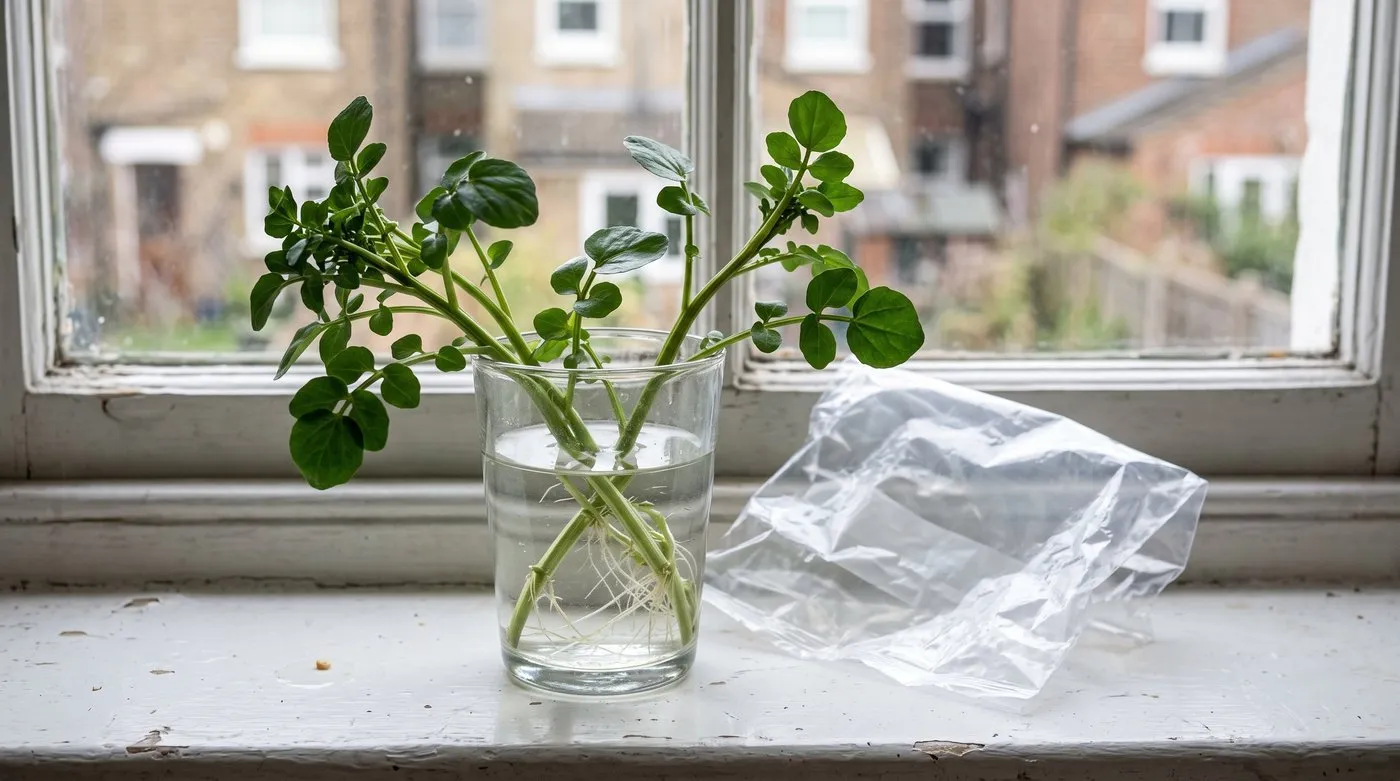
Shop-bought watercress stems root in a glass of water in a week or two. Change the water daily, then pot them up.
Once the roots are a few centimetres long, plant them into your pot of compost. It’s a quick way to get started without seed.
Picking watercress
Start picking when plants are about 15cm tall, usually around five weeks after planting. Cut the top few centimetres of each stem. New shoots grow from below, so you can pick again and again.
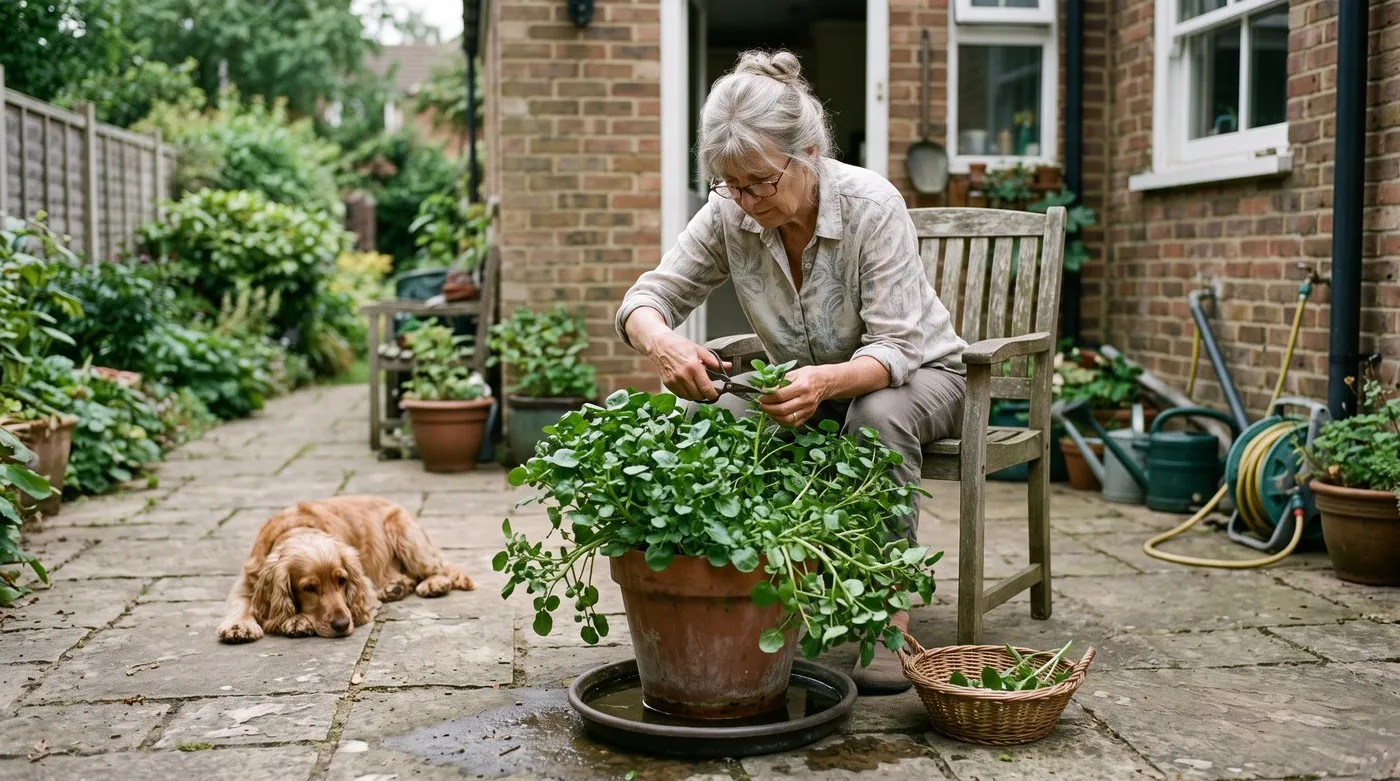
Snip the top few centimetres of each stem. New shoots grow from below, so the same pot keeps giving.
Regular picking keeps plants bushy and delays flowering. Once watercress flowers, with small white clusters, the leaves get stronger and tougher. Cut flowering shoots off, or start fresh plants.
Outdoors, watercress crops from spring to autumn. In a frost-free porch or cool greenhouse, it can keep going through a mild winter.
Is wild watercress safe to eat?
Don’t eat wild watercress raw. Watercress from streams and ditches can carry liver fluke, a parasite spread from grazing sheep and cattle. It can make people seriously ill.
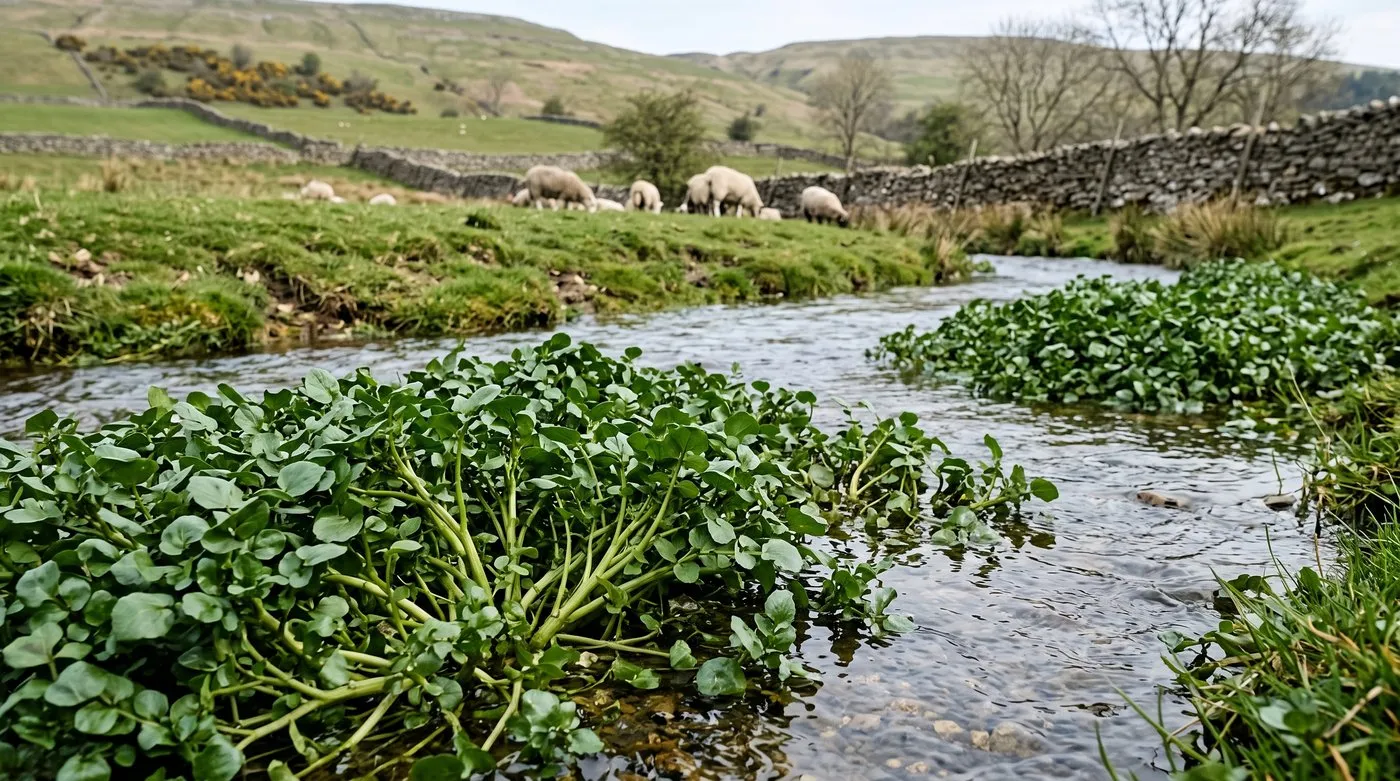
Wild watercress near grazing animals can carry liver fluke. It looks tempting, but leave it in the stream.
Growing your own in a pot of clean tap water avoids this risk. If you’re ever tempted by a stream-side clump, leave it be.
Land cress: the easy watercress swap
Land cress tastes much like watercress but grows in ordinary soil, with no standing water. It’s also called American cress or upland cress.
Sow it thinly in a bed or pot from spring to early autumn, and thin plants to about 15cm apart. It prefers light shade, as heat makes it run to seed. Sowings in August and September crop through autumn and winter, and it copes well with frost.
Pick the outer leaves as you need them and leave the centre to keep growing. The guide to growing landcress covers it in more detail.

Land cress grows like any salad leaf in a raised bed. No trays of water needed, just a lightly shaded spot.
Growing cress with children
Cress is the perfect first crop for children. It sprouts in a day or two and is ready to eat in about a week, so nobody gets bored waiting.

Eggshell heads are a classic first growing project. A week later, the cress hair is ready for a trim and a sandwich.
The eggshell head is a classic. Rinse an empty eggshell, fill it with damp cotton wool or compost and sprinkle on a pinch of seed. Draw a face on the shell. In a week the cress grows into a wild green hairdo, ready for a haircut and a sandwich.
When they’re ready for something bigger, growing sunflowers with children is a great next step.
Cress and watercress calendar
| Month | Garden cress | Watercress | Land cress |
|---|---|---|---|
| January to February | Sow indoors | Under cover only | Pick under cloches |
| March to April | Sow indoors | Start pots or root stems | Sow outdoors |
| May to June | Sow indoors | Pick. Keep shaded and cool | Sow in light shade |
| July | Sow indoors | Pick. Change water often | Sow in shade |
| August to September | Sow indoors | Pick | Main sowings for winter |
| October to December | Sow indoors | Move under cover or finish | Pick through winter |
Common problems with cress and watercress
Most problems come down to light, warmth or stale water.
- Cress is tall, thin and pale. Not enough light. Move it to a brighter windowsill.
- Cress seed isn’t sprouting. The room is too cold or the seed is old. Move it somewhere warmer and use a fresh packet.
- Cress tastes harsh or tough. It was cut too late or dried out. Cut at 5-8cm and keep it moist.
- Watercress leaves turn yellow. Usually stale water or hungry plants. Change the water and give a weak liquid feed once established.
- Watercress keeps flowering. It’s too hot or sunny. Cut it back and move it somewhere cooler and shadier.
- Land cress runs to seed. Too much heat and sun. Sow in late summer for winter crops instead.
Using cress and watercress in the kitchen
Garden cress is best snipped and eaten straight away. Egg and cress sandwiches are the classic, but it’s lovely on soup, smoked salmon or a salad.
Watercress is great raw in salads and sandwiches. A big harvest makes a good soup with leeks and potatoes. It also wilts nicely into pasta.
Land cress can be used just like watercress. Mix it with other hardy leaves such as corn salad for a winter salad. More easy crops are in the growing veg hub.
Frequently asked questions
How do you grow cress on kitchen paper?
Lay damp kitchen paper in a shallow dish and sprinkle the seeds thickly over it. Put it on a warm, bright windowsill and keep the paper moist. The seeds sprout in a day or two. Cut with scissors when the cress is 5-8cm tall, usually after about a week.
Can you grow watercress in a pot without a stream?
Yes, a pot stood in a tray of water works well. Fill a pot with multipurpose compost, plant or sow the watercress and stand it in a tray holding a few centimetres of water. Change the water every day or two so it stays fresh, and keep the pot in light shade.
What is the difference between cress and watercress?
They are different plants with a similar peppery taste. Garden cress is the quick sprouting seedling you cut after about a week. Watercress is a leafy, trailing water plant that you grow on for weeks and pick again and again.
Is wild watercress safe to eat?
Not raw. Watercress from streams and ditches can carry liver fluke, a parasite spread from grazing animals. Don’t eat wild watercress raw. Growing your own in a pot of clean tap water avoids the risk.
What is land cress and is it easier to grow?
Land cress tastes like watercress but grows in ordinary soil. It’s sown like any salad leaf and needs no standing water. It is very hardy and crops through autumn and winter, which makes it an easy swap for watercress in most gardens.
How do you stop cress from going bitter?
Cut it young, at 5-8cm tall, and keep it moist. Cress left to grow on gets tougher and stronger tasting. Letting the paper or compost dry out also makes it tough, so check it every day.
Can children grow cress at home?
Yes, cress is one of the best first crops for children. It sprouts in a day or two and is ready in about a week. Growing it in an empty eggshell with a face drawn on, so the cress becomes the hair, is a classic project.
Now your cress is sprouting, read our guide to growing winter salad leaves to keep fresh leaves coming when the weather turns cold.
Our team produces practical UK gardening guidance from source research, contributor records and established horticultural practice. Editorial standards are overseen by Matt W.


