Key takeaways
- Landcress tastes like watercress but grows in ordinary garden soil, no running water needed
- Sow from late July to September for winter picking, or in March and April for spring leaves
- Thin plants to 15-20cm apart in moist soil, ideally in light shade
- Pick outer leaves from about eight weeks after sowing and the plant keeps producing
- It is hardy outdoors, but a cloche keeps winter leaves cleaner and more tender
- Hot, dry weather makes it bolt and turn bitter, so avoid summer sowings
Landcress is a hardy salad that tastes like watercress but grows in an ordinary veg bed. Sow it in late summer and you can pick peppery leaves from autumn right through winter. It is happy in light shade and moist soil, and it’s very easy to grow.
Landcress (Barbarea verna) is also sold as American cress or upland cress. This guide covers when to sow, where to grow it, how to keep picking and how to stop it bolting. For growing quick sprouting cress and true watercress, see the guide to cress and watercress.
What is landcress?
Landcress is a low-growing member of the cabbage family. It forms a rosette of glossy, dark green leaves with a rounded end lobe and smaller lobes along the stalk. The leaves have a sharp, peppery bite very like watercress.
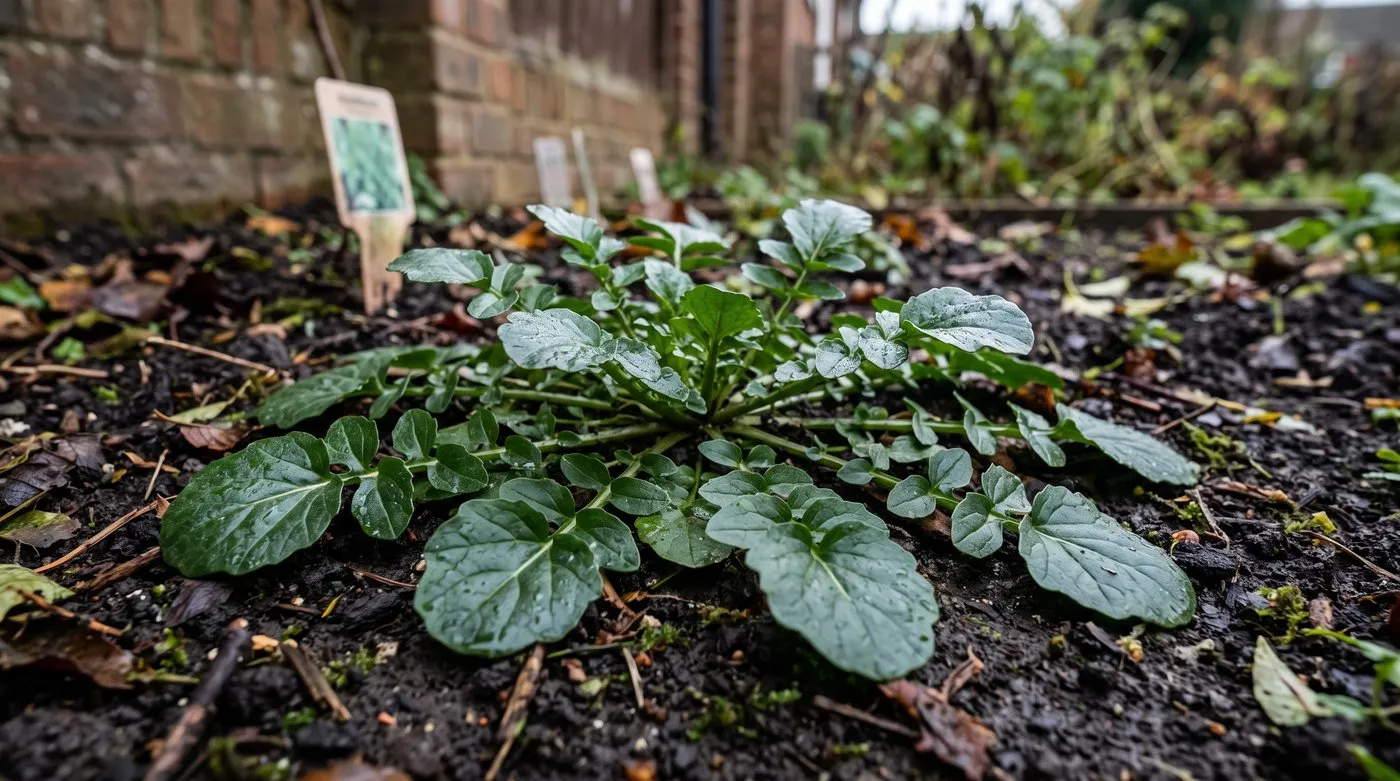
Look for glossy, dark green leaves with a big rounded tip and small lobes along the stalk. That’s landcress.
The big difference is where it grows. Watercress likes clean, running water. Landcress grows in normal garden soil, as long as it stays moist. That makes it a handy crop for anyone who loves watercress but has no stream at the bottom of the garden.
It is a biennial, which means it grows leaves in its first season and flowers the next. Plants sown in late summer crop through winter, then flower in spring.
When to sow landcress
Sow landcress from late July to September for leaves in autumn and winter. That is the main crop and the best value. You can also sow in March and April for spring leaves, though these plants bolt as the weather warms.
Avoid sowing in May and June. Warm, dry soil makes young plants run to flower before you get much to eat. Sowing a short row every three or four weeks through the late summer window gives a steady supply.
How to sow
- Choose a spot with moist soil and some shade, and rake it to a fine surface
- Water the soil the day before if it is dry
- Draw a shallow drill about 1cm deep, with rows about 30cm apart
- Sow seed thinly along the drill and cover lightly
- Keep the soil moist until seedlings appear
- Thin to 15-20cm apart once they have a few true leaves, and eat the thinnings
You can also sow two or three seeds per cell in a module tray and plant out the young plants at 15-20cm apart. Modules are a good way to dodge slugs while seedlings are tiny.

Starting landcress in modules gives the seedlings a safe start away from slugs. Plant them out when they have a few true leaves.
Where to grow landcress
Landcress likes cool, moist soil and light shade. It does well in places where sun-lovers sulk, such as a bed that gets only morning sun. The guide to vegetables that grow in shade has more crops for those spots.
Dig in some well-rotted compost before sowing to help the soil hold moisture. Good drainage still matters in winter, as waterlogged ground can rot the crowns. On heavy clay, a raised bed helps.
Landcress also grows well in a pot or trough at least 20cm deep. Keep it watered, as containers dry out quickly.
Growing landcress through winter
Landcress is hardy and can stay outside through most UK winters. Growth slows right down in the coldest weeks, then picks up again in early spring. Hard frost can mark or flatten the leaves, but plants usually recover.
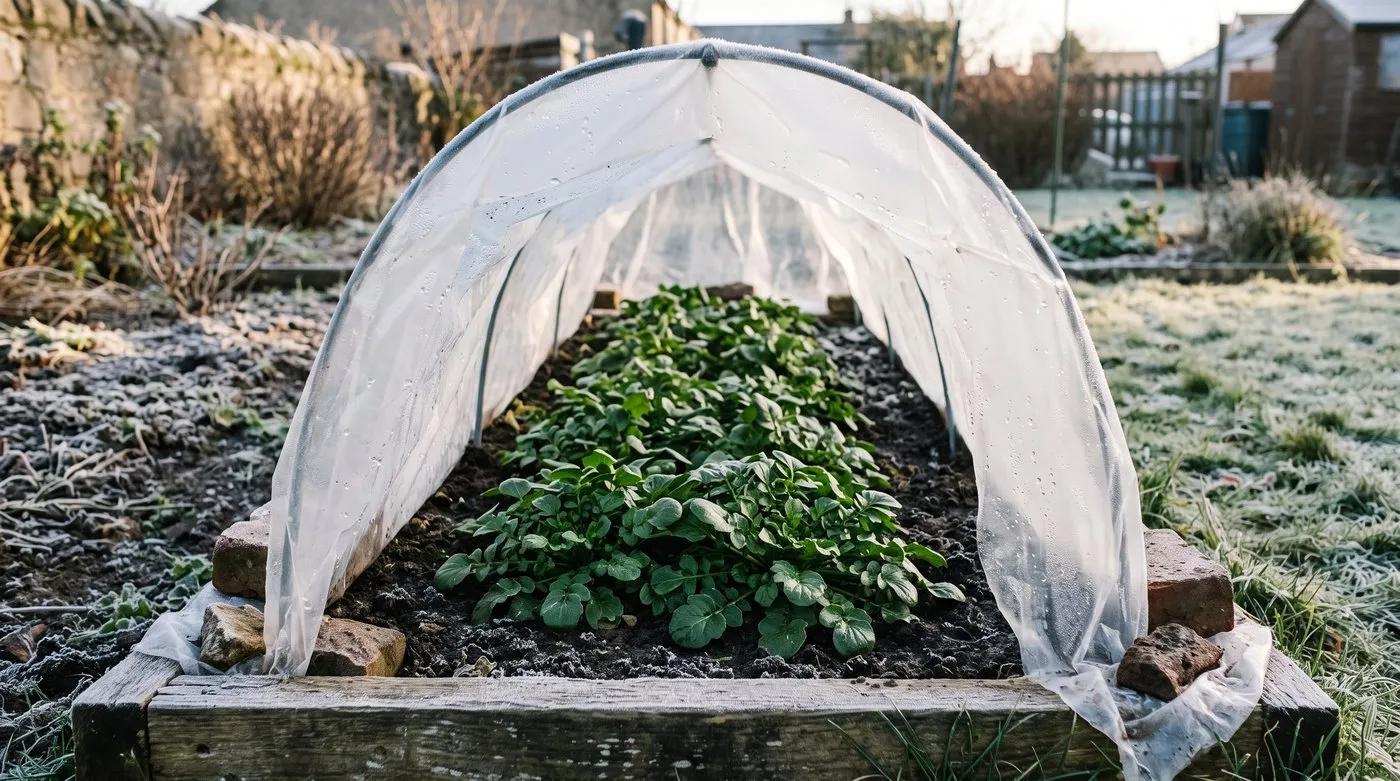
A simple cloche keeps winter leaves cleaner and more tender, so you can keep picking through the coldest weeks.
A cloche, low tunnel or layer of fleece makes a real difference. It keeps leaves cleaner and more tender, and protects them from the worst of the wind and rain. That means more picking in December and January. The guide to winter salad leaves covers other crops to grow alongside it under cover.
How to harvest landcress
Start picking about eight weeks after sowing, once the rosettes are a good size. Pick a few outer leaves from each plant and leave the centre to keep growing. The plant will keep producing new leaves for months.
You can also cut the whole rosette about 2-3cm above the soil. Leave the growing point intact and it usually regrows. Pick in the cool of the morning when leaves are crisp, and keep them in a bag in the fridge for a few days.
Young leaves are milder. Older leaves are hotter and can be cooked lightly, like spinach.

Pick a few outer leaves from each plant and leave the centre to grow on. One short row keeps a household in peppery leaves for weeks.
Pests and problems
Landcress is usually trouble-free in winter. Most problems hit late-summer seedlings.
- Flea beetle: tiny holes in young leaves in late summer. Cover seedlings with fine mesh or fleece. The guide to flea beetle has more.
- Cabbage white caterpillars: check leaf undersides in August and September and pick off eggs and caterpillars. Insect mesh keeps butterflies off.
- Slugs and snails: they love young seedlings in damp weather. Go out with a torch in the evening, or start plants in modules. See the guide to getting rid of slugs.
- Pigeons: they may strip leaves in a hard winter. Net the row on hoops.
- Bolting: a flowering stem in spring or in hot, dry weather. The leaves turn tough and bitter.
Landcress growing calendar
| Month | What to do |
|---|---|
| March | Sow outdoors or in modules for a spring crop |
| April | Last spring sowing. Thin earlier sowings |
| May | Pick spring sowings before they bolt |
| June | Clear bolted plants. Don’t sow in the heat |
| July | Sow from late in the month for winter leaves |
| August | Main sowing month. Protect seedlings from flea beetle |
| September | Last main sowing. Thin and start picking early sowings |
| October | Pick outer leaves regularly. Put cloches in place |
| November | Keep picking under cover. Water only if dry |
| December | Pick lightly as growth slows |
| January | Pick lightly. Check cloches after wind |
| February | Growth picks up again. Keep picking |
Common landcress mistakes
- Sowing in early summer. Heat and dry soil make it bolt fast. Wait until late July.
- Too much sun and too little water. Dry plants bolt and turn bitter. Choose light shade and keep the soil moist.
- Cutting into the growing point. Cut too low and the plant may not regrow. Leave the centre intact.
- Leaving bolted plants. Once it flowers, the leaves are tough and hot. Pull it and resow.
- Waterlogged winter soil. Wet, cold ground can rot the crowns. Improve drainage or use a raised bed.
Gardener’s tip: Leave one or two plants to flower and set seed in spring. Landcress self-seeds readily, so you may find free seedlings popping up in late summer.
Cooking with landcress
Use landcress anywhere you would use watercress. It is good in sandwiches, salads and soups, and as a peppery garnish for fish or eggs. Mix it with milder leaves such as corn salad to soften the bite. Wash it just before eating, as wet leaves soon go limp.

Use landcress anywhere you’d use watercress. It’s lovely in an egg sandwich or blended into a winter soup.
Now your winter salad bed is sorted, read the guide to growing rocket for another peppery leaf that is quick from seed. You’ll find more crops in the growing veg section.
Frequently asked questions
Is landcress the same as watercress?
No, but they taste very similar. Landcress (Barbarea verna) grows in ordinary moist soil. Watercress (Nasturtium officinale) is a water plant that likes clean, running water. Both have a peppery bite and can be used the same way in the kitchen.
When should I sow landcress in the UK?
Sow from late July to September for leaves through autumn and winter. You can also sow in March and April for a spring crop. Avoid sowing in early summer, as heat and dry soil make plants bolt quickly.
Is landcress hardy in winter?
Yes, it is hardy and stays outdoors through most UK winters. Growth slows in the coldest months, and frost can mark the leaves. A cloche or fleece keeps them cleaner and more tender, and helps you keep picking.
Why has my landcress turned bitter?
It is usually bolting, which means running to flower. Warm weather and dry soil trigger it, especially in late spring. Once a flower stem appears, leaves get tough and hot. Pull the plant and sow again in late summer.
Can landcress be used like watercress in recipes?
Yes, use it anywhere you would use watercress. It works in soups, sandwiches, salads and as a garnish. The flavour is peppery and fresh, and older leaves can be quite hot.
Does landcress grow in shade?
Yes, light shade suits it well. Cool, moist conditions keep the leaves tender and slow down bolting. Avoid deep, dry shade under trees.
Our team produces practical UK gardening guidance from source research, contributor records and established horticultural practice. Editorial standards are overseen by Matt W.