Key takeaways
- Sow in August and September for leaves from late autumn to March
- Corn salad shrugs off frost outdoors; a cloche just makes the leaves bigger and cleaner
- Sow 1cm deep in rows 15cm apart, then thin to 10cm
- It copes with light shade and ordinary soil, and needs no feeding
- Pick outer leaves for several harvests, or cut whole rosettes
- Leave a few plants to flower in spring and it will self-seed for next winter
Corn salad is the salad leaf that keeps going when everything else has given up. While lettuce sulks in the cold and rain, its neat green rosettes sit happily through frost. Sow it in late summer and you’ll be picking fresh leaves from late autumn to March.
Also called lamb’s lettuce or mache, it’s tiny, tough and asks for almost nothing. This guide covers sowing, varieties, picking, pots and letting it self-seed. There’s a round-up of other winter leaves at the end.
What is corn salad?
Corn salad (Valerianella locusta) is a small, hardy annual grown for rosettes of soft, spoon-shaped leaves. It has nothing to do with sweetcorn. The name comes from it growing wild in cornfields.
The leaves taste mild and nutty, with a soft, almost buttery texture. That makes it a good partner for strong flavours like beetroot, blue cheese or a mustardy dressing.
Its real value is timing. It’s ready when there’s little else to pick. If you already grow lettuce in summer, corn salad picks up where it leaves off. For a peppery contrast in the same bowl, try cress and watercress.
When to sow corn salad in the UK
Sow corn salad in August and September for winter picking. Plants get established while the soil is still warm, then crop through the cold months. Early August sowings give the biggest plants by winter. Late September sowings still give a useful crop, just smaller.
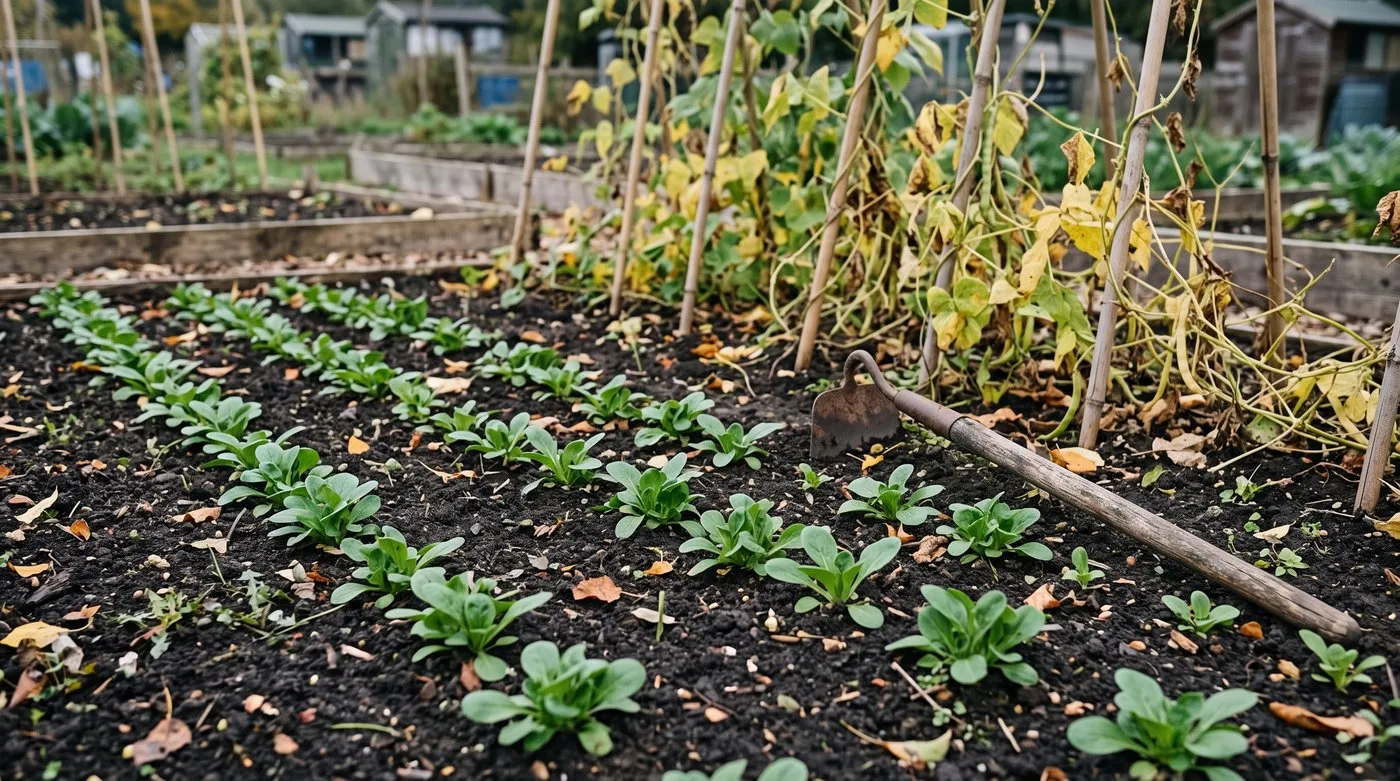
Autumn sowings come up quickly in still-warm soil. Seedlings in neat rows are easy to tell apart from weeds.
You can also sow from March to April for a quick spring crop. Spring plants grow fast but run to flower, or bolt, once the weather warms up in May or June.
Corn salad germinates poorly in hot soil, so skip June and July sowings. The seedlings usually appear in one to two weeks.
| Month | What to do |
|---|---|
| March to April | Sow for a quick spring crop |
| May to July | Leave a few spring plants to flower and self-seed |
| August to September | Main sowings for winter |
| October | Thin seedlings to 10cm. Water in dry spells |
| November to March | Pick outer leaves or whole rosettes |
| April | Let a few plants flower for next year’s seed |
How to sow and grow corn salad
Sow corn salad 1cm deep in rows 15cm apart, then thin seedlings to 10cm. You can also scatter seed thinly over a patch and rake it in.

Sow thinly in a shallow drill about 1cm deep. Thin the seedlings to 10cm apart later and eat the thinnings.
- Rake the soil level and remove large stones and weeds.
- Draw shallow drills 1cm deep and 15cm apart.
- Sow thinly, cover lightly and water gently.
- Keep the soil moist until seedlings appear.
- Thin to 10cm apart once they have two true leaves. Eat the thinnings.
It isn’t fussy about soil. Any ordinary garden soil will do, and it doesn’t need rich ground or feeding. On heavy clay, fork a little compost into the surface to help the seeds come up.
You can also sow a few seeds per module under cover and plant the little clumps out 10cm apart. That’s handy if slugs are a problem or the bed is still full of summer crops.
Once established, it needs little care. Hand-weed around young plants and water in dry spells in September and October. After that, rain usually does the job.
Which corn salad varieties grow best in the UK?
Vit is the easiest variety to find and a reliable choice for winter. It forms compact, dark green rosettes.
Large-leaved types, sometimes sold as Verte d’Etampes or Grosse Graine, have bigger, paler leaves and give a bit more per plant. If you can’t find a named variety, any packet labelled for autumn sowing will do fine.
Growing corn salad in shade
Corn salad grows well in light or partial shade. In spring, some shade actually helps, as heat makes it bolt. In winter it just needs an open spot with some daylight. That makes it useful for beds where lettuce struggles. The guide to vegetables that grow in shade has more crops for darker corners, and the growing veg hub covers the rest of the plot.
Does corn salad need protecting in winter?
No, corn salad copes with hard frost outdoors. It stops growing in the coldest weeks, then picks up again as soon as it turns milder.
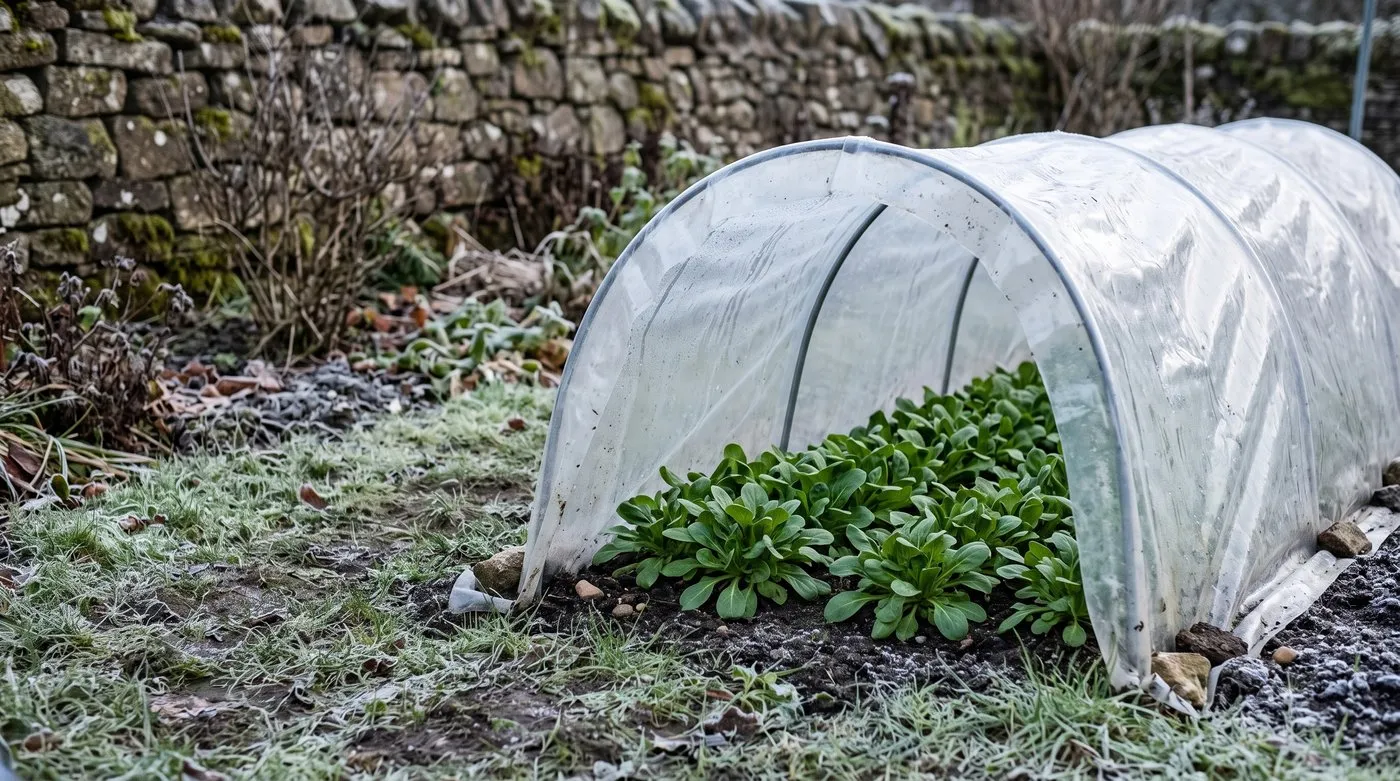
A cloche isn’t essential, but it keeps the leaves clean and a little bigger through the coldest weeks.
A cloche or cold frame is a nice extra, not a must. Under cover the leaves grow a bit bigger and stay free of mud splashes. Open the cover on sunny days so plants don’t overheat. The guide to cold frame gardening explains how to use one.
How to harvest corn salad
Pick outer leaves for several harvests, or cut whole rosettes at soil level. Most autumn sowings are ready from about October or November.

Take a few outer leaves from each plant and leave the centre, and the rosettes keep growing for more pickings.
- Outer leaves: pick a few from each plant and leave the centre. New leaves grow from the middle over the following weeks.
- Whole rosettes: cut at soil level with scissors when you want a big bowlful. The plant won’t regrow after this.
Handle the leaves gently, as they bruise easily. Wash them in cold water just before eating. They keep for a couple of days in a bag in the fridge but are best eaten fresh.
Does corn salad self-seed?
Yes, leave a few plants to flower in spring and corn salad will self-seed. The tiny pale blue flowers appear around April and May. Seed drops near the parent plant, and new seedlings pop up in late summer and autumn.

Leave a few plants to flower like this in spring. They drop seed for a fresh crop next autumn.
After the first year, simply thin the self-sown seedlings to 10cm and let them grow. Move spares to fill gaps elsewhere. Pull any that come up in paths.
If you prefer neat rows, pull the plants before they set seed and sow fresh each August. More easy-going self-seeders are in the guide to self-seeding plants.
Growing corn salad in pots and window boxes
Corn salad grows well in pots, troughs and window boxes at least 10cm deep. Use peat-free multipurpose compost and sow thinly across the surface. Thin to a few centimetres apart for small rosettes.
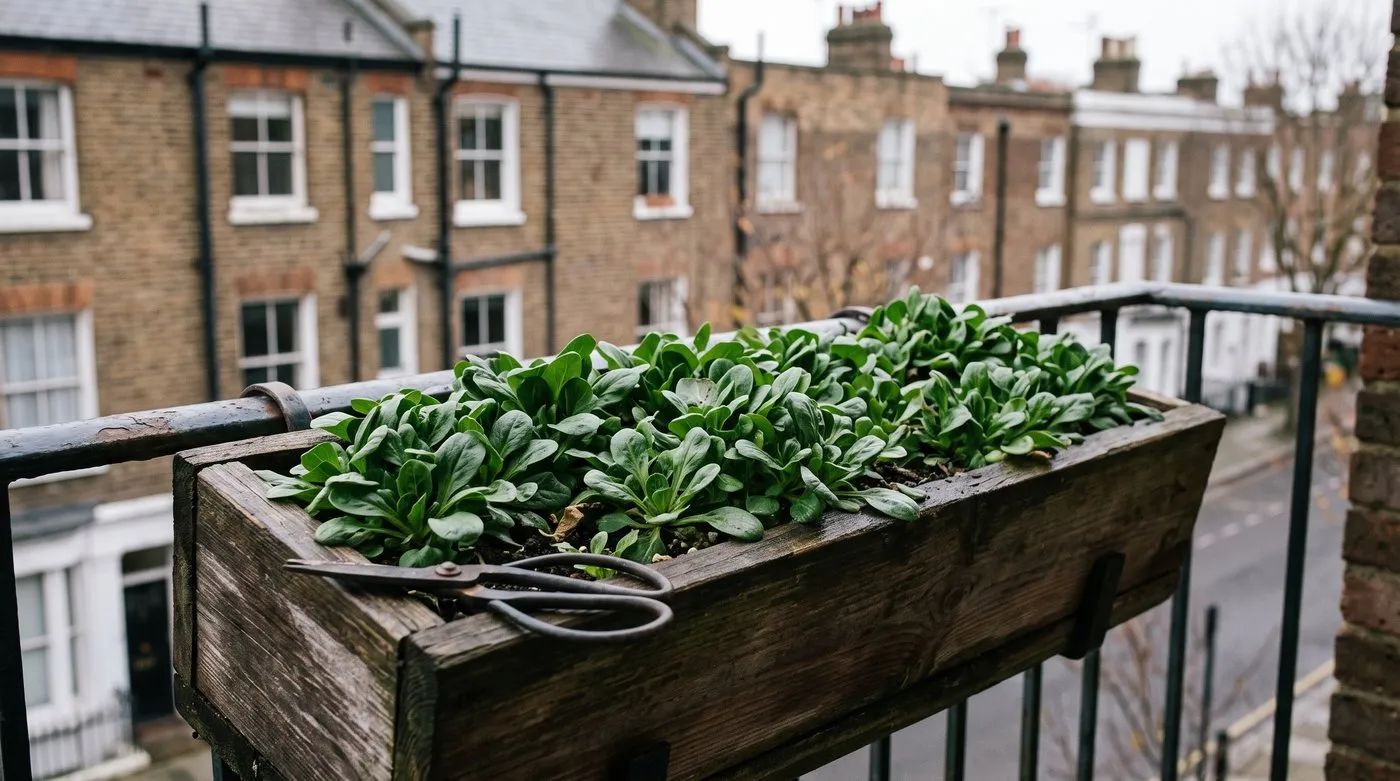
A window box at least 10cm deep is plenty. It’s a handy way to grow winter salad if you only have a balcony.
Stand pots in the brightest spot you have in winter. An outdoor windowsill, balcony or a sheltered spot by the back door works well. Water when the compost feels dry, which won’t be often in winter. Indoors, it can also grow on a cool, bright windowsill.
It mixes well in a trough with other hardy leaves such as landcress for a ready-made winter salad bowl.
Corn salad pests and problems
Corn salad has few problems, and slugs are the main one. Most pests are quiet over winter.
- Slugs and snails go for young seedlings in mild, damp autumn weather. Check after dark and pick them off, or use nematodes while the soil is still warm. The guide to getting rid of slugs has more options.
- Aphids sometimes appear on plants under cover in late winter. Rub them off or rinse them away with water.
- Mildew can show up on crowded plants in wet, mild weather. Thin to 10cm so air can move, and pick off affected leaves.
- Birds sometimes peck at young seedlings. A layer of fleece or netting helps until plants are established.
Common corn salad mistakes
Most failures come from sowing at the wrong time.
- Sowing in midsummer. Hot soil gives poor germination. Wait until August.
- Sowing too late. Seed sown in October makes tiny plants that barely grow before spring.
- Not thinning. Crowded plants stay small and get mildew. Thin to 10cm.
- Stripping plants bare. Take a few outer leaves from each plant so they keep growing.
- Forgetting the slugs. Protect young seedlings in a damp autumn.
Frequently asked questions
When should I sow corn salad in the UK?
Sow in August and September for winter leaves. Plants get established before the cold and crop from late autumn to March. You can also sow in March and April for a quick spring crop, but it runs to flower once the weather warms up.
Does corn salad survive frost?
Yes, it is one of the hardiest salad leaves you can grow. It stops growing in the coldest weeks but recovers as soon as it gets milder. A cloche or cold frame isn’t essential, but it gives bigger, cleaner leaves.
What does corn salad taste like?
It has a mild, nutty flavour and soft, tender leaves. It has none of the bite of rocket or cress, so even fussy eaters often like it. Young leaves are the mildest.
Can I grow corn salad in shade?
Yes, it grows well in light or partial shade. Shade helps spring sowings, as heat makes it run to flower. In winter it just needs an open spot with some daylight. It’s a good choice for beds where lettuce struggles.
Does corn salad self-seed?
Yes, it self-seeds if you let a few plants flower in spring. The tiny pale blue flowers appear around April and May. Seedlings then pop up nearby in late summer and autumn, ready to grow on for winter.
What is the best corn salad variety for the UK?
Vit is a reliable, easy-to-find choice for winter. It makes neat, dark green rosettes. Large-leaved types, sometimes sold as Verte d’Etampes or Grosse Graine, give bigger leaves. Any packet labelled for autumn sowing will do well.
How do I harvest corn salad?
Pick the outer leaves, or cut whole rosettes at soil level. Picking outer leaves and leaving the centre lets the plant regrow for more pickings. Handle the soft leaves gently and wash them just before eating.
Now your corn salad is sown, read our guide to growing winter salad leaves to add mizuna, winter purslane and more to your winter bowl.
Our team produces practical UK gardening guidance from source research, contributor records and established horticultural practice. Editorial standards are overseen by Matt W.