Key takeaways
- Sunflower seeds are big enough for children aged three and up to sow themselves
- Sow indoors in April or outside in May, one seed 2cm deep per pot or spot
- Use 'Russian Giant' for a tallest-sunflower contest and dwarf types for pots
- Protect seedlings from slugs, and stake tall ones before they flop
- Count the seed spirals, save seed for next year and leave heads for the birds
Sunflowers are a brilliant first plant for children. The seeds are big and easy to handle, they come up quickly and the plants shoot up fast enough to measure every week. By late summer, the sunflower towers over the child who sowed it.
This guide is all about making sunflowers a family project: jobs for each age, a tallest-sunflower contest, simple science and what to do with the seeds. For the full growing method, see our guide on how to grow sunflowers.
What you need to grow sunflowers with children
The kit list is short, and you probably have most of it already.
- Seeds: One packet is plenty for a family. Pick a giant for a contest or a dwarf for pots.
- Pots: Small plastic pots, or washed yoghurt pots with holes poked in the base.
- Compost: Peat-free multipurpose compost.
- A small watering can with a fine rose, so seeds don’t get washed out.
- Labels: Lolly sticks work well. Let children write their own names.
- A tape measure for the weekly height check.
When and how to sow sunflower seeds with children
Sow indoors in April, or straight outside in May once the soil has warmed up. In northern England and Scotland, outdoor sowing is safer from mid to late May. Our guide on when to plant sunflowers has timings for each part of the UK.
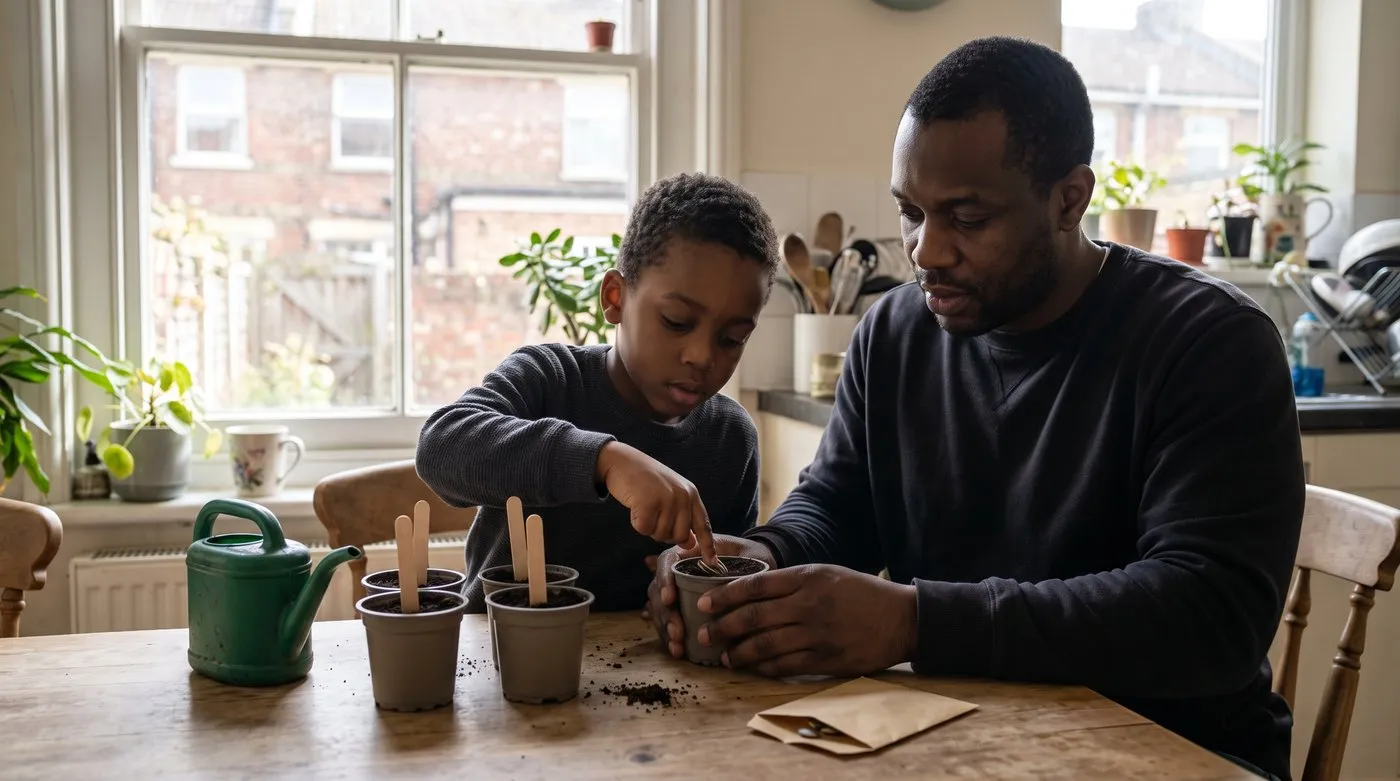
Sunflower seeds are big enough for little fingers. One seed per pot, about 2cm deep, is all it takes.
Sowing in pots, step by step:
- Fill a pot with compost to just below the rim.
- Poke a hole about 2cm deep with a finger.
- Drop in one seed and cover it over.
- Water gently until the compost is damp.
- Write a label with your name and the date.
- Stand the pot on a sunny windowsill.
Seedlings usually appear within one to two weeks. Turn the pots every couple of days so the stems grow straight.
Planting out: When seedlings are about 10-15cm tall, get them used to outdoor life over a week or so, putting them out by day and bringing them in at night. Then plant them in the sunniest spot you have, out of strong wind.
Best sunflower varieties for children
Match the variety to your space and the child’s patience.
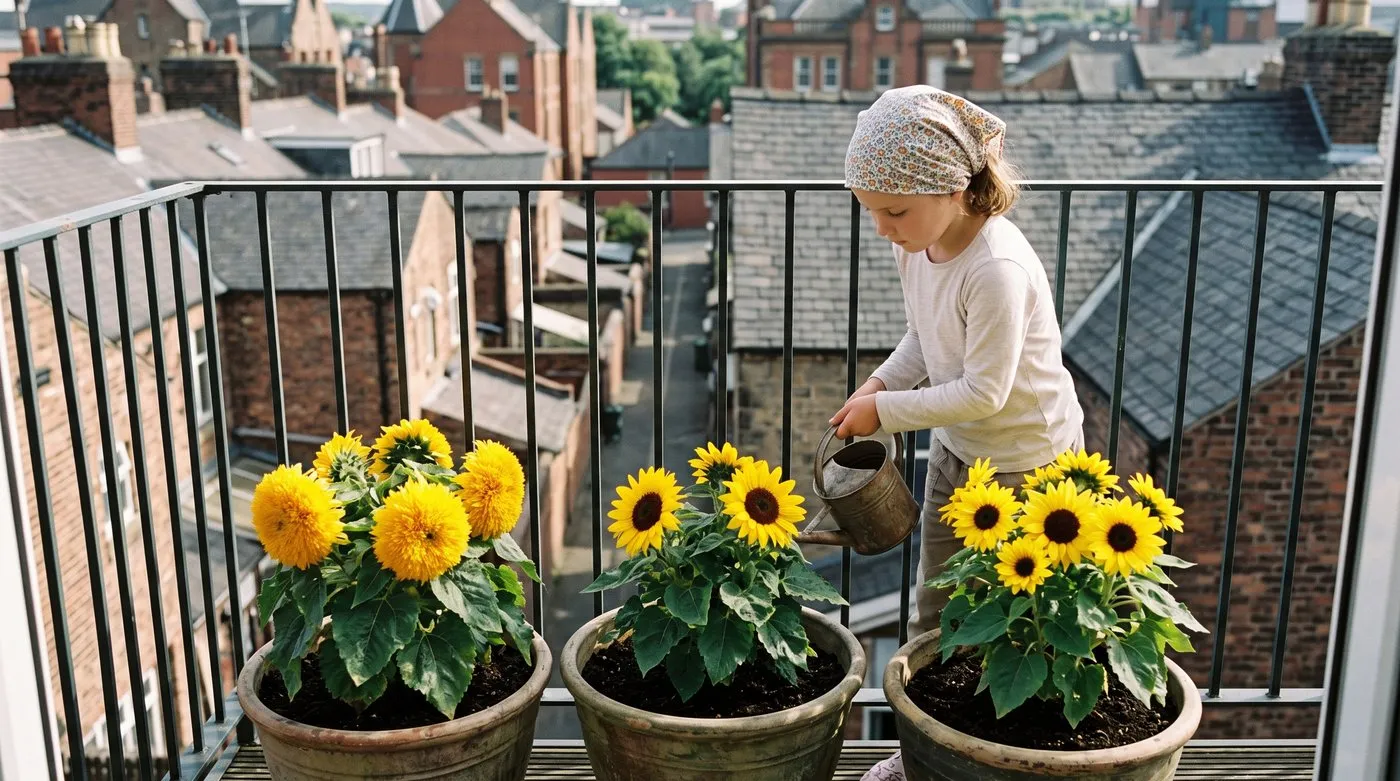
Dwarf sunflowers are perfect for pots. No garden needed, just a sunny spot and regular watering.
| Variety | Rough height | Best for |
|---|---|---|
| ’Russian Giant’ | 2-3m | Tallest-sunflower contests |
| ’Teddy Bear’ | About 1m or less | Fluffy flowers, pots |
| Dwarf types such as ‘Sunspot’ | About 60cm | Big heads on short stems, pots |
| Branching types | Varies | Lots of flowers for picking |
Giants are the most exciting but need a stake and a spot in the ground. Dwarf types fit on a patio or balcony and flower sooner.
Sunflower jobs for every age
Children of different ages enjoy different jobs. Here’s a rough guide.
Ages 3 to 5: little helpers
Scoop compost into pots, push seeds in and water with a small can. Check the windowsill each morning for shoots. Keep sessions short, ten minutes or so, and let them do the fun bits.
Ages 5 to 8: independent growers
Most children this age can sow, label and water on their own. They’ll love measuring their plant every week and marking it on a chart. Ask them why they think the seedling leans towards the window.
Ages 8 to 12: young scientists
Older children can run simple experiments, draw graphs and take photos. They can grow two varieties side by side and compare them, or save seed from the best plant. Our seed saving guide for beginners shows them how.

A weekly measure keeps children hooked all summer. Hold the ladder for little ones.
How to run a tallest-sunflower contest
A height contest keeps children interested right through the summer. Keep it simple and fair.
- Same start: Everyone sows the same giant variety, on the same day, in the same compost.
- Own plant: Each child waters and cares for their own sunflower.
- Weekly measuring: Measure from the soil to the top of the plant on the same day each week.
- Height chart: Pin a big sheet of paper to a fence or wall. Each child marks their plant’s height in their own colour.
- Lots of prizes: Tallest plant, biggest flower head, best drawing, best-decorated pot. That way every child wins something.
Schools can find free sunflower resources through the RHS Campaign for School Gardening. For more family projects, see our gardening projects for kids.
Looking after the sunflowers
Sunflowers are easy, but a few jobs make all the difference.
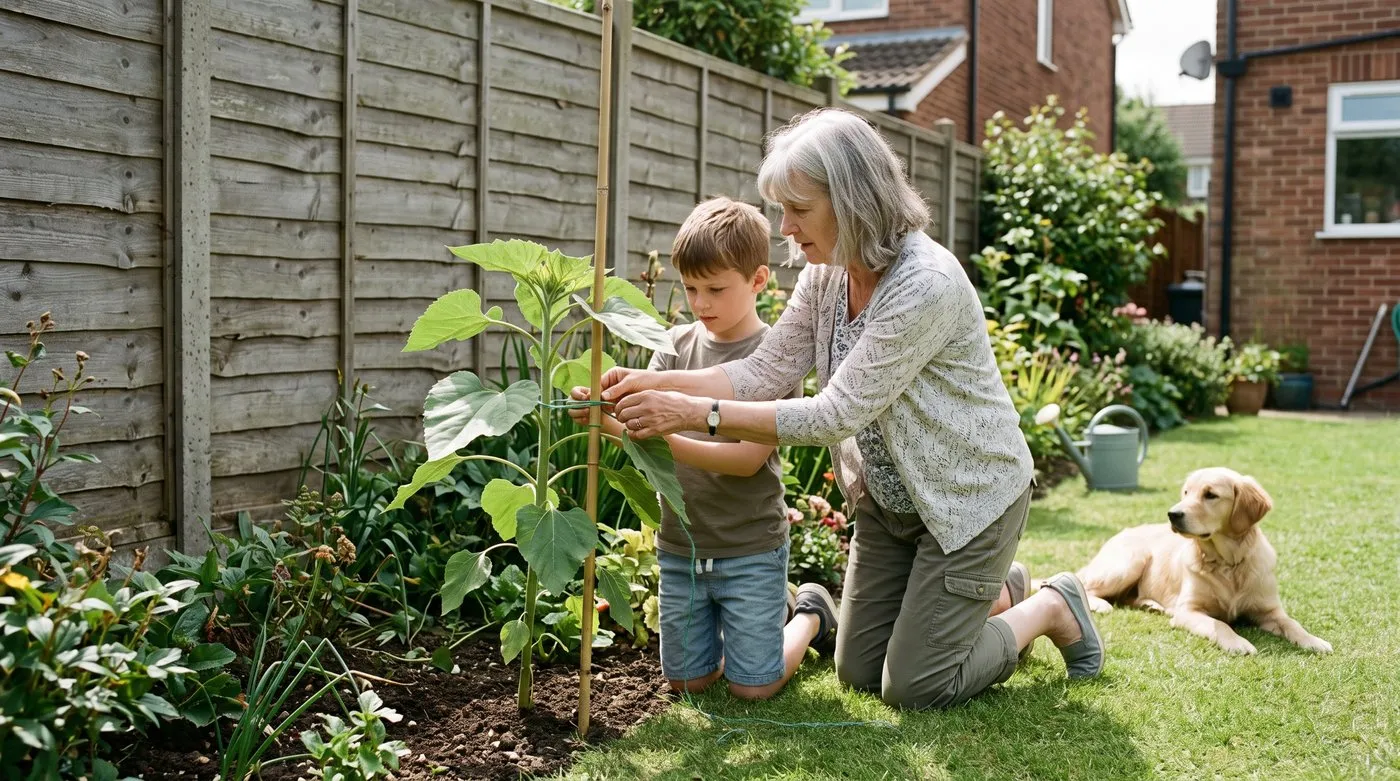
Put the cane in early and tie the stem loosely. Giant sunflowers need the support before the summer winds arrive.
- Slugs: They love young sunflowers and can eat a seedling overnight. Grow seedlings in pots until they’re sturdy, and go on a torchlit slug hunt after rain. Our guide on how to get rid of slugs has more ideas.
- Watering: Water well in dry spells, especially plants in pots.
- Staking: Push in a cane next to giant varieties when you plant them. Tie the stem loosely to it as it grows.
- Aphids: Squash small groups or wash them off with a jet of water. Ladybirds will help too.
Simple science with sunflowers
Sunflowers are a living science lesson.
Light-seeking stems: Put a seedling on a windowsill and mark which way it leans. Turn the pot round. Within a day or two the stem bends back towards the light. Young sunflower heads also follow the sun across the sky.
Spiral patterns: When the flower head is ripe, count the spirals of seeds running each way. They often turn out to be numbers from the Fibonacci sequence, such as 34 and 55, where each number is the sum of the two before it.
Germination test: Sow seeds in a warm spot, a cool room and a dark cupboard. Which comes up first? Which seedlings look healthiest after two weeks?

Count the spirals one way, then the other. It’s a maths lesson growing in the garden.
How to harvest sunflower seeds with children
Harvesting is the grand finale. The seeds are ripe when the back of the head turns brown, the petals have dropped and the seeds look plump and striped. This is usually in September.
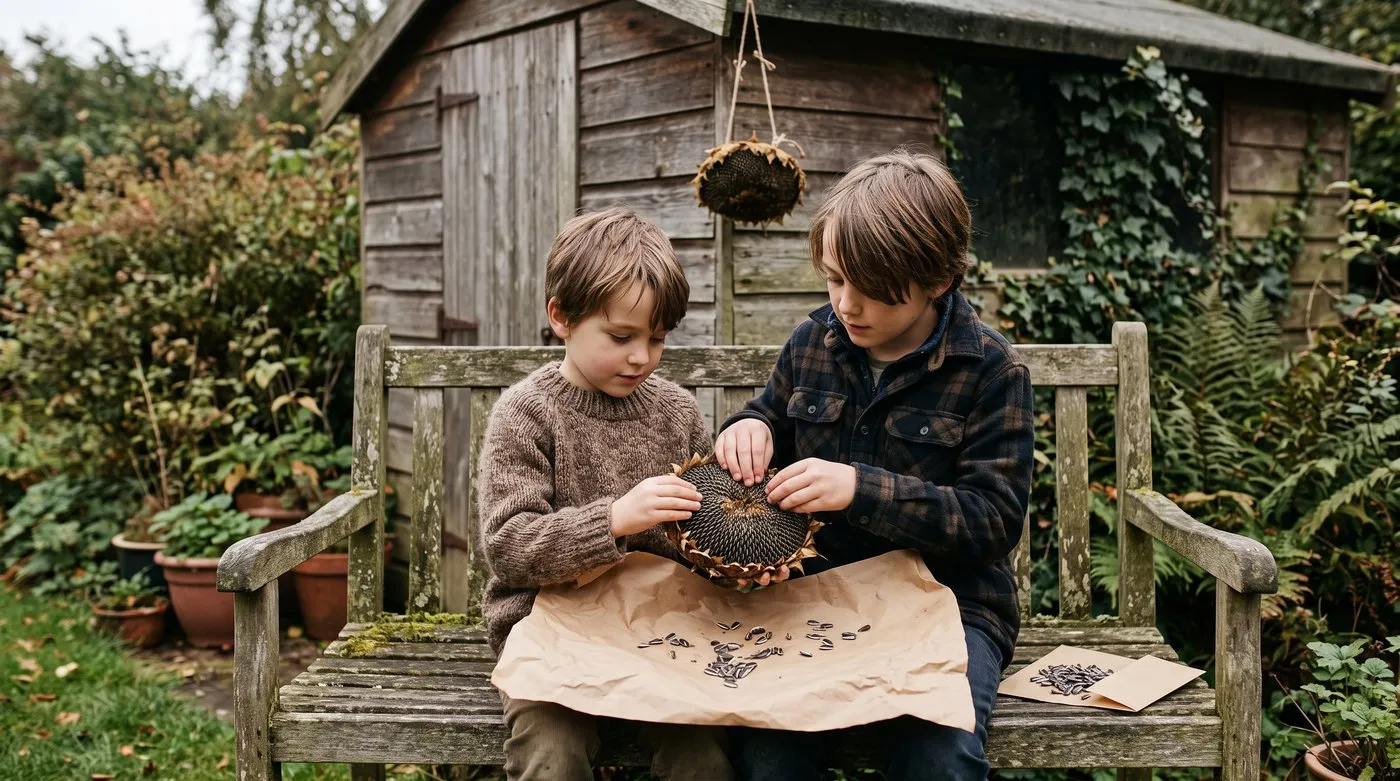
Rubbing out the seeds is the best bit. Keep a few for next year and leave the rest for the birds.
- Cut the head with a length of stem attached. An adult should do the cutting.
- Hang it upside down somewhere dry and airy, with paper underneath to catch falling seeds.
- After a week or two, children can rub the seeds out with their thumbs.
- Keep the best seeds in a labelled paper envelope for next year. Seed from F1 hybrids won’t come true, but open-pollinated giants usually do.
For the birds: Leave a few heads standing in the garden. Goldfinches and other birds love them in autumn and winter. Our bird feeding guide has more ideas for winter. For other ways to get children watching wildlife, try our wildlife activities for kids.
Family sunflower calendar
| Month | Job | Children can |
|---|---|---|
| April | Sow seeds indoors | Fill pots, sow, label, water |
| May | Plant out or sow outside | Water and check for slugs |
| June | Start the height chart | Measure and record each week |
| July | Stake tall plants, water in dry spells | Water and spot visiting bees |
| August | Flowers open | Draw, photograph and count spirals |
| September | Cut and dry seed heads | Rub out and sort seeds |
| October | Save seed, leave heads for birds | Label envelopes, watch for goldfinches |
Common mistakes when growing sunflowers with children
- Sowing outside too early. Cold, wet soil rots seed. Wait for May or sow indoors.
- Forgetting about slugs. Protect seedlings until they’re well grown.
- No stake for giants. One windy night can snap a tall stem.
- Overwatering pots indoors. Damp, not soggy, is right for seedlings.
Find more crop ideas in our growing section. When the sunflowers are done, try our guide to easy vegetables for kids to grow for the next project.
Frequently asked questions
What age can a child start growing sunflowers?
Children from about three can sow sunflower seeds. The seeds are big enough for small hands to push into compost. Toddlers love watering too. By five or six, most children can manage the whole thing with a little help.
When should children plant sunflower seeds in the UK?
Sow indoors in April, or straight outside in May. Indoor pots on a sunny windowsill give a head start and keep seedlings away from slugs. In the north and Scotland, wait until mid to late May to sow outside.
How long does it take for a child’s sunflower to grow?
Seeds come up in about one to two weeks. Dwarf types flower in summer, and giants usually open from late July or August. Growth is fastest in warm midsummer weather, so weekly measuring is exciting.
What is the best sunflower variety for children to grow?
‘Russian Giant’ is the classic for a tallest-sunflower contest. Dwarf ‘Teddy Bear’, with fluffy double flowers, suits pots and small gardens. Shorter, branching types give lots of flowers for picking.
Can children grow sunflowers in pots?
Yes, dwarf varieties grow well in pots at least 30cm wide. Use peat-free multipurpose compost, stand the pot in full sun and water often in summer. Giants are better in the ground.
What can children do with sunflower seeds after harvesting?
They can save some to sow next year and leave the rest for birds. Dry seeds and keep them in a paper envelope somewhere cool. Seed heads left standing in autumn feed goldfinches and other birds.
Are sunflowers safe for children and pets?
Yes, sunflowers are not poisonous to children, dogs or cats. The rough leaves and stems can irritate sensitive skin, so gloves help. Keep slug pellets and feeds well out of reach.
Our team produces practical UK gardening guidance from source research, contributor records and established horticultural practice. Editorial standards are overseen by Matt W.