
Key takeaways
- Start with fast crops such as cress and radishes so children see results quickly
- Big seeds like peas, beans, courgettes and sunflowers are easiest for small hands
- Potatoes in a bag make a brilliant treasure hunt at harvest time
- Give each child their own pot or patch, with a name label
- Runner beans must be cooked, and potato berries and leaves should never be eaten
The easiest vegetables for kids to grow are fast, big-seeded and fun to pick: cress, radishes, peas, potatoes, runner beans and cherry tomatoes. Pick crops that show results quickly, and a child is far more likely to stay keen all summer.
This guide lists the best crops for children, when to sow them and how to keep young gardeners interested. For more garden activities beyond veg, try our gardening projects for kids.

Pea seeds are big enough for small fingers to push into the soil one at a time, which makes sowing a proper hands-on job.
What makes a vegetable good for kids?
The best children’s crops tick three boxes.
- Speed. Something to eat within weeks, not months. Cress and radishes win here.
- Something to see. Climbing beans, giant courgette leaves and swelling tomatoes keep children checking in. Carrots hide underground, so they’re less exciting.
- Jobs for little hands. Watering, picking pods and hunting for courgettes under leaves. Fiddly jobs like thinning tiny seedlings suit older children.
The best vegetables for children
| Crop | Ready in about | Best age to start | Why kids love it |
|---|---|---|---|
| Cress | 1 week | 2+ | Super fast, grows indoors |
| Radishes | 4 weeks | 3+ | First outdoor harvest |
| Peas | 10-12 weeks | 3+ | Eat them straight from the pod |
| Potatoes | 10-12 weeks (earlies) | 3+ | Digging for treasure |
| Runner beans | 10-12 weeks | 3+ | Climbs taller than an adult |
| Lettuce | 4-6 weeks for leaves | 5+ | Cut it and it grows back |
| Courgettes | 8-10 weeks | 4+ | Huge leaves and fast fruit |
| Cherry tomatoes | 4-5 months from seed | 5+ | Sweet summer snacks |
| Strawberries | Following summer | 3+ | Warm fruit straight off the plant |
| Pumpkins | 4-5 months | 4+ | A Halloween lantern of your own |
Cress: ready in a week
Cress is the quickest win there is. Sprinkle seeds on damp kitchen roll or cotton wool on a saucer and keep it on a windowsill. Keep it moist. In about a week it’s ready to snip into egg sandwiches.
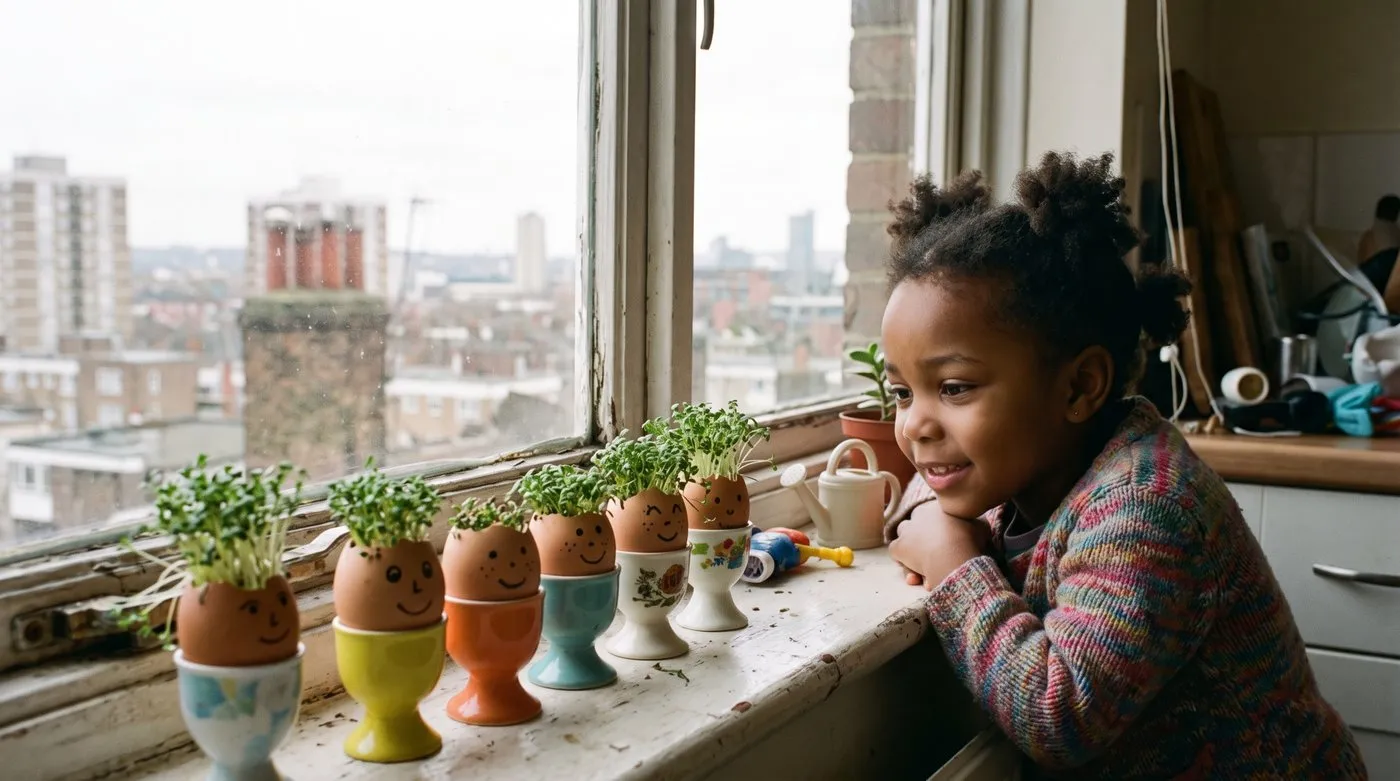
Cress heads grow their green hair in about a week, the perfect first project for very young gardeners.
For a fun twist, make cress heads. Draw a face on an empty eggshell, fill it with damp cotton wool and sprinkle seeds on top. A few days later the face grows green hair. Our guide to windowsill mini-gardens for kids has more indoor ideas.
Radishes: the first real harvest
Radishes are the fastest outdoor vegetable, usually ready about four weeks after sowing. Sow from March to September, 1cm deep, in the ground or a pot. French Breakfast and Cherry Belle are reliable, mild varieties.
Space seeds about 2.5cm apart, and water every couple of days in dry weather. Pull them when the round red tops start to show at the soil surface. The radish growing guide covers varieties and sowing little and often.
Peas: snacks straight from the plant
Peas are many children’s favourite because you can eat them raw, straight from the pod. Sow from March to June, 5cm deep and about 5cm apart. Give them twiggy sticks or netting to climb.
Kelvedon Wonder is a short, sturdy variety that doesn’t need much support. Sugar snap and mangetout types are even better for snacking, as you eat the whole pod. Teach children to hold the stem with one hand and pull the pod with the other, so they don’t uproot the plant.

Checking for fat pods every few days gives children a reason to visit the plot, and a tasty reward when they find one.
Runner beans: a real beanstalk
Runner beans climb taller than an adult in one summer, with bright red flowers that bees love. The seeds are big and easy to handle.
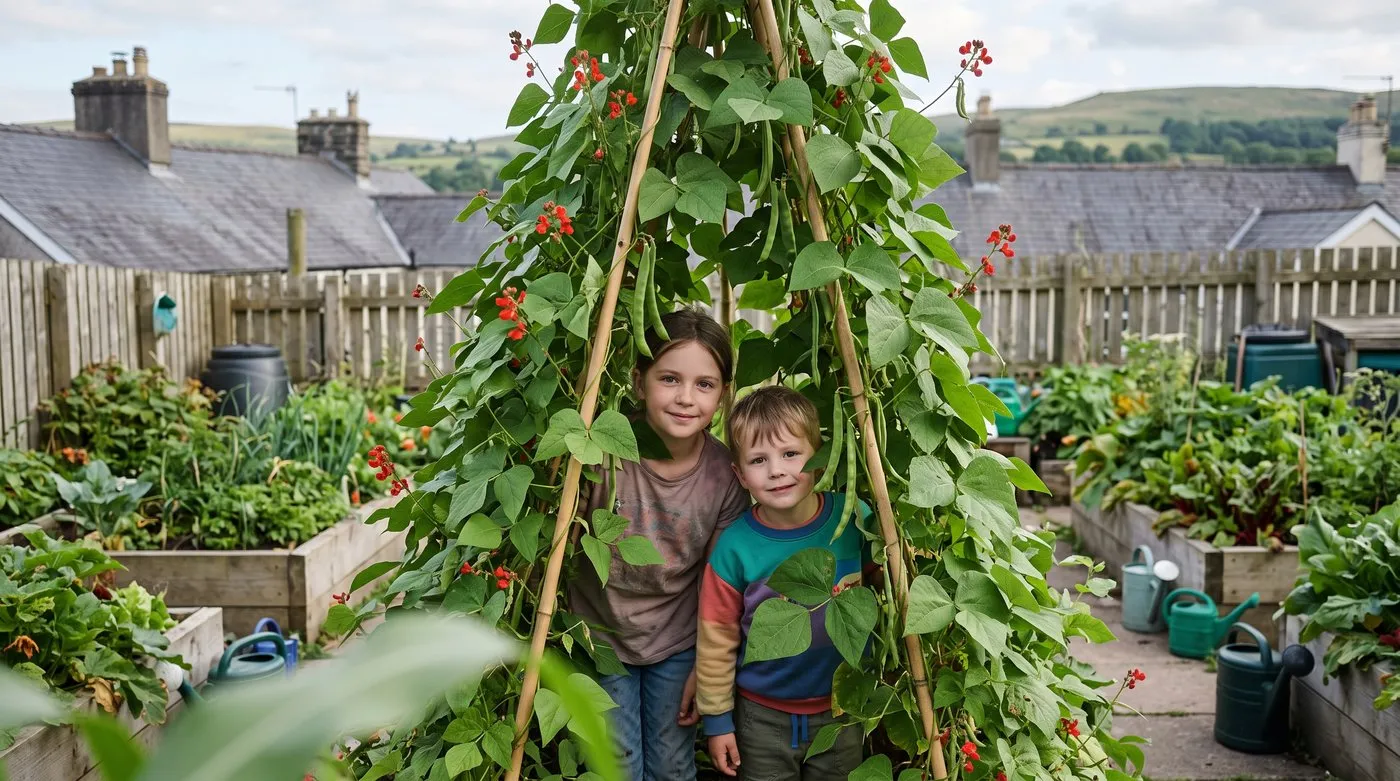
A runner bean wigwam doubles as a leafy den once the beans have climbed to the top.
Sow one seed 5cm deep in a small pot indoors in late April or May. Plant out after the last frost. Alternatively, sow straight outside in late May or June. Build a wigwam of six to eight long canes tied at the top, with one plant at the foot of each cane. Once it’s covered, it makes a great den.
Runner beans must always be cooked before eating, because raw beans contain a natural toxin. The runner bean guide has more on picking and watering.
Potatoes: digging for treasure
Potatoes are pure excitement at harvest. Every forkful or every tipped-out bag reveals more. First earlies such as Rocket or Swift are the quickest, ready from about early summer.
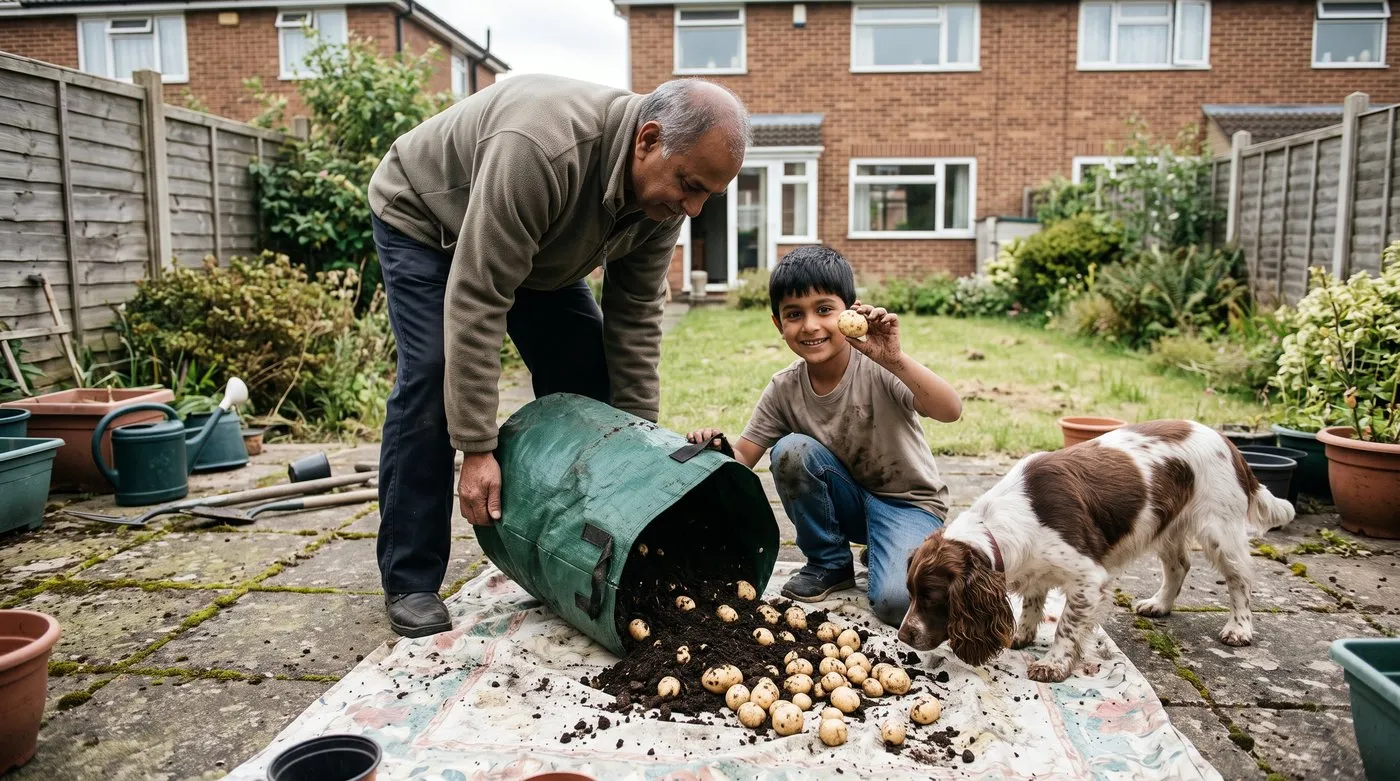
Tipping out a potato bag is the best treasure hunt in the garden, and there’s no digging needed.
Grow them in a large potato bag on a patio. Put 15cm of compost in the bottom, add one seed potato and cover. As shoots grow, add more compost until the bag is nearly full. When the plants flower, tip the bag onto a sheet and let children hunt for potatoes. Weighing the seed potato and then the harvest is a lovely maths lesson.
Potato leaves and the small green berries that sometimes form are poisonous, so teach children never to eat them. Our guide to growing potatoes in buckets has step-by-step help.
Lettuce: cut it and it grows back
Cut-and-come-again lettuce like Salad Bowl and Lollo Rossa regrows after cutting. Sow from April to August. The seeds are tiny, so mix them with dry sand in a salt shaker for small children to scatter. Snip outer leaves with child-safe scissors and leave the centre to keep growing. Mixing red and green types makes a colourful pot.
Cherry tomatoes: the summer prize
Cherry tomatoes take longer, but the reward is huge. Sow indoors in March or April, or buy young plants in May. Plant outside after the last frost.
Tumbling Tom is perfect for pots and hanging baskets because it trails and needs no staking. Taller types like Gardener’s Delight need a cane and older children can help pinch out side shoots. Tomato leaves aren’t for eating, only the ripe fruit.

A small watering can lets children water their own tomatoes every day, which gives them a real job to own.
More fun crops to try
Courgettes grow fast once they start. Sow indoors in April or May and plant out after frost. Pick them at 15-20cm long. Leave one on and watch it swell into a marrow.
Strawberries are easy from young plants. Plant in autumn or spring, and they’ll fruit the following summer. Raise them in pots or baskets to keep fruit off the soil.
Pumpkins need space, but the prospect of carving your own lantern is powerful motivation. Sow indoors in late April or May and plant out in June.
Sunflowers aren’t veg, but they make a great height contest. See growing sunflowers with children for tips.
Carrots need patience and thinning, so they suit children of seven and up who are already hooked.
Month-by-month calendar for young gardeners
In northern England and Scotland, outdoor sowing is usually a couple of weeks later than in the south.
| Month | Sow indoors | Sow or plant outdoors | Pick |
|---|---|---|---|
| January to February | Cress | - | Cress |
| March | Cress, tomatoes | Peas, radishes, early potatoes | Cress |
| April | Courgettes, pumpkins, runner beans (late) | Peas, radishes, lettuce, potatoes | Cress, first radishes |
| May | - | Runner beans, courgettes, tomatoes after frost | Radishes, lettuce |
| June | - | Radishes, lettuce, peas | Peas, lettuce, strawberries |
| July | - | Radishes, lettuce | Peas, beans, courgettes, early potatoes |
| August | - | Radishes | Beans, tomatoes, courgettes |
| September | Cress | Last radishes | Beans, tomatoes, potatoes |
| October | Cress | Strawberry plants | Pumpkins, last tomatoes |
How to keep children interested
Start fast. A child who sows carrots in April and sees nothing for weeks soon loses interest. Begin with cress and radishes.
Give them ownership. A pot or a patch with their name on it works far better than a corner of your bed. Let them paint the pot or make the labels.
Let them make mistakes. A wonky row of radishes still grows radishes. Step in only for safety and pests.
Make slug hunts a game. Slugs can wipe out seedlings overnight. A torchlight slug hunt on a damp evening is fun and works. Keep any slug pellets well away from children’s patches.
Set a watering routine. Pots need water most days in summer. Give children their own small watering can and a time of day to water.

A small raised bed with clear labels makes it easy for children to remember what they sowed and where.
Common mistakes when growing veg with kids
Starting with slow crops. Carrots, parsnips and sweetcorn take months. Save them for later.
Sowing tender crops too early. Runner beans, courgettes and tomatoes die in frost. Wait until after the last frost, usually mid-May in England.
Tipping in the whole packet. Crowded seedlings grow weak. Teach a “one finger gap” for small seeds and a wider gap for beans.
Forgetting to water. Pots dry out fast in summer. A daily routine helps.
Letting children graze unsupervised. Peas, tomatoes and strawberries are fine raw. Runner beans must be cooked, and potato leaves and berries are poisonous. Our guide to poisonous garden plants covers other plants to watch.
Frequently asked questions
What is the easiest vegetable for a child to grow?
Cress is the easiest, ready to snip in about a week. It grows on damp kitchen roll on a windowsill. Radishes are the easiest outdoor crop, ready about four weeks after sowing.
When should children start growing vegetables in the UK?
Children can grow cress indoors at any time of year. Outdoors, sow peas and radishes from March or April. Runner beans, courgettes and tomatoes go outside after the last frost, usually mid-May in England and later in Scotland.
Can children grow vegetables in pots?
Yes, most easy crops grow well in pots. Cherry tomatoes, lettuce, radishes and strawberries all suit containers at least 25-30cm across. Use peat-free compost, put pots in sun and check daily in summer.
Why do children lose interest in growing vegetables?
Slow results are the main reason. Start with fast crops like cress and radishes. Give each child their own pot or patch and simple daily jobs such as watering and checking for new growth.
What vegetables can a 3 year old plant?
Three-year-olds can sow big seeds and plant potatoes. Peas, beans, courgettes and sunflowers have seeds big enough to hold and push into compost. Save tiny seeds like carrots for older children, or mix them with sand first.
Do I need a garden to grow vegetables with children?
No, a windowsill or a few pots is enough. Cress grows indoors on kitchen roll. Lettuce, radishes, cherry tomatoes and potatoes in a bag all grow on a balcony, patio or doorstep.
For more family growing ideas, browse the growing hub. When your young gardener is ready for more, our grow your own vegetables guide is the perfect next step.
Our team produces practical UK gardening guidance from source research, contributor records and established horticultural practice. Editorial standards are overseen by Matt W.


