Key takeaways
- Sow a few seeds per module cell and plant the whole clump out together
- Beetroot, spring onions, onions, leeks, turnips and radishes are perfect for it
- Don't multi-sow carrots, parsnips, cabbage-family crops or squash
- Use module trays with cells at least 3cm wide
- Plant clumps out 20-30cm apart, depending on the crop
Multi-sowing is a brilliant time-saver. Instead of sowing one seed per cell and pricking out dozens of fiddly seedlings, you sow a little pinch of seeds together and plant the whole clump out in one go.
The method was made popular by no-dig grower Charles Dowding. It works because lots of vegetables are perfectly happy growing in little groups. You skip separating seedlings, use fewer trays, and fit plenty of plants into your beds.
What is multi-sowing, and why does it work?
You drop a few seeds into one module cell, let them come up together, and plant the whole clump without pulling them apart. Lots of veg don’t need to be grown one at a time. Root crops like beetroot simply push sideways as they swell. Onions and leeks grow upwards and barely bother their neighbours. Salads get picked young before they’re crowded.
Charles Dowding has grown this way for years, and his page on multi-sowing is well worth a read. It’s just as handy on an allotment or in a back garden, where time is always short.
Above ground, the leaves fan outwards and each seedling gets enough light. Below ground, the roots spread out into the soil once the clump is planted.
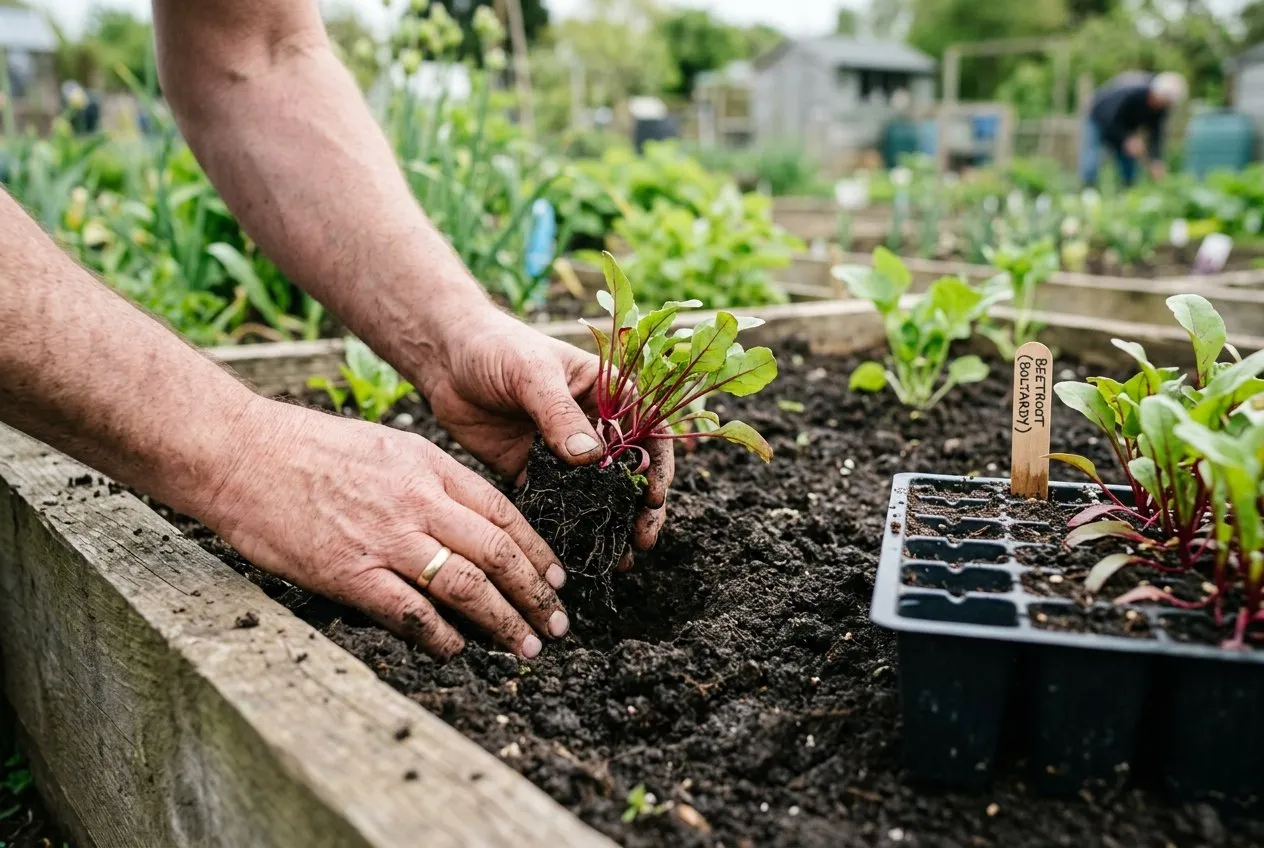
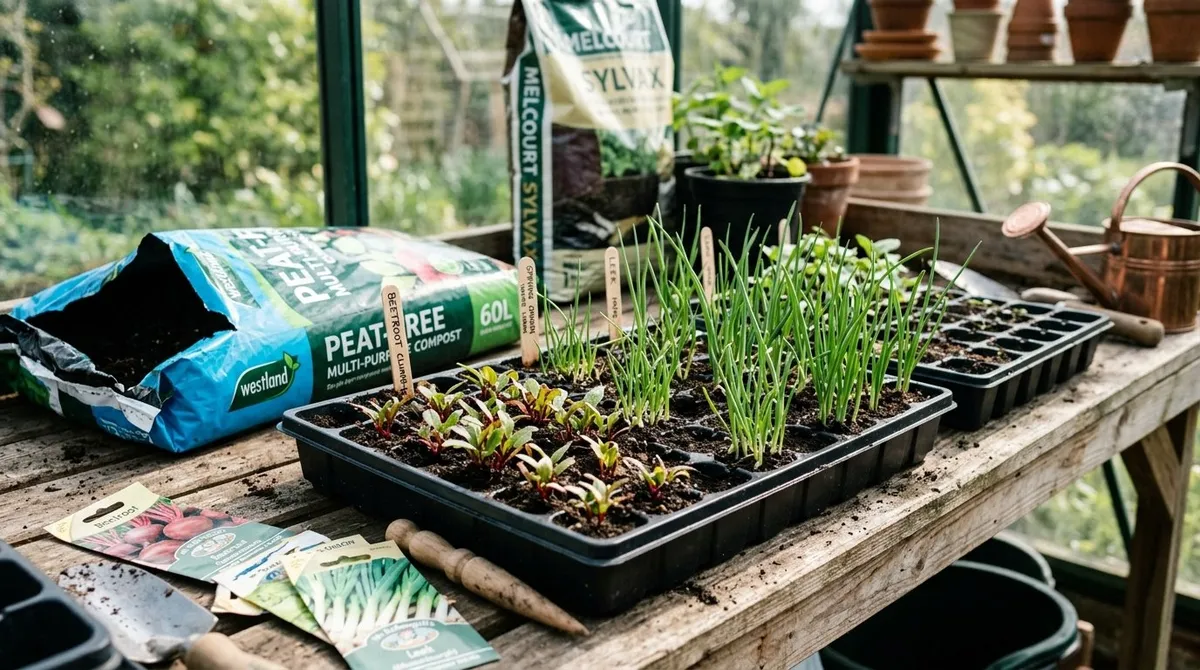
Clumps of seedlings going straight from the module tray into the bed.
Why gardeners love it
It saves time. No pricking out, no thinning. You handle each clump once, not every single seedling twice. Brilliant if your allotment time is squeezed into weekends.
It saves space on the windowsill. One tray gives you several times as many plants as single sowing, so you need fewer trays and less shelf space.
Roots aren’t disturbed. Each clump goes in with its rootball whole, so there’s no teasing apart or broken roots. Plants settle in fast, which matters in a chilly UK spring, when stalled seedlings are easy pickings for slugs.
It uses less compost. Fewer trays means less compost, which saves money across a whole season.
Which vegetables to multi-sow
Beetroot is the star. Sow 4-5 seeds per cell. Each clump gives you several roots that push apart as they grow. Pick them at golf-ball size. Space clumps 25cm apart. Our beetroot guide has variety ideas.
Spring onions are a classic. Sow 5-6 seeds per cell and plant clumps about 20cm apart. Pull the whole bunch when ready.
Leeks sow at 4-5 seeds per cell. The leeks come out a bit slimmer than single ones, but you get more of them. Space clumps 30cm apart.
Bulb onions work well at 4-5 seeds per cell. The bulbs flatten slightly where they touch but grow to a good cooking size. Space clumps 25cm apart.
Turnips suit 4-5 seeds per cell. Pick them young, before they get woody. Space clumps 25cm apart.
Radishes are quick and easy at 5-6 seeds per cell. They’re ready in about a month. Space clumps 15cm apart.
Herbs like parsley, coriander and dill multi-sow nicely. Snip rather than pull them.
Salad leaves, including lettuce and cut-and-come-again mixes, work well for baby leaves.
Peas suit 3-4 seeds per cell in deeper modules. Plant clumps 20cm apart and give them supports.
Dwarf French beans work at 3-4 seeds per cell, and the plants hold each other up. Space clumps 30cm apart.
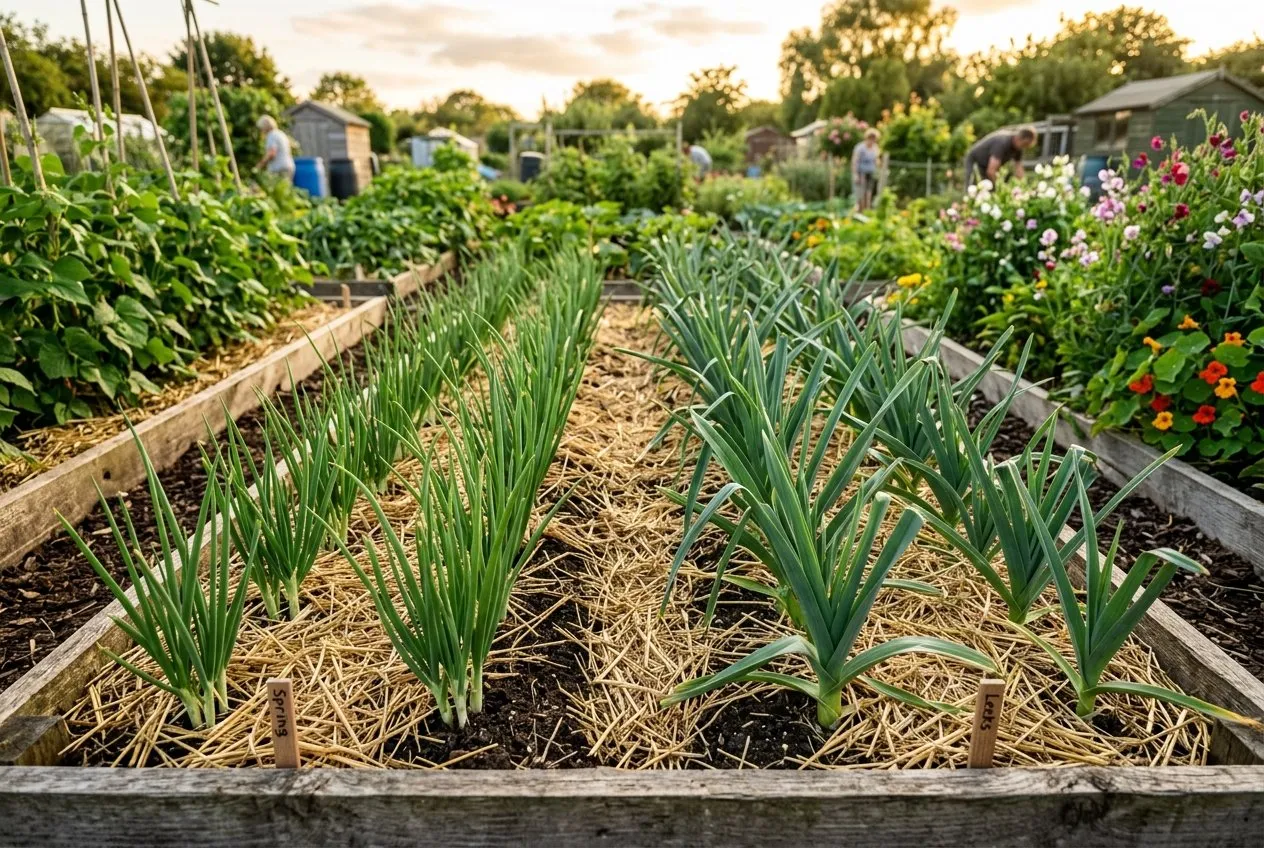
Beetroot and spring onion clumps in a raised bed. Each one started in a single module cell.
Which vegetables NOT to multi-sow
Some crops really don’t like sharing.
Carrots fork and twist when their roots compete. Sow them straight into the ground in rows and thin them out.
Parsnips have the same problem. Their long roots need clear, stone-free soil.
Cabbage-family crops, such as cabbage, cauliflower, broccoli and Brussels sprouts, need space of their own to make good heads. Grow one plant per spot.
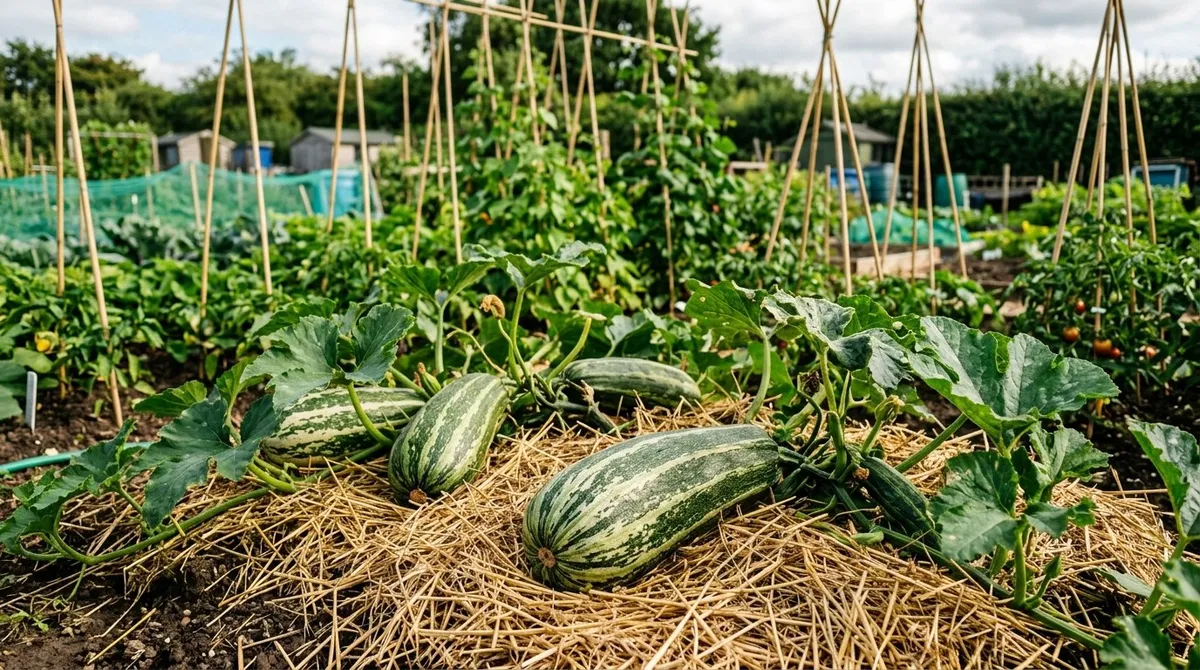
Squash, courgettes and cucumbers are far too big and vigorous. Sow one seed per small pot.
Sweetcorn needs to be planted in a block so the wind can pollinate it. Grow plants singly, about 45cm apart.
How to multi-sow, step by step
This works from late winter right through to midsummer.
Step 1: Pick your tray. Use module trays with cells at least 3cm wide and 4-5cm deep. A standard 24-cell tray suits most crops. Deeper modules are best for leeks and onions. Skip tiny plug trays, as they fill with roots too fast.
Step 2: Fill with compost. Ordinary peat-free multipurpose compost is fine. Fill the cells loosely, tap the tray to settle it, and press down lightly with a finger. Water the compost before sowing so the seeds don’t wash about.
Step 3: Sow. Drop the seeds into each cell, spreading them out a little. Cover with a thin layer of vermiculite or sieved compost. Label every row.
Step 4: Water and find a spot. Water gently with a fine rose. Put the tray in a greenhouse, cold frame or on a bright windowsill. Most crops like it cool to mild, roughly 10-18C. Leeks and onions are happy at the cooler end.
Step 5: Grow on. Keep the compost damp but not soggy. Seedlings pop up in one to two weeks. No thinning, so let them all grow. Toughen them up for a week or so before planting out by putting the tray outside during the day.
Step 6: Plant out as clumps. When the seedlings have three or four proper leaves, plant each clump into prepared ground in a hole a little bigger than the rootball. In no-dig beds, just push the clump into the compost on top. Water well. Space them as in the table below.
How far apart to plant clumps
| Crop | Seeds per cell | Space between clumps |
|---|---|---|
| Beetroot | 4-5 | 25cm, rows 30cm apart |
| Spring onions | 5-6 | 20cm |
| Leeks | 4-5 | 30cm |
| Bulb onions | 4-5 | 25cm |
| Turnips | 4-5 | 25cm |
| Radishes | 5-6 | 15cm |
| Peas | 3-4 | 20cm |
| Dwarf French beans | 3-4 | 30cm |
When to sow
Here’s when to sow each crop in modules.
Late February to March: Leeks, onions and early peas. These tough crops cope with a cool greenhouse. Leeks are slow, so an early start helps.
March to April: Beetroot, spring onions, turnips and parsley. The soil outside is often still cold, so sowing in modules gives them a head start. Plant out from late April once the ground warms up.
April to May: Radishes, lettuce, dwarf French beans and coriander. These quick growers fill the gaps as earlier crops move outside.
May to July: Keep sowing beetroot, spring onions, radishes and salads. A fresh tray every three weeks or so keeps the harvests coming into autumn. Our raised bed guide covers getting beds ready for summer planting.
Common mistakes
These catch out lots of first-timers, and they’re all easy to fix.
Too many seeds per cell. Overcrowded seedlings get leggy and weak. Stick to the numbers in the table.
Shallow trays for leeks and peas. They need deeper cells, or the roots get cramped.
Leaving clumps in the tray too long. Plant out when they have three or four proper leaves. Leave it longer and the roots circle the cell, and the clumps are slower to settle.
Planting into cold, wet soil. Young clumps sulk in cold ground. Wait until the soil has warmed, usually late April in the Midlands and a little earlier in the south.
Skipping hardening off. Seedlings from a warm greenhouse wilt in wind and cold. Give them a week or so of getting used to the outdoors first. Our guide to sowing seeds indoors explains hardening off in more detail.
Planting clumps too close. It’s tempting to squeeze them in, but crowding cuts airflow and invites disease. Stick to the spacings above, and weeding and picking will be easier too.
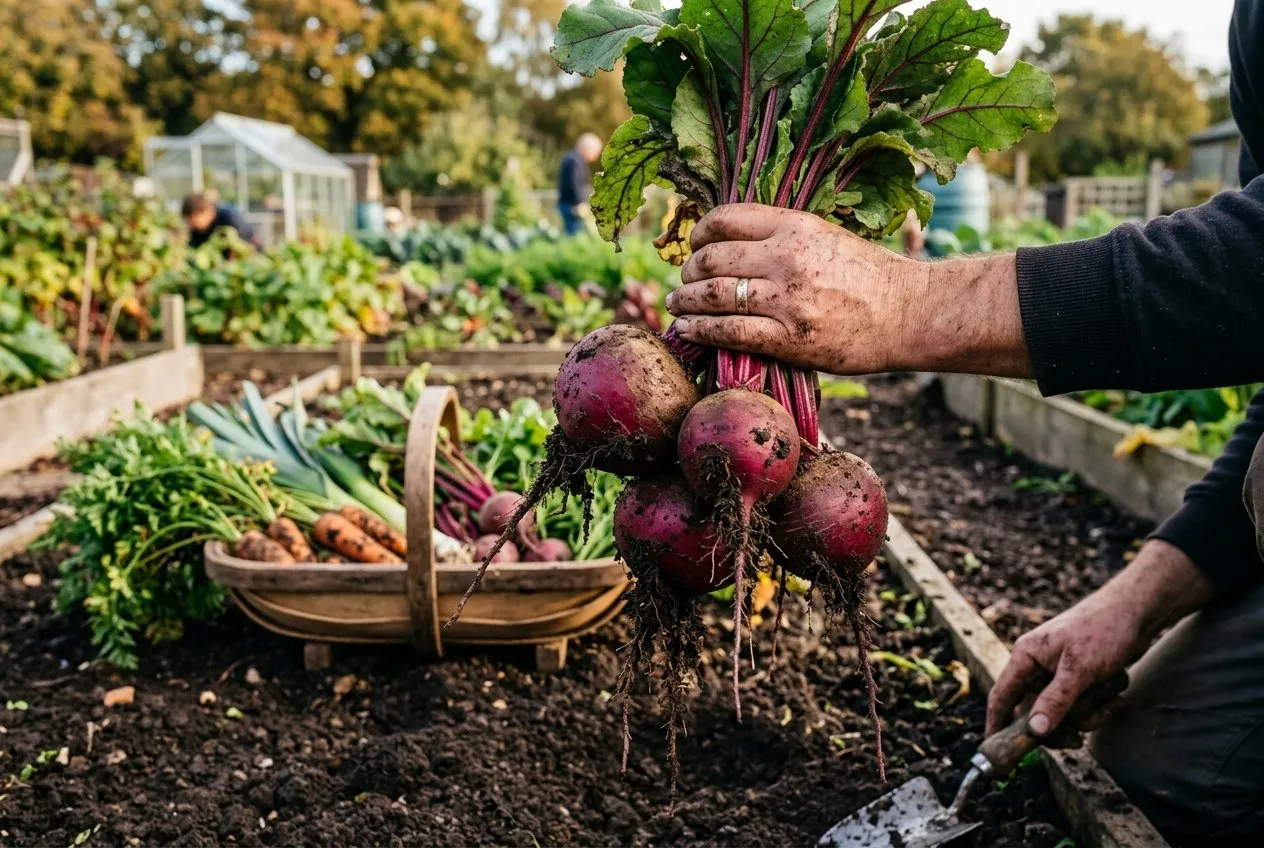
The reward: clumps of beetroot, spring onions and leeks at harvest, each grown from a single module cell.
Frequently asked questions
How many seeds should I put in each module cell?
Usually 4-6, depending on the crop. Beetroot, spring onions and radishes are happy with 5-6. Leeks and onions like 4-5. Bigger seeds like peas and beans need just 3-4. Too many and the seedlings get leggy, so stick to these numbers.
Which vegetables should I not multi-sow?
Carrots, parsnips and other long-rooted veg. They fork and twist when grown in clumps. Cabbages, cauliflowers and broccoli need space of their own for their big heads. Squash, courgettes and cucumbers are far too big and vigorous to share.
When should I start multi-sowing in the UK?
From late February for leeks and onions. Beetroot and spring onions follow in March and April. You can keep sowing until July for later harvests. Sow somewhere bright and frost-free, like a greenhouse, cold frame or sunny windowsill.
Do I need to thin multi-sown clumps after planting out?
No, and that’s the beauty of it. The plants in each clump grow on together and gently push apart as they get bigger. Beetroot roots nudge each other outwards, and onions simply grow upwards side by side.
What spacing do I use for multi-sown clumps?
Space clumps 20-30cm apart, depending on the crop. Beetroot clumps like 25cm, with 30cm between rows. Spring onion clumps need about 20cm and leek clumps about 30cm. That’s wider than for single plants, but each spot holds several plants.
Can I multi-sow in any type of module tray?
Use trays with cells at least 3cm wide and 4-5cm deep. Standard 24-cell or 40-cell trays suit most crops. Very small plug trays fill with roots too quickly. Deeper cells are best for leeks and onions.
Is multi-sowing better than direct sowing?
For many crops, it gives you a great head start. Seedlings in modules are safe from slugs, cold soil and weeds while they’re tiny. The only extra job is planting out, and popping in clumps is quick.
Our team produces practical UK gardening guidance from source research, contributor records and established horticultural practice. Editorial standards are overseen by Matt W.