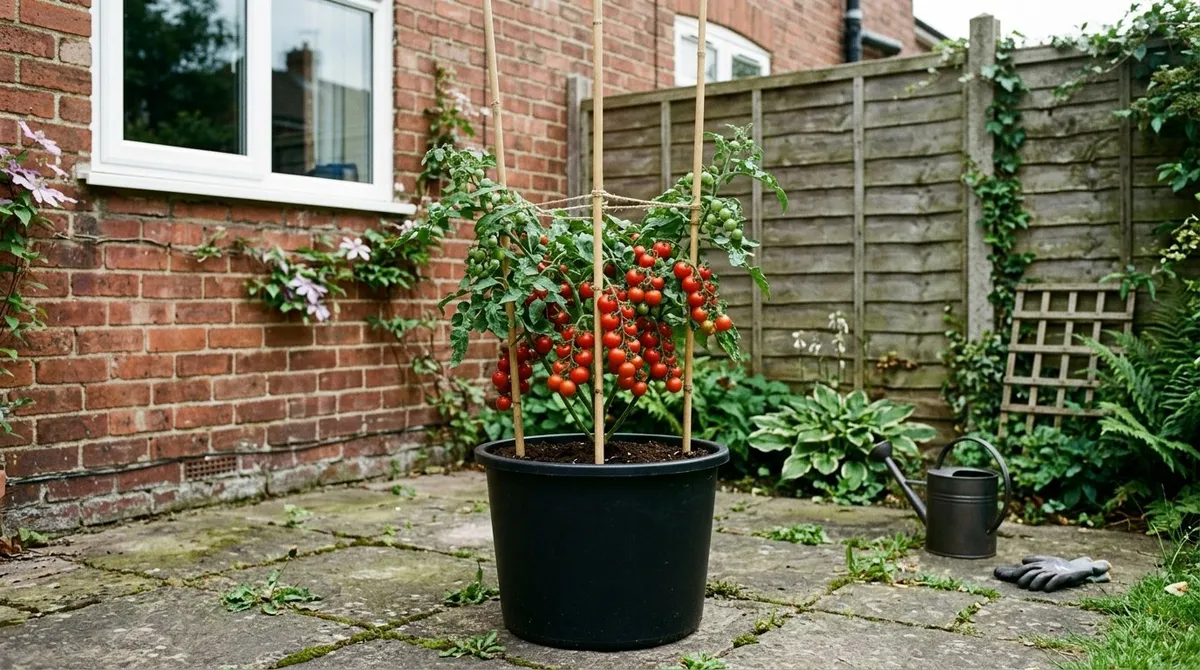
Key takeaways
- Use a 30-40 litre bucket with drainage holes and plant one or two seed potatoes per bucket
- First and second earlies suit buckets best, as they crop before blight usually strikes
- Start with 10-15cm of compost and top up as the shoots grow until the bucket is full
- Keep the compost evenly moist, which can mean daily watering in summer
- Tip the bucket out to harvest first earlies about 10-12 weeks after planting
Growing potatoes in buckets is the easiest way to get a crop of new potatoes on a patio, balcony or paved yard. Use a 30-40 litre bucket with drainage holes, plant one or two seed potatoes, and top up with compost as the shoots grow. In about 10-12 weeks you tip the bucket out and pick up clean potatoes. No digging, no spearing tubers with a fork.
This guide is all about the bucket method. For timings by region and potato type, see the guide on when to plant potatoes. If you have a bed or allotment, the guide to growing potatoes in the ground covers trenches, rows and spacing.
Why grow potatoes in buckets?
Buckets let you grow potatoes with no veg bed at all. A patio, a balcony or a strip of concrete by the back door will do. You also get fresh compost each year, so soil pests such as slugs and wireworm have less of a head start.
Dark buckets warm up quickly in spring, which helps first earlies get going. Buckets are easy to move into a porch or greenhouse if a late frost is forecast. And harvest is a treat: tip the bucket out and every potato is there in the compost.
The trade-off is water. A bucket dries out much faster than open ground, so you need to keep an eye on it. The guide to container vegetable gardening has more on growing other crops the same way.

A sunny patio is all you need. Dark buckets warm up quickly in spring and give first earlies a good start.
Choosing a bucket and compost
A 30-40 litre bucket is the best size. Plant one or two seed potatoes in it, no more. Crowd in three or four and you harvest a heap of marble-sized potatoes.
Old builder’s buckets, large plastic pots, tubs and fabric potato bags all work. Anything much smaller than 30 litres dries out very fast, though a single first early will cope in a smaller pot if you water it often.
Use multipurpose compost, peat-free if you can. Mix a handful of general-purpose fertiliser through it at the start. Peat-free compost can dry out faster, so check it more often. Don’t use garden soil on its own, as it packs down hard in a pot and drains badly.
Gardener’s tip: Buy more compost than you think you need. Topping up the bucket through the season uses a surprising amount.
Drilling drainage holes so tubers don’t rot
Every potato bucket needs drainage holes. Without them, a wet week turns the compost into a sour, airless sludge and the tubers rot. This is the step people skip most often.
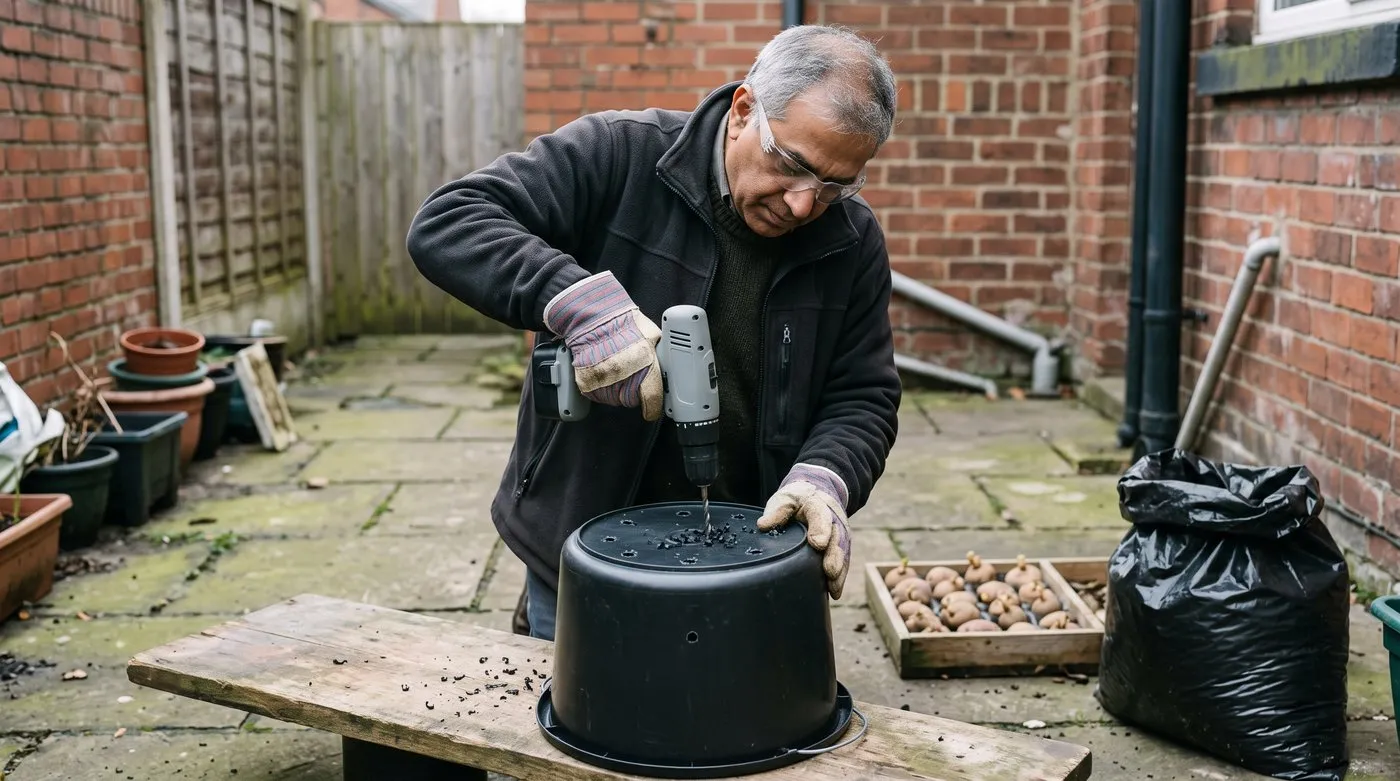
Several holes spread across the base let rain drain away. Without them the potatoes rot in a wet summer.
Turn the bucket upside down and drill several holes, about 1cm across, spread over the base. Use a drill bit suited to plastic and wear safety glasses.
Stand the finished bucket on pot feet or a couple of bricks. That stops the holes sitting flat on the paving, so water can always drain away, even in a wet summer.
How to chit seed potatoes
Chitting means letting seed potatoes sprout before you plant them. It gives first earlies a head start, but it’s optional. Start about six weeks before you plan to plant, so late January or February.
Buy certified seed potatoes from a garden centre or seed supplier. Supermarket potatoes may carry disease. Stand each seed potato in an egg box with the end that has the most “eyes” facing up. Put them somewhere cool, bright and frost-free, such as a porch or a spare-room windowsill.
You’re after short, sturdy, dark green or purple sprouts about 2cm long. Long, pale, spindly shoots mean the spot is too warm or too dark.

Short, sturdy sprouts are what you want. Pale, leggy ones mean the spot is too warm or too dark.
Planting and earthing up in a bucket
Potatoes form along the buried part of the stem. So start with the bucket only part full, and top it up as the plant grows. This is called earthing up.
- Put 10-15cm of compost in the base of the bucket.
- Sit one or two seed potatoes on top, sprouts pointing up, spaced apart.
- Cover with about 10cm more compost and water lightly.
- When the shoots reach about 15cm, add compost until only the top few leaves show.
- Repeat every week or two until the compost is a few centimetres below the rim.
Plant first earlies in March or April once hard frosts have passed, or in late February if you can keep the bucket in a frost-free greenhouse or porch. Earthing up also keeps light off the tubers. Potatoes turn green in the light, and green potatoes are not safe to eat. The guide to earthing up potatoes covers the technique in more detail.

Top up with compost each time the shoots reach about 15cm. More buried stem means more room for potatoes.
Watering bucket potatoes
Keep the compost evenly moist. Push a finger in: if the top few centimetres are dry, water until it runs out of the base. Once the leaves fill the bucket in summer, that often means watering every day.
A leafy potato plant acts like an umbrella. The compost below can stay dry even after rain, so always check rather than assume.
Steady watering matters as much as the amount. If the compost dries out and then gets a big soaking, the tubers can split or grow hollow in the middle. Water the compost, not the leaves, as wet leaves in muggy weather invite blight.
Feeding for a better crop
The fertiliser you mixed in at the start feeds early growth. Once the plants start to flower, give a tomato feed every week or two, following the label. It is high in potash, which helps the potatoes swell.
Don’t use a high-nitrogen feed such as lawn food. It gives lots of leaf and few potatoes.
Best potatoes for buckets
First earlies and second earlies are the best choice for buckets. They are quick, and they usually finish before blight arrives in mid to late summer. Maincrop potatoes take much longer and get very big, so they are better in the ground.
| Variety | Type | Ready after | Good for |
|---|---|---|---|
| Rocket | First early | About 10-12 weeks | Very early new potatoes |
| Swift | First early | About 10-12 weeks | Small containers, compact plants |
| Lady Christl | First early | About 10-12 weeks | Waxy salad potatoes |
| Charlotte | Second early | About 13-15 weeks | Classic waxy salad potato |
| Maris Peer | Second early | About 13-15 weeks | Salads and boiling |
Plant buckets a few weeks apart and you get new potatoes over a longer season. For more variety ideas, see the guide to the best potato varieties.

Waxy salad potatoes such as Charlotte are a favourite for buckets. Fresh new potatoes are best eaten within a few days.
Harvesting potatoes from a bucket
First earlies are usually ready about 10-12 weeks after planting, often around when the plants flower. To check, slide a hand down the inside of the bucket and feel for potatoes. If they’re the size of a hen’s egg, they’re ready.
Tip the whole bucket onto a sheet, a tarpaulin or an empty bed and sort through the compost. Eat new potatoes within a few days, as they don’t store. Or steal a few from the side of the bucket and leave the plant to keep growing.
Second earlies can stay in until you need them. If you grow maincrop, wait until the leaves die back, then leave the potatoes a couple of weeks before tipping out so the skins firm up.

Tipping out is the fun bit. Every potato is there in the compost, with no fork to spear them.
Frost and blight protection
Frost blackens young potato leaves in April and May. If frost is forecast, move buckets into a porch, shed or greenhouse overnight, or cover them with fleece. Damaged plants usually regrow, but they lose a week or two.
Potato blight is a disease that strikes in warm, humid weather, usually from midsummer. Brown patches appear on the leaves, often with a white fuzzy edge underneath, and spread fast. If you see it, cut off all the leaves and stems and bin them. Leave the potatoes a couple of weeks before tipping out. The guide to potato blight has pictures and more advice.
Earlies often crop before blight arrives, which is another reason they suit buckets. Space buckets apart for airflow.

Spacing buckets and bags apart lets air move between the plants. That helps leaves dry quickly after rain.
Month-by-month bucket potato calendar
These timings suit most of England and Wales. In Scotland and northern England, run a couple of weeks later.
| Month | Task |
|---|---|
| January | Order certified seed potatoes |
| February | Chit first earlies. Drill holes in buckets. Plant under cover late in the month |
| March | Plant first and second earlies once hard frosts ease |
| April | Keep earthing up. Cover with fleece if frost is forecast |
| May | Finish earthing up. Water more as plants grow |
| June | Water daily in warm spells. Feed once flowering. First earlies ready |
| July | Harvest first and second earlies. Watch for blight |
| August | Harvest remaining second earlies. Remove blighted leaves at once |
| September | Tip out any maincrop once leaves have died back |
| October | Empty buckets onto beds or the compost heap. Wash and stack buckets |
| November to December | Plan next year and choose varieties |
Common mistakes with potatoes in buckets
Too many seed potatoes. One or two per 30-40 litre bucket. More gives only tiny potatoes.
No drainage holes. The compost turns sour and the crop rots. Drill holes and raise the bucket.
Filling the bucket at the start. Start low and top up as the plant grows. Tubers form along buried stem.
Letting it dry out. Check daily in summer. Dry then soaked compost splits the potatoes.
Leaving potatoes in the light. Keep them covered with compost so they don’t turn green.
Grow bags work much the same way for other crops. See the guide to growing in grow bags, or browse all the growing guides.
Frequently asked questions
How many potatoes can you grow in one bucket?
Plant one or two seed potatoes in a 30-40 litre bucket. More than that and the plants compete for water and food, so you get lots of tiny potatoes instead of a useful crop.
What size bucket is best for growing potatoes?
A 30-40 litre bucket is the best size for potatoes. It holds enough compost to stay moist and to bury plenty of stem. A smaller pot can take one first early but dries out very fast.
Do you need drainage holes in a potato bucket?
Yes, a potato bucket must have drainage holes. Without them, rain turns the compost sour and the tubers rot. Drill several holes in the base and stand the bucket on pot feet or bricks.
How often should you water potatoes in containers?
Water whenever the top few centimetres of compost feel dry. Once the leaves fill out in summer, that is often every day. Keep watering steady, as a soaking after a dry spell can split the tubers.
How long do potatoes take to grow in a bucket?
First earlies take about 10-12 weeks from planting. Second earlies take about 13-15 weeks and maincrop roughly 15-20 weeks. First earlies are usually ready once the plants flower.
Can you grow potatoes in a bucket without chitting?
Yes, unchitted seed potatoes still grow fine. Chitting just gives first earlies a head start of a week or two. Maincrop potatoes gain little from it and can go straight in.
Why are my container potatoes so small?
Usually too many seed potatoes, dry compost or an early harvest. Plant just one or two per bucket, keep the compost evenly moist and wait until the plants flower before tipping out first earlies.
When your first bucket is tipped out, the guide to harvesting potatoes shows how to tell when each type is ready.
Our team produces practical UK gardening guidance from source research, contributor records and established horticultural practice. Editorial standards are overseen by Matt W.