Key takeaways
- First earlies: lift from late June, about 10 weeks after planting, when the flowers open
- Second earlies: lift from July, about 13 weeks after planting
- Maincrop: lift from late August to October, once the foliage turns yellow and dies back
- Cut maincrop foliage to the ground two weeks before lifting so the skins set
- Lift on a dry day, start your fork well out from the plant and never wash tubers you plan to store
Potatoes are ready to harvest from late June to October, depending on the type you planted. First earlies come first, then second earlies, then maincrop. The trick is reading the plant: flowers tell you when earlies are ready, and yellowing foliage tells you when maincrop is.
This guide covers the signs to look for, how to lift without spearing your crop, and how to get maincrop ready to store. If you’re still at the planting stage, start with when to plant potatoes instead.
When are potatoes ready to harvest?
Each type has its own window. Weather can shift it by a week or two either way. A cold spring makes everything later, and a warm one brings it forward.
| Type | Time after planting | Usual harvest | Best for |
|---|---|---|---|
| First earlies | About 10 weeks | Late June to July | Eating fresh as new potatoes |
| Second earlies | About 13 weeks | July to August | Eating fresh, short keeping |
| Maincrop | 15 to 20 weeks | Late August to October | Storing through winter |
The dates assume first earlies went in around late March and maincrop in April. In the north, add a week or two. Which varieties fall into which group is covered in the guide to the best potato varieties for UK gardens.
How to tell first earlies are ready
First earlies are usually ready when the flowers open, or when the flower buds drop on varieties that don’t flower much. The foliage will still be green and upright. Don’t wait for it to yellow.
Before you dig the whole row, do a test. Scrape the soil away gently by hand at the side of one plant. If the tubers are about the size of a hen’s egg, they’re ready. If they’re marble-sized, cover them up and check again in a week.
Popular first earlies include Foremost, Rocket, Pentland Javelin and Swift. Their skins are thin and rub off easily. That’s normal: new potatoes aren’t meant for storing. Lift only what you’ll eat in the next few days, and leave the rest in the ground to keep growing.

Hen’s egg size is the sign to start digging. Thin skins like these are perfect for boiling but won’t keep, so eat them fresh.
When to dig second early potatoes
Second earlies are ready about 13 weeks after planting, usually from July. Again, the flowers are a good signal, and the lower leaves may start to yellow.
Charlotte, Kestrel, Estima and Wilja are well-known second earlies. Charlotte is the classic salad potato. Dig them in stages through July and August, taking what you need. The tubers will keep for a few weeks somewhere cool and dark, but they don’t store as well as maincrop.

Lifting a clump of Charlotte. Push the fork in well away from the stem, then lever up the whole plant and pick through the soil.
How to lift potatoes without damaging them
Use a garden fork, not a spade, and lift on a dry day. A spade slices straight through tubers.
- Wait for dry soil and a dry afternoon, after any dew has gone
- Push the fork in about 20-30cm out from the stem, so you don’t spear the potatoes
- Lever the fork back to lift the whole root ball
- Pull the plant up by the stems and shake the tubers free
- Sift through the loosened soil by hand for any you missed
- Leave tubers on the surface for a few hours to dry if the weather is fine
Speared or cut potatoes are fine to eat, but use them within a few days. Don’t store them, as damaged spots rot. Even a careful dig leaves a few behind, so go over the bed again. Missed tubers sprout next year and can carry pests and disease into the next crop.
Maincrop potatoes: cut the haulm first
Maincrop is ready when the haulm (the leafy stems) turns yellow and dies back, usually from late August into October. Maris Piper, King Edward, Desiree and Cara are favourite maincrop varieties.
If you plan to store them, cut the haulm to just above the ground once it starts to yellow. Then wait about two weeks before lifting. The tubers stay put in the soil while their skins thicken up. A firm skin is what lets potatoes keep for months.
To check, dig up one tuber and rub it with your thumb. If the skin slides off, give them another week. Clear the cut stems off the bed rather than leaving them to lie there.

Cutting the yellowing stems a fortnight before lifting gives the tubers time to firm their skins in the soil.
Drying and sorting potatoes for storage
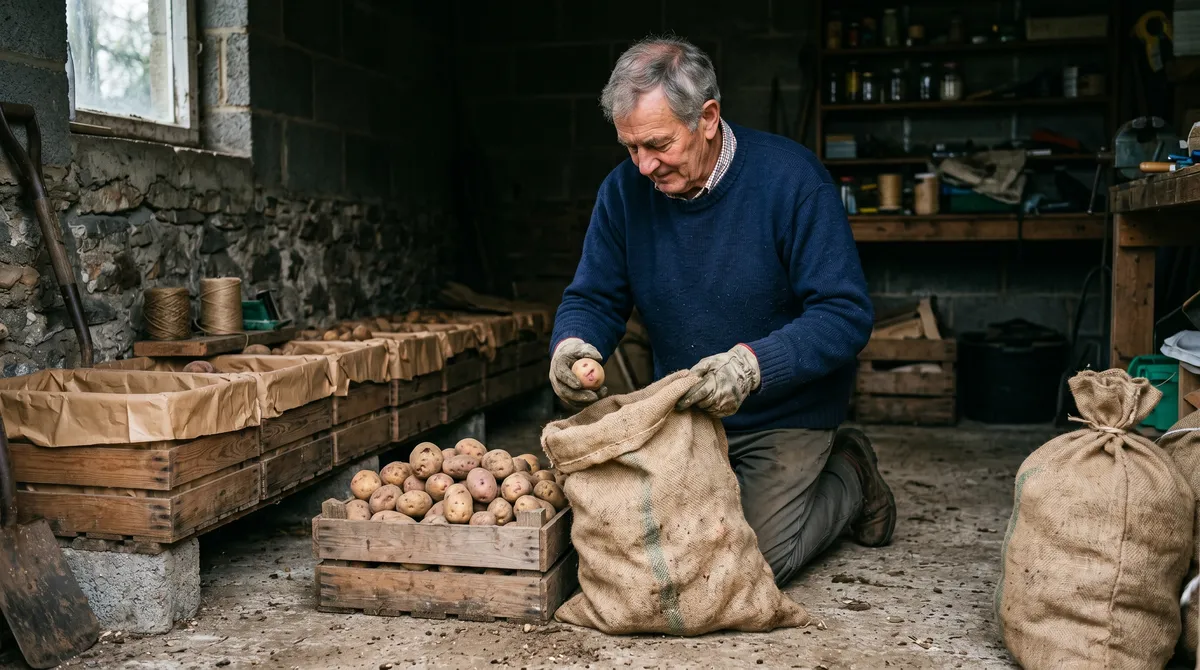
Once lifted, maincrop needs to dry and be sorted before it goes into store. Lay the potatoes in a single layer for a few hours on the soil in fine weather. If it’s damp, spread them out somewhere dark and airy instead, such as a garage floor.
Some gardeners leave them like this for a week or two. It helps the skins toughen and small nicks heal over. Keep them in the dark the whole time, or they turn green.
Then sort them carefully:
- Store only firm, unblemished tubers
- Eat soon any with fork damage, slug holes or bruises
- Throw away anything soft, smelly or rotten
Brush off loose soil but don’t wash them. Store them in hessian or paper sacks somewhere cool, dark and frost-free. The full how-to is in the guide to storing potatoes in sacks, boxes and clamps.

A single layer in a dark, airy garage lets the skins dry and toughen before the potatoes go into sacks.

Sort as you go. Clean, firm tubers go into store, and any with nicks or holes go to the kitchen first.
Harvesting potatoes with blight
If late blight strikes, act on the foliage straight away but don’t rush to dig. Blight shows as brown patches on the leaves, often with a white fuzz underneath in damp weather. It spreads fast in warm, wet summers.
Cut all the foliage down to the ground and remove it from the bed. Then leave the tubers in the soil for two to three weeks before lifting. This stops spores on the leaves washing onto the tubers, and gives the skins time to set. Lift on a dry day and sort hard. Throw out any tuber with brown, sunken or soft patches, and use the rest first rather than storing them long term.
Spotting it early makes a big difference. The guide on how to stop potato blight spreading covers resistant varieties and what to watch for.

Brown patches with a pale fuzzy growth mean blight. Cut the foliage off at once, then wait a couple of weeks before lifting.
Common potato harvesting mistakes
- Digging maincrop too soon. Lifting while the foliage is still green leaves you with thin skins that scuff and rot in store. Cut the haulm and wait two weeks.
- Using a spade. It slices through tubers. A fork, started well out from the stem, does far less damage.
- Washing before storing. Damp skins invite rot. Brush the soil off dry instead.
- Storing damaged tubers. One rotten potato can spoil a whole sack. Eat nicked ones first.
- Leaving them in too long. Slugs and wireworm tunnel into tubers left in the ground into autumn. The guide to wireworm identification and control explains the holes.
- Leaving them in the light. Potatoes turn green in daylight. Green parts are mildly poisonous, so cut them away or throw the tuber out.
Potato harvest calendar
| Month | What to do |
|---|---|
| June | Test dig first earlies once the flowers open. Start lifting late in the month |
| July | Keep lifting first earlies. Start on second earlies |
| August | Finish second earlies. Watch maincrop for blight. Cut haulms as they yellow |
| September | Main maincrop lift, two weeks after cutting the haulm. Dry and sort |
| October | Finish lifting maincrop before the weather turns cold and wet |
| November to February | Check stored potatoes every few weeks and remove any going soft |
Once the bed is clear, it moves on in your four-year crop rotation. For more veg growing guides, browse the growing veg hub.
Now your crop is in, read the guide to growing potatoes in the UK to plan next year’s rows.
Frequently asked questions
When do you harvest first early potatoes in the UK?
From late June, about 10 weeks after planting. Lift them when the flowers open or the buds drop. Scrape back a little soil first and check for tubers about the size of a hen’s egg. First earlies are for eating fresh, not storing.
How do you know maincrop potatoes are ready to lift?
The foliage turns yellow and dies back, usually from late August. For storing, cut the stems to the ground and wait about two weeks. Then rub a tuber with your thumb. If the skin stays put, they’re ready.
Should you wash potatoes before storing them?
No, brush off loose soil and store them unwashed. Damp skins rot more easily in storage. Let them dry for a few hours before bagging, and wash them just before you cook them.
Can you lift potatoes in wet weather?
Try not to, especially potatoes you want to store. Wet, muddy tubers bruise easily and are more likely to rot. Wait for a dry spell, and lift once any morning dew has gone.
What should I do if my potatoes get blight?
Cut off and remove the foliage straight away. Then leave the tubers in the ground for two to three weeks before lifting. This stops spores on the leaves reaching the tubers and lets the skins firm up.
Can I leave potatoes in the ground over winter?
It’s best not to. Slugs, wireworm and frost all damage tubers left in the soil. Lift maincrop by the end of October in most areas and store them somewhere cool, dark and frost-free.
Our team produces practical UK gardening guidance from source research, contributor records and established horticultural practice. Editorial standards are overseen by Matt W.