Key takeaways
- Bottling and canning are the same thing, sealing heated food in glass jars
- Fruit and tomatoes with added lemon juice are safe to bottle in a boiling water bath
- Plain vegetables need a pressure canner, so freeze or pickle them instead
- Follow a reliable recipe for the processing time and jar size, and never cut it short
- Use a new rubber seal or lid every time, and check every seal before storing
- Throw away any jar with a failed seal, bulging lid or off smell without tasting it
Bottling is a lovely way to keep a summer glut of plums, pears or tomatoes for winter. You pack the fruit into glass jars, heat them in a pan of boiling water, and they seal as they cool. A good seal keeps the contents safe in the cupboard without a fridge.
The golden rule is simple: only bottle acidic foods this way, such as fruit and tomatoes with added lemon juice. Plain vegetables are a different story, and most UK growers freeze or pickle them. This guide covers how water bath bottling works, which crops suit it, and how to check your jars are safe. For an overview of every way to keep your harvest, see our guide on how to preserve fruit and vegetables.
Bottling and canning: what’s the difference?
There isn’t one. Bottling is the British name and canning is the American one. Both mean packing food into glass jars, heating them to kill moulds, yeasts and bacteria, then letting them seal as they cool.
Home canning doesn’t involve tins. In the UK you’ll mostly see clip-top jars with an orange rubber seal, such as Kilner and Le Parfait, or screw-top preserving jars with a flat metal lid and a separate ring. Both work, as long as you fit a new seal or lid each time.
Which foods are safe to bottle in a water bath?
Only acidic foods are safe to bottle in a boiling water bath. The acid stops the bacteria that cause botulism from growing in the sealed jar. Botulism is rare but very serious, and you can’t see, smell or taste it.
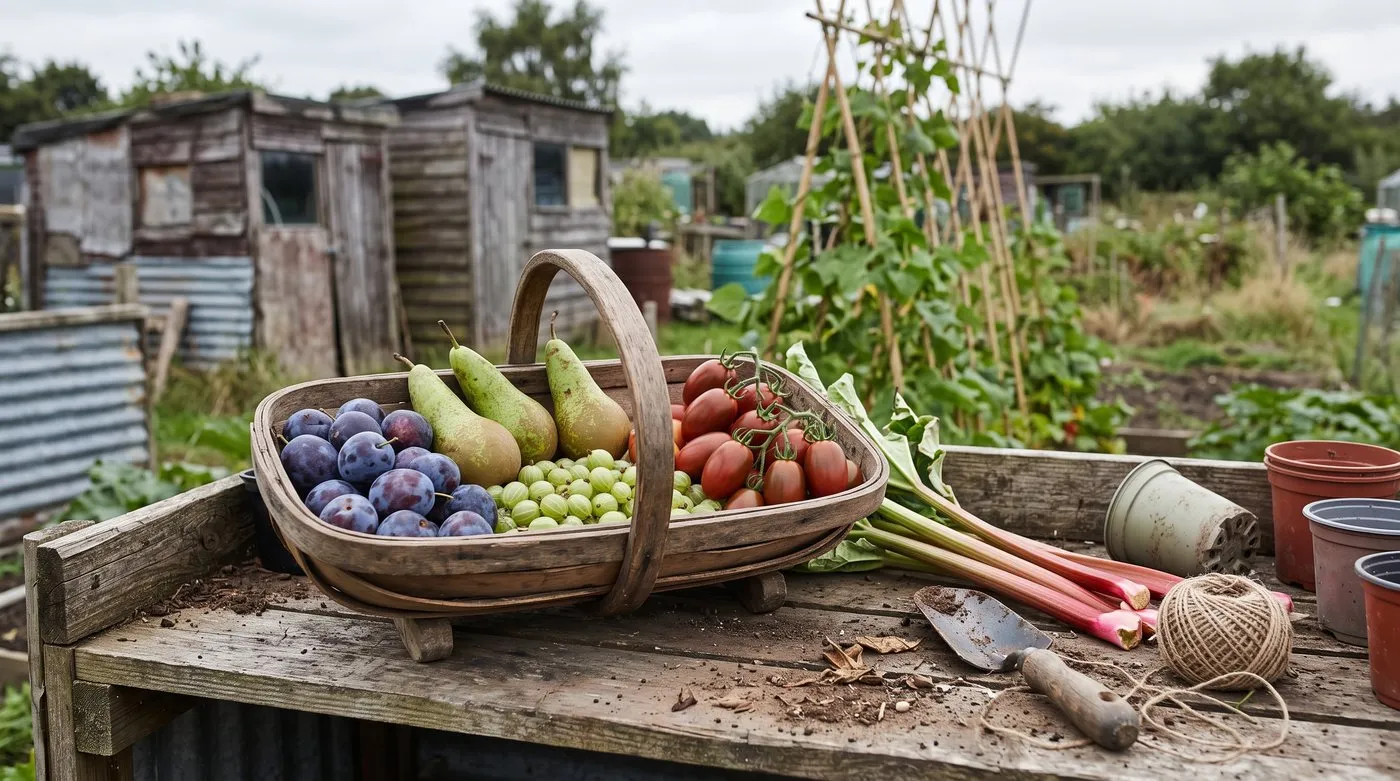
Fruit and tomatoes are the crops to bottle. Plain veg like beans and carrots are better frozen or pickled.
Safe to bottle in a water bath:
- Most fruit: apples, pears, plums, damsons, greengages, cherries, gooseberries, rhubarb, blackcurrants and other berries
- Tomatoes, but only with bottled lemon juice or citric acid added, as your recipe says. Tomatoes sit on the borderline, so the extra acid makes them safe
- Pickles made with vinegar, plus jams and garden chutneys
Not safe in a water bath:
- Plain vegetables such as beans, carrots, peas, sweetcorn and beetroot
- Stocks, soups, meat and fish
These low-acid foods need a pressure canner, which reaches a higher temperature than boiling water. A pressure cooker isn’t the same thing. Pressure canning needs its own kit and reliable instructions, so most UK growers simply freeze their vegetables or pickle them in vinegar. Our guide to pickling and fermenting garden produce covers that side.
Warning: Never bottle plain vegetables in a water bath, and never make up your own recipe or shorten the time. Follow a reliable recipe for the food and the jar size you’re using.
What you need for bottling
You don’t need much to start bottling fruit. Most of it is already in your kitchen.
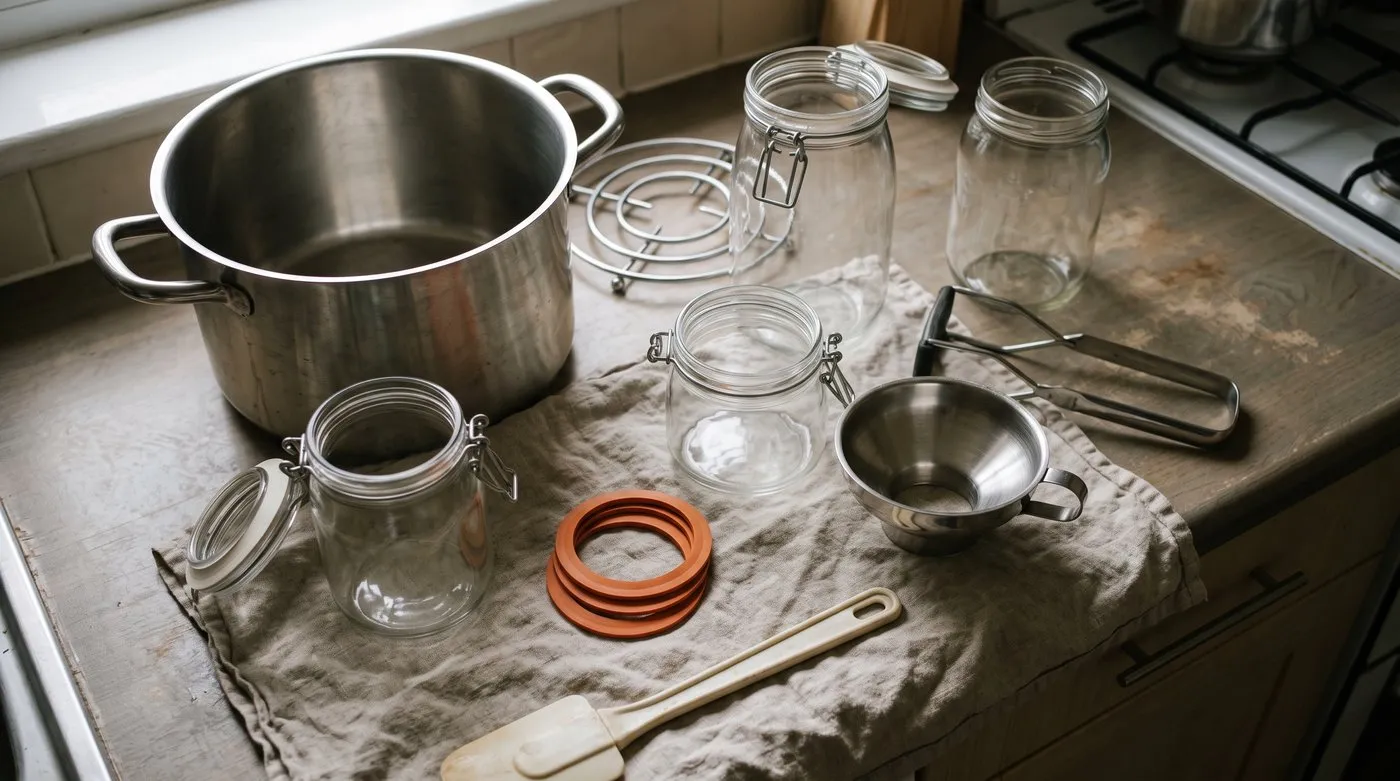
Most of the kit is already in your kitchen. Fresh rubber seals are the one thing to buy every season.
- Preserving jars with new rubber seals or new metal lids. Check every rim for chips
- A deep pan or stockpot, tall enough for the jars to sit under 2-3cm of water
- A rack, trivet or folded tea towel for the bottom of the pan, so the jars don’t sit on direct heat
- Jar lifter tongs for lifting hot jars safely
- A wide-mouth funnel for clean filling
- A clean plastic spatula or chopstick for releasing air bubbles
- A reliable recipe that gives the time for your food and jar size
Clip-top jars last for years. Their rubber seals don’t, so buy fresh ones each season.
How to bottle fruit step by step
This is the basic method for fruit and tomatoes. Your recipe will give the exact syrup, headspace and time.
1. Prepare the jars
Wash the jars, seals and lids in hot soapy water and check every rim for chips or cracks. A damaged rim won’t seal. Keep the jars warm, for example in hot water, until you fill them. This stops them cracking when the hot fruit goes in.
2. Prepare the fruit
Pick fruit that’s ripe but firm, and throw out any that’s bruised or mouldy. Wash it, then peel, core, halve or stone it as your recipe says. To peel tomatoes, dip them in boiling water for under a minute, then into cold water, and the skins slip off.
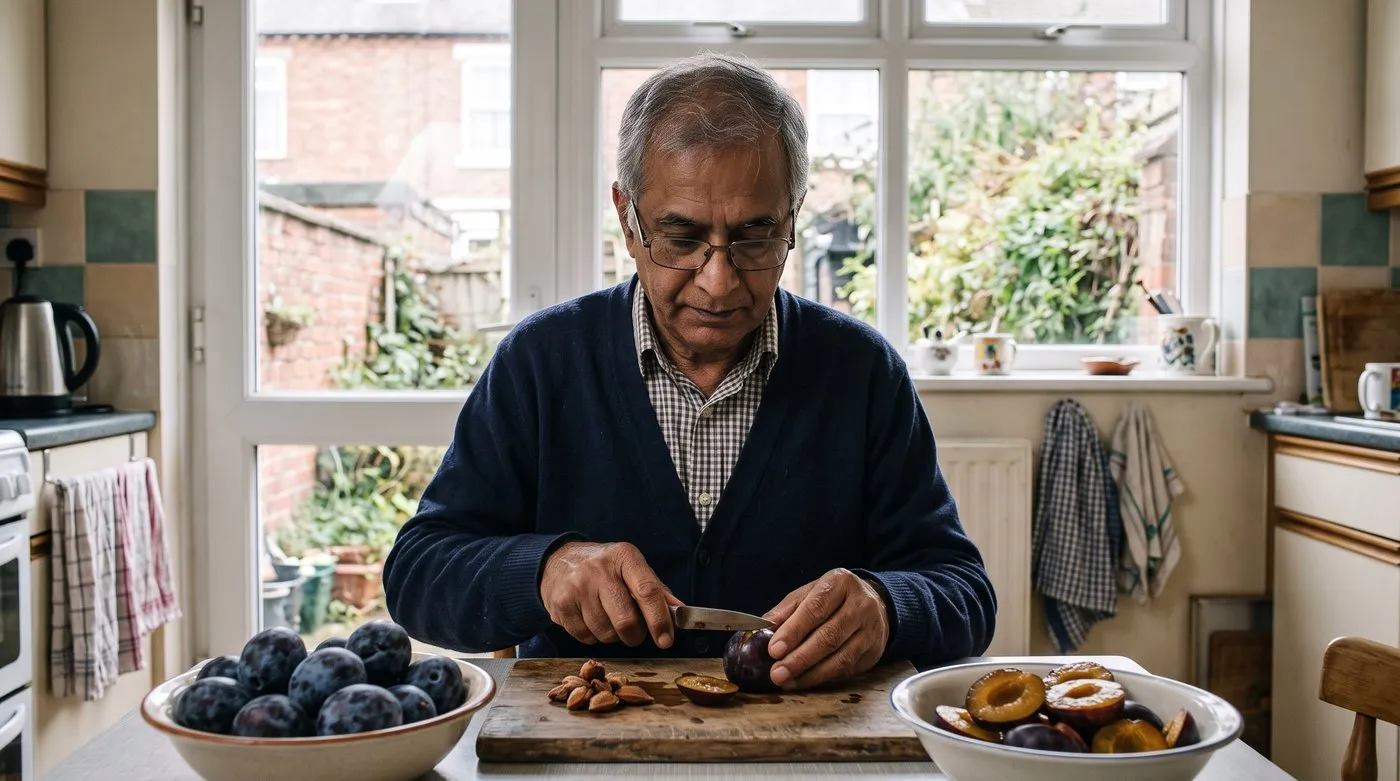
Halving and stoning plums lets you pack more into each jar. Use only firm, sound fruit.
You can pack the fruit raw or hot:
- Raw pack: put the raw fruit in the jars, then pour hot syrup or juice over it. It’s quicker, but the fruit tends to float
- Hot pack: warm the fruit in the syrup for a few minutes first, then pack it. It floats less and keeps its colour better
3. Fill the jars
Use a funnel to pack the fruit snugly, then cover it with hot syrup, juice or water. Leave the headspace your recipe gives, usually 1-2cm. This is the gap between the food and the rim.
Run a clean plastic spatula around the inside of the jar to let trapped air out. Wipe the rim with a clean, damp cloth, as any sticky residue stops a good seal. Fit the seal and lid.

A wide funnel keeps the rim clean as you fill. Wipe it before closing the lid, as any stickiness can stop the seal forming.
4. Process in the water bath
Stand the jars on the rack in the pan so they don’t touch each other or the sides. Pour in hot water until the jars are covered by 2-3cm. Bring it to a full, rolling boil.
Start timing only once the water is boiling. Keep it boiling for the whole time your recipe gives, topping up with boiling water if needed. Bigger jars need longer, so always use the time for your jar size.
5. Cool and check the seal
Lift the jars out with tongs and stand them on a wooden board or folded towel, away from draughts. Leave them alone for 12-24 hours while they cool and seal. Don’t tighten or fiddle with the lids while they cool.
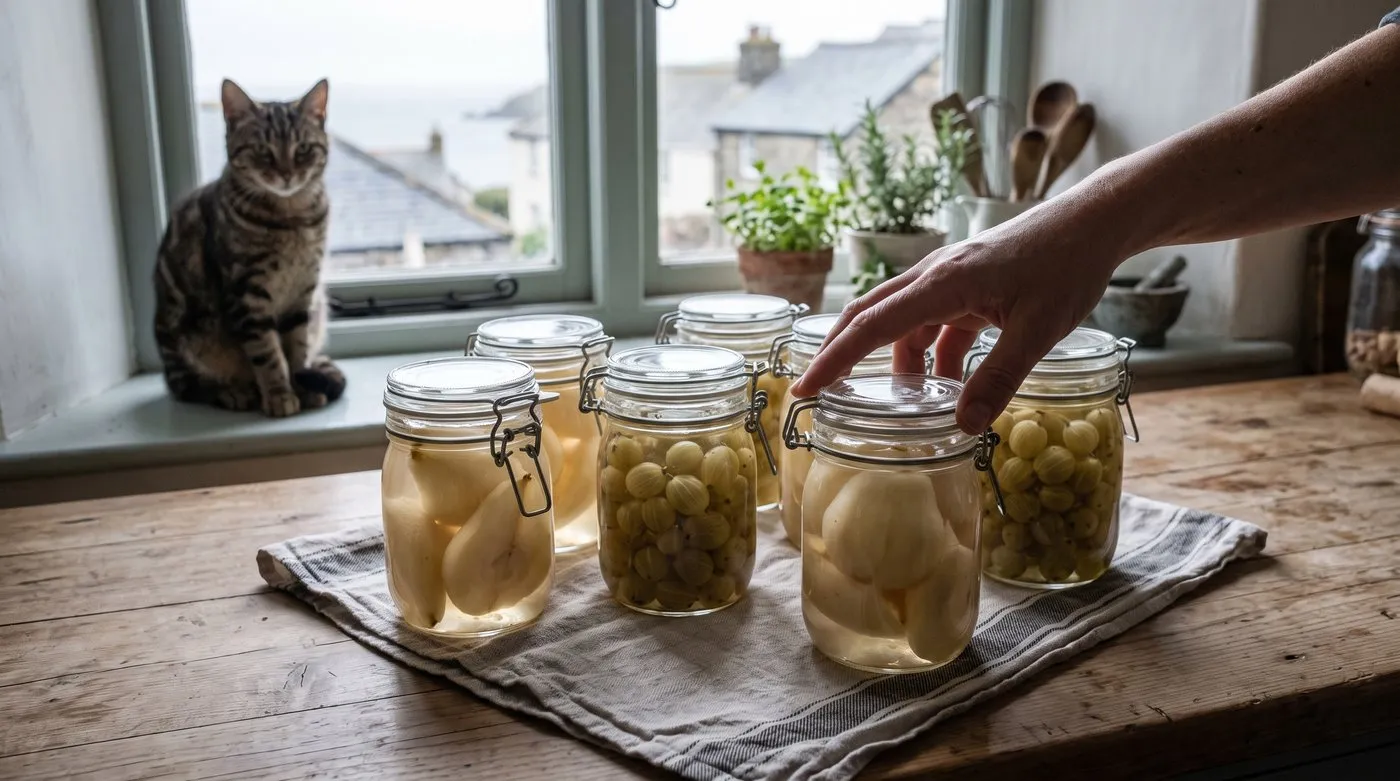
Once cool, undo the clip. If the lid stays firmly shut on its own, the jar has sealed.
Then check every seal:
- Clip-top jars: undo the clip. The lid should stay firmly shut on its own
- Screw-top jars with metal lids: press the middle of the lid. It should be curved down and not pop up and down
If a jar hasn’t sealed, keep it in the fridge and eat it within a few days, or reprocess it within 24 hours with a new seal or lid.
The best fruit to bottle from your garden
Fruit that holds its shape bottles best. These are good ones to start with.
Plums, damsons and greengages. Bottle them halved and stoned, or whole with a prick in the skin to stop them splitting. Victoria plums are a classic.
Pears. Peel, core and halve them. Firm pears such as Conference hold their shape well. Pears aren’t as acidic as most fruit, so follow your recipe on whether to add lemon juice.
Apples. Peel, core and slice them, or bottle them as apple sauce. For other ways to keep a heavy crop, see drying apples and pears.
Gooseberries and rhubarb. Both are tart and bottle easily. Top and tail gooseberries, and cut rhubarb into short lengths.
Tomatoes. Bottle them whole, halved, crushed or as passata, always with lemon juice or citric acid added as your recipe says. Plum tomatoes such as San Marzano and Roma have meaty flesh that bottles well. Our guide to growing tomatoes has more on varieties.

Label every jar with what’s in it and the date, so you know which to eat first.
Choosing a syrup for bottled fruit
Sugar is there for flavour, colour and texture. The heat and the seal do the preserving, so you can bottle most fruit in light syrup, fruit juice or even water.
| Syrup | Sugar per litre of water | Good for |
|---|---|---|
| Light | About 200g | Apples, pears, gooseberries |
| Medium | About 350g | Plums, damsons, cherries |
| Juice | No added sugar, use apple or grape juice | Lower-sugar fruit |
| Water | None | Fruit for pies and crumbles |
Stick to your recipe’s syrup if it gives one, as it may affect the time.
What to bottle month by month
| Month | What to bottle |
|---|---|
| June | Gooseberries, rhubarb, early cherries |
| July | Cherries, blackcurrants, redcurrants, raspberries |
| August | Tomatoes, plums, damsons, greengages |
| September | Pears, apples, late plums, tomatoes |
| October | Apples, apple sauce, quinces, the last tomatoes |
How to store bottled fruit and spot a bad jar
Store sealed jars in a cool, dark, dry place, such as a cupboard or larder. Light fades the colour and warmth spoils the flavour. Eat them within about a year and use the oldest first.
Before opening a jar, check it. Throw it away without tasting if:
- the seal has failed or the lid has come loose
- the lid is bulging or the jar is leaking
- liquid spurts out when you open it
- it smells off, looks cloudy or slimy, or has mould
Common bottling mistakes
Bottling plain vegetables in a water bath. This is the dangerous one. Beans, carrots, peas and sweetcorn need a pressure canner. Freeze or pickle them instead.
Guessing the time. Always use a reliable recipe for your food and jar size. A bigger jar needs longer to heat right through.
Reusing rubber seals or metal lids. Old seals lose their spring and may not seal. Use new ones each time.
Forgetting the acid in tomatoes. Tomatoes need bottled lemon juice or citric acid added to be safe.
Not checking the seals. Check every jar after cooling and again before you open it.
Frequently asked questions
Is bottling fruit and vegetables safe?
Yes, if you bottle acidic foods and follow a reliable recipe. Fruit and tomatoes with added lemon juice are safe in a boiling water bath. Plain vegetables are low in acid and can carry botulism if bottled this way, so freeze or pickle them instead. The National Center for Home Food Preservation publishes reliable recipes and processing times.
What is the difference between bottling and canning?
They are the same thing. Bottling is the British name and canning the American one. Both mean heating food in sealed glass jars so it keeps without a fridge. UK cooks usually use clip-top or screw-top preserving jars.
How long do bottled fruits last?
Eat them within about a year for the best quality. Store the jars somewhere cool, dark and dry. Before opening, check the seal is still tight. If it has failed, throw the contents away.
Can I use old jam jars for bottling?
No, use proper preserving jars for bottling. Ordinary jam jars and reused lids aren’t made to seal reliably after heat processing. Clip-top jars with rubber seals, or preserving jars with new metal lids, are the safe choice.
Do I need a pressure canner?
Only if you want to bottle plain vegetables, stocks or meat. For fruit, tomatoes with lemon juice and pickles, a deep pan works fine. Most UK growers freeze their vegetables instead.
Why do my bottled fruits float to the top of the jar?
Air trapped in the fruit makes it float. Raw fruit packed into jars floats more than fruit warmed in syrup first. Pack the fruit snugly, and release air bubbles with a clean plastic spatula before sealing.
Bottled your plums? Turn the rest of the glut into something spreadable with our guide to making jam from garden fruit, or browse more growing guides.
Our team produces practical UK gardening guidance from source research, contributor records and established horticultural practice. Editorial standards are overseen by Matt W.