
Key takeaways
- Pickle in vinegar with at least 5% acidity, and check the label
- Ferment with 20-30g of salt for every kilo of veg, weighed on scales
- Sauerkraut takes one to two weeks at room temperature, then goes in the fridge
- Always sterilise jars and use ones without chips or cracks
- Beetroot, onions and courgettes are the easiest crops to start with
- Keep fermenting veg under the brine and never seal the jar tight while it ferments
Pickling and fermenting are two of the oldest and easiest ways to save a glut. They turn spare courgettes, beetroot and onions into tasty jars that last for months. If you grow veg, you’ll almost certainly have more than you can eat fresh, and this is a fun way to make the most of it.
Quick pickling vs lacto-fermentation: which method to choose
They work in different ways, so it helps to know which suits which crop.
Pickling means covering veg in hot or cold vinegar. The vinegar is sour enough to stop food going off, so it’s preserved straight away. You get a sharp, tangy taste.
Fermenting (often called lacto-fermentation) uses salt instead. The salt holds back the bad bacteria and lets friendly ones get to work, turning the veg’s natural sugars sour. It takes days or weeks, and the flavour is deeper and more complex.
| Pickling | Fermenting | |
|---|---|---|
| What preserves it | Vinegar | Friendly bacteria and salt |
| Salt | Optional, for flavour | Essential, weighed carefully |
| Ready in | A day to a few weeks | A few days to two weeks |
| Keeps for | Up to a year sealed | About six months in the fridge |
| Live bacteria | No | Yes |
| Texture | Crisp | A bit softer |
| Kit | Jars, vinegar, pan | Jars, salt, a weight |
| Best for | Onions, beetroot, eggs, gherkins | Cabbage, carrots, radishes, chillies |
Handy tip: New to preserving? Start with vinegar pickles. They’re more forgiving. Try fermenting once you’re happy with sterilising jars.
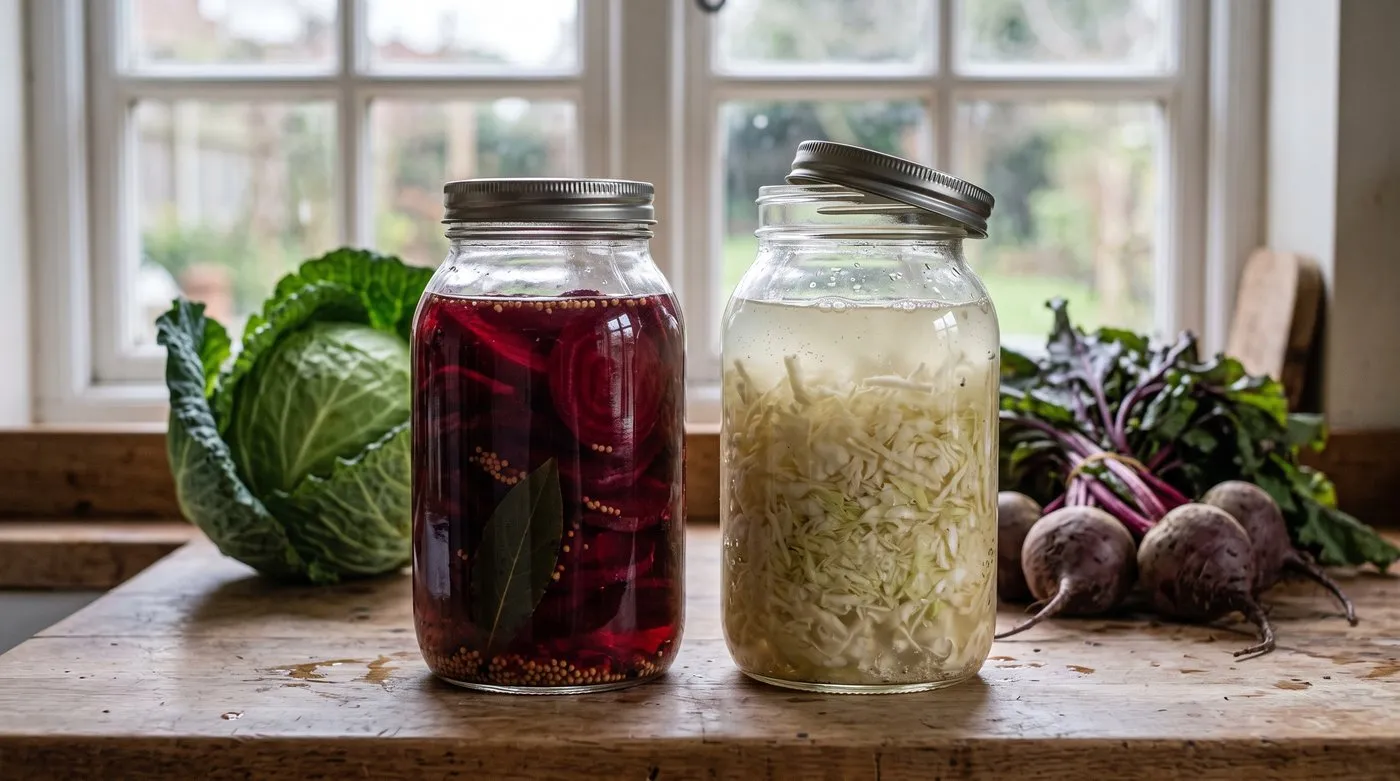
Vinegar pickles stay clear and sharp, while ferments go cloudy and fizzy as the friendly bacteria get to work. Both are normal.
Essential equipment for home preserving
You don’t need anything fancy. Most of it is already in your kitchen.
For pickling:
- Glass jars with airtight lids (clip-top jars, or old jam jars with new lids)
- A large stainless steel or enamel pan (not aluminium, as vinegar reacts with it)
- Digital kitchen scales
- A wide funnel
- Clean tea towels and oven gloves
For fermenting:
- Wide-necked glass jars (1-litre clip-top jars are ideal)
- Fine sea salt (not table salt, which has added anti-caking agents)
- Digital scales that weigh to the gram
- Something to keep the veg under the brine, like a small jar of water, a glass weight or a sandwich bag filled with brine
- A cloth or loose lid to cover the jar
Sterilise your jars for both methods. Wash them in hot, soapy water, rinse, then stand them upright on a baking tray in the oven at 120C for 15 minutes. Or boil them in water for 10 minutes. Pour boiling water over the lids and leave them for 5 minutes.
Check your jars: Don’t use any with chips, cracks or damaged seals. Air can get in and spoil the food.
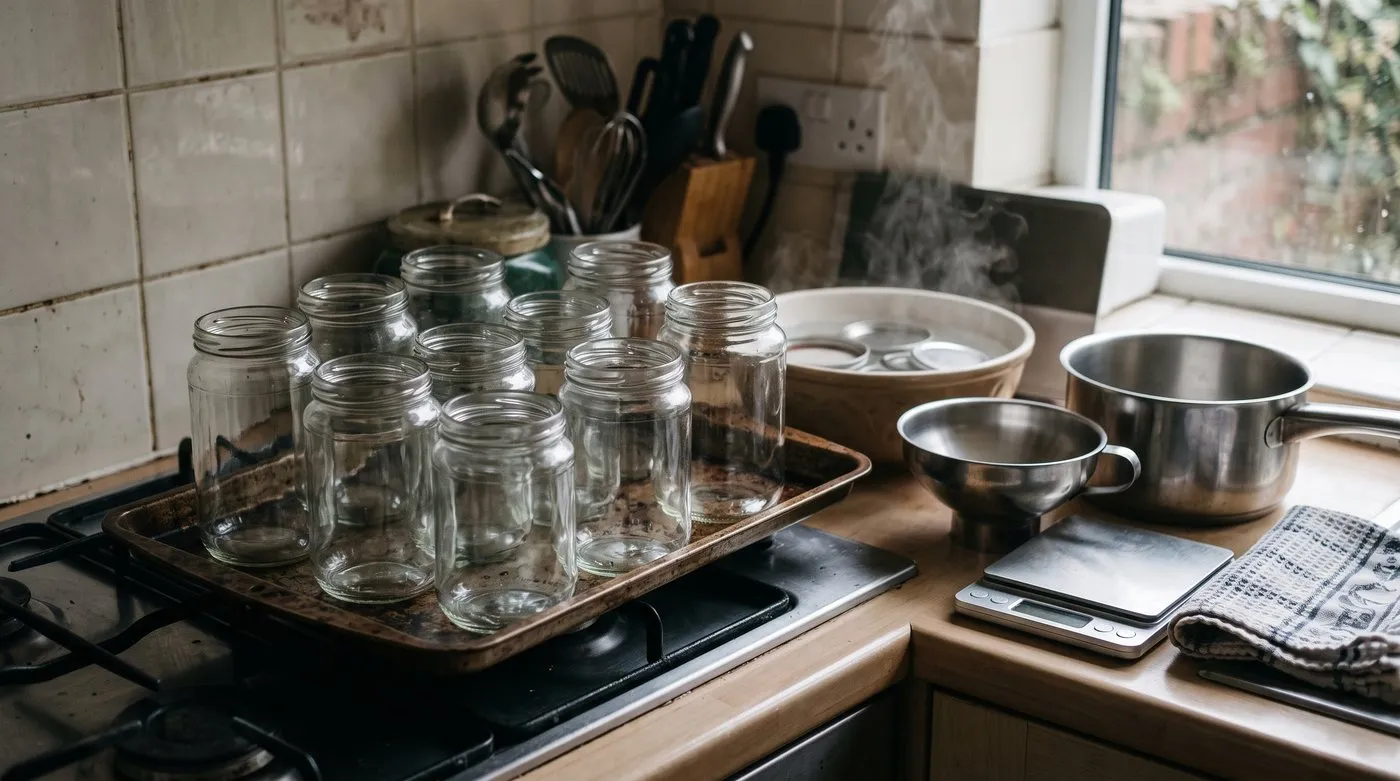
Sterilised jars are the one step not to skip. Stand them upright on a tray in a low oven and fill them while they’re still warm.
How to pickle vegetables in vinegar
This is the classic British way. Pickled onions, beetroot and eggs have been kitchen favourites for generations.
Basic pickling brine
This works for almost any veg:
- 600ml malt vinegar (at least 5% acidity)
- 100g granulated sugar
- 1 tablespoon fine sea salt
- Whole spices: 1 teaspoon mustard seeds, 1 teaspoon black peppercorns, 2 bay leaves and 4 cloves
Put everything in a stainless steel pan. Bring to a simmer and stir until the sugar dissolves. Take it off the heat and let it cool for 5 minutes before pouring it over your veg.
Pickled beetroot
Beetroot is one of the easiest and most rewarding crops to pickle.
- Wash 1kg of beetroot without peeling or cutting. Trim the leaves to 3cm above the root.
- Boil in unsalted water for 30-40 minutes, until a knife slides in easily.
- Let them cool, slip off the skins and slice into 5mm rounds.
- Pack the slices snugly into sterilised jars.
- Pour over the hot brine, leaving 1cm of space at the top.
- Tap the jar on the worktop to knock out air bubbles, then seal straight away.
- Keep somewhere cool and dark for at least 2 weeks before eating.
Unopened, pickled beetroot keeps for up to a year. Once opened, keep it in the fridge and eat within 4 weeks.
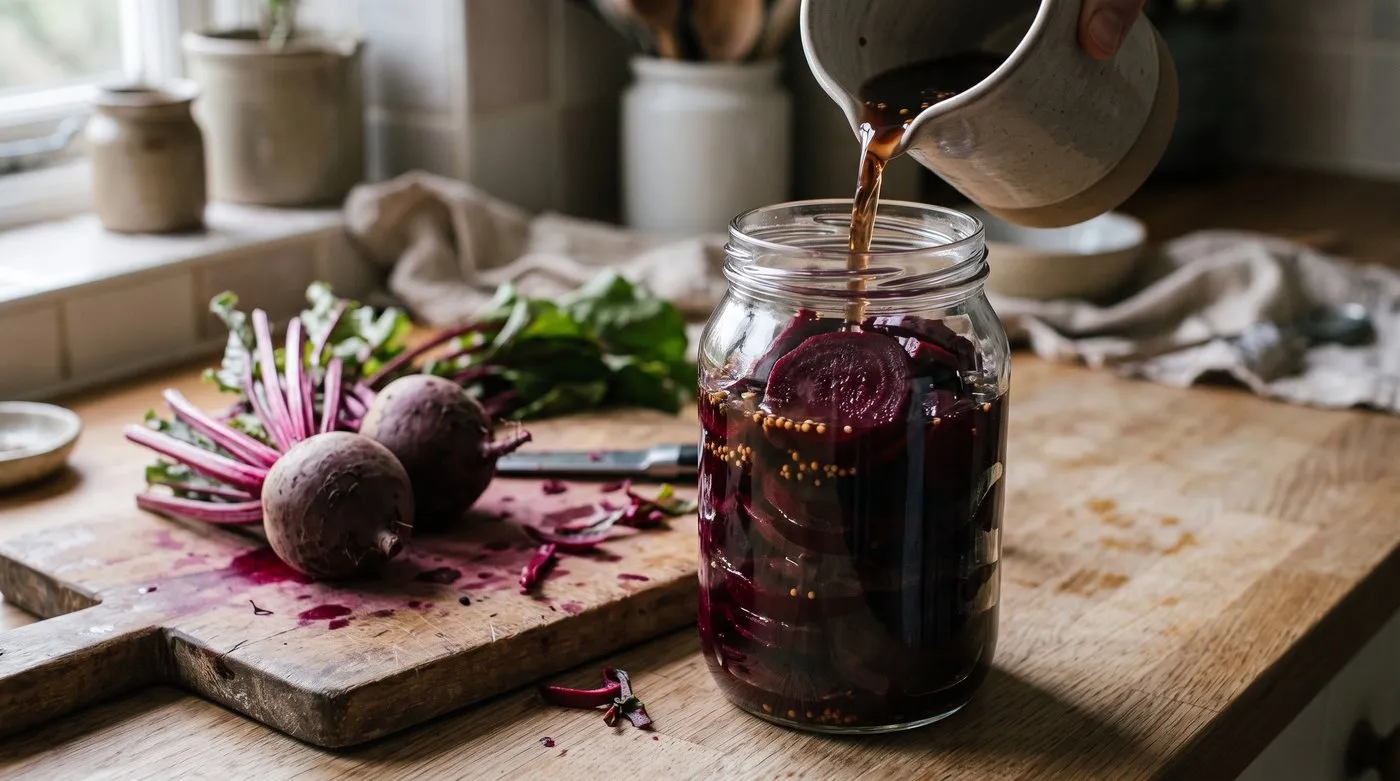
Pack the slices snugly and leave a little space at the top. Tap the jar on the worktop to knock out air bubbles before you seal it.
Pickled onions
Use small pickling onions or shallots from your own onion crop. Peel them and soak in a strong salt brine (100g salt to a litre of water) for 24 hours. Rinse well, pack into jars and cover with cold spiced malt vinegar. Seal and leave for at least 6 weeks. They get even better with time, and many are at their best after about 3 months.
Pickled courgettes
Courgettes always seem to produce more than anyone can eat. Slice into 5mm rounds, sprinkle with a little salt and leave in a colander for 30 minutes to draw out water. Rinse, pack into jars and cover with the basic brine. Add a sprig of dill and half a garlic clove to each jar. They’re ready in 48 hours and keep for about 6 months.
A guide to lacto-fermentation at home
Fermenting needs no vinegar and no cooking. You pack veg in salty brine, keep the air out, and let friendly bacteria do the rest.
The 2-3% salt rule
This is the key to a safe ferment. For every 1kg of prepared veg, add 20-30g of fine sea salt. Weigh both on digital scales. Guessing can lead to failed batches.
| Veg weight | Salt (milder) | Salt (firmer) |
|---|---|---|
| 500g | 10g | 15g |
| 750g | 15g | 22g |
| 1kg | 20g | 30g |
| 1.5kg | 30g | 45g |
| 2kg | 40g | 60g |
Use the lower amount for juicy veg and a milder taste. Use the higher amount for firmer veg or a warm kitchen. In winter, a cold kitchen slows fermenting down, so find a slightly warmer spot, like on top of the fridge.
Sauerkraut
The easiest ferment and the perfect place to start.
- Take the outer leaves off a white cabbage (about 1kg once prepared).
- Quarter it, cut out the core and shred finely into 3-5mm strips.
- Put it in a big bowl and add 20g fine sea salt.
- Squeeze and massage it with clean hands for 8-10 minutes, until it softens and there’s a pool of liquid in the bowl.
- Pack it tightly into a sterilised wide jar, pressing down so the cabbage sits under its own juice.
- Put a weight on top. The cabbage must stay under the liquid the whole time.
- Cover loosely so gas can escape.
- Leave at room temperature for 1-2 weeks. Start tasting from day 5, and move it to the fridge when you like the sourness.
Sauerkraut keeps for about 6 months in the fridge, and the flavour gets richer over the first month.
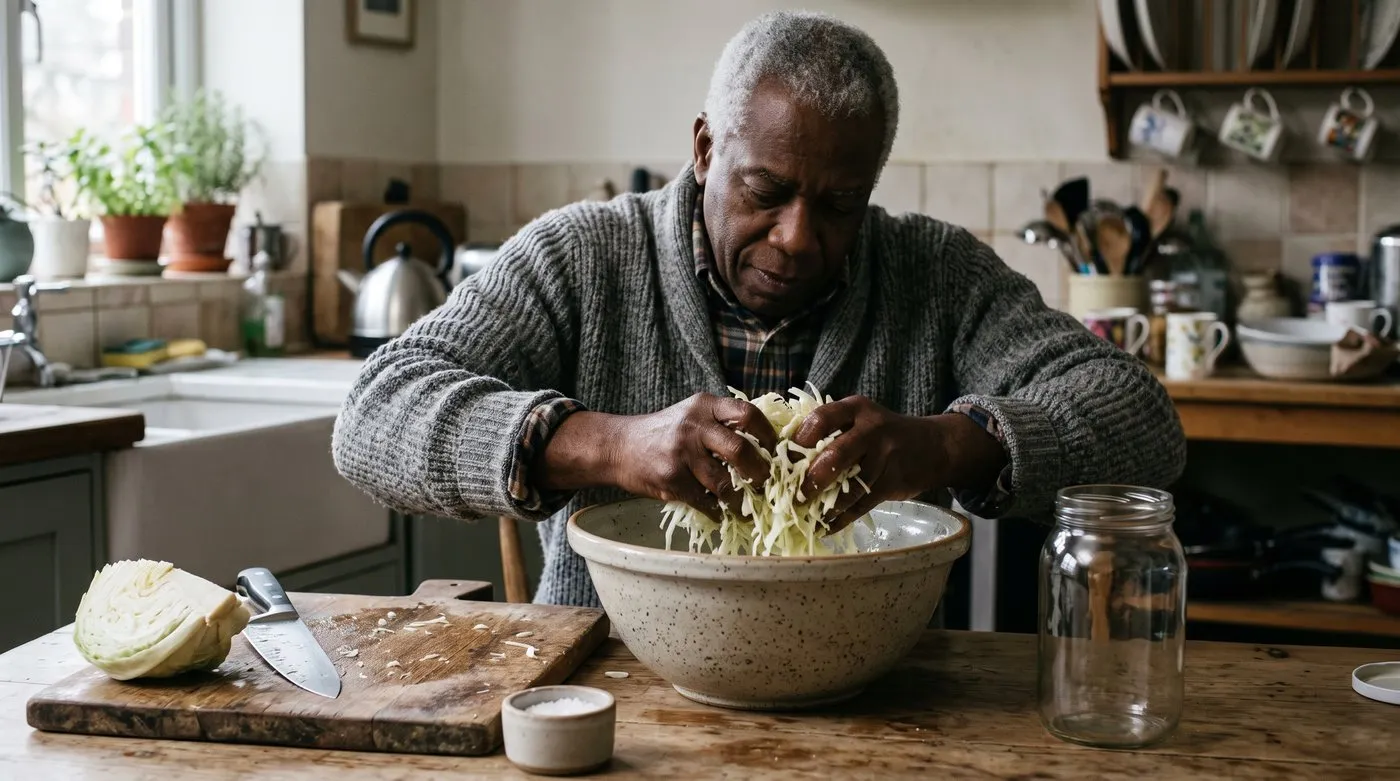
Keep squeezing until the cabbage goes limp and sits in its own juice. That liquid is the brine that keeps it safe in the jar.
Kimchi
Korean-style spicy cabbage, made with ingredients you can find in the UK.
- Cut a Chinese (napa) cabbage into 3cm pieces. Toss with 30g salt and leave for 2 hours.
- Rinse and drain well.
- Make a paste with 30g Korean chilli flakes (gochugaru), 15g grated fresh ginger, 4 crushed garlic cloves, 10g sugar and 15ml fish sauce.
- Mix the paste through the cabbage, wearing gloves.
- Pack into a jar, press down firmly and close the lid loosely.
- Leave at room temperature for 3-5 days. Open the lid briefly each day to let gas out.
- Move it to the fridge once it tastes right to you.
You’ll find gochugaru in Asian supermarkets and online. Ordinary chilli flakes work too, but they taste different and are hotter.
Fermented hot sauce
Grow your own chilli peppers? This is one of the best ways to use them up.
- Roughly chop 500g of mixed chillies. Pull off the stems but keep the seeds for heat.
- Blend with 4 garlic cloves and 15g salt.
- Spoon into a jar, press down and cover loosely.
- Leave at room temperature for 5-7 days, stirring every day.
- Blend until smooth, then push through a fine sieve.
- Pour into sterilised glass bottles and keep in the fridge.
How hot it is depends on your chillies. Cayenne and Scotch Bonnet are popular with UK growers. Mixing in some sweet peppers gives a gentler, rounder sauce.
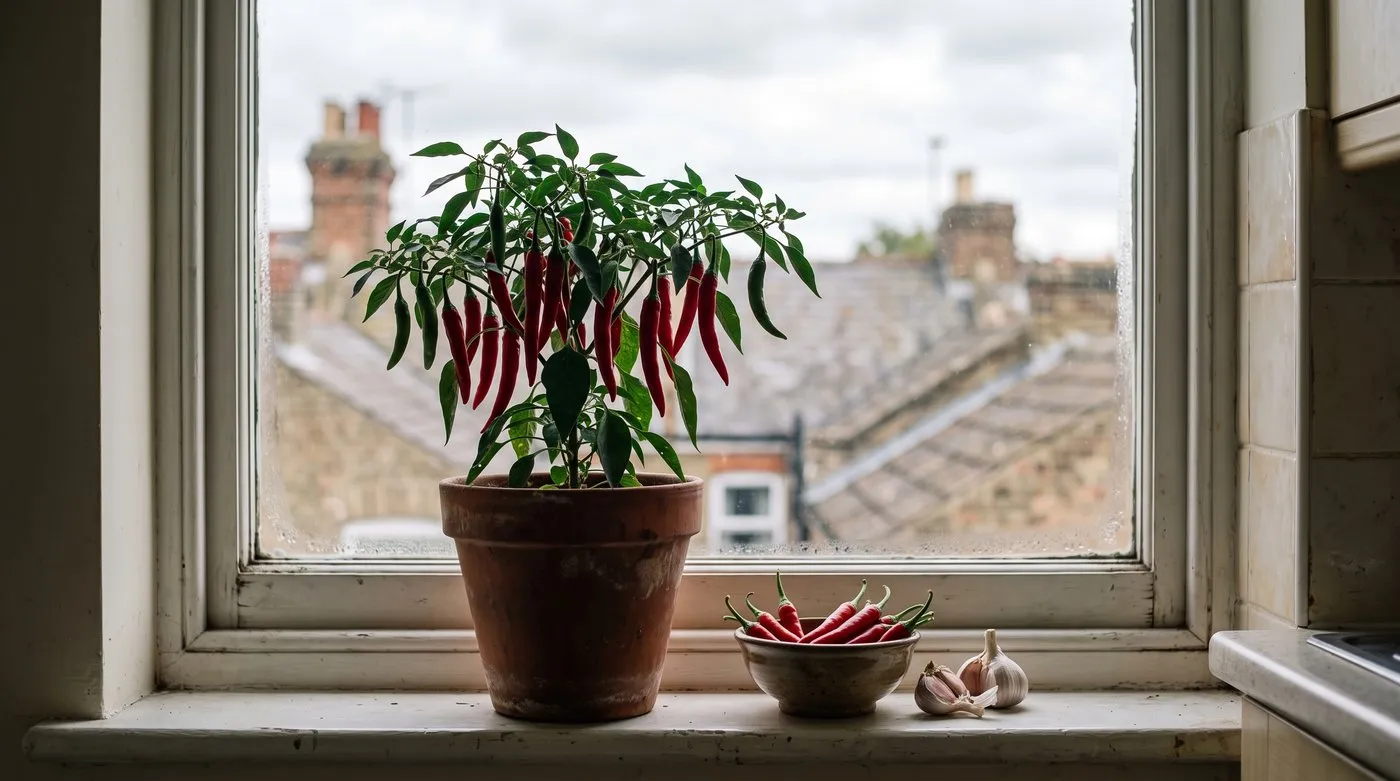
A good chilli plant gives far more than you can eat fresh. Fermenting them into hot sauce is a tasty way to use the lot.
Best UK garden crops for pickling and fermenting
Some crops suit one method better than the other. Here’s a quick guide.
| Crop | Best method | Tips |
|---|---|---|
| Beetroot | Pickling | Cook it first. A classic British pickle |
| Onions | Pickling | Soak in salty brine for 24 hours first |
| Courgettes | Either | Slice thinly |
| Cabbage | Fermenting | Sauerkraut and kimchi |
| Carrots | Either | Cut into sticks or coins |
| Cucumbers | Either | Pick small for the best crunch |
| Runner beans | Pickling | Slice on a slant and salt first |
| Chilli peppers | Fermenting | Hot sauce or whole fermented chillies |
| Cauliflower | Either | Break into small florets |
| Green tomatoes | Chutney | Much better in chutney |
| Garlic | Either | Cloves can turn blue-green in vinegar, which is harmless |
| Broad beans | Pickling | Best when young and small |
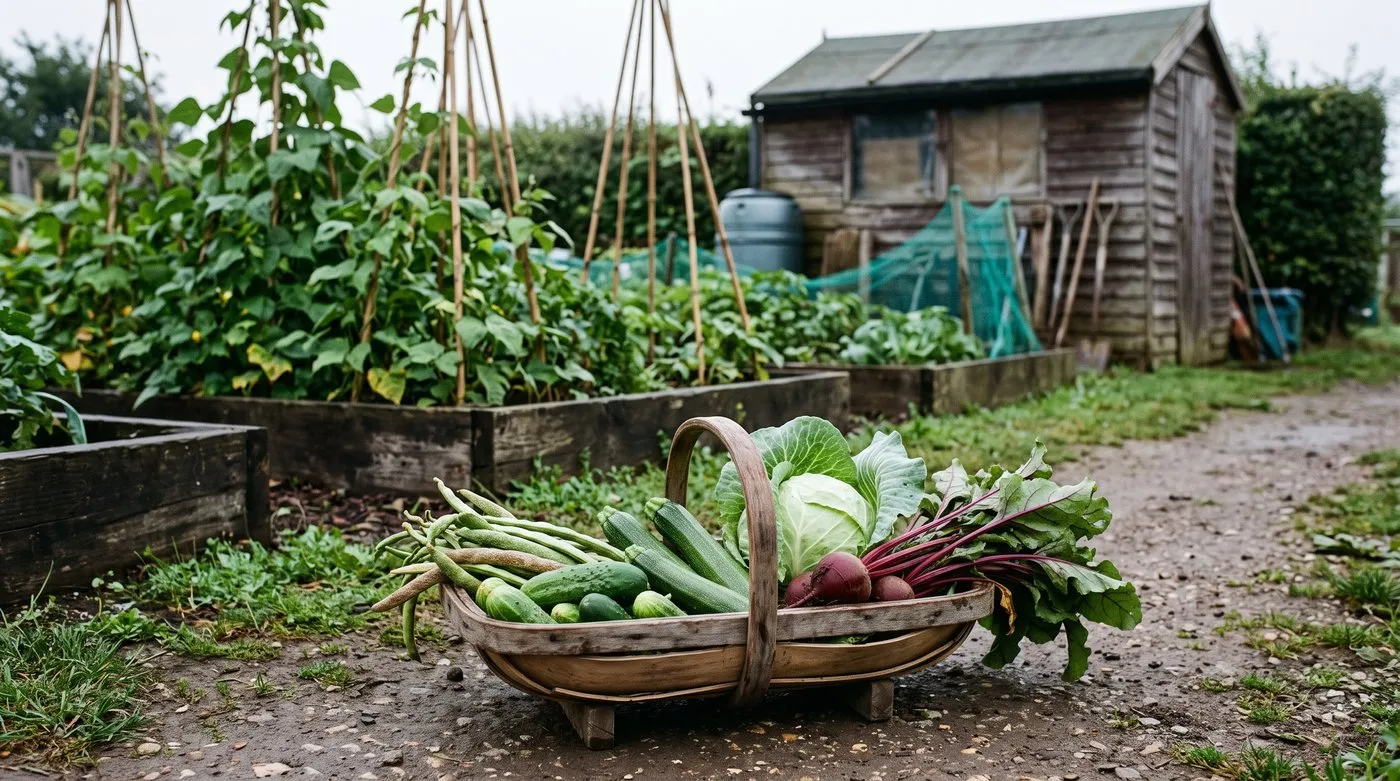
Pick in the cool of the morning and preserve the same day. Crisp, fresh veg makes the crunchiest pickles.
Seasonal preserving calendar for UK gardeners
Preserve your crops as they come in, when they’re fresh and full of flavour.
| Month | What to preserve | How |
|---|---|---|
| June | Broad beans, early beetroot, radishes | Quick pickle, ferment |
| July | Courgettes, cucumbers, French beans, garlic | Pickle, ferment |
| August | Runner beans, onions, chillies, green tomatoes | Pickle, start a hot sauce |
| September | Cabbage, beetroot, apples, plums | Sauerkraut, kimchi, pickle |
| October | Late courgettes, pumpkin, green tomatoes | Pickle, chutney |
| November | Stored cabbage, root veg | Sauerkraut, fermented roots |
Handy tip: Preserve within a day of picking for the crunchiest results. Pick in the cool of the morning, when crops are crisp and full of water.
Vinegar types and strengths for UK pickling
How sour a vinegar is decides whether your pickles will keep safely, so check the label.
| Vinegar | Usual acidity | Taste | Best for |
|---|---|---|---|
| Malt vinegar | 5% | Strong, traditional | Onions, beetroot, eggs |
| White wine vinegar | About 6% | Clean, sharp | Delicate veg, courgettes |
| Cider vinegar | 5% | Fruity, mild | Mixed pickles, chutneys |
| Distilled white vinegar | 5-8% | Plain | Clear pickles where colour matters |
| Red wine vinegar | About 6% | Rich, rounded | Red cabbage, beetroot |
Never preserve with vinegar under 5% acidity. Some flavoured or diluted “pickling vinegars” may fall below this, so always read the label. Plain malt vinegar at 5% is safe and good value for big batches.
Common mistakes when pickling and fermenting
1. Using table salt for fermentation
Table salt has anti-caking agents and sometimes iodine, which can make ferments cloudy and taste odd. Use fine sea salt instead. Flaky sea salt works but is harder to weigh evenly.
2. Not keeping vegetables submerged
Any veg poking out above the brine will go mouldy. This is the number one reason ferments fail. Press everything down firmly, use a weight and check daily for the first week.
3. Using aluminium pans for vinegar pickling
Vinegar reacts with aluminium and gives a metallic taste. Use stainless steel, enamel or glass for everything that touches the vinegar.
4. Sealing fermentation jars airtight
Fermenting makes gas. A tightly sealed jar builds up pressure and can crack or even burst. Use a loose lid, a cloth held on with a rubber band, or an airlock lid. Only seal it tight once it’s done and going in the fridge.
5. Storing preserves in a warm place
Warmth spoils both pickles and ferments. Keep sealed pickles somewhere cool and dark, below about 15C, like a cupboard or pantry. Ferments go in the fridge once they taste right. A shed is fine for pickles in winter but too warm in summer.
How to store preserved food safely
Good storage keeps your jars tasting great for longer.
Pickles:
- Sealed jars: up to a year somewhere cool (10-15C)
- Opened jars: 4-6 weeks in the fridge
- Always use a clean fork or spoon, never fingers
- If the vinegar goes cloudy or smells off, throw the whole jar away
Ferments:
- In the fridge: about 6 months
- At room temperature: keeps getting more sour, and very sour within 2-3 weeks
- Move to the fridge once it tastes how you like it
- A white film on top is usually harmless yeast but tastes unpleasant, so skim it off
Frequently asked questions
What is the difference between pickling and fermenting?
Pickling uses vinegar, while fermenting uses salt. With fermenting, the salt lets friendly bacteria turn the veg sour. Both stop food going off. Quick pickles can be ready in a day or two, while ferments take a few days to a couple of weeks. Ferments also contain live bacteria, which pickles don’t.
What vinegar should I use for pickling in the UK?
Use malt vinegar with at least 5% acidity. Standard malt vinegar from the supermarket usually meets this, but check the label. White wine and cider vinegar work well too. Don’t use anything under 5%, as it won’t keep your pickles safe.
How much salt do I need for lacto-fermentation?
Use 20-30g of fine sea salt for every kilo of vegetables. That’s 2-3% of the weight. Weigh both on digital scales rather than guessing. Too little salt lets the wrong bacteria grow, and too much slows things down and tastes very salty.
How long does fermented food last?
About six months in the fridge. Once opened, eat it within four to six weeks. Left at room temperature it keeps fermenting and gets more and more sour. Pop it in the fridge when it tastes how you like it.
Can I pickle any garden vegetable?
Most firm vegetables pickle well. Beetroot, onions, courgettes, cucumbers, green beans, cauliflower and peppers all work. Soft things like ripe tomatoes and leafy greens go mushy in vinegar, so they’re better in chutney or the freezer.
How do I sterilise jars for pickling?
Wash them in hot, soapy water first. Rinse well, then stand them upright on a baking tray in the oven at 120C for 15 minutes. Or boil them in water for 10 minutes. Pour boiling water over the lids. Fill jars while they’re still warm so they don’t crack.
Is fermented food safe to eat?
Yes, when it’s made carefully. The salt keeps harmful bacteria out and lets the friendly ones turn the veg sour. If a ferment smells rotten, grows pink or black mould or turns slimy, throw it away. A thin white film on top is usually harmless yeast, so just skim it off.
What equipment do I need to start fermenting at home?
Very little. You need glass jars, fine sea salt, digital kitchen scales and something to weigh the veg down under the brine. A 1-litre clip-top jar is perfect. Crocks and airlock lids are nice extras but not essential.
Our team produces practical UK gardening guidance from source research, contributor records and established horticultural practice. Editorial standards are overseen by Matt W.


