
Key takeaways
- The basic mix is 1kg fruit or veg, 500g sugar and 500ml vinegar
- Simmer until a spoon drawn across the pan leaves a clear trail
- Use vinegar of at least 5% acidity and never cut the vinegar, as it does most of the preserving
- Leave chutney 4-6 weeks before eating so the flavours can mellow
- Sealed jars keep for up to 12 months somewhere cool, dark and dry
Chutney is the happy ending for a garden glut. If you grow tomatoes, courgettes or runner beans, there comes a point in late summer when you can’t eat them fast enough. A few jars of chutney sort that out, and taste better than anything from the shop.
Here are six reliable recipes for common UK crops. They all use the same basic mix and method, so once you’ve made one, the rest are easy. For other ways to preserve, see our guides to pickling and fermenting and making jam from garden fruit.
The basic chutney ratio and method
The basic mix is 1kg prepared fruit or veg, 500g sugar and 500ml vinegar, cooked slowly until thick. Learn this and you can make chutney from most things you grow. If you adapt a recipe, always keep the vinegar the same.
The mix:
- 1kg prepared fruit or vegetables (chopped)
- 500g sugar (white granulated, demerara or light brown)
- 500ml vinegar (malt, cider or white wine, at least 5% acidity)
- Spices to taste
The method:
- Chop everything into roughly 1cm pieces. Smaller pieces cook faster and give a smoother chutney.
- Put it all in a heavy stainless steel or enamel pan. Don’t use aluminium, copper or iron, which react with vinegar.
- Bring to a gentle simmer over a medium heat, stirring until the sugar dissolves.
- Turn the heat down low and cook uncovered for 60-90 minutes.
- Stir every 10 minutes or so to stop it sticking.
- It’s ready when a wooden spoon drawn across the bottom leaves a clear trail for 2-3 seconds.
- Spoon it straight into hot, sterilised jars, filling to within 5mm of the top.
- Seal with new, vinegar-proof lids. Wax discs and cellophane aren’t airtight enough.
Mind your hands: Chutney spits as it cooks. Use a deep pan, keep the heat low, wear oven gloves to stir, and keep children away from the hob.

Chop your produce into roughly 1cm pieces so it all cooks evenly.
Sugar types and their effect
| Sugar | Colour | Flavour | Good with |
|---|---|---|---|
| White granulated | Lighter | Clean, lets the fruit shine | Pale, delicate chutneys |
| Demerara | Golden | Toffee notes | Apple, pear, plum |
| Light brown soft | Dark and rich | Treacly | Green tomato, beetroot |
| Dark muscovado | Very dark | Strong | A little, mixed with other sugars |
Green tomato chutney
This is the classic way to use up green tomatoes at the end of the season. Every tomato grower ends up with fruit that won’t ripen, and this turns it into something special.
Ingredients:
- 1kg green tomatoes, chopped into 1cm pieces
- 2 medium onions (about 300g), finely chopped
- 2 cooking apples (about 300g), peeled, cored and chopped
- 500g demerara sugar
- 500ml malt vinegar
- 100g sultanas
- 1 teaspoon ground ginger
- 1 teaspoon mustard seeds
- Half teaspoon ground allspice
- Half teaspoon salt
Method:
Put everything in the pan. Bring to a simmer, stirring until the sugar dissolves. Cook on low for 75-90 minutes until thick and glossy, by which time the tomatoes will have broken down. Pot into sterilised jars and seal. Makes about 4-5 jars (roughly 2kg).
Leave it: At least 6 weeks. Best at 3-4 months. Lovely with mature cheddar and crusty bread.
Handy tip: Pick green tomatoes before the first frost, which often arrives in October in much of England. Frosted tomatoes go mushy and make a watery chutney. Our monthly harvest guide helps with timing.

Green tomato chutney, labelled and waiting patiently for its six weeks to pass.
Apple chutney
A handy all-rounder for cooking apples, windfalls and bruised fruit. Bramleys are ideal, as they’re sharp and cook down nicely.
Ingredients:
- 1kg cooking apples (Bramley or similar), peeled, cored and chopped
- 2 medium onions (about 300g), finely diced
- 500g light brown sugar
- 500ml cider vinegar
- 150g raisins
- 1 teaspoon ground cinnamon
- 1 teaspoon ground ginger
- Half teaspoon ground cloves
- Half teaspoon salt
- Zest of 1 lemon
Method:
Put everything in the pan and simmer for 60-75 minutes. Bramleys break down quickly, so this thickens faster than tomato chutney. Stir often in the last 15 minutes so it doesn’t catch. Pot and seal. Makes about 1.8kg.
Leave it: At least 4 weeks. Great with roast pork, ham and strong cheese.
Runner bean chutney
The answer to the August runner bean mountain. It’s perfect for big, stringy beans that are past their best for eating. Nothing goes to waste.
Ingredients:
- 1kg runner beans, strings removed, sliced into 1cm pieces
- 2 medium onions (about 300g), finely chopped
- 500g granulated sugar
- 500ml malt vinegar
- 1 tablespoon cornflour (mixed with 2 tablespoons vinegar to make a paste)
- 1 tablespoon mustard powder
- 1 teaspoon ground turmeric
- Half teaspoon salt
Method:
Boil the beans in unsalted water for 5 minutes and drain well. Add the onions, sugar, vinegar and dry spices, and simmer for 45 minutes. Stir in the cornflour paste and cook for another 15 minutes until thick. The cornflour gives it that lovely glossy finish. Pot and seal. Makes about 1.8kg.
Leave it: 4 weeks. Perfect with cold meats and a ploughman’s.
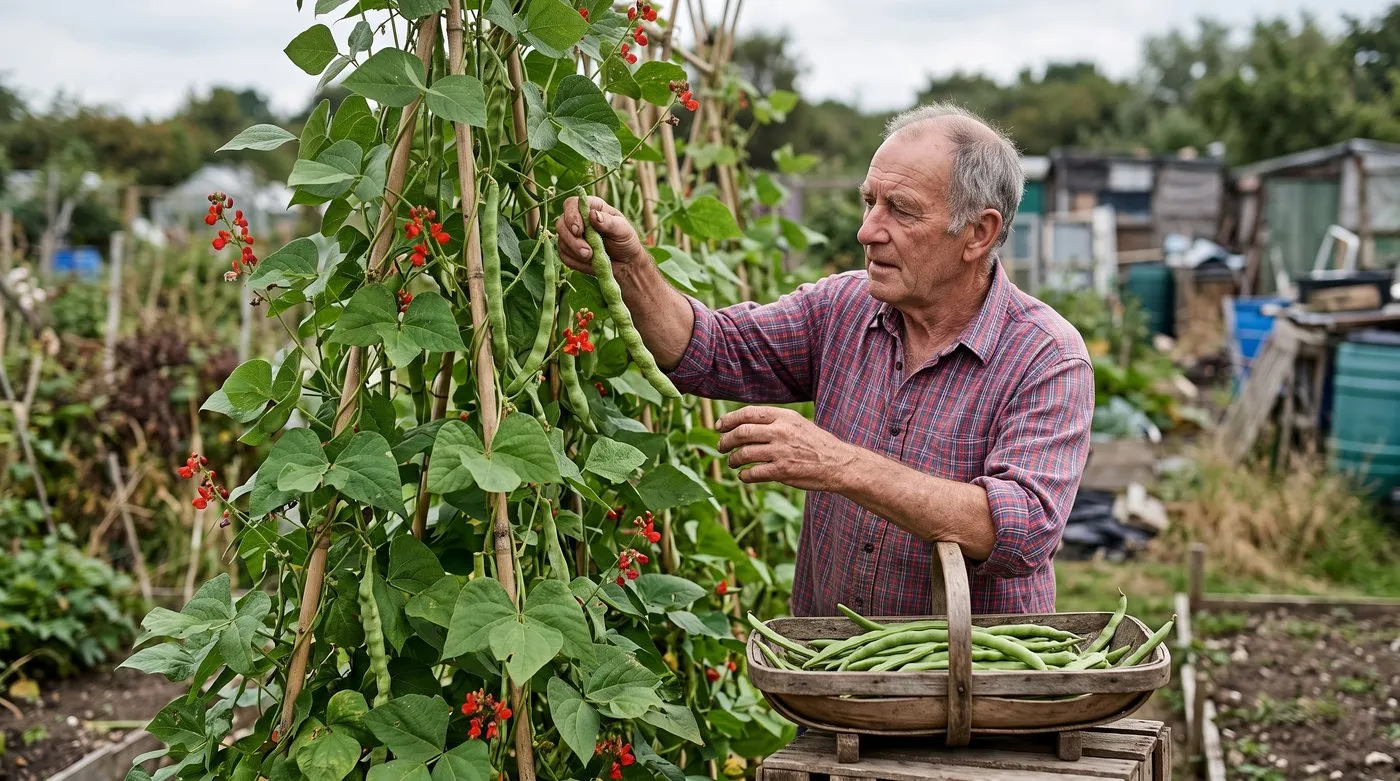
Big, stringy beans past their best for eating are perfect for chutney. String them, slice them and nothing goes to waste.
Courgette chutney
Courgettes just keep coming from July. This recipe is ideal for the ones that turned into marrows while you weren’t looking.
Ingredients:
- 1kg courgettes, cut into 1cm cubes (no need to peel)
- 2 medium onions (about 300g), finely chopped
- 3 garlic cloves, crushed
- 500g granulated sugar
- 500ml white wine vinegar
- 1 teaspoon ground cumin
- 1 teaspoon ground coriander
- Half teaspoon chilli flakes (or 1 fresh chilli, finely chopped)
- Half teaspoon salt
Method:
Sprinkle the courgette cubes lightly with salt and leave in a colander for 30 minutes to draw out water. Rinse and pat dry, so your chutney isn’t watery. Put everything in the pan and simmer for 60-75 minutes. Courgettes hold their shape, so this one stays chunky. Pot and seal. Makes about 1.8kg.
Leave it: 4 weeks. Delicious with grilled halloumi, in sandwiches or with a curry.
Plum chutney
Plum trees often crop heavily in August and September. Victoria is the classic, but any plum works. Plums are naturally sweet, so this uses a little less sugar.
Ingredients:
- 1kg plums, stoned and quartered
- 1 medium onion (about 150g), finely chopped
- 400g demerara sugar (less than usual, as plums are sweet)
- 500ml cider vinegar
- 100g raisins
- 1 teaspoon ground mixed spice
- 1 cinnamon stick
- 4 cloves
- Half teaspoon salt
- 2cm piece fresh ginger, grated
Method:
Put everything in the pan, bring to a simmer and cook for 60-75 minutes. Plums break down quickly and the skins go soft. Take out the cinnamon stick before potting. The colour deepens to a rich ruby as it matures. Makes about 1.8kg.
Leave it: At least 6 weeks. Wonderful with cold turkey, Boxing Day leftovers or a cheeseboard.
Handy tip: Freeze stoned plums in August and make the chutney in October when life is calmer. Frozen plums go soft as they thaw and cook down even faster. This works for any stone fruit.
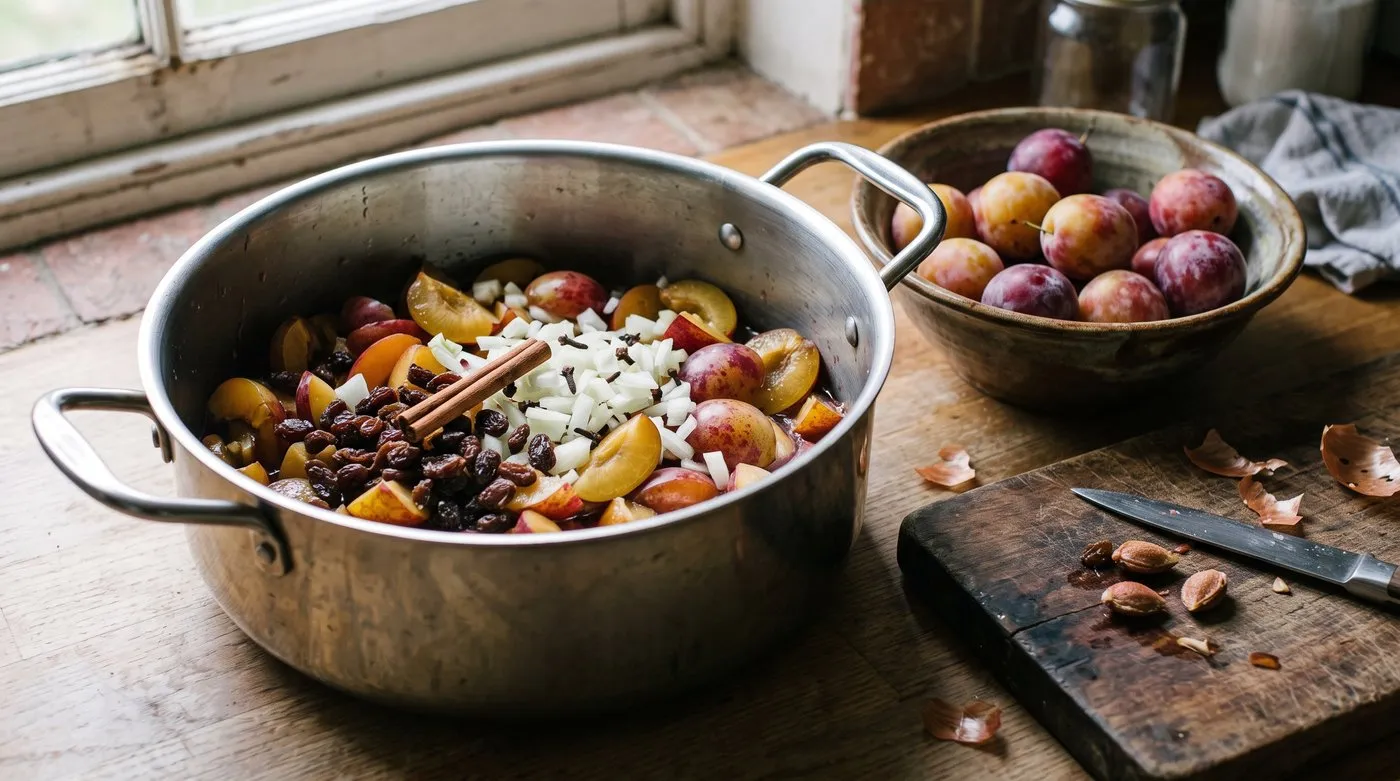
Plums are naturally sweet, so this chutney needs a little less sugar. Remember to fish out the cinnamon stick before potting.
Beetroot chutney
Beetroot chutney is deep red and earthy, and fab with goat’s cheese and smoked fish. Cook the beetroot first.
Ingredients:
- 1kg beetroot, cooked, peeled and cut into 1cm cubes
- 2 medium onions (about 300g), finely chopped
- 500g light brown sugar
- 500ml red wine vinegar
- 1 cooking apple (about 150g), peeled and grated
- 1 teaspoon ground cumin
- 1 teaspoon caraway seeds
- Half teaspoon salt
- Juice of 1 orange
Method:
Boil the beetroot whole for 30-40 minutes until tender. Cool, peel and chop. Add everything else and simmer for 45-60 minutes. As the beetroot is already cooked, this one is quicker. It stains everything, so wear gloves. Pot and seal. Makes about 2kg.
Leave it: 6 weeks.
Recipe comparison table
| Chutney | Main crop | Cook time | Jars (about) | Leave for | Lovely with |
|---|---|---|---|---|---|
| Green tomato | 1kg green tomatoes | 75-90 mins | 4-5 | 6 weeks | Mature cheddar |
| Apple | 1kg Bramley apples | 60-75 mins | 4 | 4 weeks | Roast pork |
| Runner bean | 1kg runner beans | 60 mins | 4 | 4 weeks | Cold meats |
| Courgette | 1kg courgettes | 60-75 mins | 4 | 4 weeks | Grilled halloumi |
| Plum | 1kg plums | 60-75 mins | 4 | 6 weeks | Cheeseboard |
| Beetroot | 1kg beetroot | 45-60 mins | 4-5 | 6 weeks | Goat’s cheese |
Spice blends for chutney
Four simple blends cover most garden chutneys.
Warm winter blend: 1 teaspoon cinnamon, half teaspoon ground cloves, half teaspoon ground ginger, quarter teaspoon nutmeg. Use with apple, plum and pear.
Indian-style blend: 1 teaspoon ground cumin, 1 teaspoon ground coriander, half teaspoon turmeric, half teaspoon chilli flakes, quarter teaspoon fenugreek. Use with courgette, marrow and broad bean chutneys.
Mustard blend: 1 tablespoon mustard powder, 1 teaspoon mustard seeds, half teaspoon turmeric. Use with runner bean and green tomato.
Simple classic: 1 teaspoon ground ginger, half teaspoon allspice, half teaspoon black pepper. Goes with almost anything, so it’s a safe bet when you’re trying something new.
Handy tip: Buy whole spices and grind them yourself for more flavour. Keep a separate grinder or pestle and mortar just for spices.
Seasonal chutney calendar
| Month | What’s ready | Chutney to make |
|---|---|---|
| July | Courgettes, early beetroot | Courgette, beetroot |
| August | Runner beans, plums, onions, courgettes | Runner bean, plum, courgette |
| September | Apples, plums, beetroot, green tomatoes | Apple, plum, beetroot, green tomato |
| October | Green tomatoes, late apples, pumpkins | Green tomato, apple, pumpkin |
| November | Stored fruit, windfalls | Apple, mixed |
September and October are the busiest months, so stock up on jars and sugar early.
Common mistakes when making chutney
1. Not cooking long enough
This is the big one. Undercooked chutney is runny and too sharp. Keep going until it passes the spoon test, which usually takes 60-90 minutes. Don’t rush it.
If your jars turn out runny, tip the chutney back into the pan the same day and simmer until it passes the test. Pot it into freshly sterilised jars with new lids. If a batch catches on the bottom, don’t try to rescue it with water or extra vinegar, as the burnt taste spreads through the lot.
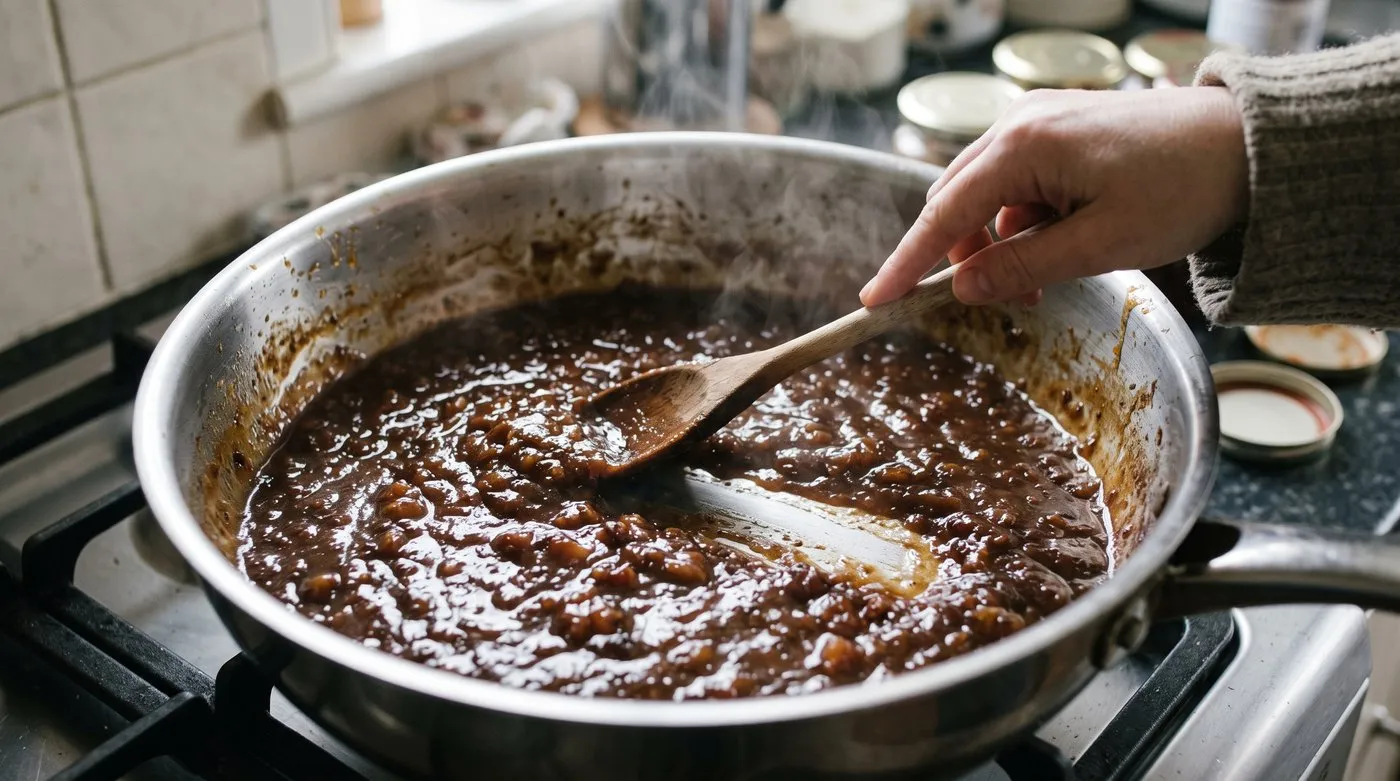
When the spoon leaves a clear trail for two or three seconds, it’s ready. If the gap closes straight away, keep simmering.
2. Using old or damaged lids
Used lids may not seal properly, as the coating inside wears out. Always buy new lids for preserving. Twist-top lids from shop jars can work if they’re in perfect condition, so check the inside carefully.
3. Filling jars when cold
Hot chutney goes into hot jars. Cold glass can crack when you pour in hot chutney. Fill the jars straight after sterilising, and use a jam funnel to avoid spills and burns.
4. Skipping the maturation period
Fresh chutney tastes harsh and vinegary. The flavour only comes together as it sits. Four weeks is the minimum and six to twelve is better. Label every jar with the date you made it.
5. Storing in a warm or bright place
Heat and light spoil chutney. Keep it in a cool, dark, dry cupboard or pantry. A garage is fine in winter but may be too warm in summer. Never on a sunny windowsill or near a radiator.
Jar sterilisation and sealing
Sterilise jars by boiling them in water for 10 minutes, then fill them while hot. This is the method the US National Center for Home Food Preservation gives for preserves that aren’t processed after filling. UK council food-safety advice also accepts an oven at 160C (gas 3) for 10 minutes.
- Wash jars and lids in hot soapy water and rinse well.
- Stand the jars upright in a big pan, cover with hot water by 2-3cm, bring to the boil and boil for 10 minutes. Or heat clean jars in the oven at 160C for 10 minutes.
- Sterilise the lids separately in boiling water, as dry oven heat can damage the seal.
- Lift out one jar at a time, drain it and fill straight away with hot chutney.
- Leave 5mm space at the top.
- Wipe any drips off the rim with a clean, damp cloth.
- Seal tightly. The lid should pop inwards as the jar cools, which means it has sealed.
Check after 24 hours by pressing the middle of the lid. If it doesn’t move, the seal is good. If it pops up and down, put that jar in the fridge and eat it first.
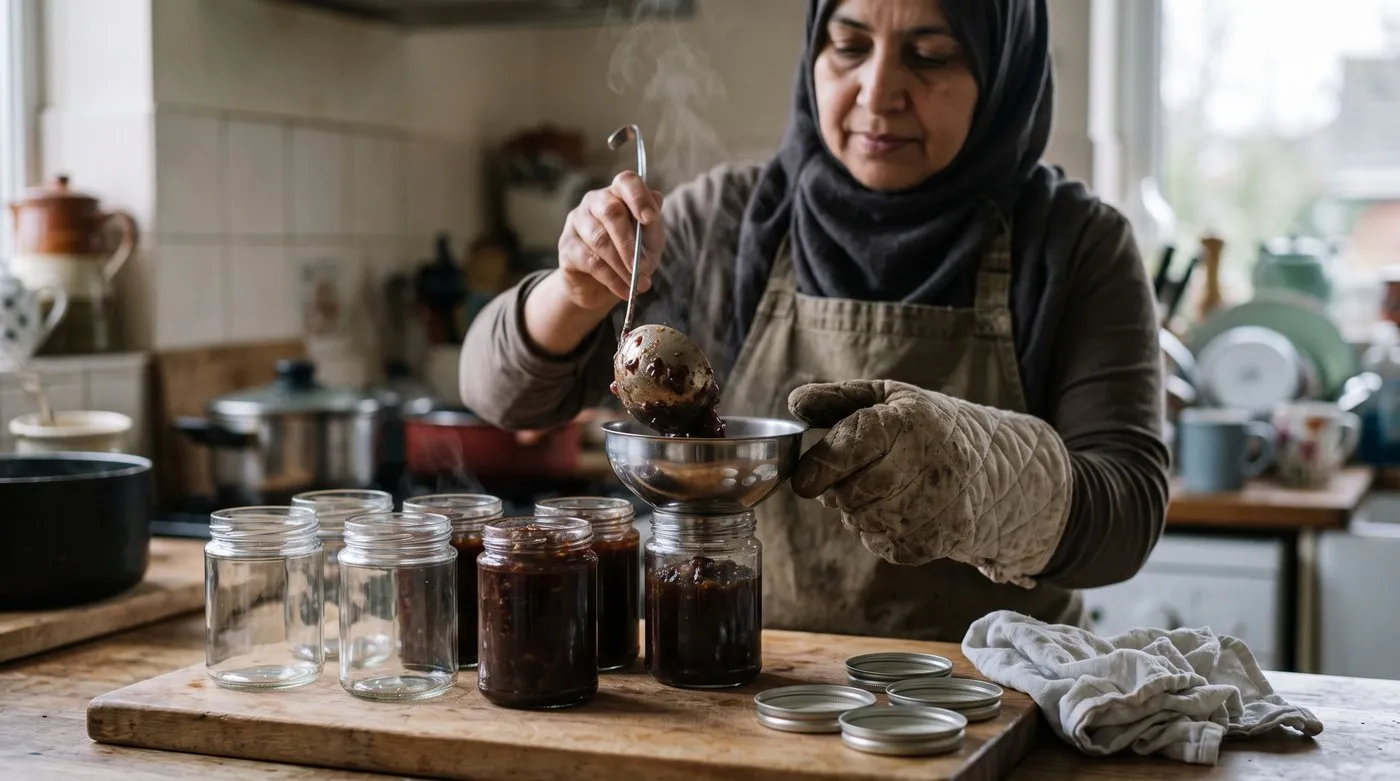
Hot chutney goes into hot jars, filled to within 5mm of the top. Wipe the rims clean before the new lids go on.
Do you need to water bath chutney?
No, not for traditional UK chutney recipes. They rely on plenty of vinegar and sugar, long cooking and hot filling into sterilised jars with vinegar-proof lids. The vinegar keeps the chutney acidic enough to store safely, which is why you should never cut it.
American recipes are different. Tested US chutney and relish recipes are processed in a boiling-water canner for the time each recipe gives. If you follow an American recipe, follow its processing step too. Don’t reduce the vinegar or add extra low-acid ingredients like more onion or garlic unless a food-safety body’s recipe says you can. If a jar doesn’t seal, keep it in the fridge and eat it first.
Can you eat chutney straight away?
Yes, it’s safe as soon as it has cooled. It just tastes harsh and very vinegary. Leaving it 4-6 weeks mellows the vinegar and lets the spices blend.
If you can’t wait, try a sweeter recipe like plum or apple, which tastes rounder when young. Keep any jar you open early in the fridge. Label every batch with the date made and a “best from” date six weeks later, so you open them in order.

A big pan of chutney bubbling gently until it passes the spoon test.
For more ways to save your harvest, see our guides to preserving fruit and vegetables and freezing garden produce.
Gift presentation for homemade chutney
Chutney made in September or early October will be ready just in time for Christmas presents.
- Use matching jars for a set of three or four flavours
- Cut fabric circles 5cm wider than the lid and tie on with string or twine
- Label each jar with the name, the date made and a “best after” date six weeks later
- Keep gift sets somewhere cool until you hand them over
- Add a little card with what each one goes with
A set of four (green tomato, apple, plum and beetroot) makes a lovely gift from your garden. If you also make jam from garden fruit or pickled vegetables, a mixed hamper of preserves is even better.
Got the chutney bug? Our guide to preserving fruit and vegetables has plenty more ideas.
Frequently asked questions
How long does homemade chutney need to mature?
At least 4-6 weeks. Freshly made chutney tastes sharp and vinegary. As it sits, the vinegar mellows and the spices blend together. Most chutneys are at their best after three or four months. Keep the jars somewhere cool and dark while you wait.
What is the basic ratio for making chutney?
1kg fruit or veg, 500g sugar and 500ml vinegar. So 1kg of tomatoes needs 500g sugar and 500ml vinegar. It works for almost any chutney. For very sweet fruit like plums, you can drop the sugar to about 400g per kilo.
How do I know when chutney is cooked enough?
Use the spoon test. Draw a wooden spoon across the bottom of the pan. If the trail stays clear for a couple of seconds, it’s ready. It should look thick and glossy. This usually takes 60-90 minutes at a gentle simmer.
Can you use any vinegar for making chutney?
Use one with at least 5% acidity. Malt vinegar gives the classic strong flavour. Cider vinegar is milder and fruitier. White wine vinegar keeps the colour lighter. Skip balsamic and flavoured vinegars, which can drown out your fruit and veg.
How long does homemade chutney last?
Sealed jars keep for up to 12 months. Store them somewhere cool, dark and dry. Once opened, keep the jar in the fridge and use a clean spoon. If you see mould, or the lid has bulged or lost its seal, throw the whole jar away. Never taste food from a jar that shows signs of spoilage.
What can I do with a glut of green tomatoes?
Make green tomato chutney, the classic answer. One batch uses 1kg of green tomatoes and turns them into a tangy treat for cheese and cold meats. Green tomato pickle, salsa and fried green tomatoes are tasty too.
Do I need special equipment to make chutney?
Not really, most kitchens have the basics. You need a heavy stainless steel or enamel pan, a wooden spoon, glass jars with new lids, and ideally a jam funnel. Avoid aluminium, copper and iron pans, as vinegar reacts with them. Kitchen scales help you measure accurately.
Can I reduce the sugar in chutney recipes?
A little, but always keep the full amount of vinegar. The vinegar does most of the preserving. Sugar helps too, and thickens the chutney, so keep lower-sugar batches in the fridge. Sweet fruit like plums needs less sugar anyway, about 400g per kilo.
Our team produces practical UK gardening guidance from source research, contributor records and established horticultural practice. Editorial standards are overseen by Matt W.


