Key takeaways
- Dandelion, nettle, chickweed and hairy bittercress are common, easy to identify and good to eat
- Pick most weeds young, from March to May, before they flower and turn bitter or coarse
- Always cook nettles: blanching for a minute takes the sting away
- Crush every wild garlic leaf and check for a garlic smell, because toxic lookalikes grow nearby
- Ground elder shares white umbrella flowers with deadly hemlock, so learn both before picking
- Skip weeds from areas treated with weedkiller or used by dogs and foxes
Many common garden weeds are edible, and some are delicious. Dandelion, stinging nettle, chickweed and hairy bittercress grow in almost every UK garden and make tasty salads, soups and pesto. Before you pull them out and bin them, it’s worth knowing which ones you can eat.
This guide helps you identify ten edible weeds, spot their dangerous lookalikes and use them in the kitchen. For a season-by-season look at everything you can pick in a garden, see our guide to garden foraging through the year.
Before you start: three simple safety rules
- Only eat a plant you’re completely sure of. If in doubt, leave it out. Check several features, not just one.
- Pick from clean ground. Avoid anywhere sprayed with weedkiller, treated with slug pellets, close to busy roads or used by dogs and foxes.
- Wash everything well in cold water before eating.
On your own land you can pick freely. Elsewhere, picking leaves, flowers and fruit of common plants for your own use is generally allowed, but uprooting wild plants without the landowner’s permission is an offence. Nature reserves often have their own rules.
1. Dandelion
How to spot it. A flat rosette of deeply toothed leaves. Each hollow stem holds one yellow flower and oozes white sap when snapped. Seed heads form the familiar fluffy clock.
How to eat it. Young leaves taste a bit like rocket with a bitter edge. Add them to salads or wilt them with garlic. Flowers can be dipped in batter for fritters. Roasted roots make a coffee-like drink. Pick leaves before the plant flowers, when they’re mildest.
Lookalikes. Cat’s ear has hairy leaves and branched stems. It’s also edible, so a mix-up is harmless.
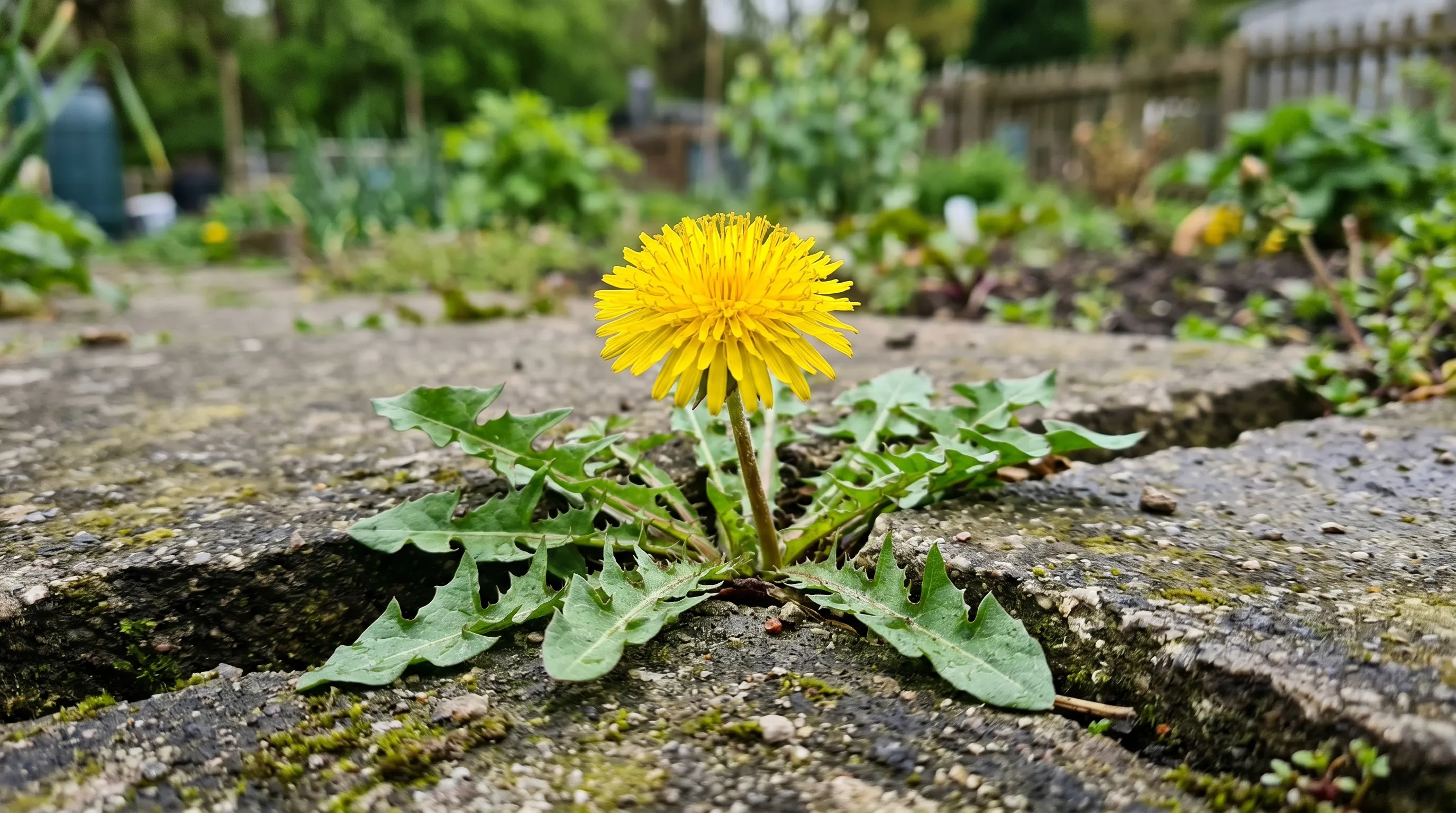
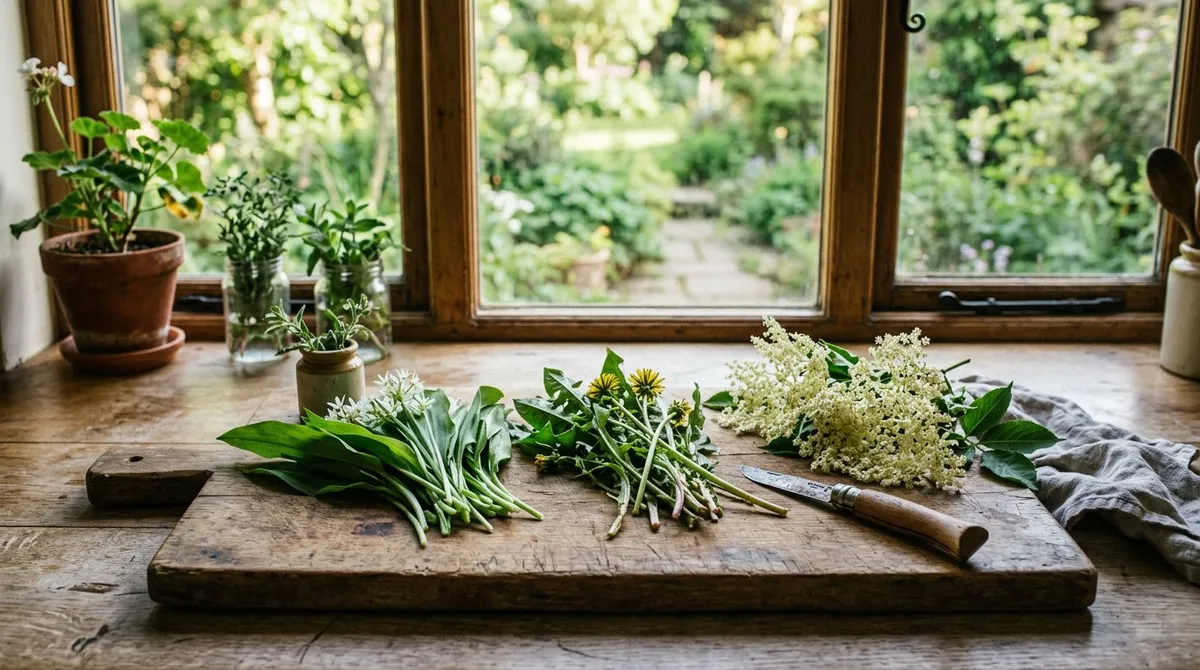
Dandelion’s toothed leaf rosette and single yellow flower on a hollow stem make it one of the easiest weeds to identify.
2. Stinging nettle
How to spot it. Pairs of heart-shaped, toothed leaves on square stems, covered in stinging hairs. Clusters of tiny green flowers dangle from the stems in summer.
How to eat it. Cooked nettles taste like rich spinach. Wear thick gloves and snip the top four to six leaves from young plants in spring. Blanch for about a minute in boiling water to remove the sting, then use in soup, risotto or pesto. Avoid older plants once they flower, as the leaves turn coarse and gritty.
Lookalikes. Dead-nettles have similar leaves but no sting and white or purple flowers. They’re edible too.
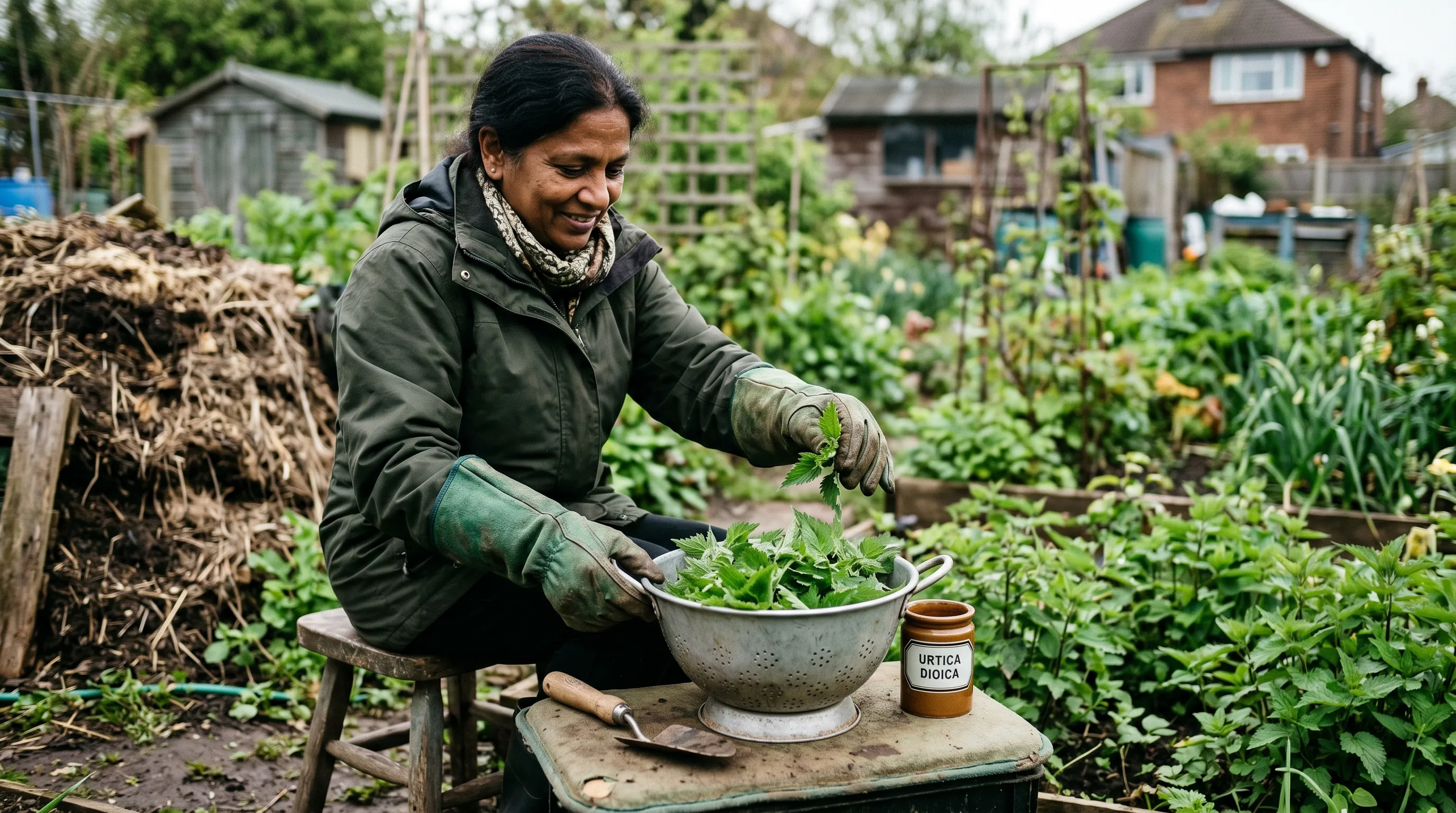
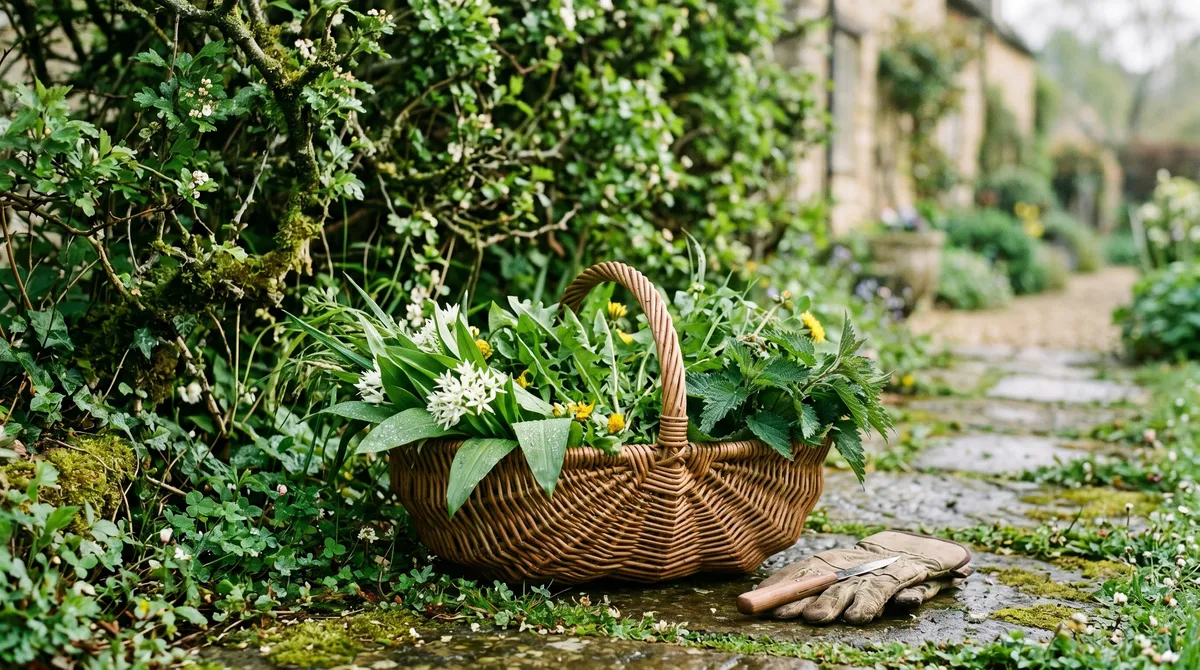
Thick gloves make nettle picking painless. Take only the soft top leaves from young plants in spring.
3. Ground elder
How to spot it. Broad, toothed leaflets in groups of three on long stalks, spreading in a thick carpet. Flat heads of small white flowers appear in early summer.
How to eat it. Young spring leaves taste of celery and parsley. Chop them into salads or add to soups at the end of cooking. Older leaves turn strong and soapy.
Lookalikes. This is the one to be careful with. Ground elder has white umbrella-shaped flowers like several deadly plants in the carrot family, including hemlock. Hemlock has a smooth stem with purple blotches and finely divided, fern-like leaves. Pick ground elder only from a known patch when the leaves are young, and never pick anything with umbrella flowers from the wild unless an expert has checked it. If you’d rather be rid of it, see how to remove ground elder.
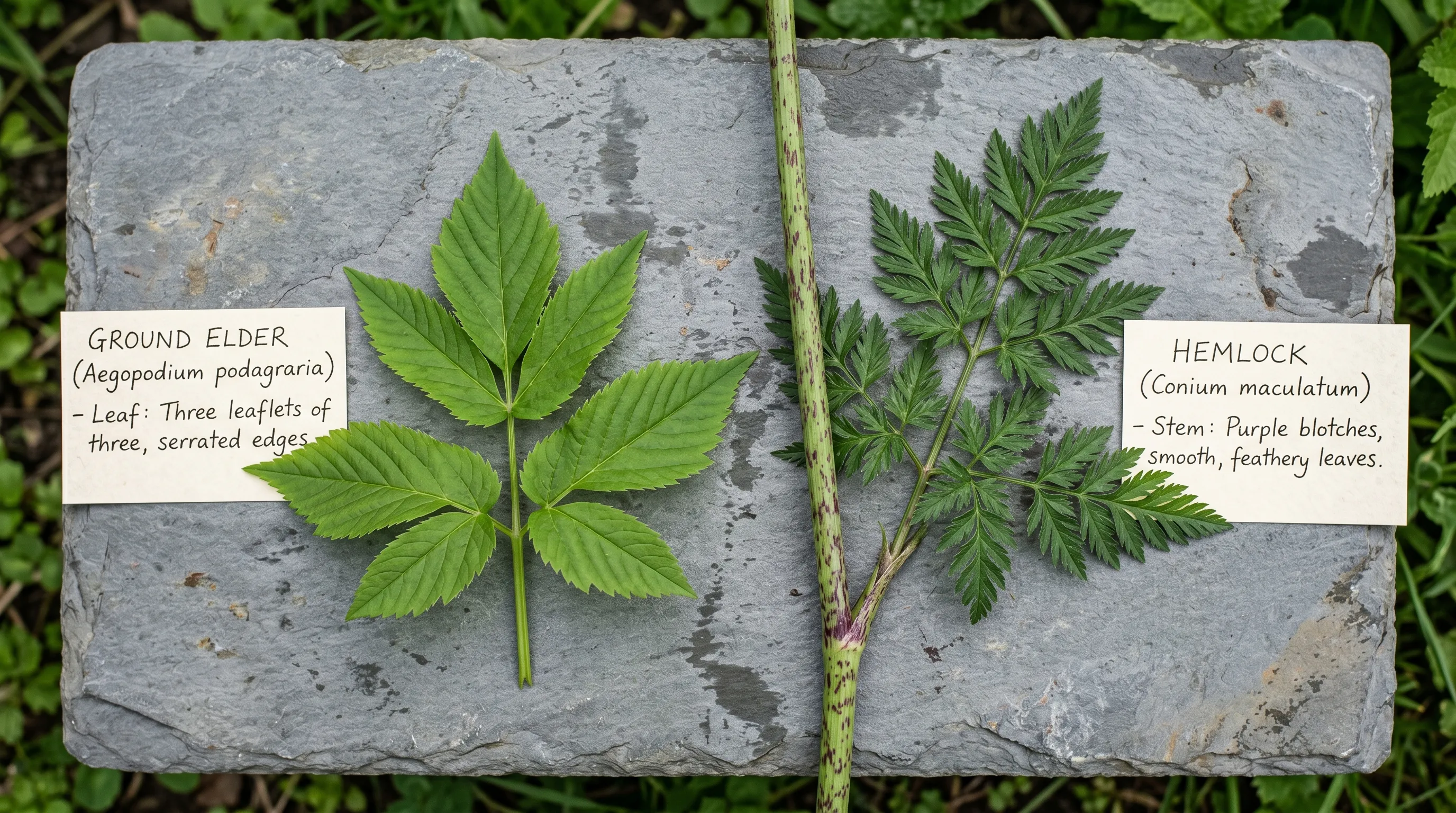
Ground elder (left) has broad, toothed leaflets. Hemlock (right) has a purple-blotched stem and fern-like leaves. Always check several features, never just one.
4. Chickweed
How to spot it. A low, sprawling mat of small, pointed oval leaves in pairs. Tiny white star-shaped flowers with deeply split petals. Look for a single line of fine hairs running down one side of the stem.
How to eat it. Mild and fresh, a bit like baby spinach. Snip the tender tips into salads and sandwiches. It grows almost all year in mild weather. Our chickweed guide covers it as a weed too.
Lookalikes. Scarlet pimpernel is poisonous. It has a square stem, no hairy line and orange-red flowers.
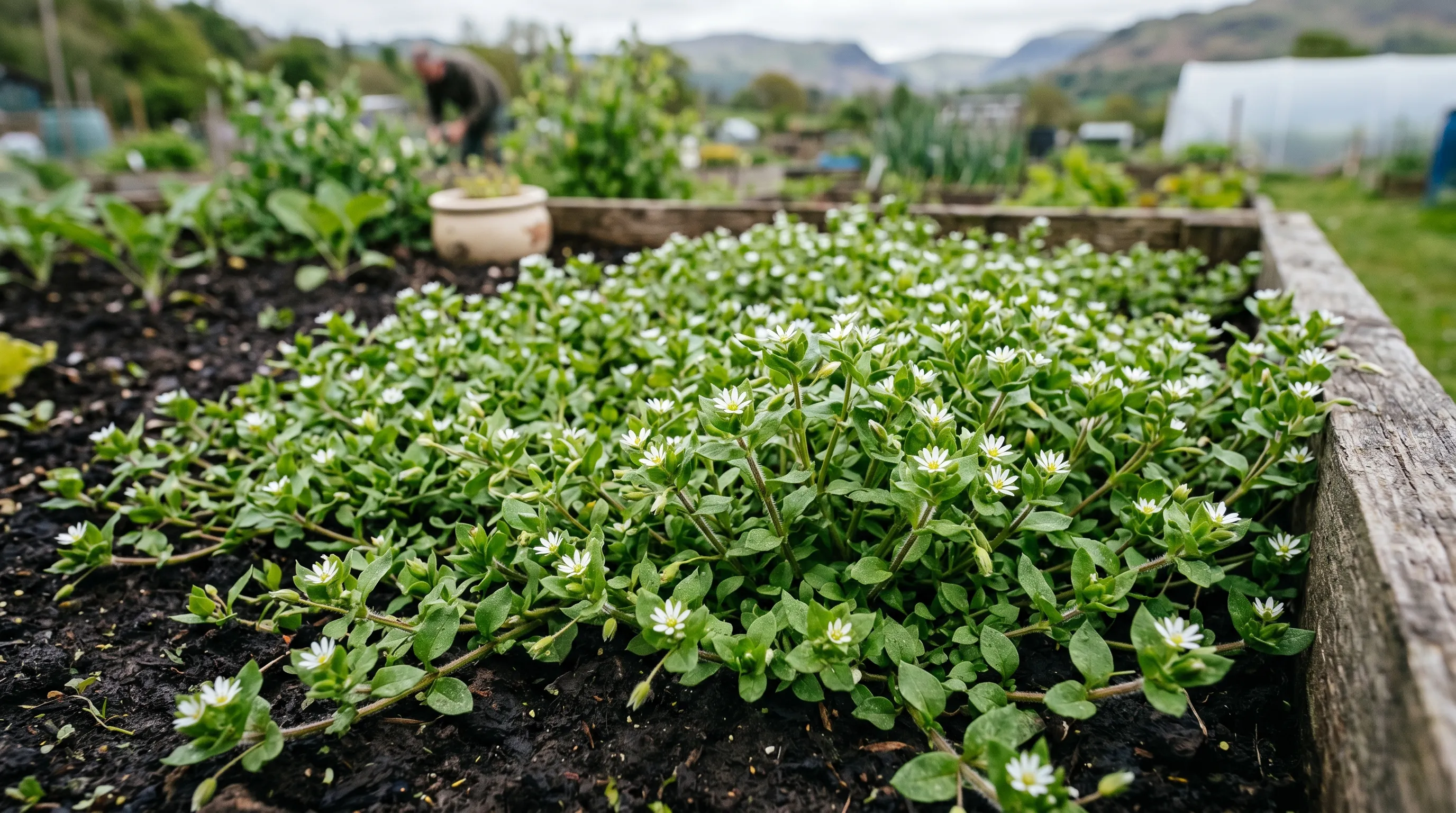
Chickweed loves bare, rich soil in raised beds. Snip the soft tips for salads and leave the roots behind.
5. Wild garlic
How to spot it. Broad, glossy, pointed leaves, each rising from the ground on its own stalk. Starry white flowers in a round head from April to June. Crushed leaves smell strongly of garlic.
How to eat it. Milder than garlic cloves. Make pesto, garlic butter or soup, or add to risotto. The flowers look pretty in salads. It grows in damp, shady spots, often under trees. Our guide to growing wild garlic shows how to start your own patch.
Lookalikes. Lily of the valley, lords-and-ladies and autumn crocus all grow in similar places and can be deadly. None smell of garlic. Crush each leaf and sniff before you pick it. Wash your hands between checks, because the smell lingers on fingers.
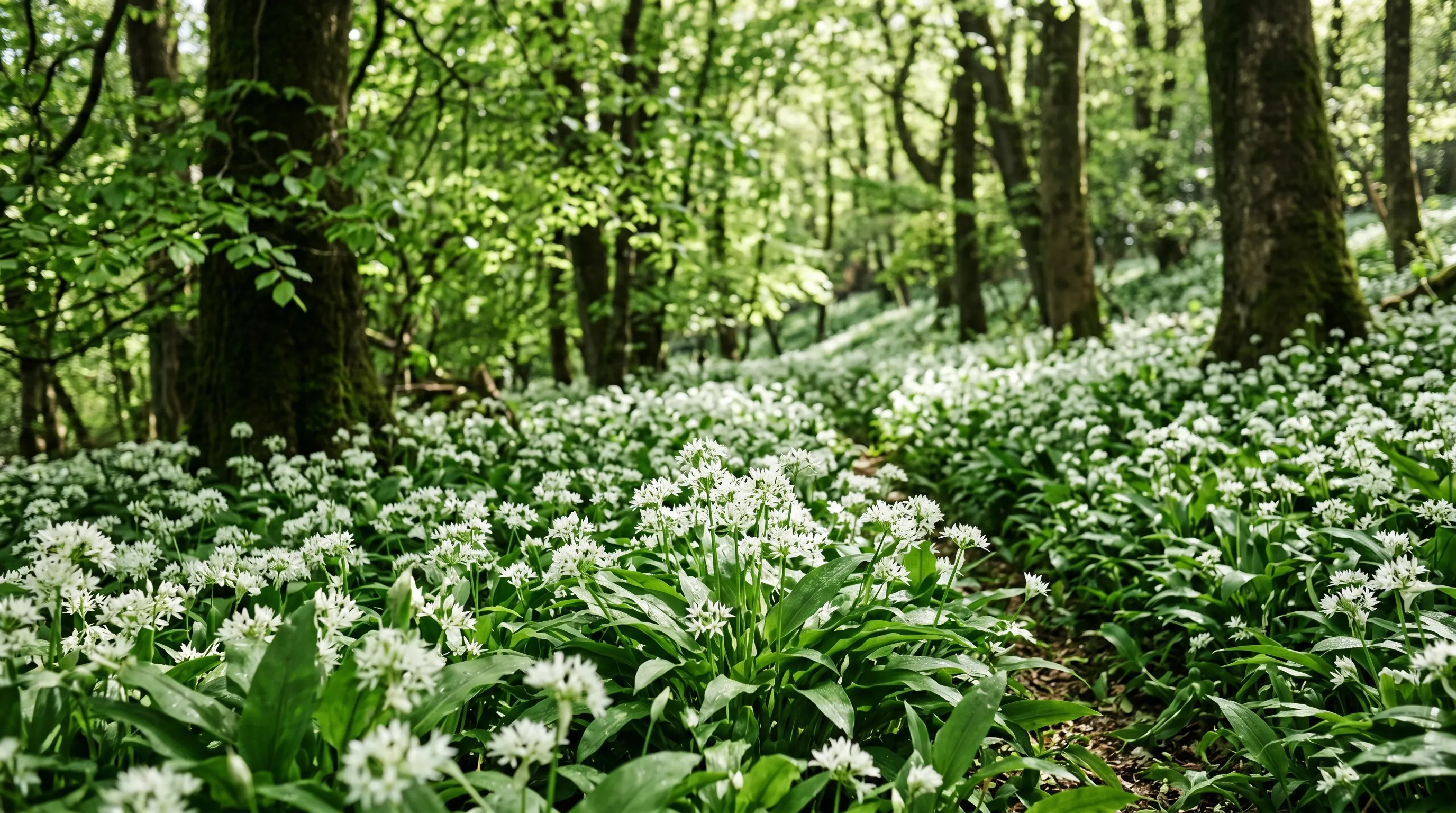
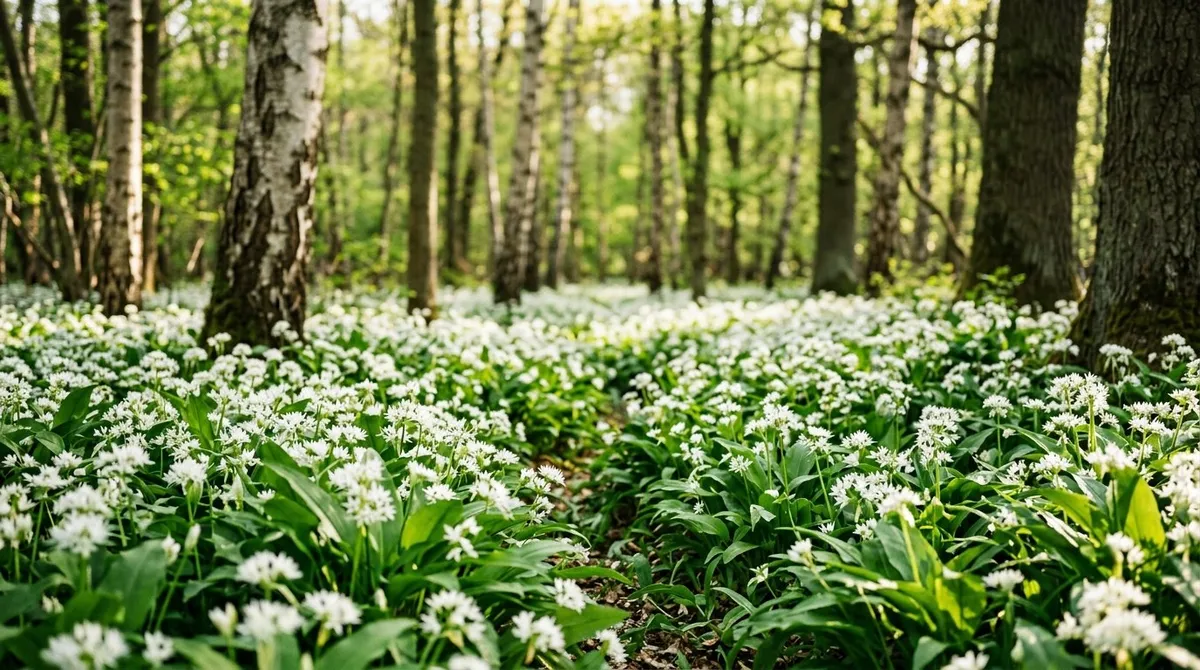
Wild garlic carpets damp, shady ground in spring. Every leaf should smell of garlic when you crush it.
6. Garlic mustard
How to spot it. Also called Jack-by-the-hedge. Heart-shaped, scalloped leaves that smell of garlic when crushed. Tall stems of small white four-petalled flowers in spring.
How to eat it. Peppery and garlicky. Use young leaves raw in salads and sandwiches, or stir into sauces at the end of cooking.
7. Cleavers
How to spot it. Also called goosegrass or sticky willy. Scrambling stems with rings of narrow leaves, all covered in tiny hooks that stick to clothes.
How to eat it. Too rough to enjoy raw. Pick young shoots in early spring and cook them briefly like greens, or steep them in cold water overnight for a fresh, grassy drink.
8. Hairy bittercress
How to spot it. A small rosette of leaves made of little round leaflets. Thin stems carry tiny white flowers, followed by slender pods that pop and fling seeds when touched.
How to eat it. Peppery, like a mild watercress. Snip whole rosettes into salads, sandwiches and egg dishes. It’s best in autumn, winter and spring. See our hairy bittercress guide to stop it seeding everywhere.
9. Fat hen
How to spot it. Diamond-shaped, toothed leaves dusted with a mealy white powder that rubs off on your fingers. It grows tall on rich, dug soil in summer.
How to eat it. Cook the young leaves and tips like spinach. Eat it in moderation, as it’s high in oxalates, like spinach and sorrel.
Lookalikes. Young black nightshade can look similar. It has no white powder, and its black berries are poisonous.
10. Wood sorrel
How to spot it. Bright green leaves of three heart-shaped leaflets, like a delicate clover. White flowers with fine pink veins in spring. It grows in damp shade under trees and hedges.
How to eat it. Sharp and lemony. Scatter a few leaves over salads or fish. Eat it in small amounts, as it’s high in oxalic acid. Skip it if you’re prone to kidney stones.
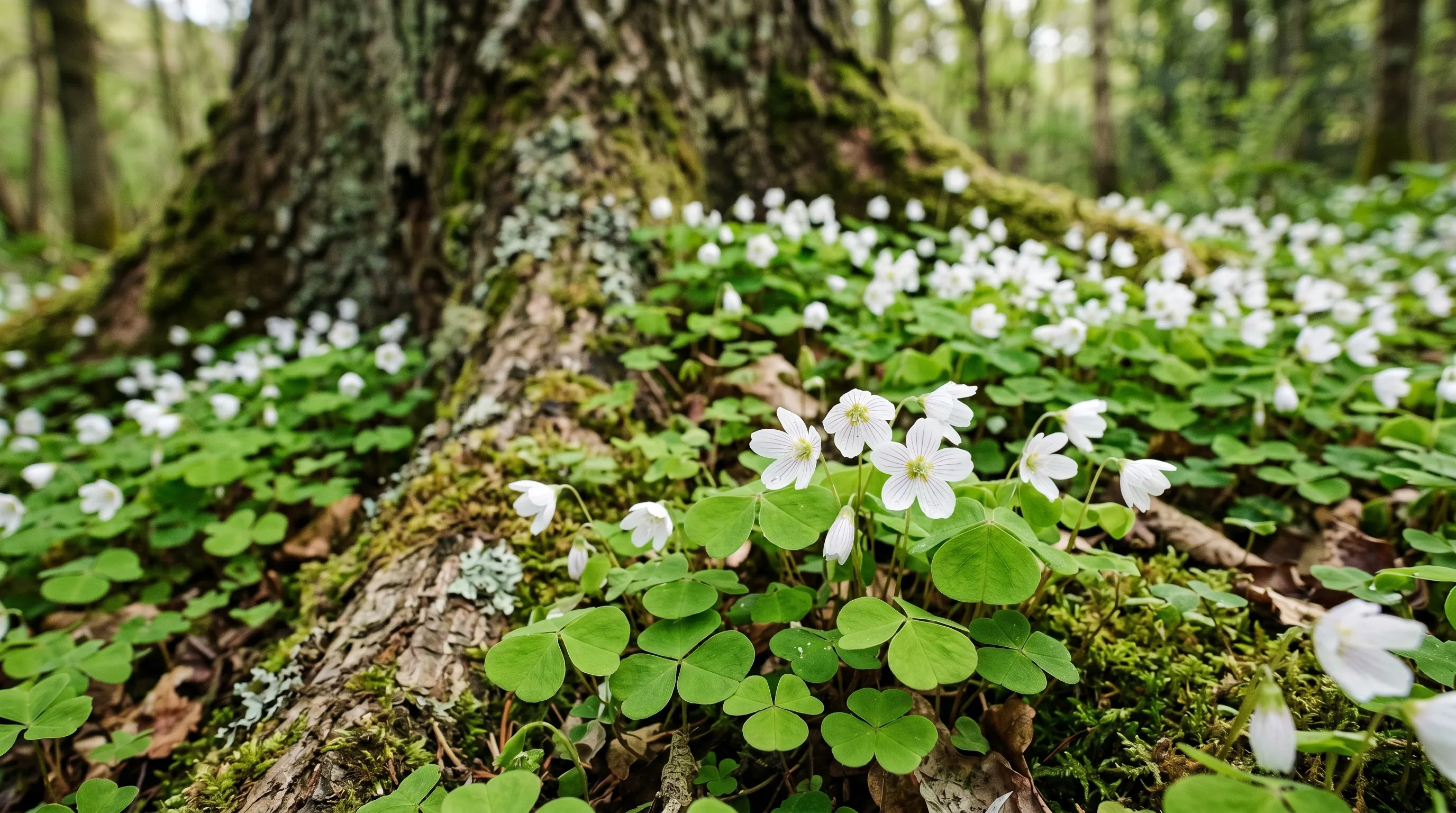
Wood sorrel’s heart-shaped leaflets are tangy and lemony. A few leaves are plenty to brighten a salad.
Edible weeds at a glance
| Weed | Best time to pick | What to eat | Lookalike risk |
|---|---|---|---|
| Dandelion | March to May | Leaves, flowers, roots | Low |
| Stinging nettle | March to May | Young tops, cooked | Low |
| Ground elder | March to May | Young leaves | High: hemlock |
| Chickweed | Most of the year | Leafy tips | Medium: scarlet pimpernel |
| Wild garlic | March to May | Leaves, flowers | High: lily of the valley |
| Garlic mustard | February to May | Young leaves | Low |
| Cleavers | February to April | Young shoots, cooked | Low |
| Hairy bittercress | Autumn to spring | Whole rosettes | Low |
| Fat hen | June to August | Young leaves, cooked | Medium: black nightshade |
| Wood sorrel | March to June | Leaves, in small amounts | Low |
How to store and use foraged weeds
Most leafy weeds wilt within a day. Keep them in the fridge wrapped in a damp tea towel and use them quickly.
- Freeze blanched nettles, ground elder or fat hen. Squeeze into balls and freeze for winter soups.
- Dry nettle leaves for tea. Our guide to drying herbs covers the methods.
- Make pesto with wild garlic or nettles and freeze it in ice cube trays.
Common mistakes when eating garden weeds
Guessing at umbrella-flowered plants. Hemlock and other deadly plants have white umbrella flowers. If you aren’t certain, don’t pick.
Skipping the garlic sniff test. Toxic lily of the valley grows beside wild garlic. Sniff every leaf.
Picking from sprayed or dog-walked ground. Choose clean beds and borders you know.
Picking too late. Most weeds turn bitter or coarse once they flower. Pick young.
Eating raw nettles. They still sting. Always cook them first.
Frequently asked questions
What is the most common edible weed in UK gardens?
Dandelion is the most common edible weed in UK gardens. The leaves, flowers and roots are all edible. Pick young leaves for salads before the plant flowers, when they’re least bitter.
Is it legal to forage weeds from my garden?
Yes, you can pick weeds from your own garden. On other land, picking leaves, flowers and fruit of common plants for your own use is generally fine. Uprooting wild plants on land that isn’t yours, without permission, is an offence.
Which plants look like wild garlic but are poisonous?
Lily of the valley, lords-and-ladies and autumn crocus can look similar. None of them smell of garlic. Crush each leaf and sniff before picking, and wash your hands between checks so the smell doesn’t linger.
Can you eat stinging nettle raw?
No, raw nettles still sting. Cook or blanch them in boiling water for about a minute first. Pick only the young top leaves in spring, before the plants flower.
When is the best time to forage edible weeds in the UK?
March to May is best for most leafy weeds. Leaves are young and tender before the plants flower. Chickweed and hairy bittercress can be picked through mild winters too.
How do you tell ground elder from hemlock?
Look at the stem and the leaves. Hemlock has a smooth stem with purple blotches and very finely divided, fern-like leaves. Ground elder has a green stem and broad, toothed leaflets in groups of three. If you’re unsure, don’t eat it.
Hungry for more free food? Browse the growing hub, then try our guide to edible hedgerows to plant your own forage.
Our team produces practical UK gardening guidance from source research, contributor records and established horticultural practice. Editorial standards are overseen by Matt W.