
Key takeaways
- Miscanthus is fully hardy and grows in most UK soils, from clay to chalk
- Plant in spring in the sunniest spot you have
- Leave the stems up all winter and cut them down to about 10cm in February or March
- 'Malepartus' is a good pick for reliable autumn plumes
- Divide big clumps in spring every few years to keep them healthy
- It looks great with rudbeckia, sedum and Verbena bonariensis
Miscanthus is a brilliant choice for a low-fuss garden that looks good all year. This grass gives you fresh green leaves in spring, silky plumes in late summer and autumn, golden autumn colour, and frosty winter seed heads. Plant it, enjoy it, and cut it down once a year. That’s about it.
What is miscanthus?
Miscanthus sinensis, often called silver grass, is a grass that dies back each winter and regrows in spring. It makes dense, upright clumps of arching leaves. From late summer, feathery plumes rise above the leaves, opening pink or wine-red and fading to silver.
Most garden types are varieties of Miscanthus sinensis. There’s also Miscanthus x giganteus, or elephant grass, a giant that’s even grown as a fuel crop. Garden miscanthus forms clumps, isn’t invasive and is fully hardy right across the UK. The RHS has lots of miscanthus varieties to browse, including several with its Award of Garden Merit.
 Miscanthus plumes glowing in low autumn sun. They last from late summer well into winter.
Best garden uses for miscanthus
Miscanthus fits almost any garden style. Its height, movement and changing colours make it a really useful plant.
Screening and privacy. A row of ‘Malepartus’ or ‘Gracillimus’ planted about 80cm apart makes a soft, living screen once established. Unlike a fence, it sways in the wind and gently filters the view. It works well alongside other screening plants for a layered boundary.
A single star plant. One big clump in a lawn or gravel makes a great focal point. ‘Morning Light’ is ideal, as its white-edged leaves glow when the sun is behind them and it holds a neat vase shape.
Mixed borders. Miscanthus gives a border height and structure. Plant it at the back, behind lower plants like sedum, geranium and rudbeckia, and let it catch the light above them.
Gravel gardens. It loves the free-draining conditions of a gravel garden. Once settled it rarely needs watering, and the dried plumes look great against stone.
Best miscanthus varieties for UK gardens
‘Morning Light’. Fine, narrow leaves with white edges that give the clump a silvery shimmer. A lovely medium-sized plant for borders or as a single feature.
‘Malepartus’. A taller type with wine-red plumes that fade to silver. It flowers reliably, even in cooler northern gardens, and turns lovely autumn shades.
‘Gracillimus’ (maiden grass). Very fine leaves in a graceful fountain shape. It flowers late and may not produce plumes in a cool summer, so grow it mainly for its leaves.
‘Kleine Fontane’. A compact choice for small gardens and narrow borders. It often flowers from late summer, earlier than many others, and does well in a big pot.
‘Zebrinus’ (zebra grass). Leaves with eye-catching yellow bands across them, which show best in full sun from midsummer. It can flop in rich soil, so it’s happier in poorer ground.
Miscanthus x giganteus (elephant grass). The giant of the family, with broad leaves and a huge, upright clump. It rarely flowers in UK gardens and is grown for sheer size and screening. Not one for small gardens.
If autumn plumes really matter to you, pick an earlier-flowering variety like ‘Malepartus’ or ‘Kleine Fontane’.
Miscanthus variety comparison table
| Variety | Size | Plumes | Best use |
|---|---|---|---|
| ’Morning Light’ | Medium | Silvery, late | Single feature, borders |
| ’Gracillimus’ | Medium | Silver, sparse | Leaves, screens |
| ’Malepartus’ | Tall | Wine-red to silver, reliable | Autumn colour, screens |
| ’Kleine Fontane’ | Compact | Pink to silver, early | Small gardens, pots |
| ’Zebrinus’ | Medium to tall | Silvery pink | Eye-catching feature |
| M. x giganteus | Very tall | Rarely flowers | Screening, scale |
How to plant miscanthus
Plant in spring, around April or May, once the soil has warmed up. That gives the roots a whole summer to settle in before winter.
Sun. Pick your sunniest spot. In light shade it grows thinner and flowers less.
Soil. Any ordinary garden soil is fine: clay, loam, chalk or sand. It doesn’t need rich soil. Avoid ground that stays waterlogged, though a bit of winter wet is fine. Our guide to plants for heavy clay has more on tricky soils.
Spacing. Allow 80-100cm between plants for a screen or drift. For a single plant, give it room to spread.
Depth. Plant at the same depth it was in the pot, without burying the crown. Firm it in, water well and spread a bark mulch around it to hold moisture.
Watering. Water in dry spells during its first summer. After that, it rarely needs watering.
Miscanthus care through the year
Miscanthus is one of the easiest plants in the garden. Once settled, the only real job is the yearly cut in late winter.
Spring (March to May). New shoots appear in April. A little garden compost as mulch is nice but not essential. Don’t feed it, as rich soil makes it floppy.
Summer (June to August). Nothing to do. It grows fast and needs no staking, feeding or spraying. Pests and diseases are rarely a bother.
Autumn (September to November). The plumes appear and the leaves turn gold and bronze. Leave everything standing.
Winter (December to February). The dry stems and plumes look wonderful with frost on them. Leave them standing until late winter, as they shelter insects and small birds.
 Miscanthus on a frosty January morning. The dried stems give the garden shape when everything else is bare.
How to cut back miscanthus
Cut miscanthus down to about 10cm in late February or early March. It’s the one job that really matters each year.
Timing. Cut before the new green shoots get going, so you don’t snip them. Don’t cut in autumn or early winter, as you’ll lose the winter display and leave the crown open to the wet and cold.
How. Shears are fine for young plants. For big, thick clumps, use a pruning saw or hedge trimmer. Tie the stems into a bundle with string before you cut, and clearing up is much easier.
What to do with the stems. They’re slow to rot, so shred them before adding them to the compost heap, or use them as mulch around shrubs. A bundle of hollow stems left in a sunny corner makes a home for solitary bees.
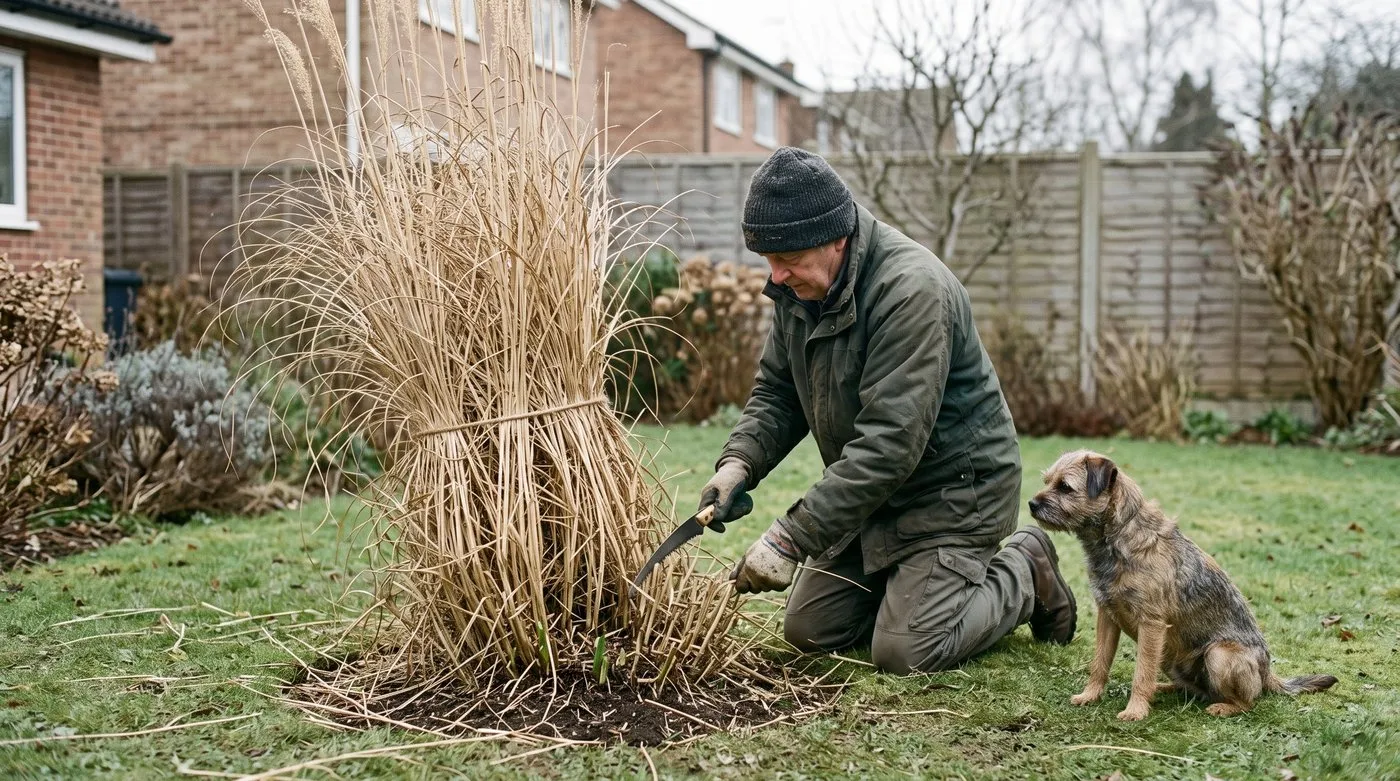
Tie the stems into a bundle before you cut, and clearing up is far easier. Do it before the new green shoots get going.
Dividing and propagating miscanthus
Divide big clumps every few years to keep them healthy and stop the middle dying out. It’s also the easiest way to get free plants.
When. April is ideal, just as new growth begins. Warm soil and spring rain help the pieces settle in fast.
How. Dig up the whole clump. Big old ones are heavy work, as the roots are dense. Lever it apart with two garden forks back to back, or cut through it with a sharp spade or an old bread knife. Make sure each piece has several healthy shoots.
Replanting. Plant the pieces at the same depth as before, water well and mulch. They’ll fill out in a couple of seasons, which makes this a free way to fill gaps or start a new screen. For ideas on what to plant with them, see our guide to border combinations.
Year-round interest: why miscanthus earns its space
Very few plants look good in every season. Miscanthus is one of them.
Spring. Fresh green shoots pop up from the cut stumps in April and grow fast. They look lovely next to fading spring bulbs.
Summer. By July it’s reached full height. The long, arching leaves sway and rustle in the lightest breeze. Striped and white-edged types like ‘Zebrinus’ and ‘Morning Light’ add colour too.
Autumn. This is its big moment. Silky plumes rise above the leaves and catch the low sun, while the leaves turn gold, amber and bronze.
Winter. The dry stems and plumes stand tall against winter skies, and frost makes them look magical. They also shelter insects and small birds.
Design combinations and companion plants
Miscanthus works with almost any planting style. Here are a few easy combinations.
Prairie border. ‘Malepartus’ at the back, Rudbeckia fulgida in the middle, Sedum ‘Herbstfreude’ at the front and Verbena bonariensis woven through. It’s at its best from late summer into autumn and still has shape in winter.
 A relaxed prairie border with miscanthus, rudbeckia and sedum beside a gravel path. It peaks in late summer and lasts into winter.
Cottage garden. ‘Morning Light’ behind a shrub rose, Salvia ‘Caradonna’ and lady’s mantle (Alchemilla mollis). The grass makes a calm backdrop that lets the flowers shine, and its silvery leaves glow at dusk.
Modern look. ‘Gracillimus’ in a big square planter, with Hakonechloa macra ‘Aureola’ underneath for a lovely mix of textures. Great on terraces and in courtyards.
Screening. A row of ‘Malepartus’ about 80cm apart makes a dense screen from early summer through winter. Plant it in front of a garden fence to soften it, or use it to divide one part of the garden from another.
Frequently asked questions
When should I cut back miscanthus in the UK?
Cut it down to about 10cm in February or March. Leave the stems standing through autumn and winter for shape, frosty seed heads and wildlife shelter. Cut before the new shoots get tall, so you don’t snip them. Shears work for small clumps, and a pruning saw for big old ones.
Does miscanthus grow well on clay soil?
Yes, miscanthus is happy on clay. Clay holds the moisture it likes, especially while it settles in, and its tough roots cope with heavy soil. Just avoid spots that stay waterlogged for long. A mulch after planting helps keep the soil moist.
How tall does miscanthus grow in the UK?
Anything from about 1m to over 2.5m, depending on variety. Compact types like ‘Kleine Fontane’ suit small gardens. ‘Gracillimus’ and ‘Morning Light’ are mid-sized. ‘Malepartus’ is taller, and Miscanthus x giganteus can shoot up well over head height. Plants reach full size after a few years.
Is miscanthus invasive in UK gardens?
No, garden miscanthus forms tidy clumps. Miscanthus sinensis varieties spread slowly outwards and don’t send out long runners. Miscanthus x giganteus spreads a little more but is easy to manage. Split big clumps every few years to keep them in check.
Can I grow miscanthus in shade?
Not really, as it needs full sun to do well. In part shade it grows thinner, may flop and flowers less. In deep shade it struggles. For shady spots, try Hakonechloa macra or Deschampsia cespitosa instead.
How do I divide miscanthus?
Divide it in spring as new growth starts. Dig up the whole clump and split it with two forks back to back or a sharp saw. Make sure each piece has several shoots and a good chunk of root. Replant at the same depth, water well and mulch.
What is the best miscanthus for a small garden?
‘Kleine Fontane’ is a great choice for small gardens. It stays fairly compact and often flowers earlier than many others. ‘Morning Light’, with its fine white-edged leaves, is another good pick. Skip Miscanthus x giganteus and tall types like ‘Malepartus’, and check the height on the label before buying.
Our team produces practical UK gardening guidance from source research, contributor records and established horticultural practice. Editorial standards are overseen by Matt W.


