Key takeaways
- Pennisetum alopecuroides, such as 'Hameln', is the hardy fountain grass to grow in UK borders
- Purple-leaved P. setaceum 'Rubrum' is tender, so treat it as a summer pot plant
- Give it full sun and free-draining soil, as winter wet kills it more often than cold
- Plant in late spring once the soil has warmed
- Leave the stems standing all winter, then cut back to about 10cm in late winter
- You may see it sold under its newer name, Cenchrus
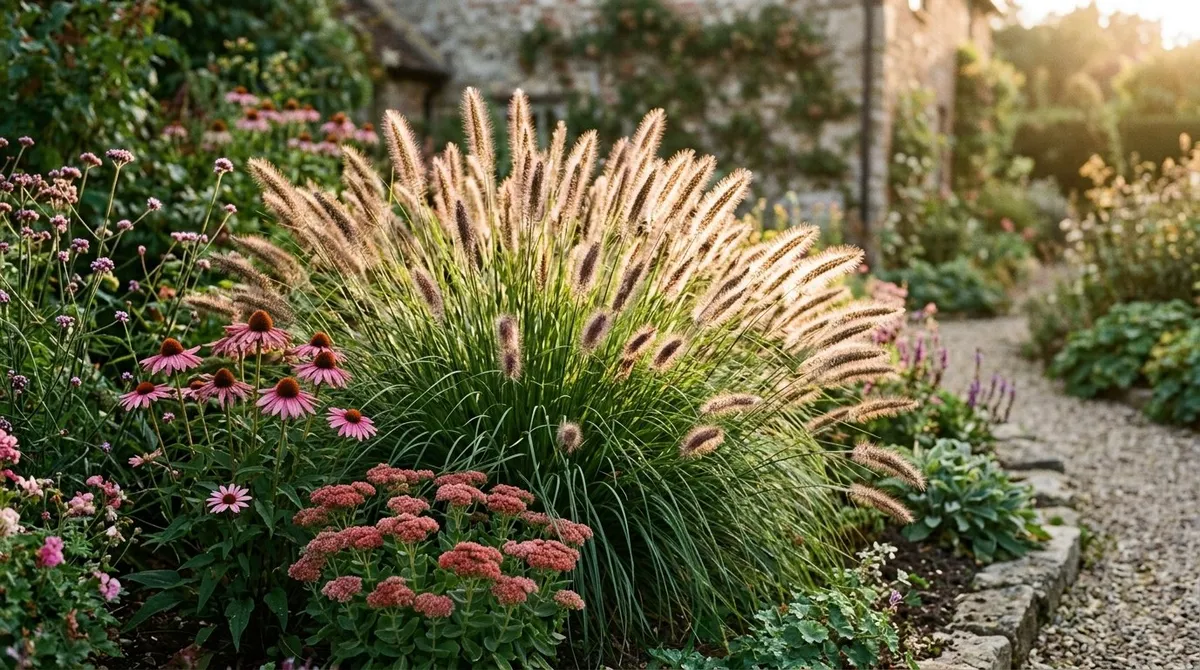
Pennisetum, or fountain grass, makes a soft fountain of leaves topped with fluffy bottlebrush plumes from late summer into autumn. They look magical with low sun behind them. The secret to success is choosing the right kind: hardy P. alopecuroides comes back every year in a sunny, well-drained spot, while purple ‘Rubrum’ is a tender summer plant.
You may also see these grasses labelled Cenchrus, their newer botanical name. For an overview of all the grasses you can grow, see our ornamental grasses guide.
Which pennisetum is hardy in the UK?
P. alopecuroides is the one to choose for a permanent border plant. It forms a neat clump with creamy to pinkish plumes from late summer, and the leaves turn golden in autumn. In free-draining soil it’s hardy in most of the UK.
P. orientale has the softest, pinkest plumes and a more delicate look. It’s less tough, so give it a warm, sunny, sheltered spot with sharp drainage. It’s best in milder gardens.
P. macrourum is tall, with narrow cream spikes. It spreads slowly by underground stems, so give it room. It also likes a sheltered spot.
P. setaceum ‘Rubrum’ has deep purple leaves and pink-purple plumes. It’s tender and won’t survive a UK winter outside, so grow it as a summer pot plant.
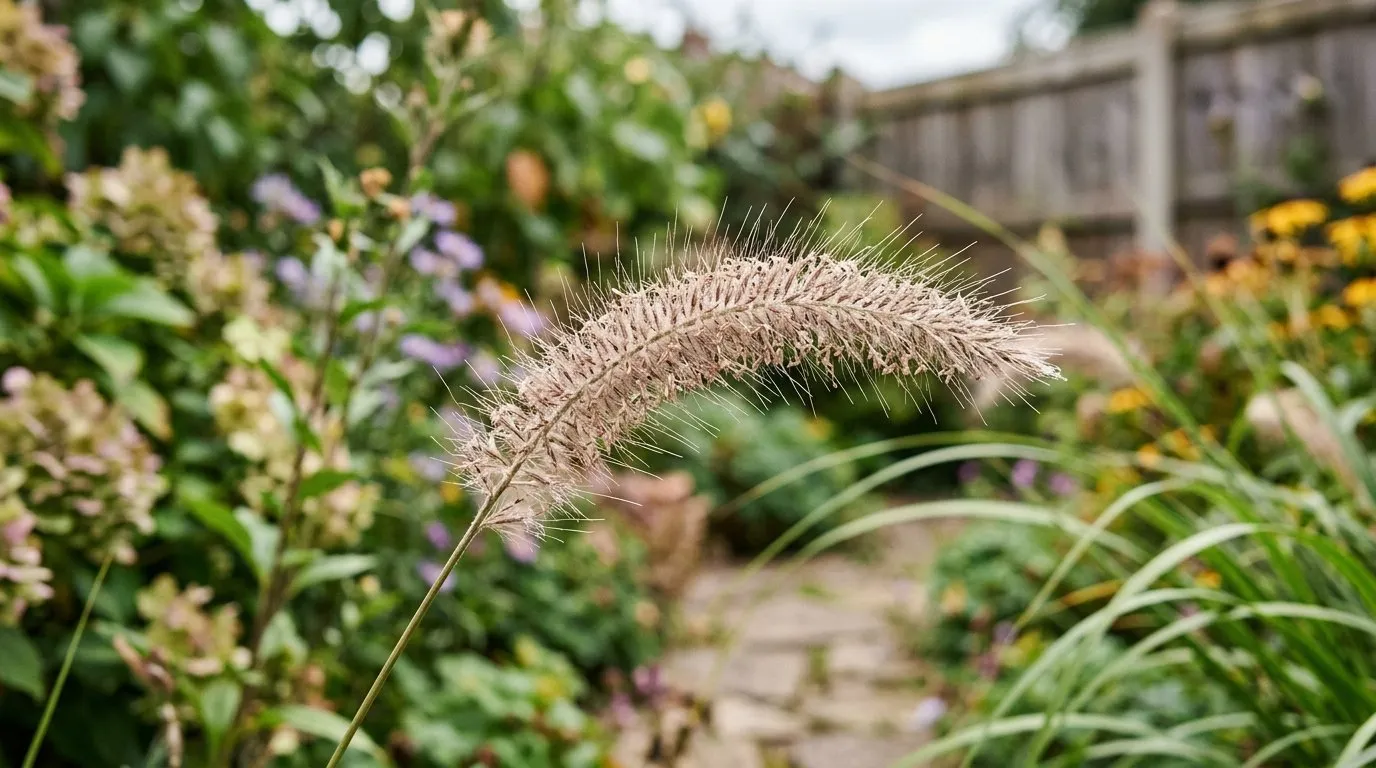
Each fluffy plume is soft to the touch and moves in the lightest breeze.
Best pennisetum varieties for UK gardens
| Variety | Height | Plumes | Hardy? | Good for |
|---|---|---|---|---|
| P. alopecuroides ‘Hameln’ | About 50-60cm | Creamy white | Yes | Borders, the easiest choice |
| P. alopecuroides ‘Little Bunny’ | About 30-40cm | Creamy white | Yes | Pots and path edges |
| P. alopecuroides ‘Cassian’ | About 70-80cm | Pink-tinged cream | Yes | Borders, good autumn colour |
| P. orientale | About 50-60cm | Soft pink | In mild, well-drained spots | Gravel and sunny borders |
| P. macrourum | Up to about 1.5m | Cream | In sheltered spots | Big borders, height |
| P. setaceum ‘Rubrum’ | About 1m | Pink-purple | No | Summer pots |
‘Hameln’ is the safest bet. It flowers reliably, stays compact and doesn’t flop. ‘Little Bunny’ is a sweet dwarf for small pots and the front of a border, though it takes a couple of years to bulk up.
For the showiest flowers, try P. orientale. Its pink plumes look lovely among drought-tolerant plants in a gravel garden.
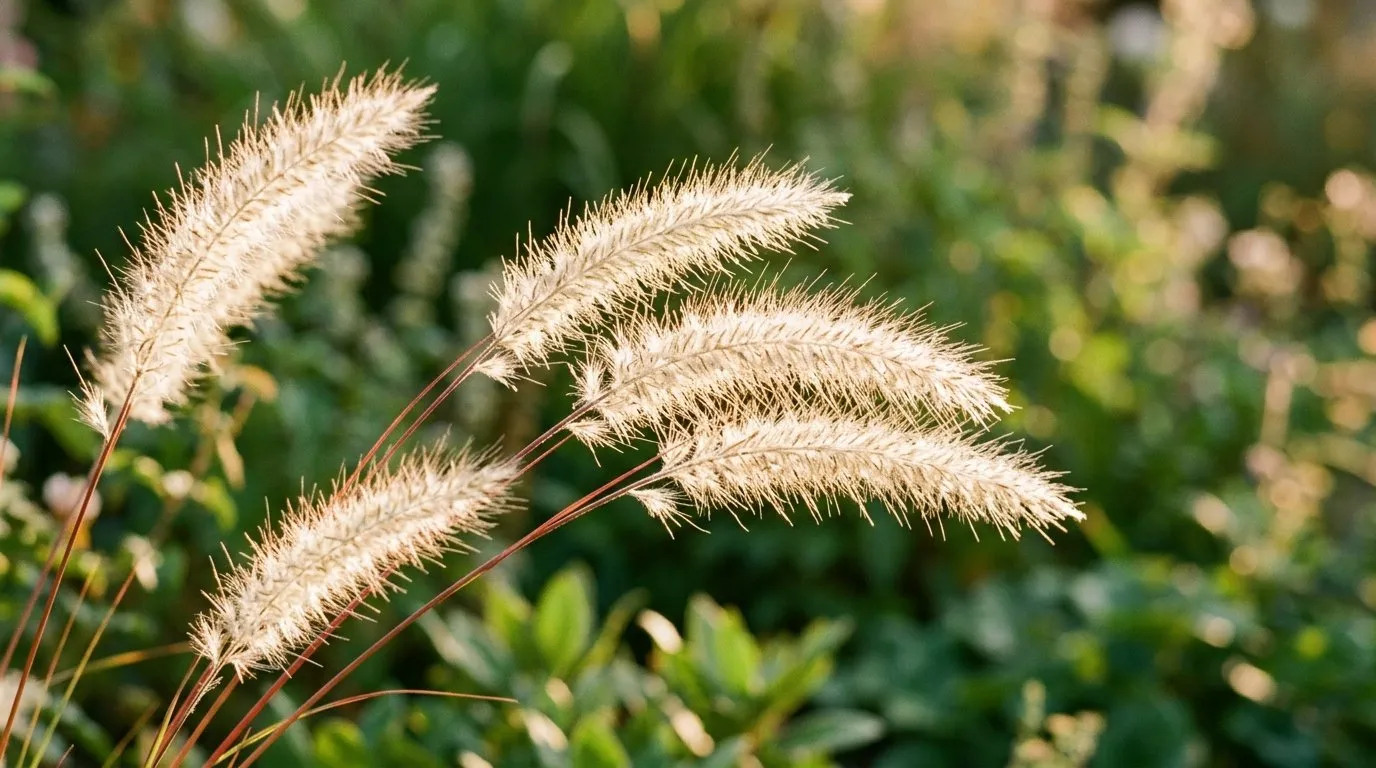
‘Hameln’ is compact, hardy and reliable, which makes it the best first fountain grass.
How to plant pennisetum fountain grass
Plant in late spring, from May into June, when the soil has warmed. Fountain grass is slow to get going in cold, wet ground.
- Choose a spot in full sun
- On heavy soil, dig in plenty of grit, or plant on a slight mound or raised bed
- Dig a hole wider than the pot and the same depth
- Set the plant so the crown sits level with the soil, not buried
- Water well, then mulch with gravel rather than bark, which holds moisture against the crown
Space ‘Hameln’ and P. orientale about 45-50cm apart, and ‘Little Bunny’ about 30cm apart. Give P. macrourum more room. In shade, plants flop and flower poorly.
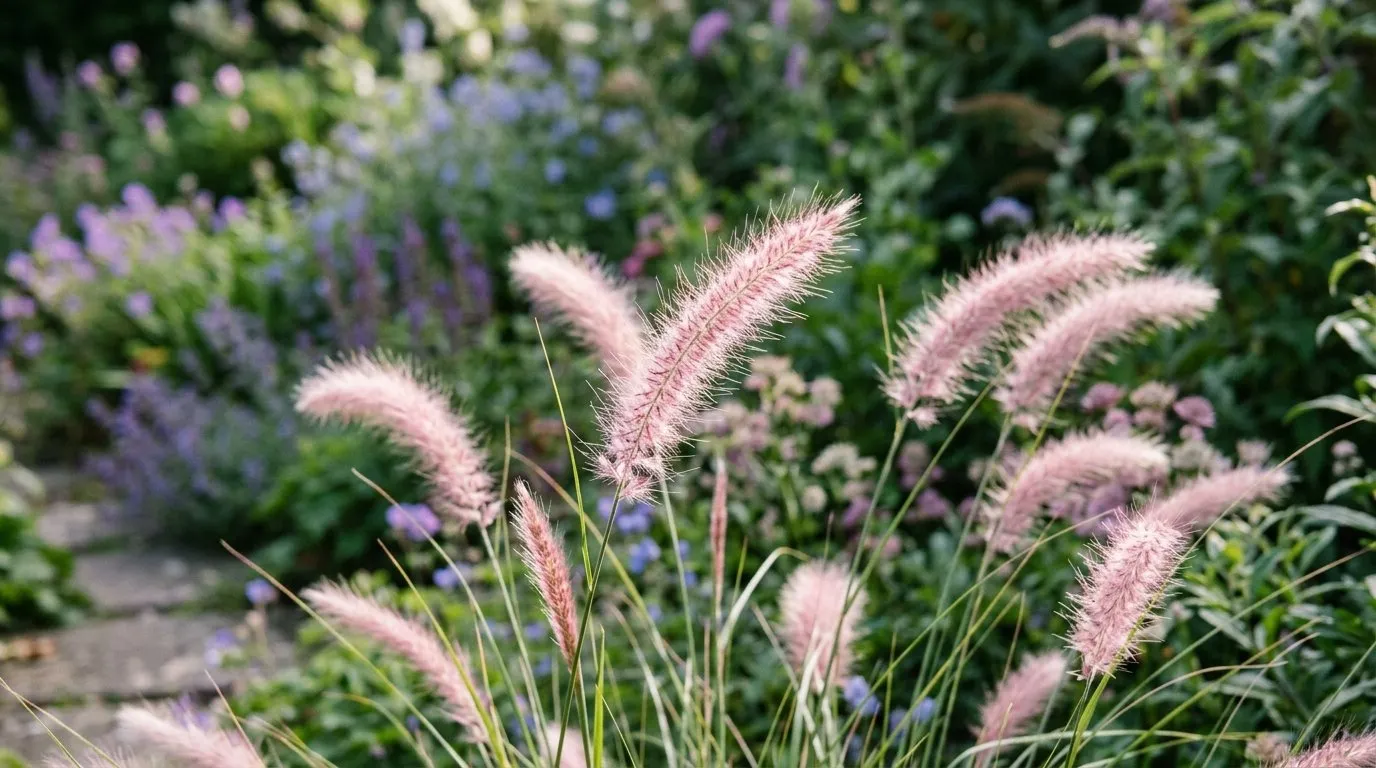
P. orientale has the softest pink plumes. Give it sun and sharp drainage for the best show.
Getting pennisetum through a UK winter
For hardy kinds, drainage matters more than cold. A plant in gritty, free-draining soil copes with winters that would rot the same plant in wet clay.
- Leave the stems standing. They help shed rain away from the crown, and frosted plumes look beautiful.
- Improve drainage. Add grit or grow in a raised bed on heavy soil.
- Pick a warm spot. South or west-facing borders suit the less hardy kinds best.
- Choose the right type. In colder northern gardens, stick to P. alopecuroides.
The standing stems also give shelter to insects over winter. For more plants that look good through the cold months, see our guide to plants for winter seedheads.
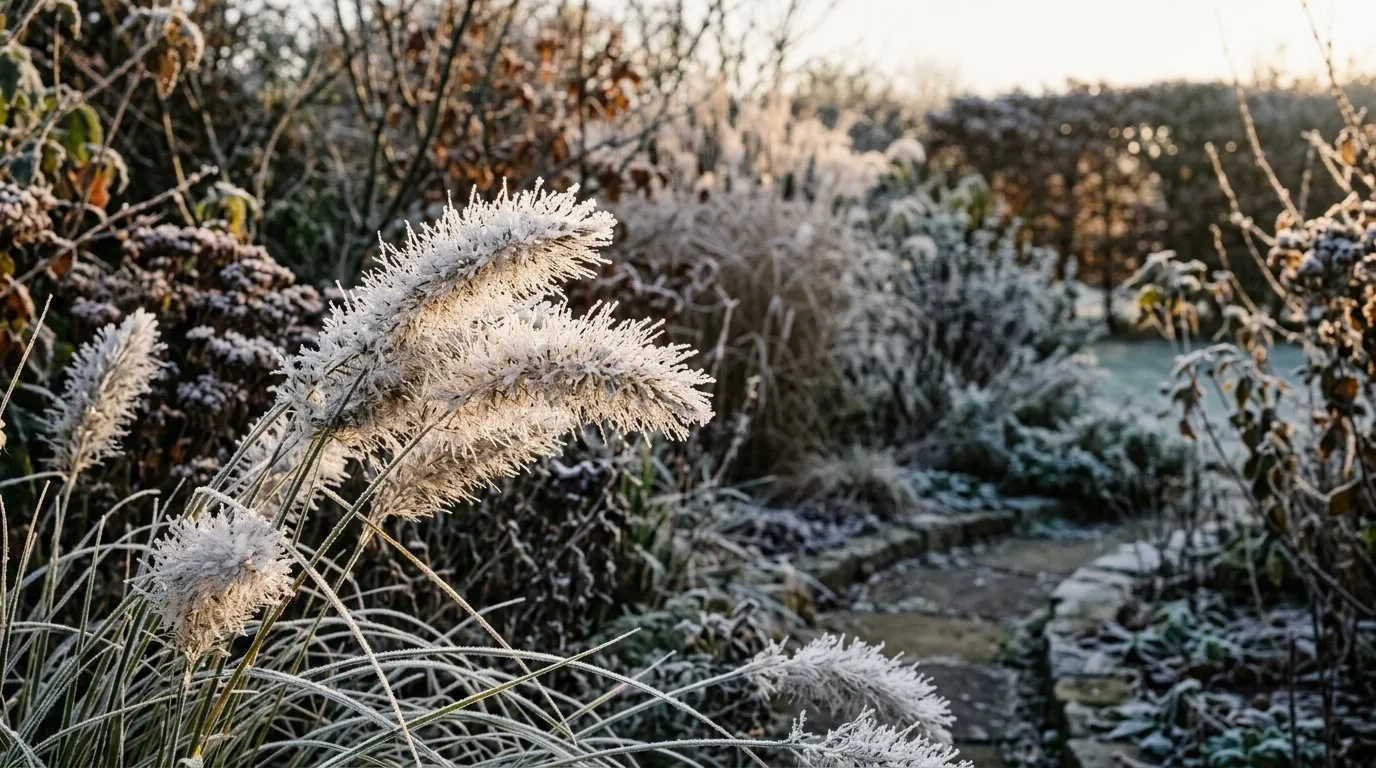
Leave the plumes standing through winter. They look lovely in frost and help keep rain off the crown.
How to overwinter tender pennisetum
P. setaceum ‘Rubrum’ must come indoors before the first frost, usually by late September or early October. No amount of fleece will save it outside.
Move the pot into a frost-free greenhouse, conservatory or bright porch. Water very sparingly, keeping the compost barely moist. Some leaves may die back, which is normal.
In spring, trim off dead leaves and start watering a little more. Harden it off and move it outside after the last frost, usually late May. Plenty of gardeners simply buy a fresh plant each spring instead, which is fine too.
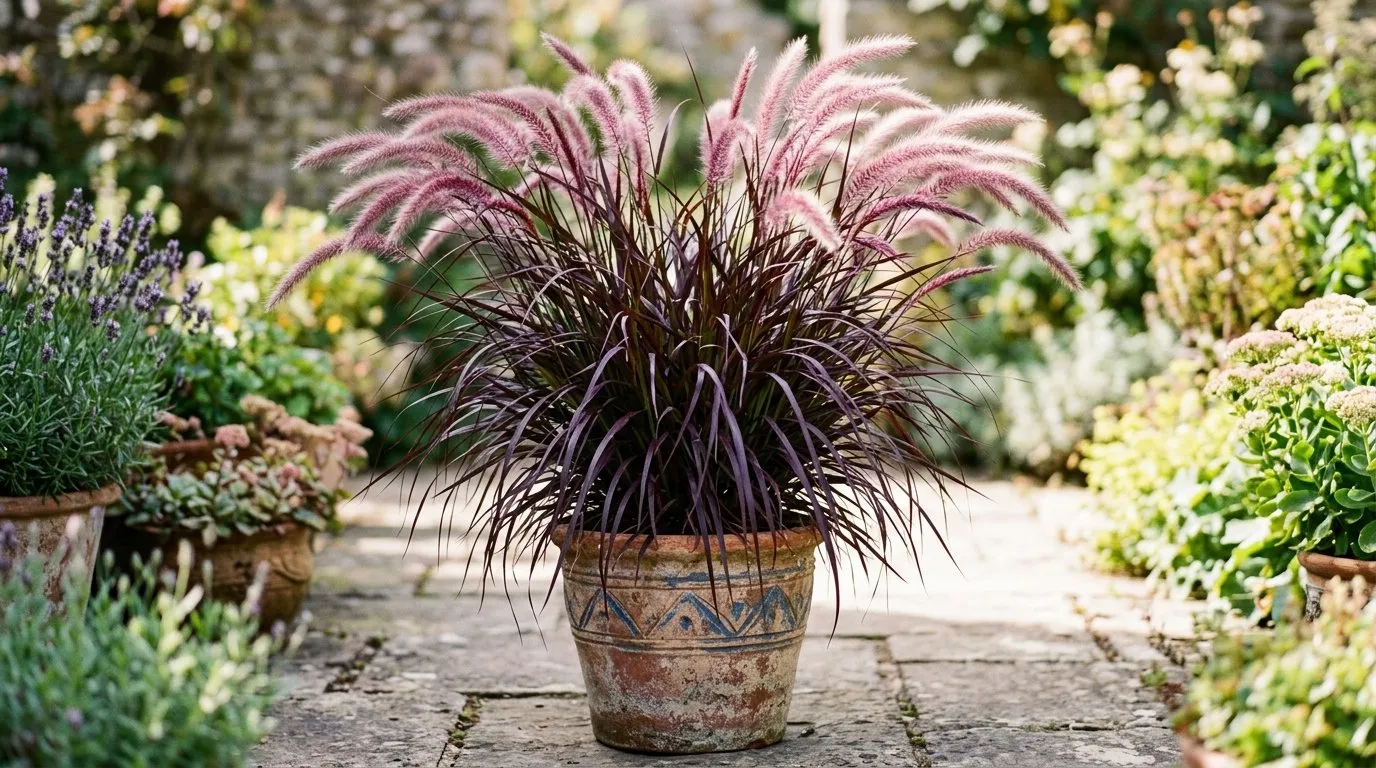
‘Rubrum’ is stunning in a summer pot, but it’s tender and needs bringing in before frost.
Cutting back and dividing pennisetum
Cut hardy pennisetum back in late winter, usually February or early March, before the new shoots grow through. Grab the stems in a bundle with one hand and cut across them about 10cm above the ground with shears. Compost the old leaves.
Don’t cut it back in autumn. That removes the stems that protect the crown from winter wet.
Divide big, tired clumps every few years in spring, as growth begins. Lift the clump with a fork and split it into pieces with a sharp spade, each with plenty of roots and shoots. Throw away the dead middle and replant the healthy outer pieces at the same depth. P. orientale dislikes disturbance, so it may take a season to recover.
Growing pennisetum in pots
Pennisetum looks great in a pot on a sunny patio.
- Use a pot at least 30-40cm across with good drainage holes
- Fill with loam-based compost, such as John Innes No 2, with some grit mixed in
- Water regularly in summer, but let the top dry out a little between drinks
- In winter, raise hardy kinds on pot feet and keep them out of the worst of the rain
For more patio ideas, see our guide to container gardening.
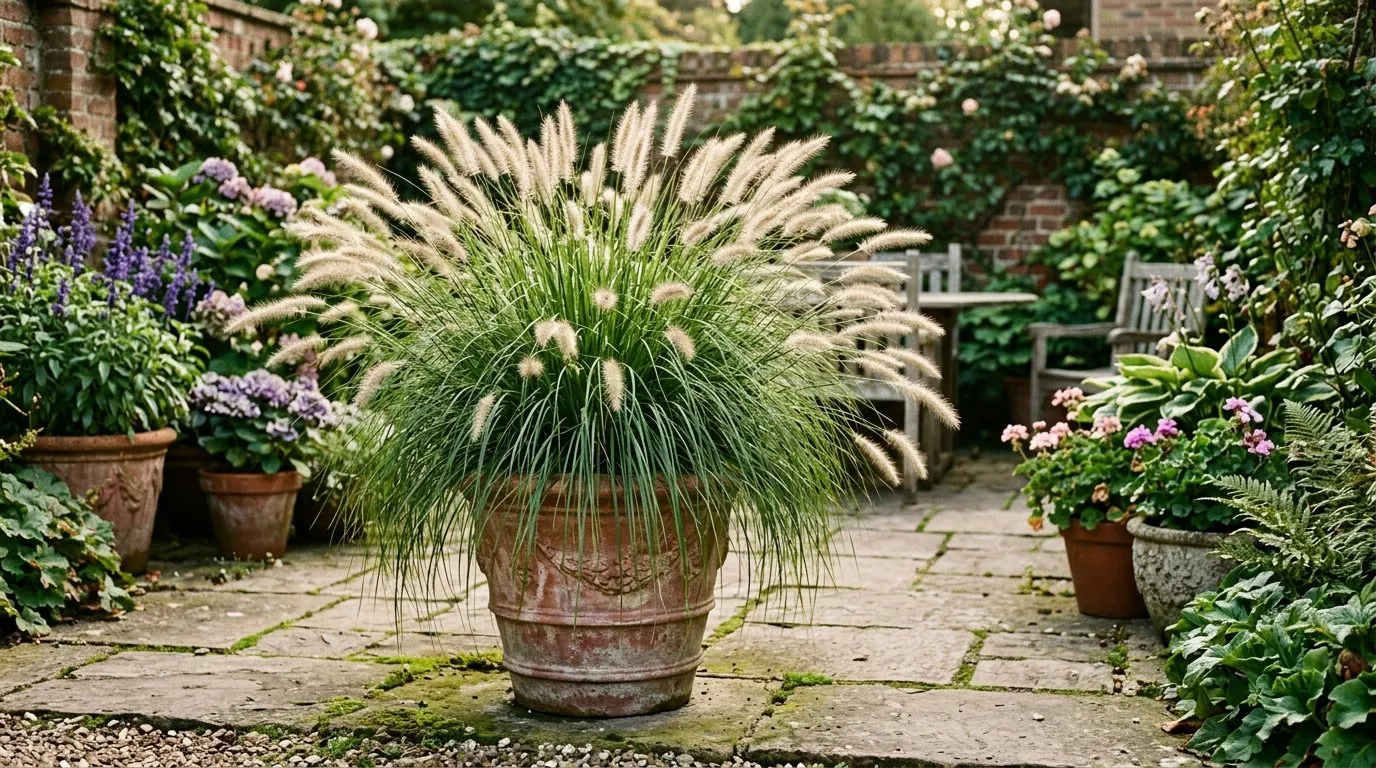
A big pot of fountain grass softens a paved patio. Hardy kinds can stay out all year if the pot drains well.
What to plant with pennisetum
Fountain grass looks best with other late-summer flowers that love sun and good drainage.
| Fountain grass | Good partners | Style |
|---|---|---|
| ’Hameln’ | Sedum, echinacea, rudbeckia, asters | Prairie-style border |
| P. orientale | Lavender, perovskia, salvia | Gravel or Mediterranean |
| P. macrourum | Verbena bonariensis, crocosmia, kniphofia | Tall sunny border |
| ’Rubrum’ | Cannas, dahlias | Bold summer pots |
For a natural, flowing look, our guide to prairie planting shows how to mix grasses and perennials. Other grasses that pair well include stipa feather grass in sun and hakonechloa for shadier spots.
Pennisetum month by month
| Month | What to do |
|---|---|
| January | Leave stems standing. Check ‘Rubrum’ indoors |
| February | Cut hardy kinds back to about 10cm |
| March | Finish cutting back. Divide large clumps as growth starts |
| April | Buy new plants. Prepare sunny, well-drained spots |
| May | Plant out once the soil warms. Move ‘Rubrum’ out after the last frost |
| June | Water new plants in dry spells |
| July | Plumes start to appear on many kinds |
| August | Peak plumes. Enjoy the movement |
| September | Plumes carry on. Bring ‘Rubrum’ in late in the month |
| October | Autumn leaf colour on hardy kinds |
| November | Leave everything standing |
| December | Enjoy frosted plumes |
Common pennisetum mistakes
Planting in wet, heavy soil. The crown rots over winter. Add grit or use a raised bed.
Cutting back in autumn. This leaves the crown open to winter wet. Wait until late winter.
Leaving ‘Rubrum’ out in winter. It’s tender and will die. Bring it in or replace it each year.
Planting in shade. Plants flop and flower poorly. Give it full sun.
Burying the crown. Plant at the same depth it was in its pot.
Frequently asked questions
Is pennisetum hardy in the UK?
Some kinds are and some aren’t. P. alopecuroides is hardy in most UK gardens if the soil drains well. P. orientale and P. macrourum need a sunny, sheltered spot. P. setaceum ‘Rubrum’ is tender and won’t survive a UK winter outside.
When should I cut back pennisetum?
Cut it back in late winter, before new growth starts. Leave the dead stems standing through winter, as they look good and help keep rain off the crown. Then cut them to about 10cm above the ground in February or early March.
Can I grow pennisetum in pots?
Yes, it grows well in pots. Use a loam-based compost with some grit added for drainage. Tender ‘Rubrum’ is best kept in a pot so you can move it indoors. Raise hardy kinds on pot feet in winter so they don’t sit wet.
How tall does pennisetum grow?
From about 40cm to 1.5m, depending on the type. Dwarf ‘Little Bunny’ stays small, ‘Hameln’ is a medium clump, and P. macrourum is the tallest. Tender ‘Rubrum’ usually reaches about 1m in a summer.
Why did my pennisetum die over winter?
Wet soil is the usual cause. Even hardy kinds rot if the crown sits in cold, soggy ground. Plant in free-draining soil or a raised bed, and don’t cut it back in autumn. If it was ‘Rubrum’, it’s tender and needed bringing in.
What is the difference between pennisetum and miscanthus?
Pennisetum is usually shorter, with soft bottlebrush plumes. Miscanthus grows taller, with open, feathery plumes, and copes better with heavier, damper soil. Pennisetum suits smaller gardens and pots, while miscanthus is better for height and screening.
Does pennisetum self-seed in UK gardens?
Sometimes, a little. After a warm summer, hardy fountain grass may drop a few seedlings nearby. They won’t always look like the parent, so pull them out while small if you don’t want them.
For a taller grass to add height and screening, read our guide to growing miscanthus, or browse all our plant guides.
Our team produces practical UK gardening guidance from source research, contributor records and established horticultural practice. Editorial standards are overseen by Matt W.