Key takeaways
- Hakonechloa is one of the few ornamental grasses that grows well in partial shade
- Golden 'Aureola' glows best in dappled shade; the plain green species copes with more shade
- Plant in spring in moist, humus-rich soil, 40-50cm apart, and water well for the first two summers
- It is slow, taking about three years to make a full arching mound, but never invasive
- Leave dead foliage over winter and cut it back in late February or early March
Hakonechloa, or Hakone grass, is a soft, arching grass that grows happily in partial shade, which most ornamental grasses won’t. Plant it in spring in moist soil rich in leaf mould, and give golden types dappled light. It’s slow to get going, but after a few years it forms a lovely cascading mound that changes colour through the seasons.
It looks a little like a tiny bamboo, with leaves that ripple in the lightest breeze. In autumn the foliage turns warm orange and bronze, so it earns its place for months.
What is hakonechloa?
Hakonechloa macra is a deciduous perennial grass from the moist, wooded mountains of Japan. It’s the only species in its genus. In the wild it grows on damp, rocky slopes in light woodland. That tells you what it wants in a UK garden: moisture, shelter, some shade and soil full of organic matter.
It grows from slowly creeping rhizomes (underground stems) rather than a tight clump. Each shoot carries a fan of narrow leaves that all lean the same way, which gives the plant its flowing, waterfall look. Small, airy flower heads appear in late summer.
The golden variety ‘Aureola’ holds the RHS Award of Garden Merit. It’s one of the most useful plants for brightening a shady corner, alongside others in the guide to the best plants for shade.

In late summer, fine, airy flower heads float above the leaves. They’re subtle, but they catch the light.
Best hakonechloa varieties for UK gardens
Start with ‘Aureola’ if you want gold, or the plain green species for deeper shade. Here’s how the main forms compare.
| Variety | Leaf colour | Best light | Good to know |
|---|---|---|---|
| Hakonechloa macra | Fresh green | Partial to fairly deep shade | Grows a little faster and copes with more shade |
| ’Aureola’ (AGM) | Gold, striped green | Dappled shade | The most popular. Great autumn colour |
| ’All Gold’ | Solid bright gold | Dappled shade | The brightest, but needs steady moisture |
| ’Nicolas’ | Green, turning orange-red in autumn | Partial shade | Compact, good for pots |
‘Aureola’ stays bright from spring to autumn, then turns warm apricot and bronze. A clump beneath a Japanese maple is a classic pairing.
‘All Gold’ is the most dazzling, but its leaves can scorch at the tips if the soil dries out. In a damp, shady border it’s a showstopper. Somewhere drier, choose ‘Aureola’.
The green species is underrated. It’s a little quicker to fill out and handles more shade than the golden forms, turning amber in autumn.

‘Aureola’ makes a neat golden mound. All the leaves lean the same way, like a little waterfall.
How to plant hakonechloa
Plant in spring, ideally April or May, in moist, humus-rich soil that doesn’t sit wet. Spring planting gives the slow roots a full season to settle.
- Dig a hole twice the width of the pot and the same depth.
- Mix plenty of leaf mould or garden compost into the soil you dug out.
- On heavy clay, add some grit to help drainage.
- Plant at the same depth it sat in its pot.
- Firm gently and water well.
- Mulch around the plant with leaf mould, keeping it off the shoots.
Space plants 40-50cm apart as single mounds. For a carpet of ground cover, plant closer, about 30cm apart, and expect a few years before they knit together. Water regularly through the first two summers, as young plants dislike drying out. Homemade leaf mould is ideal here, and the guide to making leaf mould shows how.
How much shade can hakonechloa take?
Hakonechloa grows well in partial shade, and the green species copes with quite deep shade. That puts it on a short list of grasses for shade, alongside Deschampsia and Luzula.
Golden forms need some light to stay gold. In heavy shade they turn lime-green. They’re still pretty, just less bright. The sweet spot for ‘Aureola’ and ‘All Gold’ is dappled shade, or a spot with a little morning sun and shade for the rest of the day. Under high deciduous trees works well.
Avoid the two extremes:
- Hot afternoon sun, especially on a south-facing bed, can scorch and bleach golden leaves.
- Dense, dry shade under evergreen trees or conifers starves the roots of water, and even the green species struggles. The guide to plants for dry shade has better options there.
How fast does hakonechloa spread?
Hakonechloa is slow. A small pot planted in spring makes a modest tuft by autumn. It roughly doubles in its second year and reaches its full arching mound by about year three.
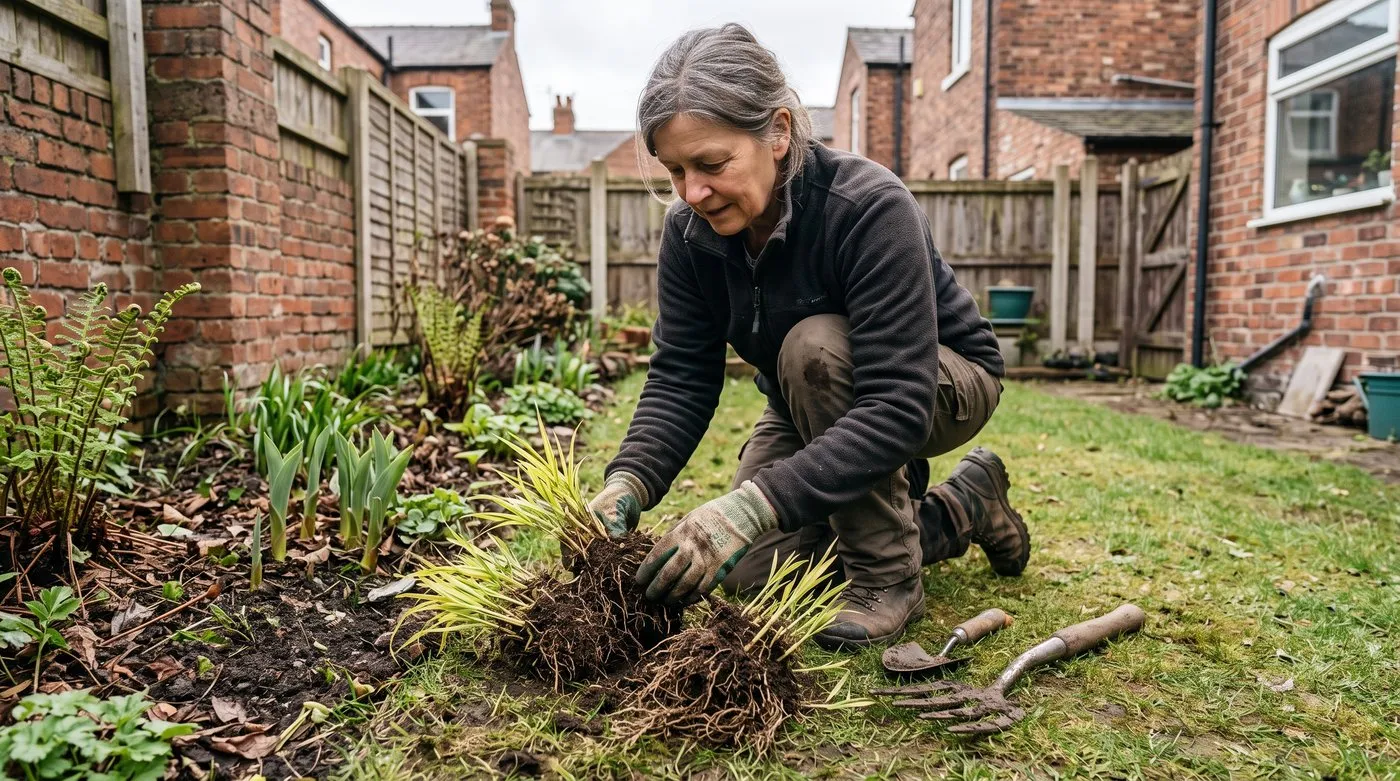
Spring is the time to split a crowded clump. Make sure each piece has both roots and fresh shoots.
That’s slower than many popular grasses, but it means it never becomes invasive. It just widens gradually into a broader mound. To fill space faster, buy larger plants in 2-3 litre pots, or plant smaller ones closer together and mulch between them to keep weeds down.
Once a clump is several years old and crowded, you can divide it. Lift it in spring as new shoots appear, then pull or cut it into a few good-sized pieces, each with roots and shoots. Replant at the same depth and water well. The guide to ornamental grasses compares how other grasses spread.
Autumn colour and winter care
Hakonechloa gives some of the best autumn colour of any perennial. From September, leaves shift from gold or green to amber, then bronze, copper and red. ‘Aureola’ and ‘Nicolas’ are especially good.
Winter care is simple. The leaves die back by late autumn. Leave them in place over winter, as they protect the crown and look lovely rimmed with frost. Cut the old foliage down to a few centimetres in late February or early March, before new shoots appear.

Autumn is when hakonechloa really shows off. Leave the faded leaves until late winter.
Feeding is light. A sprinkle of general fertiliser or fish, blood and bone in spring is plenty. A yearly leaf mould mulch usually does the job on its own. Avoid high-nitrogen feeds, which give soft, floppy growth.
Pests are rarely a problem. Slugs may nibble young spring shoots, but it’s far less of a target than hostas. In pots, check for vine weevil grubs in the compost when you repot.
Best companion plants for hakonechloa
Hakonechloa looks best with other shade lovers that like the same moist, leafy soil. Its fine, flowing leaves contrast well with big, bold foliage.
- Hostas are the classic partner. Blue-leaved types such as ‘Halcyon’ look great beside golden ‘Aureola’. The guide to growing hostas covers slug-proofing.
- Ferns add upright, feathery texture. Soft shield fern stays green over winter when the grass has died back.
- Heucheras add purple, bronze or silver leaves that make gold foliage glow.
- Brunnera ‘Jack Frost’, astilbe and tiarella like similar conditions and add spring or summer flowers.

Blue hostas and ferns make golden hakonechloa glow. Plant the grass at the front so it can spill forward.
For a Japanese-style garden, pair it with acers, moss and stepping stones. The grass softens hard edges and adds gentle movement.

Planted along a path, hakonechloa softens the stone edges and leans towards the light.
Growing hakonechloa in pots
Hakonechloa is one of the best grasses for pots. It spills over the rim, and because it grows slowly it won’t outgrow a container quickly. A golden form in a dark glazed pot brightens a shady patio or doorway.
Choose a pot at least 30cm wide with drainage holes. Fill with peat-free multipurpose compost mixed with some grit or perlite. Watering is the big difference from a border. Pots dry out fast, and hakonechloa dislikes drought, so check them often in summer. Feed lightly with a liquid feed in spring and early summer.
Pots get colder in winter than open ground. In very cold spells, move the pot against a house wall or wrap it. Repot or divide every few years in spring when the plant fills the pot.

A single ‘All Gold’ in a dark pot lights up a shady courtyard. Keep it well watered in summer.
Hakonechloa through the year
| Season | What to do |
|---|---|
| Late February to March | Cut old foliage down to a few centimetres before new shoots appear |
| April to May | Plant new plants. Divide crowded clumps. Mulch with leaf mould |
| June to August | Water in dry spells, especially pots and young plants |
| September to November | Enjoy the autumn colour. Plant in mild areas if needed |
| December to February | Leave the faded foliage in place to protect the crown |
Common mistakes with hakonechloa
- Hot, dry spots. Full afternoon sun and dry soil scorch golden leaves. Give it moist soil and some shade.
- Giving up too soon. It’s slow in the first year or two. Water, mulch and be patient.
- Dense, dry shade. Under conifers it struggles. Choose a moist, lighter spot.
- Cutting back in autumn. Leave the old leaves until late winter, as they protect the crown.
Frequently asked questions
Does hakonechloa grow in full shade?
The green species copes with quite deep shade; golden forms prefer dappled shade. In heavy shade, ‘Aureola’ and ‘All Gold’ turn lime-green rather than gold. Avoid dense, dry shade under evergreen trees, where even the species struggles.
How fast does hakonechloa spread?
Very slowly, by short underground stems. A small plant usually takes about three years to form a full, arching mound. It is not invasive and stays where you put it. Divide large clumps in spring if you want more plants.
Is hakonechloa hardy in the UK?
Yes, it is fully hardy across the UK. It needs no winter protection in the ground. The leaves die back in late autumn and new shoots appear in spring. Pots are more exposed, so move them against a house wall in very cold spells.
When should I plant hakonechloa?
Spring is best, from April to May. This gives the slow roots a whole season to settle before winter. Early autumn planting can work in milder areas on well-drained soil. Water regularly through the first summer whenever you plant.
Why is my hakonechloa not growing?
Slow growth in the first year or two is normal. It’s busy making roots. If it still struggles, check for dry soil, hot afternoon sun or heavy, compacted ground. Mulch with leaf mould and water in dry spells.
Can I grow hakonechloa in a pot?
Yes, it is one of the best grasses for pots. Use a container at least 30cm wide with drainage holes and peat-free compost with some grit or perlite. Pots dry out fast, so water regularly in summer and feed lightly in spring and early summer.
How do I divide hakonechloa?
Divide it in spring as new shoots appear. Lift the clump with a fork and pull or cut it into a few good-sized pieces, each with roots and shoots. Replant at the same depth in soil enriched with compost or leaf mould, then water well.
Ready to plant up the rest of your shady corner? Read the guide to growing heuchera, or browse more plant guides.
Our team produces practical UK gardening guidance from source research, contributor records and established horticultural practice. Editorial standards are overseen by Matt W.