Key takeaways
- Echinops flowers in mid to late summer with round, steel-blue heads
- Give it full sun and well-drained soil; it rots in wet winter ground
- Once settled it copes well with dry spells and poor soil
- Support taller types early, before the stems start to lean
- Bees and butterflies love it, and the heads dry beautifully
- Divide congested clumps in spring, or take root cuttings in winter
Echinops, or globe thistle, is the plant with the perfectly round, steel-blue flower heads that bees can’t resist. It adds a bold, spiky shape to a summer border and looks great with grasses. It is tough, copes well with dry spells and the heads dry beautifully for the house.
The main things it needs are sun and good drainage. This guide covers which echinops to choose, where to plant it, growing it from seed, staking, dividing and drying the flowers.
Which echinops should I grow?
There are several good echinops for UK gardens. They differ mainly in height and colour.
| Type | Rough height | Flower colour | Good for |
|---|---|---|---|
| Echinops ritro | 60-90cm | Steel-blue | Middle of a border, smaller gardens |
| E. ritro ‘Veitch’s Blue’ | 60-90cm | Deep blue | Strong colour |
| E. bannaticus ‘Taplow Blue’ | 1-1.5m | Bright blue | Middle to back of a border |
| E. bannaticus ‘Blue Globe’ | About 90cm | Blue | Smaller gardens |
| E. sphaerocephalus ‘Arctic Glow’ | 1-1.5m | White | White schemes, back of border |
Echinops ritro is a great starting point for most gardens. For something taller and bolder, choose ‘Taplow Blue’. The white ‘Arctic Glow’ has dark stems and silvery-white heads.

Each globe is made of lots of tiny flowers packed together. Bees work their way round the whole ball.
Where to plant echinops
Echinops needs full sun and well-drained soil. It grows happily in poor, stony or chalky ground. What it can’t stand is winter wet, which rots the crown.
- On heavy clay, dig in grit or grow it in a raised bed.
- On sandy or stony soil, it’s in its element.
- Skip rich feeding, as lush soil gives soft stems that flop.
Plant in spring or autumn, about 45-60cm apart. Groups of three or five look best. Once settled, it copes well with dry spells and rarely needs watering.
Gardener’s tip: Check the spot after heavy rain. If water still sits on the surface hours later, it’s too wet for echinops. Choose a drier place or build a raised bed.

Globe thistles look brilliant with grasses and heleniums in a naturalistic border.
How to grow echinops from seed
Echinops is easy to grow from seed. Sow in spring, in a greenhouse, cold frame or on a bright windowsill.
- Fill a pot or tray with seed compost.
- Sow the seed thinly and cover with a thin layer of compost or vermiculite.
- Water gently and keep it moist, but not soggy.
- Prick out seedlings into their own pots once they’re big enough to handle.
- Grow them on, harden them off, then plant out in late spring or early summer.
Seed-raised plants usually flower in their second summer. Named varieties may not come true from seed, so buy plants if you want a particular one.

Young echinops already have the silvery, spiky leaves of the grown-up plant.
Staking tall echinops
Shorter types such as Echinops ritro usually stand up on their own. Taller types can lean or collapse after heavy rain or wind, especially in rich soil.
Put supports in early, in late spring, before the stems start to lean. Once a stem has flopped, it’s hard to get it upright again. Good options include:
- Linked metal stakes or plant rings, for tall clumps.
- Twiggy sticks, pushed in round the clump while it’s still small.
- A single cane for an odd tall stem.
Our guide on how to stake tall perennials shows each method.

Support put in early (left) keeps tall stems upright. Without it, a clump can flop after one wet, windy night (right).
Looking after echinops through the year
Echinops is easy going once established.
- Spring: Clear away old stems. A light mulch is plenty, with no need for feeding.
- Summer: Put in supports early. Water new plants in dry spells.
- Late summer: Cut heads for drying, or leave them for the bees and birds.
- Autumn: Cut stems down, or leave the seedheads standing for winter interest.
Some types self-seed. Cut off the heads before the seed ripens if you don’t want seedlings.
Wear gloves when handling echinops, as the leaves and stems are prickly.
Dividing echinops and taking root cuttings
Divide echinops when clumps get crowded or flower less, usually after several years. Do it in spring, as new growth appears.
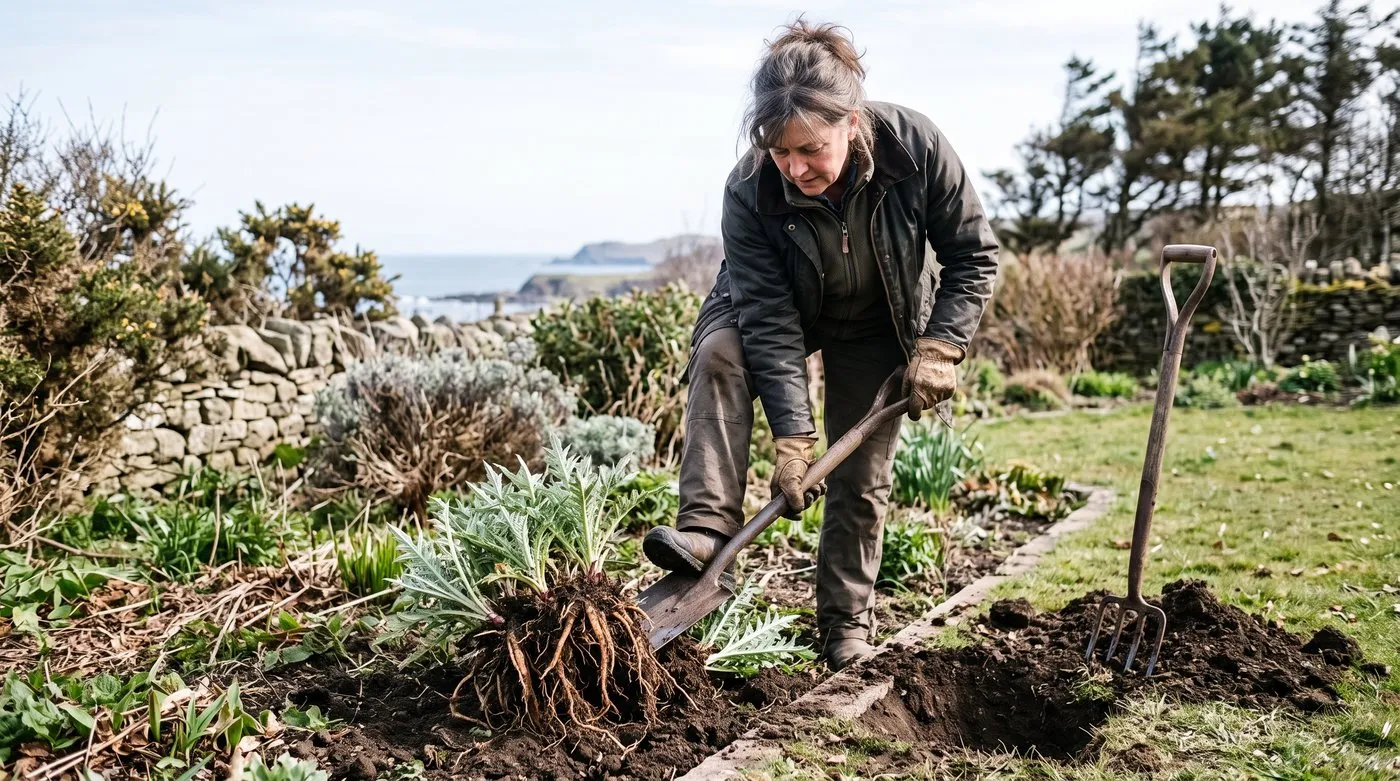
Dig deep and wide, then split the clump so each piece has shoots and plenty of root. Gloves help with the prickles.
Echinops has deep roots, so dig widely and deeply around the clump. Split it with a spade into pieces, each with shoots and a good amount of root. Replant straight away and water well.
You can also take root cuttings in winter. Cut pencil-thick roots into short lengths and push them upright into pots of gritty compost. Keep them in a cold frame until new shoots appear. Our guide to plant propagation by cuttings and division explains both methods.
Echinops for bees and butterflies
Echinops is a brilliant plant for bees. Bumblebees and honeybees work their way round the round heads, often lingering for ages. Butterflies and other insects visit too.
It flowers in mid to late summer, which helps keep pollinators fed as earlier flowers fade. Leave some heads after flowering, as birds such as goldfinches may visit for the seed. For more ideas, see our list of bee-friendly garden plants.
Cutting and drying echinops
Echinops is excellent for both fresh and dried arrangements. Wear gloves, as the stems are prickly.
For fresh flowers, cut when the heads have turned blue. Strip the lower leaves and stand the stems in water somewhere cool for a few hours before arranging.
For drying, cut stems when the heads are well coloured but before the tiny flowers fully open. Fully open heads tend to shed. Tie small bunches and hang them upside down in a dry, airy place out of direct sun. They are ready when the stems snap cleanly.

Dried echinops keeps its shape for months. It mixes well with dried lavender and grasses.
Common echinops mistakes
- Planting in shade. It flowers poorly and stems lean towards the light.
- Wet, heavy soil. Crowns rot in winter. Add grit or use a raised bed.
- Overfeeding. Rich soil gives soft stems that flop.
- Staking too late. Put supports in before the stems start to lean.
- Drying heads too late. Cut before the flowers fully open, or they fall apart.
Echinops month-by-month calendar
| Month | What to do |
|---|---|
| January-February | Take root cuttings. Order seed or plants |
| March-April | Clear old stems. Divide crowded clumps. Sow seed |
| May | Put in supports for tall types. Plant out young plants |
| June | Water new plants in dry spells |
| July-August | Flowering. Cut heads for the vase or drying |
| September | Leave seedheads or cut them before they shed seed |
| October-November | Plant new echinops. Cut stems down or leave for winter |
| December | Leave seedheads standing for winter interest |
Plants to grow with echinops
Echinops looks best with plants that share its love of sun and good drainage.
- Ornamental grasses, for soft movement. See our prairie planting guide.
- Yellow and orange daisies, such as coreopsis and heleniums. Our guide on growing coreopsis has more.
- Other drought-tolerant plants. See our list of drought-tolerant plants.
- Red hot pokers, for a bold contrast in shape. See our guide to growing kniphofia.
Browse more border plants in our plants hub. Now you know how to grow echinops, read our guide to growing sea holly, another spiky blue favourite for dry, sunny spots.
Frequently asked questions
When does echinops flower in the UK?
Usually from July to September, depending on the type. The round heads start grey-green, turn steel-blue as they open, then fade to silvery-grey. The seedheads stay attractive into autumn.
How do you grow echinops from seed?
Sow seed in pots in spring, in a greenhouse or on a windowsill. Prick seedlings out into their own pots and plant out once they’re well rooted. Seed-raised plants usually flower in their second summer.
Is echinops a thistle?
Not a true thistle, though they’re in the same plant family. Its prickly leaves look thistle-like, which gives it the name globe thistle. It is a garden plant, not a weedy native thistle.
Does echinops need staking?
Shorter types usually stand on their own. Taller types can lean or flop in wind and rain, especially in rich soil. Put supports in early, before the stems start to lean.
How often should you divide echinops?
Only when clumps become congested or flower less. Divide in spring as new growth appears. Each piece needs shoots and a good amount of root. Echinops has deep roots, so dig widely and deeply.
Does echinops self-seed?
Yes, some types self-seed, especially taller kinds. Cut off the heads before the seed ripens if you don’t want seedlings. Leave a few if you’d like more plants.
Our team produces practical UK gardening guidance from source research, contributor records and established horticultural practice. Editorial standards are overseen by Matt W.