Key takeaways
- Give red hot pokers full sun and sharp drainage. On clay, dig in plenty of grit and plant on a slight mound
- Plant in spring with the crown level with the soil, never buried, 45-60cm apart
- Mix early, mid and late varieties for spikes from early summer into October
- Leave the foliage on over winter and tie it loosely upright to keep the crown dry
- Divide crowded clumps in April or May every four or five years, never in autumn
Red hot pokers (kniphofia) are easy, long-lived perennials once you get one thing right: drainage. Give them full sun and gritty, free-draining soil and they’ll throw up their torch-like spikes every summer for years. Sit them in cold, wet clay all winter and the crown rots.
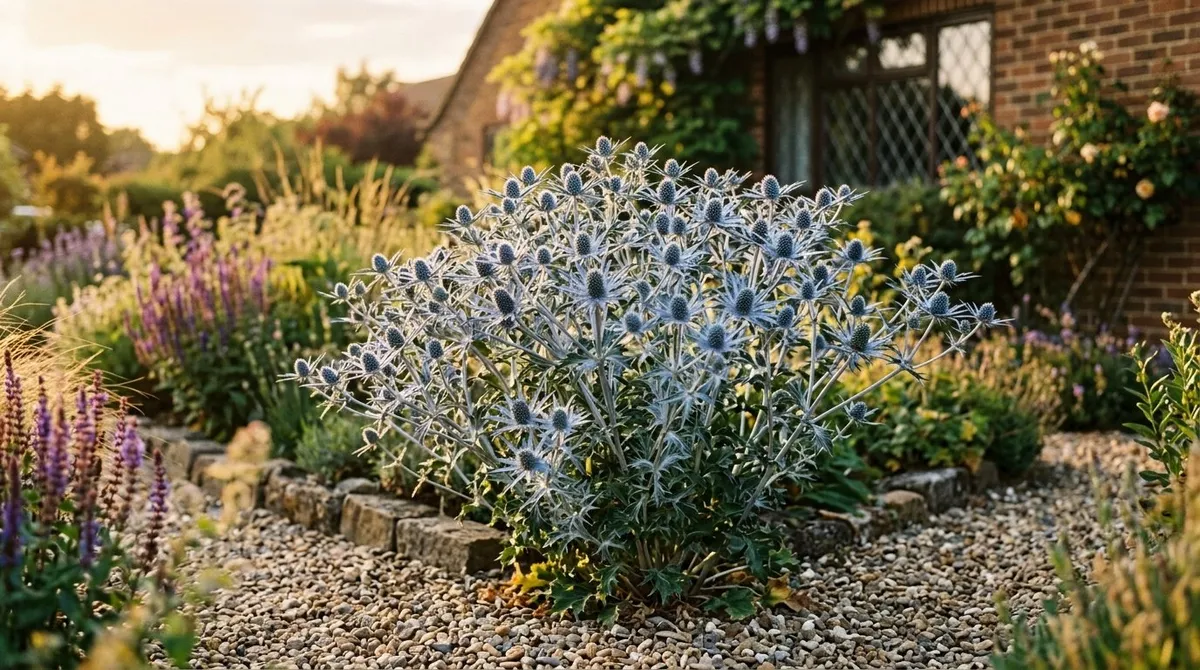
They look exotic, but they’re tougher than they seem. Most are hardy across the UK, cope well with drought once settled and love poor, sandy or coastal soil. This guide covers choosing varieties, planting, winter care and dividing. If you’re planning a dry, sunny border, you might also like our guides to growing echinops (globe thistle) and sea holly, which enjoy the same conditions.
Which red hot poker varieties should you grow?
Pick two or three varieties that flower at different times and you’ll have spikes from early summer into October. The classic look is a two-tone spike: red buds at the top opening to yellow flowers below, like a poker glowing in a fire. Modern varieties also come in plain lemon, coral, orange and cream.
| Variety | Height | Colour | Flowers |
|---|---|---|---|
| ’Early Buttercup’ | About 90cm | Yellow from orange buds | Early summer |
| ’Royal Standard’ | About 1m | Scarlet to yellow | Mid to late summer |
| ’Alcazar’ | About 1m | Flame orange | Summer |
| ’Tawny King’ | About 1m | Bronze buds, cream flowers | Summer to early autumn |
| ’Bees’ Lemon’ | About 1m | Lemon yellow | Late summer to autumn |
| ’Percy’s Pride’ | 1-1.5m | Greenish yellow | Late summer to autumn |
| ’Nancy’s Red’ | About 60cm | Coral red | Summer |
‘Royal Standard’ is the traditional red-and-yellow poker most people picture. ‘Tawny King’ and ‘Bees’ Lemon’ are softer and blend well with grasses. For a small garden or a pot, start with compact ‘Nancy’s Red’.

The classic two-tone spike beside a lemon type. Mixing colours and flowering times keeps the show going for months.
What soil do red hot pokers need?
Red hot pokers need sharp drainage more than anything else. They grow on free-draining slopes in southern Africa, and their fleshy crowns hate sitting wet. In a UK winter, a crown in soggy soil can rot from the centre out.
They aren’t fussy about soil type or acidity. Poor, sandy, stony and seaside soils all suit them. Avoid rich, heavily manured ground, which gives soft leaves and fewer flowers.
On heavy clay, dig in plenty of horticultural grit and plant on a slight mound so water drains away from the crown. Our guide to improving clay soil explains how. On really wet ground, grow them in a raised bed or a pot instead. Their love of grit makes them a natural for a gravel garden.
How to plant red hot pokers
Plant in spring, from April to early June. The soil is warming up and the plant has a whole season to root before its first winter. Pot-grown plants can go in during summer if you keep them watered, but avoid autumn planting on cold or wet soil.
- Dig a hole twice the width of the rootball.
- On clay, mix grit into the soil you put back, and add a layer of grit in the base.
- Set the plant so the crown sits level with the soil surface. Never bury it, as a buried crown holds water and rots.
- Tuck a handful of grit around the crown.
- Firm gently and water in well.
Space most varieties 45-60cm apart, and the tallest up to 75cm. Air moving around the crowns helps keep rot away. Crowding is also a common reason clumps stop flowering, so resist the urge to plant tight for instant effect.
Watering, feeding and deadheading
Water new plants regularly through their first summer, especially in dry spells. After that, red hot pokers are properly drought tolerant and rarely need watering. They sit happily among other drought-tolerant plants in a low-water border.
Feed lightly. A sprinkle of general-purpose fertiliser in spring is plenty. High-nitrogen feeds push out leaves at the expense of flowers. A spring mulch of composted bark helps hold moisture, but keep it clear of the crown.
Cut faded spikes off at the base. This tidies the clump and stops it putting energy into seed. Some varieties then send up extra spikes later in the season.
How to look after red hot pokers in winter
Leave the foliage on over winter. It sounds untidy, but the leaves act like a little thatch over the crown, shedding rain and keeping off frost. Cutting them hard in autumn leaves the crown open to exactly the cold, wet conditions that cause crown rot.
In November, gather the leaves and tie them loosely upright with soft twine. Water then runs off the outside instead of into the centre. In March, once new growth shows, cut the old leaves back to about 10cm and clear away dead material.
Don’t move red hot pokers into shade or a sheltered damp corner to “protect” them. Shade means fewer flowers, and a still, damp spot holds water around the crown. The fix is drainage, not warmth. In very cold inland gardens, a loose layer of dry straw tucked around the crown, not over it, gives a bit of extra cover.

Tying the leaves loosely upright in November sends rain off the outside of the clump, keeping the crown drier.
How to divide red hot pokers
Divide a clump in April or May, as new growth starts. That gives the pieces a full season to settle before winter. Don’t divide in autumn, as the cut crowns can rot in cold, wet soil.
Lift the whole clump with a fork. Big clumps have thick, fleshy roots, so this is hard work. Split it with a sharp spade, or push two forks back to back into the middle and lever them apart. Keep pieces with three or more growing points each. Throw away a worn-out woody centre and replant the healthy outer pieces.
Replant straight away with the crown level with the soil, on grit as before. Water in and keep moist for a few weeks. Divided plants often skip flowering for a year, then come back stronger. Most clumps only need dividing every four or five years, when the middle dies out or flowers drop off. See our guide to perennials to divide in May for other plants you can split at the same time.

Lifting a crowded clump in spring. Split it into pieces with three or more shoots each and replant them on grit.
Growing red hot pokers in pots
Compact varieties such as ‘Nancy’s Red’ grow well in pots on a patio or balcony. Use a pot at least 30cm wide with good drainage holes.
Mix two parts loam-based compost, such as John Innes No. 2, with one part horticultural grit. Raise the pot on feet so water runs straight out. Water more often than plants in the ground during summer, but let the top few centimetres dry between drinks. Feed once in spring with a slow-release feed.
In winter, move the pot against a sheltered wall, out of the worst rain, and leave the foliage on. Wet compost is an even bigger risk in a pot than in the ground.

A compact variety in gritty compost suits a small patio. Raise the pot on feet so winter rain drains straight through.
Red hot pokers for bees and seaside gardens
Red hot pokers are great bee plants. Each spike is packed with tubular, nectar-rich flowers that open from the bottom up, so one clump feeds bumblebees for weeks. Late varieties such as ‘Percy’s Pride’ still flower in September and October, when food is getting scarce. They pair well with other autumn-flowering plants for bees.

Bumblebees work their way up the spike as the flowers open, so a single clump feeds them for weeks.
They’re a good choice by the sea, too. They cope with wind, sandy soil and salty air, which makes them useful in coastal gardens.

Free-draining, sandy soil and sea breezes suit red hot pokers well.
How to use red hot pokers in a border
The upright spikes give a border a strong vertical line. They look most at home among ornamental grasses such as stipa, with rounded flower heads like echinops and agapanthus for contrast. Our guide to growing agapanthus covers a plant that likes almost the same sunny, well-drained spot.
Hot orange and red varieties look brilliant against blue and purple salvias. The lemon and cream types work in softer schemes with grasses. Put tall varieties towards the middle or back, and compact ones at the front. Plant in groups of three or five for a bold look rather than dotting single plants about.

Red hot pokers rising through grasses and purple salvias. Groups of three or five look far bolder than singles.
Red hot poker care calendar
| Month | What to do |
|---|---|
| January to February | Check ties are holding. Leave foliage in place |
| March | Cut old leaves back to about 10cm as new growth shows |
| April | Light feed. Divide crowded clumps. Start planting |
| May | Plant pot-grown plants. Mulch, keeping the crown clear |
| June | Early varieties flower. Water new plants in dry spells |
| July to August | Main flowering. Cut off faded spikes |
| September to October | Late varieties flower. Leave foliage standing |
| November to December | Tie leaves loosely upright. Make sure crowns aren’t waterlogged |
Common mistakes with red hot pokers
Planting in wet clay without grit. This is the biggest killer. Add plenty of grit, plant on a slight mound, or use a raised bed or pot.
Cutting the leaves off in autumn. It exposes the crown to rain and frost. Leave them on, tie them up, and cut back in spring.
Never dividing. An old, crowded clump makes leaves but few spikes and gives slugs plenty of hiding places. Split it every four or five years in spring. Young shoots and new divisions are also a favourite slug snack.
Overfeeding. Rich soil and high-nitrogen feed give lush leaves and few flowers. Lean, gritty conditions give the most spikes.
Planting in shade for protection. Shade cuts flowering and damp corners rot crowns. Full sun and good drainage are what they need.
Frequently asked questions
Where is the best place to plant red hot pokers?
Full sun on free-draining soil. They are happy on poor, sandy, gravelly and coastal soils. Avoid shade, heavy wet clay and any spot where water sits in winter, because a soggy crown is the main reason they die.
Should I cut back red hot pokers for winter?
No, leave the foliage on until spring. The leaves shelter the crown from frost and rain. Tie them loosely upright in November so water runs off, then cut them back to about 10cm in March once new growth shows.
Why are my red hot pokers not flowering?
Usually too much shade, a crowded clump or too much feed. They need full sun to flower well. An old clump that has never been divided makes lots of leaf and few spikes. Newly planted or divided plants often skip a year while they settle.
When should I divide kniphofia?
In April or May, as new growth starts. Lift the clump, split it with a spade or two forks back to back, and replant pieces with three or more shoots each. Don’t divide in autumn, as the cut crowns can rot over a wet winter.
Are red hot pokers good for bees?
Yes, bumblebees love the nectar-rich tubular flowers. Each spike opens from the bottom up over a couple of weeks, so a clump feeds bees for a long time. Late varieties such as Percy’s Pride keep going into autumn.
Do red hot pokers come back every year?
Yes, they are hardy perennials that return for many years. Cold rarely kills them in the UK. Winter wet is the real threat, so plant on grit, leave the foliage on for winter and a healthy clump will get bigger each year.
How tall do red hot pokers grow?
From about 60cm to 1.5m, depending on the variety. Compact types such as Nancy’s Red suit pots and the front of a border. Most garden varieties reach about 1m. Tall ones like Percy’s Pride may need a stake on a windy site.
Now your red hot pokers are sorted, browse more sun-loving perennials in our flowers and plants hub, or read our guide to growing acanthus (bear’s breeches) for another bold border plant.
Our team produces practical UK gardening guidance from source research, contributor records and established horticultural practice. Editorial standards are overseen by Matt W.