Key takeaways
- Flowering ivy is the most important late forage, often carrying 20-plus bees on a sunny October afternoon
- Only single, open-centred flowers feed bees: double dahlias and pompon chrysanthemums offer almost nothing
- Queen bumblebees feed heavily in September and October to build fat reserves before hibernation
- The ivy bee (Colletes hederae) emerges only in autumn and depends almost entirely on ivy pollen
- Plant for succession so something is in flower every week from September to mid-November
- Mahonia and winter heather bridge the gap from late autumn into the first warm days of spring
Autumn flowering plants for bees solve a real problem in the British garden. By late September most summer borders have faded, yet bees are still flying and still hungry. Late-season bee forage keeps nectar and pollen available through the leanest weeks of the year, from September into November. This guide ranks 13 of the best autumn plants by their value to bees, explains why ivy beats every showy flower, and shows how to plant for an unbroken supply of food.
Why late-season bee forage matters so much
Autumn nectar decides whether next year’s bumblebees exist at all. In September and October, the new queen bumblebees feed heavily to build fat reserves. They are the only members of the colony that survive winter. A queen that fails to fatten will not make it through hibernation, so every autumn flower is a future nest.
Honeybees have a different need. They store autumn nectar as winter honey to feed the colony through months when nothing flowers. A strong ivy flow in October can add real weight to a hive before the cold, which is why the British Beekeepers Association rates ivy as a key late nectar source. Late forage also feeds the ivy bee (Colletes hederae), a solitary bee that emerges only in autumn and times its entire life around flowering ivy.
The gap is the problem. Summer gardens overflow with flowers, then collapse almost overnight in late September. Bees do not stop flying on warm autumn afternoons, but their food vanishes. The Bumblebee Conservation Trust stresses that autumn forage is what carries new queens into hibernation. Our early spring pollinator plants cover the other hungry gap, when queens first wake. Autumn is the mirror image, and just as important.
The best autumn flowering plants for bees, ranked
Ivy sits at the top for one reason: it flowers latest, feeds the most species, and supplies both nectar and protein-rich pollen when nothing else does. The plants below it extend colour and variety through the season but never match its sheer pulling power.
Why flowering ivy is the single most important plant
Flowering ivy is the most valuable autumn forage plant in the UK, and the most underrated. Mature ivy produces clusters of small green-yellow flowers from September to November. These flowers carry huge amounts of accessible nectar and pollen, exactly when the garden runs dry. Ivy only flowers once it reaches the adult, arboreal stage, usually after several years and once it has climbed above head height.
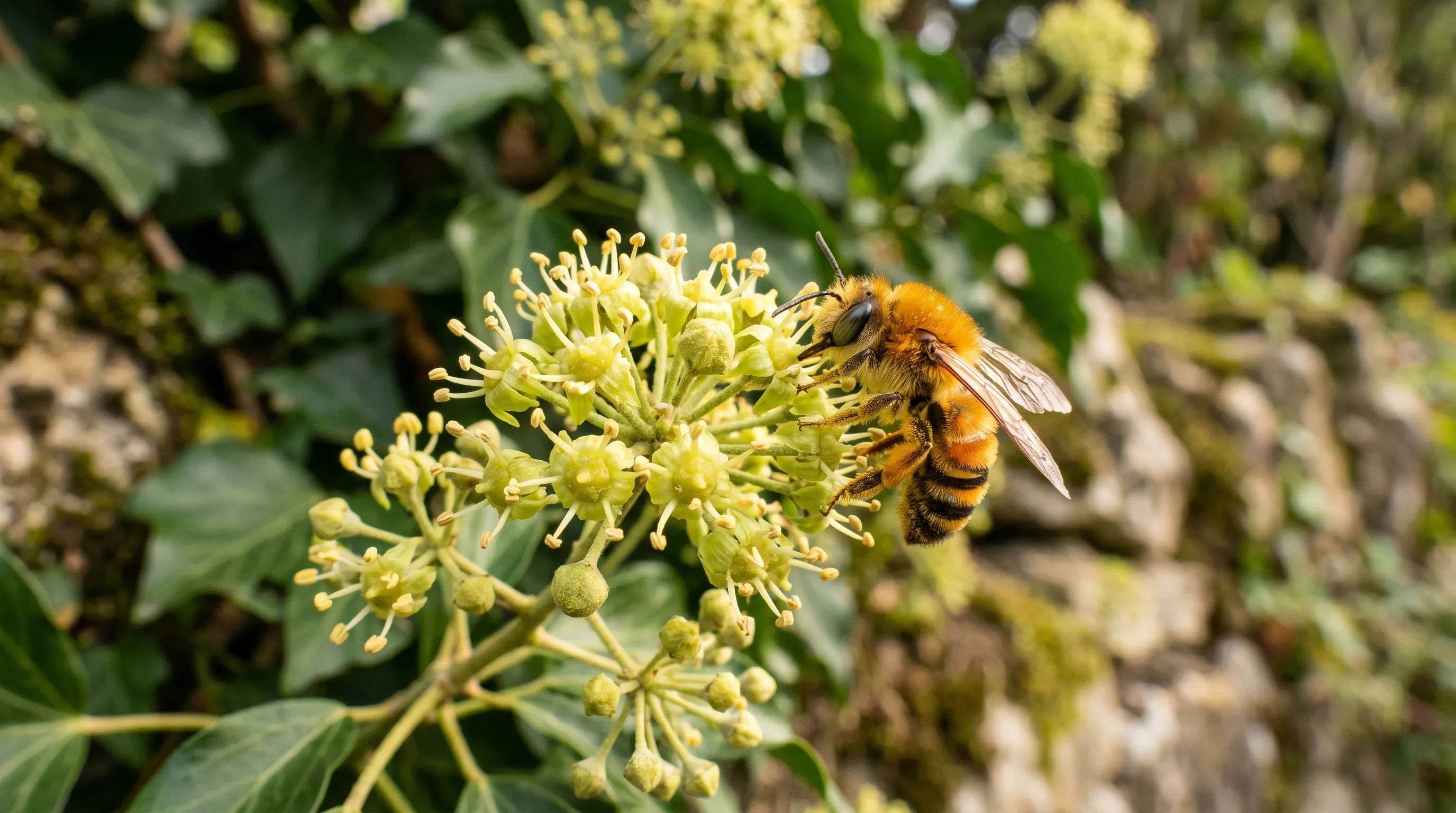 The ivy bee, Colletes hederae, emerges only in autumn and provisions its nests almost entirely with ivy pollen.
Sedum, verbena and asters: the reliable autumn workhorses
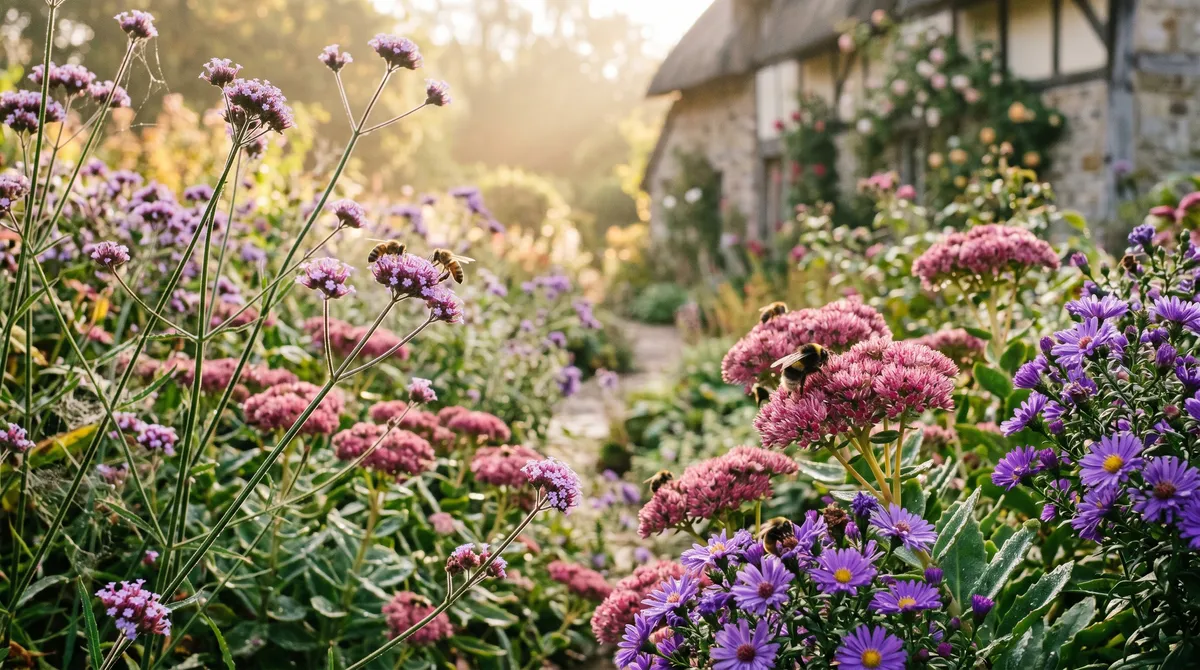
Verbena bonariensis is the tall airy plant for the back of a border. It reaches 1.5 to 1.8m, self-seeds freely, and flowers from July well into October. The small mauve flower clusters sit on long stems that sway with feeding bees. Long-tongued bumblebees and honeybees both work it hard, and it doubles as a butterfly magnet.
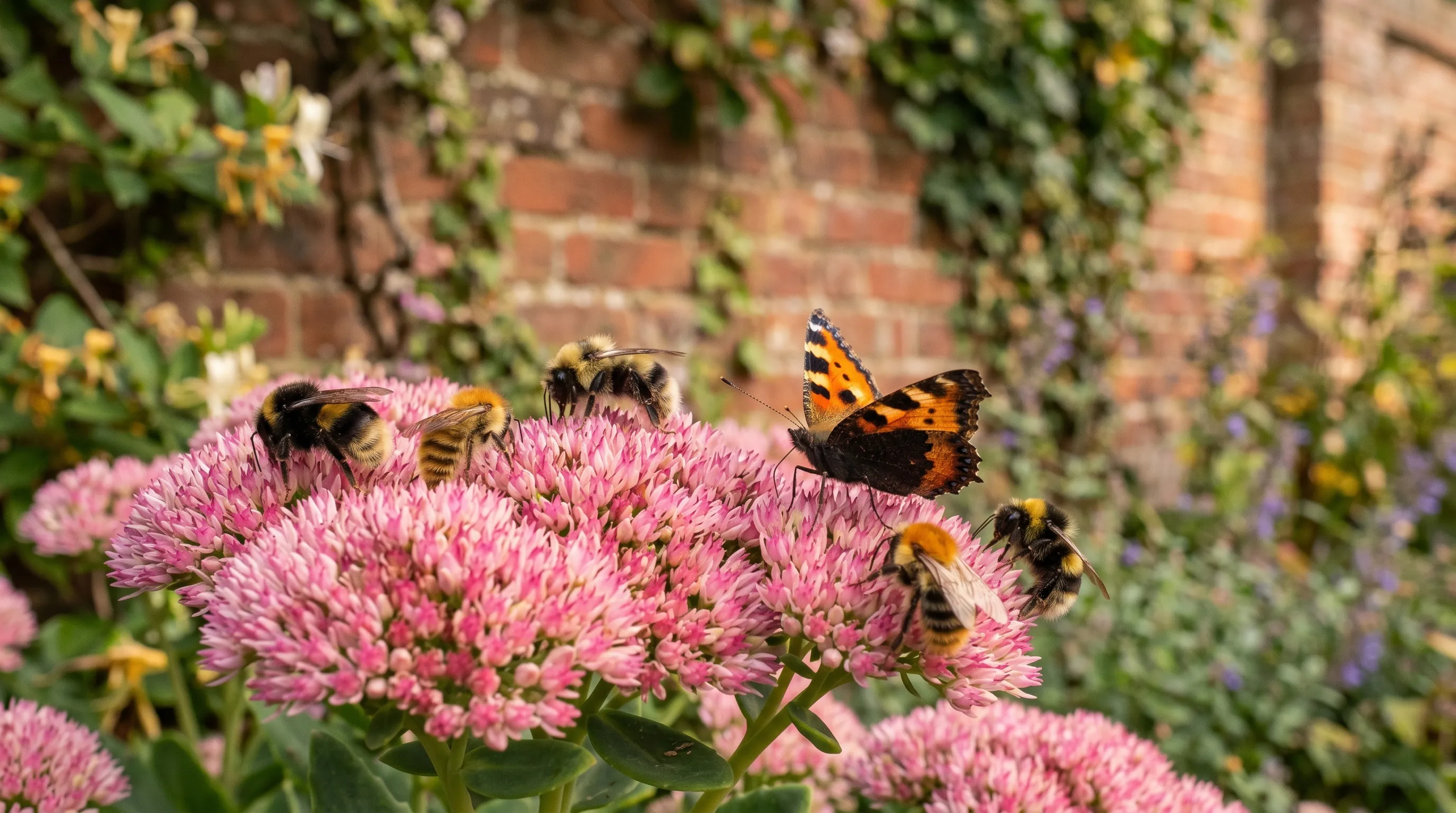 Sedum ‘Autumn Joy’ gives the easiest landing pad in the autumn garden, feeding bumblebees and butterflies together.
Single versus double flowers and why it matters
Only single, open-centred flowers feed bees. Double flowers are decoration, not food. This is the single biggest mistake in pollinator planting. Plant breeders create double flowers by converting the nectar-bearing and pollen-bearing parts of a bloom into extra petals. The result looks lush but offers a bee no reward, and often no way in at all.
Dahlias show the contrast best. A single dahlia like the Bishop series has an open central disc packed with pollen and easy nectar. Bees swarm it. A pompon or ball dahlia is a tight dome of petals with no accessible centre. Bees ignore it completely. The same rule applies to chrysanthemums, where loose single forms feed bees and packed doubles feed nothing.
The test is easy. Look for a visible middle. If you can see an open centre with stamens, bees can feed. If the flower is a solid mound of petals, it is sterile to them. When buying autumn plants, choose single, daisy-form or open-cupped flowers every time. Our notes on NPK and pollinators explain how feeding regimes also change nectar output in these plants.
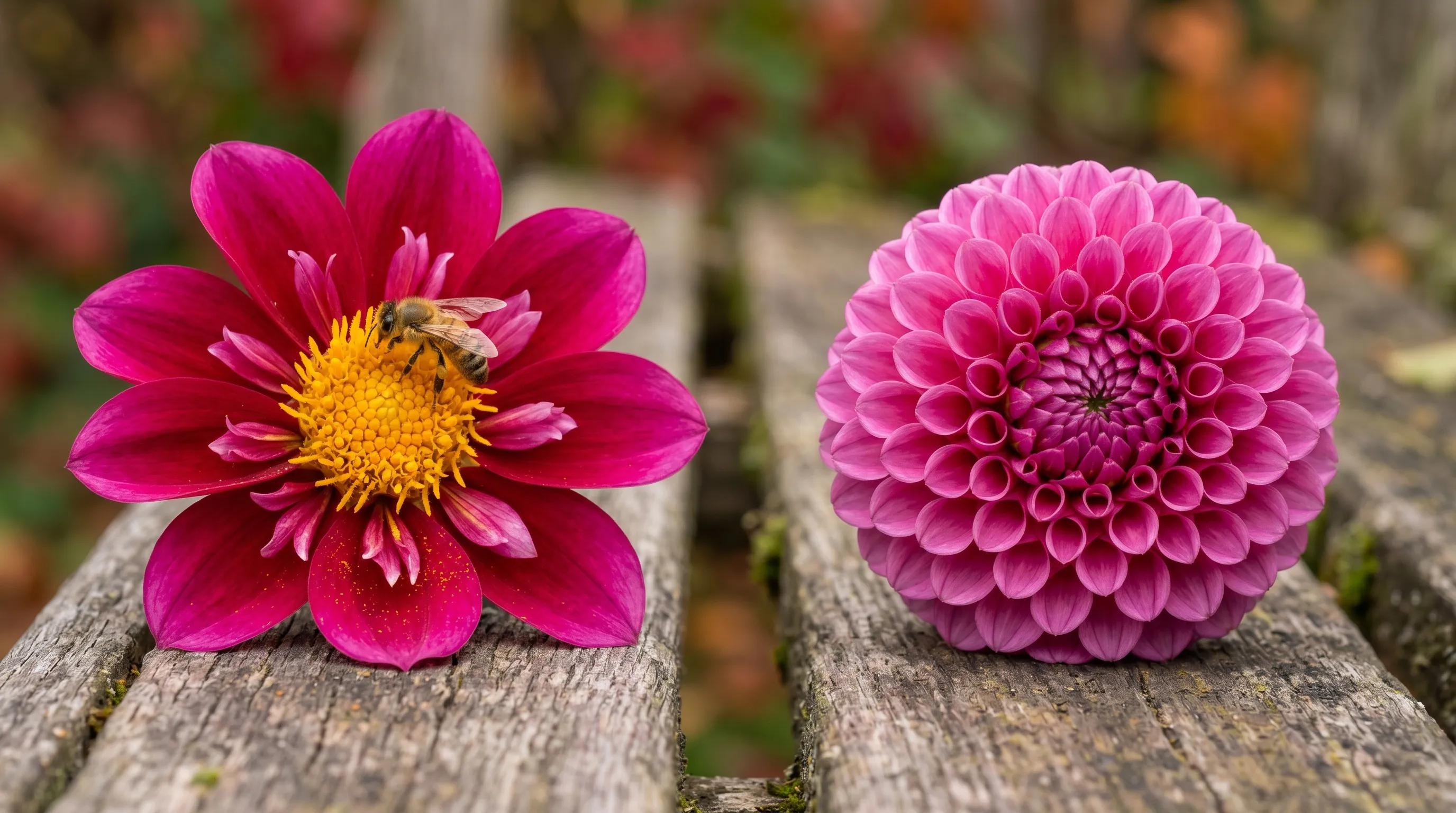 Left, a single dahlia with an open, pollen-rich centre that bees feed on freely. Right, a double pompon with no way in.
Late autumn into winter: mahonia, heather and salvia
A few plants stretch forage past the ivy season and into the first frosts. Mahonia x media varieties like ‘Charity’ and ‘Winter Sun’ carry bright yellow flower spikes from November to February. On a mild winter afternoon these draw honeybees and any bumblebee queen tempted out by warmth. The scent is strong and the nectar real, making mahonia the bridge between autumn and the first flowers of spring.
Winter-flowering heather (Erica carnea) flowers from late autumn through to spring depending on variety. It needs an open, sunny spot and gives honeybees a steady trickle of nectar on warm days. A block of heather beats scattered single plants, because bees work a dense patch more efficiently. Calluna heathers flower earlier, from August, filling the late-summer to early-autumn slot.
Salvia rounds out the season. Tender types like ‘Amistad’ and hardy ones like ‘Caradonna’ flower until the first hard frost, often into late October. Their tubular flowers suit long-tongued bumblebees, especially the common carder bee. Together these three plants keep something open from November right through the quiet months.
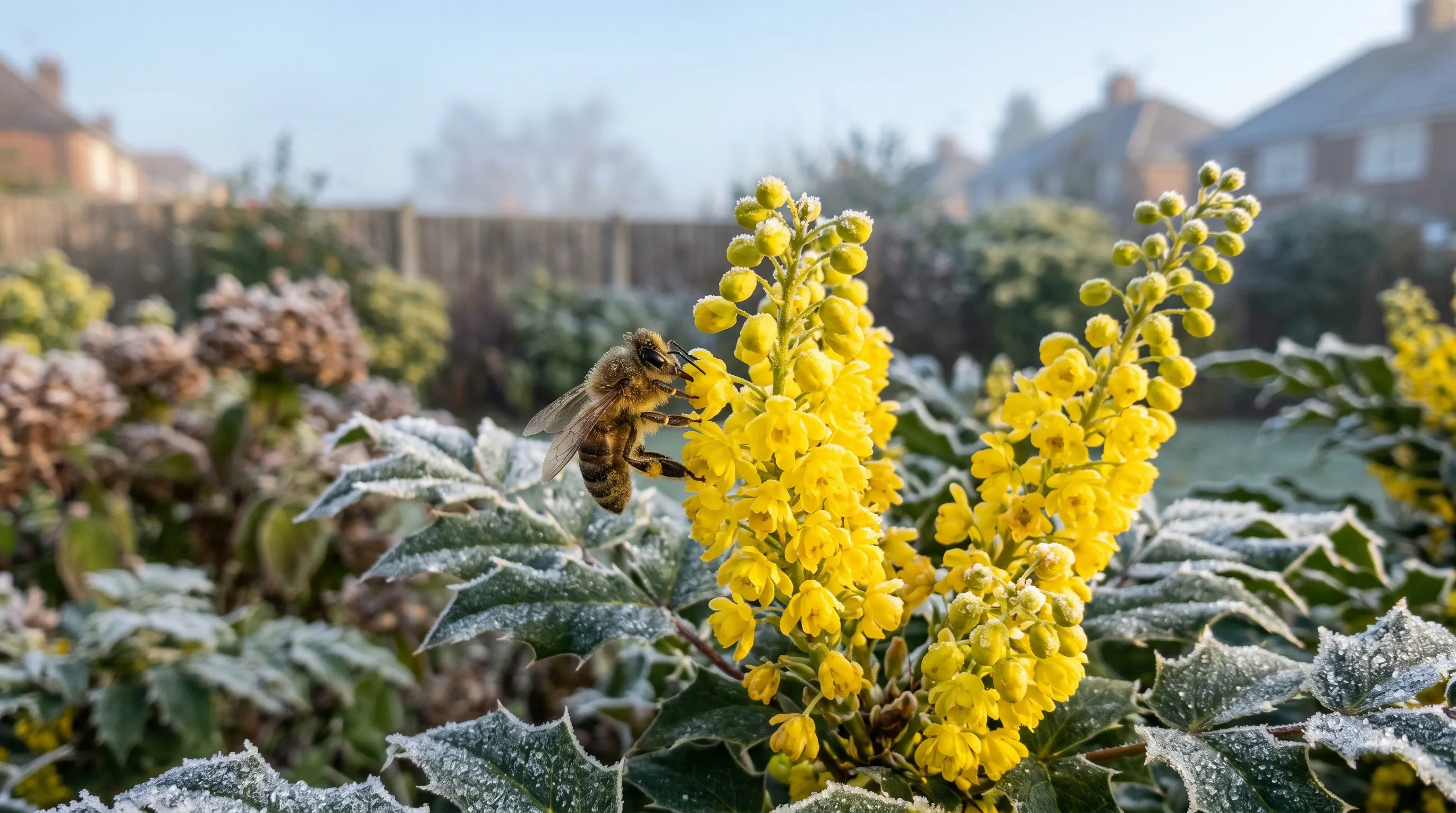 Mahonia flowers from November to February, feeding honeybees and winter-active bumblebee queens on mild days.
How to plant for autumn succession
Succession means having something in flower every single week of the season. A bee gains nothing from ten plants that all bloom in the same fortnight then stop together. The goal is overlap, so as one plant fades another opens.
Build the scheme in three waves. The early autumn wave (late August to mid-September) is sedum, helenium, rudbeckia and the first Michaelmas daisies. Agastache, or anise hyssop, bridges this wave too; our guide on how to grow agastache covers a nectar plant bees work from midsummer to the first frosts. The mid-autumn wave (mid-September to mid-October) is ivy, late asters, single dahlias and Japanese anemone. The late wave (late October into winter) is salvia hanging on, then mahonia and winter heather taking over.
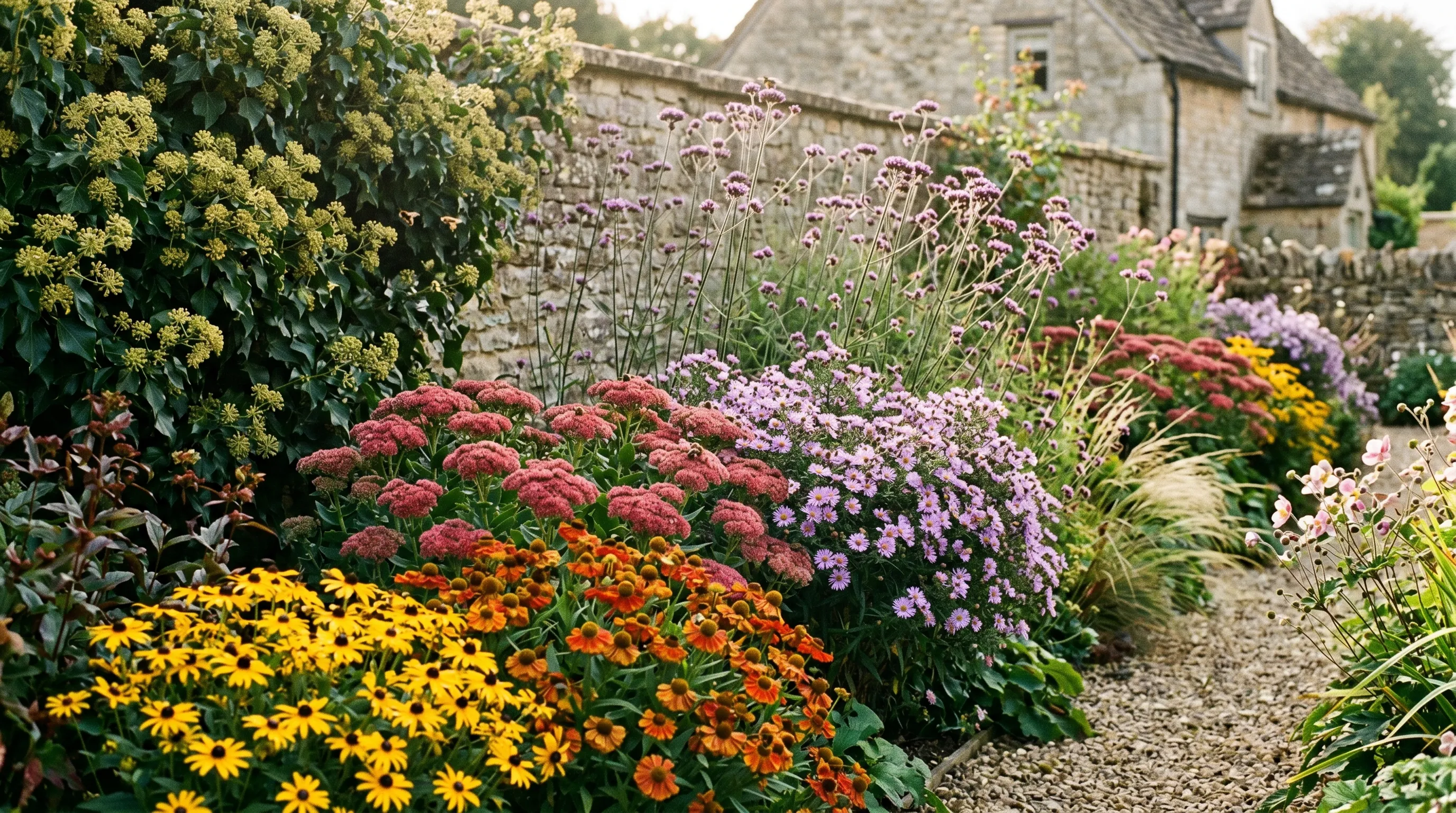 A succession border: flowering ivy on the wall, verbena at the back, sedum and asters in the middle, rudbeckia low at the front.
A month-by-month autumn forage calendar
This calendar shows what feeds bees through the autumn and into winter in a typical UK garden, with the main plants in flower each month and the bees most likely to be feeding.
| Month | Main forage in flower | Bees active |
|---|---|---|
| September | Ivy starting, sedum, verbena, asters, dahlias, helenium | Honeybees, bumblebee workers and queens, ivy bee emerging |
| October | Ivy at peak, late asters, salvia, single chrysanthemum, anemone | Honeybees, late bumblebee queens, ivy bee |
| November | Ivy finishing, mahonia starting, winter heather, last salvia | Honeybees on warm days, occasional bumblebee queen |
| December | Mahonia, winter heather (Erica carnea) | Honeybees on mild days above 10C |
| January | Mahonia finishing, winter heather, first snowdrops | Honeybees and queens only on rare warm days |
| February | Winter heather, snowdrops, crocus, early hellebores | Queen bumblebees waking, honeybees foraging |
Gardener’s tip: Watch the forecast, not the calendar. Bees only feed when it is still and above roughly 10 to 12C. A warm, calm October afternoon will pull far more bees onto your ivy than a cold, breezy one, so judge your plant’s value on a good day.
Common mistakes that starve autumn bees
A few habits quietly remove the food bees need most. Avoid these and an ordinary garden becomes a genuine autumn refuge.
Deadheading and cutting back too early. Many gardeners tidy borders in September the moment plants look past their best. This strips out nectar that bees still need for weeks. Leave seed heads and late flowers standing until late February. They feed bees, shelter insects, and feed birds too. Our notes on autumn flowers for UK gardens cover which to leave and which to lift.
Planting only double flowers. A border of pompon dahlias and tight chrysanthemums looks full but feeds nothing. Doubles convert the reward into petals. Always check for an open centre before buying.
Cutting ivy before it flowers. Ivy is routinely sheared off walls and fences in late summer, exactly when it is about to bloom. This destroys the year’s single best forage. Let a patch climb above head height, leave it through autumn, and prune only in early spring if you must.
No late forage at all. Plenty of gardens peak in July then go bare. Add just two or three autumn plants, ivy plus sedum plus asters, and you cover the whole gap. Different bee species also have different tongue lengths, as our bumblebee species guide explains, so variety matters.
Warning: Never spray insecticide on flowering plants, even in autumn. Bees feeding on treated blooms carry the chemical back to the nest. Many products remain toxic for days. If you must treat a pest, do it after dark when bees are not flying, and never on open flowers.
The wider message of autumn planting is patience. The showiest border is rarely the most useful one, and the plant bees need most is the one we are quickest to cut. Leave the ivy, plant for succession, choose single flowers, and put away the shears until spring. Do that and your garden will hum on warm October afternoons long after the rest of the street has gone quiet.
Frequently asked questions
What are the best autumn flowering plants for bees in the UK?
Flowering ivy is the best, followed by sedum, Verbena bonariensis and Michaelmas daisies. These four carry the most bees from September to November. Add single dahlias, rudbeckia, helenium and salvia for colour and variety. For very late forage into winter, plant mahonia and winter-flowering heather. Always choose single, open-centred forms over doubles.
Why is ivy so important for bees in autumn?
Ivy flowers in September and October when little else does. It is the last major nectar and pollen source of the year. Honeybees use it to build winter stores, late bumblebee queens use it to fatten for hibernation, and the ivy bee Colletes hederae depends on it almost entirely. A single mature plant can feed dozens of bees at once on a sunny afternoon.
Do double-flowered plants feed bees?
No, most double flowers feed bees very poorly or not at all. Breeders create doubles by converting nectar-bearing parts into extra petals. This buries or removes the pollen and nectar, so bees cannot reach a reward. Pompon dahlias and tight double chrysanthemums are effectively sterile decoration. Always choose single, open-centred varieties with a visible middle.
When do bumblebees stop flying in autumn?
Most worker bumblebees die off by late October, but new queens fly later. Buff-tailed bumblebee queens often feed into November, and in mild southern winters some colonies stay active. New queens need autumn nectar to build fat before they hibernate underground. Late forage like ivy and mahonia keeps these future colony founders alive through the cold months.
Should I cut back my plants in autumn for bees?
No, leave seed heads and late flowers standing through autumn. Deadheading too early removes nectar that bees still need. Spent sedum and Michaelmas daisy stems also shelter overwintering insects. Wait until late February or March to cut back. Only tidy plants that have completely finished flowering and gone fully to seed before the cold sets in.
Our team produces practical UK gardening guidance from source research, contributor records and established horticultural practice. Editorial standards are overseen by Matt W.