
Key takeaways
- You can help honeybees without keeping bees
- Plant in groups of the same flower so bees can work them quickly
- Fill the June and early autumn gaps with borage, catmint, oregano, sedum and ivy
- A shallow dish with pebbles gives bees a safe place to drink
- Let clover and dandelions flower in part of the lawn
- A swarm is usually calm; contact a local beekeeper to collect it
You don’t need to keep bees to help honeybees. A garden full of the right flowers, a safe place to drink and no sprays on open blooms all make a real difference. And if a swarm turns up, a local beekeeper will usually come and collect it.
Here’s what honeybees need through the year, which plants they love and what to do if you find a swarm. If you’d like to help all pollinators, including butterflies, see the guide to the best plants for butterflies.
How a honeybee colony works through the year
A honeybee colony is a big family of tens of thousands of bees living together with one queen. What it needs from your garden changes with the seasons.
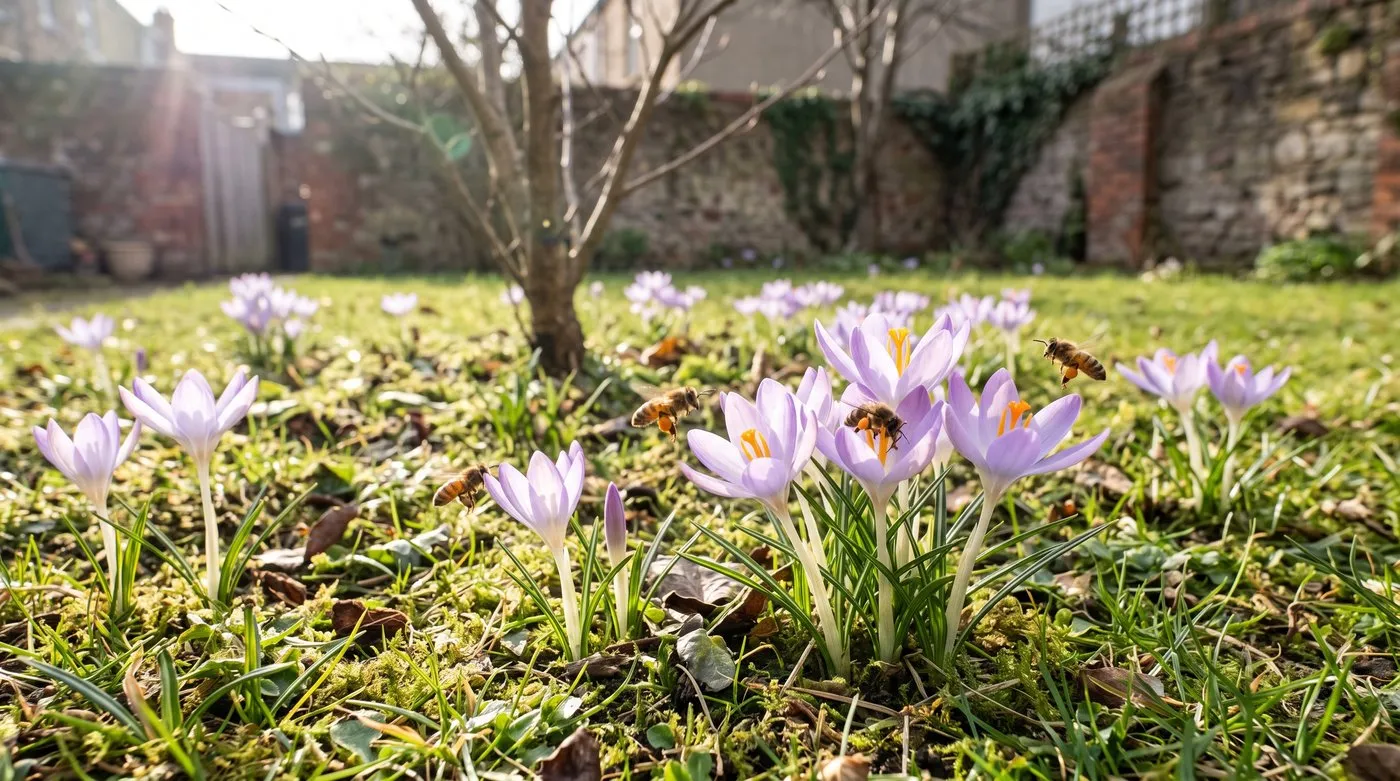
Crocus in a sunny spot gives honeybees their first pollen of the year on mild late-winter days.
- Spring (March to May): the colony grows fast. Bees need early pollen from crocus, willow catkins and fruit blossom to feed their young.
- Late spring and summer (May to July): this is swarming season, when a crowded colony splits and half the bees leave with the old queen.
- Summer (June to August): the colony is at its biggest, and foragers are out all day.
- Autumn (September to October): bees store as much honey as they can from late flowers such as ivy.
- Winter (November to February): honeybees don’t hibernate. They huddle together in the hive and live on their honey, flying out on mild days.
Honeybees are different from bumblebees, which live in much smaller nests that die out each autumn. The bumblebee species guide explains how to tell the common ones apart.
The best plants for honeybees by season
Honeybees love flowers that are open and easy to reach, planted in groups of the same kind. A drift of one plant lets them work quickly from flower to flower.
Watch out for two thin times of year. The June gap comes after spring blossom fades and before most summer flowers open. There’s often another dip in early autumn, before the ivy flowers.
| Season | Plants | Why they help |
|---|---|---|
| February to March | Crocus, winter heather, mahonia | Early pollen on mild days |
| March to May | Willow, apple and cherry blossom, rosemary | Big spring feast as colonies grow |
| June | Borage, catmint, early lavender | Fills the June gap |
| July to August | Lavender, oregano, globe thistle, phacelia | Peak summer nectar |
| September | Sedum, Michaelmas daisies, single dahlias | Bridges the gap before ivy |
| October to November | Ivy | One of the last big nectar sources |
Phacelia is a fast, easy annual that honeybees adore. The guide to growing phacelia shows how to sow it. For a longer list covering all bees, see the best bee-friendly plants.

Big groups of the same flower are easier for honeybees to work. Borage and alliums are both bee magnets.
How to give honeybees water
Honeybees collect water to cool the hive in hot weather and to feed their young. A safe drinking spot near flowers is a big help on warm days.
- Use a shallow dish or plant saucer, a few centimetres deep
- Fill it with pebbles or marbles, so bees have somewhere to land
- Add water to just below the top of the stones
- Put it near flowers, in a sunny or partly shaded spot
- Top it up in hot weather; bees soon learn where it is
Deep bird baths with steep sides can drown bees, so add a few stones to those too. A wildlife pond with muddy, gently sloping edges works well. Don’t put out sugar water, as it can attract wasps and isn’t needed. The guide to bee bars and sugar water explains why.

Pebbles and marbles give bees a safe place to stand while they drink. Top the water up on hot days.
Leave clover and dandelions in the lawn
Letting part of the lawn flower is the easiest and cheapest way to help honeybees.
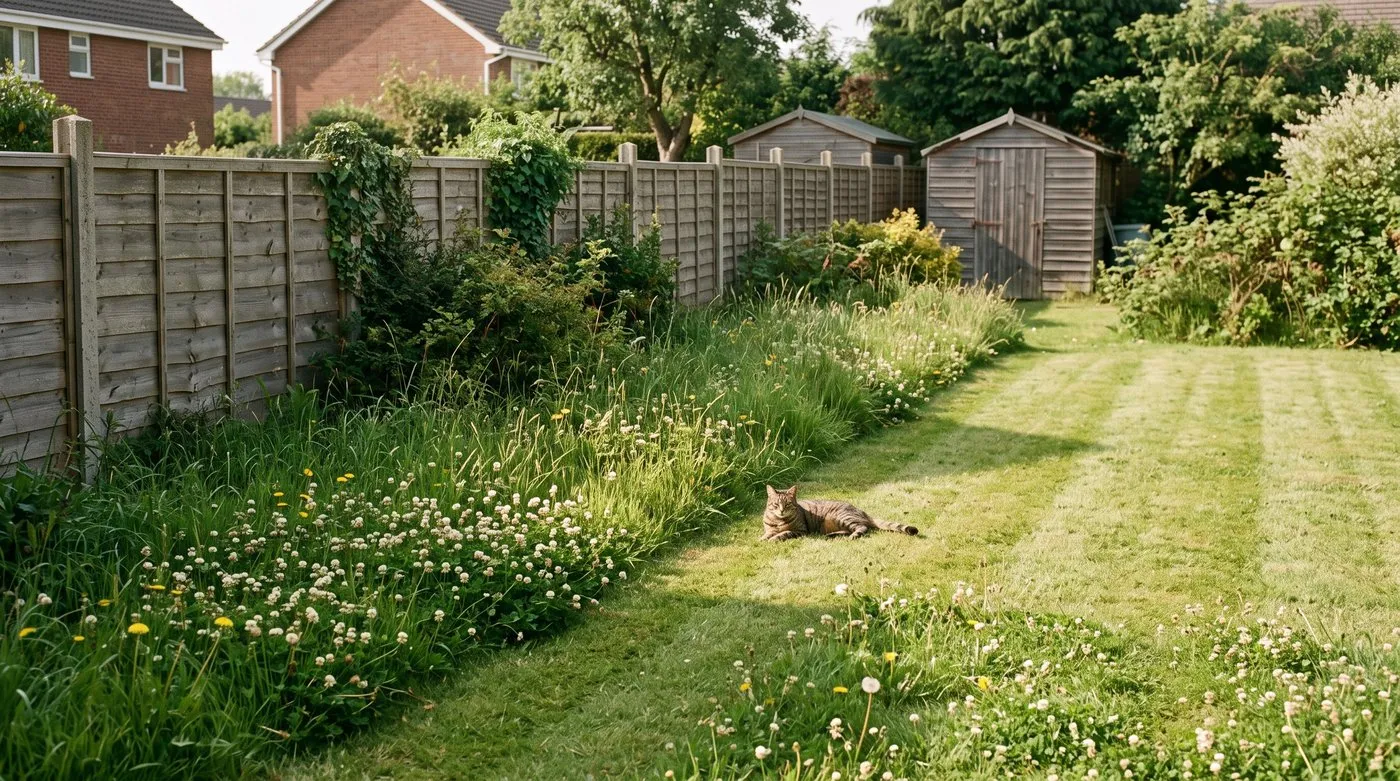
You don’t have to give up the whole lawn. A flowering strip along the fence is a feast for honeybees.
- Dandelions flower mainly in spring, giving bees both pollen and nectar when they really need it
- White clover flowers through summer and keeps the lawn green in dry spells
- Lawn daisies and self-heal are useful too
You don’t have to give up the whole lawn. Leave a strip along a fence, or mow part of it every few weeks instead of every week. Skip lawn weedkillers, which wipe out these flowers.
Keep sprays away from honeybees
Never spray plants in flower. Insecticides can kill honeybees, including “natural” ones. Some garden bug killers still contain a neonicotinoid called acetamiprid, so read the label before you buy.
Most pest problems can be sorted without spraying:
- Squash or wipe off small aphid colonies by hand
- Net crops such as cabbages against caterpillars
- Encourage predators such as ladybirds, hoverflies and birds
- Use nematodes, a biological control, for vine weevil grubs and slugs
If you ever do need a spray, use an approved product for that pest, follow the label, and never use it on open flowers.
What to do about a honeybee swarm
A swarm looks dramatic, but it’s usually calm. It’s how a colony splits in two. The bees cluster on a branch, fence or wall while scouts look for a new home. They have no honey or young to defend, so they’re rarely defensive.
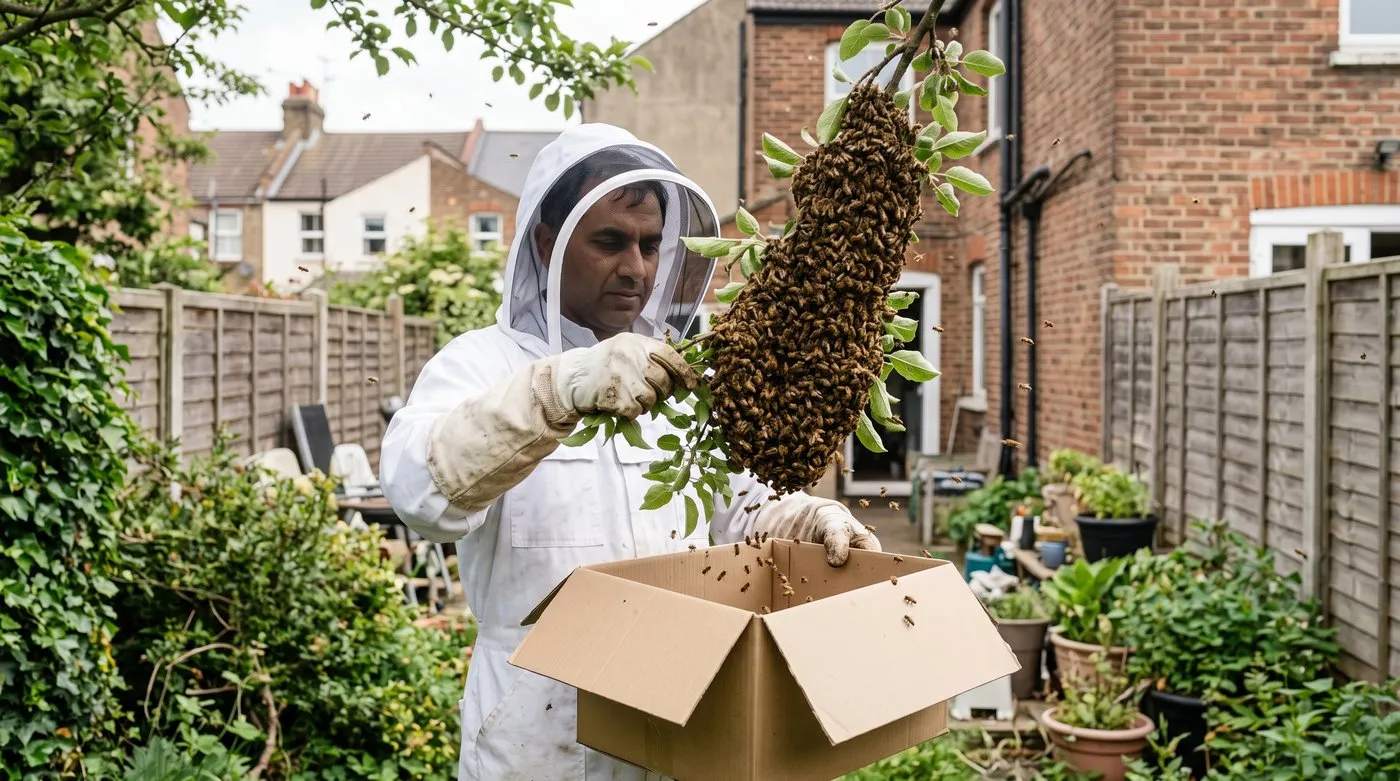
A local beekeeper can usually collect a swarm quickly. Keep back and let them get on with it.
If you find a swarm:
- Stay calm and don’t spray it with water or anything else
- Keep children and pets back
- Contact a local beekeeper or use the swarm collector search on the British Beekeepers Association website
- Many swarms move on by themselves within a day or two
Check it’s honeybees first. Beekeepers can only help with honeybee swarms. Tree bumblebees often nest in bird boxes and buzz around the entrance, which can look like a swarm but is harmless. Wasp nests are papery and grey. If bees have moved into a wall or chimney, ask a beekeeper for advice rather than blocking the hole.
Do you need to keep bees to help them?
No. Everything in this guide helps honeybees without a hive. In fact, lots of hives in one small area can compete with wild bees for flowers. Planting flowers often does more good than adding another hive.
If you’d like to try beekeeping, join your local beekeeping association first and do a beginners’ course. The guide to beekeeping for beginners covers what’s involved.

You don’t need a hive to help honeybees, but if you keep one, plenty of flowers nearby will keep the bees happy.
Common mistakes when helping honeybees
- Planting singles. One plant of each kind is hard for bees to find. Plant in groups.
- Only summer flowers. Plan for early spring and autumn too.
- Double flowers. Many have little nectar bees can reach. Choose simple, open flowers.
- Spraying in bloom. Even one spray on open flowers can kill bees.
- Putting out sugar water. It isn’t needed and draws in wasps.
Frequently asked questions
What is the best plant for honeybees in the UK?
Lavender is one of the most reliable honeybee plants. It flowers through summer, copes with dry spells and suits poor, well-drained soil. Plant several together. Borage, catmint, oregano and ivy are other honeybee favourites.
Why do honeybees need water in my garden?
Honeybees use water to cool the hive and feed their young. They collect it all through warm weather, so a reliable source nearby helps. A shallow dish with pebbles lets them drink without drowning.
What is the June gap and why does it matter?
It’s a short dip in flowers between spring and summer. Spring blossom has finished, but many summer flowers aren’t out yet. Colonies are big and hungry by then, so borage, catmint and early lavender help fill it.
Should I call someone about a honeybee swarm?
Yes, contact a local beekeeper or the BBKA swarm collector service. Swarms are usually calm because they have no home to defend. Keep people and pets back, and don’t spray them. Many swarms move on within a day or two.
How far will honeybees travel from their hive?
Usually within a few kilometres, though they can go further. They prefer good flowers close to home. If there are hives or wild colonies in your area, the right plants will bring them in.
Are neonicotinoid pesticides still sold in the UK?
Some garden bug killers still contain one, called acetamiprid. Check the label of any insecticide before you buy. Whatever you use, never spray plants in flower or when bees are about.
What is the difference between honeybees and bumblebees?
Honeybees are slimmer and less furry than bumblebees. Honeybees live in big colonies that survive winter together on stored honey. Bumblebee nests are much smaller and die out in autumn, leaving only new queens to hibernate.
Ready to plant? Keep the flowers coming late in the year with the guide to autumn plants for bees, or browse more garden wildlife guides.
Our team produces practical UK gardening guidance from source research, contributor records and established horticultural practice. Editorial standards are overseen by Matt W.


