Key takeaways
- No licence is needed to keep bees in the UK, and BeeBase registration is free
- Join a local beekeeping association and take a course before you buy any kit
- The National hive is the usual choice for UK beginners, so parts and help are easy to find
- Inspect every 7-9 days from April to August, mainly to spot swarming in time
- Every colony has varroa mites, so monitor and treat with an authorised product
- Expect little or no spare honey in the first year while the colony builds up
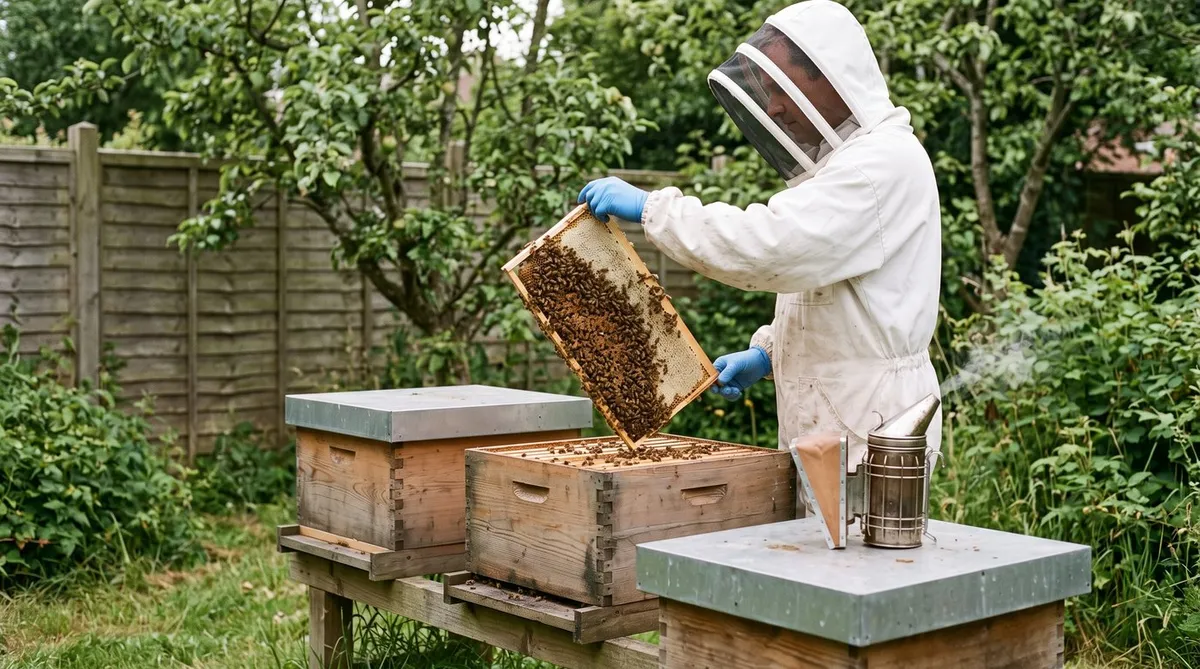
You don’t need a licence to keep bees in the UK, but you do need some know-how before you start. The best first step is to join a local beekeeping association, take a beginners’ course over winter and find a mentor.
Keeping honey bees is a lovely hobby that gets you closer to your garden than almost anything else. It also takes regular attention from spring to late summer. This guide covers the basics: the rules, the kit, choosing a hive, where to put it, the beekeeping year and the problems to watch for. If you’d rather help bees without keeping them, the guide to honeybees in the garden shows how.
Do you need a licence to keep bees in the UK?
No. You don’t need a licence, permit or planning permission to keep honey bees in a garden, on an allotment or on a roof.
You’re strongly encouraged to register your hives on BeeBase, the free database run by the National Bee Unit. Bee inspectors use it to warn beekeepers about disease outbreaks nearby and to offer free inspections.
A few things to check first:
- Deeds, leases and tenancy agreements. Some ban keeping animals, which may include bees.
- Allotment rules. Some sites welcome bees, others don’t. Ask before you buy.
- Allergies. Everyone gets stung sometimes. If you or anyone in your household has had a serious reaction to a sting, talk to your GP before you start.
You don’t need your neighbours’ permission, but tell them. A friendly chat, and a jar of honey later on, goes a long way.
Start with a course and a mentor
Join your local beekeeping association before you buy anything. Most counties have one, usually linked to the British Beekeepers’ Association. Membership normally includes insurance and a chance to learn at a teaching apiary.
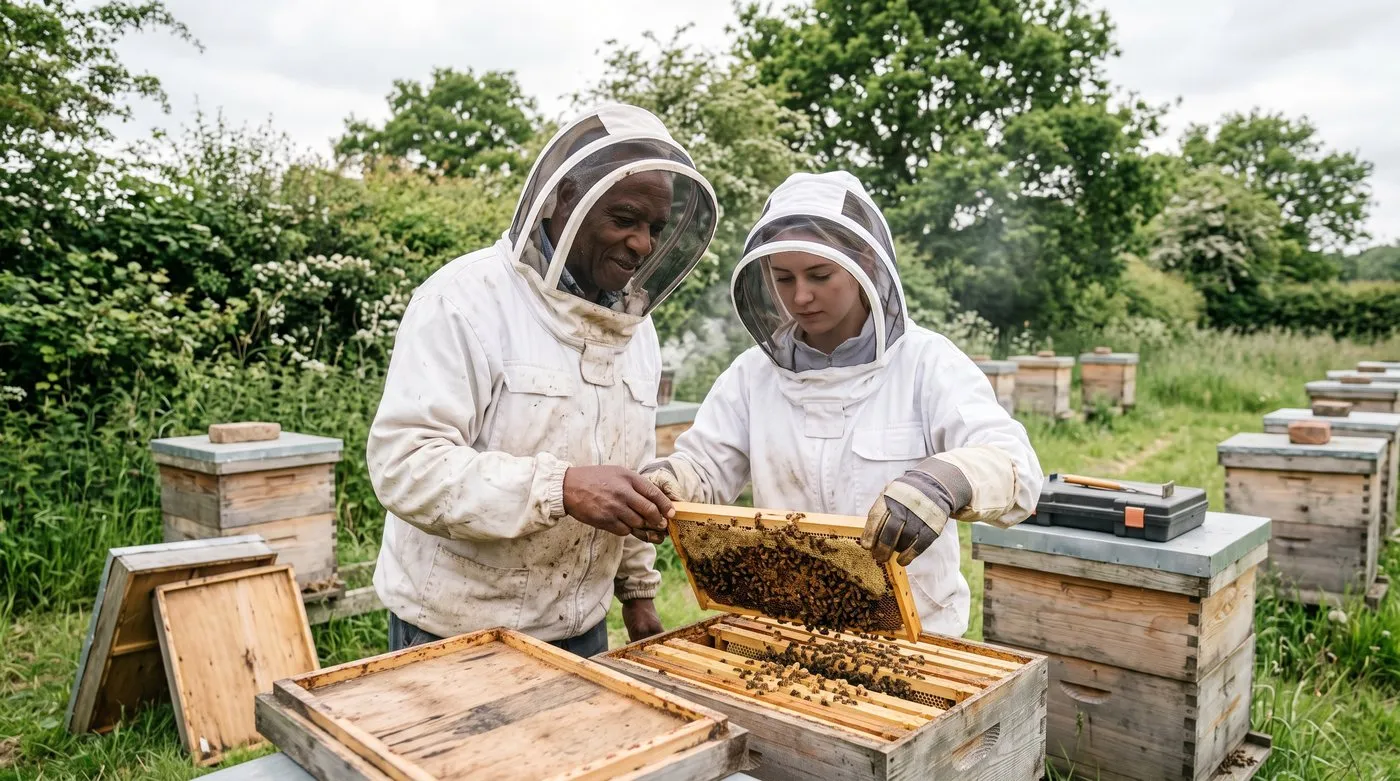
A mentor at your side teaches you more in one afternoon than a shelf of books.
Most associations run beginners’ courses in late winter, followed by hands-on sessions at the hive from spring. You’ll find out whether you enjoy handling bees before you spend money on your own.
A mentor is the most useful thing you can have. An experienced beekeeper standing beside you at the hive teaches you more than any book. They’ll show you how to handle frames calmly, spot the queen and her eggs, and deal with swarming. Many associations also sell local bees and can put you on a list to collect swarms.
What kit do you need to start beekeeping?
Start simple. You need:
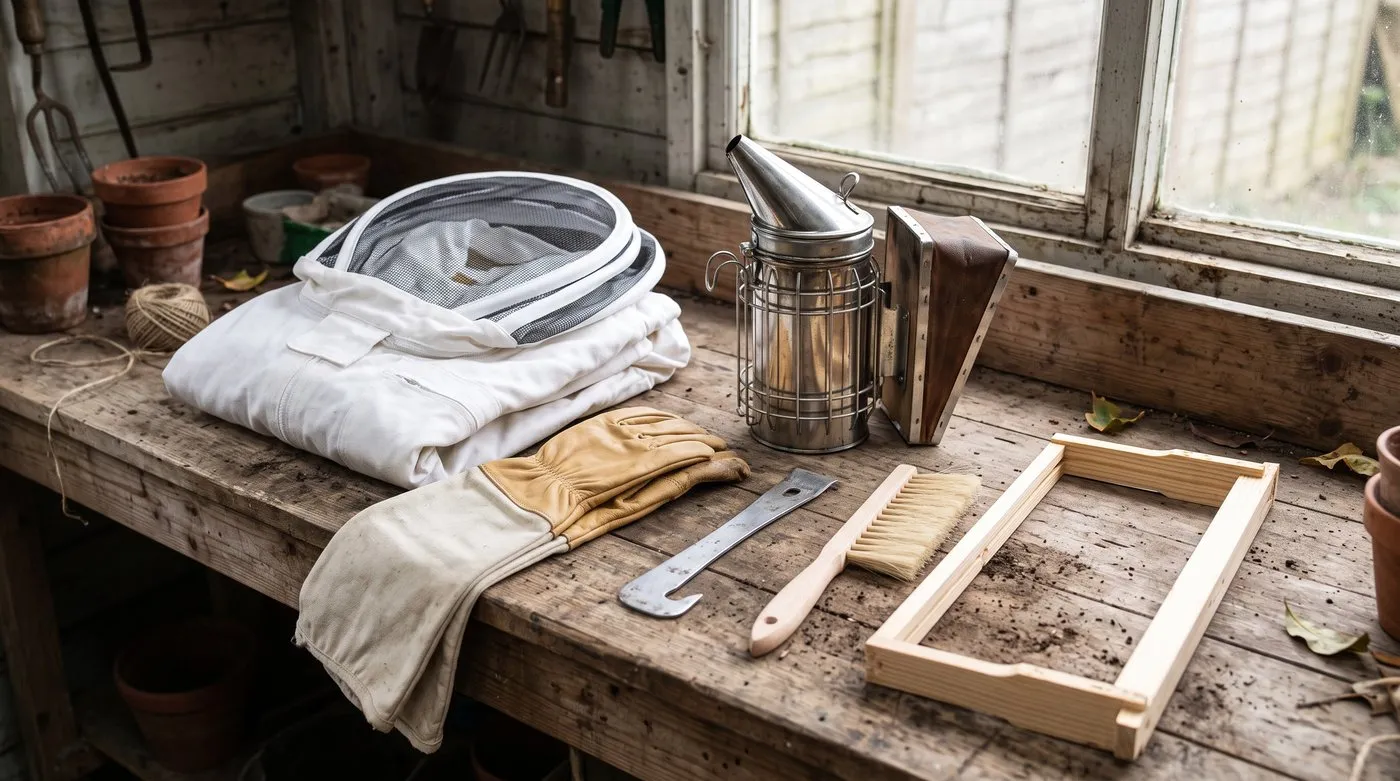
This is all the kit a beginner really needs. Skip the extras until you know what you’ll use.
| Item | What it’s for |
|---|---|
| Hive (National for most beginners) | The bees’ home, with frames and boxes |
| Nucleus colony (“nuc”) | A small starter colony with a queen, usually bought in late spring |
| Bee suit or jacket with veil | Protects you from stings |
| Gloves | Leather or disposable nitrile |
| Smoker | Calms the bees during inspections |
| Hive tool | Prises apart boxes and frames |
| Feeder | For autumn feeding with sugar syrup |
| Varroa monitoring board and treatment | To keep mites under control |
Expect to spend a few hundred pounds in total. Plain pine hives work just as well as cedar ones. If you buy second-hand kit, scorch or clean it thoroughly, as old hives can carry disease. Buy bees from a local, reputable source, ideally through your association.
Which hive type should a UK beginner choose?
The National hive is the best choice for most beginners. It’s the most common hive in Britain, so frames and parts are easy to find and your mentor will probably use one.
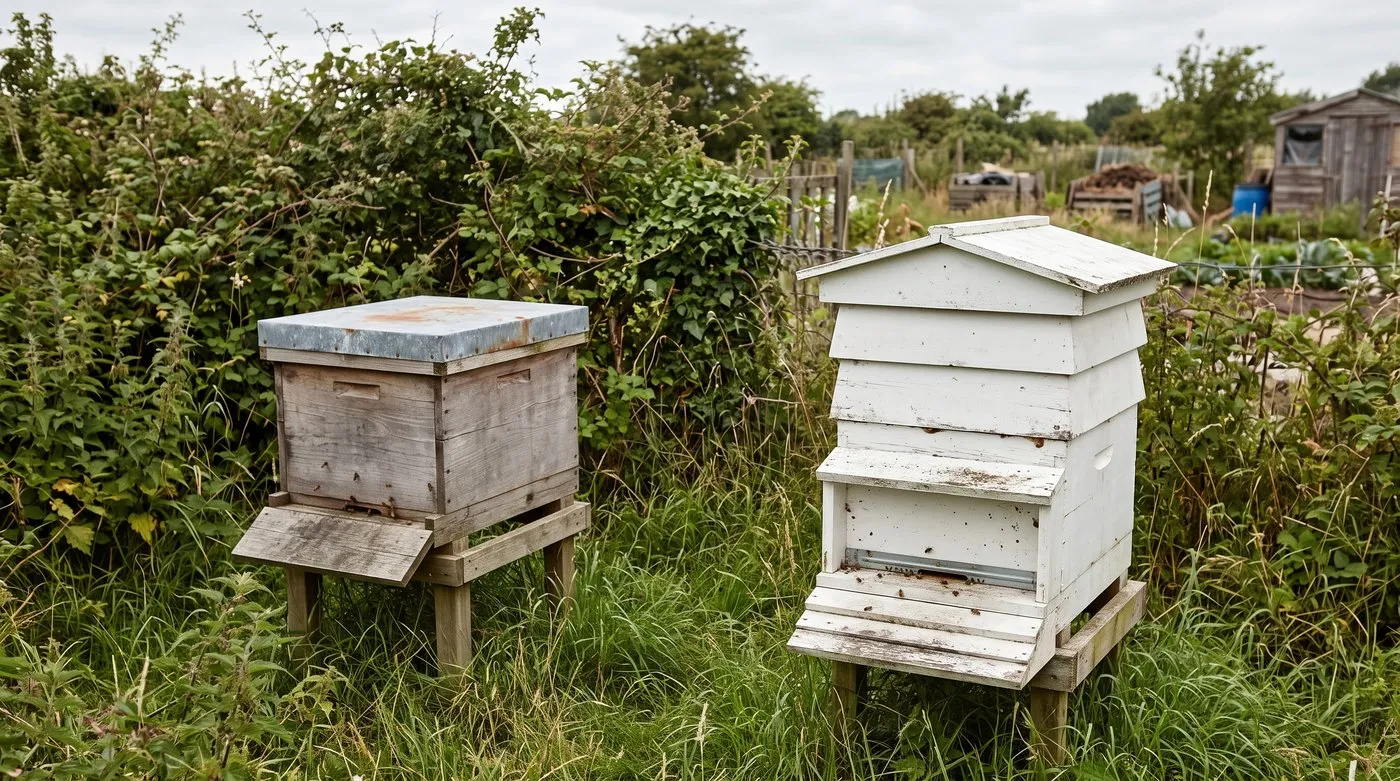
The plain National (left) is the beginner’s workhorse. The WBC (right) looks classic but takes longer to handle.
| Hive type | What it’s like | Best for |
|---|---|---|
| National | Compact, single-walled, widely used in the UK | Most beginners |
| WBC | The classic double-walled “pagoda” hive, same frames as the National | People who love the traditional look |
| Langstroth | The world standard, with bigger boxes | Strong colonies and larger-scale keepers |
| Top bar | Bees build natural comb on wooden bars, no frames | Keepers more interested in bees than honey |
The WBC looks lovely but costs more and takes longer to handle. A top bar hive gives less honey, as harvesting means cutting out the comb.
Where should you put a beehive?
Pick a sheltered, sunny spot with the entrance facing roughly south or south-east. Morning sun gets the bees out early. Keep the hive out of strong wind and off damp ground, on a firm, level stand.
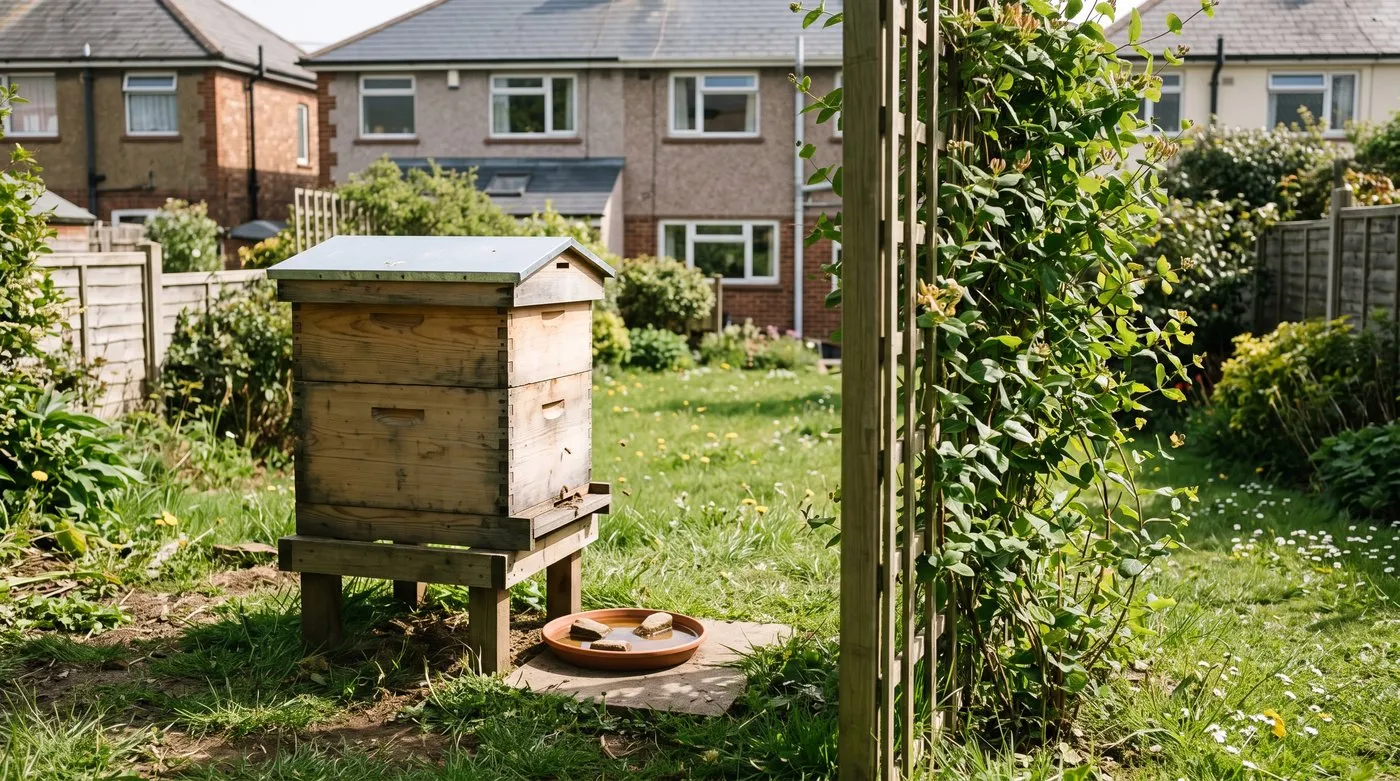
A sunny, sheltered corner suits a hive. A tall screen nearby lifts the bees’ flight path, and a water dish keeps them at home.
Keep the entrance away from paths, gates and your neighbour’s garden. A 2m fence, hedge or trellis a short way in front of the hive makes the bees fly up and over people’s heads.
Leave room to stand behind or beside the hive while you work. Put out a shallow dish of water with stones in it nearby, so the bees don’t go looking for water next door. The guide to bee bars and water dishes shows a safe design.
The beekeeping year, season by season
Spring (March to April)
The colony grows quickly as days lengthen. In early March, lift one side of the hive to feel how heavy it is. A light hive may need fondant, a soft sugar block, placed above the bees. Do your first full inspection on a calm day of around 15°C or more, often in April.
Swarm season (May to June)
This is the busiest time. Strong colonies raise new queens and get ready to swarm, when half the bees leave with the old queen. Inspect every 7-9 days and look for queen cells. Your mentor will show you how to stop a swarm, which is the hardest skill for beginners.
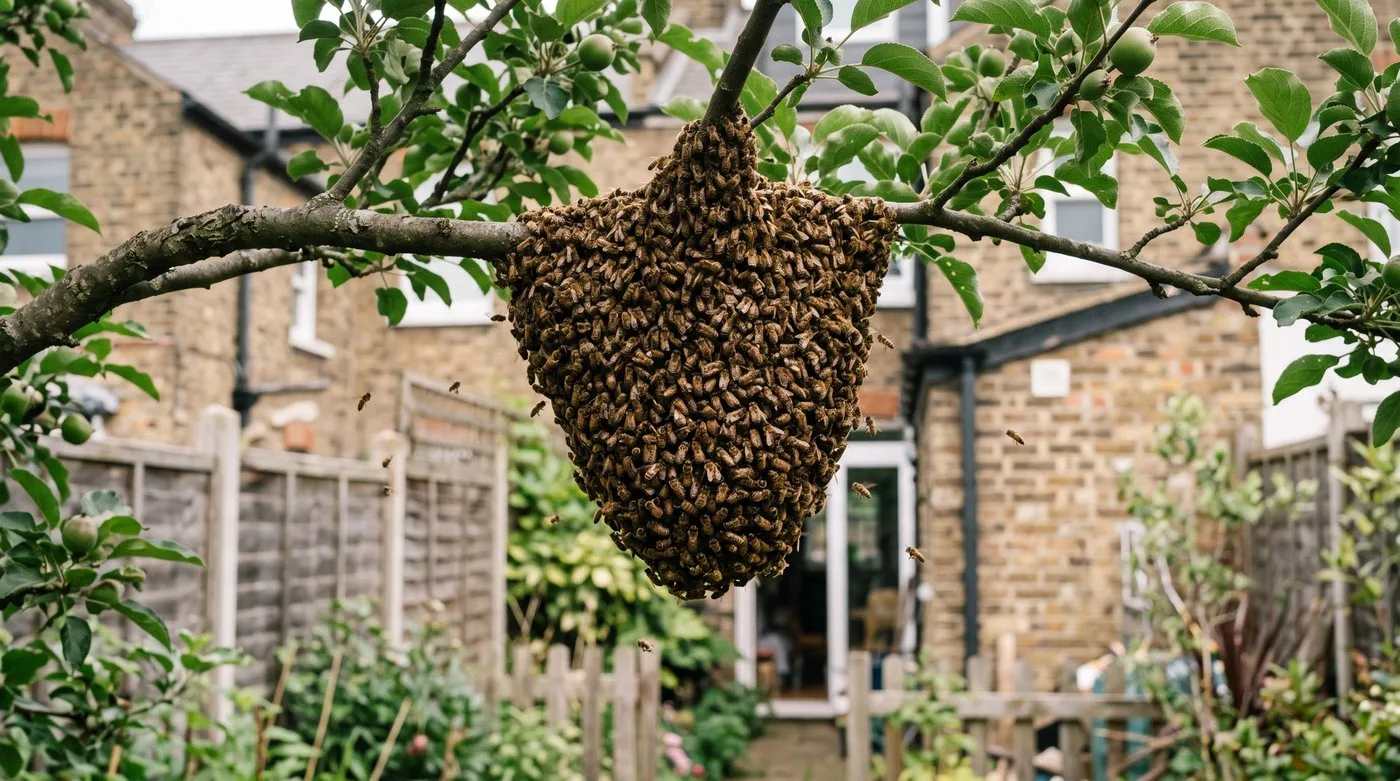
Miss the queen cells and this is what happens. Regular inspections in May and June help you stop it.
Summer (July to August)
Nectar flows from flowers and crops, and bees fill the honey boxes, called supers. Add another super before the bees run out of room. Most beekeepers take honey from late July to August.
Autumn (August to September)
Once the honey is off, treat for varroa if your monitoring shows you need to. Feed thick sugar syrup so the colony has enough stores for winter, around 20kg of food. Make the entrance smaller to keep wasps and robbing bees out.
Winter (October to February)
Leave the hive closed. Check the weight by gently lifting one side every few weeks. Clear dead bees from the entrance after cold spells, and add fondant if the hive feels very light.
Month-by-month beekeeping calendar
| Month | What to do |
|---|---|
| January | Heft the hive to check stores. Book a beginners’ course |
| February | Clean and prepare spare kit. Add fondant if the hive is light |
| March | Check stores. Watch bees bringing in pollen |
| April | First full inspection on a warm, calm day. Start regular checks |
| May | Inspect every 7-9 days. Watch for queen cells. Collect a nuc if starting |
| June | Swarm season continues. Add supers as needed |
| July | Add space for honey. Monitor varroa |
| August | Take honey. Treat varroa if needed. Start autumn feeding |
| September | Finish feeding. Reduce the entrance. Fit a mouse guard |
| October | Leave the hive closed. Store spare comb safely |
| November | Heft the hive now and then. Check the roof is secure |
| December | Winter varroa treatment if needed, while there’s little brood |
Will you get honey in the first year?
Usually not, or only a little. A nucleus colony arrives in late spring with just a few frames of bees. It spends its first summer building up, drawing out new comb and storing food for winter.
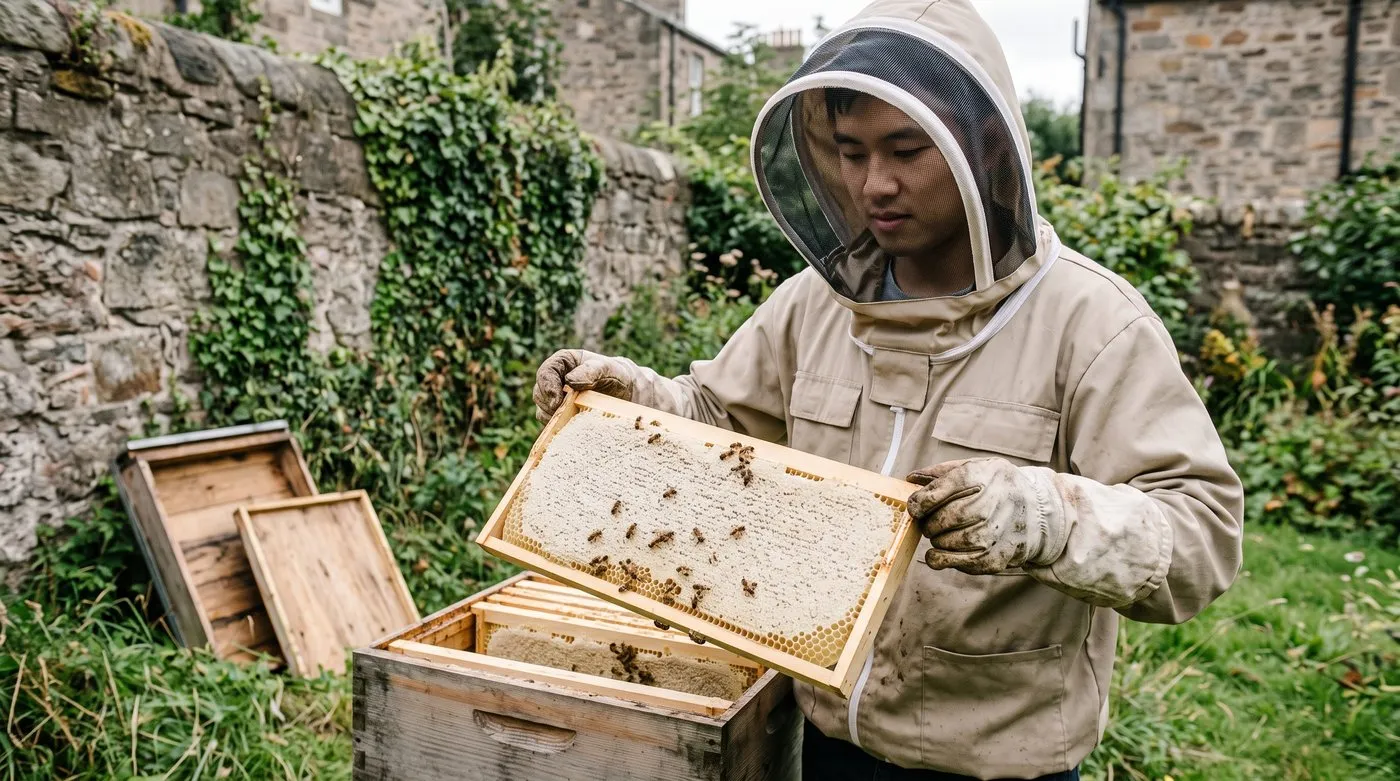
A frame of capped honey is the reward, but most colonies need a year to build up before you take any.
Taking honey from a new colony can leave it short of food. Most beekeepers take nothing in year one, feed syrup in autumn, and enjoy their first proper harvest in year two. Use the first year to learn how your bees behave and to get confident with inspections.
What pests and diseases affect UK honey bees?
Varroa is the biggest problem. These tiny mites live on bees and their young and spread viruses, such as deformed wing virus. Almost every UK colony has them, and untreated colonies usually decline and die.
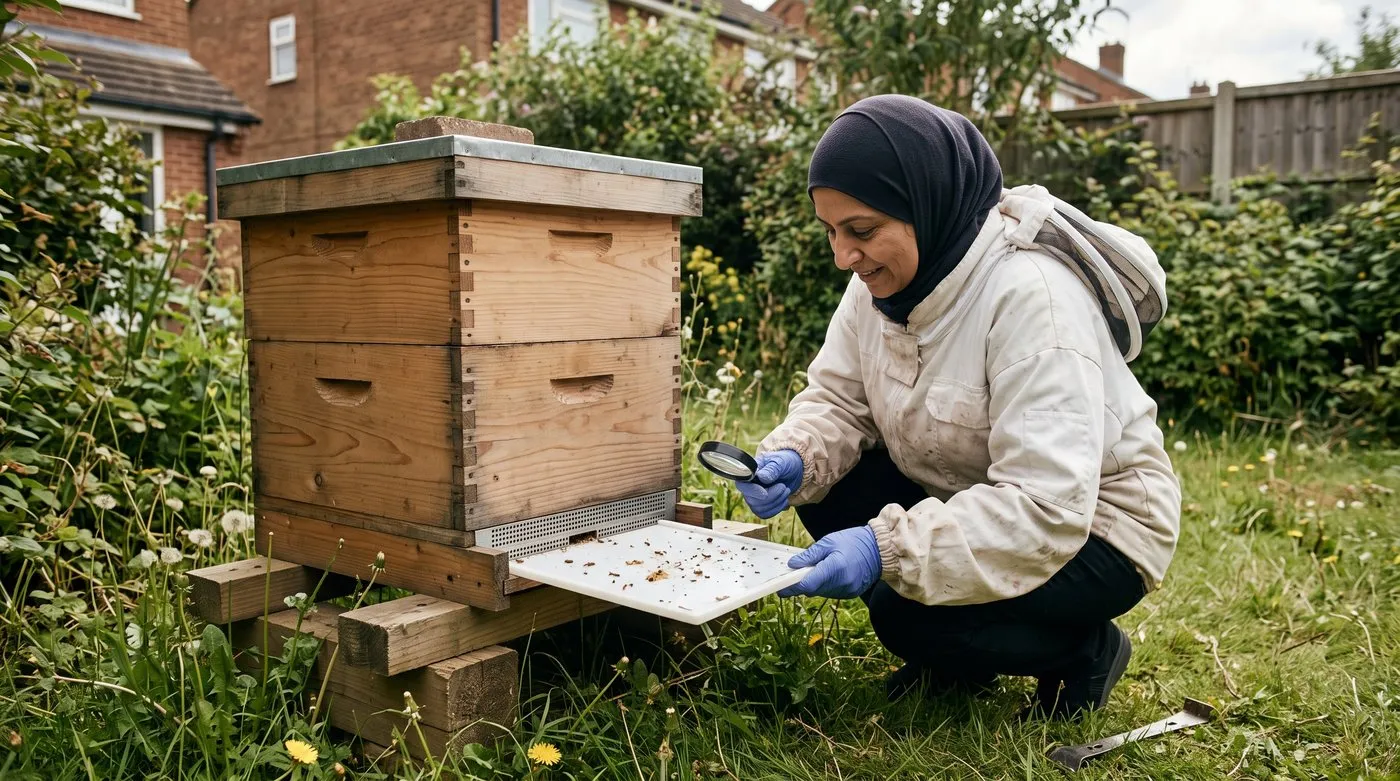
Counting the mites that drop onto a board under the hive tells you when it’s time to treat.
Monitor mite levels through the season, for example by counting mites that drop onto a board under a mesh floor. Treat with an authorised varroa treatment, following the label exactly. Many beekeepers treat after the honey comes off in late summer, and again in midwinter when there’s little brood. Your mentor and the National Bee Unit can advise on timing.
| Problem | Signs | What to do |
|---|---|---|
| Varroa | Mites on the drop board, bees with crumpled wings | Monitor and treat with an authorised product |
| American foulbrood | Sunken, dark cappings and ropy, smelly larvae | Notifiable: report it, don’t move any kit |
| European foulbrood | Twisted, discoloured young larvae | Notifiable: report it to the bee inspector |
| Chalkbrood | Chalky white “mummies” at the entrance | Usually clears up in a strong colony |
| Wax moth | Webbing and tunnels in stored comb | Store spare frames cold and sealed |
| Asian hornet | Hornets hovering at the hive entrance | Report sightings with the Asian Hornet Watch app |
American and European foulbrood are notifiable diseases. If you suspect either, you must report it to the National Bee Unit. AFB-infected colonies are destroyed, so registration on BeeBase, and early warning of outbreaks, really matters.
How do honey bees help your garden?
Honey bees pollinate fruit and veg, including apples, pears, plums, strawberries, raspberries, beans and courgettes. A hive at the bottom of the garden means plenty of visits to your fruit blossom.
Honey bees work alongside wild pollinators, such as bumblebees and solitary bees. Bumblebees fly in cooler, duller weather than honey bees, so a mix of bees gives better cover. Grow plenty of flowers from early spring to late autumn to feed them all. The guide to autumn flowering plants for bees helps fill the late-season gap.
Common beginner beekeeping mistakes
- Buying bees before learning. Take a course and handle bees with a mentor first.
- Skipping inspections in May and June. Miss queen cells and half your bees may swarm away.
- Taking too much honey. Leave the bees enough for winter, and feed in autumn if needed.
- Ignoring varroa. Monitor through the year and treat with an authorised product.
- Putting the hive by a path. Face it away from people and use a barrier to lift the flight path.
- Opening the hive in winter. Cold bees lose heat fast. Heft it instead.
Ready to plant for your bees? Browse the wildlife section, then use the guide to the best bee-friendly plants for UK gardens to fill your borders with forage.
Frequently asked questions
Do I need a licence to keep bees in the UK?
No, you don’t need a licence or permit to keep bees in the UK. You’re strongly encouraged to register your hives on BeeBase, the free National Bee Unit database. Bee inspectors can then warn you about disease outbreaks nearby. Check your deeds, lease or allotment rules too, as some ban bees.
How much does it cost to start beekeeping?
Expect to spend a few hundred pounds to get started. That covers a hive, a colony of bees, a bee suit, gloves, a smoker and a hive tool. Prices vary a lot, so ask your local association. Second-hand kit must be cleaned carefully to avoid spreading disease.
What type of beehive should a UK beginner use?
The National hive is the usual choice for UK beginners. It’s the most common hive in Britain, so parts, frames and second-hand kit are easy to find. Your mentor will most likely use one too, which makes learning much easier.
Will I get honey in the first year?
Usually not, or only a little. A new colony spends its first season building up numbers, making comb and storing food for winter. Taking honey too soon can leave it short. Most beekeepers get their first real harvest in the second year.
How often do I need to inspect the hive?
Every 7-9 days from about April to August. You’re checking for eggs, healthy brood, space for the queen to lay, signs of disease and queen cells that mean a swarm is coming. From autumn to early spring, leave the hive closed and just check its weight.
What is varroa mite and why does it matter?
Varroa is a tiny mite that lives on honey bees and spreads viruses. It’s in almost every UK colony. Left untreated, it weakens and usually kills colonies. Monitor mite levels through the year and treat with an authorised product, following the label.
Do I need permission from neighbours to keep bees?
You don’t need their permission, but it’s good manners to tell them. Face the hive away from paths and fences. A 2m fence or hedge in front makes bees fly up over people’s heads. Give your bees water so they don’t visit next door’s pond.
Our team produces practical UK gardening guidance from source research, contributor records and established horticultural practice. Editorial standards are overseen by Matt W.