Key takeaways
- A standing dish of sugar water is not a good way to help bees
- Sugar water has no pollen, and colonies need pollen to raise young
- Shared sugar dishes attract wasps and can spread disease between colonies
- Never put out honey for bees, as it can carry serious bee diseases
- For a genuinely exhausted bumblebee, offer one drop of 50:50 white sugar and water, once
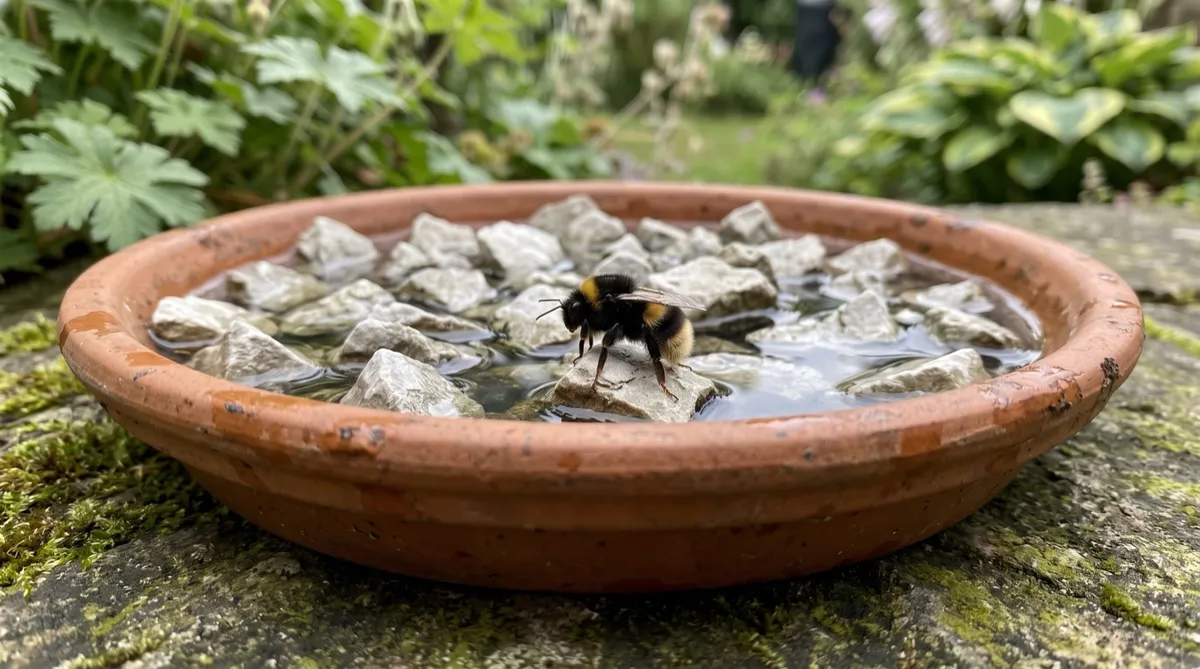
- A shallow dish of plain water with stones, plus plenty of flowers, helps bees far more
A bee bar is a dish of sugar water left out to revive tired bees. It sounds kind, but a standing sugar dish does more harm than good. Plain water and plenty of flowers are what really help.
The idea has spread fast on social media, and the instinct behind it is a good one. Bees are struggling and people want to help. Here’s why bee bars don’t work and when a drop of sugar water is fine. You’ll also see how to make a simple water dish that bees actually use.
What is a bee bar?
A bee bar is a shallow dish of sugar water, sometimes with pebbles or marbles in it, left in the garden for bees to drink. Some are sold as small ceramic dishes that clip onto a fence or pot.
The thinking goes like this: you find a bee sitting still on a path, assume it’s exhausted, give it sugar, and it flies off. Sometimes that’s true. Often, though, the bee isn’t short of energy at all. And leaving a dish of sugar out all the time is a different thing from helping one bee once.
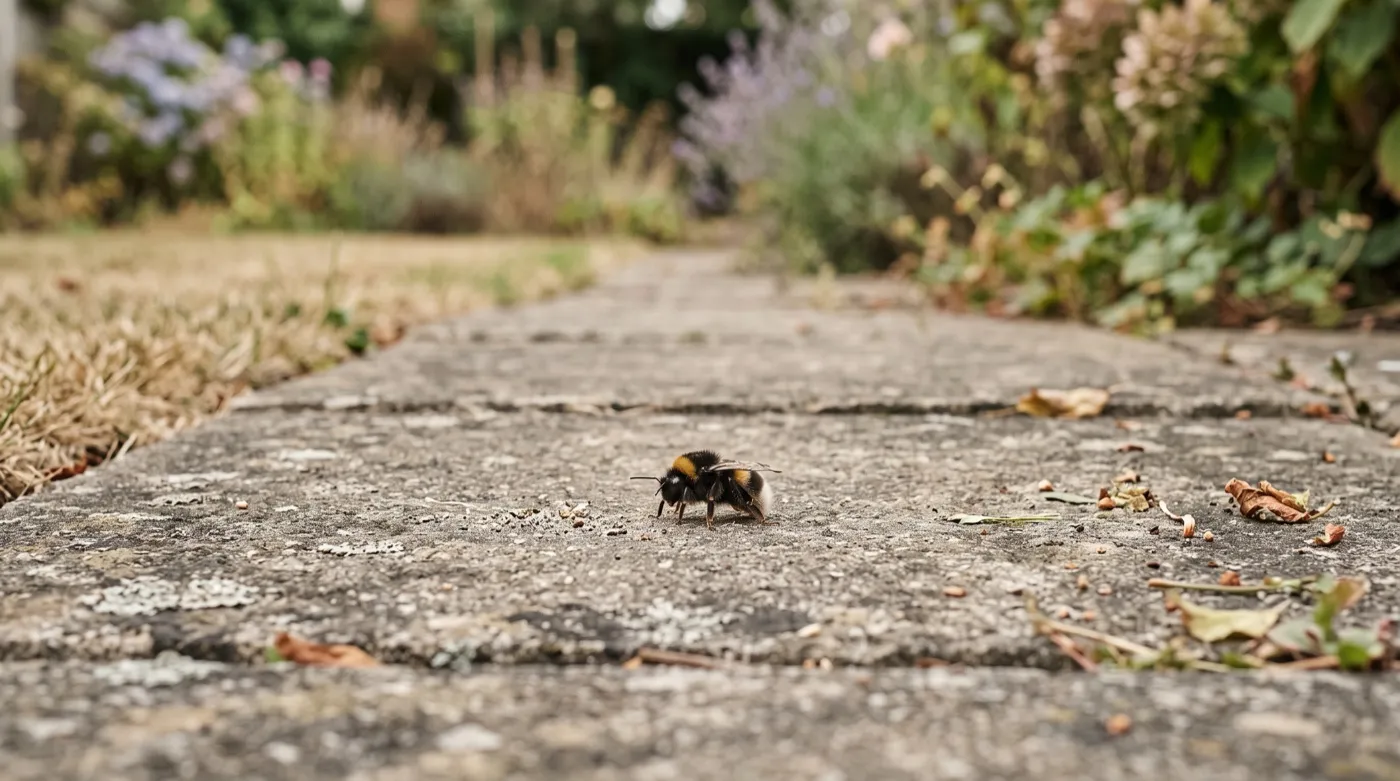
A bee on the path is the sight that makes most people reach for the sugar. In late summer, it’s often just an old bee.
Why a bee on the ground is often just old
Worker bees don’t live long in summer. A worker honeybee lives only about six weeks at that time of year, and bumblebee workers don’t last much longer. They spend their last few weeks flying out for food, and that wears them out.
You can sometimes see the signs. Old bees often have ragged, nicked wing edges and a bald, shiny patch on their back where the hair has rubbed off. That wear can’t be fixed with sugar.
If a bee looks old and worn, the kindest thing is to move it gently off the path onto a flower or a leaf. Let nature take its course.
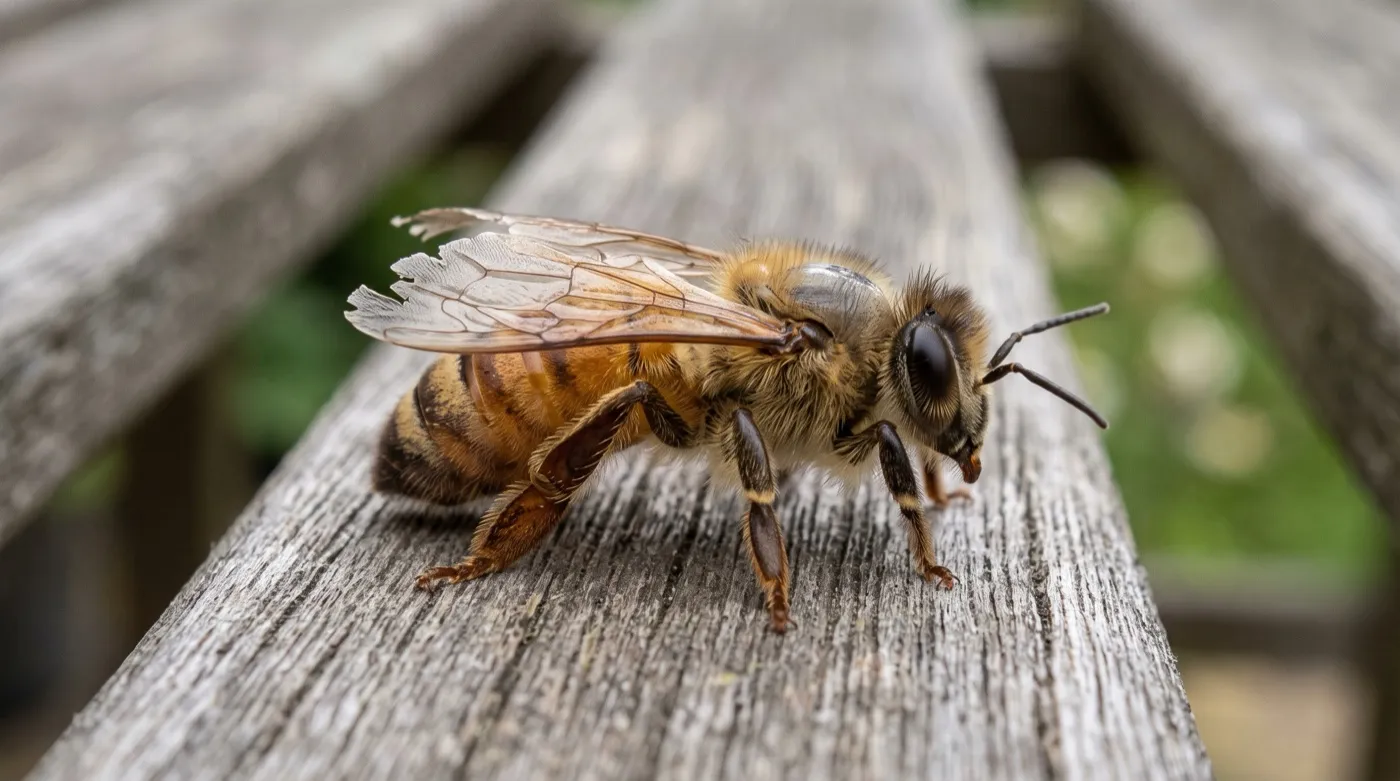
Ragged wing edges are a sign of an old bee at the end of its working life. Sugar water can’t fix worn wings.
Why sugar water dishes do more harm than good
A dish of sugar water left out all the time causes three problems.
- No pollen. Sugar gives bees energy but no protein. Colonies need pollen to raise their young, and only flowers provide it.
- It pulls bees off flowers. An easy sugar supply can draw bees away from flowers, so they spend less time feeding properly and pollinating.
- Crowds spread disease. A busy dish brings together bees from different nests, plus wasps and ants. Packing them into one spot is an easy way for diseases to spread. It can also set honeybees from a strong hive robbing a weaker one nearby.
That’s why bee charities and beekeepers advise against leaving sugar water out. Old dishes also go cloudy and sticky quickly and fill with drowned insects.
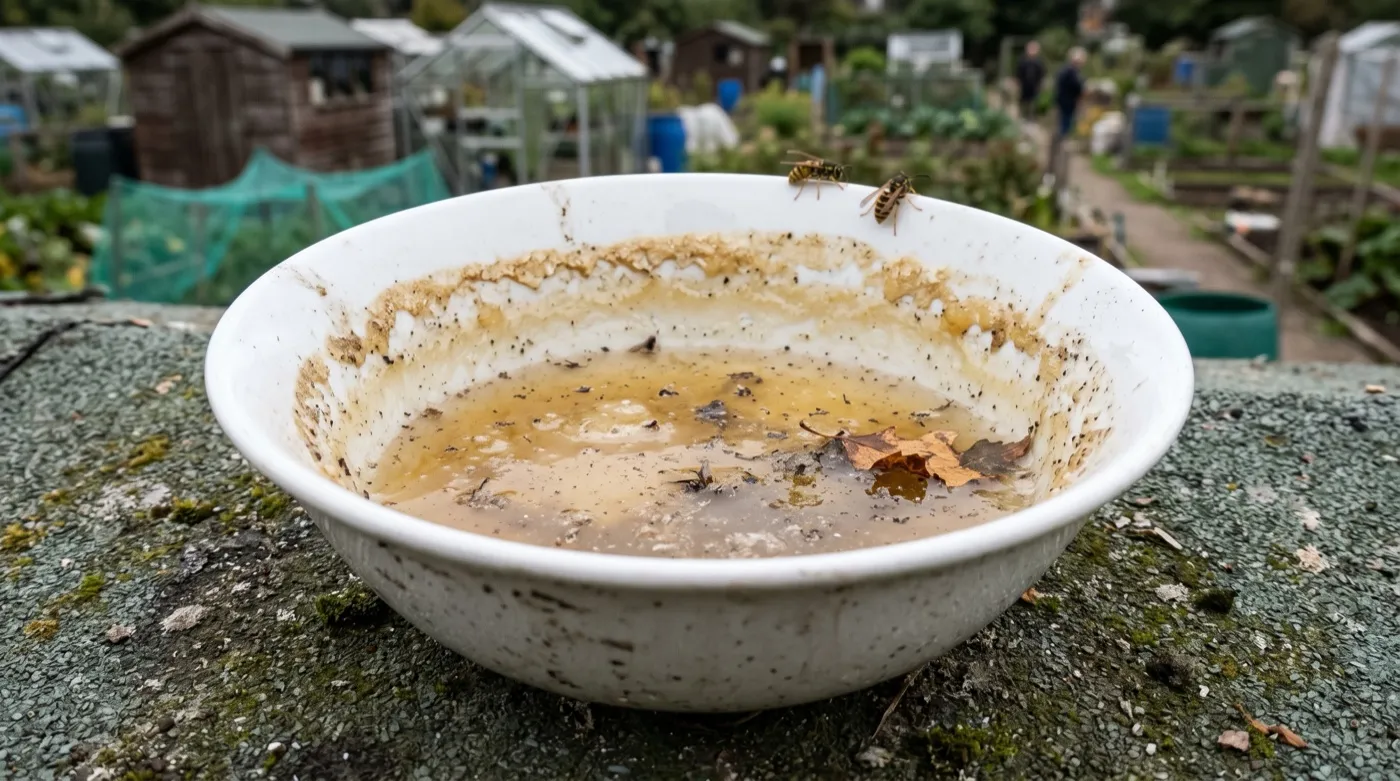
This is how most sugar dishes end up: cloudy, full of drowned insects and busy with wasps.
Never give honey to bees
This is the one hard rule.
Warning: Never put honey out for bees. Honey can carry spores of serious bee diseases, including American foulbrood, which kills honeybee young. The spores last for many years and can be found in shop-bought honey. American foulbrood is a notifiable disease in the UK, and infected colonies are usually destroyed. Rinse honey jars before you recycle them.
Honey seems like the natural choice, as it’s bee food. But it’s from a different colony and may carry disease. The National Bee Unit has more on bee diseases if you’d like to know more.
When a drop of sugar water is the right call
There is a time when sugar water helps: a genuinely exhausted bumblebee. This is most often a queen in early spring. She’s just woken from hibernation on a cold day, before much is in flower, and she may simply have run out of fuel. She’s the start of a whole new colony, so she’s worth helping.
If you find a sluggish bumblebee like this:
- Try a flower first. Gently move her onto a nectar-rich flower, such as a crocus, lungwort or pussy willow.
- If there are no flowers, mix equal parts white granulated sugar and warm water. Stir until it’s clear and let it cool.
- Put a drop on a spoon and rest it on the ground next to her head. Never pour it over her, as sticky hair stops her flying.
- Move her somewhere sheltered, out of the wind and off the path, and leave her alone.
Do this once, for that one bee. Never use honey, brown sugar or syrup. This is first aid, not a feeding station. The Bumblebee Conservation Trust gives the same advice. The bumblebee species guide helps you tell queens from workers.
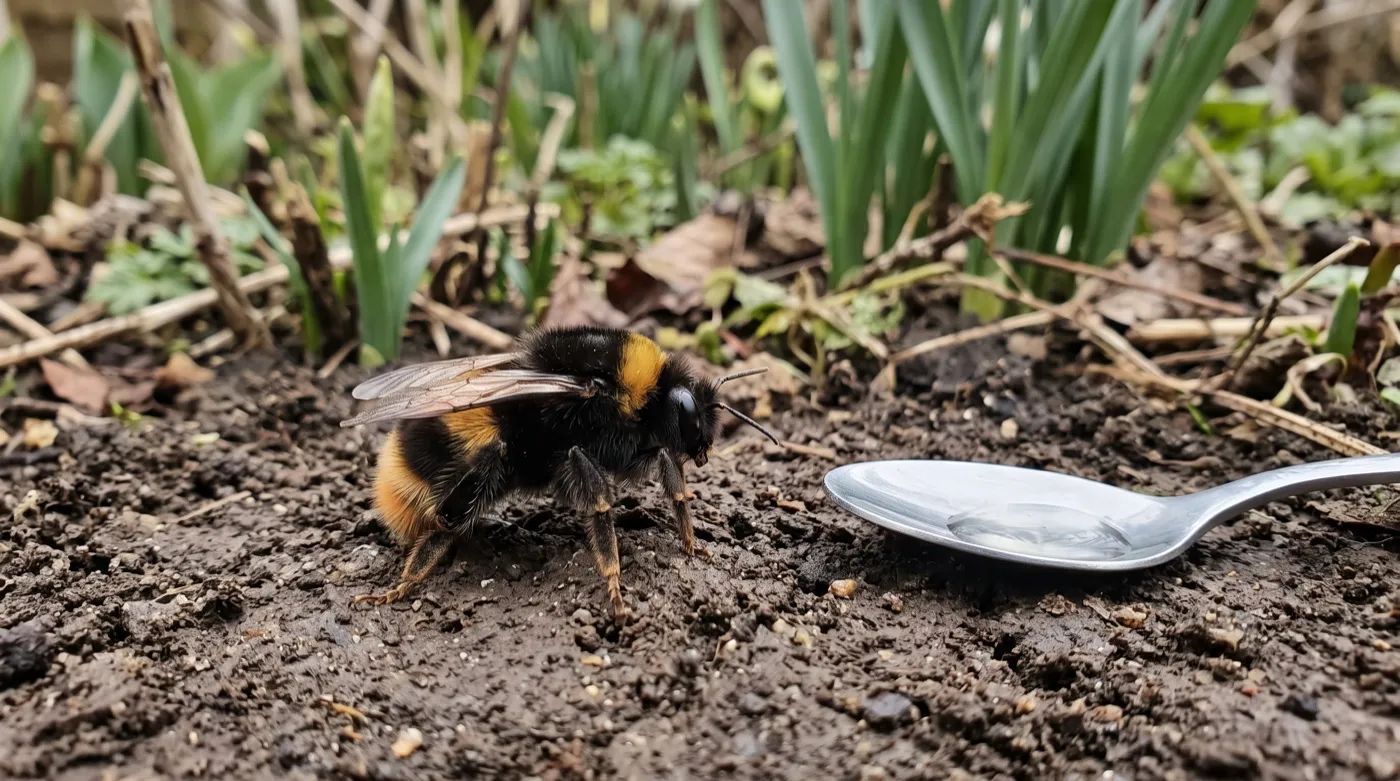
A tired queen on a cold spring day is the one time a single drop of sugar water makes sense. Rest the spoon beside her, not on her.
How to make a bee water station
Here’s the part of the bee bar idea worth keeping. Bees really do need water, especially in hot weather, and they often drown trying to reach it. Honeybees use water to cool their hive and to thin their stores, as the guide to honeybees in the garden explains.
- Dish: a plant saucer, an old baking tray or a drip tray, just a few centimetres deep.
- Fill: pebbles, gravel, marbles or wine corks, packed so they stick up above the water. Bees land on the dry tops and drink from the wet edges.
- Water: plain tap water only. No sugar, honey or salt.
- Upkeep: top it up every day or two in hot weather and scrub it out every week.
A deep bird bath is a common bee trap. The sides are too smooth and steep, and bees can’t swim. Drop in a flat stone that breaks the surface, or a few corks. The bird bath placement and cleaning guide covers keeping it safe for birds too.
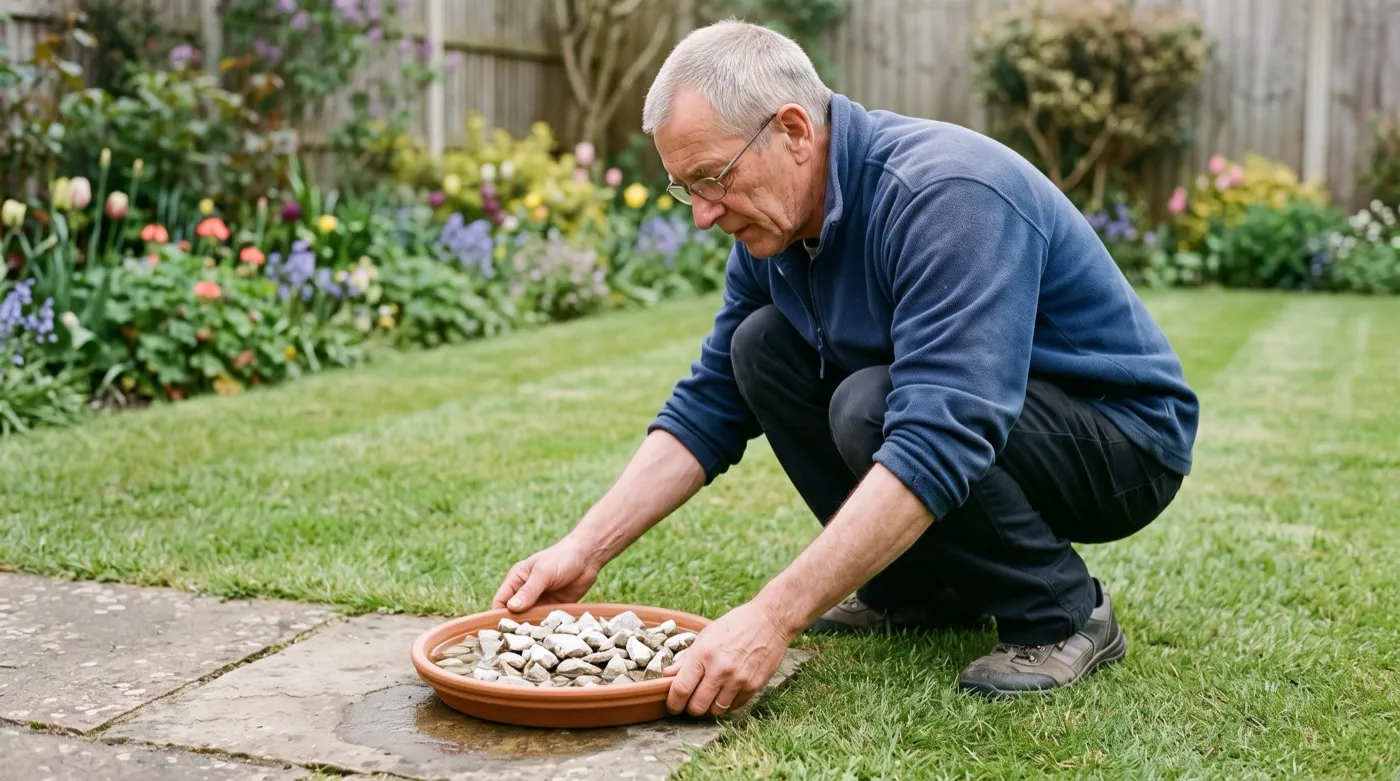
A plant saucer filled with stones and plain water is all a bee water station needs.
Where to put a bee water dish
Put the dish in a sunny, sheltered spot near flowering plants. Bees find it while they’re feeding, so an empty corner gets ignored.
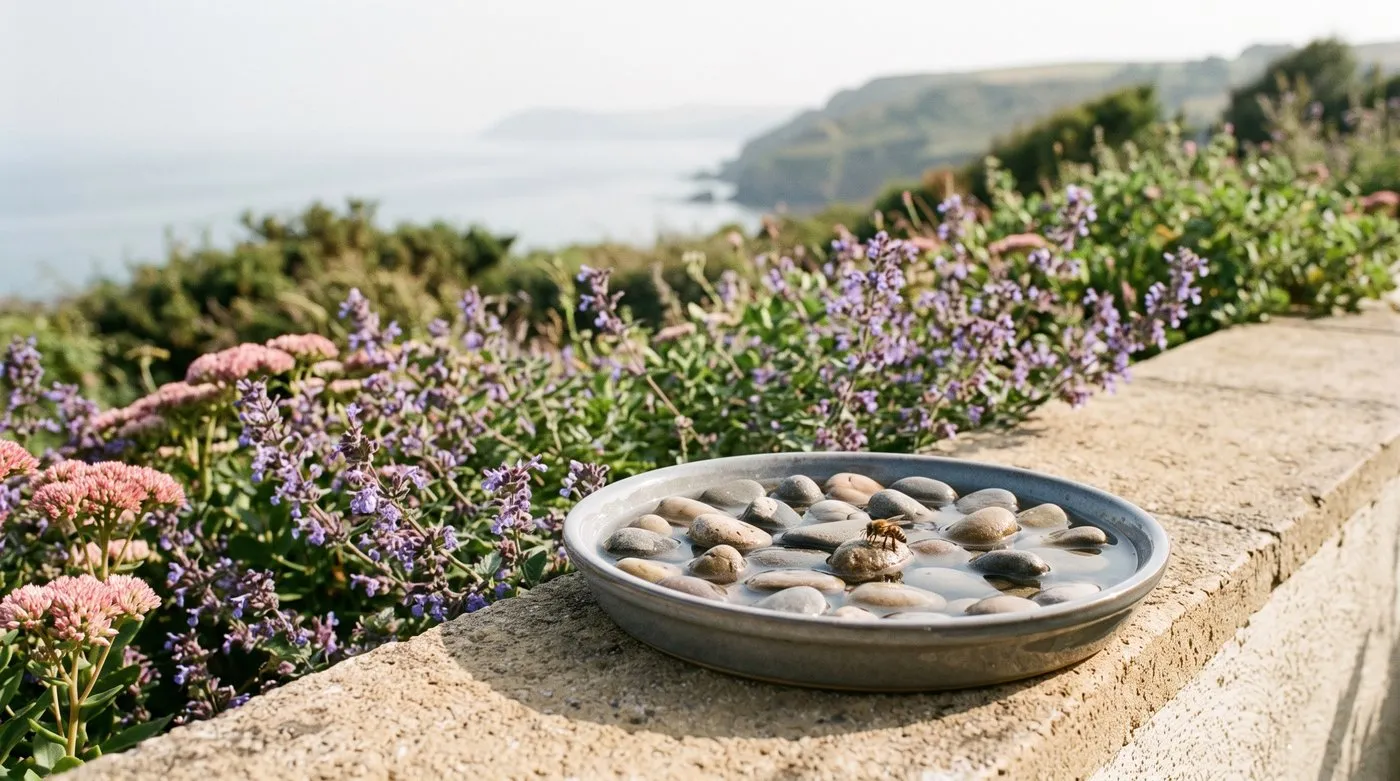
A sunny spot right next to flowers is ideal. Bees find the water while they’re feeding.
Keep it a little away from where people sit. A busy dish brings a steady stream of bees in summer. It’s lovely to watch, but not right next to the patio table.
Height doesn’t matter much. The ground, a wall top or a low shelf all work. What matters is keeping it topped up, so bees can rely on it.
Bee bars and the alternatives compared
| Option | What it gives bees | Verdict |
|---|---|---|
| Flowers through the year | Nectar and pollen | The best thing you can do |
| Shallow water dish with stones | Safe drinking water | Worth doing |
| One drop of sugar water for a tired bumblebee | A one-off energy boost | Fine as first aid |
| Standing dish of sugar water | Sugar only, plus crowding | Skip it |
| Honey | Risk of spreading bee disease | Never |
The real answer: flowers in spring and autumn
What really helps bees is flowers across the whole season. Midsummer is rarely the problem, as most gardens are full of flowers in June. The gaps come at either end.
- Early spring: bumblebee queens wake on mild days from February, often before much is in flower. Plant crocuses, snowdrops, pussy willow, lungwort and winter heather. The guide to early spring pollinator plants has more ideas.
- Autumn: colonies are stocking up and new queens are feeding before winter. Ivy, single asters, sedum, Verbena bonariensis and mahonia fill this gap. See the guide to autumn flowering plants for bees.
Choose single flowers with an open centre. Tight doubles often give bees little or nothing.
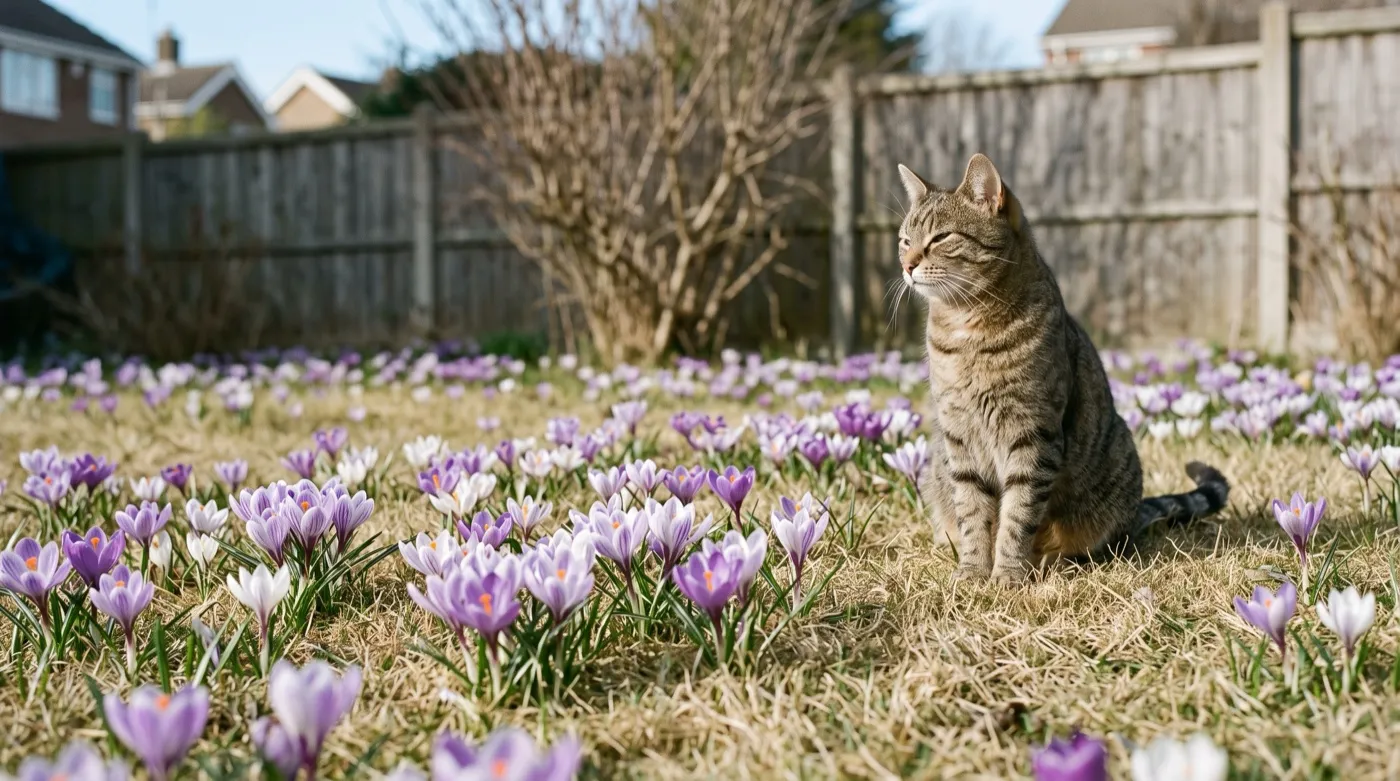
Crocuses planted in the lawn open on the first sunny days of spring, just when bumblebee queens are waking up hungry.
Month-by-month calendar for helping bees
| Month | What to do |
|---|---|
| January | Leave ivy and dead stems standing. Plan your early spring flowers |
| February | Crocuses and snowdrops open. Watch for tired queens on cold days |
| March | Queens are out. Pussy willow and lungwort earn their place |
| April | Set out a water dish. Fruit blossom feeds lots of bees |
| May | Top up the water dish in warm spells |
| June | Scrub the dish weekly. Leave clover flowering in the lawn |
| July | Never let the water dish run dry in hot weather |
| August | Bees on the ground are often old. Move them onto flowers |
| September | Ivy starts flowering. Asters and sedum are busy |
| October | Ivy at its best. Leave it unclipped |
| November | Mahonia opens. Keep the water dish going in mild spells |
| December | Leave stems and leaf litter for overwintering insects |
Common mistakes when trying to help bees
- Leaving sugar water out all the time. It attracts wasps, spreads disease and feeds no young. Keep sugar for one-off first aid.
- Putting out honey. It can spread serious bee diseases. Never do it.
- Pouring sugar water over a bee. It sticks to her hair and stops her flying. Use a drop on a spoon beside her.
- Using a deep bird bath with no landing spot. Add stones or corks so bees don’t drown.
- Letting the water dish dry out. Bees come to rely on a regular supply, so keep it topped up.
- Tidying too early. Cutting back ivy and late flowers in autumn removes food bees still need.
Keep the kind instinct and point it at the things that work: plain water and plenty of flowers. For more ideas, browse the wildlife section. Then fill your borders for the whole season with the guide to the best bee-friendly plants for UK gardens.
Frequently asked questions
Should I give sugar water to a tired bee?
Only as a one-off for a bee that’s genuinely exhausted. First try moving it onto a flower. If that doesn’t work, offer a drop of 50:50 white sugar and water on a spoon. Many bees on the ground in late summer are simply old, and sugar won’t help them.
Do bee bars actually work?
No, a standing dish of sugar water does more harm than good. It has no pollen, which colonies need to raise young. It draws bees from different nests together with wasps, which can spread disease. Flowers and a dish of plain water help far more.
Can I give honey to bees?
No, never put honey out for bees. Honey can carry spores of serious bee diseases, such as American foulbrood. It’s harmless to people but can infect honeybee colonies. Rinse honey jars before recycling them.
What is the right sugar water ratio for a tired bumblebee?
Use equal parts white granulated sugar and water. Stir until clear and let it cool. Put a drop on a spoon next to the bee’s head, never over the bee. Don’t use brown sugar, honey or syrup, and only do it once.
How do I make a bee water station that works?
Use a shallow dish filled with stones that poke above the water. Bees land on the dry stones and drink from the edges. A plant saucer works well. Top it up with plain tap water in hot weather and scrub it out every week.
Why do bees drown in bird baths?
Bird baths are often too deep and smooth for bees. Bees can’t swim, and with nothing to grip they slip in. Add a flat stone that breaks the surface, or a few corks, to give them a safe landing spot.
What actually helps bees most in a UK garden?
Flowers through the whole year, especially early spring and autumn. Those are the times gardens most often run short. Crocuses, pussy willow, lungwort, ivy, asters and sedum fill the gaps better than any feeding station.
Our team produces practical UK gardening guidance from source research, contributor records and established horticultural practice. Editorial standards are overseen by Matt W.


