Key takeaways
- Phacelia is both a quick green manure and one of the best flowers for bees
- Sow from March to September, scattering about 2g of seed per square metre
- Dig it in after 6-8 weeks, before flowering, while the stems are still soft
- It adds no nitrogen, but smothers weeds and opens up the soil with its roots
- No common vegetable is in its plant family, so it fits any gap in a rotation
- Cut it down as the flowers fade, or it self-seeds all over the plot
Phacelia is a fast, easy annual that does two jobs at once. Sow it on bare soil and you get a weed-smothering green manure in about six weeks. Let the same plants flower and bees and hoverflies flock to the lacy blue heads.
This guide is all about phacelia itself: when to sow it, how to dig it in, and how to grow it for flowers. For a wider look at every cover crop, including clover, rye and field beans, see our guide to green manures and cover crops.
What is phacelia and why grow it?
Phacelia tanacetifolia is a hardy annual from California and the south-west USA. It is also called lacy phacelia or fiddleneck. In the UK it is grown both as a green manure and as a flower for pollinators.
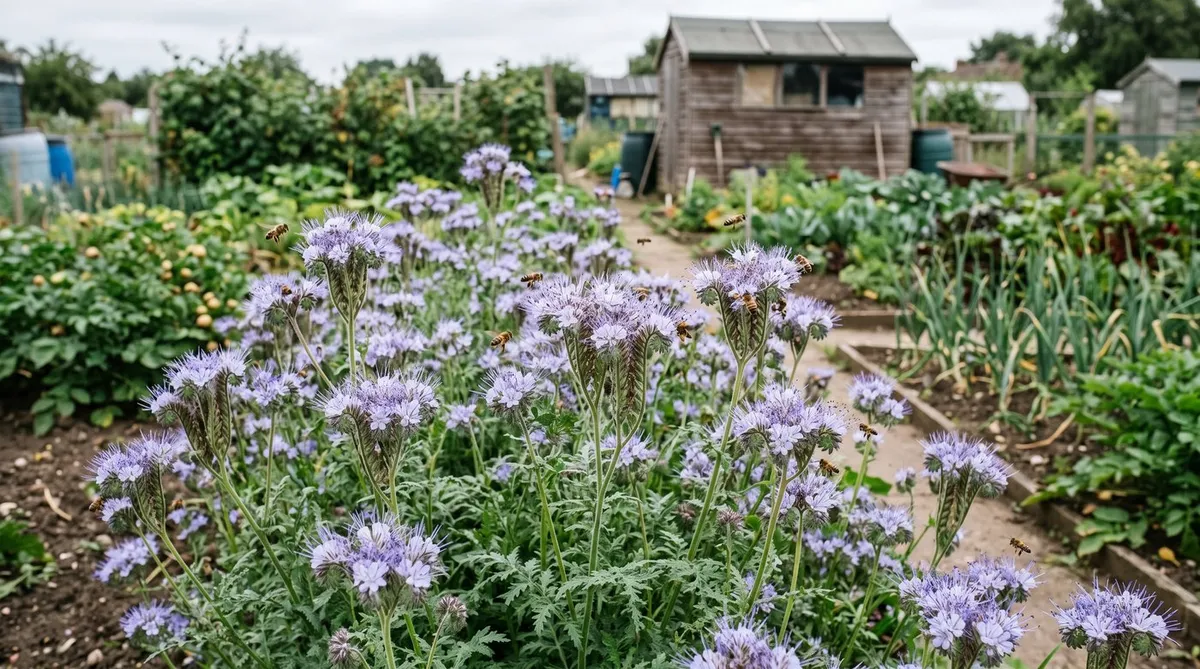
Plants reach 60-90cm tall. The leaves are ferny, finely cut and grey-green. The lavender-blue flowers sit in coiled heads that unroll as they open. Long stamens stick out from each flower, giving the heads a fuzzy look.
You can choose one job or do both. Dig some of the patch in while it’s young, then let the rest flower for the bees.
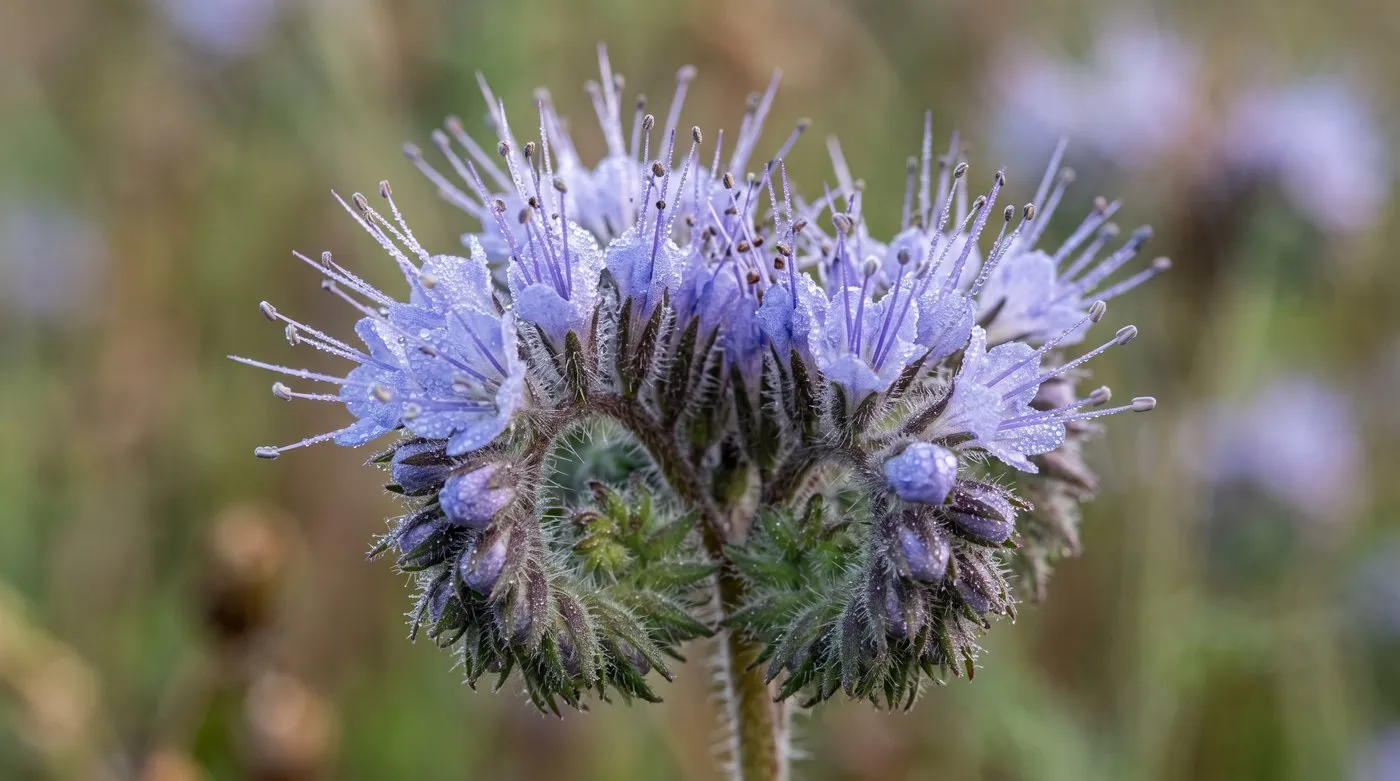
The coiled flower head unrolls as it opens. Those long, whiskery stamens are an easy way to recognise phacelia.
Where does phacelia grow best?
Phacelia grows almost anywhere with some sun. It isn’t fussy about soil and needs no feeding.
- Sun: full sun is best for flowers and bees. In shade, plants get leggy and flower poorly.
- Soil: anything from sandy to clay. It copes with poor ground and short dry spells.
- Drainage: avoid soggy beds for late sowings, as young plants can rot in wet, cold soil.
That’s why it suits allotments, empty veg beds, new borders and gaps in a wildlife patch. It asks for little and grows fast.
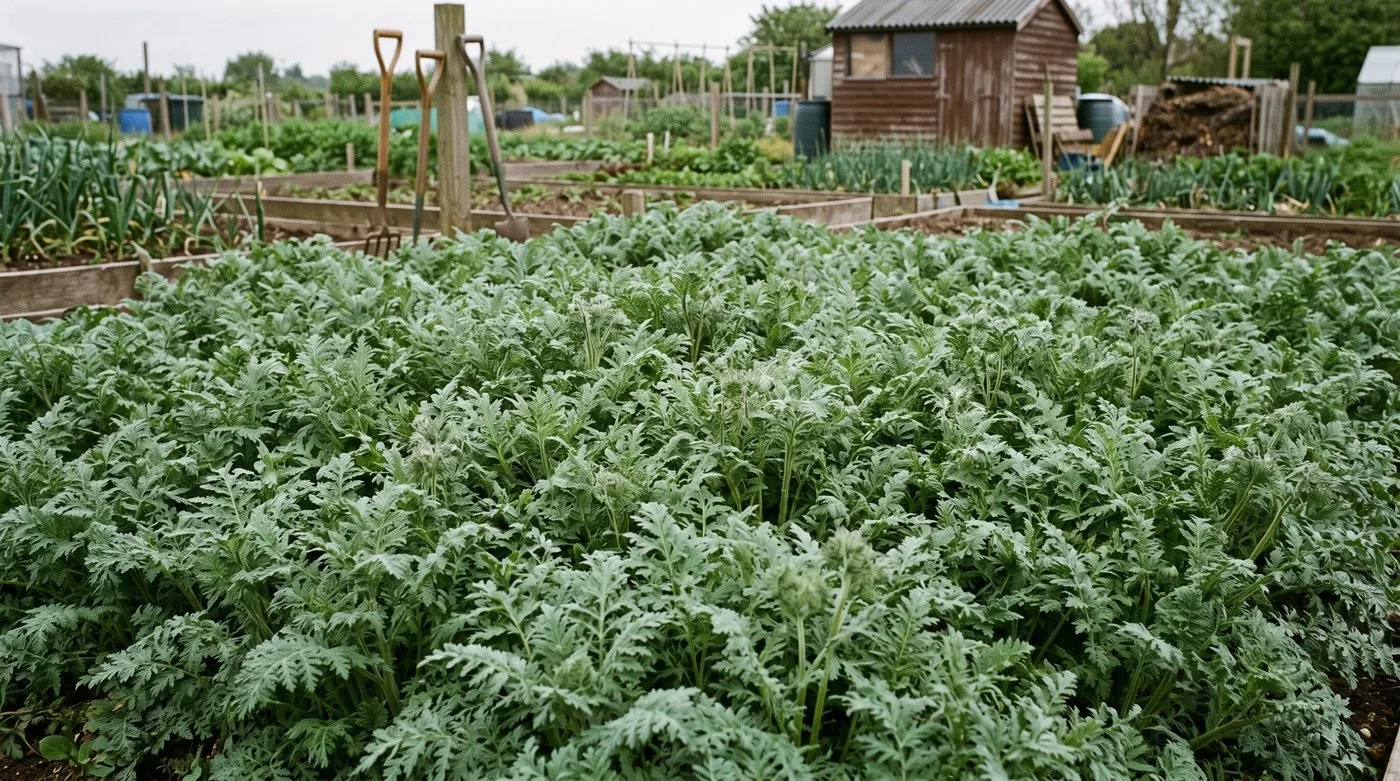
A few weeks after sowing, phacelia’s ferny leaves cover the bed and shade out weed seedlings.
How to sow phacelia as a green manure
Scatter the seed over a cleared bed, rake it in and water if dry. That’s really all there is to it.
- Clear weeds and rake the bed roughly level.
- Scatter about 2g of seed per square metre as evenly as you can. A light, even spread works better than a thick carpet.
- Rake it in so the seed is just covered. It comes up better out of the light.
- Water if the soil is dry. Seedlings usually appear within a couple of weeks.
- Let it grow for 6-8 weeks into a dense green cover.
- Chop it down before it flowers and dig it into the top 15cm of soil.
- Wait 2-4 weeks for it to rot down before sowing the next crop.
The method is the same as sowing hardy annuals direct. If you garden no-dig, cut it at soil level and leave it on the surface under a layer of compost instead.
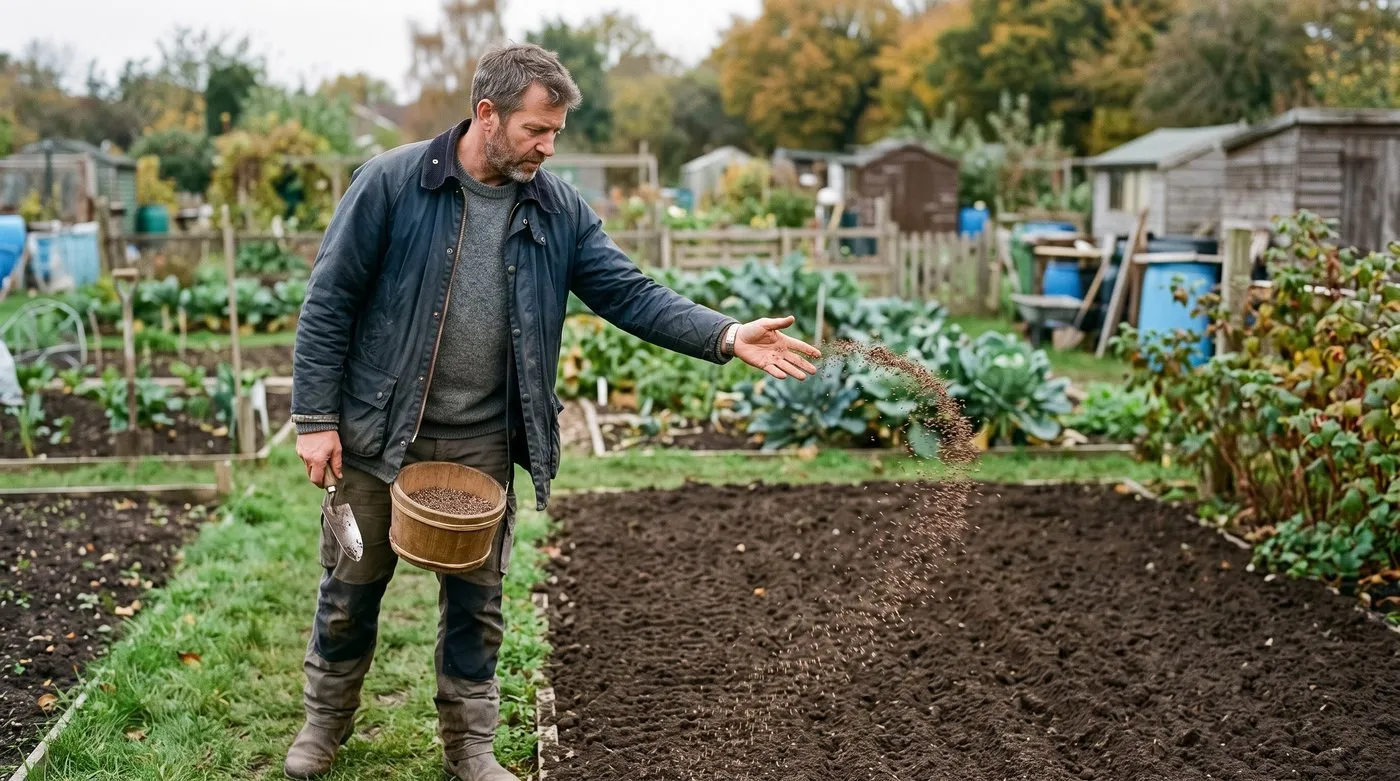
Scatter the seed lightly and evenly by hand, then rake it in so it’s just covered.
Gardener’s tip: Want soil cover and bee food from one sowing? Dig in two thirds of the patch at six weeks. Let the rest flower, then chop it down once the flowers fade.
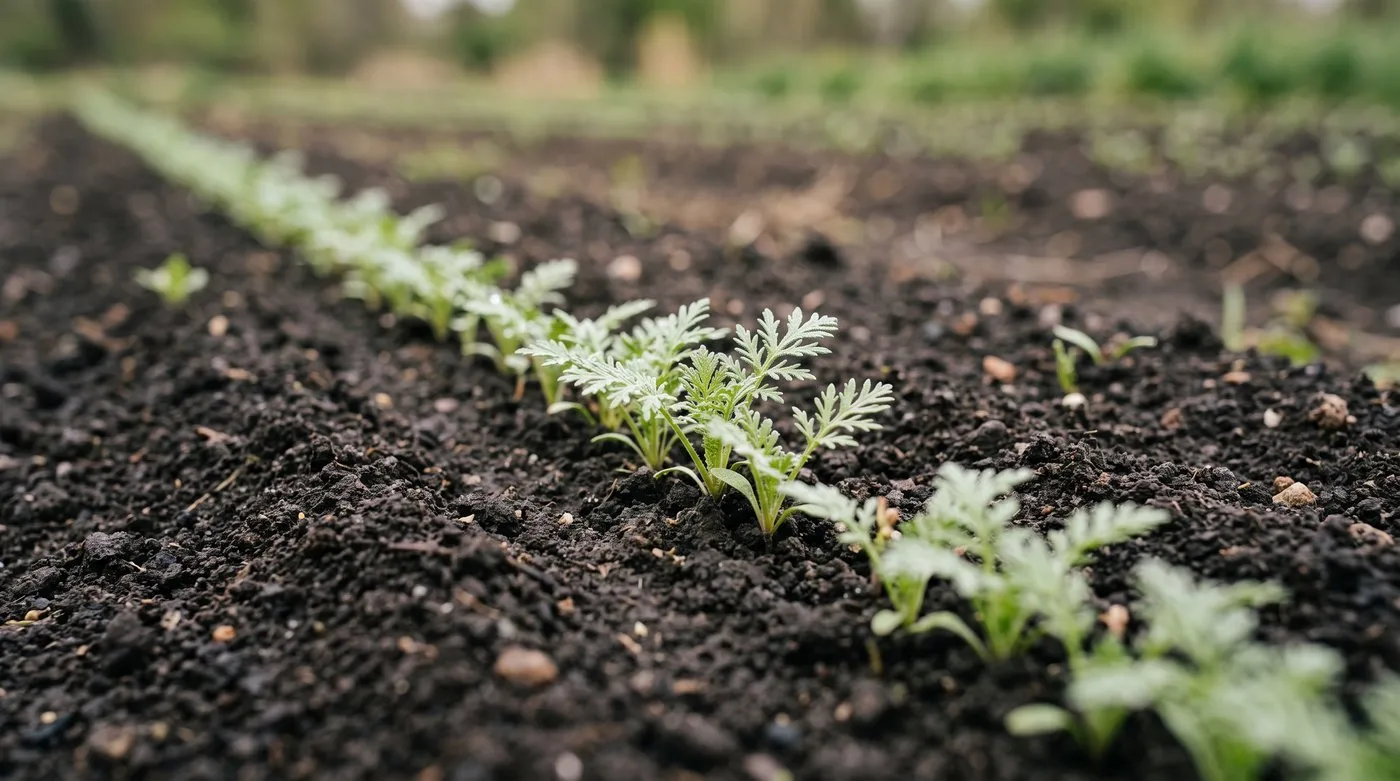
Young phacelia soon knits together into a mat that leaves little room for weeds.
Phacelia versus other green manures
Phacelia is a cover crop, not a nitrogen fixer. It protects bare soil, holds on to nutrients and improves structure with its fine roots. Only legumes such as field beans and clover add nitrogen.
| Green manure | Adds nitrogen? | Best sowing time | Survives winter? |
|---|---|---|---|
| Phacelia | No | March to September | Usually killed by hard frost |
| Mustard | No | March to September | Usually killed by hard frost |
| Field beans | Yes | Autumn | Yes |
| Grazing rye | No | Late summer to autumn | Yes |
| Crimson clover | Yes | Spring to late summer | Often, in milder areas |
Phacelia’s big plus is its plant family. No common vegetable belongs to it. Mustard is a brassica, so it doesn’t suit a bed going into cabbages. Phacelia can go into any gap in your crop rotation without upsetting the plan.
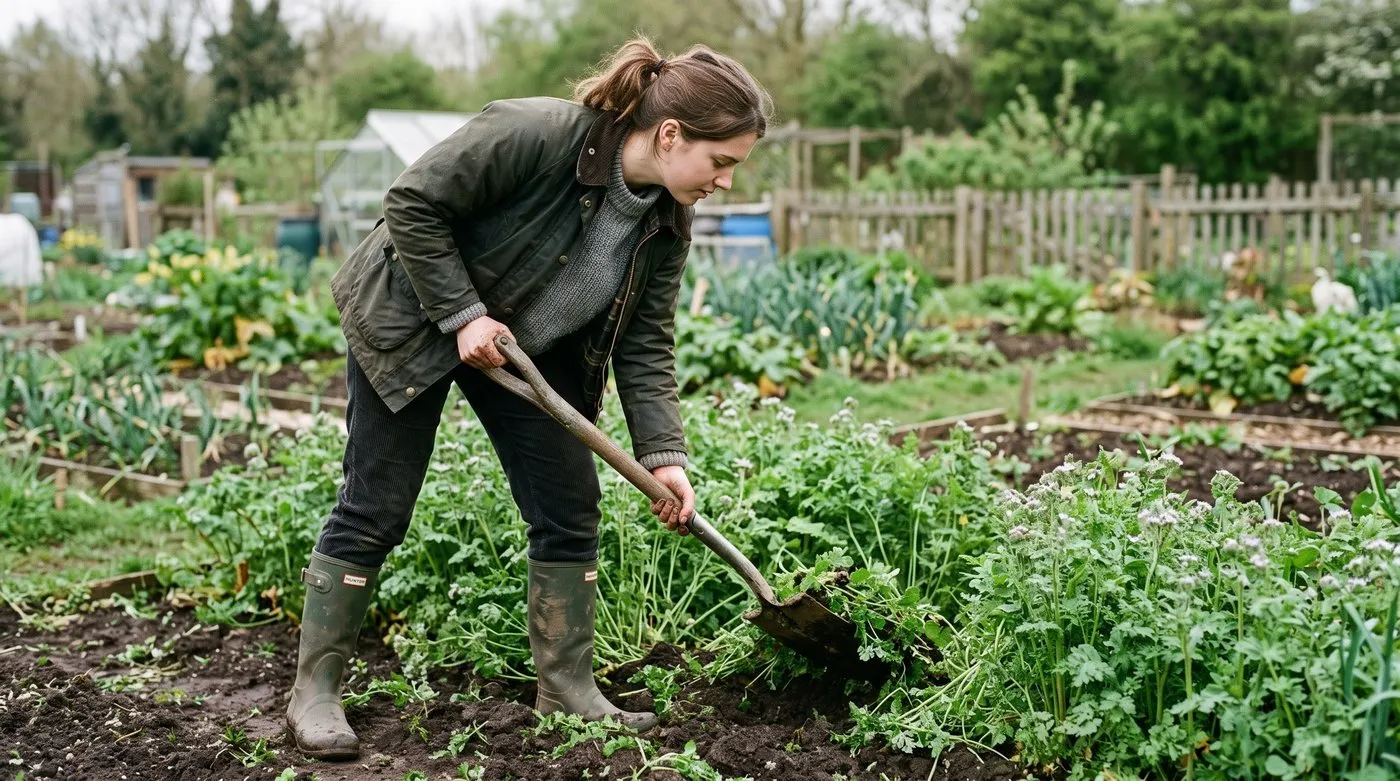
Dig phacelia in while the stems are still soft and green. Older, woody plants take much longer to rot down.
Growing phacelia for bees and hoverflies
Phacelia is one of the best flowers you can sow for pollinators. The open flowers are easy to feed from, and they keep producing nectar through the day.
Honeybees, bumblebees and solitary bees all visit. It earns a place on any list of bee-friendly garden plants, and it looks lovely in a border too.
Hoverflies are a bonus. The adults feed on the flowers, and their larvae eat aphids. Sow a strip of phacelia next to aphid-prone crops to bring them in. Our guide to hoverflies in the garden explains how to tell them from wasps.
For flowers, sow direct where they are to grow and thin seedlings to about 15-20cm apart. Bushier plants flower better. Sow a short row every 3-4 weeks from April to July for flowers from early summer into autumn.
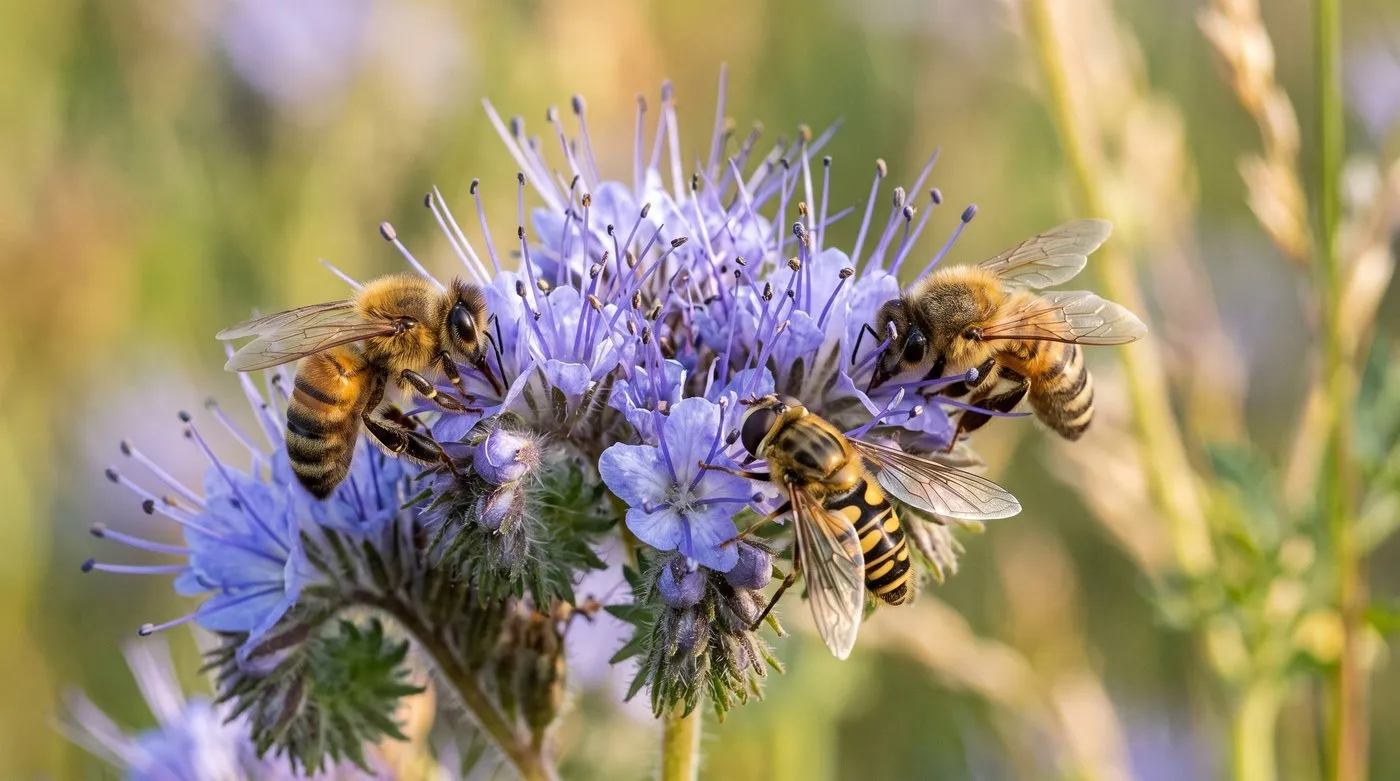
Honeybees and a hoverfly sharing one flower head. Hoverfly larvae go on to eat aphids on nearby plants.
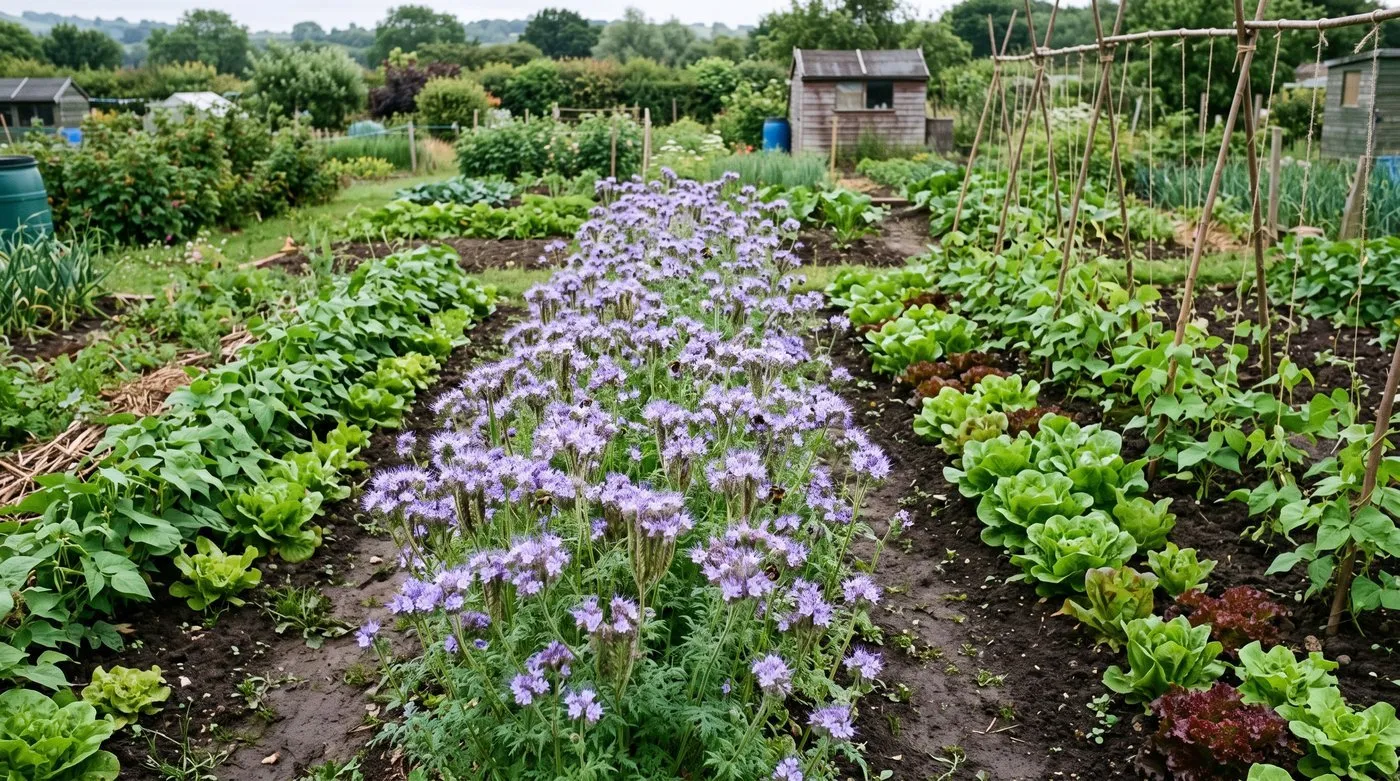
A strip of phacelia between the veg rows keeps pollinators and aphid-eating hoverflies busy all summer.
Month-by-month phacelia calendar
Phacelia has a long sowing window, so you can fit it around your other crops.
| Month | What to do |
|---|---|
| January to February | Order seed. Too cold to sow outdoors |
| March | First green manure sowings on warm, well-drained beds |
| April | Sow for green manure or flowers. Start sowing flower rows every 3-4 weeks |
| May | Main sowing month. Thin flower rows to 15-20cm |
| June | Dig in March and April green manures. First flowers on April sowings |
| July | Flowering in full swing. Last flower sowings |
| August | Sow on cleared beds for autumn cover |
| September | Last sowings, to leave a frost-killed mulch over winter |
| October | Cut down plants as flowers fade, before seed ripens |
| November to December | Frost-flattened growth protects bare soil. Nothing to do |
Self-seeding and other problems
Phacelia is largely free of pests and diseases. The two things to watch are self-seeding and frost.
Self-seeding catches most people out. Once the coiled heads turn brown, seed ripens quickly and drops. Seedlings can then appear for a couple of years. Like other easy self-seeding plants, it’s welcome in the right spot and a weed in the wrong one.
Frost kills phacelia, as it’s an annual. For autumn sowings that’s often the plan, as the dead growth mulches the soil until spring.
Slugs may nibble young seedlings in wet weather. Thin sowings recover quickly.
Warning: The stems and leaves are bristly, and some people find they irritate the skin. Wear gloves and long sleeves when pulling or cutting a big patch.
Common mistakes with phacelia
- Expecting extra nitrogen. Phacelia adds none. Grow beans or clover if that’s what you need.
- Letting it all set seed. Cut plants down as the flowers fade unless you want seedlings everywhere.
- Sowing too thickly. Crowded plants are weak and flop over. A light, even scatter is plenty.
- Digging in too late. Flowering stems are tough and slow to rot. Dig in at 6-8 weeks.
- Sowing in winter. Seed sits in cold soil and fails. Stick to March to September.
Want more pollinator-friendly ideas for your plot? Browse our plant guides, or read our guide to solitary bees in UK gardens to meet the wild bees that phacelia feeds.
Frequently asked questions
Does phacelia fix nitrogen in the soil?
No, phacelia does not fix nitrogen. It is not a legume. It works by covering bare soil, smothering weeds and holding on to nutrients that would otherwise wash away. For nitrogen, grow field beans or clover instead.
When should I sow phacelia in the UK?
Sow phacelia outdoors from March to September. Spring and summer sowings grow fast and can be dug in or left to flower. August and September sowings flower little, and frost usually turns them into a winter mulch.
How long does phacelia take to flower?
Phacelia usually flowers about 6-8 weeks after sowing. A May sowing often blooms by late June or July. Sow a fresh patch every 3-4 weeks until July for flowers into autumn.
Is phacelia good for bees?
Yes, phacelia is one of the best bee plants you can grow. Honeybees, bumblebees and solitary bees all visit the flowers. Hoverflies love it too, and their larvae eat aphids.
Does phacelia come back every year?
No, phacelia is an annual, but it self-seeds freely. Seedlings often pop up the next spring where plants were left to set seed. Cut plants down as the flowers fade if you don’t want them back.
How do I dig phacelia in as a green manure?
Chop it down before it flowers, then dig it into the top 15cm. Do this 6-8 weeks after sowing while the stems are soft. Wait 2-4 weeks before sowing or planting the next crop.
Will phacelia survive a UK winter?
Usually not, as a hard frost kills it. Young plants cope with light frost, but a cold snap flattens them. The dead growth then sits on the soil as a handy winter mulch.
Our team produces practical UK gardening guidance from source research, contributor records and established horticultural practice. Editorial standards are overseen by Matt W.