Key takeaways
- Deciduous agapanthus are the hardy ones and usually stay outside all winter
- Evergreen agapanthus are tender, so bring them under cover before the first frost
- Full sun and good drainage are a must for flowers
- Pot-grown plants flower best when their roots fill the pot
- Feed with tomato food from May to August for flowers rather than leaves
Agapanthus gives you big, bold globes of blue or white flowers on tall stems from July to September. The one thing to sort out first is whether yours is hardy or tender. Get that right and agapanthus is easy. Get it wrong and frost can finish it off.
If you like tall, striking flower spikes in sunny borders, our guide to growing kniphofia, or red hot pokers is a good next read.
Agapanthus suits a sunny border, a patio pot or a south-facing garden. Here’s how to plant, feed and overwinter it, and what to do if it won’t flower.
Hardy or tender agapanthus?
Deciduous agapanthus lose their leaves in winter and are the hardy ones. Evergreen agapanthus keep their leaves all year and are tender, so frost can damage or kill them. This one difference decides how you look after your plant.

Hardy deciduous types like Headbourne Hybrids are happy outside all year in well-drained soil.
Garden centre labels aren’t always clear, and a pot might just say “blue agapanthus”. If the label doesn’t say deciduous or evergreen, ask before you buy.
Hardy and tender types side by side
| Hardy (deciduous) | Tender (evergreen) | |
|---|---|---|
| Winter | Leaves die back, roots rest | Keeps its leaves |
| Outside all winter? | Yes, in most of the UK | No, needs frost-free cover |
| Examples | Headbourne Hybrids, Northern Star, Midnight Star, Blue Storm | Agapanthus africanus |
| Pots in winter | Stay outside, wrap the pot | Move under cover, keep barely moist |
| Best for | Open borders, colder gardens | Sheltered city gardens, conservatory pots |
The safest hardy varieties for UK gardens
Headbourne Hybrids are the classic choice. They were raised in Hampshire and are known for coping with UK winters. Expect mid to pale blue flowers in July and August. Being grown from seed, colours vary a little, which is part of the fun.
Northern Star has deep blue flowers on stems about 80cm tall and is one of the hardiest named varieties.
Midnight Star has deep violet-blue flowers and does well in colder parts of the country.
Blue Storm is compact at around 50-60cm, with packed mid-blue heads. Great for pots and small gardens.
Twister has white flowers with a bright blue stripe, so it really stands out.
White Heaven is a lovely pure white. Check the label for hardiness when you buy.
Agapanthus in pots on a sunny patio. They flower best when their roots fill the pot.
Where and how to plant agapanthus
Pick the sunniest spot you have, with soil that drains well. In shade or soggy ground, agapanthus grows leaves but very few flowers.
Planting depth: Set the crown, where leaves meet roots, about 5cm below the soil. Planting deeper can delay flowers. Space plants 40-60cm apart. They look best in groups of three or five.
When to plant: Plant potted agapanthus from late May to early September, so roots settle before winter. Plant divisions in April or early May.
Agapanthus loves the same lean, sunny, well-drained spots as drought-tolerant border plants. It’s also a natural fit for sandy soil gardens. For another South African bulb that likes the same ground, see growing crinum lily.
Growing agapanthus in containers
Agapanthus is brilliant in pots, partly because it flowers better when the roots are squashed. Roots circling the pot or poking out of the bottom mean a plant ready to bloom. In a big roomy pot it puts its energy into leaves instead.
The right pot: A 30-40cm pot suits an established clump. Terracotta is ideal as it helps the compost from staying too wet. Avoid huge pots, as all that extra compost stays soggy.
Watering: From May to September, water when the top 5cm of compost feels dry. In a hot spell, pots in full sun may need water every two or three days. Water much less from October. Hardy types outside in winter rarely need watering unless it’s very dry.
Repotting: Only repot when you really must, such as when the pot is cracking or the plant dries out within a day. Go up just one pot size. Expect fewer flowers for a season afterwards.
Feeding agapanthus for more flowers
This is where many people go wrong. A general feed gives you lots of lush leaves and fewer flowers. Agapanthus wants potash, the stuff in tomato feed.
Use a liquid tomato feed every two weeks from May to August, at the rate on the bottle. Stop in September so the plant can slow down for winter.
For border plants: a sprinkle of sulphate of potash in April is plenty for an established clump. Work it lightly into the soil and water in. Skip lawn feed and other high-nitrogen fertilisers.
Overwintering agapanthus in the ground
How you overwinter depends on whether your plant is hardy or tender.

Mulch the crown 10cm deep with bark or straw in November, then pull it back in March when new shoots appear.
Hardy deciduous types can stay put. In a cold or exposed garden, a 10cm mulch of bark or straw over the crown gives extra protection.
Tender evergreen types are best kept out of the ground in most UK gardens, unless yours is a very sheltered spot in the mild south-west. If you’ve planted one in the ground, lift it in late September before the first frost. Pot it up and keep it somewhere frost-free, then replant in May. Our guide to protecting plants from frost has more on lifting and storing tender plants.
Hardy agapanthus in a summer border. In exposed gardens, a winter mulch over the crown helps.
Overwintering agapanthus in pots
Hardy types in pots can stay outside, but roots in a pot are more exposed to frost than roots in the ground. Wrap the pot in fleece, bubble wrap or hessian from November to March. Move it against a sunny, sheltered wall. Don’t bring hardy types into a warm house, as a cold winter rest helps them flower next year.
Tender types in pots need to come in before the first frost, usually in October. A frost-free greenhouse, conservatory or cool garage, kept above 5°C, is ideal. Keep the compost barely moist, as cold, wet roots are the main winter killer. Don’t feed. Put them back out once frosts are over, usually mid-May.
Easing them back out: Over about two weeks, put pots outside in a sheltered spot by day and bring them in at night. This stops a sudden chill setting them back.
A straw mulch over the crowns in November is the simplest winter cover in colder areas.
Why isn’t my agapanthus flowering?
This is the most common agapanthus grumble. There are four usual reasons.
1. Not enough sun. The most likely culprit. In shade, agapanthus makes leaves and little else. If it’s had two or three years without flowers, move it somewhere sunnier.
2. Too much nitrogen. General or high-nitrogen feeds push out leaves instead of flowers. Switch to tomato feed. On a fertiliser label, the first of the three numbers is nitrogen, so avoid feeds where that one is highest.
3. Recently divided or repotted. Plants often skip a year, sometimes two, after being split or moved. That’s normal, so be patient.
4. Too much room in the pot. In a container, agapanthus flowers best once the roots fill it. If they haven’t yet, give it time.
Agapanthus is one of the best perennial plants for UK gardens because it lives so long. Once a clump is flowering happily in sun and good drainage, it will carry on for years.
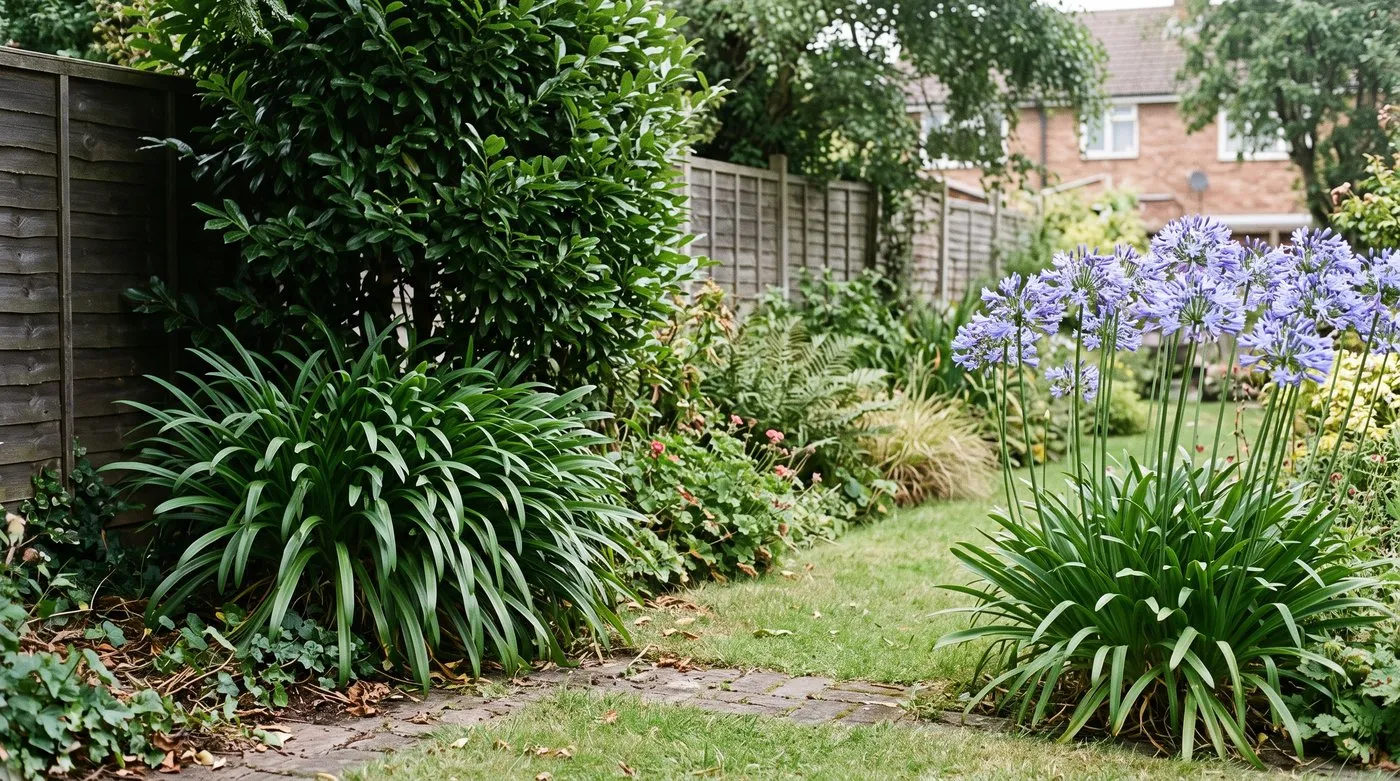
Same plant, different spots. In shade agapanthus makes plenty of leaves but few flowers, so a sunnier home is usually the fix.
Dividing agapanthus
Divide every four or five years, in April or May. Lift the clump with a fork and shake off loose soil. Split it with a sharp spade, or two forks back to back. Each piece needs several shoots and a good handful of fleshy roots.
Replant at the same depth as before, with the crown about 5cm down. If you’re replanting in the same spot, mix in some grit and a little sulphate of potash. In pots, use fresh John Innes No. 2 with added grit.
Expect few or no flowers in the first summer, with normal flowering back by the second. Dividing is also the quickest way of propagating perennial plants like this. Agapanthus from seed takes several years to flower.
Best agapanthus varieties for UK gardens
| Variety | Flower colour | Height | Good for |
|---|---|---|---|
| Headbourne Hybrids | Mid to pale blue | Tall | Borders |
| Northern Star | Deep blue | About 80cm | Colder gardens |
| Midnight Star | Violet-blue | Medium | Colder gardens |
| Blue Storm | Mid-blue | 50-60cm | Pots, small gardens |
| Twister | White with blue stripe | Medium | Something different |
Related reading:
- Best perennial plants for UK gardens
- How to grow alliums in the UK
- How to protect plants from frost in the UK
- Container gardening ideas for UK gardens
- South-facing garden plants for full sun

Agapanthus flower better when a little pot-bound. A 30-40cm pot suits most.
Frequently asked questions
Are agapanthus hardy in the UK?
The deciduous ones are, the evergreen ones aren’t. Deciduous types like Headbourne Hybrids, Northern Star and Midnight Star come through most UK winters in the ground. Evergreen types, such as Agapanthus africanus, need protecting from frost. Check the label: deciduous usually means hardy, evergreen usually means tender.
When do agapanthus flower in the UK?
From July to September. Most are at their best from mid-July into August. Plants in full sun flower most reliably. A clump you’ve just divided may skip a year while it settles in.
Why is my agapanthus not flowering?
Usually it’s too little sun or too much feed. Other causes are dividing or repotting it recently, or a pot that’s too roomy. Move it somewhere sunnier, switch to tomato feed, and leave it in its pot until roots poke out of the drainage holes. A newly divided clump may skip a season.
How do I overwinter agapanthus in the UK?
Hardy deciduous types can stay in the ground. In a cold spot, add a 10cm mulch over the crown. Move tender evergreen types in pots to a frost-free greenhouse, shed or porch before the first frost, usually October, and keep them barely moist. Lift any tender plants in the ground in late September, pot them up and keep them frost-free until May.
Can I grow agapanthus in pots?
Yes, and they often flower better in pots than in the ground. They like snug roots, so a 30-40cm pot with good drainage suits a decent clump. Don’t repot unless you have to, as moving or splitting it can stop flowering for a season or two.
How do I divide agapanthus?
Divide in April or May, every four or five years. Do it sooner if the clump is crowded and flowering less. Lift it and split it with a sharp spade into pieces, each with several shoots and plenty of roots. Replant straight away at the same depth in well-drained soil, or pot the pieces up separately.
What is the best agapanthus for a small UK garden?
Try ‘Blue Storm’ or ‘Northern Star’. Blue Storm is compact, at around 50-60cm, with rich blue flowers. Northern Star grows to about 80cm and is one of the hardiest. Both are deciduous and happy in pots on a sunny patio.
Our team produces practical UK gardening guidance from source research, contributor records and established horticultural practice. Editorial standards are overseen by Matt W.