
Key takeaways
- South-facing gardens get sun most of the day, perfect for Mediterranean and prairie plants
- Mulch borders with gravel or bark to keep the soil from drying out
- Water deeply in the evening, not a little at midday
- A small tree like amelanchier or a pergola gives you a cool spot to sit
- A sunny south-facing wall is the warmest spot for fruit and tender climbers
A south-facing garden is the one everyone wants, and with good reason. It gets sun for most of the day in summer, so you can grow a huge range of flowers, fruit and vegetables.
But full sun has its downsides too. Clay bakes hard, lawns go brown by late July and the patio can be too hot to sit on in the afternoon. Here’s how to make the most of the sunshine, from picking plants and looking after the soil to adding a little shade.
How sunlight works in a south-facing garden
Knowing where the sun goes through the day and the year helps with every planting choice.
In the UK, the sun travels across the southern sky. A south-facing garden sits right in its path, so from mid-morning to late afternoon there’s not much shade. In midsummer the sun is high. In winter it stays low, and shadows get much longer.
Measuring sun exposure in your plot
Before planting, watch how the sun moves across your garden on a clear day, ideally in each season. Note which bits get full sun (6 hours or more), part sun (3-6 hours) and shade (under 3 hours).
| Season | Where the sun is | How sunny a south-facing garden is |
|---|---|---|
| Midsummer | High in the sky | Sun most of the day |
| Spring | Halfway up | Good sun through the middle of the day |
| Autumn | Halfway up | Good sun through the middle of the day |
| Midwinter | Low | A few hours, with long shadows |
Fences, buildings and trees all cast shadows. A fence at the far, southern end of the garden throws a long shadow in winter and a short one in summer, so plan for that.
Best plants for a south-facing garden
With the right plants, all that sun becomes a gift. Plants from the Mediterranean, the prairies and South Africa love south-facing UK gardens, as long as the soil drains well.
Top perennials for full sun
Lavender and salvias are the backbone of most sunny borders. Both cope well with drought once settled and flower for weeks. For height, grow climbing plants on sunny walls and fences, where the warmth helps them flower for longer.
Shrubs that thrive in full sun
Shrubs keep the garden looking good in winter when perennials die down. The extra warmth means a sunny garden can grow some shrubs that sulk elsewhere.
Cistus (rock rose) flowers in June and July, copes with poor soil and needs no pruning. Each papery flower only lasts a day, but new ones open every morning.
Ceanothus (California lilac) covers itself in blue flowers in May. On a sunny wall it can reach about 4m. ‘Concha’ and ‘Puget Blue’ are popular, reliable choices.
Buddleja davidii is a butterfly magnet. Prune it hard in early spring to keep it compact, and snip off old flowers so it doesn’t seed everywhere. The RHS buddleja pruning guide explains the timing.
Choisya ternata (Mexican orange blossom) is evergreen and sweetly scented, happy in sun or part shade. ‘Sundance’ has golden leaves that glow in the sun. Give it well-drained soil.
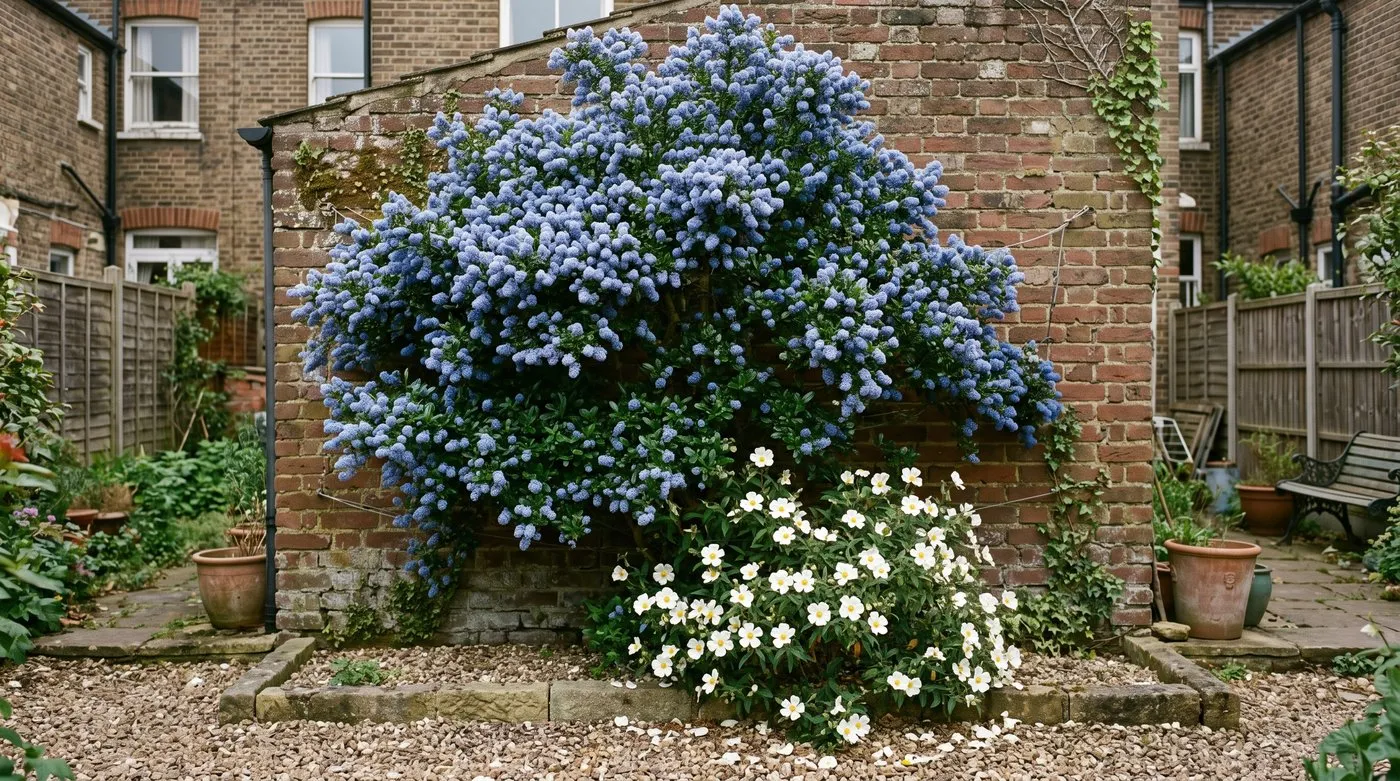
A sunny wall lets ceanothus grow tall and flower its socks off in May. Cistus loves the poor, hot soil at its feet.
Ornamental grasses for movement and texture
Grasses bring something nothing else can: movement. The lightest breeze sets them swaying and catching the light.
Stipa tenuissima (Mexican feather grass) is a favourite for sunny borders. Soft, wispy and about 60cm tall, it moves in the slightest breeze. It seeds itself around generously.
Miscanthus sinensis ‘Morning Light’ grows to about 1.5m, with slim silver-edged leaves and feathery plumes from September. It copes well with dry spells once settled. Our ornamental grasses guide has lots more.
Pennisetum alopecuroides (fountain grass) has soft, fluffy seedheads from August and grows to about 80cm. Give it a sheltered spot in colder parts of the country.
Managing soil in a south-facing garden
Looking after the soil is what makes a sunny garden thrive. Full sun makes every soil problem a bit worse.
Clay soil in full sun
Clay sets hard and cracks in a hot summer. Spread compost, leaf mould or composted bark on top every year and let the worms pull it in. Over time it makes the clay more crumbly and better at holding water.
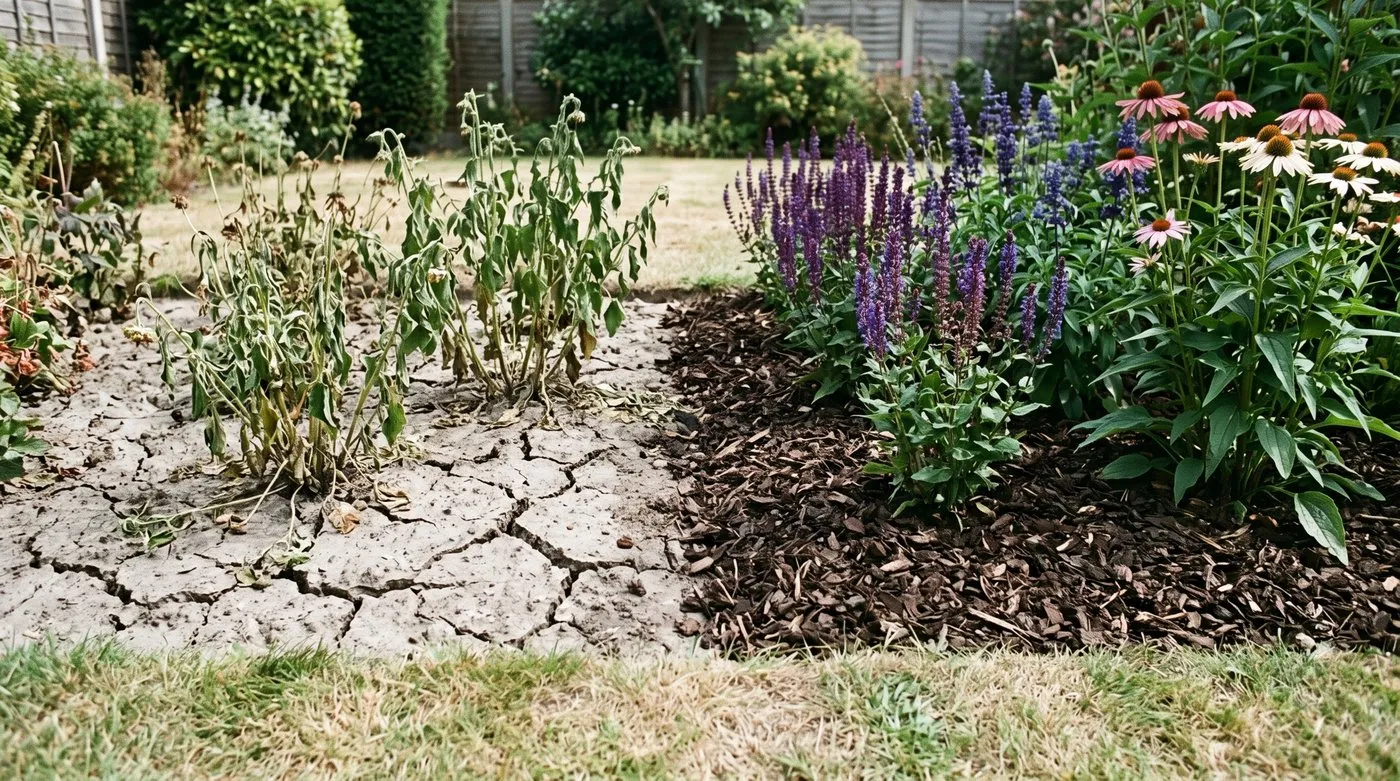
Bare clay bakes and cracks in a hot summer, while a mulched patch stays cooler and moister. Top up the mulch every year.
Sandy soil in full sun
Sandy soil drains fast, which most sun-lovers enjoy. The catch is that plant food washes through quickly. Sunny sandy borders need feeding more often than shady ones.
Chalky soil in full sun
Chalk drains freely and is limey. Lots of Mediterranean plants love it, including lavender, cistus, rosemary and salvias. Skip acid-lovers like rhododendrons, camellias and blueberries, which turn yellow and struggle on chalk.
Watering strategies for full-sun gardens
Sunny gardens lose more water than any other. On a hot July day, borders can dry out remarkably fast.
When and how to water
Water in the evening. Once the sun is off the border, less water is lost to the air. Water at midday and much of it simply evaporates.
Water deeply, less often. A good soak a couple of times a week beats a light sprinkle every day. Deep watering sends roots down to where the soil stays moist. A daily sprinkle keeps them near the hot, dry surface.
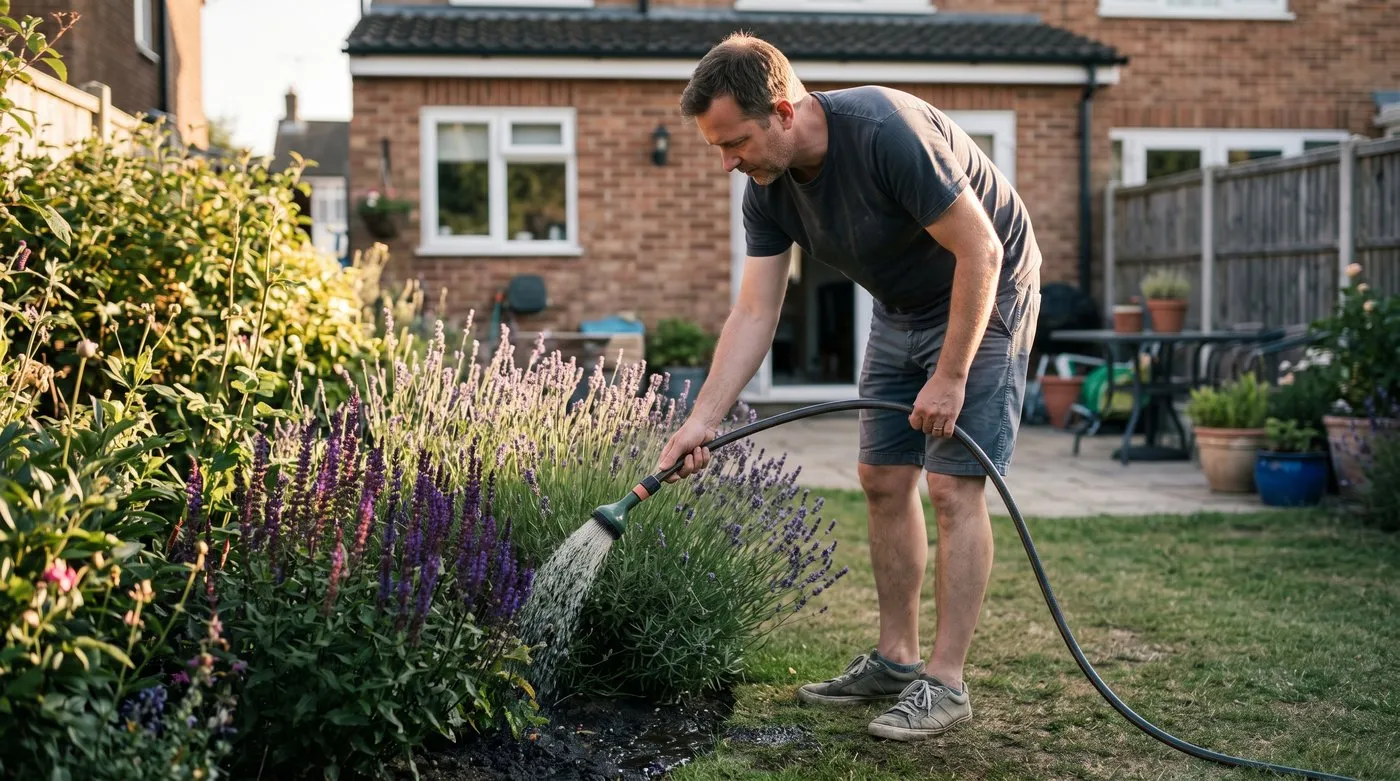
Water in the evening once the sun is off the border, and give a proper soak rather than a sprinkle. Deep water sends roots down where it’s cooler.
Mulching to reduce water loss
Mulch is the best way to save water. Spread about 5cm of gravel, bark or compost over bare soil.
| Mulch | Lasts | Best for |
|---|---|---|
| Pea gravel | For good | Mediterranean borders, gravel gardens |
| Composted bark | A few years | Mixed borders, improving clay |
| Leaf mould | A year or two | Under trees, shady spots |
| Slate chippings | For good | Modern designs |
| Composted green waste | A year or two | Veg beds, general borders |
For Mediterranean-style planting, gravel is practical and pretty. It keeps the roots cool and moist while the tops bask in the heat, just like back home for these plants.
Creating shade in a south-facing garden
Sun all day sounds lovely until you try to sit out at 2pm in July. Adding a bit of shade where you sit, while keeping the rest sunny for plants, makes the garden much nicer to use.
Trees for dappled shade
One multi-stem tree makes a big difference. The dappled shade underneath is much cooler than open ground, and still lets enough light through for plants beneath.
Amelanchier lamarckii is the best all-rounder for smaller gardens. It grows to 4-6m, with white blossom in spring, rich autumn colour and berries for the birds. Multi-stem trees give broad, light shade. Happy on clay and chalk.
Himalayan birch (Betula utilis var. jacquemontii) has stunning white bark and a light, open canopy. It gets fairly tall over time, but its airy shade suits small garden designs where heavy shade would be too much.
Cercis canadensis ‘Forest Pansy’ has purple heart-shaped leaves and pink spring flowers. It grows to 4-6m. The dark leaves look great with silver Mediterranean plants around them.
Structures for instant shade
Trees take a few years to give useful shade. Structures work straight away.
Pergolas give climbers something to grow over. Train a grapevine, wisteria or climbing rose across the top for living shade with dappled light. In winter the bare frame lets the low sun reach the house.
Sail shades are the quickest fix. Fix one to fence posts, walls or poles at about 2.5m high. Take it down in winter so the wind doesn’t damage it.
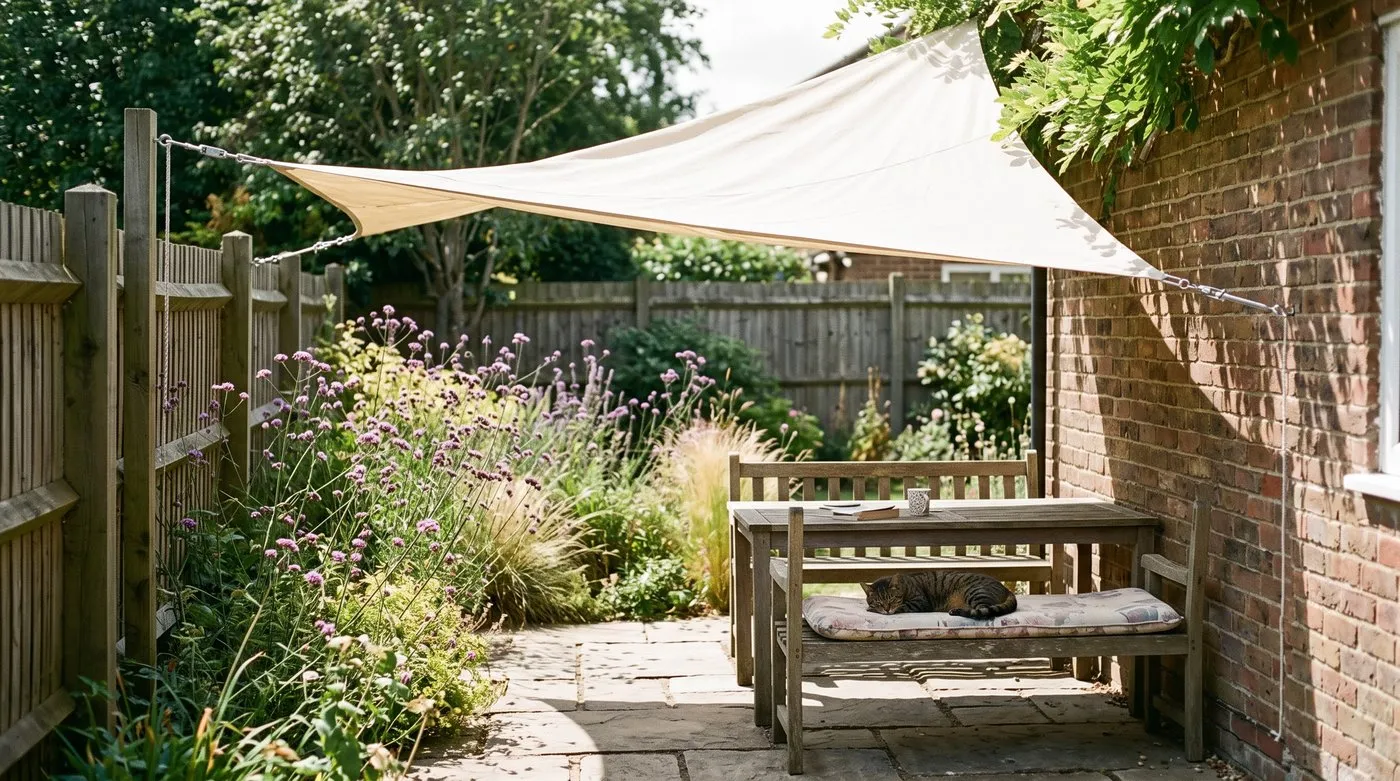
A sail shade gives you somewhere cool to sit straight away. Take it down in winter so the wind doesn’t wreck it.
Designing borders for a south-facing garden
Borders in a sunny garden work a little differently. The bright light changes how colours look.
Colour in full sun
Pale colours can look washed out in strong sun. Whites and pastels that glow in a shady garden can look a bit tired under a July sky. Rich, bold colours hold up much better.
Deep purples like salvias, lavender and Verbena bonariensis add depth. Put them towards the back to draw the eye in.
Hot oranges and reds like crocosmia, helenium and kniphofia really shine in sun. Plant them in groups of five or more for impact.
Silver leaves like artemisia, lamb’s ear and Convolvulus cneorum bounce the light back and cool down the hot colours. They’re best at the front.
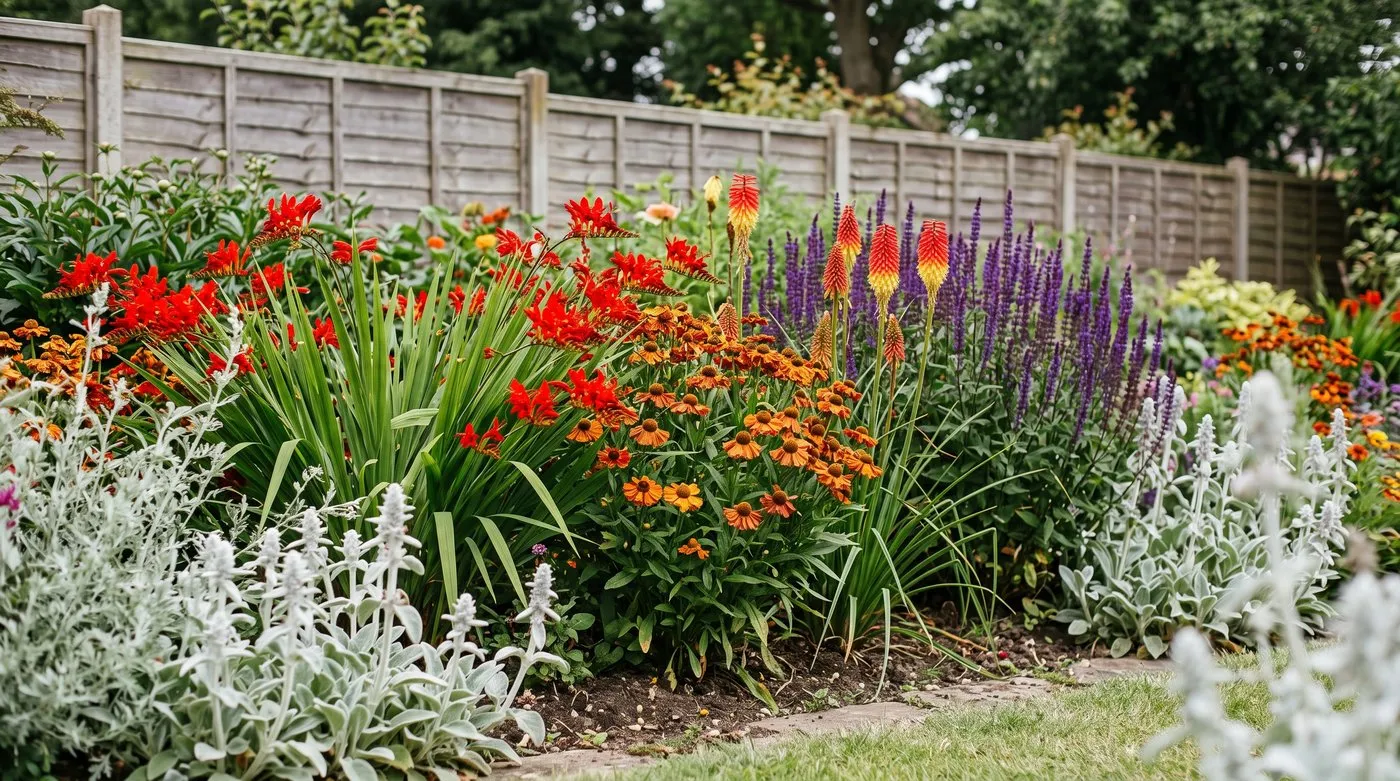
Bold reds, oranges and purples hold their own in bright sun. A front row of silver leaves cools the hot colours down.
Planting layout for south-facing borders
Plant in layers, short at the front and tall at the back, so nothing gets shaded out.
- Front (up to 40cm): sedum, thyme, aubrieta, lamb’s ear, dwarf lavender
- Middle (40-80cm): Salvia nemorosa, echinacea, agapanthus, eryngium, taller lavender
- Back (80cm and up): Verbena bonariensis, perovskia, miscanthus, Stipa gigantea
Leave 30-45cm between plants. Sun-lovers spread quickly, and a crowded border gets stuffy and prone to mildew.
Growing vegetables in a south-facing garden
A south-facing plot is the best possible spot for growing veg. The extra warmth and light give you a longer season at both ends.
What grows best in full sun
Fruiting crops need the most sun. Tomatoes, peppers, aubergines, courgettes and sweetcorn all need 6 hours or more of direct sun to ripen. A south-facing garden gives them that through summer.
Root crops grow faster in warm soil, so carrots and beetroot are often ready sooner than in a shady plot.
Salads are the exception. Lettuce, spinach and rocket bolt (run to seed) quickly in hot sun. Grow them where they get morning sun and afternoon shade, or under the light shade of a fruit tree.
Extending the season
A sunny wall soaks up heat and gives it back at night. Train tender fruit and veg against it for the earliest harvests. Tomatoes against a warm wall ripen sooner than ones out in the open. Figs fruit best against a sunny wall with their roots kept in check.
A cold frame against a sunny wall warms up fast on bright spring days. Start seeds there a few weeks before it’s safe to sow outside. It’s one of the easiest ways to stretch the season with no heating at all.
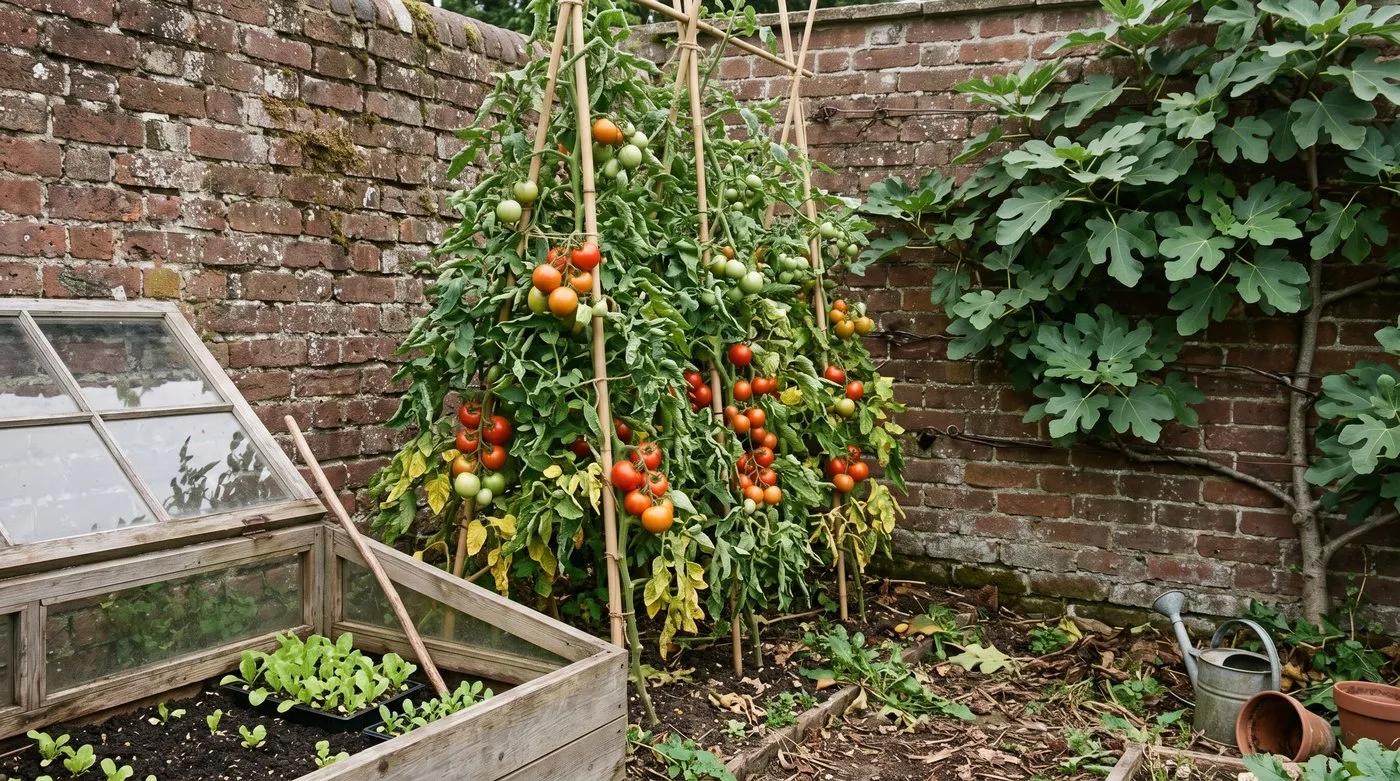
A sunny wall soaks up heat and gives it back at night. Tomatoes grown against it ripen earlier than ones out in the open.
Lawn care in a south-facing garden
Lawns have the hardest time in sunny gardens. Feet, full sun and summer drought often turn them brown by late July.
Choosing the right grass seed
Ryegrass greens up fast but browns quickly in a dry spell. Fine fescues cope with drought better, stay green longer and bounce back faster after rain.
What to look for: a drought-tolerant lawn seed mix with plenty of fescue, such as Chewings fescue and creeping red fescue, along with some ryegrass for toughness.
Summer lawn survival
Raise the mower to about 4cm from June to September. Longer grass shades its own roots and stays greener. Don’t cut a sunny lawn really short in summer.
If you water, do it in the evening and give a good soak once a week rather than a daily sprinkle. To check how much your sprinkler puts down, stand a straight-sided tub on the lawn while it runs.
Don’t panic if a sunny lawn turns straw-coloured in a long heatwave. It’s resting, not dead, and greens up again once the rain returns. And remember, hosepipe bans apply to lawns too.
Month-by-month calendar for south-facing gardens
| Month | Key tasks |
|---|---|
| January | Plan borders, order seeds, prune wisteria side shoots back to 2-3 buds |
| February | Cut back ornamental grasses |
| March | Prune buddleja and perovskia hard. Mulch borders. Sow hardy annuals under cover |
| April | Plant Mediterranean perennials, set up drip hoses, sow veg outdoors |
| May | Plant tender bedding after the last frost, deadhead spring bulbs, thin veg seedlings |
| June | Water new plants weekly, deadhead roses and salvias, pick salads |
| July | Water borders deeply twice a week, raise the mower height, pick soft fruit |
| August | Keep watering, trim lavender after flowering, sow autumn salads |
| September | Plant spring bulbs, divide crowded perennials, water less |
| October | Plant bare-root trees and shrubs, spread autumn mulch, clear weeds |
| November | Plant tulips, protect tender plants with fleece, clean tools |
| December | Plan next year, check ties on climbers, enjoy the winter shapes |
Timings suit central England. Go a week or two later in Scotland and the north, or a week or two earlier on the south coast. The RHS monthly garden jobs page has more ideas.
Common mistakes in south-facing gardens
A few easy slip-ups to avoid.
Planting shade-lovers in open sun. Hostas, ferns, astilbe and Japanese anemones scorch in full sun. Their leaves bleach and crisp, and they slowly fade away. Keep them under trees or on the north side of walls and fences. Our guide to shade-loving plants has more.
Skipping soil care. Sun makes soil problems worse. Clay cracks, sand dries out and chalk bakes. Mulching every year really matters in a sunny garden.
Watering at midday. Much of the water evaporates before it reaches the roots. Water in the evening, or use a drip hose under the mulch.
No shade at all. A garden with no shade is hard to enjoy on hot afternoons. One well-placed tree or pergola gives you a lovely spot to sit all summer.
Cramming borders. Sun-lovers grow fast. Give each plant room to spread, or the border turns into a stuffy tangle where mildew moves in.
South-facing garden design ideas
A sunny garden suits several styles. The best one depends on your soil, budget and how much time you want to spend on upkeep.
Gravel garden
The ultimate easy-care option for a sunny plot. Lift the turf, lay a woven membrane, spread about 5cm of gravel and plant through it. If you want a seating area too, our guide to laying a patio covers that. Once settled, a gravel garden needs very little watering, and it’s perfect for Mediterranean plants.
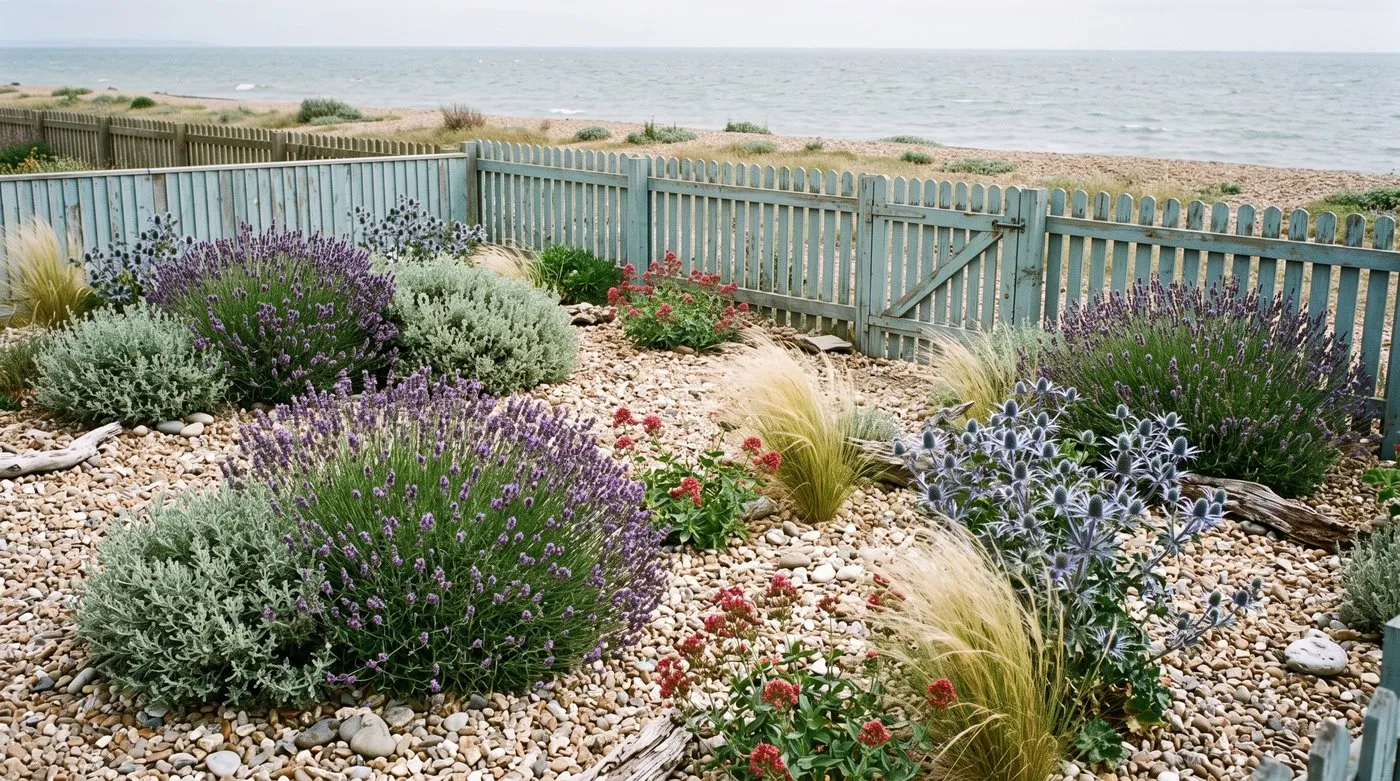
Once settled, a gravel garden barely needs watering. The gravel keeps roots cool while Mediterranean plants bask on top.
Prairie-style border
Big drifts of grasses, echinacea, rudbeckia and salvias give a relaxed, natural look that’s at its best from July to October. Cut everything down in February. The grasses look good all winter and the seedheads feed the birds. It needs space, with borders at least 2m deep, but very little watering once settled.
Cottage garden in full sun
A cottage garden works brilliantly in sun with the right plants. Swap shade-lovers like primroses for sun-loving flowering shrubs, roses, delphiniums and hollyhocks. Add a seating area with pots under a rose-covered pergola for that classic English garden feel.
South-facing walls: the warmest spots in your garden
A sunny wall is the warmest spot in any garden. Brick and stone soak up heat by day and give it back at night, so you can grow plants that would struggle out in the open.
Wall-trained fruit loves it. Fan-trained peaches, nectarines and apricots can fruit well on sunny walls in southern England. Figs crop well against a warm wall with their roots kept in check in a lined planting pit.
Tender climbers like star jasmine (Trachelospermum jasminoides), Solanum crispum ‘Glasnevin’ and trumpet vine (Campsis radicans) appreciate the extra warmth. The wall keeps them cosier in winter than they’d be in the open. At the foot of the same wall, a crinum lily for a hot wall rewards you with huge late-summer trumpets.
Climbing roses flower for months on warm walls. ‘Climbing Iceberg’, ‘New Dawn’ and ‘Madame Alfred Carrière’ are reliable choices. Tie new stems in sideways for the most flowers.
Frequently asked questions
What are the best plants for a south-facing garden UK?
Lavender, rosemary, salvias and agapanthus are top picks. They love sun and cope with dry soil. Grasses like Stipa tenuissima add lovely movement. For shrubs, try cistus, ceanothus and buddleja. Wildflowers like ox-eye daisy and field scabious bring in the bees and cope with heat too.
How do you stop soil drying out in a south-facing garden?
Mulch every border with about 5cm of gravel or bark. It keeps moisture in the soil. On clay, spread composted bark or leaf mould on top each year to help it hold water. A drip hose on a timer helps borders that dry out fast. Water in the evening so it soaks in overnight.
Do south-facing gardens get too hot?
Seating areas can get very hot on summer afternoons. A multi-stem tree like Amelanchier lamarckii or a birch gives cool, dappled shade. For instant shade, put up a sail shade or a pergola with a climber growing over it.
How many hours of sun does a south-facing garden get?
Most of the day in spring and summer. In the UK the sun travels across the southern sky, so a south-facing garden gets sun from mid-morning to late afternoon. In midsummer that can be well over six hours. In winter the sun is low, so fences and buildings cast long shadows.
Is a south-facing garden good for growing vegetables?
Yes, it’s the best spot for vegetables. Tomatoes, courgettes, peppers, aubergines, beans and sweetcorn all need plenty of sun to crop well. Root crops like carrots and beetroot grow quickly in warm soil. Grow lettuce somewhere a bit shadier so it doesn’t bolt.
What problems do south-facing gardens have?
Dry soil, cracking clay and heat are the main ones. Clay can crack in long hot spells. Sandy soil loses its goodness faster. Shallow-rooted bedding plants wilt quickly without lots of watering. Mulch, a bit of shade and the right plants sort most of it.
Can shade-loving plants grow in a south-facing garden?
Yes, if you find them a shady spot. The north side of walls and fences, and the shade under trees, make little pockets of shade. Hostas, ferns and astilbe are happy there. Just keep them out of the open sun.
Our team produces practical UK gardening guidance from source research, contributor records and established horticultural practice. Editorial standards are overseen by Matt W.


