Key takeaways
- Full sun is 6 or more hours of direct sun, part shade is 3-6 hours, full shade is under 3
- Photograph or sketch the garden at 8am, 10am, noon, 2pm, 4pm and 6pm on a clear day
- Map in June, then again near the March or September equinox, and plan for the average
- Winter shadows are long, so a 2m fence that shades about 1m in June shades about 7.5m in December
- Note which trees lose their leaves, as the shade under them changes through the year
Sun mapping your garden means watching where the sun falls through a day and marking it on a plan. It takes one clear day and a phone camera. The result shows which beds get full sun, part shade or full shade, so you stop putting sun-lovers in the dark.
Below you’ll find a simple way to log the sun, how shadows change between summer and winter, and which plants suit each zone. If you just want to know which way your garden faces, start with our guide to reading your garden’s aspect and light.
Why a sun map beats guessing
A sun map is a rough plan of your garden marked with how many hours of direct sun each area gets. Plant labels say “full sun” or “part shade”, but those words only help once you know what your own beds get.
A sun map shows where sun-lovers like lavender will thrive and where hostas and ferns belong. It also picks out the warm spots, such as a sunny wall for tomatoes, and the cold, dark corners. Fences, sheds, neighbours’ trees and extensions all cast shadows a compass can’t predict.
The three sun zones on plant labels
Plants are sorted into three light zones by hours of direct sun in the growing season.
- Full sun: 6 or more hours of direct sun a day. Open, bright areas away from buildings and trees. Mediterranean herbs, roses and most vegetables want this.
- Part shade: 3-6 hours of direct sun. Often morning sun and afternoon shade, or dappled light under high trees. A huge range of garden plants are happy here.
- Full shade: under 3 hours of direct sun. North-facing beds, the foot of tall hedges and gaps between houses. Plenty of plants still thrive, as our guide to the best plants for shade shows.
Aspect gives you a starting point. South-facing gardens usually get the most sun and north-facing the least, especially close to the house. But a tall conifer next door can put a deep-shade corner in even the sunniest plot. That’s why you log real shadows.
How to sun map your garden step by step
The photo method is simple and records what actually happens in your garden.
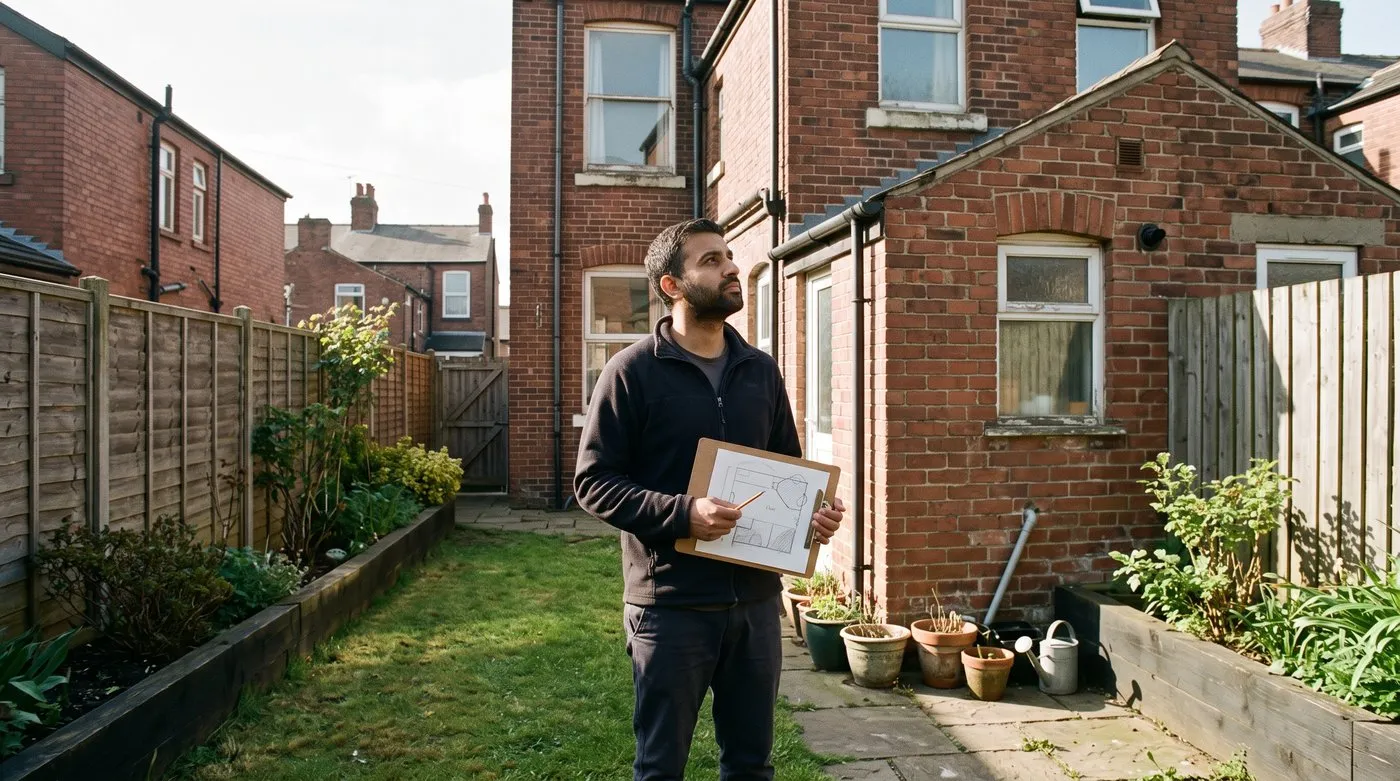
Shade in the shadows on a fresh sketch at each check. Six quick sketches build up a clear picture of your sun and shade.
- Sketch the plot. Draw a rough plan on paper. Mark the house, fences, trees, shed and beds.
- Pick a clear day. Thick cloud hides shadows, so wait for sun or light cloud.
- Photograph at set times. At 8am, 10am, noon, 2pm, 4pm and 6pm, take a photo from the same spot. An upstairs window gives the best view.
- Shade in the shadows. On a fresh copy of your sketch for each time, pencil in where the shadow falls.
- Count the sunny hours. For each bed, count how many of the six checks showed direct sun. Each check stands for roughly two hours.
- Colour the zones. Mark full sun, part shade and full shade on one final plan. That’s your sun map.
Keep the photos. They’re useful when you’re choosing plants or deciding where a new seat should go.

A border tucked behind a tall fence can sit in shadow for much of the morning. Checking at set times shows exactly how long.

The same garden can swing from shade to bright sun in a few hours, which is why one look isn’t enough.
How the sun changes between summer and winter
The UK sun climbs high in summer and stays low in winter. That’s why a garden can feel bright in June and gloomy in December.
In southern England the midday sun sits about 61 degrees above the horizon at midsummer. At the spring and autumn equinoxes it’s about 38 degrees. By the shortest day in December it’s only about 15 degrees. Further north, in Scotland, it sits a few degrees lower all year.
Low sun means long shadows. A bed that bakes in July can sit in shade from November to February. So a map made only in June makes the garden look sunnier than it is. A map made only in December makes it look darker. Map in June and again in March or September, then plan for the average.

At midday in summer the sun is high and shadows are short. In winter the same tree would shade much of the lawn.
How long a shadow does a fence or tree cast?
Shadow length depends on the height of the object and how high the sun is. Here’s roughly what a 2m fence does at midday in southern England.
| Time of year | Midday sun height | Shadow from a 2m fence |
|---|---|---|
| Late June | About 61° | About 1.1m |
| Late March or late September | About 38° | About 2.6m |
| Early November or early February | About 23° | About 4.7m |
| Late December | About 15° | About 7.5m |
To work out other objects, multiply the height by the same ratio. A 3m hedge shades about 11m in late December. A 6m tree shades over 20m. Shadows are longer still in the early morning and late afternoon.
Trees are trickier. A deciduous tree such as a birch lets much more light through once its leaves drop. An evergreen conifer shades all year. When you map, note which trees lose their leaves.
Gardener’s tip: Before planting anything permanent near a tall fence, hedge or wall, check how far its winter shadow reaches. That strip may suit shade plants better than sun-lovers.
Matching plants to each sun zone
Once you’ve got your map, choosing plants gets much easier.
| Sun zone | Direct sun | Example UK plants |
|---|---|---|
| Full sun | 6+ hours | Lavender, salvia, roses, sedum, thyme, tomatoes |
| Part shade | 3-6 hours | Hardy geranium, astilbe, geum, heuchera, foxglove |
| Dappled shade | Shifting light under high trees | Japanese anemone, hellebore, pulmonaria, ferns |
| Full shade | Under 3 hours | Hostas, ferns, ivy, skimmia, sarcococca |
Full sun beds suit Mediterranean plants. Lavender grows leggy and flowers poorly with less than six hours. Our south-facing garden guide has more ideas for the sunniest spots. Part shade is the most forgiving zone and suits the widest range of plants. Even shade can feed you: see our list of vegetables that grow in shade.

Lavender needs at least six hours of direct sun. Give it less and it flowers poorly and flops.
When to map: best and worst months
| Month | How useful | Why |
|---|---|---|
| January to February | Poor | Sun very low and trees bare. Only shows the darkest corners |
| March | Good | Equinox average. Trees still bare, so note which ones will leaf up |
| April to May | Very good | Sun climbing, leaves coming out |
| June to July | Best | Highest sun, longest days, trees in full leaf |
| August | Very good | Still strong light |
| September | Good | Equinox average, a useful check against June |
| October to December | Poor to fair | Low sun and long shadows. Shows worst-case shade |
The two key sessions are June for the sunniest picture and March or September for the average. A bed that’s in full sun in June but part shade in September is really a part-shade bed for planning.
Common sun mapping mistakes
- Mapping only in midsummer. A June-only map shows every bed at its sunniest. Always check again near an equinox.
- Forgetting about trees coming into leaf. A bare tree in March shades far less than the same tree in July.
- Trusting the label over your map. A “full sun” plant in a four-hour bed will grow but sulk. Go with what you’ve logged.
- Mapping on a cloudy day. You can’t see where direct sun falls under thick cloud.

A north-facing bed that gets little direct sun can still look lush with hostas and ferns.
Keep your sun notes alongside notes on how damp each spot is. Our Church Gill garden-zone lessons show how to plan a garden with very different areas side by side.
Using your sun map to plan the whole garden
A sun map helps with every design decision, not just plants. Put a seat where the evening sun lands, often on the west side. Put the veg beds or greenhouse in the brightest open spot. Tuck the shed or bins into the darkest corner.
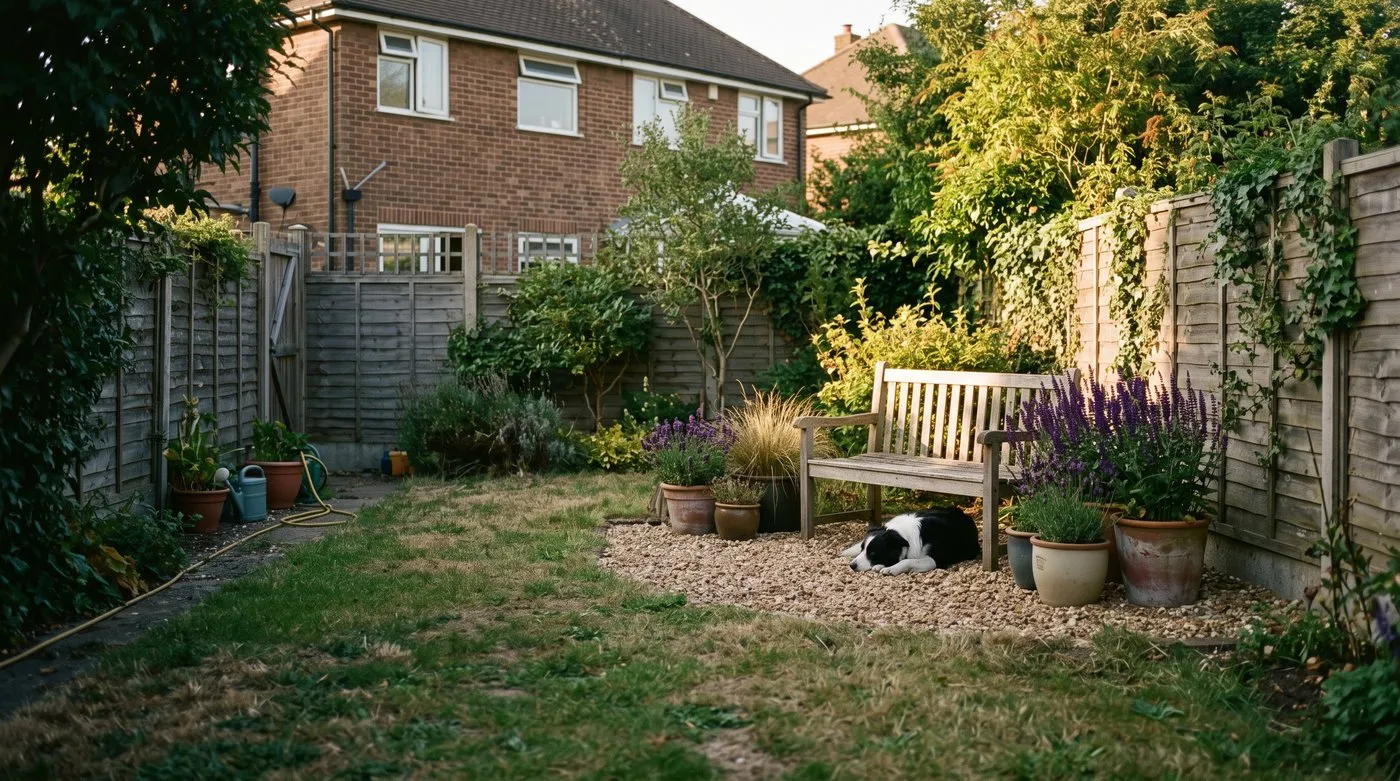
Your sun map shows where the evening sun lingers, which is the perfect spot for a seat.
If your only full-sun spot is small, decide what earns it: tomatoes, roses or a sunny seat. If most of the plot is shady, lean into ferns and woodland plants rather than fighting the light. Our north-facing garden ideas show how good a shady garden can look.
Mapping the sun also fits neatly into a wider look at your plot. Our garden audit guide adds soil, drainage and wind to the picture.
Frequently asked questions
What is sun mapping a garden?
It means recording how many hours of direct sun each part of your garden gets. You note where light and shadow fall at set times, then mark the zones on a plan. That shows you where full sun, part shade and full shade are, so you can pick plants that suit each spot.
How many hours of sun is full sun in the UK?
Full sun means at least six hours of direct sun a day. Part shade means about three to six hours, and full shade is under three. These are the terms used on most UK plant labels. Judge it in summer, when plants are growing.
When should I sun map my garden?
Map first in June, around the longest day. Map again near the spring or autumn equinox, in March or September, for a fairer average. Don’t map only in winter, when the low sun and bare trees give a misleading picture.
How long a shadow does a fence cast?
It depends on the season, as the sun sits much lower in winter. In southern England, a 2m fence casts a midday shadow of about 1.1m in June. In late December the same fence casts a shadow of about 7.5m.
Do I need an app to sun map my garden?
No, a phone camera and a notebook are enough. Photograph the garden from the same spot at set times and mark the shadows on a simple sketch. Sun path apps are handy for checking how a new shed or tree might shade a bed before you build or plant.
What plants grow in 4 hours of sun a day?
Four hours of direct sun is part shade, and lots of plants enjoy it. Hardy geraniums, astilbes, geums, heucheras and foxgloves all do well. Many roses cope, though they flower less than in full sun. Lavender and other Mediterranean herbs need more sun.
Now your sun map is done, use our guide to the best shrubs for shade to fill the darker zones, or browse the garden design hub for more planning ideas.
Our team produces practical UK gardening guidance from source research, contributor records and established horticultural practice. Editorial standards are overseen by Matt W.