Key takeaways
- Moss loves shade and damp, so pick a spot with under three hours of direct summer sun
- Acid soil suits most garden mosses, and they never need feeding
- Use flat sheet moss such as Hypnum for the carpet and cushion moss as a feature
- Take moss from your own garden or buy it, never from the wild
- Mist with rainwater in dry spells and clear fallen leaves weekly in autumn
- A full carpet takes a few years, so mind-your-own-business is a quicker stand-in
A Japanese moss garden is a carpet of soft green moss where grass would struggle, usually in a shady, damp corner. The UK’s cool, wet climate suits it well. If your lawn keeps going mossy under trees, that spot is already telling you what it wants to be.
This guide covers which mosses to use, where to put them, how to spread them and how to keep them green. For the wider style, with gravel, water and stone lanterns, see the guide to Japanese garden design.
Why moss suits UK gardens
Moss loves cool, damp, shady places, which UK gardens have plenty of. It has no proper roots. It drinks through its leaves, so it relies on rain, dew and damp air rather than deep soil moisture.
Shaded corners stay damp for much of the year here. Moss greens up quickly after a wet morning and can sit out dry spells, going brown and then recovering when rain returns.
Moss also likes acid soil. Many gardens in Wales, Scotland, the north of England and the sandy south-east are naturally acid. If yours is, you may not need to change anything.
The best mosses for a UK moss garden
Use a flat sheet moss for the main carpet and a cushion moss as a feature. Each type has a job.
Hypnum cupressiforme (cypress-leaved plait moss) is the workhorse. It grows flat, spreads sideways and takes light foot traffic. It’s common in gardens, on paths and old lawns, so start here.
Leucobryum glaucum (white cushion moss) forms the pale blue-green domes you see in pictures of Japanese temple gardens. It grows slowly and wants steady damp and deep shade. Use a few cushions as a feature within a Hypnum carpet, not as the whole carpet.
Polytrichum commune (common haircap moss) is taller and coarser, a bit like tiny pine trees. It suits banks, damp hollows and bed edges, and copes with a little more sun.
Thuidium tamariscinum (common tamarisk moss) has feathery, fern-like fronds. It adds texture on a shady woodland edge.
Soleirolia soleirolii (mind-your-own-business) isn’t a moss, but it looks like one from a short distance. It fills a bed in a season or two. It does spread into lawns and paving cracks, so give it a firm edge.
| Moss | Light | Foot traffic | Look | Use it for |
|---|---|---|---|---|
| Hypnum cupressiforme | Shade to part shade | Light | Flat green sheet | The main carpet |
| Leucobryum glaucum | Deep shade | None | Pale domed cushions | Features |
| Polytrichum commune | Shade to some sun | None | Tall, coarse tufts | Banks and edges |
| Thuidium tamariscinum | Shade | None | Feathery fronds | Texture |
| Soleirolia soleirolii | Shade to part shade | Light | Tiny round leaves | Quick cover |

Flat sheet moss, a pale cushion and spiky haircap side by side. Mixing heights stops a moss carpet looking flat.
Where to put a moss garden
Pick the coolest, dampest, shadiest part of the garden, with under three hours of direct summer sun. North- and east-facing spots are ideal. The guide to north-facing garden ideas has more ideas for these spots.
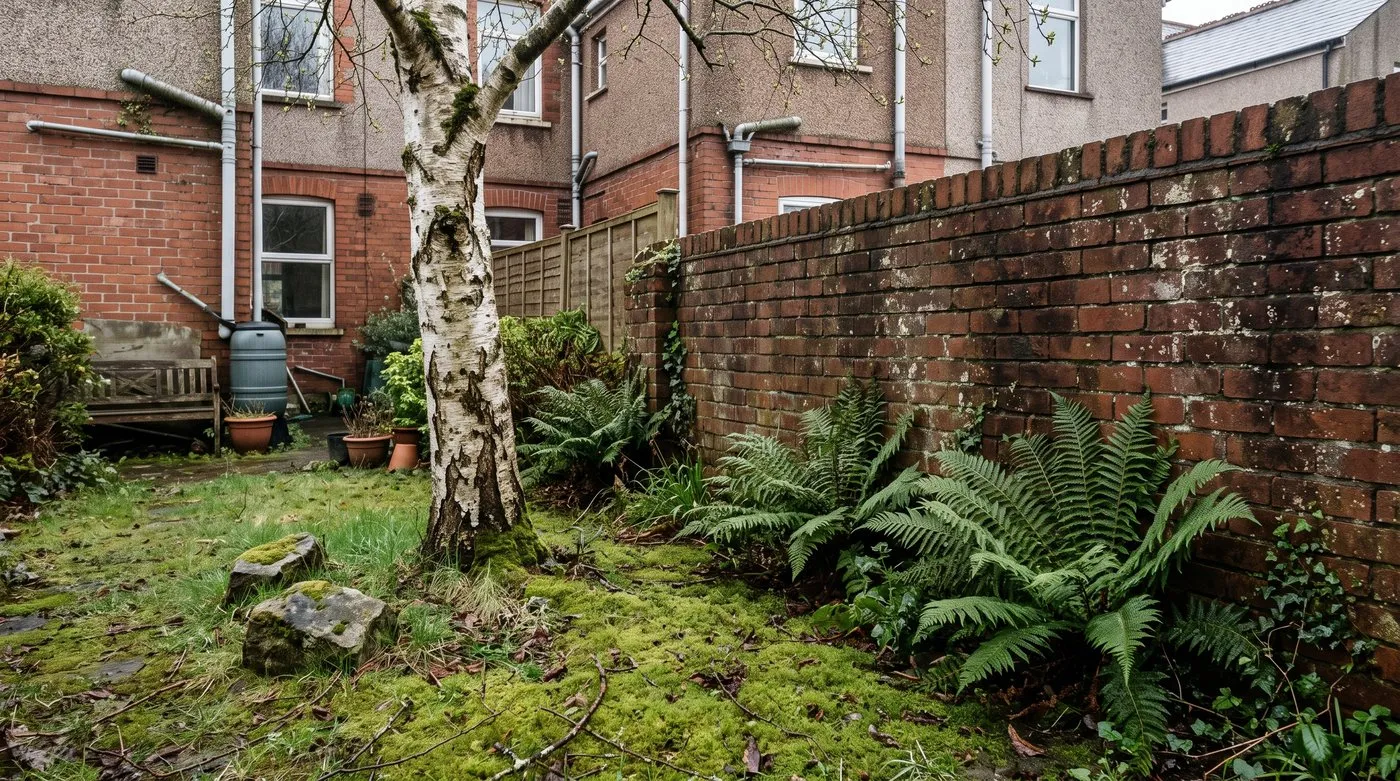
A shady corner where grass keeps losing to moss is the perfect place to let moss take over on purpose.
Avoid open south- and west-facing ground. Moss there browns fast in dry weather and struggles to form a lasting carpet.
Light tree cover helps, as it filters sun and keeps the air damp. Heavy leaf fall is the catch. Wet leaves left on moss block the light and can kill patches underneath. Japanese maples, birch and ferns drop fairly light leaves. Avoid siting moss under sycamore or horse chestnut.
Moss copes with ground that stays damp far better than grass does. What it can’t take is water standing on it for days, so a gentle slope helps.
Getting the soil ready for moss
Moss wants lean, acid, firm, weed-free ground. Test the soil with a cheap kit first. The guide to soil testing and pH explains how.
- Clear it. Remove grass, weeds and roots, then rake level.
- Firm it. Tread or roll the surface so moss has a firm base to grip.
- Acidify gently if needed. On neutral soil, rake in a thin layer of ericaceous compost, or use sulphur at the rate on the pack.
- Don’t fight chalk. On very limy soil, grow moss on stones, log slices or a raised bed of ericaceous compost instead.
Never feed a moss garden. Fertiliser and fresh compost feed the weeds and grass that crowd moss out. Bare, lean ground is what you want.
How to spread and plant moss
Press small patches of moss into damp, firmed soil, close together. This gives the quickest, most reliable cover. Spring and autumn are the best times, when rain is reliable.
- Gather moss from your own garden, such as shady paths, old lawns or walls, or buy cultivated moss. Never take it from woods or the countryside without the landowner’s permission. It’s against the law, and wild moss beds recover slowly.
- Water the ground well so it’s damp all through.
- Lay patches a few centimetres apart, like a jigsaw with gaps.
- Press each one down firmly with your hand or a board, so it touches the soil all over.
- Fill the gaps by crumbling a little moss between the patches and pressing it in.
- Mist daily for the first few weeks unless it rains.
You’ll see a “moss milkshake” of blended moss and buttermilk recommended online. Results are patchy at best. Crumbling moss by hand and pressing it in is simpler and works just as well.

Painting on blended moss is a popular trick, but results are patchy. Pressing in small pieces of moss is more reliable.
Watering moss in dry spells
In a normal damp UK week, do nothing. Rain and dew keep moss green. Only step in when it’s been dry for several days.

A light sprinkle of rainwater in the evening keeps moss green through a dry spell. No need for a heavy soak.
- Mist lightly early in the morning or in the evening, wetting the moss itself.
- Use rainwater if you can. In hard-water areas, tap water can leave a chalky film on moss over time. A water butt on a shed or house gutter is ideal.
- Little and often beats a heavy soak, as moss drinks through its surface.
- Don’t panic if it goes brown in a drought. Most moss greens up again once it rains.
On a large bed, a simple misting line on a tap timer saves a lot of summer chores.
Stepping stones, rocks and structure
Moss looks best against hard, still things like stone. Keep the hard landscaping simple and let the green do the talking.
Stepping stones let you cross without squashing the moss. Use flat natural stones roughly 35-50cm across, set level with the moss surface so the green seems to lap against them. Lay them before the moss goes down.
Rocks placed in groups of three or five, at different heights, anchor the scene. Moss creeping up the shady side of a boulder is the classic look.
A gravel edge can frame a moss bed. Keep the two apart with a low buried edging strip, as gravel raked onto moss damages it.

Stones set level with the moss let you cross without squashing it. Pick up maple leaves like these before they pile up.
Plants to grow with a moss garden
Moss is the floor, not the whole garden. Add a few shade-lovers above it, and keep the list short and repeated.
- Ferns are the natural partner. Soft shield fern (Polystichum setiferum) and autumn fern (Dryopteris erythrosora) sit happily above moss. The guide to hardy UK ferns covers more.
- Japanese maples (Acer palmatum) give shade and autumn colour. They like the same sheltered, slightly acid spot. See Japanese maple care for siting tips.
- Japanese forest grass (Hakonechloa macra) adds a soft, flowing line at bed edges.
Plant these before laying the moss, so you don’t trample it later.

Ferns and a Japanese maple above the moss give height and stop the bed reading as a flat green mat.
Moss garden calendar: month by month
Moss care is light. The two busy jobs are misting in dry summer spells and clearing leaves in autumn.
| Month | What to do |
|---|---|
| January | Brush off debris, check water isn’t sitting on the surface |
| February | Clear leftover leaves, patch thin areas |
| March | Good time to lay new moss while rain is reliable |
| April | Lay more moss, pull weed seedlings as they appear |
| May | Mist if a dry spell sets in, weed weekly |
| June | Mist in dry weather, keep weeding |
| July | Main misting month in dry spells, rainwater if possible |
| August | Keep misting and weeding, avoid walking on dry moss |
| September | Rain returns, so lay more moss |
| October | Start clearing fallen leaves every week |
| November | Keep clearing leaves, the most important job of the year |
| December | Final leaf sweep, check stones and edges |
Common moss garden mistakes
Leaving fallen leaves on the moss. Wet leaves block the light and rot the moss beneath. Clear them weekly in autumn by hand or with a leaf rake.
Feeding the bed. Moss needs nothing. Fertiliser and compost just feed the weeds and grass that compete with it.
Using hard tap water every time. In limescale areas, it can grey the moss over time. Use rainwater where you can.
Using cushion moss as a carpet. It’s slow and won’t cover ground. Use flat Hypnum for the carpet.
Walking on it. Moss takes light foot traffic at best. Lay stepping stones before the moss goes down.
Growing moss on purpose can feel odd when so many people fight it in their lawns. If you’d rather keep grass elsewhere, see how to get rid of moss in a lawn. The leaves you clear off the moss make excellent leaf mould too.

Given a few years, moss creeps over rocks and around a lantern base. This is the soft, settled look a moss garden aims for.
Frequently asked questions
Can you grow a Japanese moss garden in the UK?
Yes, the UK’s mild, damp climate suits moss well. Regular rain and damp air keep carpeting mosses green for much of the year. You need shade, acid soil and patience while the moss knits together. Remove fallen leaves often so they don’t smother it.
What moss is best for a Japanese moss garden?
Hypnum for flat ground, with cushion moss as a feature. Hypnum cupressiforme spreads across level beds and takes light foot traffic. Leucobryum glaucum forms pale, domed cushions like those in Japanese temple gardens. Polytrichum suits banks and damper spots. Most moss gardens mix two or three types.
What pH does moss need?
Most garden mosses prefer acid soil, around pH 5 to 6. Test your soil with a simple kit first. On neutral ground, rake in ericaceous compost or use sulphur at the rate on the pack. On chalk, grow moss on stone, logs or a raised bed of ericaceous compost instead.
Does the buttermilk moss method work?
It’s hit and miss, so pressing in small pieces is more reliable. The idea is to blend moss with buttermilk and paint it on. Fragments can grow, but often patchily. Crumbling moss by hand onto damp, firmed soil and pressing it in does the same job without the mess.
How long does a moss garden take to establish?
Usually a few years to form a full carpet. Patches of moss pressed in close together fill in fastest. Crumbled fragments take longer. Keep the area weeded, clear of leaves and misted in dry spells. For quicker cover, plant mind-your-own-business, which looks like moss from a short distance.
Where can I get moss for a moss garden?
From your own garden, or from a supplier of cultivated moss. Shady paths, old lawns and north-facing walls often have plenty. Never collect moss from woods or the countryside without the landowner’s permission. It’s against the law, and many wild moss beds are slow to recover.
Now you know how to grow the carpet, browse more garden design ideas or compare other low-growing options in the guide to lawn alternatives and ground cover plants.
Our team produces practical UK gardening guidance from source research, contributor records and established horticultural practice. Editorial standards are overseen by Matt W.