Key takeaways
- Acanthus mollis flowers in summer on spikes about 1.5m tall
- Plant in sun or part shade, in deep soil that doesn't sit wet in winter
- Leave about 1m round each plant, as the roots spread and are hard to remove
- Small pieces of root regrow, so lifting it later is a long job
- Protect new spring shoots from slugs and snails
- Take root cuttings in late autumn or winter for free plants
Acanthus, or bear’s breeches, is the plant to grow if you want big, bold leaves and tall summer spikes that look good for months. The glossy, deeply cut leaves bring a Mediterranean feel to a border. The flower spikes, hooded in mauve and white, stand well above them.
It is tough, hardy and easy to please. The one thing to know before planting is that the roots spread and are very hard to dig out. This guide covers which acanthus to choose, where it grows best, how to keep it in check, and how to make more plants from root cuttings.
Which acanthus should I grow?
Acanthus mollis is the one most people grow, and the best start for most gardens. It has broad, glossy leaves and spikes about 1.5m tall. It copes with part shade better than the others, though it flowers best with some sun.
A few others are worth knowing:
- Acanthus spinosus has narrower, more deeply cut leaves with spiny tips. Wear gloves when you tidy it.
- Acanthus hungaricus has finely divided, matt leaves and white to pale pink flowers. It enjoys a sunny spot.
- Acanthus dioscoridis var. perringii is much smaller, with grey spiny leaves and rose-pink flowers. It needs a sunny, gritty spot, such as a gravel garden.
- Acanthus mollis ‘Rue Ledan’ has white flowers, and ‘Hollard’s Gold’ has golden young leaves.

Acanthus spinosus has spikier, more finely cut leaves than A. mollis. It looks fantastic, but tidy it with gloves on.
Where to plant acanthus in a UK garden
Give acanthus a spot in sun or part shade with deep, well-drained soil. It copes with clay better than many Mediterranean plants, as long as the ground doesn’t sit waterlogged in winter. More sun means more flower spikes. More shade means lush leaves but fewer flowers.
Choose a place where you’re happy for it to stay. Once settled, it is very hard to move or remove. Keep it away from lawn edges and paths, as mowing or edging can chop up roots and start new plants.
It is a great choice for the back of a border, a sunny corner, or against a wall where its leaves can show off. It is also one of the few big perennials that cope with some shade, so it suits our guide to the best plants for shade too.

Even without flowers, the big glossy leaves of Acanthus mollis bring drama to a shady corner.
How to plant acanthus
Plant acanthus in spring (March to May) or early autumn (September to October). On heavy, wet soil, spring is safer, as the roots settle before winter.

Plant at the same depth as the pot and leave a good gap. Acanthus will fill it in a couple of years.
- Dig a hole a little bigger than the pot, and loosen the soil in the base.
- On heavy clay, fork in some grit or gravel to help drainage.
- Set the plant at the same depth it was in the pot. Don’t bury the crown.
- Firm the soil and water well.
- Leave about 1m between acanthus and other plants.
Water regularly through the first summer while the roots settle. After that, it rarely needs watering except in long dry spells.
Is acanthus invasive and how do you control it?
Acanthus isn’t legally invasive, but it does spread. Its thick roots run deep and outwards, and new shoots pop up from them. Any small piece of root left in the soil can grow into a new plant. That’s why it appears in our guide to garden thugs.
To keep it in bounds:
- Give it space. About 1m in every direction is a good starting point.
- Pull stray shoots early. Dig them out as soon as they appear, with as much root as you can.
- Use a root barrier. A deep barrier sunk round the plant at planting time slows the spread.
- Don’t fork through the clump. It chops roots up and spreads them about.
If you want to remove an established plant, lift as much of it as you can, then dig out every new shoot as it appears. It can take a couple of seasons of patience. If you choose a weedkiller for regrowth, use an approved product for that use, following the label.

Acanthus roots run deep and wide. A barrier set in at planting time is much easier than digging them out later.
How to look after acanthus through the year
Acanthus needs very little care once settled. A few jobs keep it looking good.
- Spring: Cut off any leaves blackened by frost. Mulch around the plant with compost or leaf mould, keeping it off the crown.
- Summer: Water young plants in dry spells. Tall spikes on exposed sites may need a stake.
- Autumn: Cut spent spikes down to the base, or leave them for winter interest. Seed heads can self-sow, so remove them if you don’t want seedlings.
- Winter: Leave healthy leaves in place. In cold winters they blacken, which looks dramatic but is normal.
There’s no need for regular feeding. A spring mulch is plenty. Rich, high-nitrogen feeds give soft, floppy leaves and fewer flowers.
Slugs, mildew and other acanthus problems
Acanthus has two main problems: slugs on new shoots and powdery mildew on the leaves.
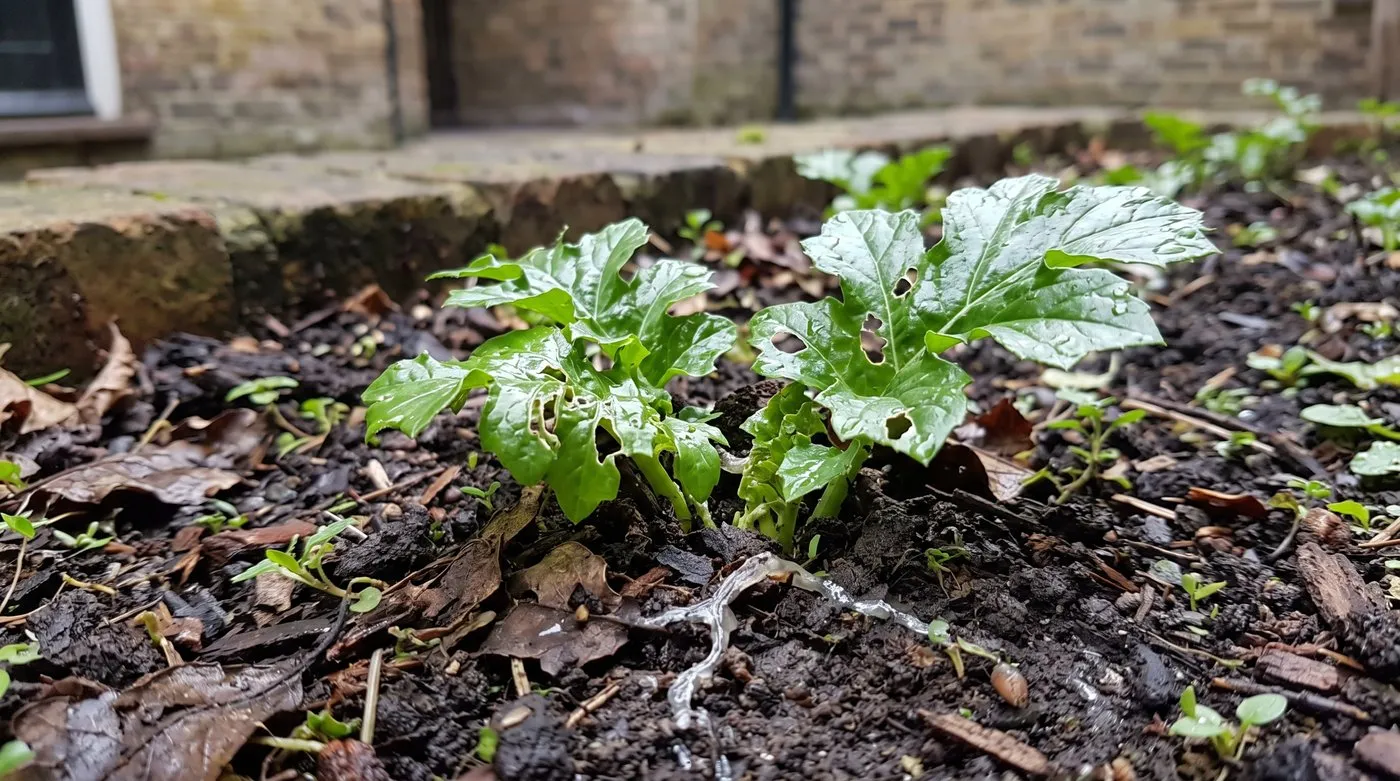
Ragged holes and slime trails on new shoots mean slugs have found your acanthus. Check plants on damp evenings.
Slugs and snails love the tender new shoots in spring. Check plants at dusk on damp evenings and pick them off, or use slug nematodes once the soil has warmed. Our guide on how to get rid of slugs has more options.
Powdery mildew shows as a white, dusty coating on the leaves, usually in late summer. It looks untidy but rarely harms the plant. Plants in dry soil are hit hardest, so water in dry spells and mulch to hold moisture. Cut off the worst leaves in autumn. Our guide to powdery mildew explains what helps.
How to propagate acanthus from root cuttings
Root cuttings are the easiest way to make more acanthus. Take them in late autumn or winter, while the plant is dormant.
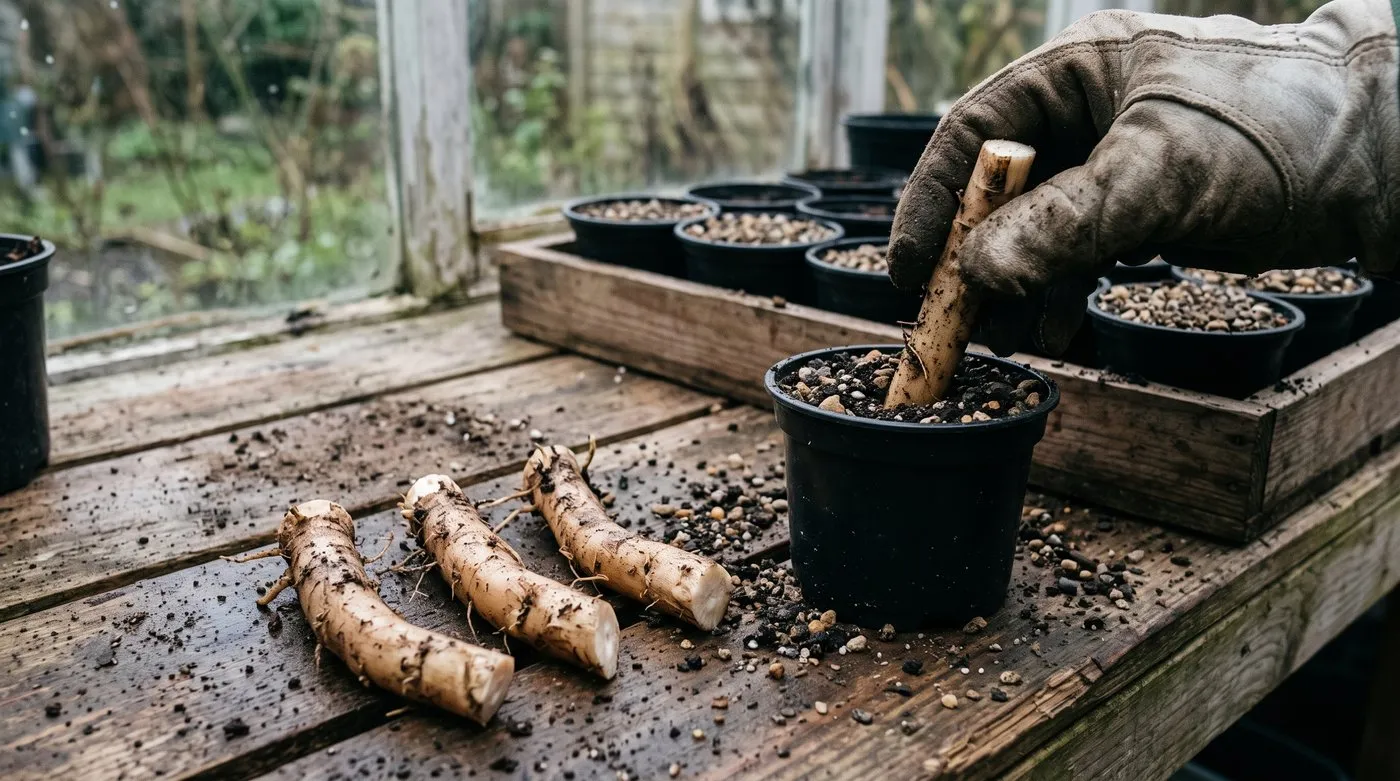
Flat cut at the top, slanted cut at the bottom, so every root cutting goes in the right way up.
- Scrape away soil at the edge of the clump to expose a few roots.
- Cut a few pencil-thick roots and fill the hole back in.
- Cut them into 5-10cm lengths. Make a flat cut at the top end and a slanting cut at the bottom, so you plant them the right way up.
- Push them upright into pots of gritty compost, with the flat top level with the surface.
- Cover with a thin layer of grit and put them in a cold frame or unheated greenhouse.
New leaves should appear in spring. Pot them on once they have a few leaves, and plant out the following year. For other ways to make new plants, see our guide to plant propagation by cuttings, division and layering.
You can also divide a clump in spring, though it is hard work. Seed is slow, and named varieties don’t come true.
Plants to grow with acanthus
Acanthus looks best next to plants with finer leaves or a looser shape. Good partners include:
- Grasses such as miscanthus and stipa, for an airy contrast. See our miscanthus growing guide.
- Flat-topped flowers such as achillea, against the upright spikes.
- Mediterranean plants in a sunny spot. Our guide to Mediterranean garden planting has plenty of ideas.
Keep small or slow perennials and bulbs well away, as acanthus will crowd them out.
The leaves have a long history too. Carved acanthus leaves decorate the tops of Corinthian columns, and the plant has been grown in gardens for centuries.

Spot the likeness? Carved acanthus leaves have decorated classical columns for centuries.
Common mistakes with acanthus
- Planting it in the wrong spot. It is hard to move later, so think before you plant.
- Planting too close to other plants. The roots will crowd neighbours. Leave about 1m.
- Forking through the clump. This spreads root pieces that become new plants.
- Ignoring slugs in spring. Damaged shoots can mean fewer flowers that year.
- Overfeeding. Rich feeds give floppy leaves and fewer spikes.
Acanthus month-by-month calendar
| Month | What to do |
|---|---|
| January-February | Take root cuttings on mild days |
| March | Cut off frost-damaged leaves. Mulch around the plant |
| April-May | Plant new acanthus. Watch for slugs on new shoots |
| June | Spikes appear. Stake on windy sites |
| July-August | Flowering. Water young plants in dry spells |
| September-October | Cut spent spikes or leave for winter. Plant or divide |
| November-December | Take root cuttings. Leave healthy leaves in place |
Find more border favourites in our plants hub. Now you know how to grow acanthus, read our guide to the best perennial plants for UK gardens to plan the rest of your border.
Frequently asked questions
Is acanthus invasive in UK gardens?
It isn’t a legally invasive plant, but it does spread. The deep roots creep outwards, and small pieces left in the soil grow into new plants. Give it room, or grow it where it can spread without crowding anything precious.
When does acanthus flower in the UK?
Acanthus flowers in summer, usually from June or July into August. The spikes open from the bottom up and stay handsome for weeks. The dry seed heads can stand into autumn. New plants may take a year or two to flower well.
How do you stop acanthus spreading?
Plant it with plenty of space and keep a close eye on the edges. Dig out stray shoots as soon as they appear, getting as much root as you can. A deep root barrier set in at planting time also helps. Removing an established plant completely takes patience, as roots left behind will regrow.
Why is my acanthus not flowering?
Usually it’s too young, too shady or recently moved. Young or newly divided plants often take a year or two to flower. Deep shade gives lovely leaves but few spikes. Slug damage to spring shoots can also set it back.
How do you propagate acanthus?
Root cuttings in late autumn or winter are the easiest way. Cut pencil-thick roots into 5-10cm pieces and push them upright into gritty compost. Keep them cool in a cold frame and new leaves should appear in spring. You can also divide clumps in spring.
Is acanthus evergreen?
Acanthus mollis keeps some leaves in mild winters. In cold winters the leaves blacken and die back. Cut them off in early spring and fresh growth comes from the base.
Our team produces practical UK gardening guidance from source research, contributor records and established horticultural practice. Editorial standards are overseen by Matt W.