Key takeaways
- Sow indoors in March or April at about 20-22°C, covering the seed lightly
- Plant out from late May, after the last frost, about 25-30cm apart
- Give it full sun and lean, well-drained soil, as rich soil means leaves rather than flowers
- It flowers from July to the first frosts, and the more you cut, the more it flowers
- For drying, cut as the globes colour fully and hang upside down in a dark, airy place
Gomphrena, or globe amaranth, is a half-hardy annual with papery, clover-like flowers that are lovely fresh and dry beautifully. Sow it indoors in spring with plenty of warmth, plant it out after the last frost in a sunny spot, then cut it all summer. The globes keep their colour for months once dried.
It’s an easy, cheerful plant once it gets going. It shrugs off hot, dry spells that flatten softer annuals. The tricky part is the start, because the seed needs real warmth.
What is gomphrena?
Gomphrena globosa is a half-hardy annual from Central America. Each round “flower” is really a tight ball of stiff, papery bracts, a bit like a clover head. That papery texture is why it dries so well and holds its colour.
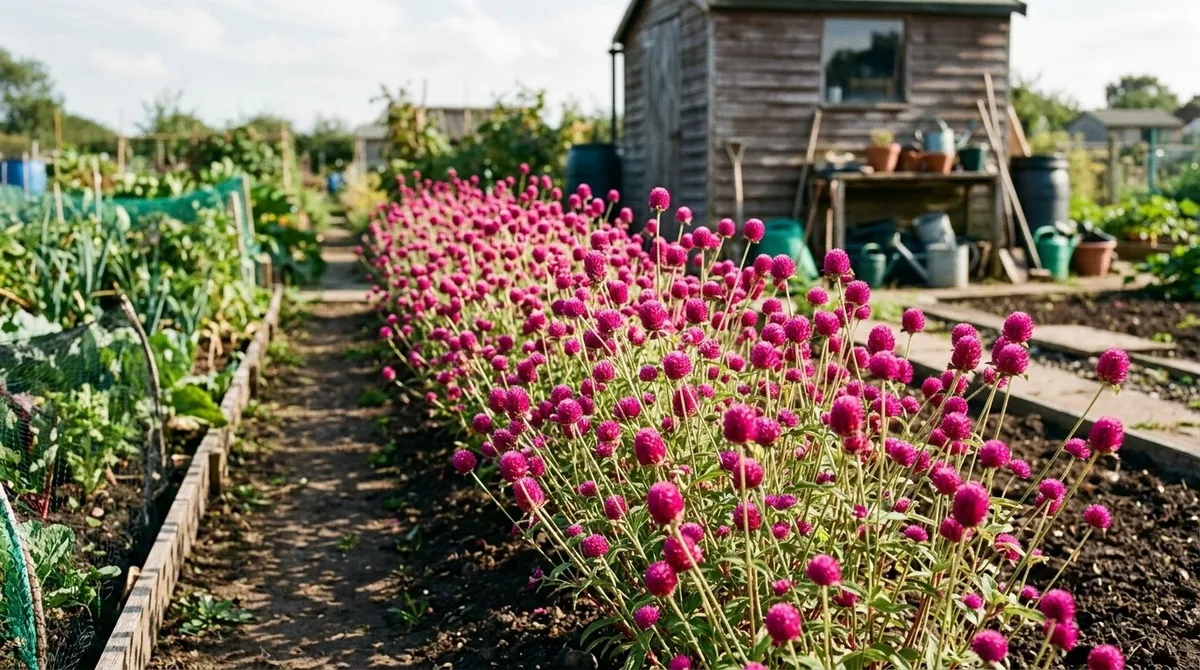
Plants form a bushy clump of soft, slightly hairy leaves. From July they send up wiry stems topped with globes in magenta, purple, pink, white and red. Bees and butterflies visit too. It’s a handy all-rounder in a cutting garden, giving stems for both fresh posies and dried arrangements.
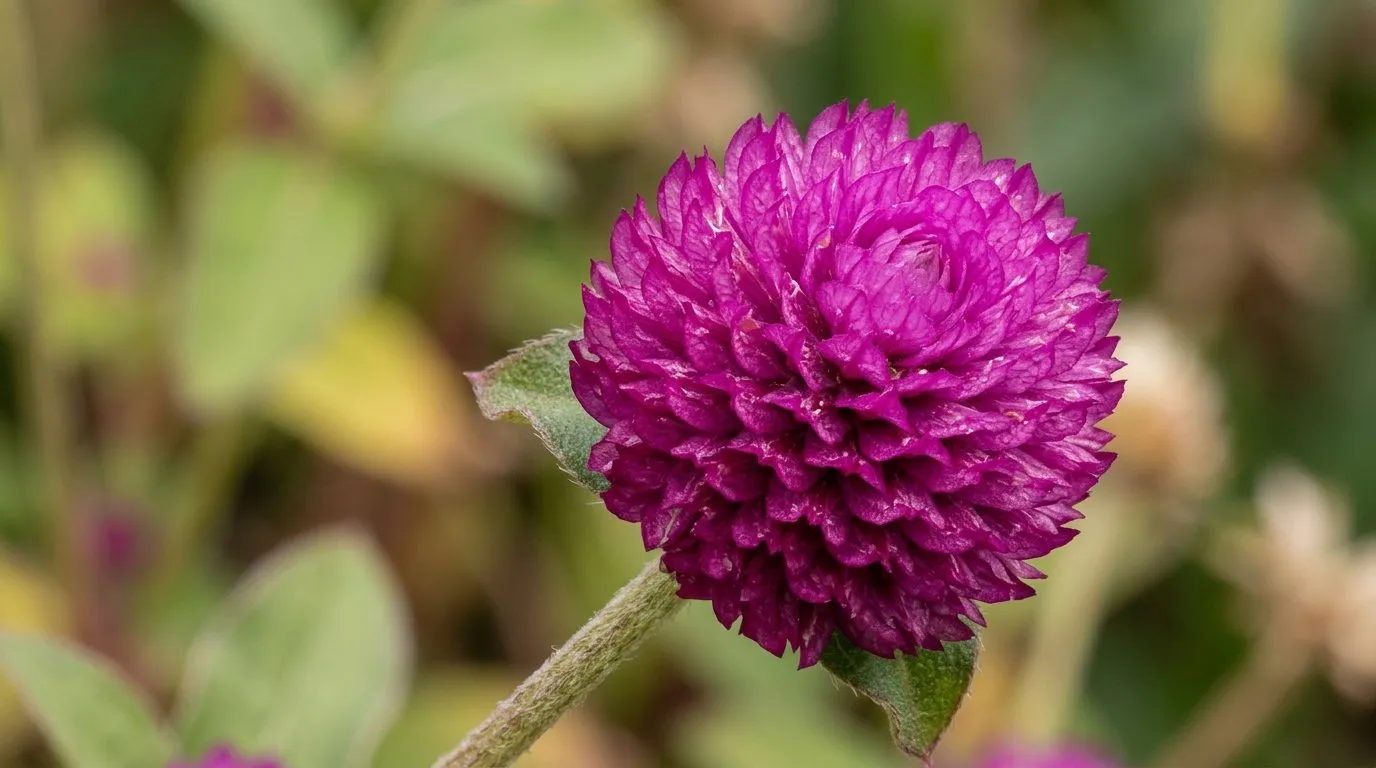
Those stiff, papery bracts are the secret. They hold their shape and colour when dried.
If you’re choosing between summer annuals, the guide to the best half-hardy annuals compares gomphrena with other warmth-lovers.
When and how to sow gomphrena seeds
Sow gomphrena indoors in March or April at about 20-22°C. Warmth is everything. Sown cold, the seed sits in the compost and often rots.
The seed comes in a fluffy, woolly coat. Some growers soak it overnight before sowing to help water get in. Seedlings usually appear in one to two weeks when kept warm.
- Fill a module tray with seed compost and firm it gently.
- Sow two seeds per cell and cover lightly with compost or vermiculite.
- Keep at 20-22°C in a heated propagator, day and night.
- Water from below so the compost stays just moist.
- Once seedlings appear, give them bright light and remove the weaker one in each cell.
A cold windowsill at night undoes all the daytime warmth. If you don’t have a propagator, a warm room away from draughts is the next best thing. The guide to seed germination temperatures compares gomphrena with other seeds.
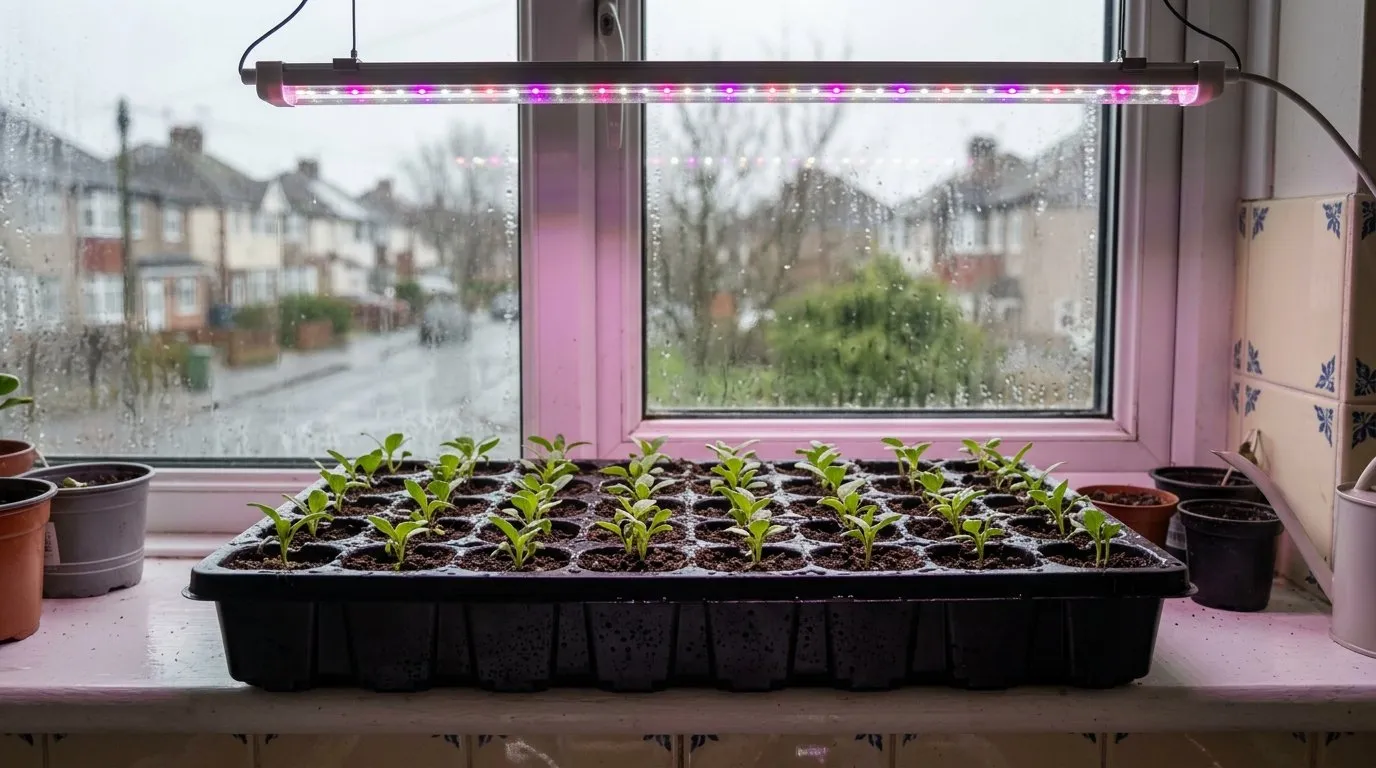
A grow light helps on dull spring days and stops seedlings stretching towards the window.
Growing on and planting out gomphrena
Once seedlings have two true leaves, move them into small pots. Hold them by a leaf, never the stem. Grow them on somewhere bright and warm. Leggy seedlings mean too little light.
Gomphrena is killed by frost, so don’t rush it outside. Harden off plants over a week or two from mid-May. Put them out by day and bring them in at night at first. Plant out from late May in the south, or early June further north.
Space plants about 25-30cm apart in full sun and well-drained soil. Pinch out the growing tips when plants are about 15cm tall to make them bushier, with more stems. The guide to hardening off seedlings walks through the routine.
Gardener’s tip: Don’t plant gomphrena in very rich soil or give it a high-nitrogen feed. Like cosmos, it flowers best on lean ground. Fat, leafy plants give fewer stems.
Month-by-month gomphrena calendar
This calendar suits most of England and Wales. In Scotland, the north and exposed spots, shift each step about two weeks later.
| Month | What to do |
|---|---|
| February | Order seed. Start a first sowing only if you have heat and good light |
| March | Main sowing time, indoors at 20-22°C |
| April | Last sowings. Pot on seedlings from earlier batches |
| May | Harden off. Plant out from late May in the south |
| June | Plant out in the north. Pinch out tips at about 15cm |
| July | First flowers. Start cutting for fresh posies |
| August | Peak flowering. Main cutting for drying |
| September | Keep cutting. Another good harvest for drying |
| October | Cut the last stems before frost blackens the plants |
| November | Clear spent plants. Store dried bunches out of sunlight |
How to dry gomphrena flowers
Drying is where gomphrena earns its keep through winter. Timing matters most. Cut stems when the globes are fully coloured and firm, before they start to fade or go soft. Cut too early and the heads stay small. Cut too late and the colour is duller.
- Cut in the cool of the morning with sharp snips.
- Strip all the leaves from the stems, as leaves hold moisture.
- Bundle a handful of stems with an elastic band, which tightens as the stems shrink.
- Hang the bunches upside down somewhere dark, dry and airy, such as a shed or spare room.
- Leave them for two to three weeks, until the stems snap rather than bend.
Light fades the colour and damp brings mould. A sunny window or steamy utility room are the worst places to dry them. Kept out of direct sun, dried gomphrena holds its colour for months.
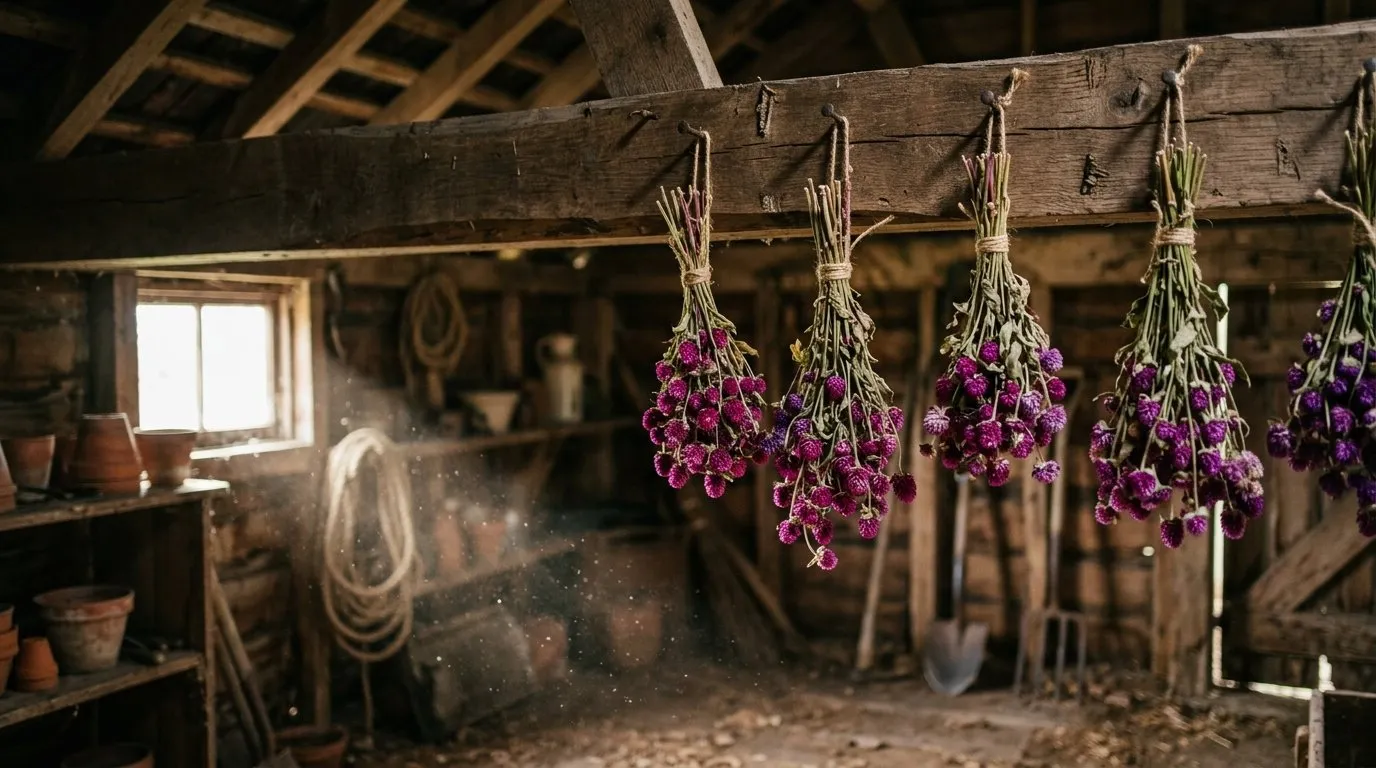
A dark, airy shed is ideal. Away from bright light, the globes keep their colour.
For fresh posies, stand cut stems in deep water for a few hours first. The guide to conditioning cut flowers explains how to make stems last longer.
Best gomphrena varieties for UK gardens
Choose a tall cutting type for drying and vases, or a dwarf type for pots and bedding.
| Variety | Colour | Type | Best for |
|---|---|---|---|
| QIS series | Purple, pink, white, red | Tall | Cutting and drying |
| ’Strawberry Fields’ | Orange-red | Tall | Drying, warm colour |
| ’Fireworks’ | Pink with yellow tips | Very tall, airy | Fresh cutting |
| Gnome series | Purple, pink, white | Dwarf | Pots and bedding |
| Buddy series | Purple, white | Dwarf | Edging and containers |
‘Strawberry Fields’ is a different species, Gomphrena haageana, with bright orange-red heads. ‘Fireworks’ has a looser, sparkly look that’s great in a fresh mix.
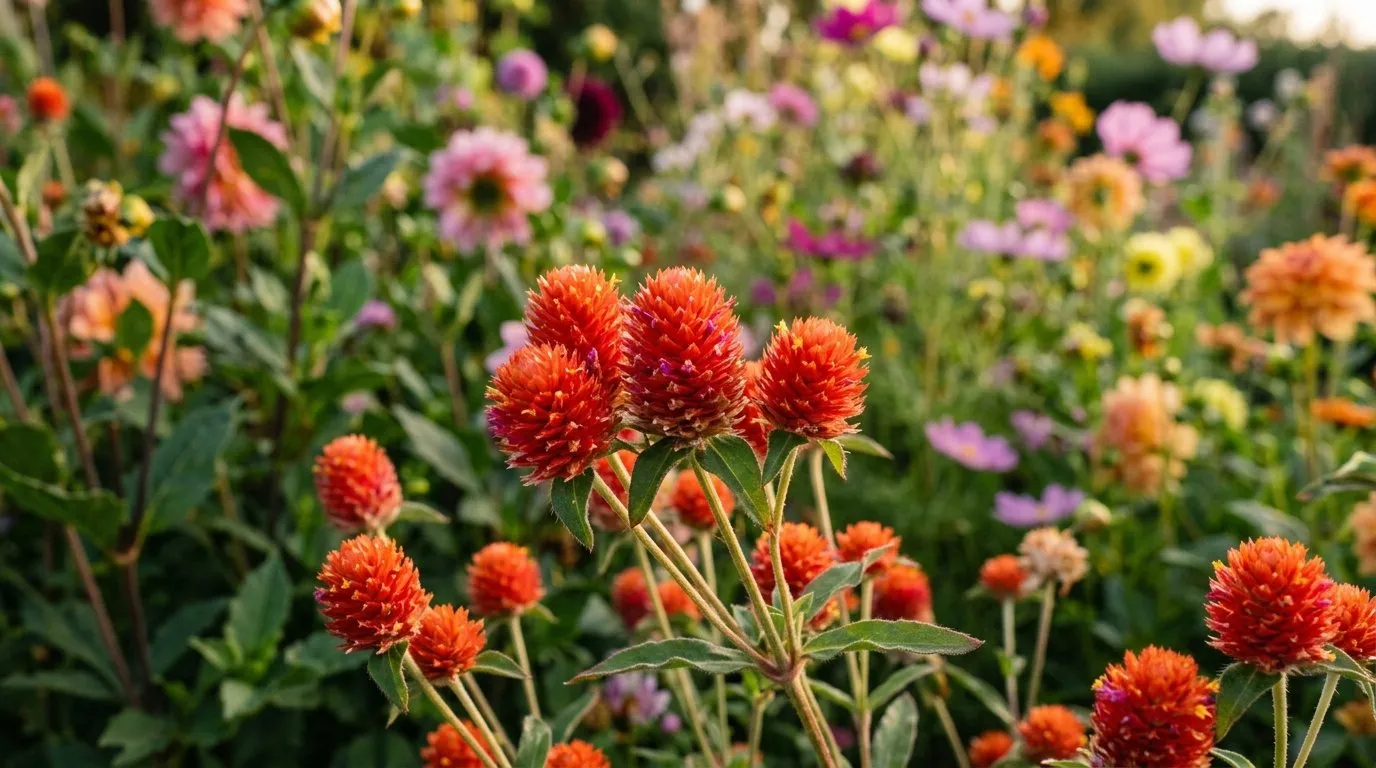
‘Strawberry Fields’ brings a warm orange-red that few everlasting flowers can match.
Why gomphrena copes with heat and drought
Gomphrena comes from warm, dry places, so it’s built for sun. Once settled, it keeps flowering through dry August weather that leaves softer annuals flopping.
Rich, wet soil works against it, giving soft, leafy growth that can collapse. Lean, well-drained soil in full sun is closer to what it likes. Water young plants until they’re established, then only in long dry spells. Pests rarely bother it much.
Gomphrena teams well with cosmos, rudbeckia and zinnias, which like the same warm, sunny bed. For another warm-season cut flower with a velvet texture, try celosia.
Common mistakes with gomphrena
- Sowing too cold. The seed needs about 20-22°C. A cool windowsill stalls it. Use a propagator and keep it warm at night too.
- Planting out too early. One late frost kills it. Wait until late May in the south and early June in the north, after hardening off.
- Feeding too richly. High nitrogen gives leaves, not flowers. Grow it lean.
- Drying in light or damp. Sun bleaches the colour and damp brings mould. Dry in a dark, airy spot.
- Not cutting enough. Regular cutting keeps new stems coming. Leave it alone and flowering slows.
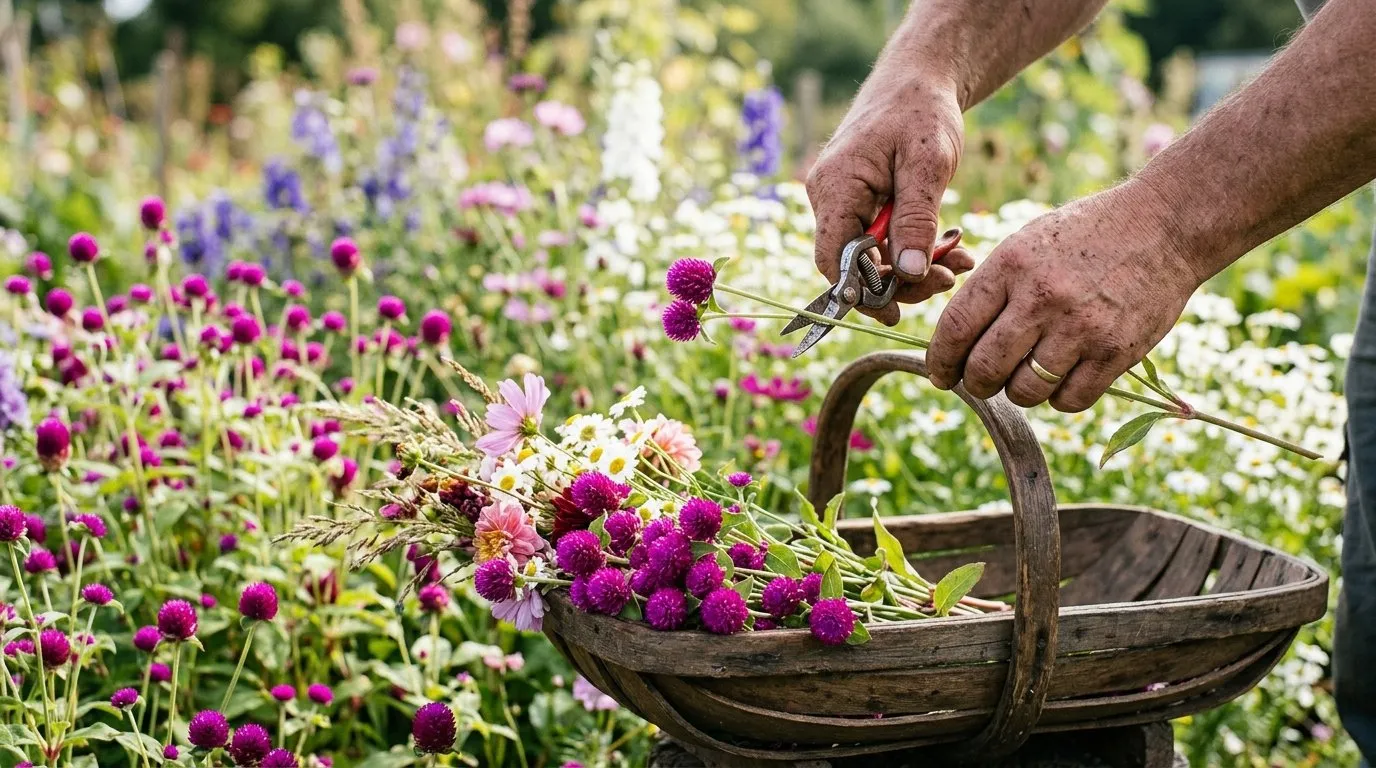
Regular cutting through summer keeps the plants sending up fresh stems.
Using gomphrena fresh and dried
One sowing gives you two harvests. Through summer, cut stems for fresh posies. Gomphrena is a true cut-and-come-again flower: the more you pick, the more it flowers.
From August, cut more for drying. Dried bunches are lovely in wreaths, small jugs and winter arrangements. They mix well with dried hydrangea heads, which dry just as easily. Store spare bunches in a box out of sunlight until you need them.
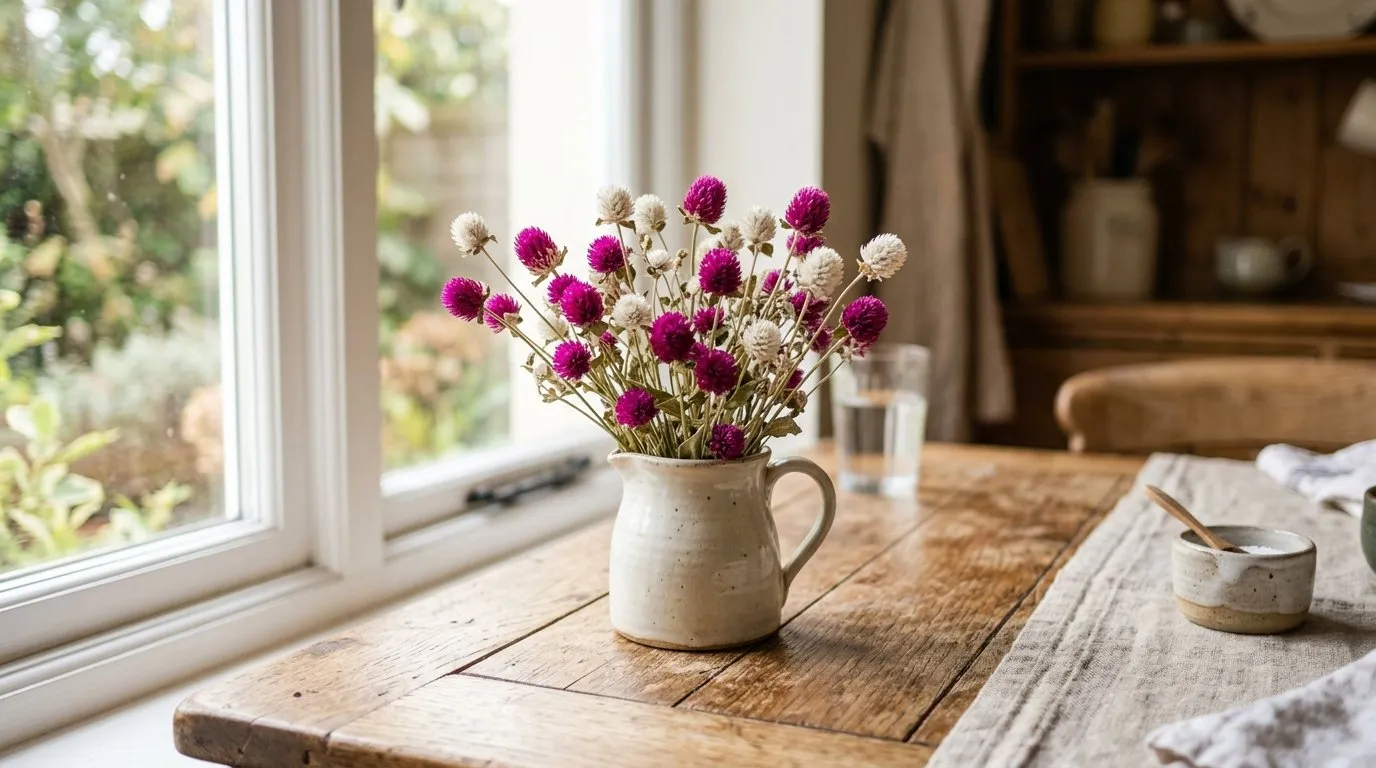
A little jug of dried globes brightens a kitchen table all winter. Keep it out of strong sun.
Frequently asked questions
When should I sow gomphrena seeds in the UK?
Sow indoors in March or April, somewhere warm. Aim for about 20-22°C, ideally in a heated propagator. You can start in late February if you have heat and good light. Outdoor sowing rarely works well here because the soil stays too cool in spring.
Why won’t my gomphrena seeds germinate?
Usually because they are too cold. Gomphrena seed likes steady warmth of about 20-22°C, day and night. A chilly windowsill at night slows or stops it. Use a heated propagator, cover the seed lightly, and keep the compost just moist rather than wet.
How do I dry globe amaranth flowers?
Cut stems as the globes colour fully, then hang them upside down. Strip off the leaves, bundle a handful of stems with an elastic band, and hang them somewhere dark and airy. They are usually dry in two to three weeks.
Is gomphrena a perennial or an annual?
In the UK it is grown as a half-hardy annual. Frost kills it, so sow fresh seed each spring. In frost-free climates it can carry on longer, but it won’t survive a UK winter outside.
How tall does gomphrena grow?
From about 20cm to over 60cm, depending on the variety. Dwarf bedding types such as the Gnome and Buddy series stay short and bushy. Cutting types such as the QIS series grow taller, with longer stems for the vase.
How long does fresh gomphrena last in a vase?
Well over a week, often longer. Cut stems in the cool of the morning, strip the lower leaves and stand them in deep water for a few hours. Change the water every couple of days.
Does gomphrena need full sun?
Yes, it needs full sun to flower well. It loves heat and copes well with dry spells once settled. In shade it grows leggy and flowers poorly. A warm, sunny bed with well-drained soil suits it best.
Which gomphrena variety is best for drying?
Tall cutting types such as the QIS series are a good choice. They give long, strong stems in a mix of colours. ‘Strawberry Fields’ adds orange-red globes, and ‘Fireworks’ gives tall, airy pink and yellow heads.
Now your globes are drying, read the guide on how to grow cut flowers to plan a full summer of stems, or browse more plant guides.
Our team produces practical UK gardening guidance from source research, contributor records and established horticultural practice. Editorial standards are overseen by Matt W.