Key takeaways
- Pollen beetles are tiny, shiny black beetles about 2mm long that feed on pollen
- They do no real harm to garden flowers, fruit or veg, so there's no need to spray
- They love yellow and pale flowers, especially in July and August
- Clear them from cut flowers by standing the stems in a dark shed near one window
- Spraying open flowers harms bees and hoverflies feeding alongside them
- Holes in brassica leaves are flea beetles, not pollen beetles
Tiny black beetles crawling all over your sweet peas or courgette flowers are almost always pollen beetles. They look alarming in numbers, but in a garden they’re harmless. They’re mainly a nuisance when you bring cut flowers indoors and the beetles wander onto the windowsill. This guide shows how to identify them, why spraying isn’t needed and the easy shed trick for clean cut flowers.
Are pollen beetles harmful in the garden?
No. In gardens, pollen beetles feed on pollen in open flowers and don’t harm the plant. Your sweet peas keep flowering, roses keep blooming and courgettes still set fruit.
Their reputation comes from farming. In spring the adults feed on the closed flower buds of oilseed rape, which can stop some buds opening. That matters across a field grown for its seed. It doesn’t matter in a border.
Once flowers are open and the pollen is on show, the beetle is simply a guest at the table.
How to identify pollen beetles and their lookalikes
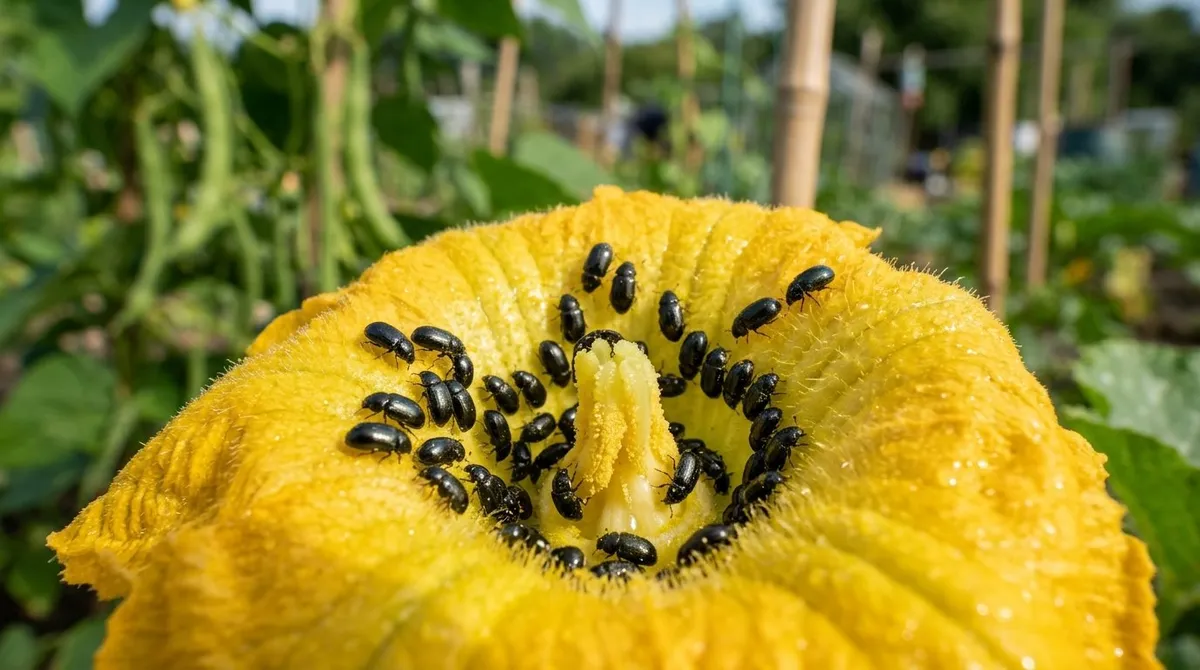
A pollen beetle is a tiny oval beetle about 2mm long. It’s shiny black, often with a faint green or bronze sheen in sunlight. The antennae end in small clubs, though you’ll need a hand lens to see them. They crawl over flowers rather than leaping away.
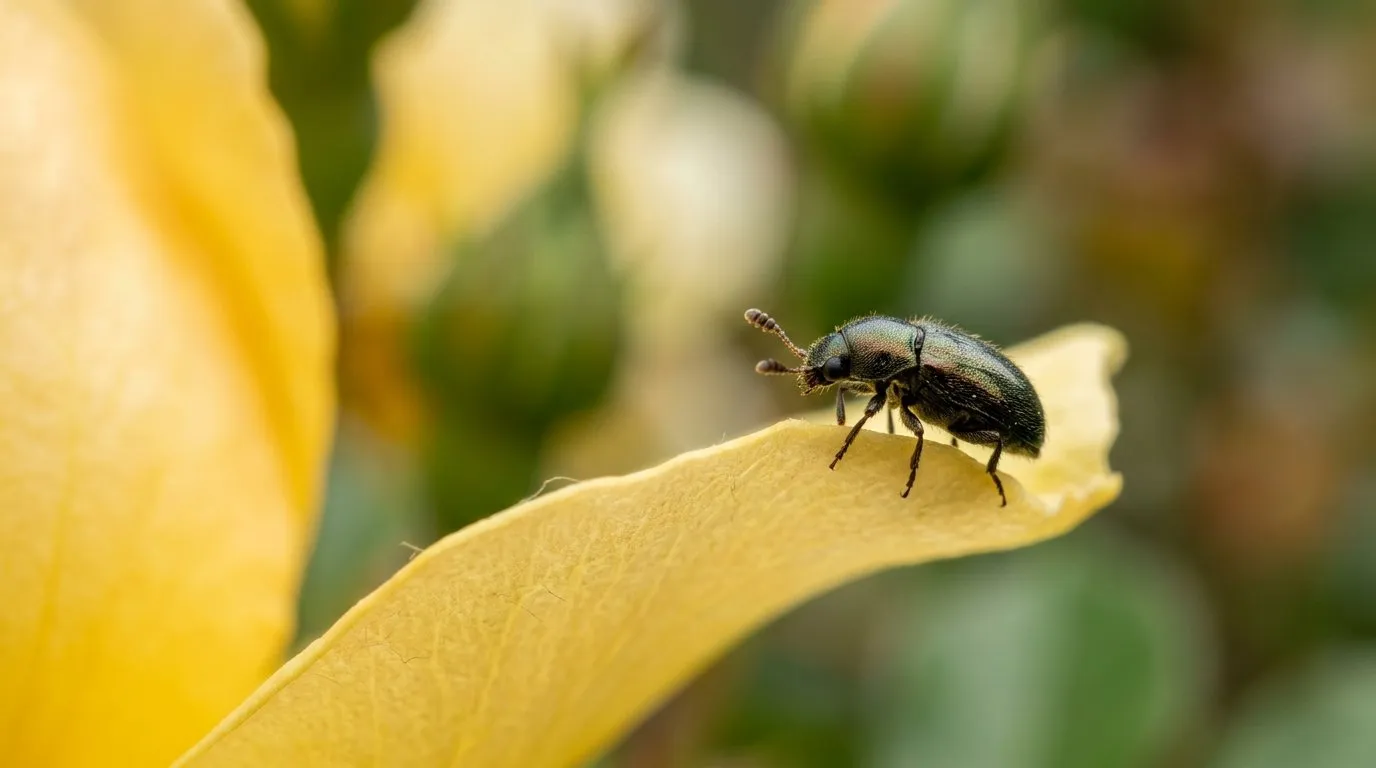
Up close, a pollen beetle is a neat little oval with a metallic sheen. In real life it’s no bigger than a pinhead.
Two common lookalikes:
- Flea beetles are also small and shiny, but they live on leaves, not flowers. They jump when disturbed and leave lots of small round holes in brassica and rocket leaves. The flea beetle guide covers how to protect your crops.
- Black aphids cluster on stems and shoot tips, not inside flowers, and they’re soft-bodied rather than hard and shiny.
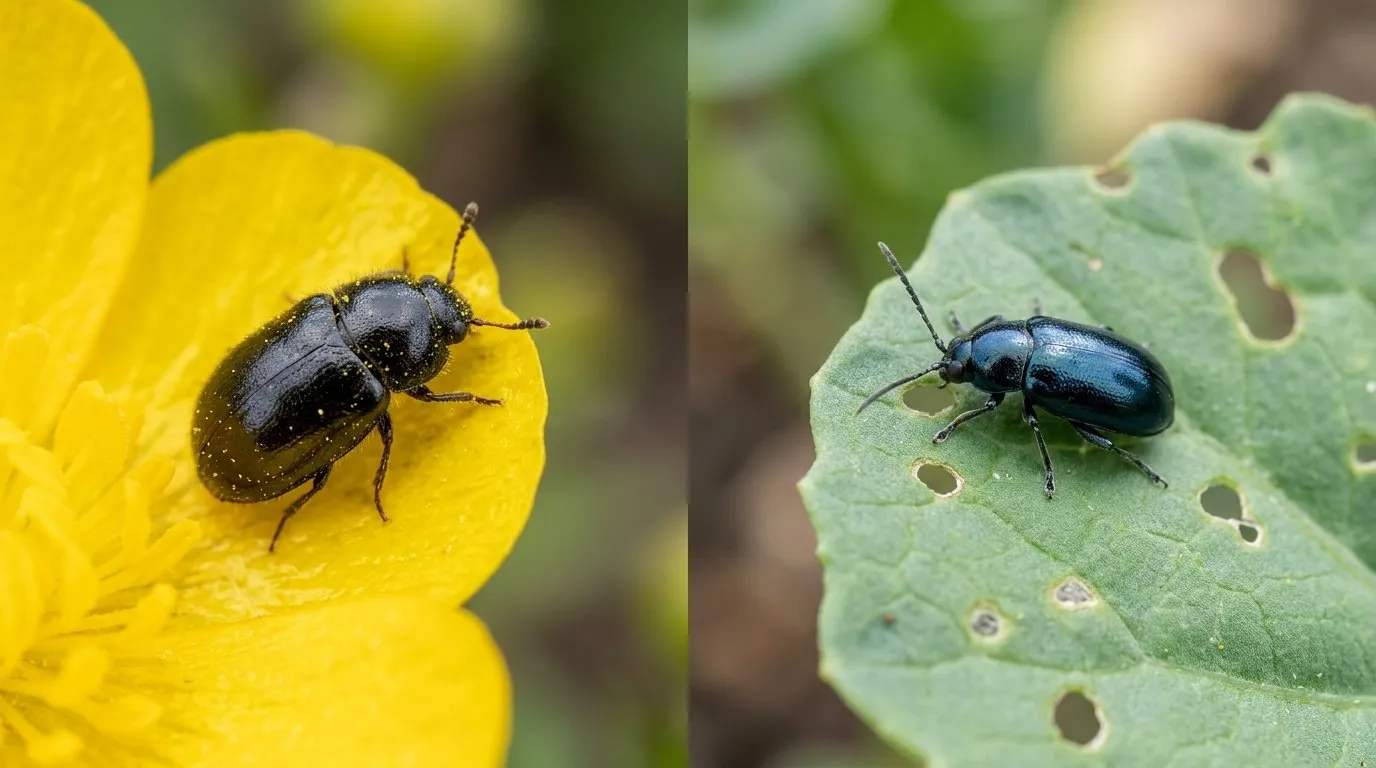
Pollen beetle on a flower, left, and flea beetle on a holed leaf, right. Where you find them is the quickest clue.
Why pollen beetles love sweet peas and yellow flowers
Pollen beetles are drawn to yellow and pale flowers with plenty of pollen. Favourites include courgette and squash flowers, roses, sweet peas, dahlias, and the flowers of brassicas left to bolt.
Numbers build in early summer and peak in July and August. Gardens near fields of oilseed rape sometimes see a big rush of beetles as the crop finishes and they move on in search of more pollen.
They don’t stop flowers forming seed pods or fruit. The only real problem comes when you want a vase of spotless blooms. Keep picking anyway, as the sweet pea growing guide explains, because regular cutting means more flowers.
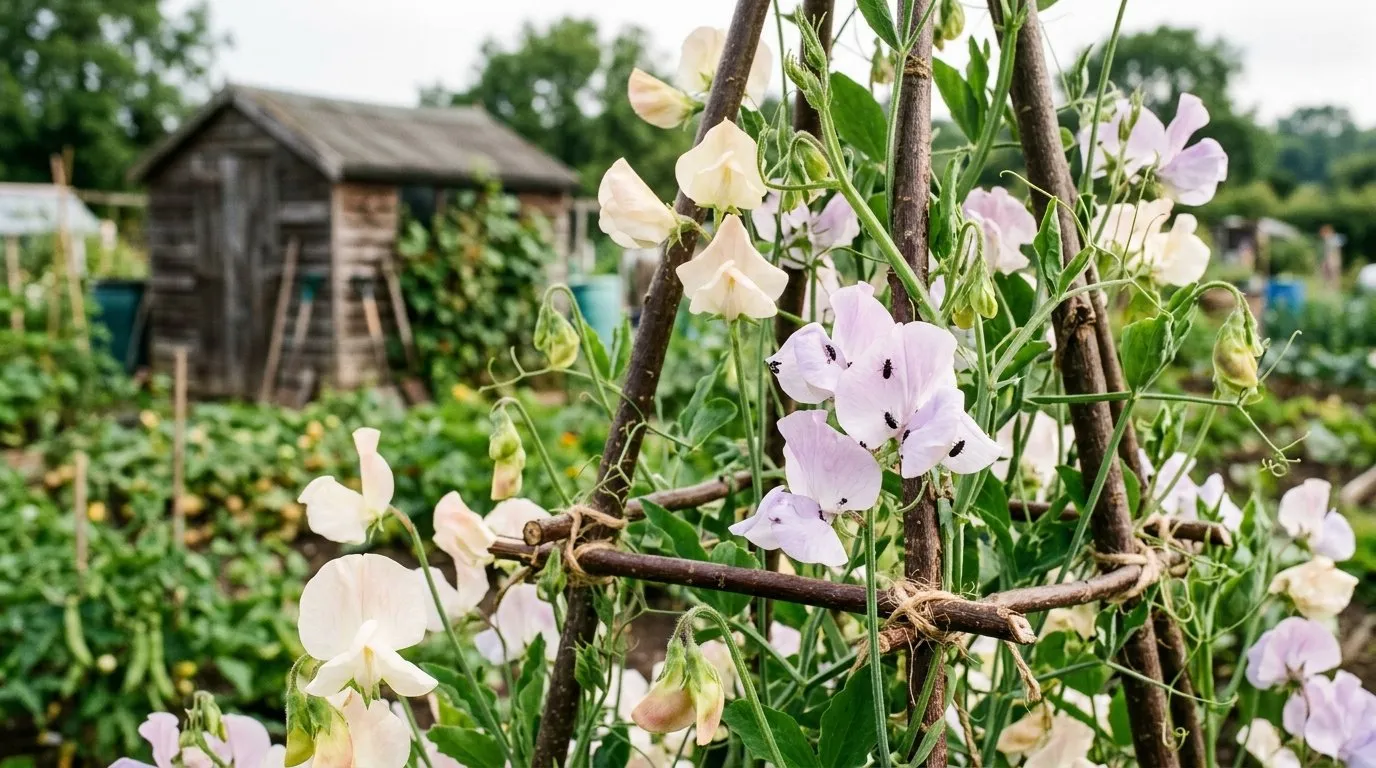
Those little black dots on the petals are pollen beetles. The sweet peas will carry on flowering regardless.
The pollen beetle year in the UK
| Season | What the beetles are doing |
|---|---|
| Winter | Adults shelter in leaf litter, soil and rough ground |
| Spring | Adults wake up and fly to early flowers and brassica buds to feed and lay eggs |
| Late spring to early summer | Small pale larvae feed in the flowers, then drop to the soil to pupate |
| July to August | The new generation of adults appears and visits all kinds of open flowers |
| Autumn | Adults look for winter shelter and numbers drop away |
There is usually one generation a year. By the time you notice crowds of them in July, they’re simply feeding up for winter.
How to get pollen beetles out of cut flowers
The beetles head for light. Use that to clear your cut flowers before they go indoors. It works for sweet peas, roses, dahlias and any of the best flowers for cutting they’ve moved into.
- Cut your flowers as usual and stand them in a bucket of water.
- Put the bucket in a dark shed, garage or porch with one window or a single light at the far end.
- Leave them for an hour or so in daylight. The beetles leave the flowers and fly towards the light.
- Give the stems a gentle tap away from the window, then take them indoors.
Shaking or rinsing hard bruises petals and still misses some beetles, so let the light do the work. Then follow the steps in the guide to conditioning cut flowers for a longer vase life.
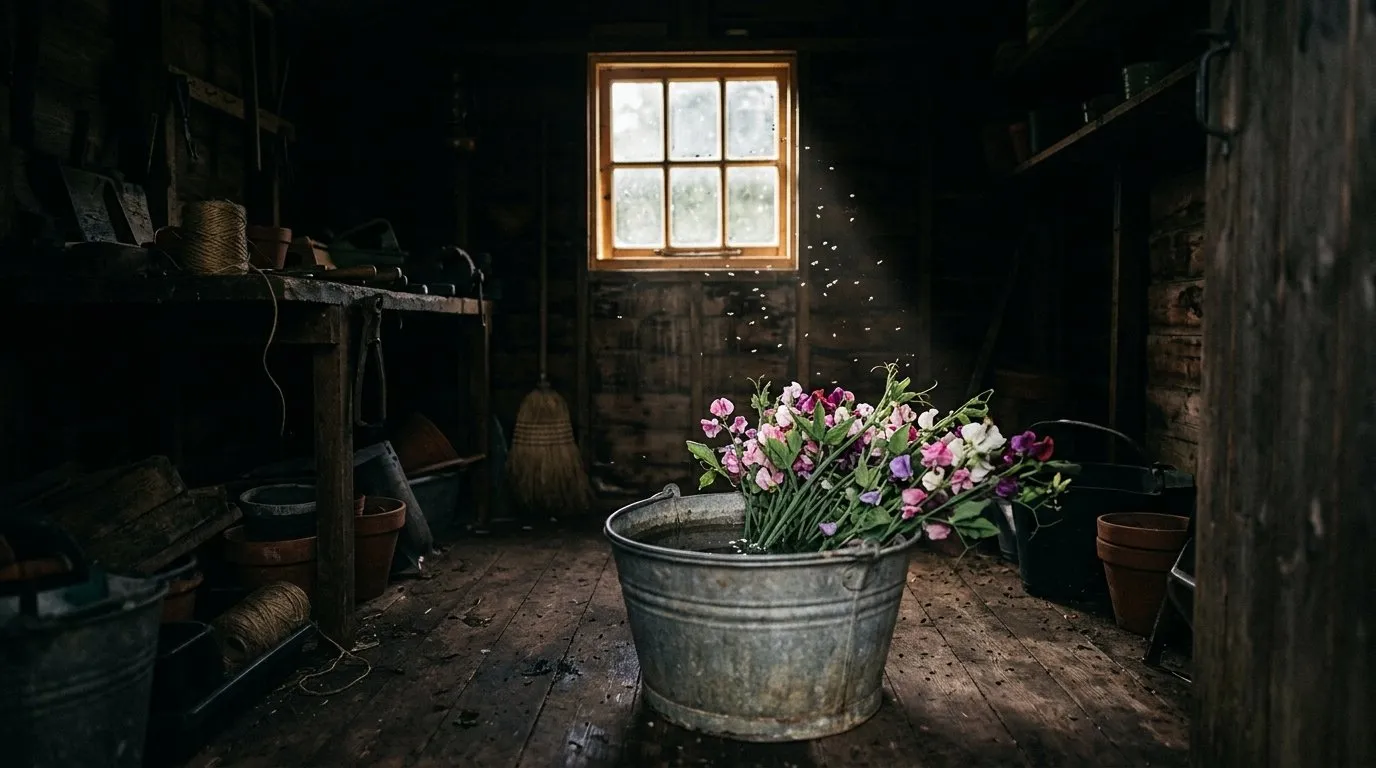
A dark shed with one bright window draws the beetles off the flowers, with no shaking needed.
Why spraying pollen beetles does more harm than good
Spraying pollen beetles isn’t needed. They’re doing no harm, and they share the same open flowers as bees and hoverflies. Any insecticide on open flowers risks harming those pollinators, which you need for beans, fruit and squash.
A garden with plenty of flowers and no sprays builds a healthy balance. Ladybirds, spiders and ground beetles feed on all sorts of small insects. The guide to bee-friendly garden plants shows how to plan a border that feeds pollinators all season.
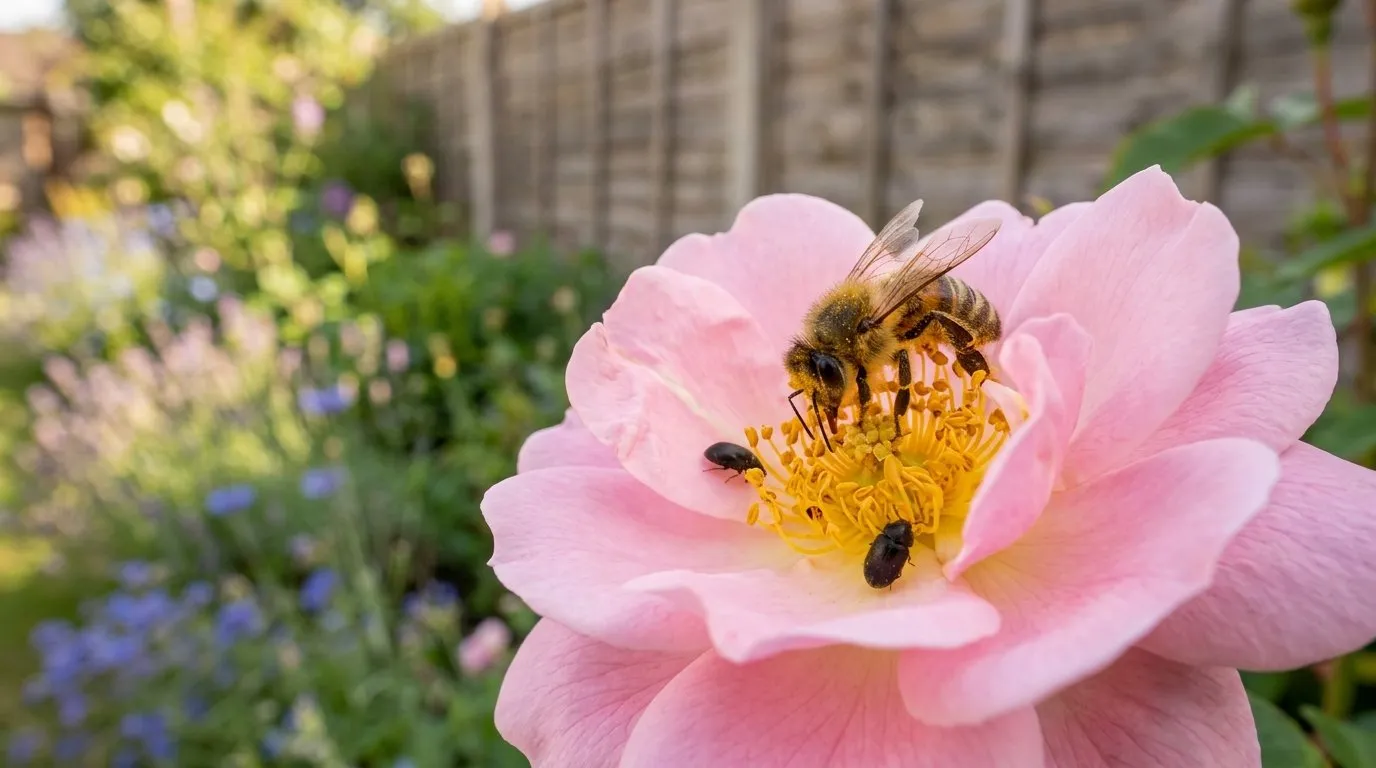
A honeybee and two pollen beetles sharing a rose. Spraying the beetles would hit the bee too.
Common mistakes with pollen beetles
Spraying the flowers. A crowd of beetles looks like an infestation, but they’re harmless. Leave them and they’ll disappear by late summer.
Blaming them for holes in leaves. Holes in brassica or rocket leaves are flea beetles or caterpillars. Pollen beetles stay in the flowers.
Shaking cut flowers hard. It bruises petals and never gets every beetle. Use the dark shed instead.
Picking straight into the house. Beetles brought indoors head for the windows. Clear them in the shed or garage first.
Frequently asked questions
Are pollen beetles harmful to garden plants?
No, not in gardens. They feed on pollen in open flowers and don’t harm the plant. The damage you read about is to farm crops of oilseed rape, where they feed on flower buds before they open.
Should I spray pollen beetles?
No, there’s no need. They cause no real harm, and spraying open flowers would also hit the bees and hoverflies feeding there. Leave them be and they disappear by late summer.
How do I get pollen beetles out of cut flowers?
Stand the stems in a dark shed or garage near one window. The beetles leave the flowers and fly to the light. After an hour or so, give the stems a gentle tap and take them indoors.
Why are pollen beetles all over my sweet peas?
They love pale and yellow flowers full of pollen. Sweet peas, roses, dahlias and courgette flowers are favourites. They feed on pollen and don’t stop the plant flowering or setting pods.
What do pollen beetles look like?
They’re tiny, shiny black beetles about 2mm long. In sunlight they have a faint green or bronze sheen. They crawl over flowers rather than jumping like flea beetles.
Do pollen beetles bite people?
No, they don’t bite or sting. They can be a nuisance when they land on yellow clothes, washing or windowsills. Indoors they head for the nearest window, where you can catch them and let them out.
When are pollen beetles most active in the UK?
They’re about from spring, but numbers peak in July and August. That’s when the new generation of adults appears and hunts for pollen. They tail off as summer flowers fade.
Save your energy for the pests that matter
Pollen beetles are a summer nuisance, not a threat. For the pests that really do need action, read the organic pest control guide, or browse more garden problem guides.
Our team produces practical UK gardening guidance from source research, contributor records and established horticultural practice. Editorial standards are overseen by Matt W.