Key takeaways
- Amaranthus is tender, so plant out only after the last frost
- Seed needs warmth, around 20°C, to come up well
- Love-lies-bleeding hangs its tassels; 'Hot Biscuits' holds its plumes upright and copes better with wind
- Stake each plant while it is still small, before the tassels get heavy
- Cut for the vase when most of the tassel has coloured, and dry tassels upside down in the dark
- Young leaves cook like spinach and the tiny seed is an edible grain
Amaranthus is one of the most dramatic annuals you can grow, with crimson tassels hanging like ropes from late summer until the frosts. Growing it in the UK is mostly about warmth and timing. It is a tender plant, so it needs a warm start indoors and must not go out until the frosts have passed.
Get that right and you have a showstopper for the border, a great cut and dried flower, and a bonus crop of leaves and grain for the kitchen.
Which amaranthus should you grow?
For hanging tassels, grow Amaranthus caudatus, love-lies-bleeding. For a windy garden or upright plumes, grow Amaranthus cruentus. For coloured leaves, grow Amaranthus tricolor.
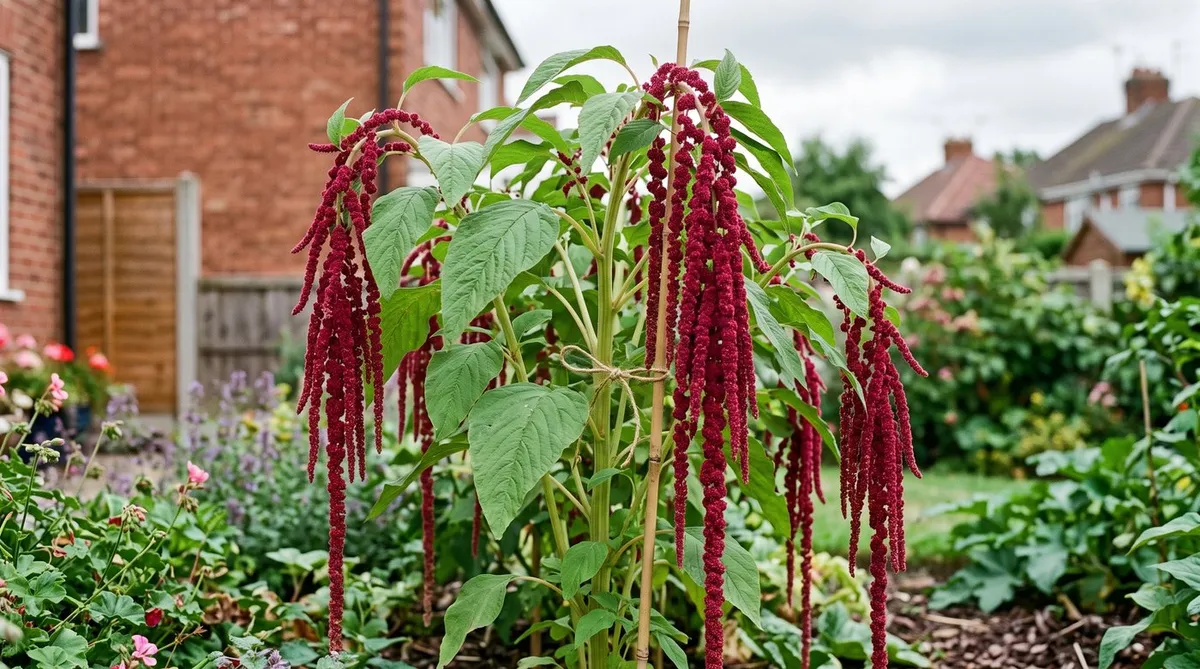
Love-lies-bleeding has thick pale stems, broad oval leaves and long tassels that hang straight down. They are usually deep crimson, though ‘Viridis’ is a fresh lime green. The name comes from the way the tassels seem to drip colour down the plant.
Amaranthus cruentus carries stiff, branched plumes that stand upright. ‘Hot Biscuits’ is the one most people know, a warm bronze-tan loved by flower arrangers. Upright plumes catch less wind than hanging ropes, so it is the better pick for an exposed plot.
| Amaranthus | Habit | Colour | Best for |
|---|---|---|---|
| A. caudatus | Hanging tassels | Crimson | Drama in the border, drying |
| A. caudatus ‘Viridis’ | Hanging tassels | Lime green | Cutting, mixes with anything |
| A. cruentus ‘Hot Biscuits’ | Upright plumes | Bronze-tan | Windy sites, arrangements |
| A. tricolor | Leafy, small flowers | Red, green and yellow leaves | Colourful foliage and edible leaves |
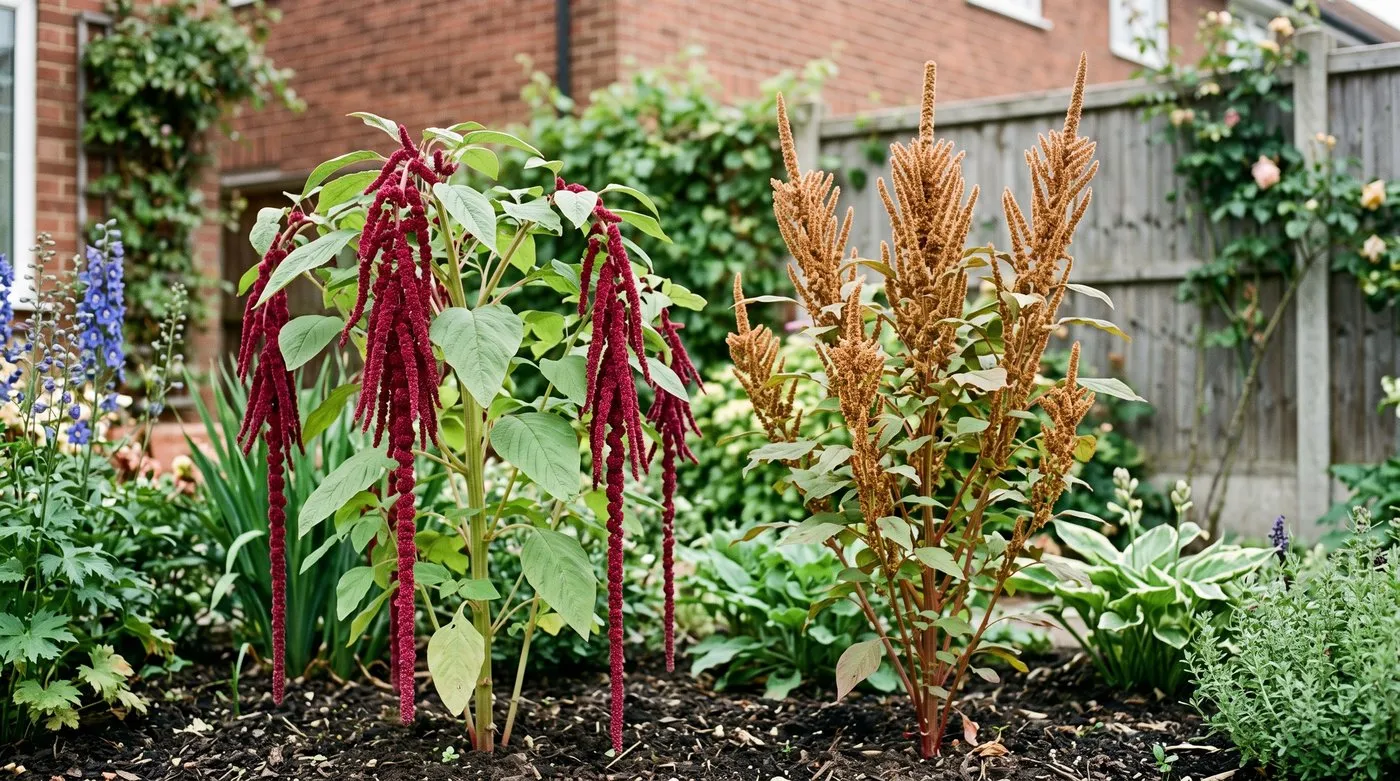
Hanging crimson love-lies-bleeding on the left, upright bronze ‘Hot Biscuits’ on the right. The upright one shrugs off wind much better.
When to sow and plant out amaranthus
Sow indoors in late March or April and plant out after the last frost. Getting both dates right is most of the battle.
Don’t sow too early. Amaranthus grows fast once warm. Sown in February, plants outgrow their pots long before it is safe to plant out. They sulk and never quite recover.
Don’t plant out too early. Even a light frost blackens the leaves and kills the plant. A warm spell in early May is tempting, but wait until the frosts are over. That is usually late May in the south and early June in the north and on high ground.
Waiting costs very little. Plants set out in early June grow away fast in the warmth.
How to sow amaranthus seed under cover
Amaranthus seed is tiny and needs warmth. Sow it on the surface and barely cover it.
- Fill a seed tray or modules with moist, peat-free seed compost and firm lightly.
- Scatter seed thinly on the surface.
- Cover with the thinnest dusting of vermiculite, or none at all.
- Put the tray in a propagator or cover it with a clear lid.
- Keep it at around 20°C. Seedlings usually appear in one to two weeks.
When seedlings have two true leaves, prick them out into small pots. Hold them by a leaf, never the stem, which crushes easily. Grow them on somewhere a little cooler and bright, so they stay sturdy rather than leggy.
Gardener’s tip: Sow a few spare plants a couple of weeks after your main batch and keep them under cover. If a late frost catches the first lot, you have back-ups ready to go.
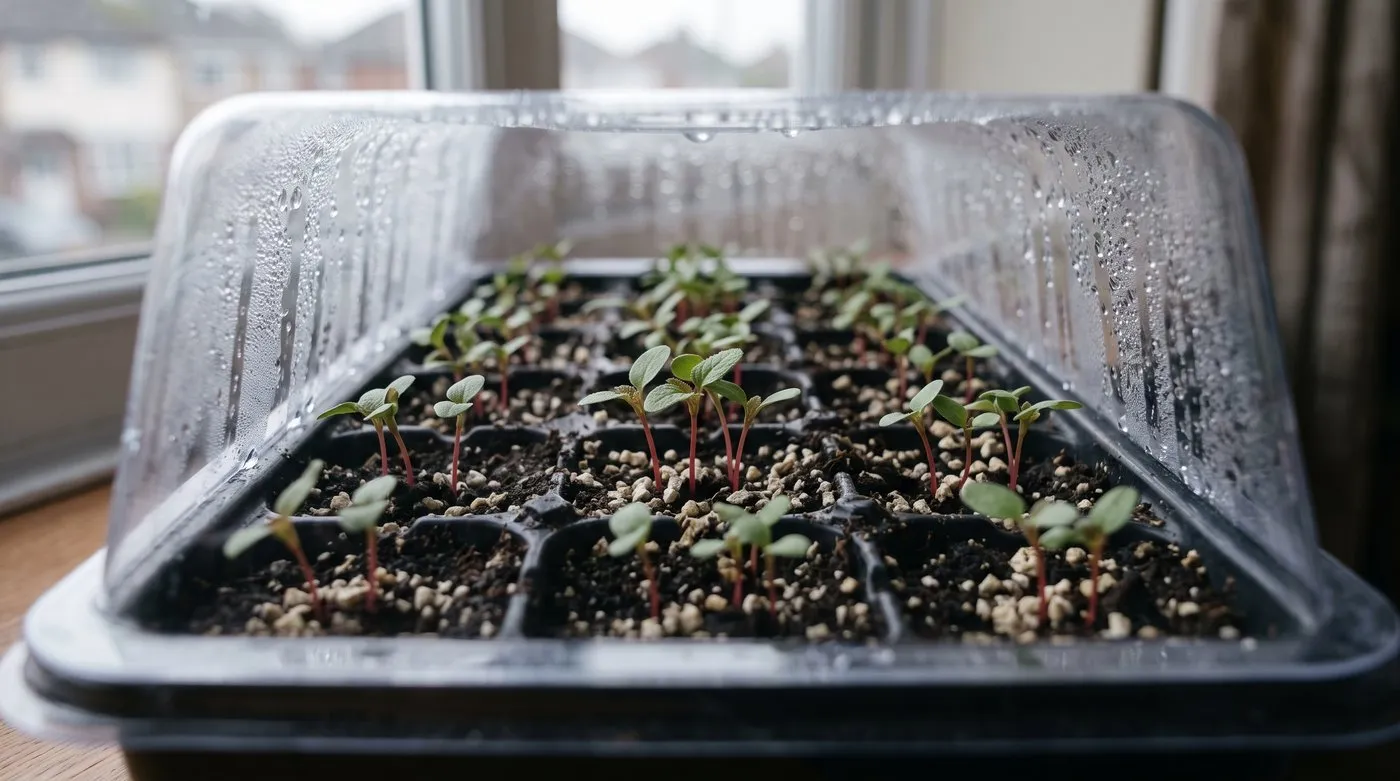
Seedlings like these, with their first true leaves, are ready to prick out. A propagator lid keeps the warmth and moisture in.
Planting amaranthus out in the garden
Harden plants off for a week to ten days before planting out. Leave them outside in a sheltered spot by day and bring them in at night, then leave them out overnight once no frost is forecast. The guide to hardening off bedding and half-hardy plants has a simple routine.
Choose a sunny spot with free-draining soil. Space love-lies-bleeding about 45cm apart and taller cruentus types a little wider. Crowded plants lose their lower leaves, which leaves bare stems in the vase.
Water in well and keep watering in dry spells for the first few weeks. Once established, amaranthus copes with dry weather well. Don’t feed it: rich soil gives soft, floppy growth and weaker colour.
How to stop amaranthus falling over
Stake every plant early. The tassels soak up rain and get surprisingly heavy, and a summer storm can flatten an unstaked row.
Push a tall cane in beside each plant while it is still knee-high or smaller. Tie the stem loosely with soft twine in a figure of eight, then add another tie higher up as it grows. Adding a cane late means spearing the roots of a top-heavy plant.
Use soft twine, not wire ties. The stems thicken fast and a tight tie can cut in, leaving a weak point that snaps in the wind. Check the ties every few weeks in summer. The guide to staking and supporting garden plants covers canes, netting and other options for a whole bed.
In a windy garden, grow ‘Hot Biscuits’ instead of love-lies-bleeding. Its upright plumes catch far less wind.
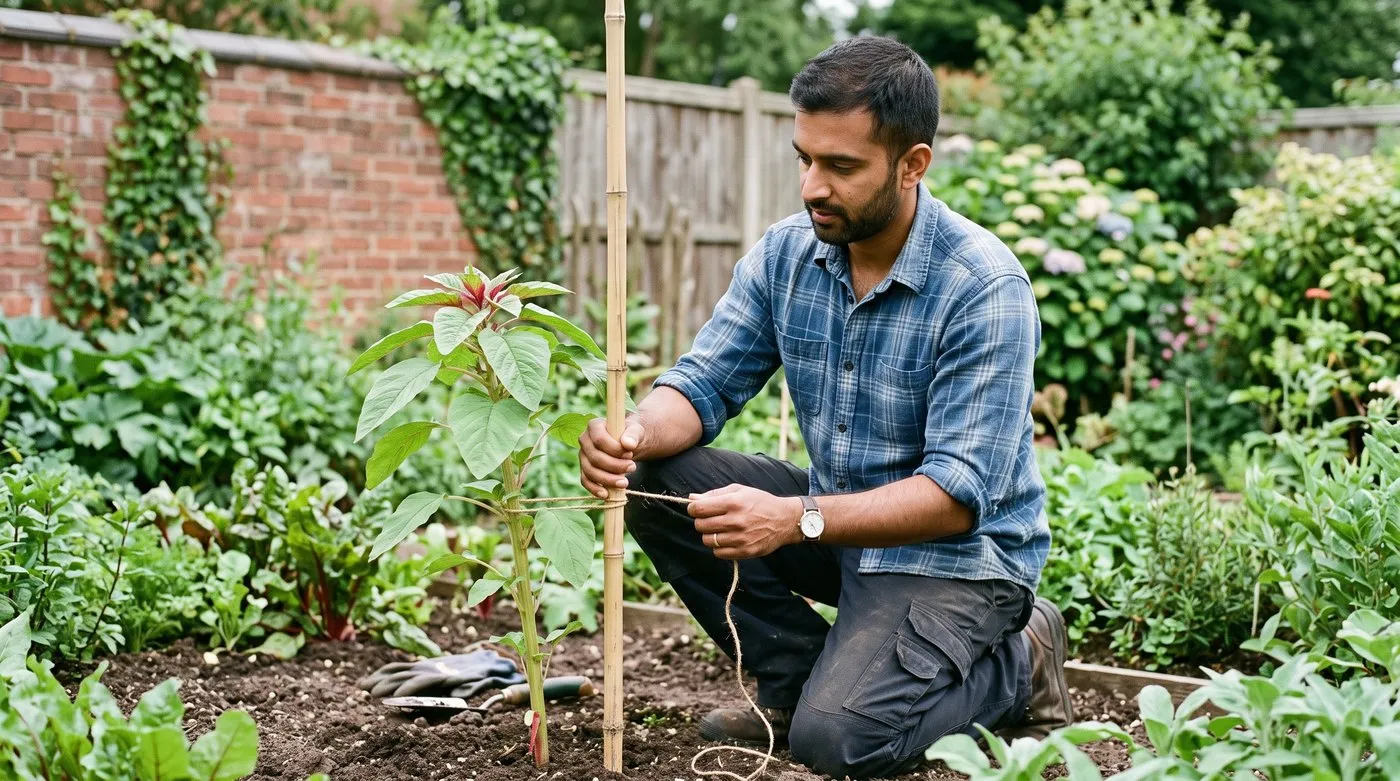
Get the cane in while the plant is small, as here. A loose figure-of-eight tie holds the stem without cutting in.
Cutting amaranthus for the vase
Cut amaranthus when most of the tassel has coloured but the tip is still developing. Left later, it starts dropping seed indoors.
Cut in the cool of early morning with clean secateurs, taking as long a stem as you need. Strip every leaf that would sit below the waterline, because the leaves rot quickly and foul the water. Then stand the stems in a bucket of cool water somewhere cool and shady for a few hours before arranging. Change the vase water every couple of days and the stems last well. The guide to conditioning cut flowers for longer vase life explains the method step by step.
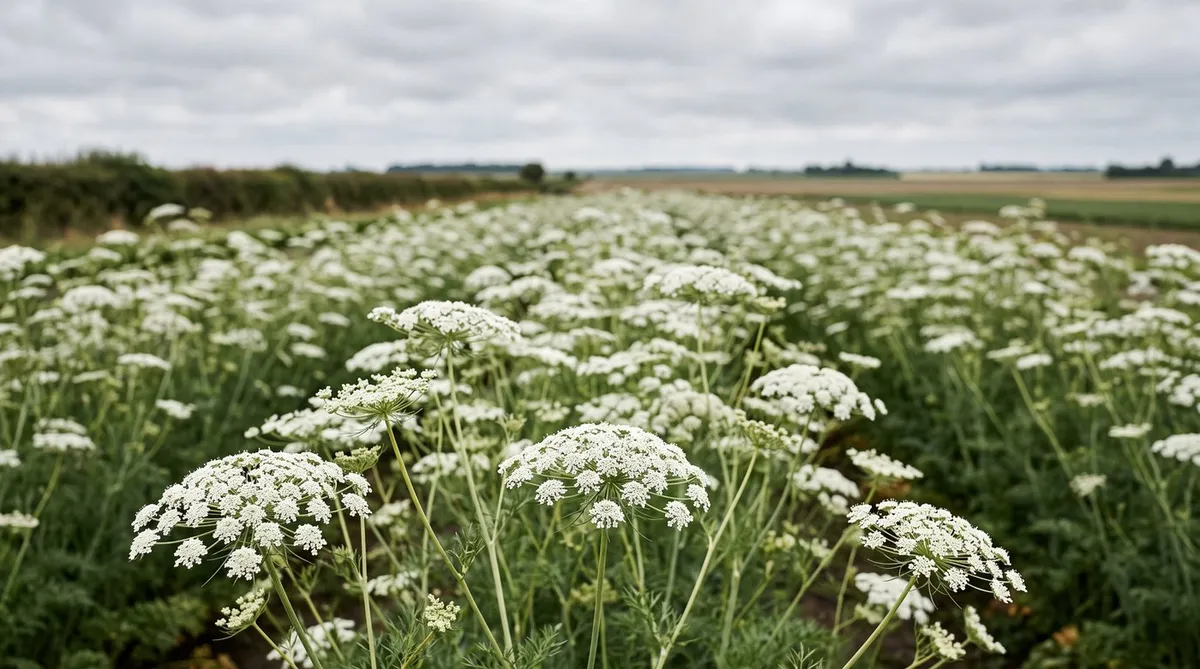
Love-lies-bleeding looks wonderful spilling over the edge of a tall vase. Pair it with the airy white umbels of Ammi majus for a classic cutting-garden combination.
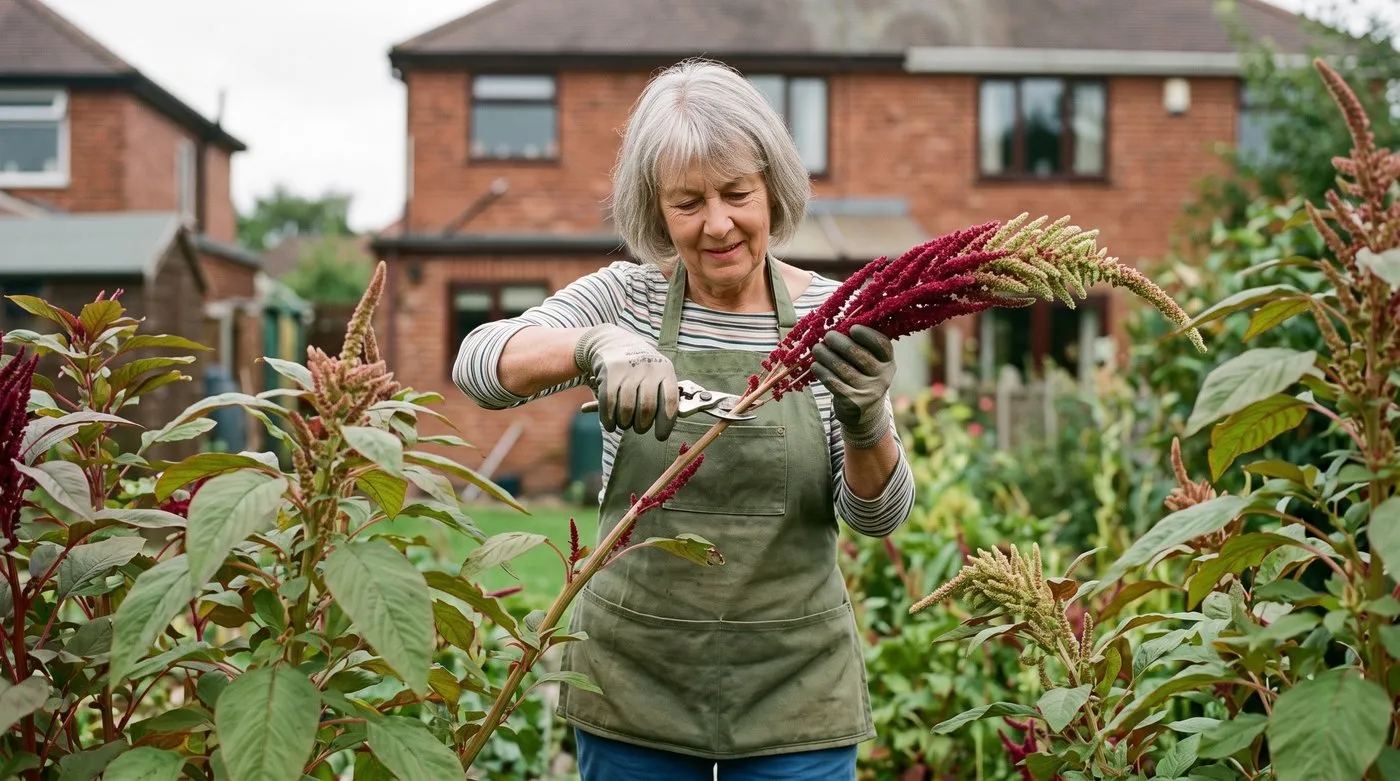
Cut when most of the plume has coloured and the tip is still fresh. That’s when stems last best in water.
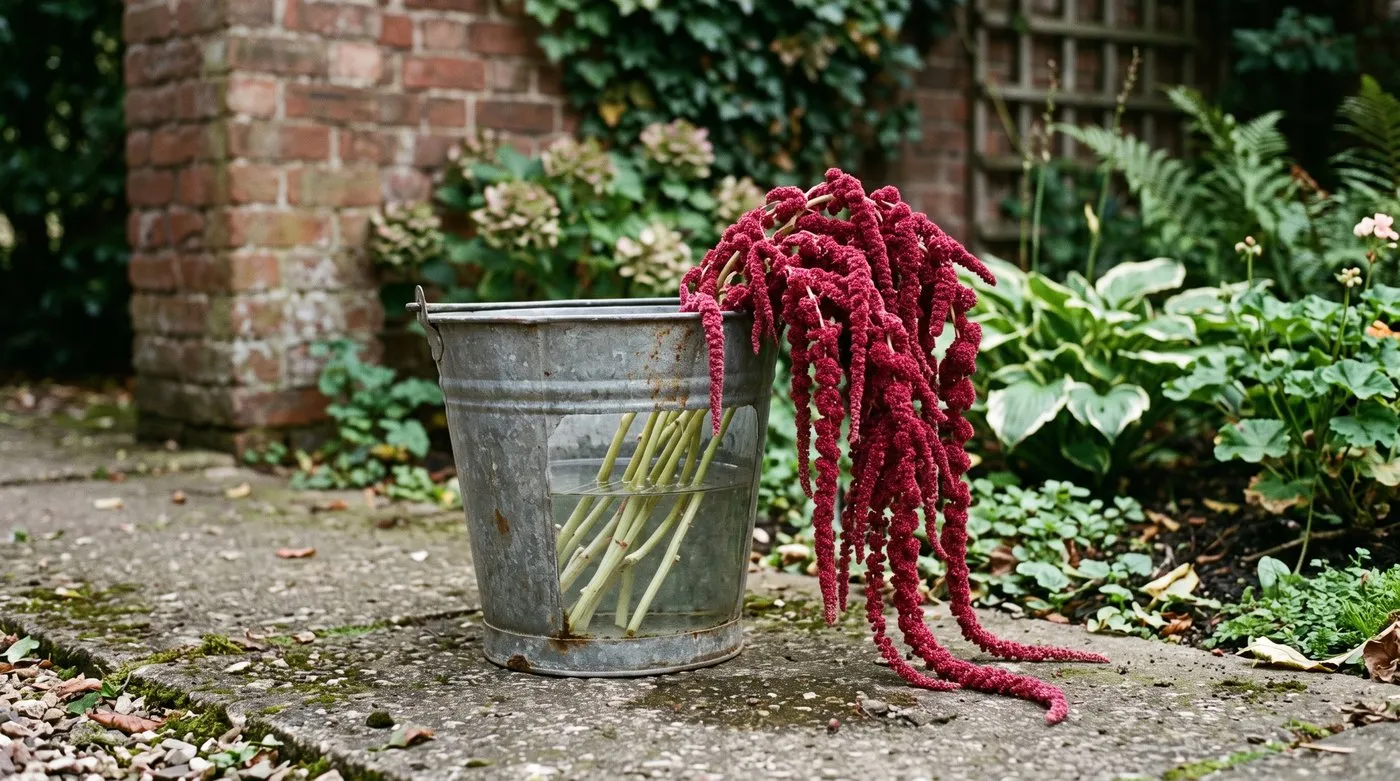
Stripped stems in a bucket of cool water. A long drink before arranging makes a real difference to vase life.
How to dry amaranthus tassels
Amaranthus is one of the best annuals for drying, and the tassels keep their colour well out of the sun.
Cut a little later than for the vase, once the whole tassel has coloured but before seed starts to shed. If seed rains out when you squeeze a tassel, it’s a bit past its best for drying.
Strip off all the leaves. Tie stems in small bunches with soft twine and hang them upside down somewhere dark, dry and airy, such as a garage, shed or spare room. Darkness keeps the colour. Sunlight fades it to straw. The stems are ready when they snap cleanly rather than bend, usually after two or three weeks.
Crimson tassels dry to a deep dusky red and ‘Hot Biscuits’ to a warm tan. Green ‘Viridis’ fades the most. Hang bunches over a sheet to catch any falling seed, which gives you free seed for next year.
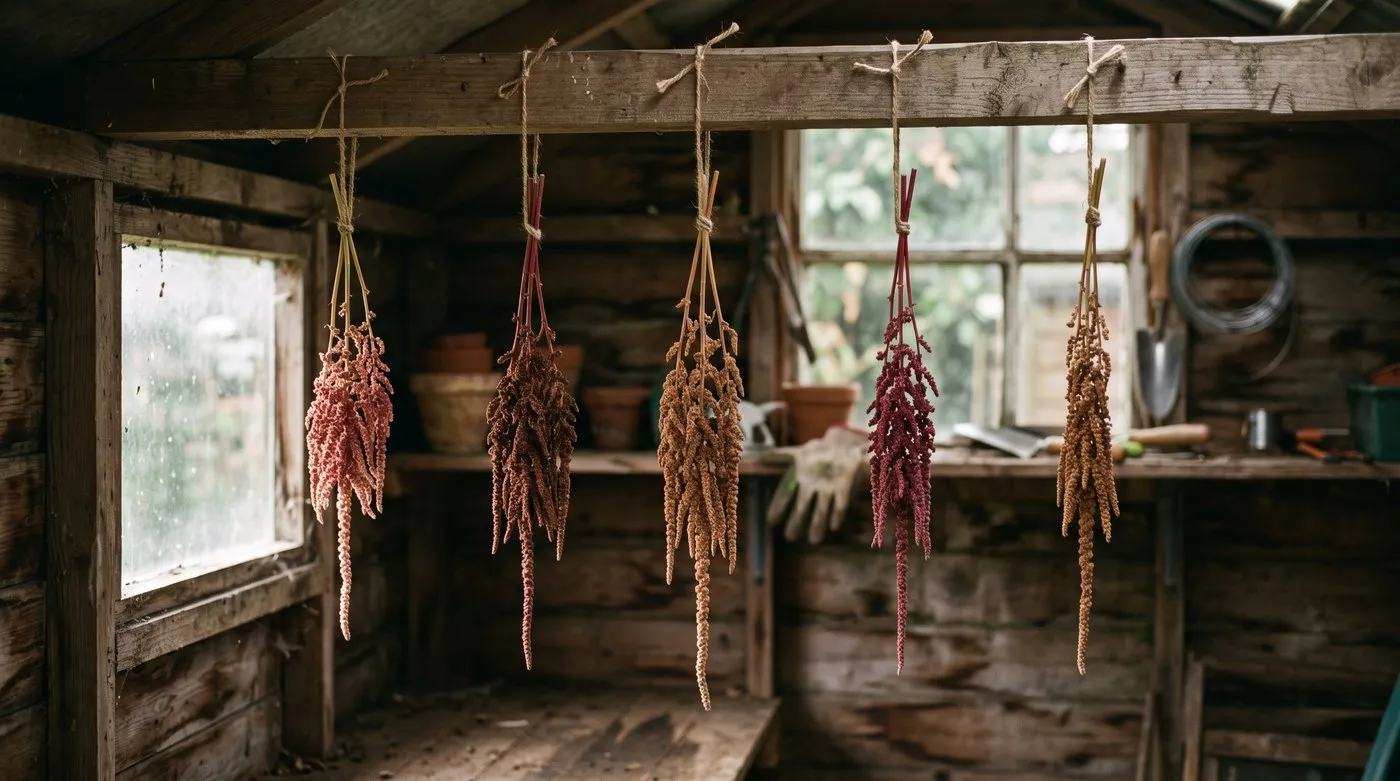
A dim, airy shed is perfect for drying. Out of the sun, the tassels hold their colour for months.
Can you eat amaranthus?
Yes. The young leaves and the seed of these garden amaranthus are both edible, so it is a two-in-one crop.
Leaves. Pick young leaves from early summer and cook them like spinach in a pan with a little oil. Like spinach and chard, they contain oxalates, so cook them rather than eating lots raw. Take a leaf or two from each plant rather than stripping one you want for flowers. A. tricolor is the best one for leaves.
Grain. The tiny, gluten-free seed is a true grain. In early autumn, bend dried heads into a paper bag and rub them between gloved hands. Then tip the seed gently from bowl to bowl in a light breeze to blow off the chaff. Cook it like quinoa or pop it in a hot dry pan. Yields in a British summer are small, so treat it as a fun extra. The guide to growing quinoa in the UK covers a similar harvest and cleaning method.
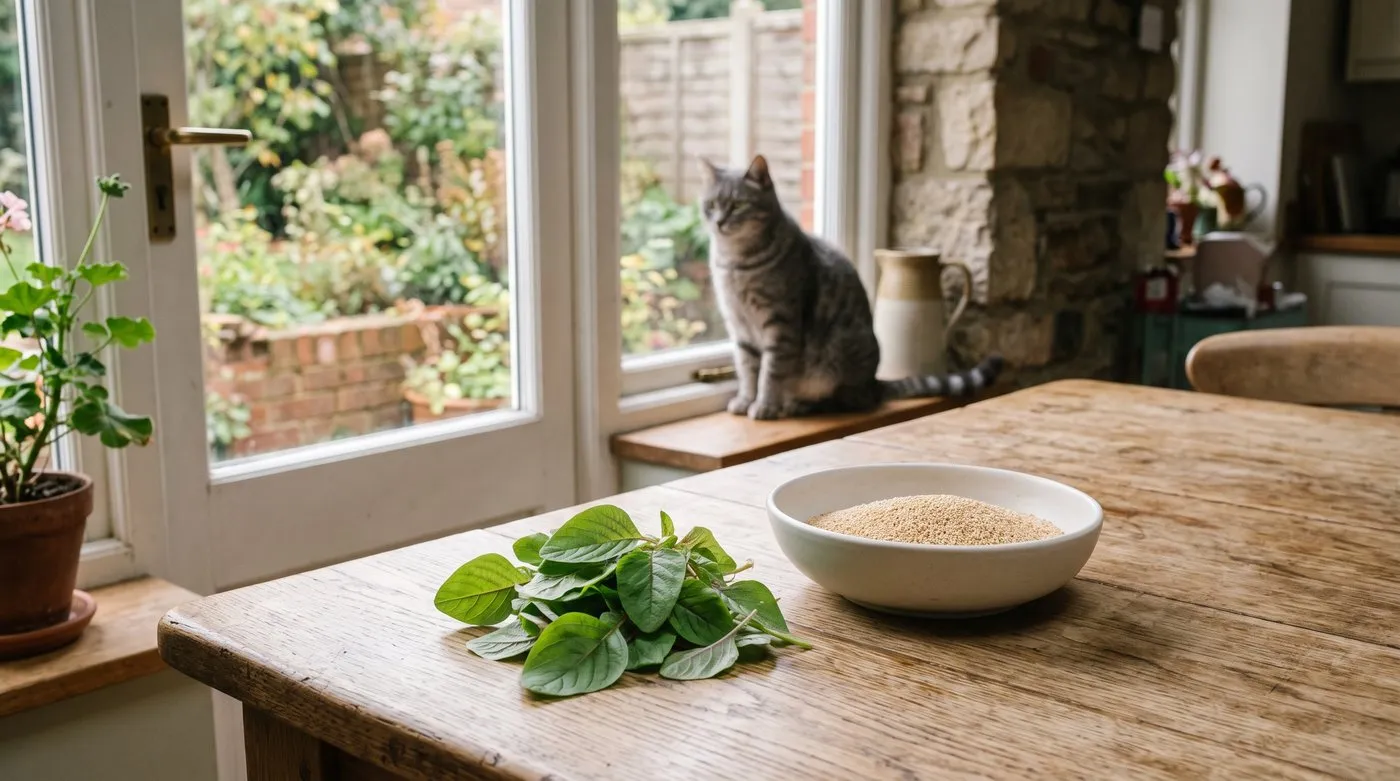
Leaves for the pan and a bowl of grain from the same plants. The cat seems less impressed than the cook.
Amaranthus growing calendar
| Month | What to do |
|---|---|
| February | Order seed. Too early to sow |
| March | Sow indoors in warmth from late March |
| April | Main sowing month. Prick out seedlings into small pots |
| May | Grow on under cover. Start hardening off late in the month |
| June | Plant out once frosts are over. Put canes in early |
| July | Water in dry spells only. Pick young leaves. Add ties |
| August | Tassels colour. Cut for the vase. Check ties before storms |
| September | Cut for drying. Harvest grain from dried heads |
| October | Flowers carry on until the first frost. Collect seed |
| November | Frost kills the plants. Pull them out and compost them |
Common mistakes with amaranthus
- Planting out too soon. One frost kills the lot. Wait until the frosts are over and keep spare plants under cover.
- Burying the seed. It is tiny and needs warmth. Sow on the surface and barely cover it.
- Feeding it. Rich soil gives soft, floppy growth and weaker colour. Lean soil suits it better.
- Staking too late. A cane added to a big, top-heavy plant damages roots and rarely saves it. Stake while plants are small.
- Cutting too late for the vase. A fully ripe tassel sheds seed all over the table. Cut while the tip is still developing.
Build a cutting bed around amaranthus
Amaranthus works at the back of a bed with lower plants in front. For velvety plumes and crests in similar jewel colours, try celosia. For the next step, read the guide to growing annuals from seed, or browse all our growing guides.
Frequently asked questions
When should I sow amaranthus seed in the UK?
Sow indoors in late March or April at around 20°C. A heated propagator or warm windowsill helps. You can sow direct outdoors in late May or June in warm, sheltered gardens.
Is love-lies-bleeding hardy in the UK?
No, it is a tender annual that dies at the first frost. Plant out only after your last local frost, usually late May in the south and early June further north.
Does amaranthus need staking?
Yes, most amaranthus needs a cane once it gets going. The tassels get heavy, especially when wet. Put one cane beside each plant while it is still small and tie it loosely as it grows.
Can you eat amaranthus leaves and seeds?
Yes, both the young leaves and the seed are edible. Cook the leaves like spinach. The tiny seed is a gluten-free grain you can boil or pop like quinoa.
How long does cut amaranthus last in a vase?
Usually around a week or more if conditioned well. Cut early in the morning, strip the lower leaves and give the stems a long drink in cool water before arranging.
How do you dry amaranthus tassels?
Hang them upside down in small bunches somewhere dark, dry and airy. Cut when the tassel is fully coloured but before seed drops. They are ready when the stems snap cleanly.
What is the difference between Amaranthus caudatus and cruentus?
Caudatus hangs its tassels; cruentus holds its plumes upright. Caudatus is classic love-lies-bleeding. Cruentus, including ‘Hot Biscuits’, stands up to wind better.
Our team produces practical UK gardening guidance from source research, contributor records and established horticultural practice. Editorial standards are overseen by Matt W.