Key takeaways
- Red valerian (Centranthus ruber) and common valerian (Valeriana officinalis) are different plants
- Red valerian wants full sun and dry, poor, free-draining soil, such as walls and gravel
- Common valerian wants moist, fertile soil in sun or light shade
- Cut red valerian back after its first flush to stop seeding and get more flowers
- Only Valeriana officinalis has the root used in herbal remedies; lift it in its second autumn
- Both feed pollinators, and red valerian is a favourite of the hummingbird hawk-moth
Valerian is easy to grow in the UK, once you know which valerian you have. Red valerian (Centranthus ruber) is the pink and red plant that bursts out of old walls. Common valerian (Valeriana officinalis) is a tall native herb of damp ground. They share a name but want opposite conditions. Match the plant to the place and both look after themselves.
Red valerian and common valerian are two different plants
Red valerian is a Mediterranean plant that has made itself at home across much of Britain, especially in the south and west. It has fleshy, smooth, blue-grey leaves and domed clusters of small pink, red or white flowers. It loves dry, chalky, poor ground.
Common valerian is a native wildflower of damp meadows and stream banks. It has divided, fern-like leaves and flat heads of tiny white to pale pink flowers on tall stems. Its root is the one used in herbal remedies.
The easiest way to tell them apart is the leaf. Smooth and fleshy means Centranthus. Divided and ferny means Valeriana. Always check the Latin name on a seed packet or plant label.

Red valerian on the left, common valerian on the right. Look at the leaves: smooth and fleshy, or divided and ferny.
Red valerian or common valerian: which suits your garden?
| Red valerian (Centranthus ruber) | Common valerian (Valeriana officinalis) | |
|---|---|---|
| Height | 60-90cm | 1.2-1.5m |
| Flowers | Pink, red or white clusters | White to pale pink flat heads |
| Leaves | Smooth, fleshy, blue-grey | Divided, fern-like |
| Soil | Dry, poor, free-draining, chalk is fine | Moist and fertile |
| Spot | Full sun, walls, gravel, coast | Sun or light shade, damp borders, pond edges |
| Flowering | Late spring to autumn | Summer |
| Used as a herb | No | Yes, the root |
How to grow red valerian on walls and in gravel
Red valerian thrives on neglect. Give it full sun and sharp drainage and it will flower for months. Rich, wet or fed soil makes it floppy and short-lived.
It seeds itself into wall mortar, gravel and paving cracks. A deep root helps it shrug off drought, and it copes with salt spray. That makes it a good choice for coastal gardens with salty winds and for drought-tolerant planting.
- Sow seed in spring in trays indoors or outside where it is to flower. Cover it only lightly.
- Plant young plants 45-60cm apart in spring or early autumn.
- Choose from the usual rosy red, deeper red ‘Coccineus’ or white ‘Albus’.
- Never feed it. You’ll get soft leaves and fewer flowers.
On heavy clay, plant it on a raised bed, a mound or in a gravel garden, and mix grit into the planting area. Wet winter soil is the main thing that kills it.

Red valerian loves a sunny wall base and a gravel path. No feeding needed, just a cut back after flowering.
How to stop red valerian taking over
The one job red valerian needs is a cut back after its first flush, usually in July. This stops it seeding everywhere and often brings a second round of flowers into autumn.
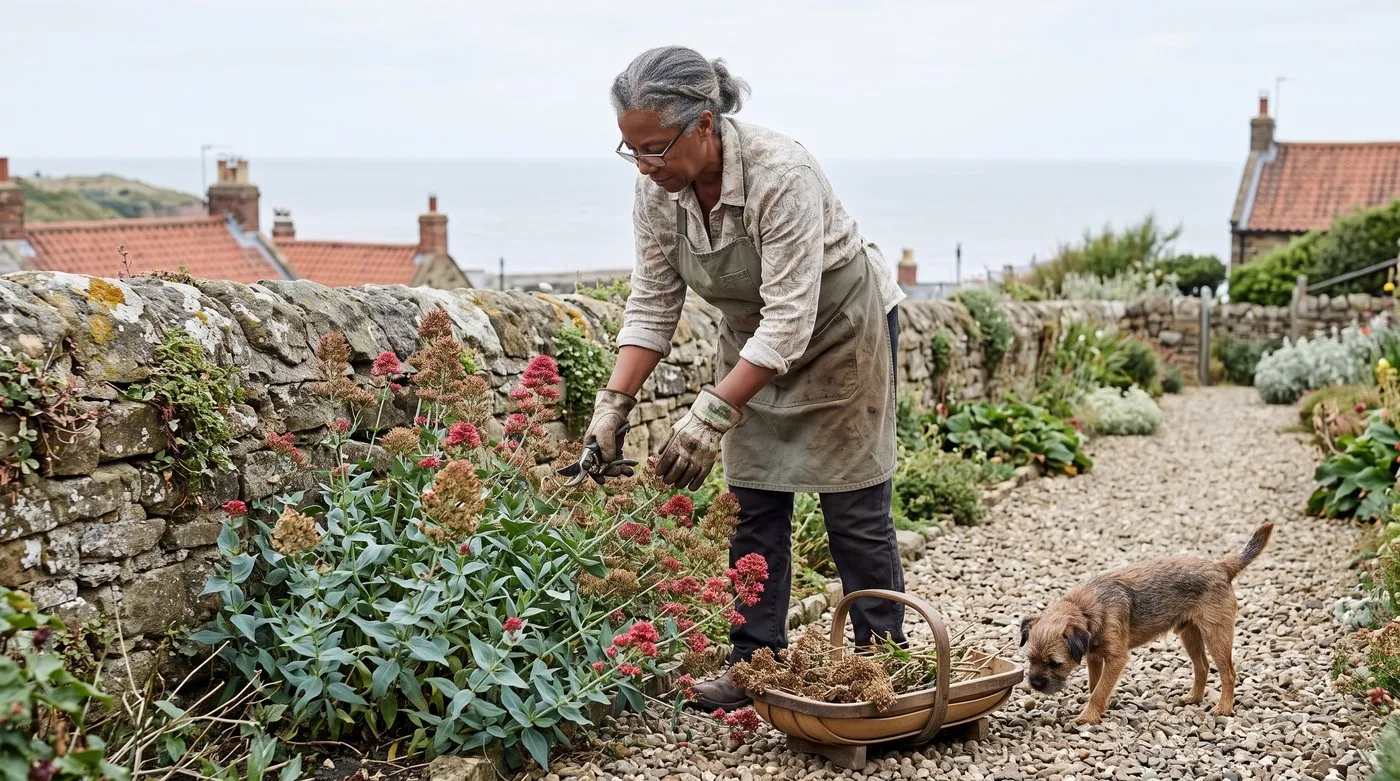
A quick cut back in July stops red valerian seeding everywhere and often brings a second flush of flowers.
Pull unwanted seedlings while they are small. Older plants grow a deep root and are much harder to shift. Keep it away from old walls you care about, as roots in the mortar can loosen stones over time. It’s one of the self-seeding plants that is lovely in the right place and a nuisance in the wrong one.
How to grow common valerian for flowers and root
Common valerian wants the opposite of its red cousin: moist, fertile soil in sun or light shade. It suits the back of a border, a bog garden edge or a wild patch. Dry soil leaves it small and stunted.
- Sow in spring, on the surface of the compost, as the seed needs light to germinate. Use fresh seed, as it doesn’t keep well.
- Plant out 60cm apart once plants are a good size.
- Stake discreetly on windy sites, as stems reach 1.2-1.5m.
- Mulch with garden compost in spring to keep the soil damp.
The flowers have a sweet scent and draw bees and hoverflies. It earns a place in a bee-friendly border or a medicinal herb garden.

Common valerian grows wild beside streams. Give it the same damp soil in the garden.
Harvesting common valerian root
Only Valeriana officinalis has the root used in herbal remedies. Red valerian’s root is not used.
Lift roots in the second autumn, once the top growth dies back. First-year roots are too thin to bother with. Fork up the plant, wash the roots well and slice thick pieces. Dry them somewhere warm and airy until they snap cleanly, then store them in an airtight jar. The strong smell develops as they dry. Before taking any herbal remedy, check with a pharmacist or GP, especially if you take other medicines.
Valerian growing calendar month by month
| Month | Red valerian | Common valerian |
|---|---|---|
| March to April | Sow seed. Plant out young plants | Sow seed on the surface. Mulch established plants |
| May to June | First flowers open | Plant out. Water young plants in dry spells |
| July | Cut back after the first flush | Peak flowering |
| August to September | Second flush. Pull unwanted seedlings | Collect seed if wanted |
| October to November | Leave some stems for wildlife | Lift second-year roots. Divide old clumps |
| December to February | Little to do | Little to do |
Wildlife value of both valerians
Red valerian is one of the best plants for the hummingbird hawk-moth, a day-flying moth that hovers to feed. Its long, narrow flowers also suit butterflies and long-tongued bumblebees. Because it flowers for so long, it keeps feeding insects into autumn. See more plants for butterflies.
Common valerian’s open, flat heads suit hoverflies, solitary bees and other short-tongued insects. As a native, it fits naturally into wild and meadow-style planting.

Red valerian’s long flowering season keeps bees and butterflies fed well into autumn.
Common mistakes with valerian
- Mixing up the two plants. Pink Centranthus won’t give you a herbal root, and Valeriana sulks in a dry wall. Check the Latin name.
- Letting red valerian seed everywhere. Cut it back after the first flush every year.
- Feeding red valerian. It flowers best in poor soil.
- Planting common valerian in dry soil. It needs moisture to grow tall and build a good root.
- Lifting roots in the first year. Wait until the second autumn.
Good companions for each valerian
Red valerian looks great in a hot, dry gravel scheme with lavender, sea holly, verbascum and erigeron. Its pink and red flowers stand out against silver leaves. Catmint is a classic partner along a sunny path.
Common valerian belongs with other tall moisture-lovers such as meadowsweet, hemp agrimony and purple loosestrife. Find more ideas in the plants section.
Now you can tell your valerians apart, read the guide to easy self-seeding plants for more plants that fill gaps on their own.
Frequently asked questions
Is red valerian the same as medicinal valerian?
No, they are different plants from different genera. Red valerian is Centranthus ruber, a colourful wall and border plant. Medicinal valerian is Valeriana officinalis, whose root is used in herbal remedies. They also need very different growing conditions.
How do you stop red valerian taking over the garden?
Cut off the faded flowers before they set seed. Cutting back after the first flush stops seeding and often brings more flowers. Pull unwanted seedlings while small, as older plants grow deep roots.
Does valerian grow well in UK gardens?
Yes, both kinds are hardy and easy in the right spot. Red valerian suits dry, sunny walls and gravel. Common valerian prefers moist soil, such as damp borders, pond edges and meadow patches.
When do you harvest valerian root?
Lift common valerian roots in autumn of the second year. First-year roots are usually too small. Wash, slice and dry them somewhere warm and airy, then store in an airtight jar.
Is valerian good for bees and butterflies?
Yes, both valerians are good nectar plants. Red valerian flowers for months and draws butterflies, bees and the hummingbird hawk-moth. Common valerian’s flat heads attract bees and hoverflies.
Our team produces practical UK gardening guidance from source research, contributor records and established horticultural practice. Editorial standards are overseen by Matt W.