
Key takeaways
- Blue fescue is a small evergreen grass, about 20-30cm tall, with blue spiky leaves
- It needs full sun and free-draining soil, so it loves gravel, pots and raised beds
- 'Elijah Blue' is one of the bluest and most popular varieties
- Wet winter soil kills it faster than cold, so add plenty of grit on clay
- Divide clumps in spring every few years to stop brown centres
Blue fescue (Festuca glauca) is a small grass that gives you a neat dome of blue, spiky leaves all year round. It is evergreen, compact and very easy if you get one thing right: free-draining soil in full sun.
It loves gravel gardens, pots, path edges and sunny raised beds. In wet, heavy soil it sulks and rots. This guide covers the best varieties, how to plant it, and how to keep it blue and stop it going brown in the middle. For taller grasses that sway in the breeze, see the guide to ornamental grasses for UK gardens.
What is blue fescue?
Blue fescue is a clump-forming evergreen grass from dry, stony ground in southern Europe. It makes a tidy dome of thin, stiff leaves about 20-30cm tall and wide. The blue colour comes from a waxy coating on the leaves, a bit like the bloom on a grape. It is strongest in full sun and dry soil.
In early summer, pale flower spikes rise above the leaves. They fade to straw colour by midsummer. Some people love them, others cut them off to keep the neat blue shape.
Blue fescue isn’t long-lived as a single clump. After a few years the centre tends to die out. Dividing it every few years keeps it looking fresh.

The blue comes from a waxy coating on each thin leaf. Full sun and lean soil keep it at its brightest.
Best blue fescue varieties
These are the varieties you’re most likely to find in UK garden centres.
| Variety | Colour | Height | Good to know |
|---|---|---|---|
| ’Elijah Blue’ | Pale powder blue | About 20-30cm | Popular, reliably blue |
| ’Intense Blue’ | Bright blue | About 25-30cm | Strong colour, compact |
| ’Blaufuchs’ (Blue Fox) | Silvery blue | About 25-30cm | Lovely with silver plants |
| ’Festina’ | Blue-green | About 25-30cm | Often sold cheaply for mass planting |
| ’Golden Toupee’ | Yellow-green | About 20-25cm | Not blue, but a bright contrast |
If you just want a good blue, pick ‘Elijah Blue’. ‘Golden Toupee’ is a fun contrast and takes the same care.
Where to plant blue fescue
Choose a spot in full sun. In shade the colour fades to green and the clumps flop.
The soil must be free-draining. Sandy, stony and chalky soils are ideal. Poor soil is fine, and actually keeps the colour better than rich soil. Good places include:
- gravel gardens and dry banks
- the front of a sunny border or a path edge
- pots, troughs and raised beds
- between paving or stepping stones in a sunny patio
On heavy clay, add lots of grit or grow it in a raised bed or pot. Sitting wet in winter kills it far faster than cold does. The guide to creating a gravel garden is a good way to give it the conditions it loves.
How to plant blue fescue
Plant in spring or early autumn, when the soil is warm and moist.
- Dig a hole a little wider than the pot.
- On heavy soil, mix plenty of coarse grit into the soil you dug out.
- Plant at the same level it sat in the pot. Don’t bury the crown.
- Firm gently and water in.
- Mulch around it with gravel or grit to keep the crown dry.
Space plants about 25-30cm apart. Blue fescue looks best in groups of five, seven or more. A single clump can look a bit lost.
Water new plants in dry spells for the first few weeks. After that, established clumps rarely need watering. Too much water dulls the colour and can rot the roots.

On heavy soil, plenty of grit in and around the planting hole keeps the crown from sitting wet in winter.
Growing blue fescue in pots
Blue fescue is great in pots, alone or with other drought-loving plants. Use a pot with drainage holes. Fill it with a mix of peat-free compost and grit, roughly half and half, or a loam-based compost with extra grit. Top with gravel.
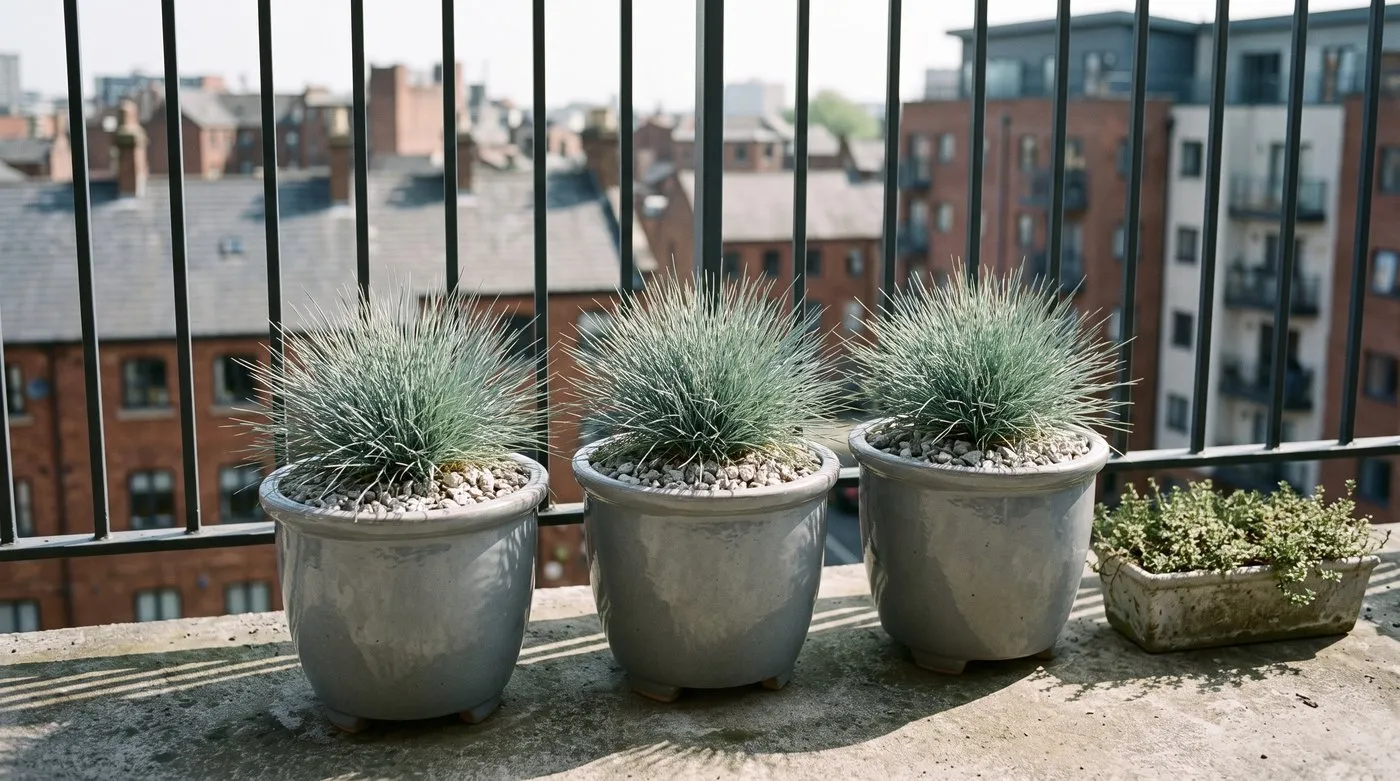
Gritty compost, a gravel top and pot feet keep the roots from sitting wet, even on a small balcony.
Pots dry out faster than the ground, so water when the compost is dry a few centimetres down. Don’t stand the pot in a saucer of water in winter. The guide to alpine troughs and container displays has ideas for mixing it with small, tough plants.
Spring tidy-up and flowers
Blue fescue needs little care. In spring, run your gloved fingers through the clump to comb out dead brown leaves. Don’t cut it right down like a deciduous grass.
When the flower spikes fade in summer, you can trim them off at the base. This keeps the dome neat. It also stops self-sown seedlings, which often come up greener than the parent.

The early summer flower spikes are pretty but soon fade. Snip them off at the base if you prefer the neat blue dome.
How to divide blue fescue
Divide clumps every few years, or as soon as the centre starts to go brown. Spring, in March or April, is the best time.
- Lift the whole clump with a fork.
- Pull it apart by hand into smaller pieces, each with healthy leaves and roots.
- Throw away the brown, dead centre.
- Replant the pieces straight away at the same depth.
- Water in, and keep them watered in dry spells while they settle.
Avoid dividing in late autumn or winter. New pieces can’t root well in cold, wet soil.

Pull an old clump into small rooted pieces and replant the best. You get fresh, blue plants for free.
What to plant with blue fescue
Blue fescue looks great with other plants that like sun and dry soil:
- Drumstick alliums rise through the clumps in summer.
- Sedums add late pink and rust flowers.
- Lavender and other silver-leaved plants echo the blue colour.
- Stipa tenuissima adds soft movement next to the stiff blue domes.
- Thyme and small alpines suit pots and troughs.
Avoid sprawling plants that will flop over and shade it, such as big hardy geraniums.

Blue fescue at the front, lavender and drumstick alliums behind. All three love sun and sharp drainage.
For a taller grass with lots of movement, read the guide to growing Stipa feather grass. If you are planning a whole dry, sunny bed, the Beth Chatto-style dry garden is full of ideas.
Blue fescue care calendar
| Month | What to do |
|---|---|
| January | Leave alone. Avoid walking on frozen clumps |
| February | Check pots aren’t sitting wet |
| March | Comb out dead leaves. Divide old or brown-centred clumps |
| April | Plant new clumps. Finish dividing |
| May | Water new plants in dry spells |
| June | Flower spikes appear |
| July | Trim faded flower spikes if you like |
| August | Little to do. Established plants rarely need water |
| September | Plant new clumps while the soil is warm |
| October | Top up gravel mulch around crowns |
| November | Move pots out of puddles. Raise them on feet |
| December | Enjoy the evergreen blue |
Common mistakes with blue fescue
- Planting in wet clay. It rots in winter. Add grit, raise the bed or use a pot.
- Burying the crown. Plant at the same level as in the pot.
- Too much shade. Colour fades to green. Give it full sun.
- Overwatering. Established plants need little water, and too much dulls the blue.
- Never dividing. Clumps go brown in the middle. Divide every few years in spring.
Frequently asked questions
Is Festuca glauca evergreen in the UK?
Yes, blue fescue keeps its leaves all year. It can look a little tired by late winter. Comb out dead leaves in spring and fresh blue growth soon follows.
Why is my blue fescue going brown in the middle?
Ageing clumps naturally die out in the centre. It usually happens after a few years. Lift and divide the clump in spring, throw away the dead middle and replant the healthy outer pieces.
Where should I plant Festuca glauca?
Plant it in full sun on free-draining soil. Gravel gardens, pots, raised beds and the front of a sunny border all suit it. Avoid shade and soggy clay.
How do you divide blue fescue?
Lift the clump in spring with a fork and pull it apart by hand. Keep healthy outer pieces with roots and throw away the dead centre. Replant at the same depth and water in.
What is the bluest festuca variety?
‘Elijah Blue’ is usually rated one of the bluest. ‘Intense Blue’ is also very bright, and ‘Blaufuchs’ has a silvery blue tone. Colour is strongest in full sun on poor soil.
Should I cut the flowers off blue fescue?
You can, once they fade in summer. Many people prefer the neat blue dome without them. Cutting them off also stops seedlings, which may not be as blue.
For more tough plants that thrive in the same hot, dry spots, read the guide to drought-tolerant plants for UK gardens. You’ll find more ideas in the plants hub.
Our team produces practical UK gardening guidance from source research, contributor records and established horticultural practice. Editorial standards are overseen by Matt W.


