
Key takeaways
- Sow direct where they are to flower, from March to May or in September
- They hate root disturbance, so avoid sowing in trays and transplanting
- Poor, free-draining soil in full sun gives far more flowers than rich soil
- Thin seedlings to about 15cm apart and don't feed them
- Deadhead for longer flowering, then leave some pods in late summer to self-seed
California poppies are about the easiest flowers you can grow from seed in a sunny, dry spot. Scatter the seed where you want them in spring, cover it lightly, and you’ll have silky orange, yellow or cream cups over feathery blue-grey leaves from early summer into autumn.
They are not the same as the field and oriental poppies in our guide to growing Papaver poppies. California poppies (Eschscholzia californica) are smaller, flower for longer and are happiest on poor, gravelly ground where other plants struggle. This guide covers sowing, the best varieties, and how to keep them coming back on their own.
When and how to sow California poppies
Sow California poppies outdoors where they are to flower, from March to May. In milder areas you can also sow in September. Autumn-sown plants overwinter as small rosettes and flower earlier the following year.
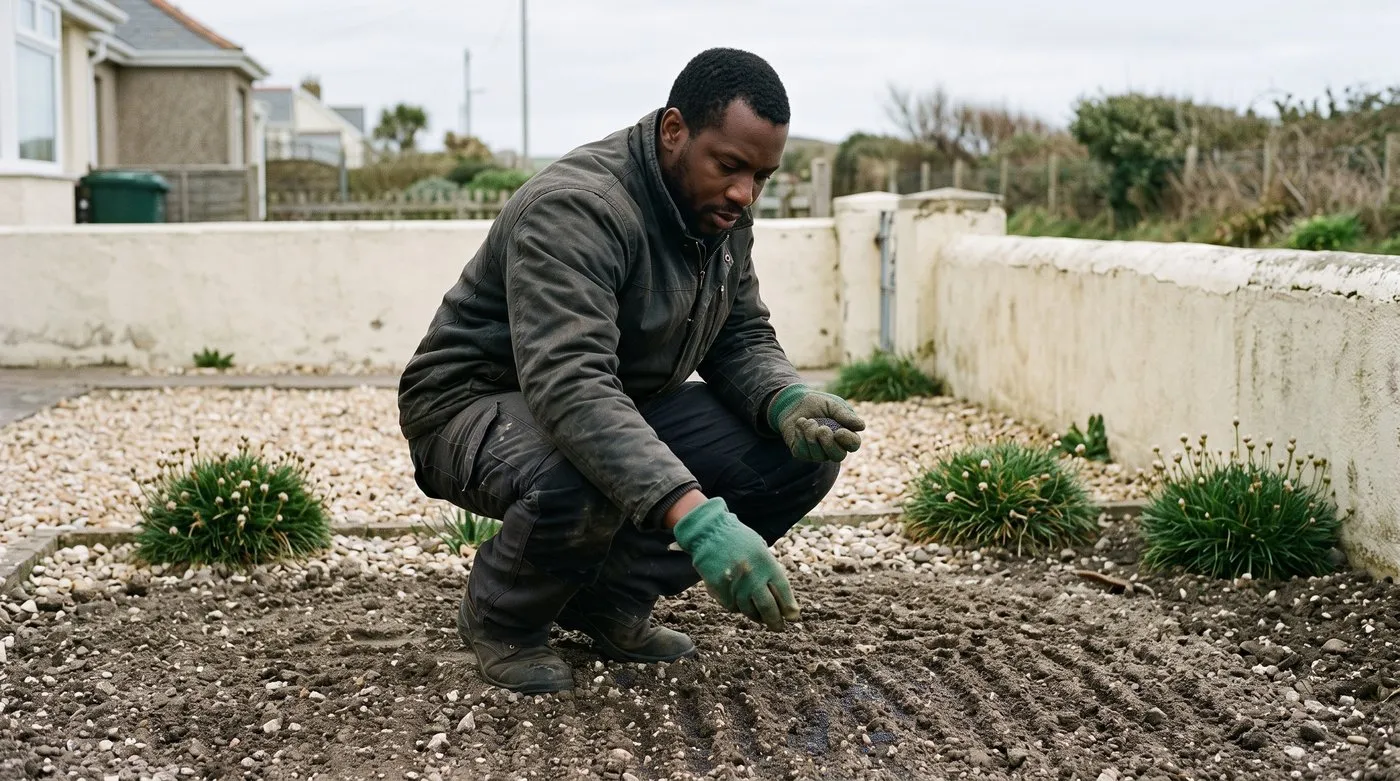
Scatter the seed thinly where you want flowers and just cover it. No trays, no transplanting.
They grow a long taproot, a single deep root that hates being disturbed. That’s why direct sowing works far better than raising them in trays.
- Pick a spot in full sun and pull out any weeds.
- Rake the soil to a fine, crumbly surface. Don’t add compost.
- Scatter the seed thinly, or sow in short rows.
- Cover lightly with a sprinkling of soil and water gently.
- Seedlings usually appear within two or three weeks.
- Thin them to about 15cm apart once they are big enough to handle.
Sowing a small patch every few weeks from March to May keeps the flowers coming through summer. Our guide to sowing hardy annuals direct has more on getting a good, even sowing.
Gardener’s tip: If you must start them indoors, sow two or three seeds into small biodegradable pots. Thin to the strongest and plant the whole pot out while the seedling is still small.
Where California poppies grow best
California poppies want full sun, poor soil and sharp drainage. Give them all three and they flower their socks off. In shade or damp ground they flop and sulk.
Good spots include:
- South- or west-facing borders and dry banks
- Gravel gardens and the cracks between paving
- Rockeries, raised beds and the front of sunny borders
- Pots of gritty compost on a sunny patio
Rich, freshly manured soil gives lush leaves and few flowers. Heavy clay that stays wet in winter is the other thing they dislike. On clay, grow them in a raised bed or a gravel area instead. Our guide to creating a gravel garden shows how to make the kind of dry, sunny spot they love.

Given a sunny path and a bit of gravel, California poppies happily seed themselves into the gaps.
Best California poppy varieties for UK gardens
The wild form is bright orange and still hard to beat. Seed catalogues also sell softer and richer colours, all grown the same way.
| Variety | Colour | Good for |
|---|---|---|
| Wild form | Bright orange | Gravel and wildlife-friendly planting |
| ’Buttermilk’ | Pale cream-yellow | Soft cottage-style borders |
| ’Apricot Chiffon’ | Peachy apricot, ruffled | Pots and the front of borders |
| ’Ivory Castle’ | Creamy white | Calming down hot colours |
| ’Carmine King’ | Deep pink-red | Something different from orange |
| ’Mission Bells’ | Mixed, some semi-double | A colourful mix from one packet |
Self-sown seedlings from named varieties often drift back towards orange over a few years. If you want to keep a particular colour, buy fresh seed every couple of years.

The feathery blue-grey leaves look good even when the flowers have closed for the evening.
Watering, feeding and deadheading
California poppies need very little looking after. Water new sowings in dry spells until the seedlings are growing well. After that, plants in the ground rarely need watering. Plants in pots need a drink every few days in hot weather.
Don’t feed them. Fertiliser gives soft, leafy growth and fewer flowers.
Snip off faded flowers and the long, thin seed pods every few days to keep new buds coming. Our guide to deadheading flowers shows the quick way to do it. Plants can look tired by late summer. Pull out the worst and let the rest set seed.

Blue and purple partners such as catmint and hardy geraniums make the orange really glow.
Letting California poppies self-seed
California poppies come back year after year by self-seeding. Stop deadheading some plants from about mid-August and leave the pods to ripen. They turn brown, then split and scatter small dark seeds.
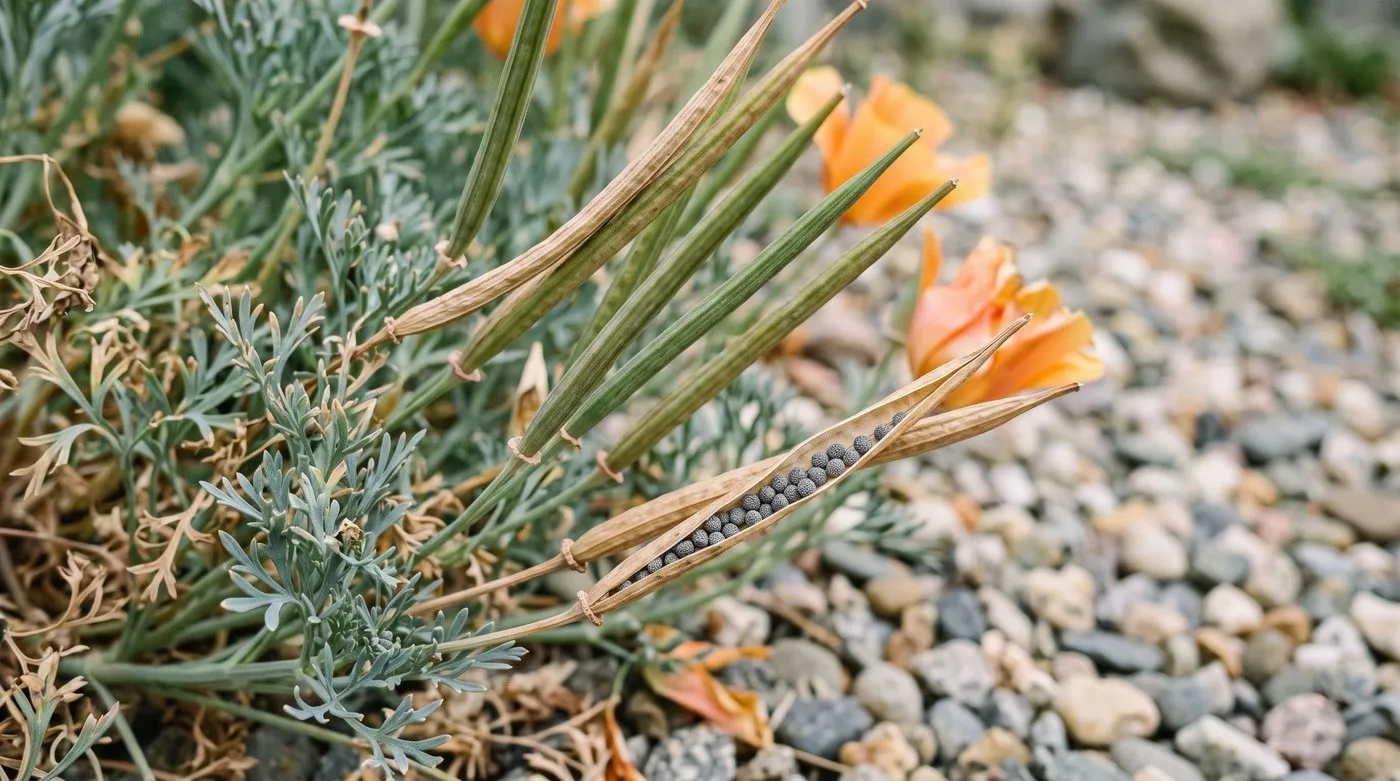
Leave a few of these slim pods to ripen and split, and next year’s poppies will sow themselves.
Seedlings pop up in autumn or the following spring. Thin them to about 15cm apart and pull up any in the wrong place while they’re small. To start a new patch, collect a few ripe pods in a paper bag and scatter the seed where you want it.
Bare, gravelly ground suits self-seeding best. A thick mulch of bark or compost smothers the seed. Our guide to self-seeding plants for easy gardens has more flowers that look after themselves in the same way.
Good companions for California poppies
California poppies suit other sun-lovers that like dry soil. Blue, purple and silver plants set off the orange flowers well.
- Catmint (Nepeta): soft blue haze and very drought-tolerant. See our guide to growing catmint.
- Lamb’s ears (Stachys byzantina): woolly silver leaves.
- Sea holly (Eryngium): spiky steel-blue heads.
- Cornflowers: another easy hardy annual from seed.
- Ornamental grasses such as Stipa, for gravel gardens.
For more plants that cope with dry summers, see our list of drought-tolerant plants for UK gardens.
Common mistakes with California poppies
- Sowing in trays and transplanting. The taproot breaks and the plants sulk or die. Sow direct.
- Rich soil or feeding. You get plenty of leaf and few flowers. Leave the soil unimproved.
- Too much shade. The flowers stay shut and plants flop. Give them sun for most of the day.
- Wet, heavy ground. Seedlings rot over winter. Choose a free-draining spot or a raised bed.
- Mulching over the seedbed. A thick mulch stops self-seeding. Keep the ground bare or gravelled.
California poppy calendar
| Month | What to do |
|---|---|
| January to February | Buy seed. Clear weeds from the spot you’ll sow |
| March | Start sowing outdoors in mild spells |
| April to May | Keep sowing small patches. Thin seedlings to 15cm |
| June to July | Flowering. Deadhead every few days |
| August | Leave some pods to ripen for self-seeding |
| September | Sow in milder areas. Collect ripe pods |
| October to November | Last flowers. Self-sown seedlings appear |
| December | Nothing to do. Seedlings sit quietly until spring |
Frequently asked questions
When should I sow California poppies in the UK?
Sow outdoors from March to May, or in September in milder areas. Sow thinly where they are to flower and cover lightly. Autumn sowings make bigger plants that flower earlier the next summer.
Do California poppies come back every year?
Usually yes, by self-seeding rather than from the same plant. They are grown as annuals, but leave a few pods to ripen in late summer and new seedlings appear in autumn or spring. In mild, dry spots some plants also survive the winter.
Can you transplant California poppies?
Not easily, because they have a long taproot. Sow them where you want them to flower. If you must start them in pots, sow into small biodegradable pots or deep modules and plant out while still small.
What soil do California poppies need?
Poor, free-draining soil in full sun is best. Sandy, stony or gravelly ground suits them well. Rich or freshly manured soil gives lots of leaf and fewer flowers, so don’t add compost or feed.
Why are my California poppy flowers closed?
They close in dull weather, in the evening and in rain. This is normal. The flowers open again when the sun comes out, so plant them where they get sun for most of the day.
Are California poppies invasive?
Not in the UK, but they do self-seed freely in the right spot. Spare seedlings are easy to pull up while small. Deadheading more of the flowers cuts down the number of seedlings the next year.
Want more easy colour for next summer? Our pick of the best hardy annual flowers to grow from seed has plenty more to sow alongside them, and the plants hub has guides to hundreds more.
Our team produces practical UK gardening guidance from source research, contributor records and established horticultural practice. Editorial standards are overseen by Matt W.


