Key takeaways
- Cistus loves full sun and poor, well-drained soil
- Flowers open every day from May to July, each lasting just one day
- Never cut back into bare wood, as it won't regrow
- Winter wet kills more cistus than cold, so drainage is everything
- Plant in spring so roots settle before winter
- Take cuttings in summer to replace old, leggy plants
Cistus, or rock rose, is a tough evergreen shrub that flowers its heart out where other plants give up. From May to July it’s covered in crinkly, tissue-paper flowers, even in baking sun and dry soil. Give it sun and drainage and it asks for very little else.
It’s an easy shrub that more UK gardeners should try. If you love drought-tolerant plants or have a south-facing garden, cistus is a natural fit.
What is cistus and where does it come from?
Cistus comes from the dry, rocky hillsides of the Mediterranean. It’s called rock rose because the flowers look a bit like single wild roses, but it isn’t a rose at all.
In the wild it grows in thin, stony soil. That’s why it does so well in poor ground and sulks in a rich, damp border.
Some types, especially gum cistus (C. ladanifer), have sticky, scented leaves. On a warm day you can smell the resin in the air.
Cistus keeps its small, often grey-green leaves all winter. Most grow into rounded shrubs between 60cm and 2m tall. The flowers are the big draw: five crinkled petals in white, pink or purple, often with a dark blotch in the middle. Each one opens in the morning and drops by evening, and new ones keep coming.
Best cistus varieties for UK gardens
These six do well across most of the UK, as long as they get sun and good drainage.
| Variety | Height | Flower | Best use |
|---|---|---|---|
| C. x purpureus | 1.5m | Pink with maroon blotch | Borders, a star plant |
| C. x hybridus (C. x corbariensis) | 1m | White with yellow centre | Ground cover, banks, coast |
| C. ladanifer | 2m | White with crimson blotch | Back of border, sheltered spot |
| C. ‘Silver Pink’ | 75cm | Silver-pink | Front of border, pots |
| C. x dansereaui ‘Decumbens’ | 60cm | White with crimson blotch | Ground cover, walls |
| C. x lenis ‘Grayswood Pink’ | 1m | Pale pink | Mixed borders, gravel |
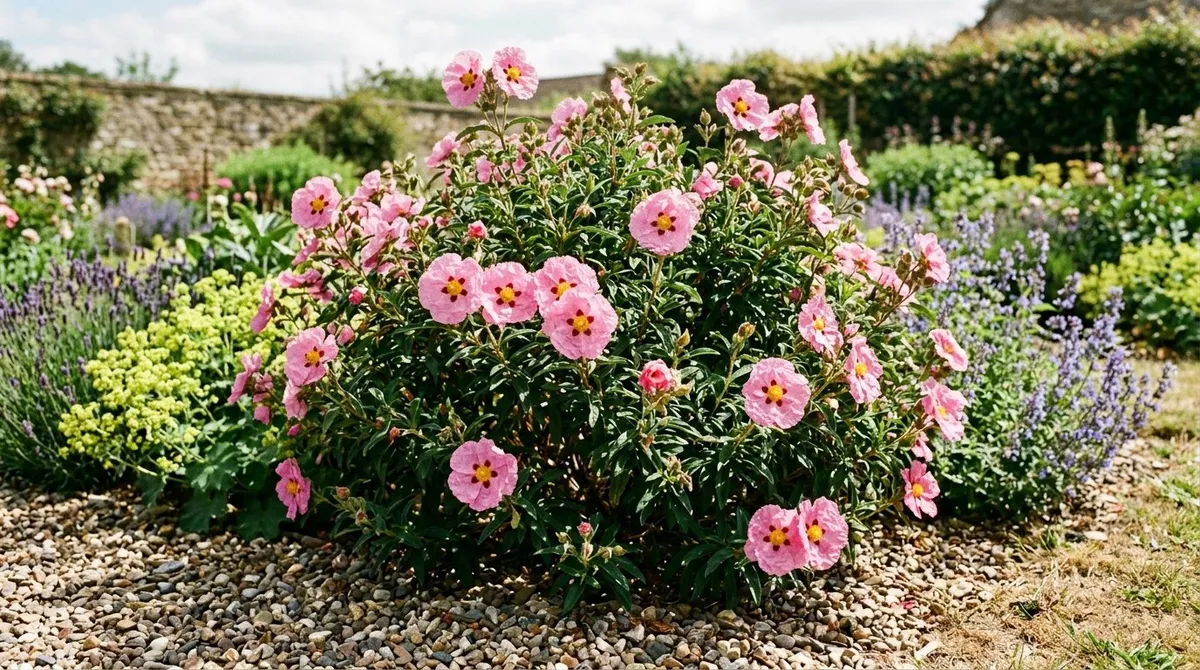
C. x purpureus is the best all-rounder. Big pink flowers with dark maroon blotches open from late May. It’s one of the hardiest large-flowered types and holds an RHS Award of Garden Merit.
C. x hybridus (often sold as C. x corbariensis) is one of the toughest. Its white flowers are smaller, but the plant is dense and spreading. It’s great on dry banks and copes well by the sea.
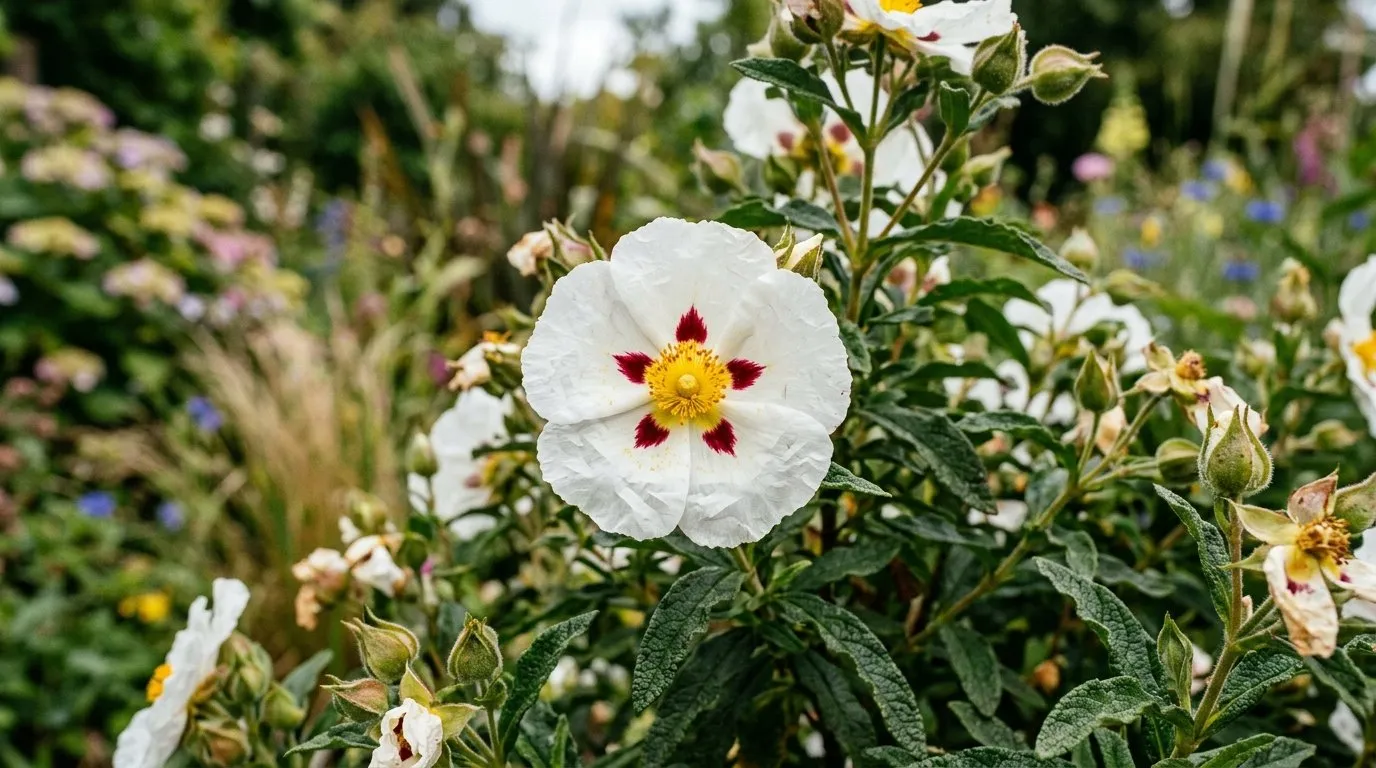
C. ladanifer (gum cistus) is big and very aromatic, with large white flowers marked in crimson. It’s a little less hardy, so give it a sheltered spot in colder areas.
C. ‘Silver Pink’ is small and neat, with soft silver-pink flowers. It suits small gardens, pots and chalky soils at the front of a border.
C. x purpureus in full flower. Each bloom lasts a day, but fresh ones open every morning.
How to plant cistus rock rose
Plant in spring, from April to June. Autumn planting can mean rot in cold, wet soil. Pick the sunniest spot you have, ideally facing south or west.
Poor soil is best. Rich soil makes soft, floppy growth that frost can damage. On sandy or chalky soil, just plant it. On heavy clay, dig a wide hole and mix a bucket of grit into the soil you put back.
Plant at the same depth it sat in the pot. Water it in well, then mostly leave it alone. It quickly roots deep and doesn’t like regular watering once settled. Mulch with gravel, not bark or compost, which hold damp against the stems.
Give each plant room to spread. C. x purpureus needs about 1.2-1.5m. ‘Silver Pink’ needs 60-75cm. Crowded plants stay damp, and cistus hates damp.
By a wall, leave about 30cm between plant and brickwork. A sunny wall gives useful warmth but can stay damp at the base.
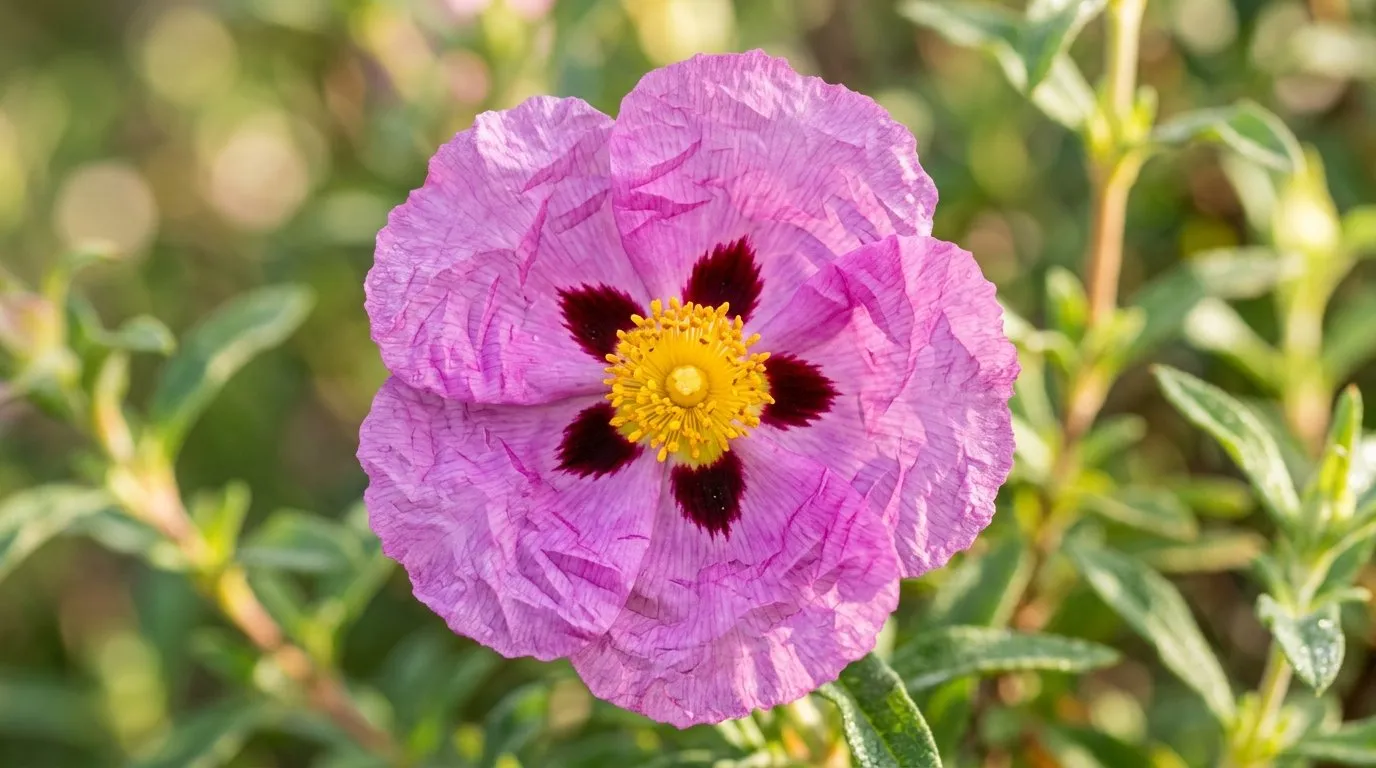
The dark blotch on each C. x purpureus petal makes the flowers really stand out.
Does cistus need pruning?
Hardly at all, and hard pruning can kill it. Unlike many shrubs, cistus won’t regrow from old, bare wood. Cut it back to leafless stems and nothing comes back. That’s the one thing to remember.
After flowering, you can lightly trim this year’s growth to keep it neat. Snip off any frost-damaged tips in late spring. Use secateurs rather than shears.
If a plant gets leggy and bare at the base, replace it rather than trying to rescue it. Take summer cuttings first so you have a new plant ready.
Broken or dead branches can come off. Just make sure every cut stem still has green leaves on it.
Can cistus survive UK winters?
Cold rarely kills cistus. Winter wet does. The hardier types cope with most UK winters if the soil drains well. Roots sitting in cold, soggy clay are what cause losses.
In the mild south-west, by the coast and in towns, most cistus are fine without help. In the Midlands and the north, choose C. x purpureus or C. x hybridus and plant against a sunny wall or fence.
Older plants rarely need covering. Young plants can have a fleece over them in a long freezing spell. Take it off once it warms up, or damp builds underneath.
For a cold, windy garden, C. x hybridus is the safest bet, as it stays low out of the wind. It looks great with other evergreen shrubs.
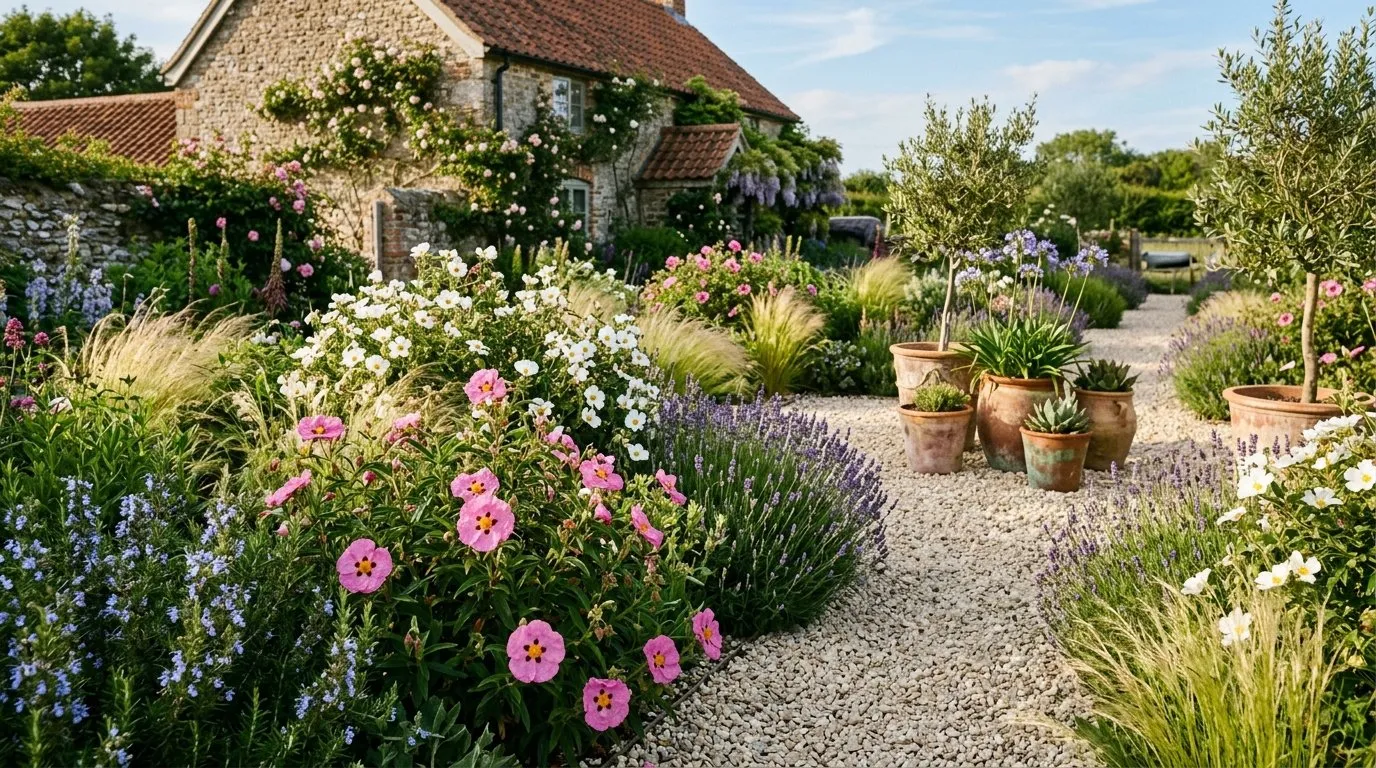
Gravel gardens suit cistus perfectly: sharp drainage and plenty of warmth.
How to propagate cistus from cuttings
Take cuttings in July or August. Named varieties don’t come true from seed, but cuttings give you an exact copy.
Choose healthy side shoots without flowers. Pull off 10cm pieces so a little strip of bark from the main stem comes too. This is called a heel. Strip the lower leaves and dip the end in rooting powder.
Push them into pots of half perlite and half compost. Water lightly and cover with a clear bag. Keep them out of direct sun. Roots usually form in a few weeks. Pot them up when roots show at the bottom.
Keep young plants in a cold frame or cool greenhouse for their first winter, then plant out in spring. Our guide to taking cuttings explains the basics.
Low, spreading types like ‘Decumbens’ can also be layered. Pin a low branch to the soil and leave it to root.
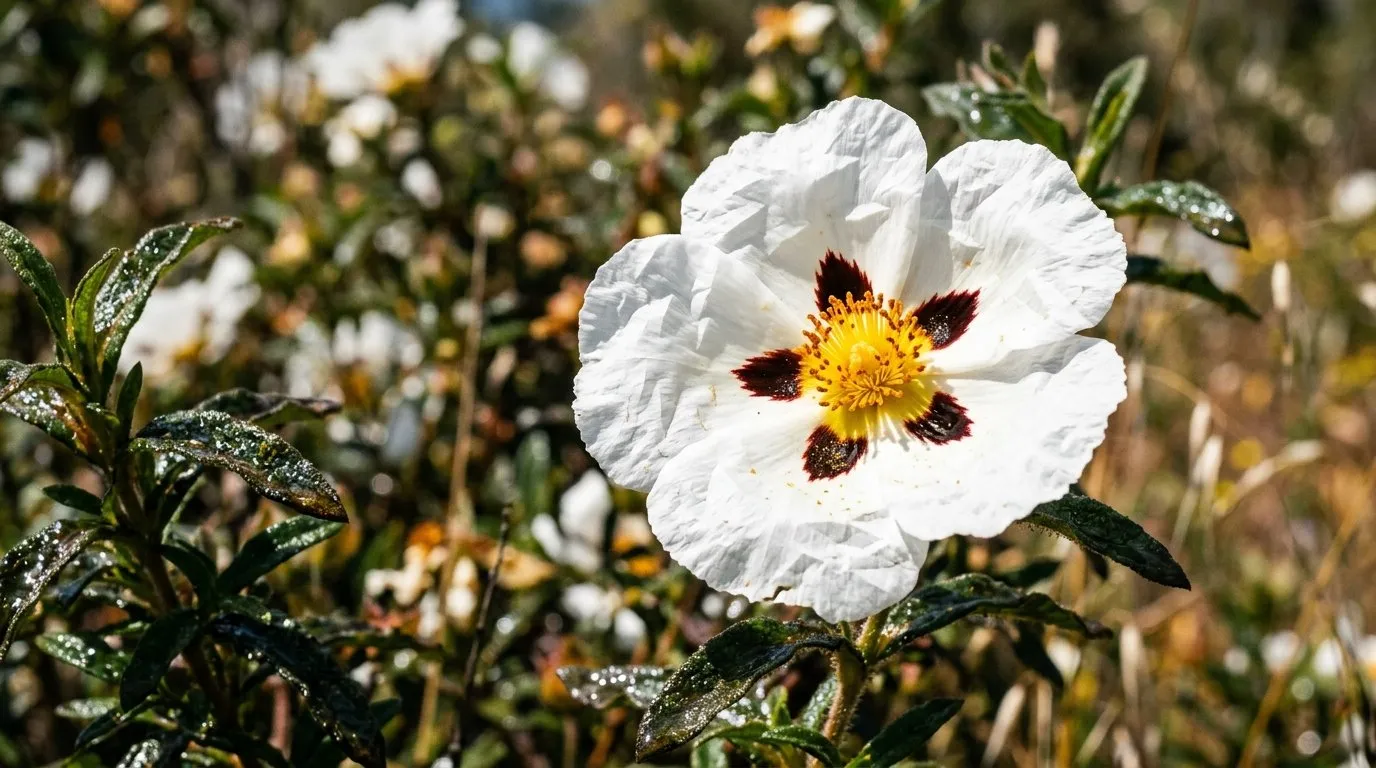
Gum cistus has big white flowers and sticky, scented leaves on warm days.
Best uses for cistus in garden design
Cistus is perfect for gravel gardens, sunny borders, coastal gardens and dry banks. It keeps its leaves all year and flowers in summer, which few dry-garden shrubs manage so well.
Gravel gardens are its natural home. Plant it with Stipa grasses, lavender, rosemary and Phlomis, and once settled you’ll rarely need the hose. Making a gravel garden on free-draining soil is the closest you’ll get to the Mediterranean in the UK.
Coastal gardens suit cistus well. It copes with wind, salt and thin sandy soil. C. x hybridus is the best pick for an exposed spot.
Dry banks and slopes are hard to plant. Low, spreading ‘Decumbens’ covers the ground, smothers weeds and needs no watering once settled. It’s a handy low-maintenance answer for a tricky spot.
Mixed borders work if cistus gets the sunniest, driest edge. Keep it away from lush plants that need lots of water.
The RHS cistus guide has more varieties to browse.
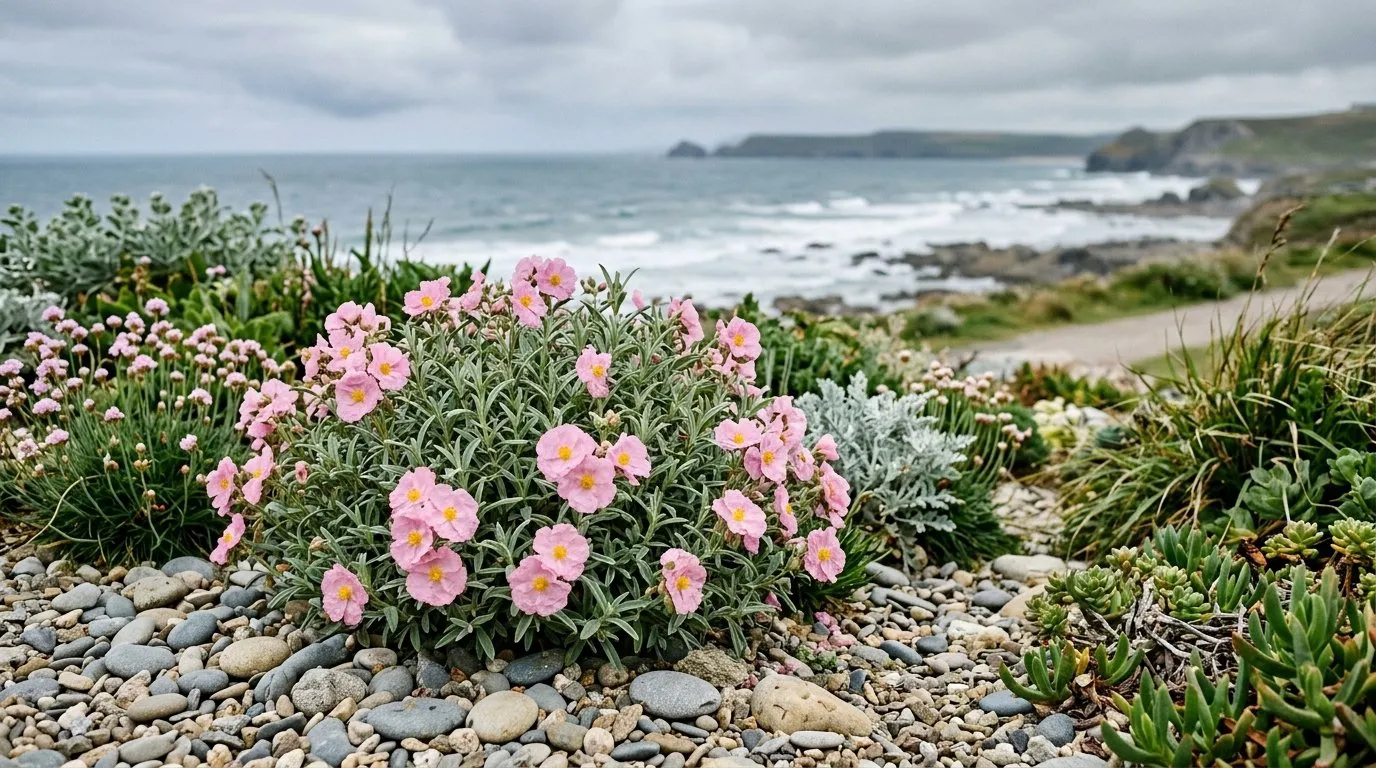
‘Silver Pink’ stays small and neat, so it suits pots and the front of a border.
For more sun-loving flowering shrubs to grow alongside cistus, take a look at our list.
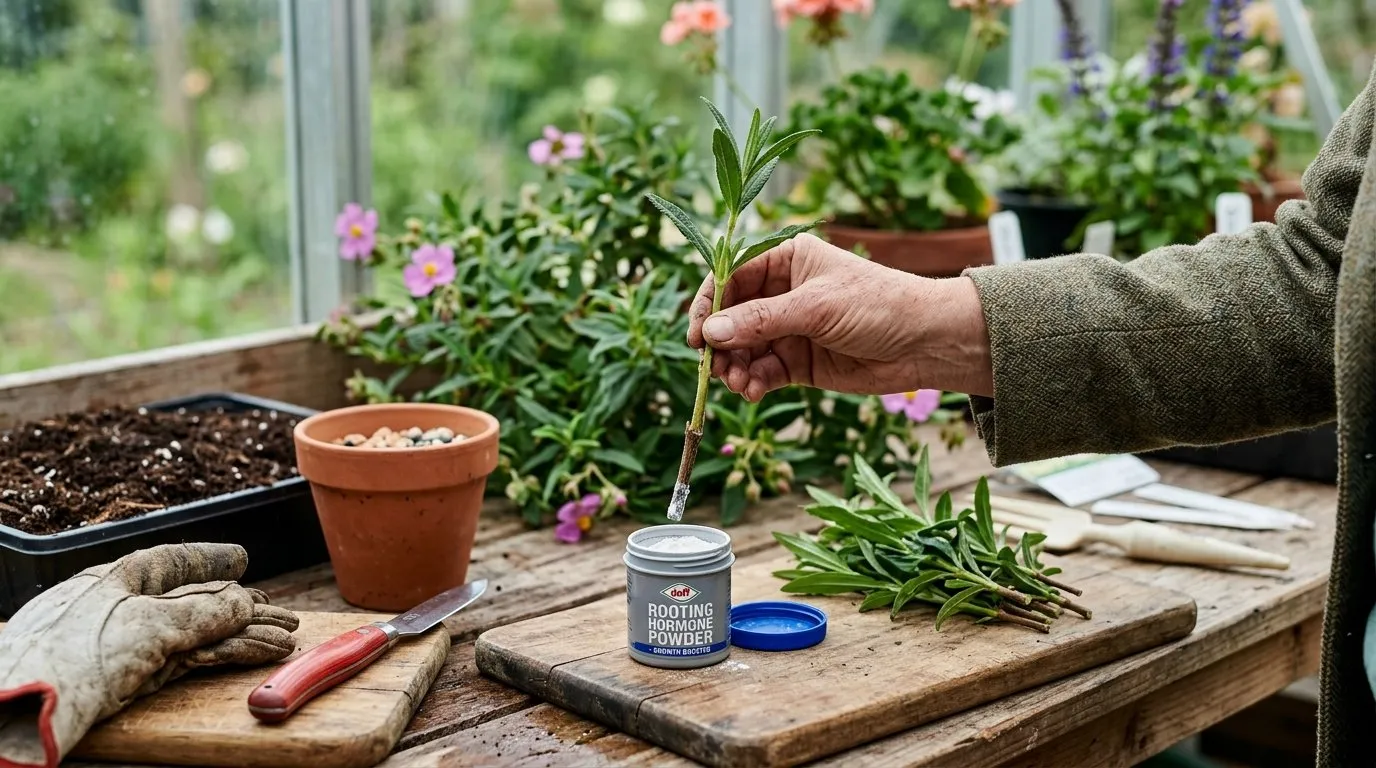 Summer cuttings in gritty compost are the easiest way to replace an old, leggy plant.
Frequently asked questions
Is cistus rock rose hardy in the UK?
Yes, most cistus cope with a typical UK winter. Wet soil is the real danger, not cold. In colder areas, choose C. x purpureus or C. x hybridus and plant against a sunny wall in soil that drains well.
Can you hard prune cistus?
No, cistus won’t regrow from old wood. Hard pruning can kill it. Just trim lightly after flowering and never cut into bare, woody stems. If a plant goes leggy and bare at the base, replace it.
How long does a cistus plant live?
Cistus is fairly short-lived for a shrub. It grows quickly but tends to get woody and bare at the base as it ages. Take cuttings while the plant is still young and healthy, so you have replacements ready.
Why are my cistus flowers falling off so quickly?
That’s normal, so don’t worry. Each flower lasts just one day. It opens in the morning and drops its petals by evening. Fresh flowers open every day from May to July.
Does cistus grow in clay soil?
Not on heavy, wet clay. The roots rot if they sit in winter wet. On clay, dig a wide hole and mix in plenty of grit, or grow cistus in a raised bed or on a slope.
What is labdanum resin from cistus?
It’s a sticky, scented resin on the leaves and stems. Gum cistus, C. ladanifer, has the most. It has long been used in perfume and incense. Brush the leaves on a hot afternoon and you’ll smell it.
When is the best time to plant cistus in the UK?
Plant in spring, from April to June. That gives the roots a whole summer to settle before winter. Young plants put in during autumn can rot in cold, wet soil.
Our team produces practical UK gardening guidance from source research, contributor records and established horticultural practice. Editorial standards are overseen by Matt W.