Key takeaways
- Aubretia flowers from March to June and loves full sun and well-drained soil
- Grow it in walls, rockeries, path edges or pots. Good drainage matters most
- Cut it back by half straight after flowering to stop it going woody
- Take cuttings in June from the trimmings, or divide clumps in autumn
- It's fully hardy, evergreen and a great early food source for bees
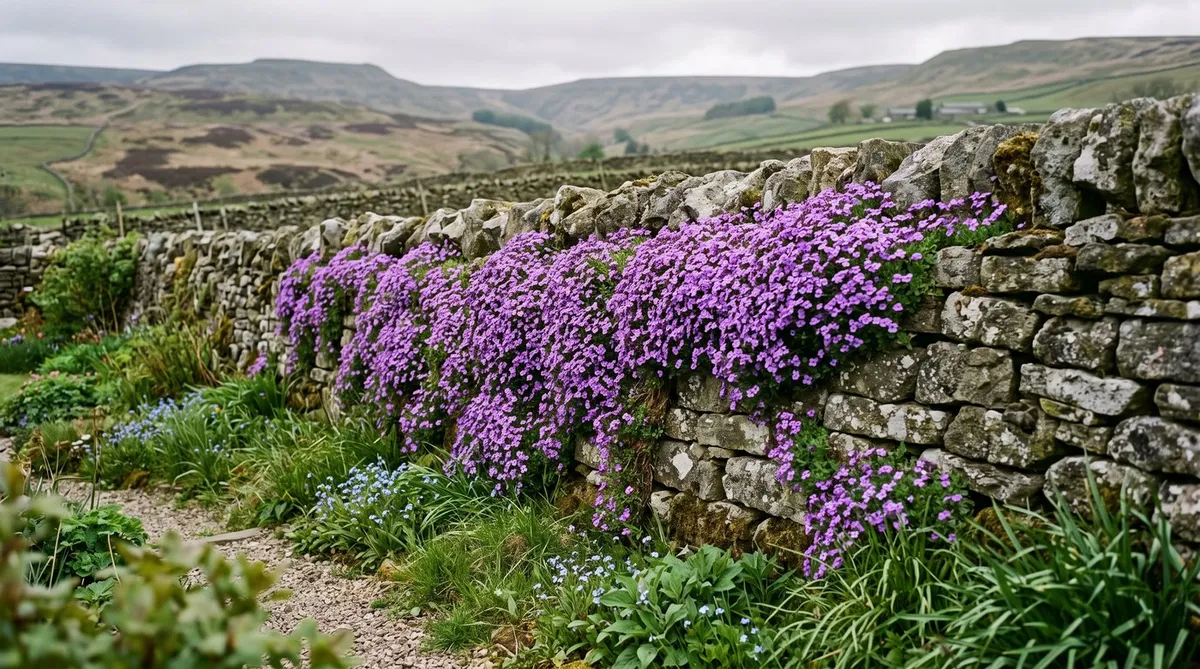
Aubretia is one of the easiest and most cheerful spring flowers for UK gardens. From March to June it covers walls, rockeries and path edges in purple, pink, blue or red.
Here you’ll find the best varieties, where and how to plant them, the trim after flowering that keeps plants going for years, and how to grow new plants for free. The RHS aubrieta growing guide has more varieties if you’d like to explore further.
Where does aubretia grow best in the UK?
Aubretia grows best in full sun on well-drained, neutral to chalky soil. In the wild it grows on rocky limestone slopes, so it loves the chalky, free-draining soils found across much of southern and eastern England. On heavy clay it needs raised planting or plenty of grit.
South and west-facing spots give the most flowers, and east-facing walls work well too. North-facing spots are too shady. If your soil is heavy clay, plant aubretia in a raised rockery or trough of gritty compost rather than fighting the border soil.
 Different aubretias in a rockery, showing off the purple, pink, red and blue shades you’ll find at UK garden centres.
Best aubretia varieties for UK gardens
For walls and spilling over edges, choose trailing types like Cascade Blue or Royal Blue. For rockeries and path edges where you want a tidier mound, Bressingham Pink and Argenteovariegata are neater. Purple Gem is a reliable classic. Red Cascade makes a nice change from the usual purple and looks great with yellow alyssum and white arabis in a spring flower display.
How to plant aubretia in walls and rockeries
Plant in autumn (September to October) or spring (March to April), tucking plants into gaps where the roots can reach cool soil behind the stones. Planting into a wall is a bit different from planting in a border.
For an existing dry stone wall, find a gap between stones big enough for a small plant. Take it out of its pot, wrap the rootball in damp moss or coir, and push it firmly into the gap. Pack a little gritty compost around it. Water gently with a fine rose for the first fortnight. Once the roots grip the wall, it looks after itself.
For a new rockery, mix plenty of grit or sharp sand into the planting compost, about a third to a half. Aubretia hates wet roots. Plant so the crown sits slightly above the soil around it, firm in and water once. Mulch with gravel or stone chippings, not bark, which holds damp against the stems and can rot them.
In gravel gardens, aubretia often seeds itself into the gravel. Let some seedlings grow where they land, as they tend to find the spots that suit them.
Growing aubretia in containers
Aubretia is a lovely container plant for stone troughs, alpine pans, window boxes and terracotta pots. It’s especially nice on front steps and courtyard walls, where it softens hard edges.
 Aubretia spilling from a stone trough by a front door, a simple way to add spring colour to a front garden entrance.
Use loam-based compost mixed with plenty of grit, around a third. Terracotta suits it better than plastic, as it dries out faster. Check the drainage holes are clear.
Water sparingly. Pot-grown aubretia dies from too much water far more often than too little. It’s perfectly hardy, but cold, wet compost rots the roots, so in winter move pots to a sheltered spot by a wall and raise them on pot feet.
Give a light, half-strength liquid feed in early March and that’s it for the year. Too much feeding gives leaves rather than flowers. For more container ideas, see our guide to plants for pots year-round.
How to prune aubretia after flowering
Cut the whole plant back by half as soon as flowering finishes, usually by late June. It’s the most important job for aubretia. It stops the plant going woody, brings fresh leafy growth and keeps it going for many years.
 Trimming aubretia hard after flowering. Shears make quick work of bigger plants.
Use shears or sharp scissors. Secateurs are slow unless you only have a plant or two. Cut through the old flower stems and into the green growth, down to just above the fresh shoots at the base. It looks brutal at first, but within a few weeks it’s a dense green cushion again.
Plants trimmed in June sometimes give a small second show of flowers in September. Treat it as a bonus rather than something to count on.
How to propagate aubretia from cuttings
Take 5-8cm softwood cuttings in June, straight after the trim. The trimmings are perfect cutting material, so you get new plants free from a job you’re doing anyway.
Choose non-flowering shoot tips and strip off the lower leaves. Dip the ends in rooting powder if you have some. Push them into small pots of half perlite, half peat-free compost. Water lightly and cover with a clear plastic bag or pop them in a propagator.
Keep them in bright light but out of direct sun, which cooks them under the plastic. They usually root in four to six weeks. Give a gentle tug: if you feel resistance, they’ve rooted. Pot them on into 9cm pots of gritty compost and plant out in September. Our guide to plant propagation has more on cuttings.
You can also divide plants. Lift a well-grown clump in September, split it into pieces with a sharp knife, and replant straight away. Each piece needs roots and some green growth.
Common aubretia problems and solutions
Aubretia is mostly trouble-free. The few problems usually come from where it’s growing rather than pests.
Crown rot is the main killer. It happens when the plant sits in wet soil over winter, especially on heavy clay. Good drainage at planting time is the answer: add grit, raise the planting spot, or grow it in a pot.
Going woody and bare in the middle comes from skipping the trim after flowering. Old stems go brown and bare, with new growth only at the tips. The yearly trim prevents it. If a plant has already gone woody, cut it back to just above the woody stems. Some recover, some don’t, so take a few cuttings as back-up.
Aphids sometimes cluster on soft new growth in spring. Knock them off with a jet of water or leave them for the ladybirds and hoverflies. Sprays aren’t needed, and it’s kinder to the bees that visit the flowers.
Leggy, sparse growth means it isn’t getting enough sun. Move it somewhere sunnier.
Companion plants for aubretia
Aubretia looks its best with other spring alpines. The classic Cotswold wall trio is aubretia, yellow alyssum (Aurinia saxatilis) and white arabis: purple, gold and white together in spring.
In rockeries, plant it with sedum, which takes over in summer when aubretia has finished, plus thyme, saxifrage and sempervivum. They all like the same sun and drainage, and together they keep a rockery colourful for much of the year.
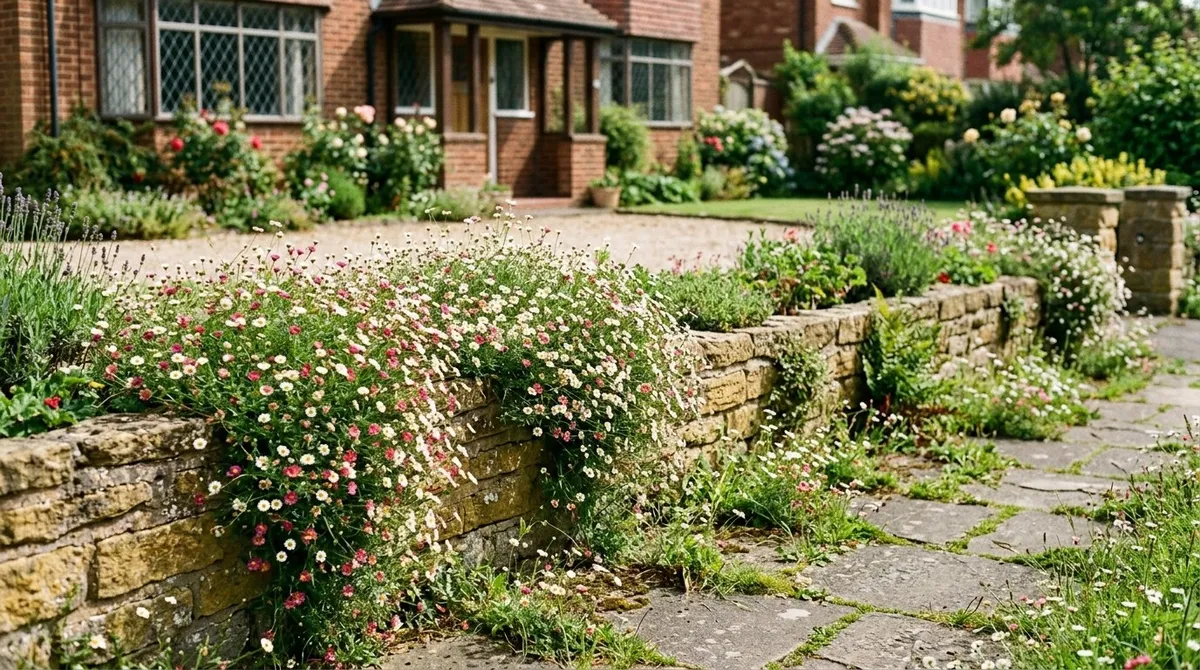
For walls and raised beds, try it with Mexican daisy (Erigeron karvinskianus), Campanula portenschlagiana and lavender. At ground level, aubretia makes a pretty edge along cottage garden borders, softening the path with a ribbon of spring colour.
It’s also a brilliant plant for early pollinators. It starts in March, before most summer flowers open. Grow it with crocus, pulmonaria and primroses for a spring feeding station for bumblebees.
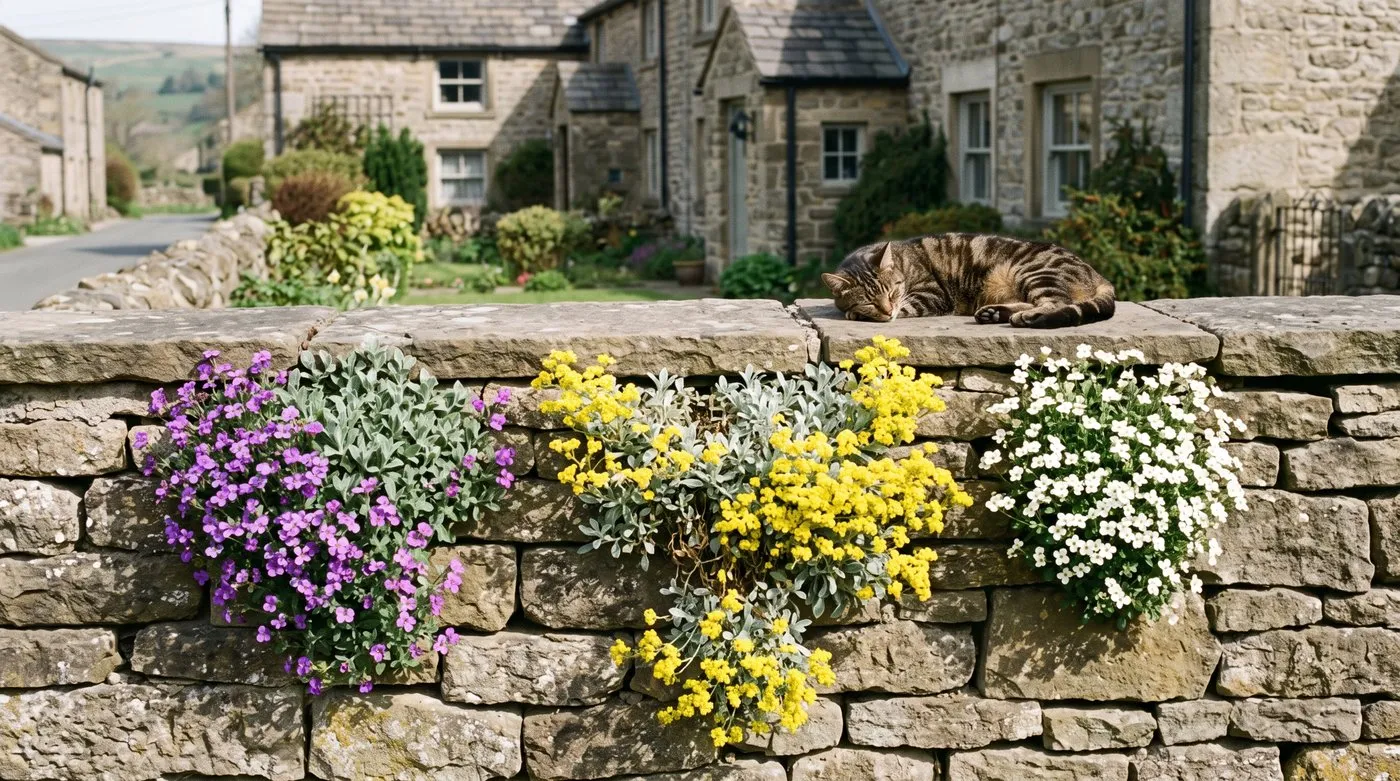
Purple aubretia, yellow alyssum and white arabis is the classic spring wall trio. They all love sun and sharp drainage, so they thrive side by side.
Month-by-month aubretia care calendar
| Month | What to do |
|---|---|
| January-February | Check drainage and clear fallen leaves off the plants. No watering needed. |
| March | Flowers start. Give pot-grown plants a light feed. |
| April-May | Peak flowering. Just enjoy it. |
| June | Trim back by half as soon as flowering finishes. Use the trimmings for cuttings. |
| July-August | Fresh growth appears. Water pots only in long dry spells. |
| September-October | Plant new aubretia, divide clumps and plant out rooted cuttings. |
| November-December | Nothing to do. Aubretia is hardy and evergreen. |
Frequently asked questions
When is the best time to plant aubretia in the UK?
Autumn, from September to October, is the best time. The soil is still warm and moist, so roots settle before winter. Spring planting in March or April works too, but water it through the first dry spell. Avoid planting into soggy winter soil or during a summer drought.
Does aubretia come back every year?
Yes, aubretia is a hardy evergreen that comes back every spring. It keeps its leaves through winter. Trim it after flowering each year, or it gets straggly and bare in the middle. Replace very old plants with new ones grown from cuttings.
Can aubretia grow in shade?
Not well. It needs full sun to flower properly. In part shade it gets leggy with fewer flowers. A sunny wall, rockery, raised bed or path edge facing south or west is ideal. In a north-facing spot it may survive but rarely flowers enough to be worth it.
How do you stop aubretia going woody?
Trim it back hard straight after it finishes flowering. That’s usually late spring or early summer. Use shears to cut off the spent flower stems and some of the leaves. Fresh, compact growth soon follows from the base. Do it every year and the plant stays neat for years.
Can you grow aubretia in pots?
Yes, it’s lovely in pots, troughs and window boxes. Use loam-based compost mixed with plenty of grit, and make sure the drainage holes are clear. Water sparingly, as too much water is more of a danger than too little. A light feed in early spring is plenty.
How do you propagate aubretia?
Take softwood cuttings in early summer, after trimming the plant. Pick non-flowering shoots about 5cm long and strip the lower leaves. Push them into a gritty mix of compost and perlite and keep them just moist. Most root within a few weeks. You can also divide clumps in early autumn.
Is aubretia good for bees?
Yes, it’s a great early food source for bees. It flowers in spring, when there isn’t much else about. Bumblebees, solitary bees and honeybees all visit, and early butterflies feed on it too. Plant it along walls and edges to help insects through a lean time.
Our team produces practical UK gardening guidance from source research, contributor records and established horticultural practice. Editorial standards are overseen by Matt W.